How Long Do Axolotls Live?
Axolotl longevity overview: Axolotls (Ambystoma mexicanum) — the only fully aquatic neotenic salamander, endemic to Lake Xochimilco, Mexico City — typically live 10 to 15 years in captivity when provided with proper water quality, appropriate diet, and consistent temperature. With exceptional care and favorable genetics, some individuals reach 18 to 20 years. In the wild, axolotls live approximately 5 to 10 years due to habitat degradation, pollution, introduced predators (tilapia and carp), and urban water diversion in their only remaining natural habitat — Lake Xochimilco in Mexico City. > Warning: Neoteny — A rare biological phenomenon where an organism retains its larval features (external gills, aquatic lifestyle) throughout its entire life cycle instead of metamorphosing into a terrestrial adult. The axolotl is the most famous example of neoteny in amphibians. Unlike most salamanders that lose their gills and develop lungs for land life, axolotls remain fully aquatic with external gills, dorsal fin, and a larval body plan indefinitely — even capable of breeding in this form (Voss et al., 2019 — University of Kentucky Ambystoma Genetics Center).
This makes the axolotl one of the longest-lived amphibian pets, comparable to the lifespan of many dog breeds.
Captive axolotl longevity — the primary focus of axolotl lifespan management — depends almost entirely on three owner-controllable factors: water temperature, water quality, and diet. Unlike dogs or cats where genetics play the dominant role, an axolotl’s lifespan is largely determined by how well you maintain their environment.
An interesting discrepancy exists between sources. Wikipedia states “10 to 15 years in the wild,” while PBS Nature, HowStuffWorks, and the AI Overview consensus all cite approximately 5 years in the wild. This likely reflects the rapid decline of wild populations — Wikipedia may reference older data from before urbanization severely impacted Lake Xochimilco.
For complete axolotl care fundamentals beyond axolotl lifespan, see our axolotl care guide.
Captive vs Wild Lifespan
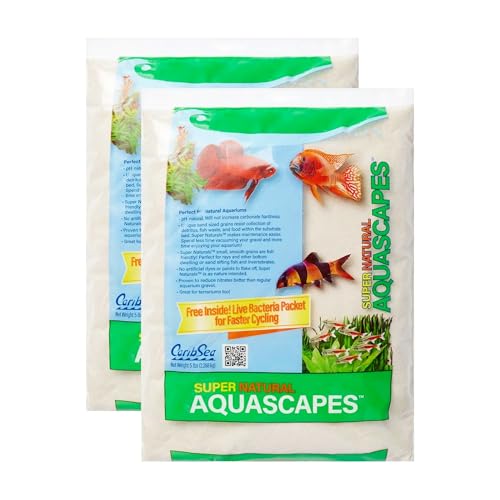
Carib Sea Moonlight Sand is a quality option worth considering for your setup.
The gap between axolotl lifespan in captivity and axolotl lifespan in the wild is dramatic — a well-cared-for captive axolotl can outlive a wild one by a decade. In captivity, an axolotl faces none of the threats that make wild life so precarious. The table below breaks down the key differences.
| Factor | In Captivity | In the Wild |
|---|---|---|
| Average lifespan | 10-15 years | 5-10 years |
| Maximum recorded | 20+ years (anecdotal) | Unknown |
| Primary threats | Poor water quality, overheating, disease | Pollution, introduced predators (tilapia, carp), habitat loss |
| Diet | Bloodworms, earthworms, pellets (consistent) | Worms, insects, small fish (variable) |
| Water temperature | Controlled 60-68°F (16-20°C) | Fluctuating, often too warm from urban runoff |
| Water quality | Filtered, monitored ammonia/nitrite/nitrate | Degraded — ammonia, heavy metals, pesticides |
| Veterinary care | Available | None |
| Predation risk | None | High (fish, birds, herons) |
| Conservation status | Captive-bred, stable | Critically Endangered (IUCN) |
The number one reason wild axolotls die younger is habitat quality, not biological limits. A well-maintained aquarium allows an axolotl to reach its full biological lifespan potential — something wild conditions increasingly prevent.
Wild axolotls are classified as Critically Endangered by the IUCN Red List of Threatened Species (IUCN, 2024 Assessment). Only an estimated 50 to 100 individuals remain in their natural habitat as of 2024 (IUCN — Ambystoma mexicanum Population Assessment). Every pet axolotl today is entirely captive-bred, meaning your axolotl’s lifespan potential has nothing to do with wild conservation pressures and everything to do with your tank conditions.
What Affects Axolotl Lifespan?
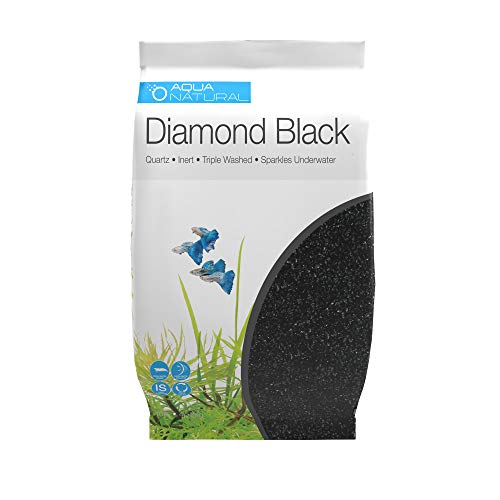
Many owners find that Aqua Natural Diamond Black works well for their pet’s needs.
Five primary factors determine how long your axolotl will live — understanding each factor is the key to maximizing your axolotl lifespan potential. Water quality is by far the most critical — it is the single factor that kills more axolotls than everything else combined.
Warning: Ammonia Toxicity — A life-threatening condition caused by the accumulation of nitrogenous waste (ammonia, NH₃/NH₄⁺) in aquarium water. Even at low concentrations (0.25 ppm), ammonia burns axolotl gills and damages internal organs. Ammonia is produced by uneaten food, waste, and decomposing organic matter. The biological nitrogen cycle (ammonia → nitrite → nitrate) processes ammonia through beneficial bacteria, but newly set up tanks lack sufficient bacterial colonies — hence the need for proper tank cycling before introducing an axolotl (VCA Hospitals — Ammonia Toxicity in Aquatic Amphibians).
Water Quality
Ammonia and nitrite must read zero at all times. Even brief exposure to 0.25 ppm ammonia can cause permanent gill damage that shortens lifespan (VCA Hospitals — Ammonia Toxicity in Aquatic Amphibians).
Nitrates should stay below 20 ppm, and weekly 25% water changes are the minimum requirement (University of Kentucky Ambystoma Genetics Center — Axolotl Husbandry Guidelines).
A quality axolotl filter is the single most important equipment investment for your axolotl’s health. Without adequate biological filtration, waste accumulates faster than beneficial bacteria can process it — creating a toxic cycle that silently damages organs over months.
Axolotl keepers who skip water testing are always surprised when problems appear. The damage is done invisibly long before you see symptoms like gill curling or lethargy.
Temperature
The ideal temperature range is 60-64°F (16-18°C), with 68°F (20°C) as the absolute maximum. Every degree above 64°F increases metabolic rate, which stresses the immune system and accelerates cellular aging (Voss et al., 2019 — University of Kentucky Axolotl Colony Husbandry Manual).
Higher temperatures also reduce oxygen saturation in water — axolotls already have low oxygen needs compared to fish, but warm water holds less dissolved oxygen (USGS — Dissolved Oxygen and Water Temperature). This double stress (faster metabolism + less oxygen) is why overheating is so deadly.
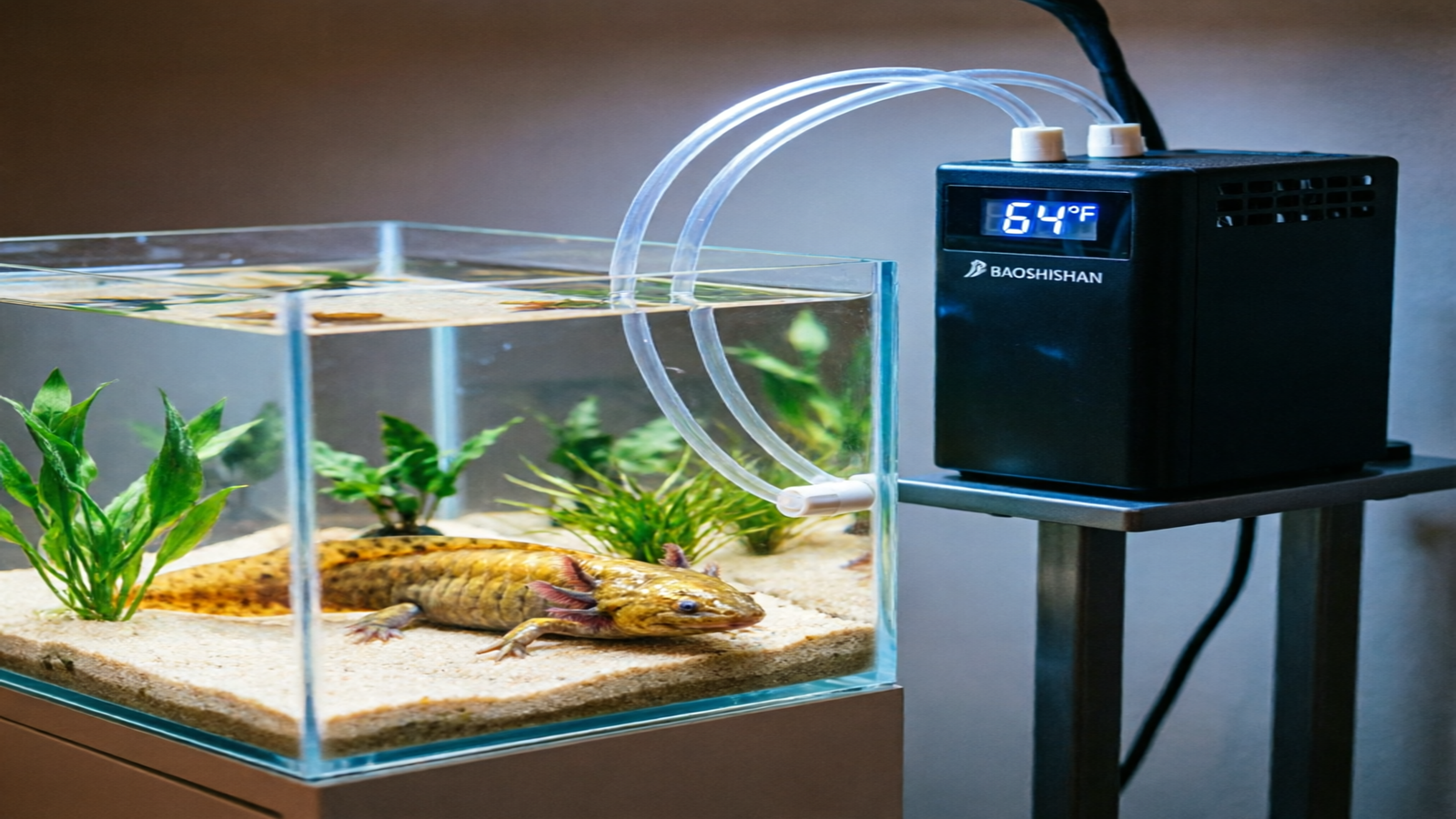
If your room temperature regularly exceeds 68°F, an axolotl chiller is not optional — it is essential for longevity. This is the single most impactful investment you can make for your axolotl’s lifespan.
Warning: Thiaminase — An enzyme found in many raw fish species (including goldfish, rosy reds, and some feeder fish) that breaks down vitamin B1 (thiamine). When consumed regularly, thiaminase causes chronic thiamine (vitamin B1) deficiency in axolotls, leading to neurological symptoms, muscle tremors, loss of coordination, and eventually death. This is the primary medical reason feeder fish are contraindicated for axolotls (Noga, 2010 — Fish Disease: Diagnosis and Treatment).
Diet
A high-protein diet based on earthworms (nightcrawlers) with bloodworms as a supplement provides optimal nutrition (University of Kentucky Ambystoma Genetics Center — Recommended Diet Protocol). Pellets work as a staple if they are high-quality and specifically formulated for aquatic amphibians.
Overfeeding causes obesity and fatty liver disease — both of which shorten lifespan significantly. Hepatic lipidosis has been documented in captive axolotls fed excessive high-fat pellets (Khonsari et al., 2019 — Axolotl Hepatic Steatosis Study). Underfeeding is equally dangerous: an axolotl will metabolize its own tail tips and gill tips when starved. Feed every two to three days for adults, adjusting portions so the axolotl’s body width stays roughly equal to its head width.
Stress and Handling
Axolotls have permeable skin — handling removes their protective slime coat and exposes them directly to bacteria and chemicals on your hands (Smith et al., 2017 — Cutaneous Physiology of Aquatic Amphibians). Handle only when absolutely necessary, such as tank transfers or health checks.
Chronic stressors include bright lighting, loud vibrations from nearby speakers or footsteps, and aggressive tank mates. Axolotls kept in high-traffic rooms with constant foot traffic can show signs of chronic stress within weeks.
Genetics
Morph may play a small role, though scientific data is limited. All captive axolotl morphs (leucistic, wild-type, melanoid, golden, GFP) are the same species — color and pattern do not alter fundamental biology or lifespan potential (University of Kentucky — Axolotl Genetics). Leucistic (white) and wild-type morphs are generally considered the hardiest by experienced keepers. GFP (green fluorescent protein) morphs are genetically identical to their non-GFP counterparts — the fluorescence gene is a harmless marker protein and does not affect health or longevity.
The Reddit r/axolotls community discussed morph-specific lifespan in August 2024, but no scientific consensus emerged. Individual genetics matter more than morph — some bloodlines simply live longer regardless of color.
Signs of Aging in Axolotls
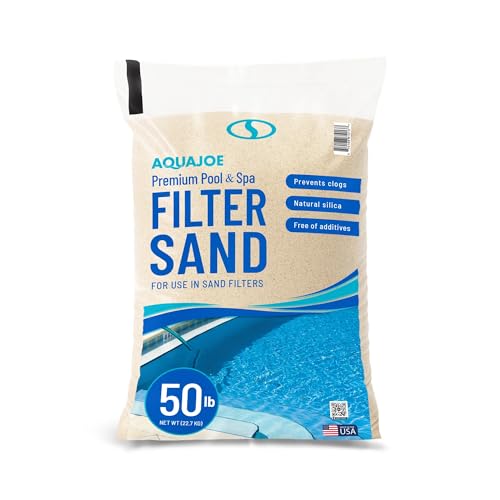
For this purpose, Aqua Joe Premium Pool Filter Sand is a popular choice among pet owners.
Axolotls age gradually, and recognizing the signs helps you adjust care for your senior pet. Most axolotls begin showing subtle age-related changes after 8 to 10 years — roughly two-thirds through their maximum axolotl lifespan range.
Gill Changes
Gills gradually shrink and lose their vibrant red or dark coloration. Older axolotls often have short, pale gills compared to the long feathery plumes of their youth. This is a normal aging process — not a sign of ammonia burn or fungal infection.
Activity Level
Senior axolotls spend more time resting on the bottom of the tank. They may reduce swimming to short bursts rather than the constant cruising seen in younger animals. Feeding response slows noticeably — they often wait for food to drift past rather than actively hunting it down.
Body Condition
Gradual weight loss and thinning of the tail and limbs are common in aging axolotls. The head may appear proportionally larger as overall body mass decreases, and the spine may become more visible from above.
Skin Changes
Overall coloration becomes less vibrant with age. Melanoid axolotls may develop lighter patches, and skin can become slightly more translucent. These changes are gradual and should not be confused with the white cottony patches of a fungal infection.
Warning: Regenerative Capacity — The biological ability to regrow lost or damaged body parts, including limbs, tail, spinal cord tissue, heart muscle, and jaw — a trait extremely rare among vertebrates. Axolotl regeneration works through blastema formation at the injury site, where dedifferentiated cells recapitulate embryonic development to rebuild the lost structure perfectly. This capacity declines significantly with age — juveniles regenerate within weeks, while adults over 10 years may produce incomplete or malformed regenerates (McCusker et al., 2015 — Ambystoma mexicanum Regeneration).
Regeneration Decline
One of the most notable changes in older axolotls is slower, less complete regeneration. A juvenile axolotl can regrow a lost limb perfectly within weeks. Axolotl regeneration is mediated by dedifferentiated cells at the injury site that recapitulate embryonic limb development (McCusker et al., 2015 — Regeneration in Ambystoma mexicanum). The same injury in a 12-year-old may result in a partially formed or slightly deformed limb.
Floating can indicate aging-related buoyancy issues or water quality problems. Learn the causes and solutions if your older axolotl begins spending time at the surface.
The Oldest Axolotl on Record
The oldest axolotl on record remains unverified by Guinness, as claims of extreme longevity lack photographic or veterinary documentation. However, community reports and scientific institutions provide useful reference points.
The University of Kentucky Ambystoma Genetics Center — the world’s premier axolotl research facility — has maintained axolotl colonies for decades and published the definitive husbandry manual for the species (Voss et al., 2019). Their oldest documented individuals typically reach 10 to 15 years under controlled laboratory conditions with optimal water parameters.
Reddit r/axolotls threads show multiple owners reporting 9 to 12-year-old axolotls still active and feeding. One owner reported in 2025: “My girl is 9 almost 10 and doesn’t show any signs of slowing down.” Claims of axolotls living 20 to 25 years surface periodically, but as one commenter noted: “24 is bananas if true!”
Some public aquariums and museums report axolotls living 15 or more years under professional care. The common thread among long-lived individuals — those reaching the upper end of axolotl lifespan — is consistently cold water (closer to 60°F than 68°F), exceptionally stable water chemistry, low-stress environments, varied diets, and minimal handling.

How to Extend Your Axolotl’s Lifespan
Seven actionable steps can help you learn how to extend axolotl lifespan and give your pet the best chance and give your pet the best chance of reaching the upper end of their 10 to 15 year range. These steps address every controllable factor that affects longevity.
1. Maintain pristine water quality: Test water weekly using a liquid test kit (API Freshwater Master Kit is the standard). Liquid reagent kits are significantly more accurate than paper strip tests for detecting low-level ammonia and nitrite (API — Freshwater Testing Guide). Target parameters: ammonia 0, nitrite 0, nitrate below 20 ppm, pH 6.5-8.0, temperature 60-64°F. Strip tests are unreliable — invest in a proper liquid kit.
2. Invest in a chiller: If your room temperature exceeds 68°F at any point during the year, get an axolotl chiller. Even two to three degrees above optimal shortens lifespan significantly through chronic metabolic stress. This is the number one longevity investment.
3. Feed a varied earthworm-based diet: Nightcrawlers should be the staple — roughly 70% of total diet. Supplement with bloodworms (10%), high-quality pellets (10%), and occasional treats like daphnia or brine shrimp (10%). Avoid goldfish and rosie reds entirely due to thiaminase content and disease transmission risk. Thiaminase is an enzyme in many fish species that destroys vitamin B1 (thiamine), causing neurological deficits and death in axolotls over time (Noga, 2010 — Fish Disease: Diagnosis and Treatment).
4. Minimize handling: Only handle your axolotl during tank transfers. Use a container rather than a net — nets snag and damage delicate gills. If you must touch your axolotl, wet your hands with tank water first to minimize slime coat disruption.
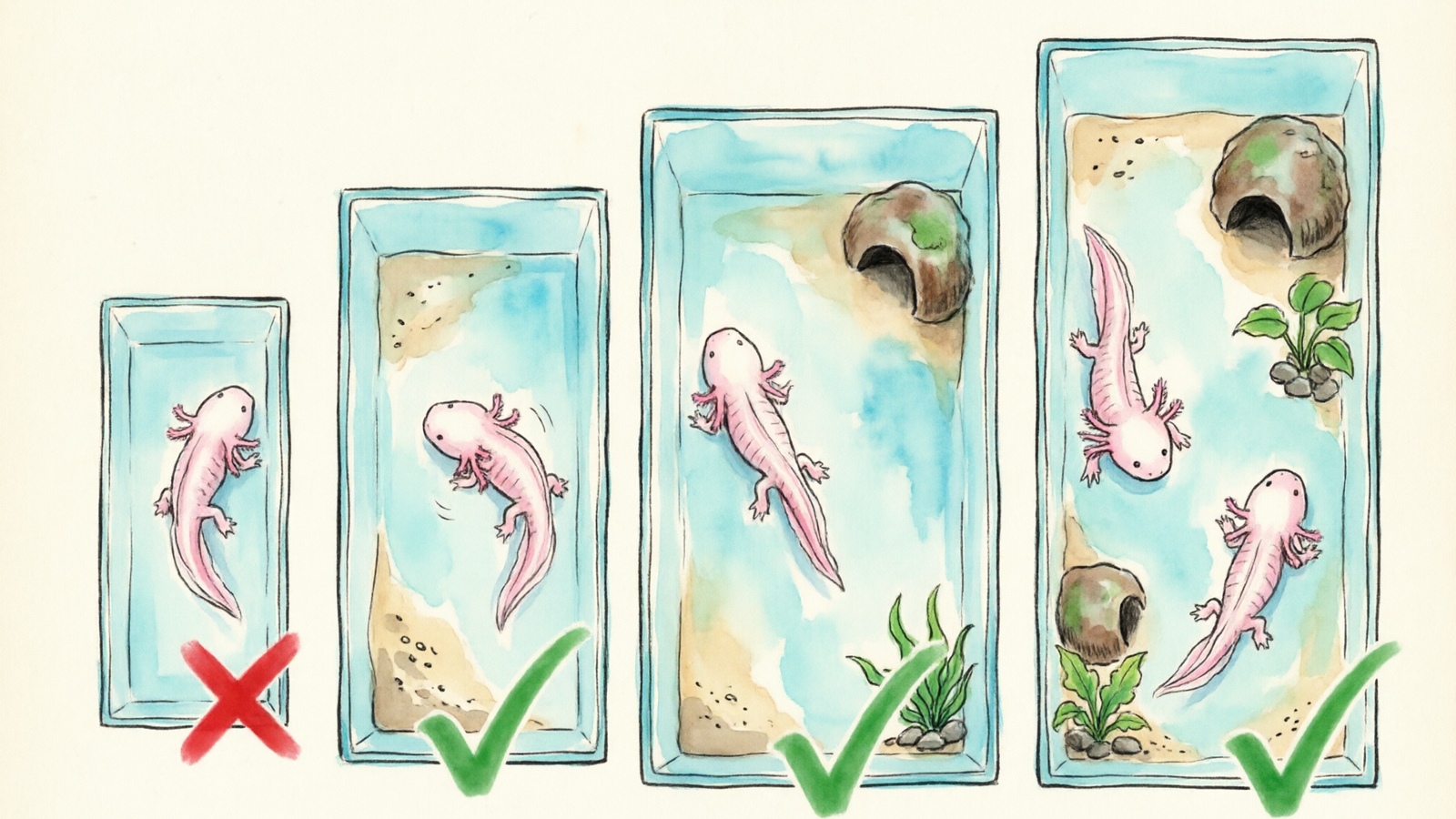
5. Choose appropriate tank size: A minimum of 20 gallons for a single adult axolotl, with 10 additional gallons per extra axolotl. Longer tanks are strongly preferred over tall ones because axolotls swim horizontally, not vertically. Proper tank setup from day one prevents the chronic stress that silently shortens lifespan.
Warning: Gastrointestinal Impaction — A blockage of the digestive tract caused by ingesting indigestible substrate (gravel, pebbles, or large sand). Axolotls are suction feeders — they create a vacuum with their mouths to engulf prey, which inevitably pulls in surrounding substrate. Gravel and pebbles cannot pass through the digestive tract, causing intestinal obstruction, sepsis, and death. This is one of the most common preventable causes of premature axolotl death in the pet trade (VCA Hospitals — Gastrointestinal Foreign Body in Amphibians).
6. Use safe substrate: Bare bottom or fine sand only. Gravel causes fatal impaction when accidentally ingested during feeding — this is one of the most preventable causes of premature axolotl death. Impaction leads to intestinal blockage, sepsis, and death, and is routinely documented in axolotl veterinary cases (VCA Hospitals — Gastrointestinal Foreign Body in Amphibians). See our substrate guide for safe options.
7. Schedule regular health monitoring: Perform weekly visual checks on gill color, skin condition, body shape, activity level, and feeding response. Keep a simple health log. Early detection of fungal infections (white cottony patches) or bacterial infections (red sores, lethargy) dramatically improves treatment outcomes.

Axolotl Lifespan Checklist
Maximize your axolotl’s lifespan potential with these evidence-based practices:
Do’s — Proven Longevity Practices:
- Maintain water at 60-64°F (16-18°C) — use a chiller if room exceeds 68°F (Voss et al., 2019)
- Keep ammonia and nitrite at exactly 0 ppm — test weekly with liquid test kit
- Keep nitrates below 20 ppm — perform 25% weekly water changes minimum
- Feed earthworms (nightcrawlers) as 70% staple — supplement with bloodworms and pellets (UK Axolotl Colony)
- Use bare-bottom or fine sand substrate — gravel causes fatal impaction (VCA Hospitals)
- Provide minimum 20-gallon tank for single adult — 10+ gallons per additional axolotl
- Handle only during tank transfers — wet hands with tank water first (Smith et al., 2017)
- Perform weekly visual health checks — gills, skin, body shape, feeding response
- Keep a simple health log — weight, feeding, behavior trends
- Cycle tank completely before adding axolotl — 4-6 weeks with ammonia source
Don’ts — Common Causes of Premature Death:
- Do NOT keep axolotl above 68°F — every degree above 64°F accelerates aging (Voss et al., 2019)
- Do NOT use paper strip test kits — inaccurate at low ammonia/nitrite levels
- Do NOT feed goldfish or rosy reds — thiaminase destroys vitamin B1 (Noga, 2010)
- Do NOT use gravel or pebbles — fatal impaction from suction feeding (VCA Hospitals)
- Do NOT handle frequently — damages permeable slime coat (Smith et al., 2017)
- Do NOT house different-sized axolotls together — cannibalism is common
- Do NOT overfeed — obesity and fatty liver disease shorten lifespan
- Do NOT use Teflon-treated equipment near the tank — PTFE particles can contaminate water
- Do NOT skip tank cycling — uncycled tanks cause ammonia spikes and gill damage
- Do NOT place tank in direct sunlight — causes temperature spikes and algae blooms
Axolotl Lifespan FAQ
Are axolotls hard to keep alive?
Axolotls are moderately easy to keep alive if you maintain three things: cold water (60-64°F), pristine water quality (zero ammonia/nitrite), and a proper diet. The most common cause of early death is overheating — axolotls kept above 72°F will develop stress, refuse food, and eventually die. A single axolotl in a properly cycled 20-gallon tank with a chiller is very likely to live 10 or more years.
Do axolotls need a friend?
No. Axolotls are solitary animals in the wild and do not require companionship — housing multiple axolotls together increases risks of nipped gills, missing limbs, and competition for food. Cannibalism is common when axolotls are different sizes. House them separately or ensure they are the same size with at least 40 gallons of space.
Is there a lifespan difference between male and female axolotls?
There is no scientifically proven axolotl lifespan male vs female difference. Unlike some species where breeding takes a significant toll on females, axolotl breeding does not appear to significantly impact female longevity. Breeding females may face increased stress during egg-laying and should be monitored closely for egg-binding.
How long do baby axolotls live?
Baby axolotls (juveniles under 6 months) have a higher mortality rate than adults — typically 10-20% in the first few months from water quality sensitivity, feeding difficulties, and cannibalism (University of Kentucky — Axolotl Husbandry Guidelines). Once they reach 4 to 6 inches and are eating reliably, their survival rate improves dramatically. Most baby axolotl deaths are preventable with daily water monitoring and separating juveniles by size.
Do axolotls recognize their owners?
Yes, partially — axolotls can learn to recognize their regular feeder and will swim to the front of the tank when that person approaches. They respond primarily to visual cues and likely associate their owner with food rather than forming true social bonds. This recognition typically develops after two to four weeks of consistent feeding by the same person.