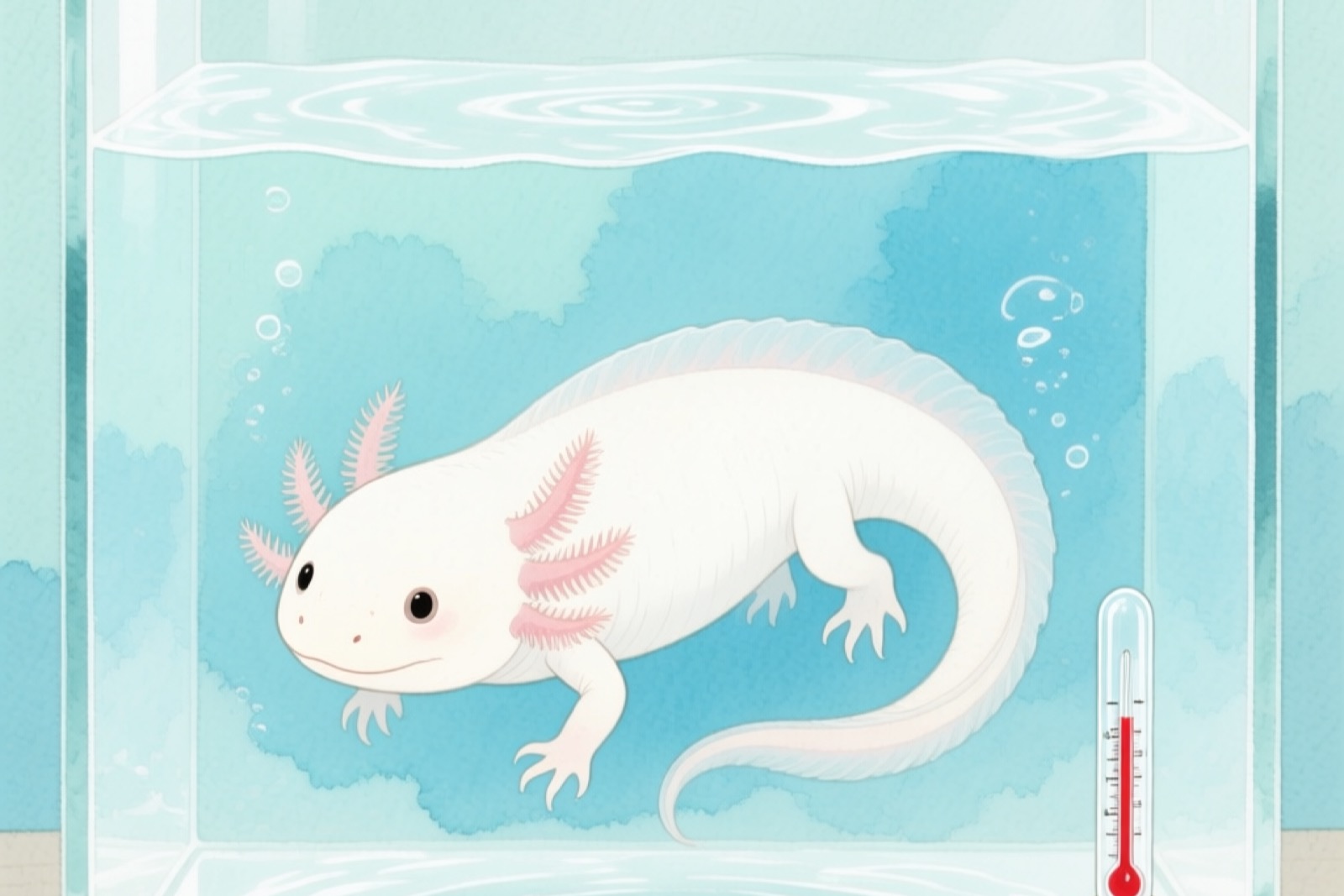
60-68°F (16-20°C). That’s the answer to the most important question in axolotl keeping — and the one that kills the most axolotls when owners get it wrong. Not diet, not water parameters, not tank size. Temperature.
Axolotls are cold-water amphibians native to Lake Xochimilco in Mexico, where water temperatures naturally sit between 60-68°F year-round. They cannot regulate their own body temperature internally — whatever the water temperature is, that’s their body temperature. This makes them fundamentally different from tropical fish and most other aquarium pets, and it’s why keeping an axolotl in a typical home aquarium requires active temperature management that most new owners don’t anticipate.
The danger zones are narrow. Above 74°F (23°C), stress responses begin — gills curl forward, appetite drops, and the immune system starts shutting down. Above 80°F (27°C), death can occur within days from heat stress and secondary fungal infections. Below 50°F (10°C), metabolism slows to the point where digestion essentially stops. The safe window is small, and most homes — where room temperature sits at 68-72°F (20-22°C) — are already at the upper edge of it.
What Temperature Should an Axolotl Tank Be?
For a complete overview of axolotl care beyond temperature, including water parameters, feeding, and tankmates, see our axolotl care guide.
Axolotl Temperature Range by Life Stage
The 60-68°F ideal range isn’t one-size-fits-all — it shifts depending on your axolotl’s age and health status. Understanding these nuances helps you fine-tune the environment rather than guessing.
| Life Stage | °F Range | °C Range | Notes |
|---|---|---|---|
| Adult | 60-68°F | 16-20°C | Standard range for healthy adults |
| Juvenile (under 4”) | 62-68°F | 17-20°C | Slightly warmer supports faster growth |
| Sick or Stressed | 60-64°F | 16-18°C | Cooler water reduces metabolic stress |
| Breeding | 64-68°F | 18-20°C | Warmer end triggers mating behavior |
The most important principle I’ve learned: cooler is always safer than warmer. An axolotl at 58°F (14°C) will be sluggish and eat less, but it will survive. An axolotl at 76°F (24°C) can develop fatal fungal infections within a week. When in doubt, err cold.
Juveniles under 4 inches benefit from the warmer end of the range — 62-68°F (17-20°C) — because their metabolisms are running faster for growth. I’ve found that juvenile axolotls in the 64-66°F range grow noticeably faster than those kept at 60°F. But even juveniles should never exceed 70°F (21°C).
Sick or stressed axolotls need cooler water — 60-64°F (16-18°C). The logic is straightforward: cooler temperatures slow metabolism, which reduces the energy demands on an already compromised body. If your axolotl is recovering from injury, illness, or a particularly stressful event (like a tank move), dropping the temperature a few degrees gives them a better chance at recovery.
Axolotl Tank Too Hot: How to Cool the Water
This is the number one problem axolotl owners face. Most homes run at 68-72°F (20-22°C), and once you add heat from lights, filter motors, and ambient room temperature, tank water typically sits at 73-75°F (23-24°C) — already above the safe range. In summer, this gets dramatically worse.
Signs the tank is too hot: gills curled tightly forward (the most recognizable stress response), floating at the surface and unable to sink, refusing food, rapid gill movement, and gill tips turning red. If you see any of these, check your thermometer immediately.
The solution is progressive — start with free methods and escalate to equipment only as needed.
Step 1: Free Methods (drops temp 2-4°F)
Before buying anything, try these. They sound basic, but they work for mildly warm tanks:
- Keep lights off during the hottest part of the day. Tank lights — especially fluorescent or halogen — add 2-4°F to water temperature. LED lights add less heat.
- Close curtains and blinds to reduce room temperature. Direct sunlight on the tank can spike water temperature 5-10°F within hours.
- Float frozen water bottles (in sealed zip-lock bags) in the tank. Replace every 4-6 hours. This is the single most effective free method — I’ve seen it drop a 20-gallon tank by 3°F in under an hour.
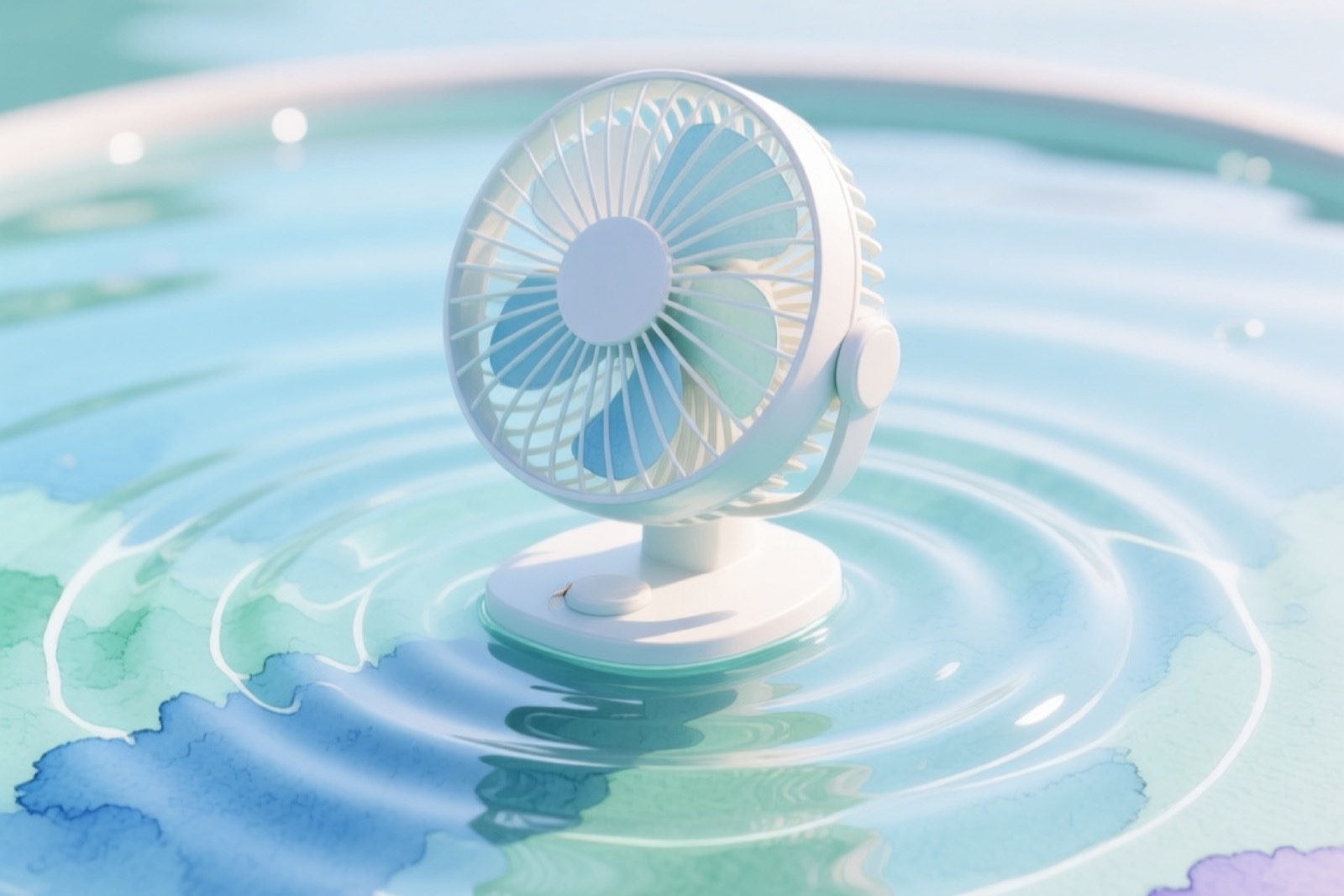
- Run a fan across the water surface — even a desk fan aimed at the tank creates evaporative cooling.
- Reduce feeding temporarily. Less food means less digestion, which means less metabolic heat generated by the axolotl itself.
These methods handle rooms up to about 74°F (23°C). Beyond that, you’ll need equipment.
Step 2: Cooling Fans ($19-36)
Cooling fans clip onto the tank rim and blow air across the water surface, cooling through evaporation. They’re effective for rooms up to about 78°F (26°C) and can drop water temperature 3-7°F (2-4°C) below room temperature. The trade-off is increased evaporation — you’ll need to top off water more frequently.
The Ultra-Quiet Fish Tank Cooler ($35.99) is the highest-rated option and is specifically designed for axolotl tanks. One owner with a 50-gallon tank confirmed it “keeps their water at the perfect temperature — way more cost effective than a chiller.” On the lowest setting, it’s genuinely silent. The main limitation is that it may not cool enough in very hot climates — one reviewer found the highest setting “could only drop the water temperature by 2 degrees.”
The hygger 1-Fan ($18.99) is the budget option — one fan head is sufficient for small tanks (10-20 gallons). It includes an adjustable timer and speed controller, which is useful. The hygger 3-Fan ($33.99) provides three fan heads for maximum cooling — in Arizona desert heat, one owner reported dropping their 10-gallon tank from 84°F to 78°F in 1.5 hours. The hygger fans do have a design issue with tank rim compatibility — some US tank rims are too thick for the clip. Check your tank rim width before buying.
Step 3: Aquarium Chillers ($34+)
For rooms that consistently stay above 78°F (26°C), or tanks above 30 gallons, fans alone often aren’t enough. A compressor-based chiller provides real refrigeration — it’s essentially a small air conditioner for your tank.
The BAOSHISHAN 42-gallon Chiller ($299.99) is the only real compressor chiller I’ve found under $35. One owner who switched from a more expensive JBJ chiller called it “much better,” and another confirmed it “maintains the temperature at 63°F” with a Fluval 207 filter. It’s rated for tanks up to 42 gallons.
I have to be transparent about the downsides. Chillers are loud — you’ll hear the compressor cycling on and off. They draw 150W+ of power, which adds to your electricity bill. And reliability is a real concern: multiple BAOSHISHAN owners report failures after 1-2 years, with poor warranty support. This is true of most budget chillers, not just this brand. If your room regularly exceeds 80°F (27°C), a chiller is the only reliable option — but budget for potential replacement every couple of years.
Axolotl Tank Too Cold: How to Warm the Water
Cold tanks are less common than warm ones, but they’re a real problem in winter, in air-conditioned rooms, or in homes with poor insulation. The signs are subtler than overheating: very slow movement, barely eating, pale or white gills, and spending all day hiding.
Thermometer First — You Can’t Manage What You Don’t Measure
Before buying a heater, you need a reliable thermometer. This isn’t optional — heater thermostats can be inaccurate by 2-4°F, and the difference between 64°F and 68°F matters for an axolotl.
The Petbank LCD Digital Thermometer ($8.99) is the most popular aquarium thermometer on Amazon with over 14,000 ratings. It’s a 2-pack with probe-style sensors that sit inside the tank for accurate readings, switchable between °F and °C, with long battery life. I’ve used these for years — they’re simple, reliable, and the 2-pack lets you monitor at different positions in the tank.
The LCR Hallcrest Liquid Crystal Strip ($5.19) is the zero-maintenance option — no battery, no wires, repositionable. It only reads in 2-degree increments, which is sufficient for axolotl care since you’re watching for broad trends rather than precise numbers. Some owners find the liquid crystal display hard to read, but it works.
The Digital LED Stick-On ($6.99) is the cheapest option. No wires inside the tank, LED display, and it comes with a spare battery. I’d note that some owners report accuracy issues — readings 2°F off compared to probe-style thermometers. It’s adequate for a rough check, but I wouldn’t rely on it as your only monitoring tool.
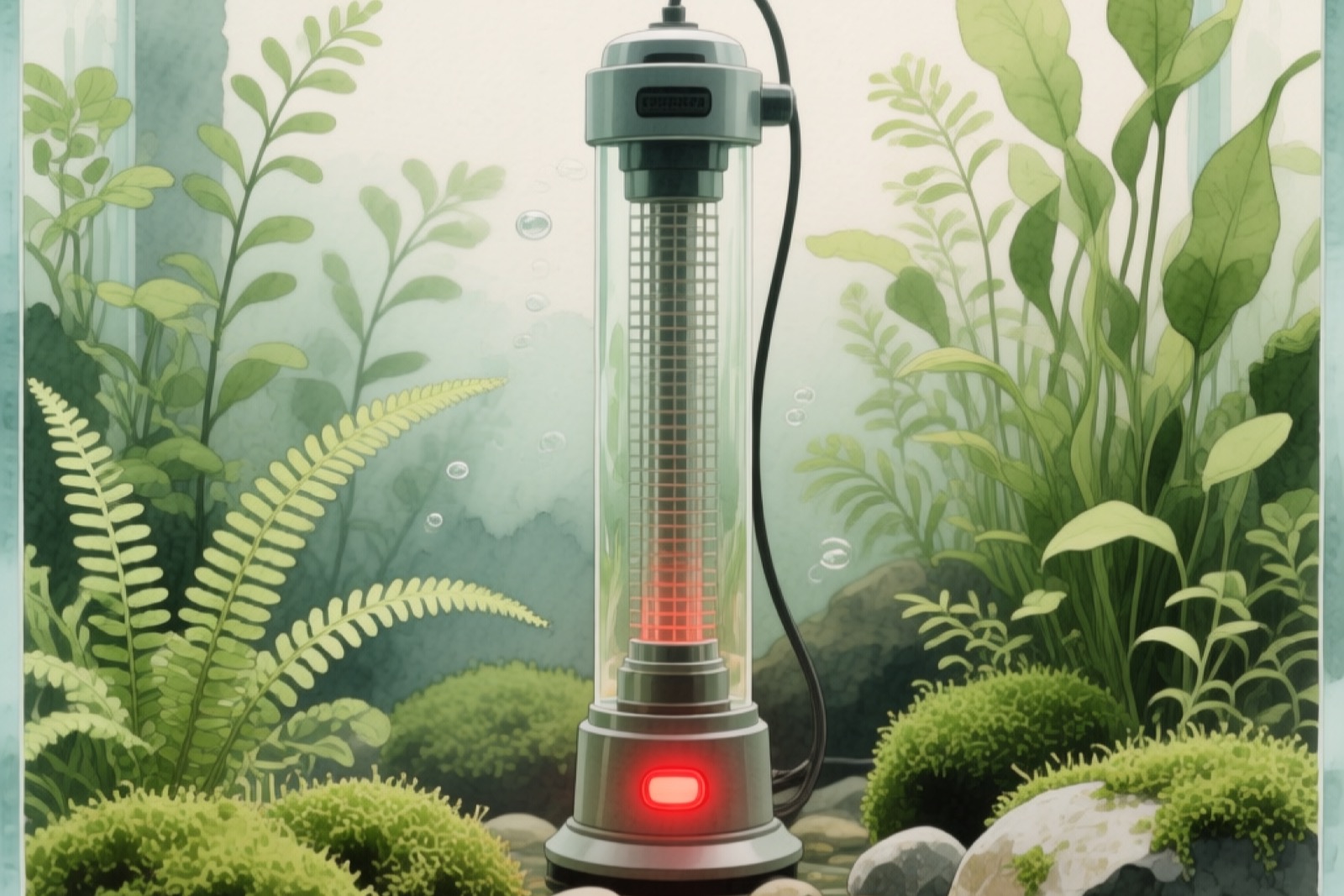
Heater Options by Budget
If your room consistently drops below 58°F (14°C), a heater becomes necessary. The key is choosing one with reliable temperature control and safety features — a heater that fails in the “on” position can cook your axolotl.
The AQUANEAT 50W ($12.29) covers tanks up to 20 gallons and is cheap enough to replace without pain when it fails — and it will fail. Multiple owners report lifespans of 2-3 months. One devastating review described it overheating and killing all their fish. At $11.68, the risk is financially manageable, but I’d only use this in tanks where you’re checking the temperature daily.
The HiTauing 50-300W ($26.99) is the best all-around option with over-temperature protection and auto shut-off when removed from water. One owner reported using it since July 2022 with no issues, and another bought one “for all 7 of my tanks” — the kind of repeat-buyer confidence that matters. Multiple wattage options cover any tank size. There are fire hazard reports I have to mention — rare, but real. One owner described the heater “smoking causing a horrible plastic smell.” Always use a separate thermometer alongside any heater to catch thermostat failures.
The Fluval M 150W ($36.97) is the premium option from a reputable aquarium brand. The “mirror technology” design provides even heat distribution, and the compact form fits easily in most axolotl tanks up to 45 gallons. Most owners report years of reliable performance — “I’ve had it running for almost 2 years now and it’s still performing like a champ.” The concerning reports involve units that shattered or “blew up inside tank” — rare but alarming. Fluval’s brand reputation and warranty support make this the safest choice if budget allows.
Heater safety tips I always follow: use a separate thermometer (never trust the heater’s built-in thermostat alone), set the heater 2°F below your target and adjust up gradually, never remove a glass heater while it’s powered on, and position it near the filter outflow for even heat distribution. For proper heater placement in your full setup, our axolotl tank setup guide covers positioning and water flow considerations.
Temperature and Axolotl Health: Warning Signs
Temperature doesn’t just affect comfort — it directly controls your axolotl’s immune system, metabolism, and oxygen absorption. Understanding this connection helps you recognize problems early.
Too warm (above 72°F / 22°C): The immune system suppresses progressively. Warm water holds less dissolved oxygen, so your axolotl is getting less oxygen per breath while simultaneously needing more energy to fight heat stress. This combination is what makes warm water so deadly — fungal infections, particularly Saprolegnia (the white fuzzy growth you see on stressed axolotls), take hold because the immune system can’t fight them off. Gill tips turn red from increased blood flow. Ammonia becomes more toxic at higher temperatures, so even slightly elevated ammonia levels that would be manageable at 64°F become dangerous at 74°F.
Too cold (below 55°F / 13°C): Digestion slows dramatically. Food that an axolotl ate at 64°F might still be digesting days later at 52°F, and partially digested food in the gut causes bloating — a serious condition that can require veterinary intervention. Activity drops to almost nothing. The immune response also weakens, though cold stress is generally less immediately dangerous than heat stress.
Temperature swings (more than ±4°F / ±2°C in 24 hours): Chronic stress from fluctuating temperatures weakens immunity over time. Axolotls handle stable cool temperatures much better than unstable warm ones.
Emergency signs that require immediate action:
- Gills curled tightly forward = acute stress. Check temperature right now.
- Floating at surface, unable to sink = buoyancy issue, often triggered by temperature stress or gut impaction from slowed digestion.
- White fuzzy patches on body or gills = fungal infection (Saprolegnia), almost always caused by warm water + compromised immunity.
- Not eating for 3+ days in warm water = temperature-related illness. Drop the temperature immediately and monitor for other symptoms. For a full breakdown of other causes, see our guide on axolotl loss of appetite.
The number one killer I’ve seen in axolotl communities isn’t any single thing — it’s heat stress combined with poor water quality.
Warm water holds less dissolved oxygen and accelerates ammonia toxicity. An axolotl in 76°F water with slightly elevated ammonia will decline much faster than one in 64°F water with the same ammonia level. Temperature management and water quality are inseparable.
For recognizing and treating common health issues beyond temperature, our axolotl care guide covers fungal infections, impaction, and other conditions.
Seasonal Temperature Management Plan
Most axolotl deaths happen in July and August. Pre-planning your seasonal approach prevents the scramble of trying to cool a tank during a heat wave when equipment is sold out everywhere.
| Season | Typical Room Temp | Tank Action | Equipment |
|---|---|---|---|
| Spring / Fall | 65-72°F (18-22°C) | Monitor only | Thermometer |
| Summer (mild) | 72-78°F (22-26°C) | Active cooling | Cooling fan |
| Summer (hot) | 78°F+ (26°C+) | Heavy cooling | Chiller |
| Winter (mild) | 58-68°F (14-20°C) | Monitor only | Thermometer |
| Winter (cold) | Below 58°F (14°C) | Gentle heating | Submersible heater |
Spring and Fall are usually the easiest seasons — room temperature naturally falls within or near the safe range. A thermometer is all you need. If your room hits 74°F+, switch on a fan.
Summer is the danger season. I’d recommend setting up your cooling equipment in May, before it gets hot. If you wait until the first heat wave, you’ll be competing with every other axolotl owner for the same fans and chillers. For rooms up to 78°F, a fan is sufficient. For sustained heat above 78°F, invest in a chiller.
Winter is usually fine without intervention in most homes. Only add a heater if your room consistently drops below 58°F. Set it to 64°F (18°C) as a safe middle ground — warm enough for healthy digestion, cool enough to avoid stress.
Year-round essentials: a reliable thermometer is non-negotiable regardless of season. Check the temperature daily — don’t rely on feeling the tank glass with your hand. Human skin can’t distinguish between 64°F and 70°F, but that difference matters enormously to an axolotl.
Room Temperature to Tank Temperature: What to Expect
Tank temperature doesn’t equal room temperature, but it follows it closely. Understanding the gap helps you anticipate problems before they happen.
In a typical setup, tank water runs 1-3°F (0.5-1.5°C) warmer than room air. This comes from multiple small heat sources: the filter motor generates warmth, lights add 2-4°F depending on type (LED adds less than fluorescent), and the water itself absorbs ambient room heat. A tank in direct sunlight can spike 5-10°F (3-6°C) above room temperature within hours.
The practical rule I use: if your room is 72°F (22°C), expect your tank water to be 73-75°F (23-24°C) without active cooling — already too warm for axolotls. This is why most axolotl owners need some form of cooling even in air-conditioned homes. The air conditioner might keep the room at 70°F, but the tank will still sit at 71-72°F — borderline, and risky during the day when lights are on.
This relationship also means that monitoring room temperature gives you early warning. If the room hits 74°F, your tank is likely at 75-77°F — time to turn on the fan before the axolotl shows stress symptoms.
For how decor choices affect tank temperature — dark rocks absorb light heat, dense plants reduce water flow and create warm spots — see our axolotl tank decor guide.
FAQ
What temperature should an axolotl tank be?
60-68°F (16-20°C) for adult axolotls. Juveniles prefer the warmer end at 62-68°F. Anything above 74°F causes stress and immune suppression. Sustained temperatures above 80°F are typically fatal.
Can an axolotl be in 70 degree water?
Short-term exposure to 70°F is survivable but not ideal. Metabolic stress increases and the immune system begins weakening. If your tank sits at 70°F, use a cooling fan to bring it down within the safe range.
Do axolotls need a heater?
Only if your room temperature consistently drops below 58°F, which is uncommon in most homes. Axolotls are cold-water animals — the more common problem is keeping them cool enough. If you need a heater, set it to 64°F.
What temperature is too hot for axolotls?
Above 74°F is the danger zone. At 74-76°F, stress responses begin — curled gills, loss of appetite, reduced immune function. At 76-80°F, fungal infections become likely. Above 80°F, death can occur within days.
How do you keep an axolotl tank cool?
Start with free methods: keep lights off during hot hours, close curtains, and float frozen water bottles in sealed bags. If that’s not enough, a cooling fan ($19-36) drops water temperature 3-7°F through evaporation.
Do axolotls need a chiller?
Only if your room temperature regularly exceeds 78°F in summer. For rooms under 78°F, a cooling fan is usually sufficient and far cheaper. Chillers are loud and consume significant electricity.
What temperature is too cold for axolotls?
Below 55°F slows metabolism to the point where digestion stops. Food sits in the gut and causes bloating. Below 50°F is dangerous long-term. Axolotls tolerate cold far better than heat, though.