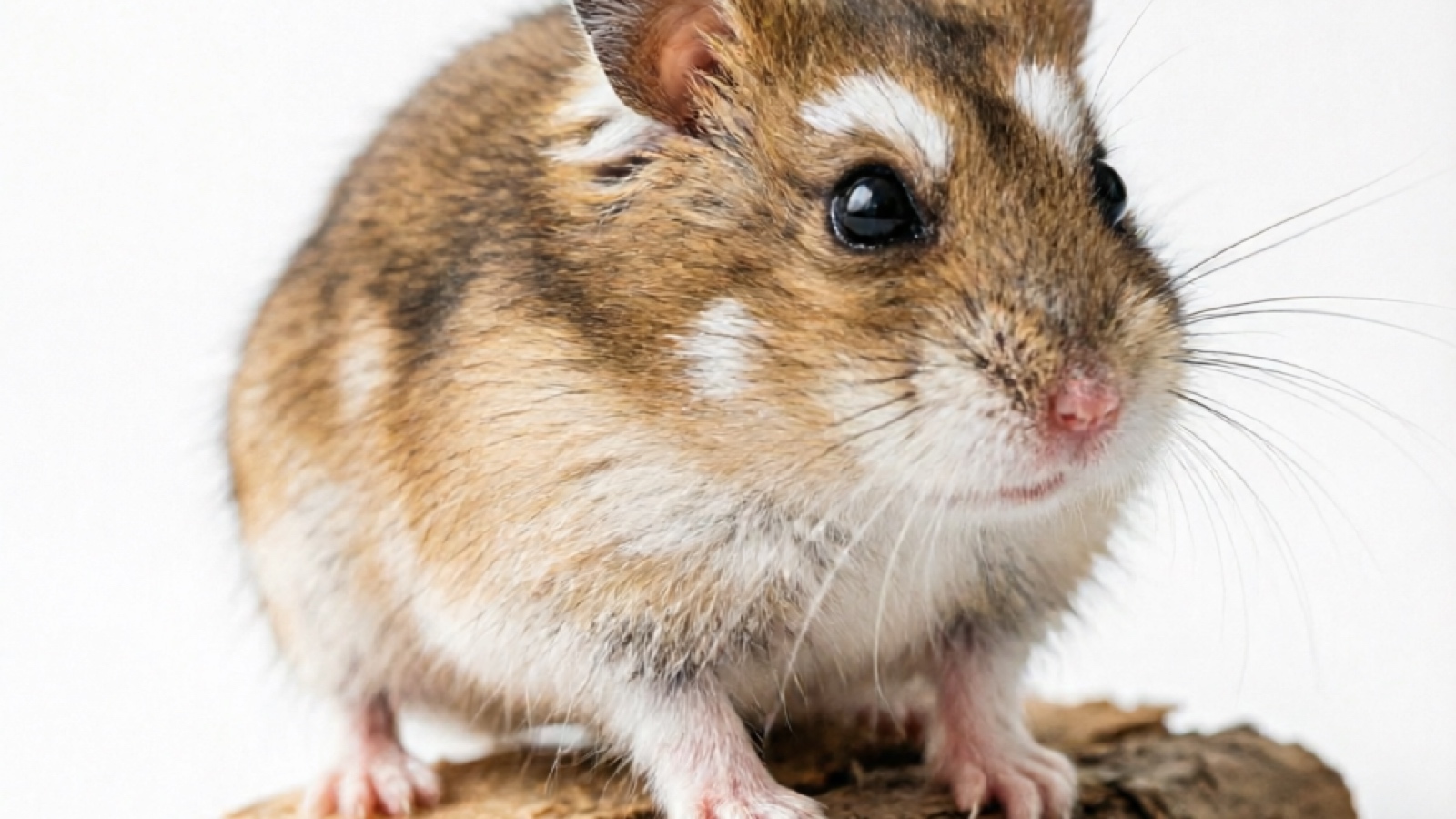
The Roborovski hamster (Phodopus roborovskii) is the smallest and fastest species of pet hamster in the world. Also known as the Robo hamster or Desert hamster, this tiny rodent is native to the arid deserts of Central Asia, spanning Mongolia, northern China, and parts of southern Russia. First described by Russian explorer Vsevolod Roborovski in 1894, these hamsters were not kept as pets until the 1970s and only became popular in Western countries in the 1990s.
If you are researching the hamster breeds available as pets, the Roborovski is one of the four most common dwarf hamster species alongside Campbell’s, Winter White, and Chinese hamsters. Learn more about the Syrian vs dwarf hamster differences to understand where the Roborovski fits in the hamster family. Among these four, the Roborovski stands out for its incredible speed, longer lifespan, and unique desert-adapted genetics.
This guide covers everything you need to know about this species — size, colors, temperament, lifespan, care requirements, and how it compares to other hamsters. It is the most comprehensive, freely accessible Roborovski hamster breed guide available online as of 2026.
What Is a Roborovski Hamster?
The Roborovski is a small, fast-moving dwarf hamster species that has become increasingly popular among experienced hamster keepers. Despite being one of the smallest pet hamsters, Roborovskis are among the most entertaining to watch. Their lightning-fast running, acrobatic climbing, and curious nature make them a favorite for owners who enjoy observation pets. Because they run at such high speeds, a properly sized wheel is essential — see our hamster wheel size guide for the right diameter.
Quick Facts
| Attribute | Data |
|---|---|
| Scientific Name | Phodopus roborovskii |
| Common Names | Roborovski hamster, Robo hamster, Desert hamster |
| Origin | Deserts of Central Asia (Mongolia, northern China, southern Russia) |
| Size | 1.5–2 inches (4–5 cm) |
| Weight | 0.7–0.9 oz (20–25 g) |
| Lifespan | 3–3.5 years |
| Colors | Sandy brown (wild type), platinum, pied, white-faced |
| Temperament | Fast, active, skittish, not ideal for handling |
| Social | Can live in same-sex pairs if introduced young |
| Price | $10–$25 from pet stores |
History of Domestication
Roborovskis were first studied in the wild by Russian explorer Vsevolod Roborovski in 1894, during an expedition to the Gobi Desert region. However, they were not bred in captivity until the 1970s, when Chinese scientists began collecting specimens for research. The first Roborovski hamsters reached the United Kingdom in 1990, and from there they spread to pet keepers across Europe and North America.
Unlike Syrian hamsters, which were domesticated from a single wild-caught litter in 1930, Roborovskis entered the pet trade much more recently. This means they are closer to their wild ancestors in behavior — faster, more alert, and less tolerant of handling than species with longer domestication histories.
How Roborovskis Differ from Other Dwarf Hamsters
The three other common dwarf hamster species — Campbell’s (Phodopus campbelli), Winter White (Phodopus sungorus), and Chinese (Cricetulus griseus) — are all larger, slower, and more handleable than Roborovskis. Roborovskis are the only dwarf hamster species that never change their coat color seasonally. They are also the only dwarf hamster with such a low body weight (under 1 ounce), and they have the longest lifespan of any dwarf species at 3 to 3.5 years.
If you want a handleable dwarf hamster, the Winter White hamster or Chinese hamster are better choices. The Roborovski is best for keepers who appreciate watching their pets run, climb, and explore rather than holding them.
Roborovski Hamster Size & Weight
The roborovski hamster size is what makes this species so remarkable. At just 1.5 to 2 inches (4 to 5 centimeters) long as an adult, the Roborovski is the smallest pet hamster species on the planet. Their weight of 0.7 to 0.9 ounces (20 to 25 grams) is lighter than a standard AA battery.
Size Comparison with Other Hamster Species
| Species | Length | Weight |
|---|---|---|
| Roborovski | 1.5–2 in (4–5 cm) | 0.7–0.9 oz (20–25 g) |
| Campbell’s Dwarf | 3–4 in (8–10 cm) | 1.4–1.8 oz (40–50 g) |
| Winter White | 3–4 in (8–10 cm) | 1.0–1.6 oz (30–45 g) |
| Chinese | 3–4 in (8–10 cm) | 1.0–1.5 oz (30–40 g) |
| Syrian | 5–7 in (13–18 cm) | 4–6 oz (115–170 g) |
The size difference is dramatic. A Syrian hamster weighs 5 to 8 times more than a Roborovski. Even the next-smallest dwarf species (Winter White and Chinese) weigh roughly twice as much.
Why Size Matters
The tiny size of the roborovski dwarf hamster has practical implications for owners:
- Bar spacing: Cage bars must be very narrow (3/8 inch or less) to prevent escape. Standard hamster cages with 1/2-inch spacing may be too wide.
- Wheel size: A minimum 6.5-inch diameter wheel is required despite their small body — because Roborovskis run at high speeds, a small wheel would cause back arching.
- Handling difficulty: Their tiny size makes them hard to grip securely, and they are fast enough to slip through inexperienced hands.
- Baby size: Baby Roborovskis are approximately the size of a bumblebee at birth — tiny, pink, and completely dependent on their mother.
Understanding Robo size requirements is essential before buying supplies. Many standard “hamster” products on the market are designed for Syrian-sized animals and are unsuitable for Robos.

Appearance & Colors
The roborovski hamster colors and physical appearance are distinctive among pet hamsters. In the wild, Roborovskis have evolved a sandy brown coat that provides camouflage against the desert sands of their native habitat.
Wild-Type Coat
The natural (wild-type) Roborovski has a sandy brown back with a clean white belly. The coat is short and dense. Two faint dark markings above the eyes resemble eyebrows, which give Roborovskis a perpetually alert or surprised expression. Their legs and feet are also white, and they have a very short, almost invisible tail.
Captive-Bred Color Variants
Through selective breeding, several color variants have been developed:
- Platinum: A lighter, more silver-grey version of the wild-type coat. The overall appearance is a soft, silvery color with a white belly.
- Pied: Irregular patches of white and sandy brown distributed across the body. Each pied Roborovski has a unique pattern, like a fingerprint.
- White-faced: White markings on the face and head, while the body retains the sandy brown color. These are distinguishable from albino hamsters by their normal-colored (not red) eyes.
No Seasonal Color Change
Unlike Winter White hamsters, which change from brown to white in response to shorter daylight hours (a winter camouflage adaptation), Roborovski hamsters do not change their coat color seasonally. Their desert ancestors never needed to blend in with snow, so this trait was never selected for in the wild.
Distinguishing Features
Key physical features that set the Roborovski apart from other dwarf hamsters:
- Smallest body size of all pet hamsters
- Sandy brown coat with white belly (wild type)
- Faint “eyebrow” markings above the eyes
- Short, stubby tail (shorter than Chinese hamster’s long tail)
- Large ears relative to head size
- No dorsal stripe (Campbell’s have a dark stripe down the back; Roborovskis do not)
Roborovski Hamster Temperament & Behavior
The roborovski hamster temperament is what most separates this species from other pet hamsters. They are the fastest, most skittish, and least handleable of all common pet hamster species.
Speed: The Fastest Pet Hamster
Roborovskis can reach running speeds of 3 to 4 miles per hour. To put that in perspective: they can cover their entire body length in under a second. On camera, they often appear as a blur. This speed is an evolutionary adaptation from their desert habitat, where they needed to outrun predators such as owls, foxes, and snakes across open sand.
Handling: “Look but Don’t Touch”
Roborovskis are not recommended for young children or owners who want a cuddly pet. They are fast, nervous, and difficult to grip securely due to their tiny size. Even experienced keepers find them challenging to hold for more than a few seconds.
That said, Roborovskis are not aggressive. They rarely bite out of malice. What they do is startle easily and bolt — their first response to anything unexpected is to run. This makes them better suited as observation pets: fascinating to watch, entertaining to set up enrichment for, but not ideal for lap time.
Activity Pattern
Roborovskis are crepuscular — most active at dawn and dusk. They have bursts of extreme speed interspersed with periods of rest. During the day, they sleep in their burrows or hideouts. At night, they run, climb, forage, and explore with seemingly endless energy.
Social Behavior
Unlike Syrian hamsters, which are strictly solitary and will fight if housed together, Roborovskis can live in same-sex pairs or small groups — but only if they were born in the same litter and raised together from birth. Introducing an adult Roborovski to another adult is risky and often results in fighting.
For more on hamster social dynamics, see our guide on hamster behavior.
Bonding Tips
If you want to bond with your Robo:
- Talk to them softly and consistently so they learn your voice
- Hand-feed small treats (a tiny piece of broccoli or a sunflower seed)
- Let them explore outside the cage in a secure playpen or hamster ball
- Never grab them from above — scoop from below or encourage them to walk onto your hand
- Be patient — it can take weeks for a Robo to become comfortable with your presence
Roborovski Hamster Lifespan
The roborovski hamster lifespan is one of the most impressive facts about this species. With proper care, Roborovskis live 3 to 3.5 years on average — the longest lifespan of any dwarf hamster species.
Lifespan Comparison
| Species | Average Lifespan |
|---|---|
| Roborovski | 3–3.5 years |
| Syrian | 2–3 years |
| Chinese | 2–3 years |
| Campbell’s Dwarf | 1.5–2 years |
| Winter White | 1.5–2 years |
The Roborovski lives approximately 50% longer than Campbell’s and Winter White dwarf hamsters. This is one of the most compelling reasons to choose a Robo — if you are prepared for their handling challenges, you get a pet with a significantly longer companion lifespan.
Why Roborovskis Live Longer
Several factors contribute to the roborovski dwarf hamster’s longer lifespan:
- Lower diabetes risk: Unlike Campbell’s and Winter White hamsters, which have a high genetic predisposition to diabetes, Roborovskis have a much lower risk. This means they are less susceptible to a common dwarf hamster killer.
- Hardy desert genetics: Their ancestors survived in harsh desert environments with extreme temperature swings and limited food. This selected for robust genetics and efficient metabolism.
- High activity levels: Roborovskis are constantly running, climbing, and exploring. This sustained physical activity may contribute to better cardiovascular health.
Factors Affecting Lifespan
Even with great genetics, a Roborovski’s lifespan depends on:
- Diet quality: A balanced hamster mix with fresh vegetables and occasional protein. Avoid sugary treats.
- Cage size: Adequate floor space (450+ square inches) and deep bedding for burrowing.
- Stress levels: A quiet location, consistent routine, and minimal handling stress.
- Genetics: Lines from responsible breeders tend to be healthier than those from mass-breeding facilities.
Signs of Aging
As your Robo enters its third year, you may notice:
- Slower running on the wheel
- Less frequent grooming (coat may look scruffy)
- Weight loss (ribs may become more visible)
- Reduced exploration and more time spent sleeping
These are normal age-related changes. If your hamster shows sudden behavior changes, weight loss, or labored breathing, consult an exotic pet vet.
Roborovski Hamster Care Guide
The roborovski hamster care requirements share many similarities with other dwarf hamsters, but their tiny size and speed create some unique needs. Here is the essential care checklist:
Step 1: Cage Setup
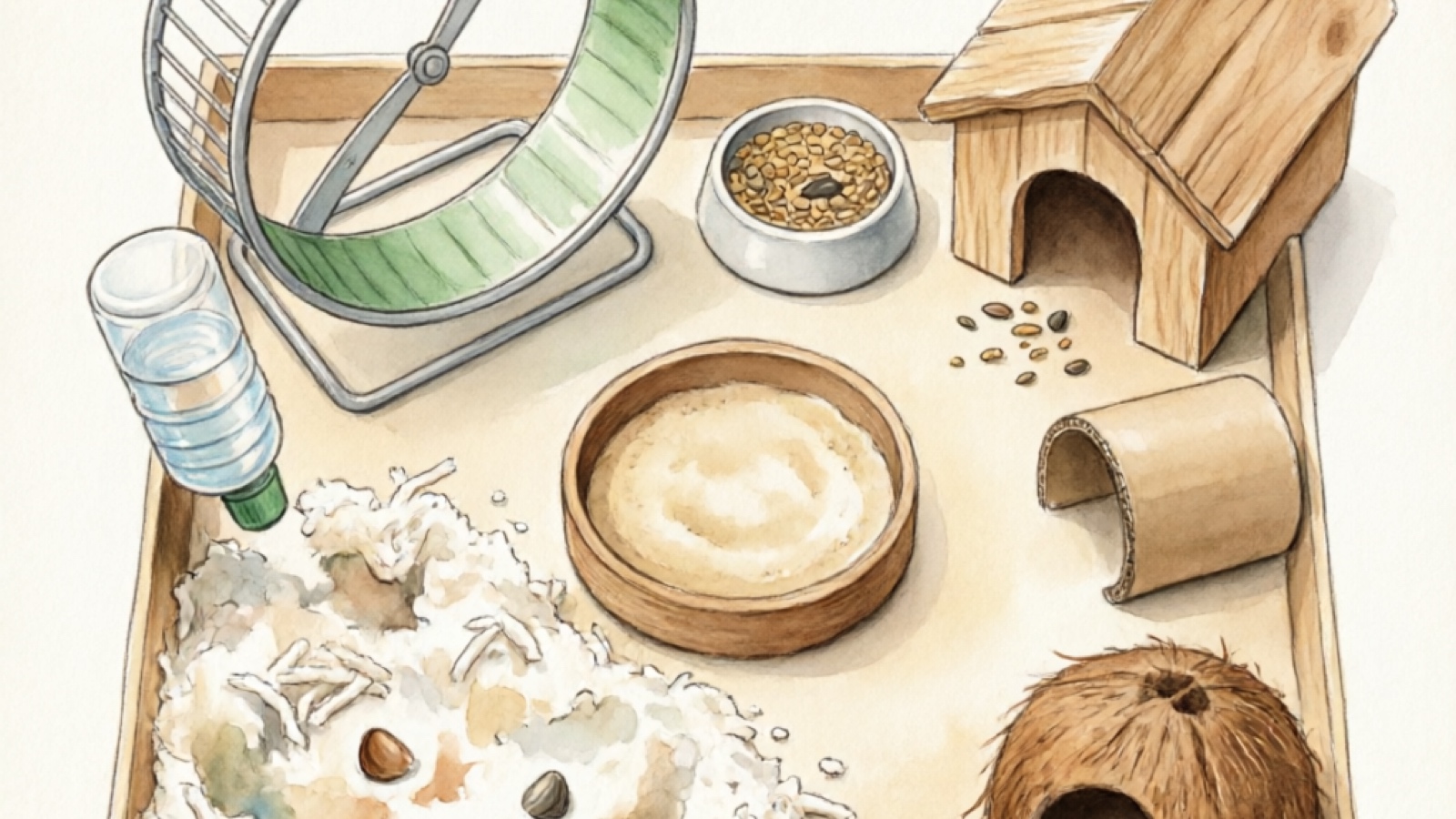
Minimum 450 square inches of uninterrupted floor space. See our detailed hamster cage setup guide for bedding depth, placement, and enrichment tips. A 40-gallon breeder tank (36×18 inches) or equivalent is ideal. The cage must have narrow bar spacing (3/8 inch or less) if it is a wire cage — standard 1/2-inch spacing is too wide for a Robo.
Step 2: Wheel
Minimum 6.5-inch diameter wheel with a solid running surface. Despite their tiny body, Roborovskis run at high speeds, and a small wheel forces their back to arch during exercise, causing spinal damage over time. Wire mesh wheels must be avoided — their tiny feet can slip through the gaps.
Step 3: Bedding
Unscented paper bedding or aspen shavings, packed at least 6 inches deep. Roborovskis are natural burrowers and need deep bedding to dig tunnels and create nests. Shallow bedding leads to stress and stereotypic bar-biting behavior.
Step 4: Diet
A quality commercial hamster mix as the staple (see our hamster diet guide for detailed feeding recommendations), supplemented with fresh vegetables and occasional protein (mealworms, boiled egg white). Roborovskis have a lower diabetes risk than other dwarf hamsters, but sugar should still be moderated. Fresh water should always be available via a drip-free water bottle.
Step 5: Sand Bath
Essential for coat health. Provide chinchilla sand (not sand meant for reptiles) 2 to 3 times per week in a small dish. Roborovskis will roll in the sand to clean their fur — this is a natural desert behavior that should never be skipped.
Step 6: Enrichment
Tunnels, hides, climbing structures, and foraging opportunities. Scatter-feed their daily food mix across the bedding instead of putting it all in one bowl to encourage natural foraging behavior. Rotate toys every 1 to 2 weeks to keep things interesting.
Housing & Equipment for Roborovski Hamsters
Choosing the right housing and equipment for this species requires attention to their unique size and behavior. Their tiny body means standard “hamster” products are often unsuitable.
Recommended Cage Types
| Cage Type | Pros | Cons | Best For |
|---|---|---|---|
| Glass Tank (40-gallon breeder) | Escape-proof, deep bedding (6+ inches), clear view, excellent ventilation with mesh top | Heavy, hard to access for cleaning | Serious keepers |
| Wire Cage (Prevue Universal) | Good ventilation, easy access, multi-level, secure with proper clips | Corner bar spacing may need mesh reinforcement, escape risk for tiny hamsters | Beginners wanting easy access |
| Bin Cage (DIY) | Cheap, large floor space, fully customizable dimensions | Ugly appearance, manual ventilation holes required | Budget keepers, DIY enthusiasts |
The glass tank (40-gallon breeder) is the gold standard for Roborovskis. It is completely escape-proof, allows for deep bedding, and provides a clear view of your hamster’s burrowing behavior. The main drawbacks are weight (a set-up 40-gallon tank is heavy) and access (cleaning requires reaching over the sides).
Product Recommendations
Niteangel 6.5” S Super-Silent Wheel — Best Wheel for Dwarf Hamsters
Price: $36.99 | Category: Best Wheel for Roborovski
The Niteangel 6.5” S wheel is the top wheel choice for dwarf hamsters. With 9 and a , it has one of the largest user bases of any hamster wheel on Amazon. The solid running surface prevents tiny feet from slipping through, the super-silent bearing means no nighttime noise, and the adjustable height accommodates deep bedding setups.
Owners consistently praise its silence (“nearly silent, a much-appreciated upgrade over her previous wheel”) and quality (“excellent quality, solid”). The height-adjustable stand is particularly useful for tanks with 6+ inches of bedding — you can set the wheel at the right level so your Robo can access it comfortably.
The main complaint is durability over time. A minority of reviewers report the wheel seizing up after 2 to 3 months. For a $36.99 investment, most owners find the quality and silence worth the occasional replacement.
Pros: Super-silent, solid surface (no foot traps), adjustable height for deep bedding, easy to clean, chew-resistant Cons: Pricey for a hamster wheel, some units seize after 2-3 months, height adjustment mechanism can wear Best for: Roborovski and other dwarf hamsters, owners wanting a silent wheel for bedroom use
Ware Flying Saucer 7.25” — Budget Saucer Wheel Option
Price: $9.99 | Category: Budget Saucer Wheel
The Ware Flying Saucer is a horizontal spinning disc that some dwarf hamsters prefer over traditional upright wheels. At $9.99, it is one of the cheapest exercise options available. Roborovskis who reject traditional wheels often take to the saucer immediately.
The saucer design has no risk of trapped tails or feet, and it is nearly silent. Owners report that dwarf hamsters “seem to love this thing” and “definitely will spend all night spinning around on this.” It is also easier to clean than traditional wheels — debris falls to the center and can be wiped away.
The downside: the saucer sits almost flat in the cage and may need bedding packed underneath for stability. Some Robos get trapped under the stand if the cage layout is not carefully arranged. Use only under supervision if your hamster has shown a tendency to burrow under equipment.
Pros: Very cheap ($9.99), no trapped tail/foot risk, nearly silent, easy to clean, some hamsters prefer it over traditional wheels Cons: Needs bedding packed underneath for stability, hamster can get trapped under stand, not as sturdy as premium wheels Best for: Roborovskis who reject traditional wheels, budget-conscious owners, as a secondary exercise option
Prevue Universal Small Animal Home — Best Cage for Dwarf Hamsters
Price: $124.99 | Category: Best Cage for Dwarf Hamsters
The Prevue Universal Small Animal Home is the premium cage choice for dwarf hamster keepers who want a wire cage with easy access and multi-level design. With 608 square inches of uninterrupted floor space, it exceeds the 450-square-inch minimum and provides ample room for deep bedding, a large wheel, hides, and enrichment items.
Reviewers consistently call it “absolutely perfect” and “the perfect hamster cage.” The deep plastic pan (4-5 inches) allows for meaningful burrowing depth. The bar spacing is appropriate for most hamsters, though some reviewers note the corner gaps may need reinforcement with wire mesh for the smallest species like Roborovskis.
At $124.99, it is a significant investment — but owners who have explored cheaper cages report that this is a “huge upgrade” that their hamster “absolutely loves.”
Pros: 608 sq in floor space, deep pan for burrowing, easy to clean, sturdy construction, multi-level with ramp Cons: Corner bar spacing may need mesh for tiny Robos, heavy to move, takes 30-60 minutes to assemble Best for: Roborovski owners wanting a premium wire cage, beginners who want easy access for cleaning
Additional Equipment
- Water bottle: A drip-free bottle like the Choco Nose 10mm is essential. Ceramic bowls get covered in bedding quickly.
- Bedding: Niteangel Aspen Shavings (4mm) provide a safe, dust-free burrowing medium. Avoid cedar and pine shavings, which contain phenols harmful to hamsters.
Roborovski Hamster vs Other Dwarf Hamsters
Choosing between dwarf hamster species can be confusing for new owners. Here is a side-by-side comparison of the four most common dwarf hamster species:
Species Comparison Table
| Feature | Roborovski | Campbell’s | Winter White | Chinese |
|---|---|---|---|---|
| Size | Smallest (1.5-2”) | Medium (3-4”) | Medium (3-4”) | Medium (3-4”) |
| Speed | Fastest (3-4 mph) | Fast | Moderate | Moderate |
| Handleability | Difficult | Moderate | Good | Good |
| Lifespan | 3-3.5 years | 1.5-2 years | 1.5-2 years | 2-3 years |
| Social | Pairs OK | Pairs OK | Pairs OK | Solitary |
| Diabetes risk | Low | High | High | Low |
| Color change | No | No | Yes (winter) | No |
| Best for | Experienced owners | Intermediate | Beginners | Beginners |
Which Dwarf Hamster Is Right for You?
- Choose a Roborovski if: You want the longest-lived dwarf hamster, you enjoy watching rather than holding your pet, and you have experience with small animals.
- Choose a Campbell’s if: You want a small, active hamster that is moderately handleable and you are comfortable managing diabetes risk through diet.
- Choose a Winter White if: You are a first-time dwarf hamster owner and want the most handleable dwarf species. The winter coat color change is a fun bonus.
- Choose a Chinese if: You want a dwarf hamster that is solitary (like a mini-Syrian) with low diabetes risk and good handleability. Note that Chinese hamsters are technically not true dwarf hamsters — they belong to a different genus (Cricetulus).
Health & Common Issues
Roborovskis are generally hardy thanks to their desert-adapted genetics. However, they are not immune to health problems. Here are the most common issues to watch for:
Dental Overgrowth
Like all hamsters, Roborovskis have continuously growing incisors. They need chew toys, wooden blocks, and hard foods to keep their teeth filed down. Signs of dental problems include difficulty eating, drooling, and weight loss.
Wet Tail
Wet tail (proliferative ileitis) is a stress-induced diarrhea condition that is more common in young Roborovskis than in other hamster species. It is triggered by stress — new environments, handling, overcrowding, or dietary changes. Symptoms include a wet, matted tail area, lethargy, and loss of appetite. Wet tail is a veterinary emergency and can be fatal within 48 hours if untreated.
Injuries from Falls
Roborovskis are incredibly fast but have poor depth perception. They do not judge distances well and can fall from multi-level cages or climbing structures. Always provide soft bedding under any elevated platforms, and supervise playtime outside the cage.
Obesity
Obesity is less common in Roborovskis than in other dwarf hamster species due to their naturally high activity levels. However, a sedentary Robo fed a high-fat diet can still become overweight. Signs include a round, wide body shape and difficulty climbing.
Diabetes
Roborovskis have a much lower risk of diabetes than Campbell’s and Winter White dwarf hamsters. This is one of their key health advantages. However, “lower risk” does not mean “no risk.” Sugary treats and high-carbohydrate diets should still be avoided.
When to See a Vet
Consult an exotic pet specialist if your Robo shows any of the following:
- Lethargy (not running, not exploring)
- Sudden weight loss
- Wet tail or diarrhea
- Labored breathing or clicking sounds
- Visible lumps or swelling
- Refusal to eat for more than 24 hours
For more on common hamster health problems, see our hamster health guide. This breed guide reflects current scientific understanding and owner experience as of 2026. For health concerns specific to your pet, consult an exotic pet veterinarian.