—>
Best Crested Gecko Enclosure: Complete Setup Guide by Age & Material (2026)
Arboreal describes animal species adapted to living primarily in trees or elevated habitats, as opposed to terrestrial (ground-dwelling) or fossorial (burrowing) species. Crested geckos (Correlophus ciliatus) are arboreal inhabitants of the canopy and understory in New Caledonia’s tropical forests, possessing adhesive lamellae (microscopic hair-like structures on their toe pads) and a prehensile tail for gripping branches. According to the Association of Reptilian and Amphibian Veterinarians (ARAV), arboreal reptile species require enclosures that prioritize vertical height over floor space, with multiple climbing surfaces at varying elevations to express natural locomotion behaviors. Enclosures that are too short or lack vertical structure cause chronic stress, reduced activity levels, and increased susceptibility to metabolic bone disease due to inadequate UVB exposure distance from basking sites.
Every enclosure must reflect that this species is an arboreal climber native to the island forests of New Caledonia. What size enclosure does a crested gecko need? The right enclosure makes the difference between a gecko that merely survives and one that thrives — climbing, displaying natural behaviors, and living up to 15 to 20 years.
Search interest in “crested gecko enclosure” has grown 72% year over year, signaling that more owners are recognizing the importance of proper housing. Yet many owners buy the wrong enclosure size or the wrong material for their climate.
Choosing the right enclosure is the single most impactful decision a crested gecko owner will make. This guide covers size requirements by age, eight product recommendations across three price tiers, a material comparison, and a complete step-by-step setup walkthrough.
If you’re new to the species, our crested gecko species overview covers the basics of temperament, lifespan, and care level before you commit.
Crested Gecko Enclosure Size by Age — Complete Guide
What size enclosure does a crested gecko need? The most common mistake is buying based on adult size when they’re housing a hatchling — or worse, keeping an adult in a tank it outgrew months ago.
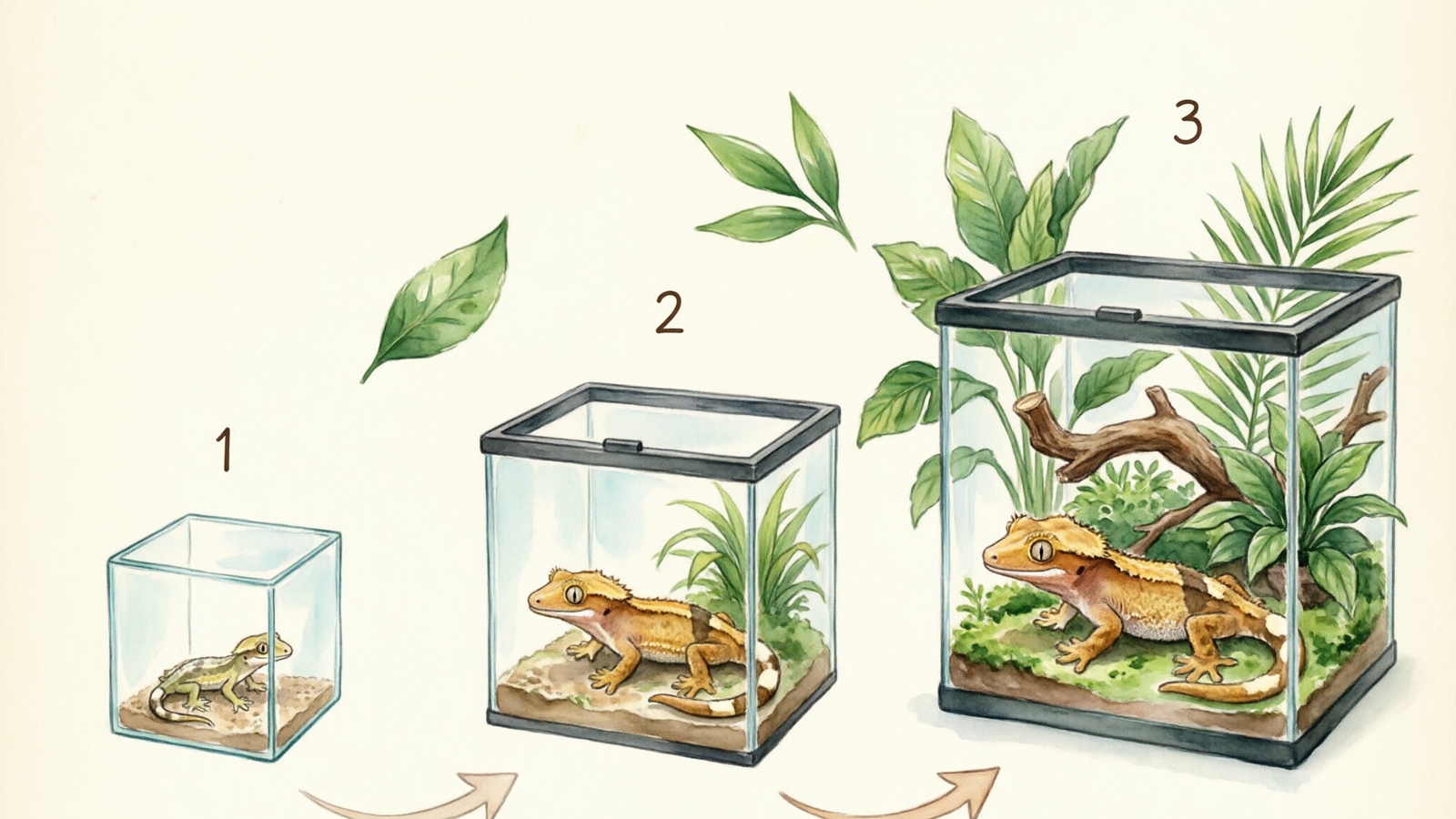
Crested geckos grow quickly in their first year. A hatchling born at 2 grams can reach 25 to 40 grams by 12 months. Their enclosure needs to grow with them.
| Age/Weight | Minimum Size | Recommended Size | Why It Matters |
|---|---|---|---|
| Hatchling (<10g, <6 mo) | 8×8×12” (3.3 gal) | 10×10×12” (5 gal) | Small space = easier to find food |
| Juvenile (10-25g, 6-12 mo) | 12×12×18” (10-11 gal) | 12×12×18” | Vertical climbing begins |
| Adult (25g+, 12+ mo) | 18×18×24” (30 gal) | 24×18×24” (45 gal) | Full activity range needed |
The key insight for any crested gecko enclosure: height matters more than floor space. Crested geckos are arboreal — they live in tree canopies and spend their lives climbing vertically. A wide, shallow enclosure wastes the space your gecko actually uses.
The old 20-gallon minimum rule is outdated for any crested gecko enclosure. Modern keepers and herpetologists recommend 18×18×24 inches (roughly 30 gallons equivalent) as the absolute minimum for a single adult. That’s because vertical volume is what counts, and an 18×18×24 tank provides 7,776 cubic inches of space — compared to just 5,760 cubic inches in a standard 20-gallon “long” aquarium (30×12×16).
Start with a 12×12×18 for a hatchling and upgrading at the 8 to 12-month mark. If you’re adopting an adult, skip the starter tank and go straight to 18×18×24 or larger.
Signs your gecko has outgrown its enclosure include touching opposite walls when stretched, lethargy, reduced climbing activity, and pacing along the glass. For more on reading these behavioral cues, see our crested gecko care guide.
8 Best Crested Gecko Enclosures
Budget Tier ($40-130)
| Product | Size | Material | Price | Rating | Best For |
|---|---|---|---|---|---|
| Exo Terra Glass Nano Kit | 8×8×12” | Glass | $119.95 | — | Hatchlings — complete starter |
| Zoo Med Nano Breeze | 10×10×12” | Aluminum Screen | $42.51 | — | Budget hatchling option |
| NEPTONION 12×12×18 | 12×12×18” | Glass | $129.99 | — | Juveniles — glass with lock |
| FixHaven 12×12×18 | 12×12×18” | Glass | $109.99 | — | Juveniles — most affordable |
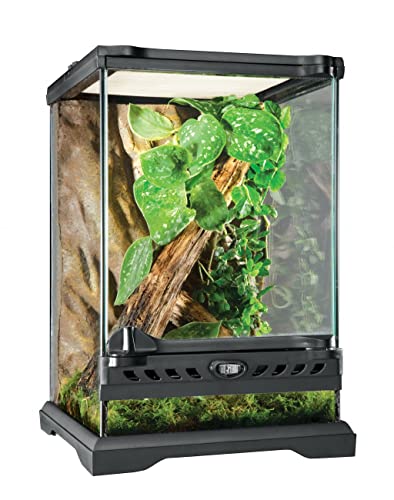
Exo Terra Glass Nano Kit is the most popular starter crested gecko enclosure for hatchlings. The all-in-one design includes LED lighting, which saves you from buying a fixture separately. At $119.95, it’s pricier than a bare tank, but the convenience is real for first-time owners. The compact 8×8×12 size is easy to place on a desk or shelf.
The Zoo Med Nano Breeze is an aluminum-framed screen crested gecko enclosure designed for small arboreal reptiles. Its full mesh construction provides unmatched ventilation — ideal for humid climates.
At $42.51, it is proven reliable. The trade-off: it struggles to hold humidity in dry environments.
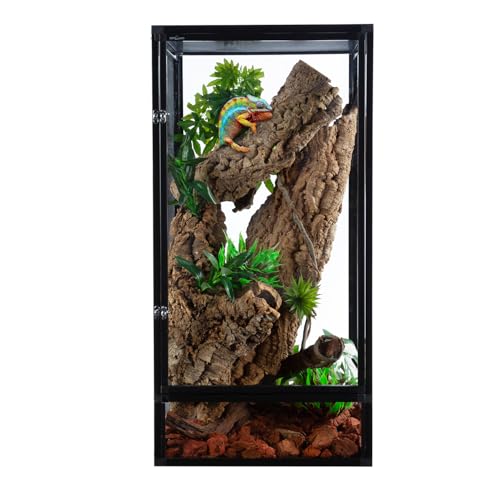
For juveniles, the NEPTONION 12×12×18 offers a front-opening glass crested gecko enclosure design at $129.99. It’s a bare tank, so you’ll need to add lighting separately.
The front door is a significant upgrade over top-opening aquariums — no looming shadows to stress your gecko.
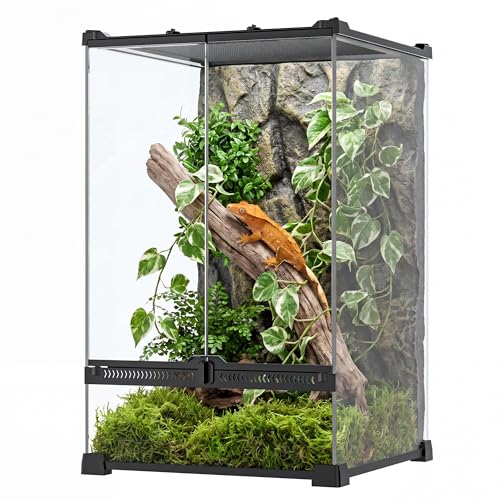
The FixHaven 12×12×18 at $109.99 is the most affordable front-opening glass option. It costs less than the Exo Terra kit and ships fully assembled.
If you already own lighting equipment for your crested gecko enclosure, this is the smart budget play.
Mid Tier ($100-220)
| Product | Size | Material | Price | Rating | Best For |
|---|---|---|---|---|---|
| REPTI ZOO 18x18x36” Cage | 18×18×36” | Screen w/ metal mesh | $166.24 | — | Adults in humid climates |
| REPTI ZOO 30 Gal PVC | 18×18×24” | PVC | $169.99 | — | Adults — lightweight option |
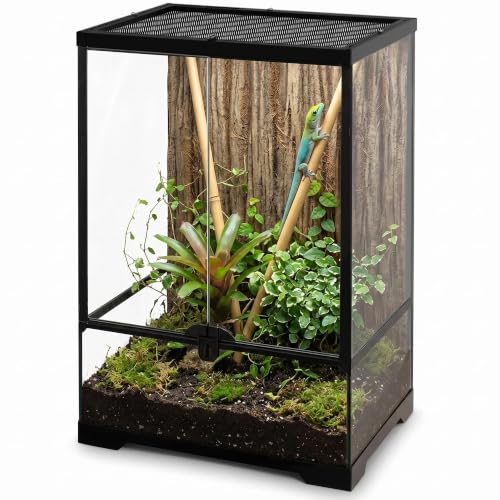
The REPTI ZOO 18x18x36” Cage at 18×18×36 inches is a great screen crested gecko enclosure. Its 36-inch height exceeds most glass terrariums, giving adult geckos serious vertical climbing space.
It is one of the REPTI ZOO’s most popular screen enclosures. At $166.24, it provides excellent value for the vertical volume it offers — a solid alternative for keepers who want a 36-inch tall screen enclosure.
The REPTI ZOO 30 Gallon PVC is the newest PVC crested gecko enclosure option. Built from expanded PVC foam with a glass front door, it combines humidity retention with the insulation benefits of foam.
At 18×18×24 inches, it matches the adult minimum. PVC weighs significantly less than glass and has 4 to 5 times better thermal insulation — useful in rooms below 68°F.
As a newer product, long-term durability data is limited.
Premium Tier ($130-180)
| Product | Size | Material | Price | Rating | Best For |
|---|---|---|---|---|---|
| REPTIZOO 45 Gallon | 24×18×24” | Glass | $199.99 | — | Adult upgrade — best value |
| REPTI ZOO 67 Gallon | 24×18×36” | Glass | $176.99 | — | Premium tall display |
The REPTIZOO 45 Gallon at 24×18×24 inches is the top pick crested gecko enclosure for adult crested geckos. It provides 50% more floor space than the 18×18×24 minimum while maintaining adequate height.
At $199.99, the cost-per-gallon ratio is excellent. The 24-inch width matches standard lighting fixtures perfectly.
It is a proven product with a solid track record.
The REPTI ZOO 67 Gallon is the largest tall glass crested gecko enclosure commonly available. At 24×18×36 inches, the 36-inch height creates a true vertical territory that mirrors the canopy habitat of wild crested geckos.
At $176.99, it is the ultimate display tank. The trade-off: it weighs over 100 pounds when fully set up and requires two people to assemble.
 —>
—>
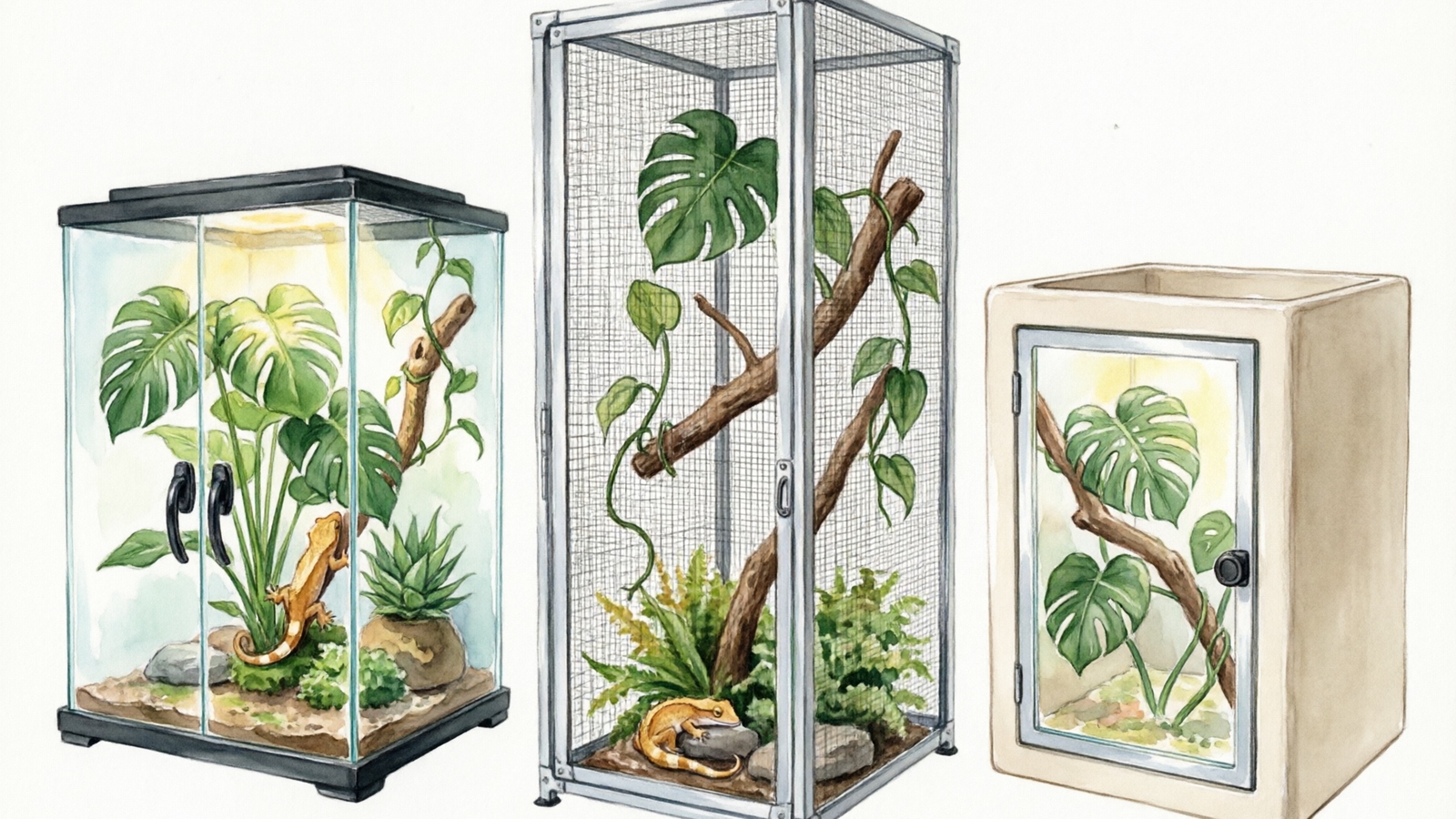
When comparing glass vs mesh enclosure crested gecko owners must weigh pros and cons.
Glass vs Mesh — Which Enclosure Material Is Best?
The material you choose for your crested gecko terrarium setup determines humidity retention, visibility, weight, and ease of maintenance. Here’s how the three main options compare:
| Factor | Glass | PVC | Screen/Mesh |
|---|---|---|---|
| Humidity Retention | Excellent | Very Good | Fair |
| Visibility | Excellent | Good | Very Good |
| Weight | Heavy (15-30 lbs) | Light (8-15 lbs) | Very Light (2-5 lbs) |
| Price Range | $60-180 | $158+ | $40-65 |
| Best Climate | All climates | Cool rooms | Humid/tropical |
Glass crested gecko enclosure terrariums are the most popular choice for good reason. They retain humidity effectively — critical for a tropical species that needs 60% to 80% humidity.
Front-opening glass doors let you access the enclosure from the side, which is less stressful than reaching from above. The three blacked-out sides on models like the Exo Terra reduce visual stress for nervous geckos.
The main drawback is weight. A 24×18×36 glass tank with substrate, water features, and decor can exceed 100 pounds.
You need a sturdy stand rated for at least 150 pounds. Assembly also requires two people.
PVC crested gecko enclosures are the newest entrant to the reptile market. Expanded PVC foam is lightweight, waterproof, and an excellent insulator with an R-value 4 to 5 times higher than glass.
In cool rooms, PVC maintains stable temperatures with less supplemental heating. The opaque sides of a PVC crested gecko enclosure mimic the sheltered environment crested geckos experience behind bark and leaves in the wild.
The trade-offs: fewer viewing angles and limited long-term durability data. These are relatively new products.
Screen crested gecko enclosures use aluminum or steel frames with mesh panels on all sides. The ventilation is unmatched — perfect for preventing mold and bacterial growth.
But that ventilation in a screen crested gecko enclosure works against humidity retention. In a home with 30% ambient humidity, a screen cage may drop below 40% within an hour of misting.
Screen cages make sense if you live in a humid climate (southern US, tropical regions), need a lightweight enclosure for a reptile room, or want unfiltered UVB transmission (screen allows nearly 100% UVB through, while standard glass blocks nearly all of it).
For temperature control regardless of enclosure type, a reliable thermostat is essential. Our best reptile thermostat guide covers options for all setups.
How to Set Up Your Crested Gecko Enclosure (Step-by-Step)
Choosing the right crested gecko enclosure is just the first step. Here’s how to set it up properly.
Step 1: Choose the Right Location
Place your crested gecko enclosure in a room that stays between 65°F and 80°F year-round. Avoid direct sunlight (which can cause dangerous heat buildup) and drafty areas near doors, windows, or AC vents. Place the enclosure on a sturdy surface rated to support the weight — a fully set-up glass tank can weigh 30 to 50 pounds.
Step 2: Add Substrate Layer
Add 2 to 3 inches of substrate for moisture retention. Coconut fiber (Eco Earth) is the most popular choice — it holds humidity well and is safe if accidentally ingested.
Sphagnum moss is another option for boosting humidity. For baby geckos, paper towels are the safest choice during quarantine.
Step 3: Install Climbing Structures
Cork bark, bamboo branches, and driftwood form the backbone of every good crested gecko enclosure. Place them at multiple heights to encourage natural climbing behavior. Magnetic ledges can be attached to glass walls for additional perching spots.
For more on creating a naturalistic environment, see our habitat setup guide.
Step 4: Add Hiding Spots
Every crested gecko enclosure needs at least two hiding spots: one at ground level and one elevated. Cork bark tubes, coconut huts, and commercial reptile hides all work well. Hiding spots reduce stress, especially during the first few weeks after bringing your gecko home.
Step 5: Install Plants
Live plants in your crested gecko enclosure contribute to humidity, create natural cover, and make the enclosure more visually appealing. Safe options include Pothos, Bromeliads, Snake Plants, and Ficus benjamina. Fake plants work for supplemental coverage but don’t contribute to humidity.
Anchor live plants in the substrate or wedge them between climbing structures. Avoid blocking areas where you plan to mount UVB or LED lighting.
Step 6: Set Up Feeding Station
Install a wall-mounted feeding ledge in the crested gecko enclosure 6 to 12 inches from the top of the enclosure. Magnetic or suction-cup ledges work best. Crested geckos prefer to eat at height, and an elevated feeding station keeps food off the substrate where it can contaminate the enclosure.
Understanding what to feed your gecko in the crested gecko enclosure is just as important as where — check our crested gecko food guide for complete nutrition information.
Step 7: Temperature and Humidity Control
Install a digital hygrometer on your crested gecko enclosure to monitor humidity levels. Crested geckos need 60% to 80% humidity.
Mist the enclosure 1 to 2 times daily with dechlorinated water. A digital thermometer helps you verify the temperature stays within the 72°F to 78°F daytime range.
Avoid analog humidity gauges — they’re notoriously inaccurate. A $10 digital hygrometer is more reliable than a $30 analog one.
 —>
—>
Bioactive vs Standard Enclosure Setup
A bioactive crested gecko enclosure uses live plants, a drainage layer, and a cleanup crew of microorganisms to create a self-sustaining ecosystem. Here’s how the two approaches compare:
| Factor | Standard Setup | Bioactive Setup |
|---|---|---|
| Initial Cost | $150-250 | $250-400 |
| Cleaning | Full clean every 2-4 weeks | Partial refresh every 3-6 months |
| Cleanup Crew | Manual waste removal | Springtails + isopods |
| Plants | Fake or low-maintenance | Thriving live ecosystem |
| Best For | Beginners | Experienced keepers |
A bioactive crested gecko enclosure setup mimics the forest floor of New Caledonia. The layered substrate — drainage layer, mesh separator, organic soil, leaf litter — creates a living system where waste gets broken down naturally. Springtails and isopods act as the cleanup crew, consuming feces, mold, and decaying plant matter.
The trade-off for a bioactive crested gecko enclosure is complexity and cost. A bioactive setup requires more initial investment and knowledge of the nitrogen cycle.
If you over-clean, you destroy the microorganism colony. If you under-clean, mold can overgrow.
For first-time crested gecko owners, Start with a standard setup. Once you’re comfortable with the basics, converting to bioactive is straightforward — you just add the drainage layer, soil mix, and cleanup crew on top of your existing enclosure.
For owners who want to supplement their gecko’s diet beyond commercial food, our crested gecko supplements guide covers calcium and vitamin options.
Safe Plants for Crested Gecko Enclosures
Choosing the right crested gecko enclosure plants is important — some common houseplants are toxic to reptiles.
Top safe live plants:
- Pothos (Epipremnum aureum) — hardy, fast-growing, tolerates low light
- Bromeliads (Neoregelia) — tropical look, holds water in leaf cups
- Snake Plant (Sansevieria) — drought-tolerant, architectural shape
- Ficus benjamina — tree-like structure, excellent for climbing
- Cryptanthus — low-growing, colorful rosette pattern
Avoid these plants:
- Aloe vera — contains saponins, mildly toxic if ingested
- Philodendron — contains calcium oxalate crystals, causes mouth irritation
- Any plant treated with pesticides — rinse all nursery plants thoroughly before adding to the enclosure
Fake plants are a reasonable supplement in any crested gecko enclosure for additional cover, especially in areas where live plants struggle to grow. They don’t contribute to humidity but require zero maintenance.
Enclosure Maintenance Schedule
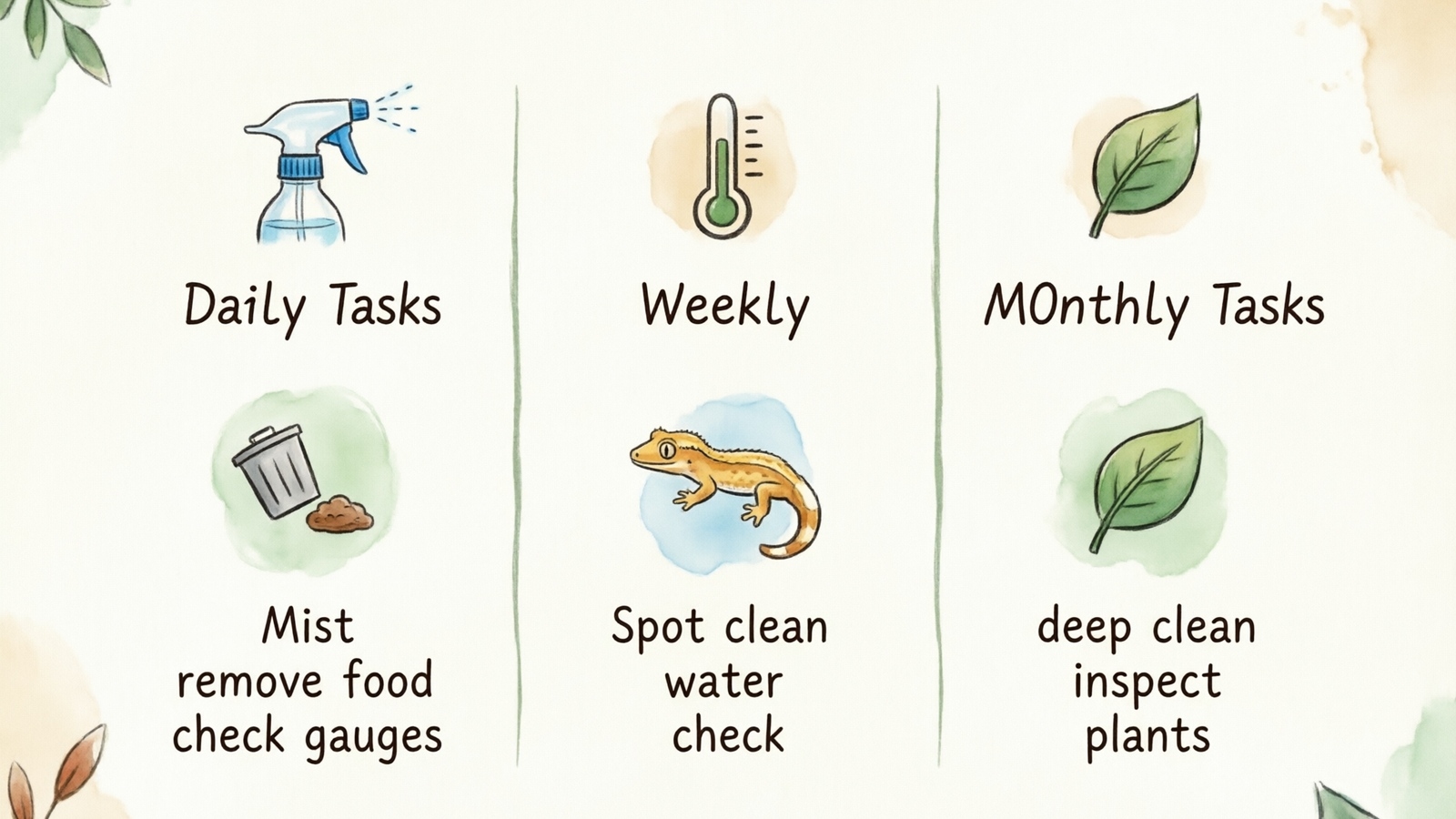
A consistent cleaning routine keeps your crested gecko enclosure healthy keeps your gecko healthy and the enclosure smelling fresh.
| Task | Daily | Weekly | Monthly |
|---|---|---|---|
| Mist enclosure | Yes | — | — |
| Check temp/humidity | Yes | — | — |
| Remove uneaten food | Yes | — | — |
| Spot clean waste | — | Yes | — |
| Check water dish | — | Yes | — |
| Wipe glass (inside) | — | — | Yes |
| Inspect plants/decor | — | — | Yes |
| Replace substrate | — | — | Every 2-3 months |
| Full deep clean | — | — | Every 3-4 months |
For bioactive setups, resist the urge to deep-clean frequently. The cleanup colony of springtails and isopods needs time to establish. Partial refreshes every 3 to 6 months are sufficient — remove large debris, replace leaf litter, and add fresh soil as needed.
Signs your crested gecko enclosure needs immediate attention include visible mold growth (white fuzzy patches on wood or substrate), a foul odor, or persistent condensation that doesn’t clear between mistings.
If your gecko stops eating despite a clean enclosure, stress from improper housing could be the cause — see our guide on why crested geckos stop eating for troubleshooting.
Crested gecko enclosure checklist:
- Vertical height prioritized — 18×18×24” minimum for adults
- Multiple climbing surfaces at varying elevations
- Temperature 72–78°F — never above 82°F (fatal heat stress)
- Humidity 60–80% — misted evening and morning
- Live safe plants: pothos, bromeliads, snake plant, ficus
- Substrate: coconut husk, cypress mulch, or bioactive mix
- UVB lighting on a day/night cycle — supports calcium metabolism
- Secure screen or mesh top — geckos are escape artists
- Never use horizontal tanks — arboreal species needs height
- Never use heat lamps without thermostat — 82°F+ is fatal
- Never house hatchlings in adult-sized tanks — struggle to find food
- Never use toxic plants: aloe, philodendron, pesticide-treated nursery plants
- Never use cedar/pine shavings — phenols toxic to reptiles
- Never ignore mold, foul odor, or persistent condensation
Common Enclosure Mistakes to Avoid
Too small crested gecko enclosure for the gecko’s age. This is the number one mistake. A baby in a 20-gallon tank will struggle to find food. An adult in a 10-gallon tank will be stressed and inactive.
Horizontal crested gecko enclosure for an arboreal species. Crested geckos climb vertically. A wide, short tank wastes the space they actually use and provides none of the height they need.
Heat lamps without a thermostat. Temperatures above 82°F cause fatal heat stress in crested geckos. Always connect heating elements to a thermostat with a probe inside the enclosure.
Screen tops without humidity management. If you choose a screen cage in a dry climate, you need to mist at least twice daily and consider an automatic mister.
No climbing structures. A bare crested gecko enclosure causes stress, reduces exercise, and can lead to tail loss. Provide multiple branches, cork bark pieces, and vines at different heights.
Toxic substrate. Avoid cedar, pine, and silica-based sands. Cedar and pine contain aromatic oils that irritate reptile respiratory systems. Loose sand can cause impaction if ingested.
FAQ
What size enclosure does a crested gecko need?
A hatchling needs a minimum 8×8×12 inch crested gecko enclosure. A juvenile (10-25g) needs 12×12×18 inches.
An adult (25g+) needs at least 18×18×24 inches, with 24×18×24 or taller preferred. Always prioritize vertical height over floor space.
What do you put in a crested gecko enclosure?
Every crested gecko enclosure needs substrate (coconut fiber or bioactive mix), multiple climbing structures (cork bark, bamboo, vines), at least 2 hiding spots, a wall-mounted feeding ledge, live or fake plants for cover, and temperature/humidity gauges.
Do crested geckos need a tall or wide tank?
Crested geckos absolutely need a tall tank. They are arboreal species that climb vertically. An ideal enclosure should be taller than it is wide — minimum height of 18 inches for juveniles and 24 inches for adults.
How often should I clean my crested gecko enclosure?
Daily: mist and remove uneaten food. Weekly: spot clean waste and check water dish.
Monthly: wipe glass and inspect decor. Standard setups need a full deep clean every 3-4 months. Bioactive setups only need partial refreshes every 3-6 months.
Can I use a screen cage for my crested gecko?
Yes, screen cages work well in humid climates. The main challenge is humidity retention — you’ll need to mist more frequently. In dry environments, glass or PVC enclosures are easier to manage.
Is PVC or glass better for crested geckos?
Glass retains humidity better and offers full visibility. PVC is lighter and insulates heat more efficiently. For crested geckos, glass is generally preferred because humidity management is more straightforward.
How much should I spend on a crested gecko enclosure?
Budget options start around $40-130 for hatchling and juvenile enclosures. Mid-range adult setups cost $100-220. Premium large enclosures run $170-220.