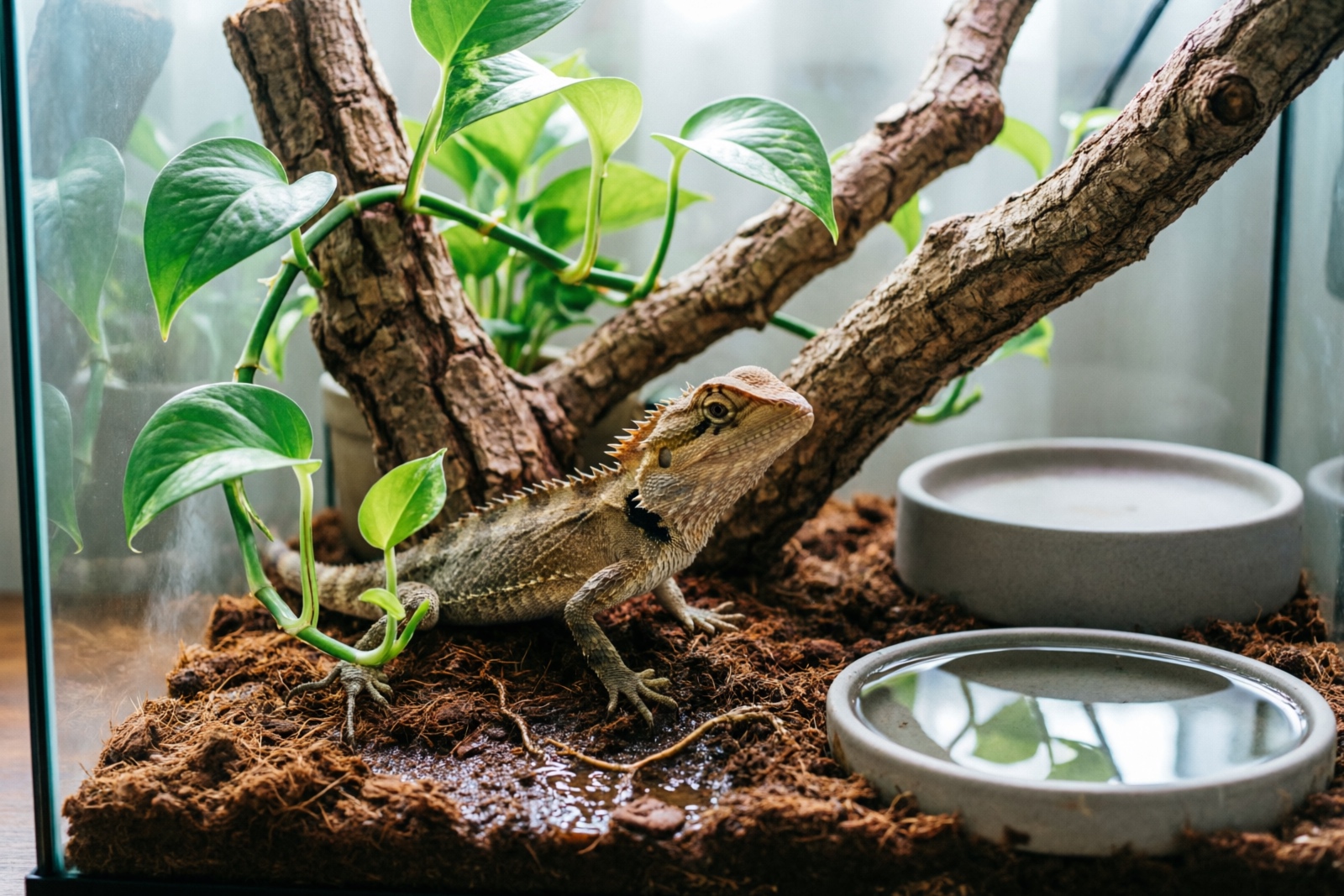
Crested geckos have become one of the most popular pet reptiles in the past decade, and for good reason. Good crested gecko care starts with choosing the right pet. They are small, low-maintenance, handleable, and genuinely charming — those little “eyelashes” give them permanent expression. Unlike bearded dragons or leopard geckos, crested geckos do not need a heat lamp or live insects as a staple diet, which makes them appealing to first-time reptile keepers.
But low maintenance does not mean no maintenance. Proper crested gecko care is straightforward once you understand the basics. Getting the terrarium setup wrong, feeding an improper diet, or ignoring humidity requirements will cause health problems fast. This crested gecko care guide covers everything you need to keep your gecko healthy for its entire 15 to 20-year lifespan.
Is a Crested Gecko Right for You?
What Is a Crested Gecko?
Crested geckos (Correlophus ciliatus) are native to New Caledonia, a group of islands in the South Pacific. They are arboreal, meaning they spend most of their time in trees and bushes rather than on the ground. Their toe pads have tiny lamellae that let them climb smooth glass — you will see your gecko clinging to the sides of its terrarium at all hours.
They are sometimes called “eyelash geckos” because of the distinctive crests above their eyes. They were thought to be extinct until they were rediscovered in 1994, which makes them a relatively new addition to the pet trade.
Crested Gecko vs. Leopard Gecko
If you are choosing between a crested gecko and a leopard gecko, the main differences come down to habitat and diet. Crested geckos are arboreal climbers that need a tall enclosure and thrive on a fruit-based powder diet. Leopard geckos are terrestrial ground-dwellers that need a wide, flat enclosure and eat live insects. Crested geckos are generally more handle-able once acclimated, while leopard geckos tend to be bolder from the start. Both make excellent first reptiles — it comes down to which care style appeals to you more. For another popular beginner option, see our bearded dragon care guide. If you’re considering a pet snake instead, our ball python care guide covers the world’s most popular pet snake. For a detailed comparison of care requirements between popular beginner reptiles, see our leopard gecko care guide.
The Real Commitment
Crested geckos live 15 to 20 years in captivity, with some reaching 25 years. That is a long-term commitment. Proper crested gecko care has initial costs of $200 to $400 for the gecko and setup, with monthly expenses of $20 to $40 for food, substrate, and supplies. You will also need access to an exotic veterinarian — standard vets often do not treat reptiles. I would recommend finding an exotic vet in your area before bringing a gecko home.
Crested Gecko Care: Tank Setup & Size Requirements
A proper crested gecko tank setup is the foundation of good crested gecko care — everything else depends on getting the terrarium right. Crested geckos are arboreal, so the setup is fundamentally different from what you would use for a ground-dwelling reptile.
What Size Terrarium Do Crested Geckos Need?
| Gecko Age | Minimum Size | Recommended Size |
|---|---|---|
| Hatchling (under 10g) | 8” × 8” × 12” | 12” × 12” × 18” |
| Juvenile (10-25g) | 12” × 12” × 18” | 12” × 12” × 18” |
| Adult (25g+) | 18” × 18” × 24” | 18” × 18” × 24” |
When considering crested gecko terrarium size, height matters more than floor space. An 18” × 18” × 24” tall glass terrarium is the standard recommendation for adults. This gives them vertical climbing room and space for branches and plants at multiple levels.
I have used the Reptile Terrarium 18”×18”×24” Aluminum Frame Glass Tank and found it to be solid value — the aluminum frame is lightweight but sturdy, the front-opening doors make access easy, and at 32 gallons it provides plenty of vertical space. Assembly is easier with two people, but the build quality is noticeably better than some of the more expensive name-brand alternatives I have tried.
Essential Terrarium Setup
Substrate — For juvenile geckos, plain paper towels are the safest choice to prevent accidental ingestion. For adults, coconut fiber substrate works well. I have had good results with ReptiChip Coconut Chip Bedding — it holds moisture well, which helps maintain humidity, and the 72-quart compressed block expands into a surprisingly large amount. Rinse it before first use to reduce dust.
Climbing structures — Cork bark rounds, bamboo poles, and driftwood branches placed at various angles give your gecko paths to climb. I like to create a diagonal branch layout that lets the gecko move from bottom to top without touching the ground.
Foliage — Live plants like pothos, bromeliads, and snake plants look great and help maintain humidity. Artificial plants work too — the gecko does not care, but you will. Dense foliage provides hiding spots that reduce stress.
Feeding station — Rather than placing food on the ground, use an elevated feeding ledge. The REPTI ZOO Magnetic Reptile Feeding Ledge attaches to the glass wall with strong magnets and comes with disposable cups. It keeps food off the substrate and at a height where your arboreal gecko naturally feeds. The magnets are strong enough to hold a gecko’s weight without budging.
Water — Crested geckos primarily drink water droplets from leaves and glass surfaces after misting. A small, shallow water dish can be provided as backup, but daily misting is the main water source.
For more on building reptile habitats, see our reptile habitat setup guide.
What Do Crested Geckos Eat?
Diet is the cornerstone of good crested gecko care and one of the things that makes crested geckos so beginner-friendly. Unlike many reptiles that require live insects as a staple, crested geckos can thrive on a commercially prepared powder diet.
Meal Replacement Powder (MRP)
The backbone of crested gecko food and nutrition is Meal Replacement Powder, commonly called MRP or CGD (Crested Gecko Diet). You mix the powder with water to a pudding-like consistency and serve it in a small cup. The most well-known brand is Repashy, but several quality options exist.
I have had good results with Nekton Crested Gecko Fig — it is a German-formulated MRP with a fig flavor that geckos seem to accept readily. One owner reported their gecko was barely eating and losing weight on another brand, but started finishing every bowl once switched to this one. The ingredient list is cleaner than some competitors, though it is priced higher per gram.
Feed adult geckos MRP three times per week. Juveniles should be fed daily since they are growing. Remove uneaten food after 24 hours to prevent mold.
Insects as Supplement
Live insects are not required, but they make a great supplement. Offer dubia roaches or crickets once or twice a week, dusted with calcium powder. Insects should be no larger than the space between your gecko’s eyes. Gut-load the insects with nutritious food 24 hours before feeding.
Can Crested Geckos Eat Fruit?
Yes, as an occasional treat — not as a dietary staple. Safe fruits include mashed banana, mango, and papaya. Avoid citrus fruits entirely, and keep fruit to less than 10% of total diet. Too much sugar disrupts their calcium absorption and can lead to metabolic issues.
| Safe Foods | Frequency | Avoid Completely |
|---|---|---|
| MRP (mixed with water) | 3x/week (adults), daily (juveniles) | Citrus fruits |
| Dubia roaches or crickets | 1-2x/week, dusted with calcium | Avocado |
| Banana, mango, papaya | Occasional treat (< 10% of diet) | Wild-caught insects |
| Fresh water (misting) | Daily | Hard-shelled beetles, fireflies |
Temperature & Humidity Requirements
Understanding temperature needs is a critical part of crested gecko care. Crested geckos come from a tropical environment, but they do not need extreme heat. In fact, keeping them too warm is more dangerous than keeping them slightly cool.
Temperature
The ideal crested gecko temperature range is 72–78°F (22–26°C) during the day. Most homes sit in this range naturally, so no additional heating is needed in most cases. At night, temperatures can safely drop to 65–70°F (18–21°C).
Temperatures above 82°F are dangerous. Crested geckos can overheat quickly, leading to lethargy, loss of appetite, and in severe cases, death. I have seen geckos become stressed simply from being kept in a room that gets afternoon sun. Keep the terrarium away from windows and heat sources.
Humidity
Humidity is the parameter you need to watch most carefully. Crested geckos need crested gecko humidity levels of 60–80% during the day, with a spike to 80–100% at night (achieved through misting). Without adequate humidity, they cannot shed properly, which leads to stuck shed — particularly on their toes and tail tips.
Daily misting with room-temperature water is the simplest approach. If you work long hours or travel, the MRREPTILE Reptile Fogger provides automatic misting on a timer with 360-degree adjustable nozzles. It raises humidity fast and runs quietly, though it does require weekly cleaning to prevent nozzle clogging.
A digital thermometer/hygrometer is not optional — it is essential. Do not guess at temperature and humidity. The REPTI ZOO Reptile Thermometer Hygrometer combines both readings in one compact device with an adjustable screen angle. I keep one in every enclosure — it is the first thing I check when something seems off with a gecko.
Signs of wrong humidity: stuck shed (too low), bubbling from the nose or wheezing (respiratory infection from fluctuating humidity), and constantly hiding on the cool side of the enclosure.
Handling Your Crested Gecko
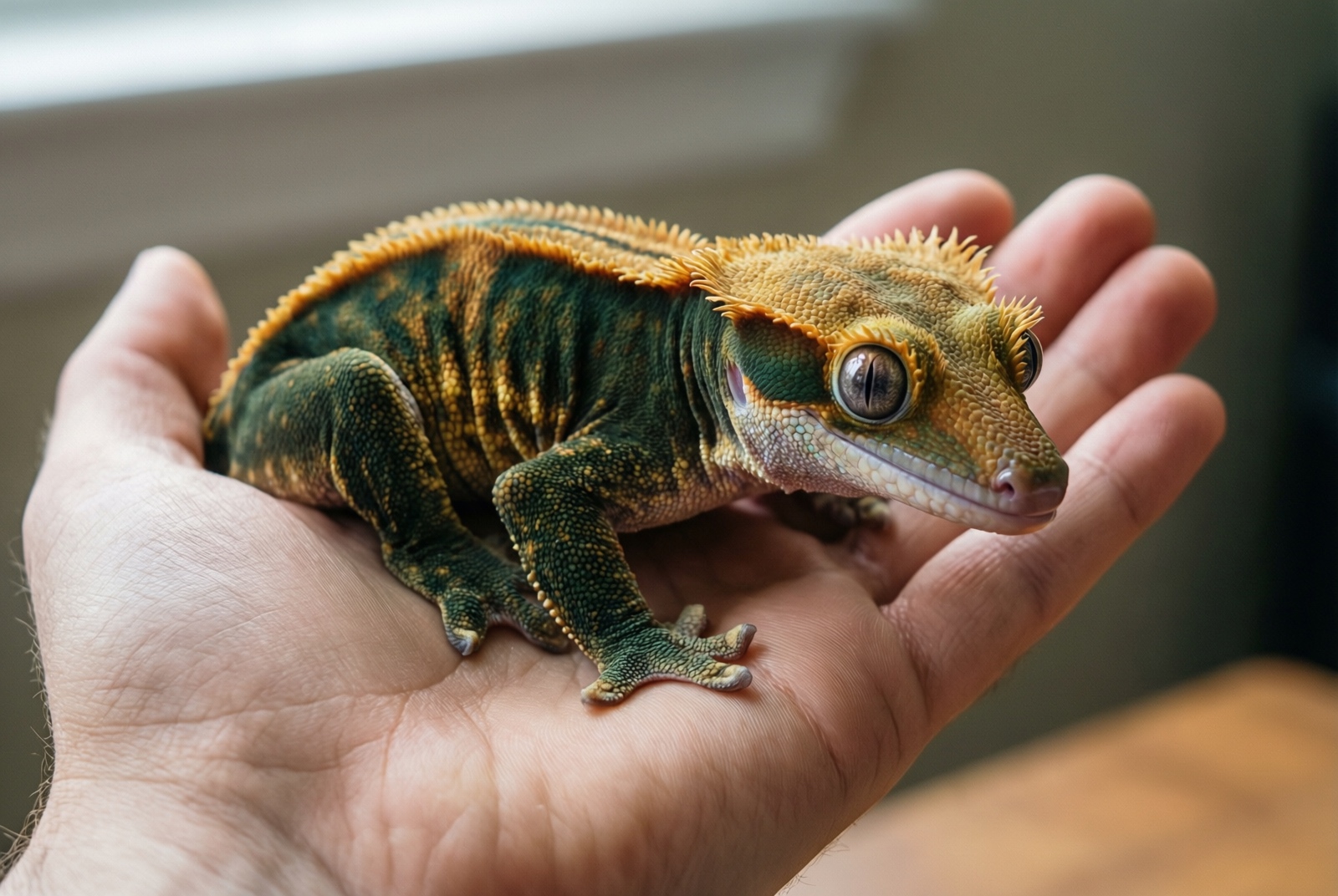
Handling is one of the more rewarding aspects of crested gecko care. Crested geckos are among the more handle-able small reptiles, but they are not as tolerant as, say, a bearded dragon. Patience is key.
Crested Gecko Handling: How to Handle Safely
Always scoop your gecko from below and let them walk onto your hand. Never grab from above — this triggers their predator response and can cause them to jump or drop their tail. Keep them over a soft surface or close to the ground during handling sessions, in case they leap.
Start with 5-minute sessions and gradually increase as your gecko becomes comfortable. Evening is the best time since they are nocturnal and more active at night. Wash your hands before and after handling to protect both you and your gecko.
Tail Dropping
Crested geckos can drop their tails as a defense mechanism when they feel threatened. Unlike many other geckos, crested gecko tails do not grow back. This is permanent. A tailless gecko is perfectly healthy — it is purely cosmetic — but once the tail is gone, it is gone for good. I would recommend avoiding any situation that could trigger tail dropping, especially with new geckos that have not yet built trust with you.
Children and Crested Geckos
Crested geckos can work as family pets, but young children should always be supervised. Their skin is delicate, and rough handling can cause stress or injury. I have found that children over the age of 8 or 9, with proper instruction, do well with these geckos.
How Long Do Crested Geckos Live? (Crested Gecko Lifespan)
Consistent crested gecko care helps your gecko live 15 to 20 years in captivity. The record is over 25 years. Males and females have similar lifespans.
The factors that make the biggest difference are consistent husbandry and diet. Geckos kept at stable temperatures with proper humidity and a quality MRP diet tend to live the longest. Extreme temperature swings, chronic low humidity, and a diet of only fruit or only insects will significantly shorten their life.
Annual checkups with an exotic vet can catch problems early. I have seen geckos that looked healthy to their owners turn out to have early-stage metabolic bone disease — something a vet would have caught months earlier.
Crested Gecko Care: Common Health Problems
Preventive health monitoring is an essential part of crested gecko care. Knowing the common health issues helps you catch problems early. Crested geckos hide illness well, so vigilance matters.
Metabolic Bone Disease (MBD)
MBD is the most serious condition in captive crested geckos, caused by calcium deficiency. Symptoms include a soft, rubbery jaw, tremors, lethargy, and in severe cases, deformities. It is largely preventable with a proper MRP diet and calcium-dusted insects. Geckos fed only fruit or only insects without supplementation are at highest risk.
Stuck Shed
When humidity is too low, geckos cannot shed completely. Retained shed most commonly affects the toes and tail tip. Over time, constricting shed can cut off circulation and cause toe loss. If you notice retained shed, increase misting frequency and consider a humid hide. In stubborn cases, a warm soak in shallow water can help.
Respiratory Infections
Incorrect temperature or humidity — particularly prolonged high humidity without ventilation or sudden temperature drops — can cause respiratory infections. Signs include wheezing, bubbles from the nostrils, and open-mouth breathing. These require veterinary treatment with antibiotics. Do not wait — respiratory infections progress quickly in reptiles.
Impaction
Impaction occurs when a gecko ingests something it cannot digest — usually loose substrate or prey that is too large. Signs include bloating, refusal to eat, and abnormal droppings. Using paper towels for juvenile geckos and avoiding overly large prey items prevents most cases.
Parasites and Mouth Rot
Wild-caught insects can introduce internal parasites, causing weight loss and abnormal droppings. Always buy feeder insects from reputable suppliers. Mouth rot is a bacterial infection that appears as white plaque inside the mouth, making eating painful. Both conditions require a vet visit.
When to See a Vet
If your gecko stops eating for more than two weeks, shows signs of MBD, has labored breathing, or has visible abnormalities, contact an exotic vet immediately. I cannot stress enough: find an exotic vet before you need one. The last thing you want in an emergency is to be frantically searching for a specialist. Keep the vet’s number saved in your phone and know the fastest route to their clinic.
Preventive Care Basics
Good crested gecko care prevents most health problems before they start. Maintain stable temperature and humidity, clean the terrarium spot-cleaned daily with full substrate changes every few months, feed a quality MRP diet, and quarantine any new gecko for at least 30 days before introducing it to an existing enclosure. These simple habits go a long way toward keeping your gecko healthy for its entire lifespan.
Frequently Asked Questions
Do crested geckos need UVB?
Technically, crested geckos can survive without UVB if fed a quality MRP that includes vitamin D3. However, low-level UVB (a 5.0 bulb) is increasingly recommended by reptile veterinarians for optimal calcium absorption and overall health. It is not required the way it is for bearded dragons, but I have found that geckos with access to low-level UVB tend to be more active and have better coloration. If you add UVB, use a REPTI ZOO UVB 5.0 bulb and position it at the top of the terrarium where the gecko can choose whether to bask under it or retreat to shade.
How often do you feed crested geckos?
Adults: MRP three times per week, insects once or twice a week as supplement. Juveniles: MRP daily, insects 2-3 times per week. Always remove uneaten MRP after 24 hours to prevent mold growth.
Can crested geckos drop their tails?
Yes, as a defense mechanism when they feel threatened or are grabbed. The tail does not grow back — this is permanent. A tailless gecko is completely healthy, but once the tail is gone, it will not regenerate. Handle gently and never grab from above.
What size tank does a crested gecko need?
Minimum 12” × 12” × 18” for juveniles, recommended 18” × 18” × 24” (tall) for adults. Height is more important than floor space since crested geckos are arboreal climbers.
Can you hold crested geckos?
Yes, they tolerate handling once acclimated. Scoop from below, keep sessions to 5-15 minutes, and handle in the evening when they are naturally active. Avoid grabbing from above, which triggers predator avoidance responses.
What do crested geckos eat?
Their primary diet is MRP powder mixed with water to pudding consistency. Supplement with calcium-dusted dubia roaches or crickets once or twice a week. Occasional fruit treats like mashed banana or mango are fine but should stay under 10% of total diet.
Can crested geckos eat fruit?
Yes, as occasional treats: mashed banana, mango, and papaya are safe. Avoid citrus fruits and avocado entirely. Fruit should not exceed 10% of the overall diet — too much sugar disrupts calcium metabolism.
What temperature do crested geckos need?
72–78°F during the day, dropping to 65–70°F at night. Most homes are already in this range, so additional heating is usually unnecessary. Avoid temperatures above 82°F — overheating is dangerous and can be fatal.