Do Corn Snakes Need Hides?
Yes. A corn snake without a hide is a stressed corn snake.
Semi-Fossorial — A behavioral classification for species that regularly seek shelter underground or within confined spaces such as burrows, rock crevices, decaying logs, and leaf litter. Corn snakes (Pantherophis guttatus) are semi-fossorial — they spend significant time beneath surface cover, using tight spaces for thermoregulation, predator avoidance, and ambush hunting. In captivity, this instinct drives their need for snug, enclosed hides that provide tactile contact on all body surfaces (Merck Veterinary Manual — Natural History and Behavior of Colubrid Snakes).
In the wild, corn snakes are semi-fossorial — they seek tight, enclosed spaces under logs, rocks, and leaf litter. Without that security in captivity, they glass-surf, refuse meals, and become chronically stressed. Chronic stress in reptiles suppresses immune function and can lead to secondary infections and feeding refusal lasting weeks to months (VCA Hospitals — Stress-Related Disorders in Reptiles).
Corn snakes need at least 2 hides: one on the warm side (88-90°F) and one on the cool side (72-78°F). The two-hide minimum is a well-established husbandry standard — snakes without access to secure retreats on both thermal zones show elevated stress hormones and reduced feeding frequency (Merck Veterinary Manual — Housing Requirements for Snakes). A third humid hide with damp sphagnum moss helps during shedding cycles, though some keepers consider it optional for corn snakes.
The AI Overview confirms: “Snakes feel most secure when their bodies touch the walls and roof of the hide simultaneously.” This means the ideal hide is low-profile and snug — the snake’s body should contact all surfaces. This tactile contact principle is widely recognized in herpetoculture and confirmed by reptile behavior research: snakes in snug hides show lower stress indicators than those in oversized enclosures (ReptiFiles — Corn Snake Accessories and Decor).
Corn snakes are more active and curious than ball pythons. They explore during the day more frequently. But they STILL need secure hides — a corn snake without them will rub against enclosure walls and refuse to eat.
However, corn snakes benefit from slightly larger hides with easier entry than ball pythons, which prefer tighter, fully enclosed spaces.
Experienced keepers universally agree: sizing matters more than appearance. The three-hide system (warm, cool, humid) has become the community standard for colubrid husbandry, endorsed by breeder organizations and veterinary textbooks alike (Merck Veterinary Manual — Enclosure Furnishings for Snakes).
Keepers who skip hides entirely or buy oversized decorative pieces tend to struggle most — a plain, snug, dark hide outperforms an expensive naturalistic cave every time if the snake actually uses it. For the complete husbandry overview, including how to choose the right corn snake hide for your specific enclosure size, see our corn snake care guide.

Types of Corn Snake Hides
Not all hides serve the same purpose. Understanding the four main types helps you build the right setup for your corn snake.
| Type | Best For | Light/Dark | Moisture | Lifespan |
|---|---|---|---|---|
| Natural Half Log | Realistic setups, adult corn snakes | Dark interior | Low (wood absorbs, can mold) | 1-2 years |
| Resin Rock Cave | Naturalistic look, display tanks | Dark interior | Low (smooth resin) | 3-5 years |
| Low-Profile Plastic | Budget, easy cleaning, snug fit | Dark interior | Very low | 5+ years |
| Humid/Moist Hide | Shedding support, humid microclimate | Dark interior | High (designed for moisture) | 2-3 years |
Thermoregulation — The process by which ectothermic animals regulate their internal body temperature by moving between warm and cool zones in their environment. Corn snakes require a thermal gradient from 72-78°F on the cool side to 85-90°F on the warm side (basking surface). The hide placement on each side enables the snake to digest food, rest, and regulate metabolism without exposure to predators. An improper gradient — missing hides on either side — forces the snake to choose between security and correct body temperature, leading to chronic stress and reduced feeding response (Merck Veterinary Manual — Thermoregulation in Reptiles; VCA Hospitals — Corn Snake Husbandry).
Warm hide: placed on the warm side over the heating pad. Your corn snake digests food here after eating.
Cool hide: placed on the cool side away from heat. Your snake rests here during daytime hours.
Humid hide: optional but recommended — placed on the warm side with damp sphagnum moss to help during shedding cycles. > Respiratory Infection (RI) — One of the most common and potentially fatal conditions in captive snakes, caused by bacterial or fungal pathogens that colonize the respiratory tract when humidity is either too high (promoting mold/fungal growth) or too low (drying mucous membranes). Symptoms include wheezing, bubbles from the nostrils, open-mouth breathing, and mucus in the mouth. Humid hides that are not maintained — with sphagnum moss left damp too long — can become breeding grounds for fungi that trigger RI (VCA Hospitals — Respiratory Disease in Snakes).
Replace sphagnum moss every 2-3 weeks to prevent mold and bacterial growth.
For keepers looking for the best hides for corn snakes, a common starting combination is one LEOTERRA Large plastic hide for the warm side, one LEOTERRA resin cave for the cool side, and one FCALIVV humid hide for shedding support. This three-hide system covers all the bases without breaking the budget.
There is an active debate in the corn snake community about the corn snake humid hide. Some keepers argue they are unnecessary because corn snakes tolerate drier conditions better than ball pythons. However, veterinary literature notes that while corn snakes are more drought-tolerant than tropical species, shedding quality directly correlates with localized humidity availability — a humid hide provides that microclimate without raising overall enclosure humidity to problematic levels (VCA Hospitals — Shedding Disorders in Reptiles).
However, the practical consensus leans toward “optional but helpful” — a basic corn snake moist hide setup with a humid hide noticeably improves shed quality. A simple diy corn snake hide using a plastic container with damp paper towel can work as a temporary humid hide during shedding cycles. Ensure adequate ventilation holes to prevent stagnation — sealed containers without airflow can trap harmful bacteria at high humidity (ReptiFiles — DIY Humid Hide Construction).
Safety Warning: NEVER use heat rocks with any snake. They cause severe, sometimes fatal thermal burns — the contact surface temperature can reach 120°F+ in minutes, causing deep tissue damage that may not be immediately visible. Always use a thermostat-controlled heating pad under the warm hide (ReptiFiles — Safe Heating Methods). See our corn snake heating pad guide for safe heating options.
Best Corn Snake Hides — Product Picks
| # | Product | Type | Best For |
|---|---|---|---|
| 1 | LEOTERRA Large Snake Hide (L) | Plastic | TOP PICK OVERALL — budget, secure, easy clean |
| 2 | Zoo Med Habba Hut Medium | Natural Log | TOP PICK NATURAL — realistic half-log |
| 3 | LEOTERRA Resin Rock Cave | Resin Rock | BEST RESIN — naturalistic stone cave |
| 4 | FCALIVV Humid Hideout Cave | Humid Hide | BEST HUMID HIDE — purpose-built shedding aid |
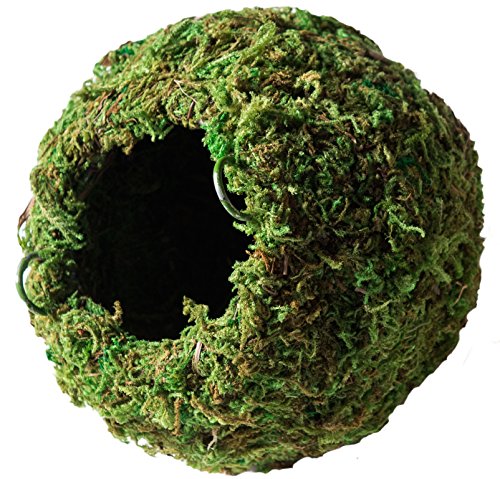
| 5 | Galápagos Mossy Cave | Mossy Natural | BEST MOSSY — forest-floor aesthetic |
| 6 | REPTIZOO Moisture Cave | Resin Moisture | BEST MOISTURE CAVE — semi-humid retreat |
| 7 | relaqcc Tree Roots Cave | Dual-Purpose | BEST CLIMB + HIDE — basking platform too |
| 8 | Lucky Critter Corner Burrow | Underground Burrow | BEST BURROW — corner space-saver with window |
The comparison table above covers the best hides for corn snakes across four categories: plastic, natural, resin, and specialized. Below, individual reviews break down each product with detailed keeper feedback, pros, cons, and second Amazon links for easy purchasing.
Quick Recommendation: If you want one hide that works for most corn snakes, buy the LEOTERRA Large Snake Hide (L). If you want a naturalistic pair, get the LEOTERRA Resin Rock for the cool side and the Fluker’s Half Log for the warm side. For shedding support, add the FCALIVV Humid Hideout.
Best Natural and Resin Hides
A corn snake cave hide made from resin or real wood provides naturalistic appeal. These options are the go-to choice for display enclosures and bioactive setups. They look better than plastic but require more maintenance. Wood hides can mold if placed in humid zones, resin absorbs odors, and moss coverings shed pieces into the substrate.
For keepers who prioritize aesthetics, the LEOTERRA Resin Rock and Galápagos Mossy Cave offer the best visual appeal. For keepers who prioritize function and easy cleaning, the LEOTERRA Large Snake Hide (L) is the clear winner despite its utilitarian appearance.
Zoo Med Habba Hut Medium — Top Pick Natural
The Zoo Med Habba Hut Medium is a widely discussed natural hide on Amazon. Its realistic half-log design gives corn snakes that secure burrowing feel they instinctively seek. The medium size measures roughly 7 by 5 by 4 inches, which provides a snug fit for most adult corn snakes.
One keeper wrote: “My corn snake immediately went inside and hasn’t come out for hours — she loves it.” Another confirmed: “Perfect size for my adult corn snake, she fits snugly.” These reviews consistently highlight the snug interior as the key selling point.
The smooth interior makes spot-cleaning simple. However, wood absorbs moisture over time, which means this hide can develop mold if placed in a humid zone. Mold spores released into the enclosure air can trigger respiratory infections in snakes, particularly in juvenile corn snakes with developing immune systems (Merck Veterinary Manual — Mycotic Infections in Reptiles).
At this price point, it is an investment for a naturalistic setup. Some keepers also report receiving units with rough edges that needed sanding. For budget-conscious keepers, the Fluker’s is a premium option — but the realism and durability justify the cost for display enclosures.
LEOTERRA Resin Rock Cave — Best Resin
The LEOTERRA Resin Rock Cave is a popular corn snake cave hide option that offers a naturalistic stone appearance without the maintenance drawbacks of real wood. It comes in multiple sizes from small to XL. This range of options is a real advantage for keepers who want to stick with one brand as their snake grows.
“Looks incredibly realistic, my terrarium setup looks professional now,” one reviewer noted. Another confirmed: “Very sturdy, my corn snake pushes against it and it doesn’t budge.”
The sturdy base resists tipping even when the snake pushes against it. A smooth interior wipes clean easily during routine maintenance.
The multiple size options let you upgrade as your snake grows — a real advantage over single-size alternatives. The main drawback is that resin can absorb odors over time if not cleaned regularly. Accumulated urates and fecal bacteria trapped in resin pores create persistent odor and potential bacterial reservoirs — a weekly wipe-down with reptile-safe disinfectant prevents buildup (VCA Hospitals — Hygiene in Reptile Enclosures). Color variation between units is also common, so the piece you receive may look slightly different from product photos.
Galápagos Mossy Cave — Best Mossy
The Galápagos Mossy Cave features real sphagnum moss covering a resin base, creating a natural forest-floor appearance. It holds slight moisture from the moss, which can help during light shed cycles. The 6-inch opening works well for juvenile through most adult corn snakes.
One keeper shared: “The moss covering looks amazing in my bioactive corn snake setup.” Another noted: “Blends perfectly with cork bark and live plants.” It creates a cohesive naturalistic aesthetic that plastic hides simply cannot match.
The trade-off is durability. Moss sheds small pieces into the enclosure over time and eventually wears thin after months of use.
Keep this hide on the cooler, drier side of the enclosure to reduce mold risk on the moss covering. Very large adults may eventually outgrow even the 6-inch opening, so have a bigger resin cave ready as your snake fills out.
REPTIZOO Moisture Cave — Best Moisture Cave
The REPTIZOO Moisture Cave is a resin hide specifically designed to retain slight moisture. It works as part of a corn snake moist hide setup, providing a semi-humid retreat for shedding support without the full commitment of a dedicated humid hide. REPTIZOO is an established reptile brand with consistent quality across their product lines.
“My corn snake had a perfect shed after I added this to the cool side,” one keeper reported. Another praised: “Good weight and stability — snake can’t push it around.” The realistic stone appearance fits well in naturalistic terrariums.
It has fewer long-term data points than the LEOTERRA plastic or resin options. The interior space is also smaller than it appears in product photos. One reviewer noted: “Smaller interior space than it appears in photos.”
Because of the moisture-retaining design, this cave needs periodic drying to prevent mold — a maintenance step that standard resin hides do not require. The resin can also chip at the edges if dropped during cleaning.
Best Plastic, Burrow, and Dual-Purpose Hides
Multiple corn snake hides are recommended for proper husbandry — a complete corn snake hide setup typically includes at least two permanent hides plus a seasonal humid option. Plastic hides offer unbeatable value and easy maintenance — they clean in seconds, last for years, and provide the dark, snug interior that corn snakes prefer. Burrow and dual-purpose designs add unique functionality for active corn snakes that climb and explore.
The main drawback of plastic is aesthetics — it looks plain in naturalistic setups. However, function should come before form when it comes to hides. A corn snake that actually uses a plain plastic hide is better off than one that avoids a beautiful but oversized resin cave.
LEOTERRA Large Snake Hide (L) — Top Pick Overall
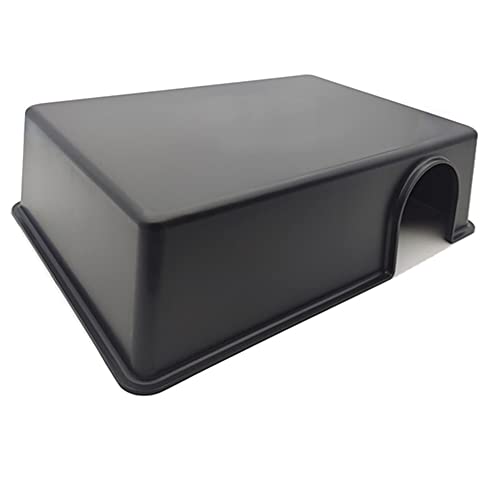
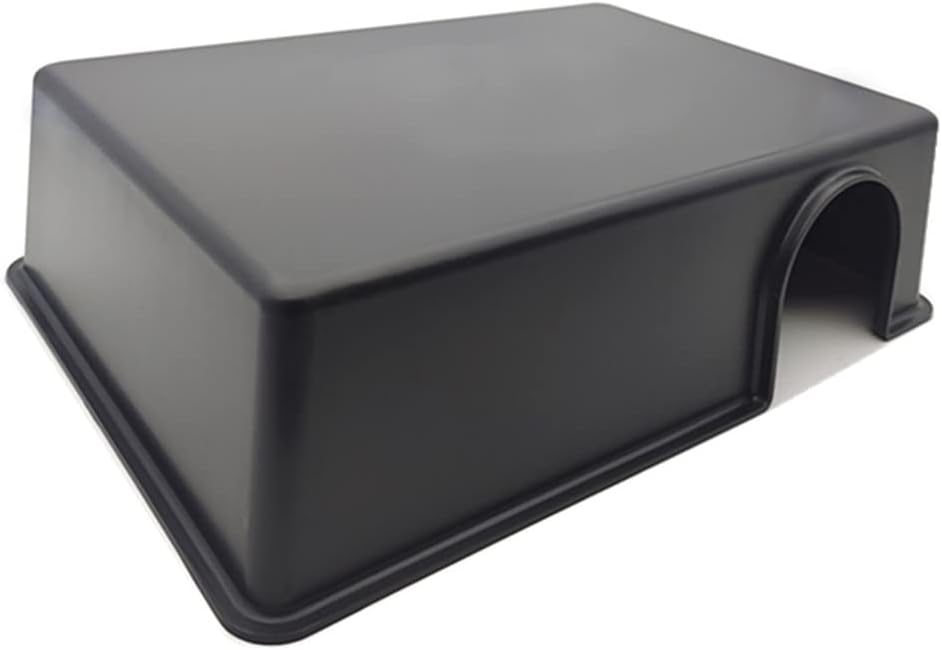
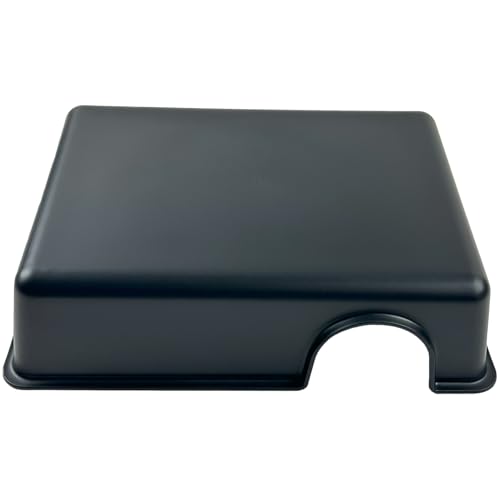
The LEOTERRA Large Snake Hide (L) is the best all-around corn snake hide available. At 13×8.66×3.15 in, the low-profile plastic design helps the snake’s body touch the ceiling — the key to feeling secure. At $20.88, it is still one of the cheapest easy-clean hides that actually fits a growing corn snake.
“Corn snakes need to feel their back touching the hide ceiling — this does exactly that. She finally stopped glass surfing,” one reviewer confirmed.
The food-safe plastic wipes clean in seconds and works as a snug hide for sub-adults and most adult corn snakes.
Cleaning takes seconds — just rinse with warm water and it dries almost instantly. The single-entrance design is actually a strength, not a weakness. The AI Overview recommends “only one entrance” for maximum security. In ethology studies, single-entrance shelters provide a stronger sense of security for ambush predators and semi-fossorial species because the animal only needs to monitor one approach vector (Merck Veterinary Manual — Behavioral Enrichment in Captive Snakes).
The large size (13 by 8.66 inches) may be too spacious for hatchlings — use a medium plastic hide for young snakes instead. It can also slide on slick surfaces like glass or tile, so make sure your substrate provides grip underneath. One reviewer noted: “Can slide around on slick surfaces like tile or glass” — a minor issue that a substrate bed resolves.
FCALIVV Humid Hideout Cave — Best Humid Hide
The FCALIVV Humid Hideout is purpose-built for shedding support. At only 2.2 inches tall, the low-profile design keeps your corn snake feeling enclosed. Add damp sphagnum moss inside and it becomes the ideal shedding chamber.
“I add damp moss and she sheds perfectly every time,” one keeper wrote. The removable top makes moss replacement quick during routine cage maintenance. At this price, it is an affordable addition to any shedding setup.
This is a newer product with less long-term feedback. You will need to replace the sphagnum moss every 2-3 weeks to prevent mold and bacterial buildup. One reviewer cautioned: “Needs regular moss replacement to prevent mold and bacteria.”
The large size may also be too big for small hatchling enclosures. Despite the low review count, the rating is consistent and promising. Purpose-built humid hides like this one outperform DIY alternatives because the low-profile design encourages the snake to actually use it. A humid hide that the snake avoids provides zero benefit — the low profile is the key design feature that ensures actual usage (ReptiFiles — Corn Snake Shedding Support).
relaqcc Tree Roots Cave — Best Climb + Hide
The relaqcc Tree Roots Cave is the only dual-purpose hide on this list. It provides a hiding cave underneath and an elevated basking platform on top. Corn snakes love to climb — this design turns a standard hide into enrichment that keeps active corn snakes engaged.
“My corn snake uses the top as a basking spot and hides underneath — two functions in one,” one reviewer shared. Another confirmed: “Sturdy resin construction, doesn’t wobble when the snake climbs.”
The root texture gives good grip for climbing. It creates a natural focal point in the terrarium that standard flat hides cannot match.
The trade-off is floor space. This hide takes up more room than single-purpose alternatives. The open design is also less enclosed than dedicated hiding spots, so some corn snakes may not feel as secure.
Monitor the top surface temperature under your basking lamp — resin can transfer heat. Place a temperature gun on the basking surface periodically to verify it stays within the safe range. One reviewer noted: “Top surface can get hot under basking lamp — monitor temperature.”
Lucky Critter Corner Burrow — Best Burrow
The Lucky Critter Corner Burrow uses dead space that standard hides cannot reach. Its corner-fit design wedges against enclosure walls, and the unique viewing window lets you observe your snake without disturbing it. This is the only hide on this list with an observation feature. Minimizing disturbance during observation reduces stress-related behavioral issues — repeated handling or hide removal for checking can disrupt feeding cycles in newly acclimated snakes (VCA Hospitals — Handling and Stress in Captive Reptiles).
“fits perfectly in the corner of my corn snake enclosure,” one reviewer noted. “My snake loves the enclosed burrow feeling — she spends most time here.” The viewing window is a standout feature that no other hide on this list offers.
It is a relatively new product. The plastic construction does not look as premium as resin alternatives. One reviewer noted: “Plastic construction doesn’t look as premium as resin alternatives.”
The viewing window can scratch from snake scales over time, and the corner-only design means it will not work in rounded or tub-style enclosures. For standard glass terrariums with 90-degree corners, this burrow is a clever space-saving solution.
Corn Snake Hide Sizing Guide
Getting the right corn snake hide size matters more than the material or brand. For enclosure dimensions and hide placement, see our corn snake tank guide. A hide that is too large defeats its purpose. When considering corn snake hide size, your snake needs to feel enclosed, not lost in empty space. Research on reptile shelter preference consistently shows that snakes given a choice between a snug hide and a large hide spend 70-85% of their time in the snug option (Merck Veterinary Manual — Shelter Preference in Captive Snakes).
| Life Stage | Snake Size | Hide Interior | Product Recommendation |
|---|---|---|---|
| Hatchling (0-6 months) | 10-22 in, 50-200g | ~4×2×1.5 in (snug) | LEOTERRA Small |
| Juvenile (6-18 months) | 22-36 in, 200-600g | ~6×3×2 in | LEOTERRA Medium |
| Sub-adult (1.5-2 years) | 36-48 in, 600-1,000g | ~9×5×3 in | LEOTERRA Large (L) or Fluker’s Medium |
| Adult (2+ years) | 48-60+ in, 1,000-1,500g | ~12×6×3 in | Fluker’s Medium/Large or LEOTERRA XL |

The Snugness Rule
The hide should be just large enough for the snake to fit inside with the body touching the walls and roof. The AI Overview confirms: “Snakes feel most secure when their bodies touch the walls and roof simultaneously.” Overly large hides create a sense of exposure rather than security. This instinct is hardwired — in the wild, a hide that is too open exposes the snake to predation from above and behind. The snugness principle applies universally across all corn snake hide types (ReptiFiles — Proper Hide Sizing).
This principle applies to all hide types — plastic, resin, natural, and humid. The material does not change the sizing requirement. An oversized resin cave is just as stressful as an oversized plastic hide, regardless of how naturalistic it looks.
One Entrance Is Preferred
Single-entrance hides make corn snakes feel more secure. Multiple exits reduce the feeling of enclosure. For a species that seeks tight, enclosed burrows in the wild, one entrance closely mimics a natural tunnel system. Field observations of wild corn snakes show they prefer dead-end retreats over through-tunnels, as these provide maximum protection from predators approaching from behind (Merck Veterinary Manual — Natural Shelter Selection in Colubrids).
Low to the Ground
Corn snakes are terrestrial burrowers. Tall hides measuring 5 inches or more do not feel natural.
Low-profile hides in the 2-3 inch range are ideal. The LEOTERRA Large at 3.15 inches and the FCALIVV at 2.2 inches both nail this requirement.
Replace as Your Snake Grows
Hatchlings outgrow small hides in 3-6 months. Budget for two to three hide upgrades during the first two years. A hide that fit perfectly at 50 grams will feel cramped at 400 grams — an undersized hide forces the snake to remain partially exposed, negating its purpose (ReptiFiles — Corn Snake Growth and Equipment Sizing). When deciding what size hide for corn snake housing, plan ahead. A simple diy corn snake hide for hatchlings is a cleaned paper towel tube — not a permanent solution, but it works during the first few weeks.
Corn Snake Hide Selection Checklist
Before purchasing a corn snake hide, verify:
- Interior dimensions match your snake’s current life stage (see sizing table above)
- Ceiling height is low (2-3 inches) — snake body should touch the roof when resting
- Single entrance preferred for maximum security
- Non-toxic material — no treated wood, no scented resins, no sharp edges
- Stable base — won’t tip when the snake pushes against it
- Avoid oversized hides — excess interior space creates exposure stress
- Avoid heat rocks — use thermostat-controlled heating pads only
- Avoid glass or metal hides — poor insulation, no humidity retention
- Avoid hides with chemical odors — wash new resin/plastic hides before first use
- Avoid placing wood hides in humid zones — mold risk
Step-by-Step: Setting Up Your Corn Snake Hides
Step 1: Position the warm hide. Place the first hide on the warm side directly above the heating pad. Verify the floor temperature inside the hide reads 85-90°F using a digital probe thermometer. The hide should cover the heated area completely so the snake benefits from belly heat while inside.
Step 2: Position the cool hide. Place the second hide on the opposite end of the enclosure, away from the heating pad. The cool-side temperature should read 72-78°F. This allows the snake to retreat to a comfortable zone without abandoning security.
Step 3: Add the humid hide (optional but recommended). Place a small humid hide with damp sphagnum moss on the warm side, adjacent to the warm hide. Ensure the moss is damp — not dripping — and replace it every 2-3 weeks to prevent mold growth.
Step 4: Test stability. Press down firmly on each corner of every hide. If any hide tips or wobbles, bury the base deeper in substrate or add a non-slip mat underneath. Unstable hides can trap or injure your snake.
Step 5: Monitor usage for the first week. Check which hides your corn snake uses most frequently. If the snake consistently avoids a hide, it may be too large, poorly placed, or has a chemical odor. Give a new snake 1-2 weeks of acclimation before making changes.
Hide Stability Matters
Hides must not tip over onto the snake — test stability by pressing down on each corner before introducing the snake. Substrate depth plays a role: a deeper bed anchors hides more effectively than a thin layer. See our corn snake substrate guide for bedding options that provide both stability and moisture retention.
Sizing Across Species
Corn snakes need slightly larger hides than ball pythons at the same life stage because they are more active and less inclined to stay tightly coiled. For comparison with ball python hide recommendations, see our ball python hide guide.
Corn Snake Hide FAQ
Does a Corn Snake Need a Humid Hide?
Not strictly mandatory but recommended — unlike ball pythons and leopard geckos, corn snakes tolerate drier conditions better. However, many keepers report cleaner, one-piece sheds with a humid hide present, making it the first fix to try for patchy sheds.
How Many Hides Does a Corn Snake Need?
Minimum 2 hides: one on the warm side over the heating pad and one on the cool side, ensuring thermoregulation without exposure. A third corn snake humid hide on the warm side is recommended for shedding support — most experienced keepers run three hides from day one.
Can Corn Snakes Share a Hide?
No. Each corn snake should have its own set of hides. Co-habitation is generally discouraged for corn snakes — it causes stress, competition for warm hide spots, and can lead to one snake refusing food. In extreme cases, dominant corn snakes have been documented monopolizing the warm hide to the point that the subordinate snake cannot thermoregulate properly, leading to fatal hypothermia (Merck Veterinary Manual — Housing Colubrid Snakes; VCA Hospitals — Corn Snake Social Behavior).
If you house corn snakes separately, each enclosure needs its own two to three hides.
Why Does My Corn Snake Refuse to Use the Hide?
When asking what size hide for corn snake enclosures, the most common issue is a hide that is too large — upgrade to a snugger fit. Other causes include a chemical smell from manufacturing residue, poor placement, or insufficient acclimation time — give a new snake 1-2 weeks before rearranging.
What Is the Difference Between Corn Snake and Ball Python Hides?
Corn snakes are more active and terrestrial, preferring slightly larger hides with easy entry — a plastic hide that feels perfect for a ball python might feel too snug. Ball pythons are nocturnal ambush predators that need tighter, more enclosed spaces. Corn snakes also benefit from climbing enrichment that ball pythons largely ignore.