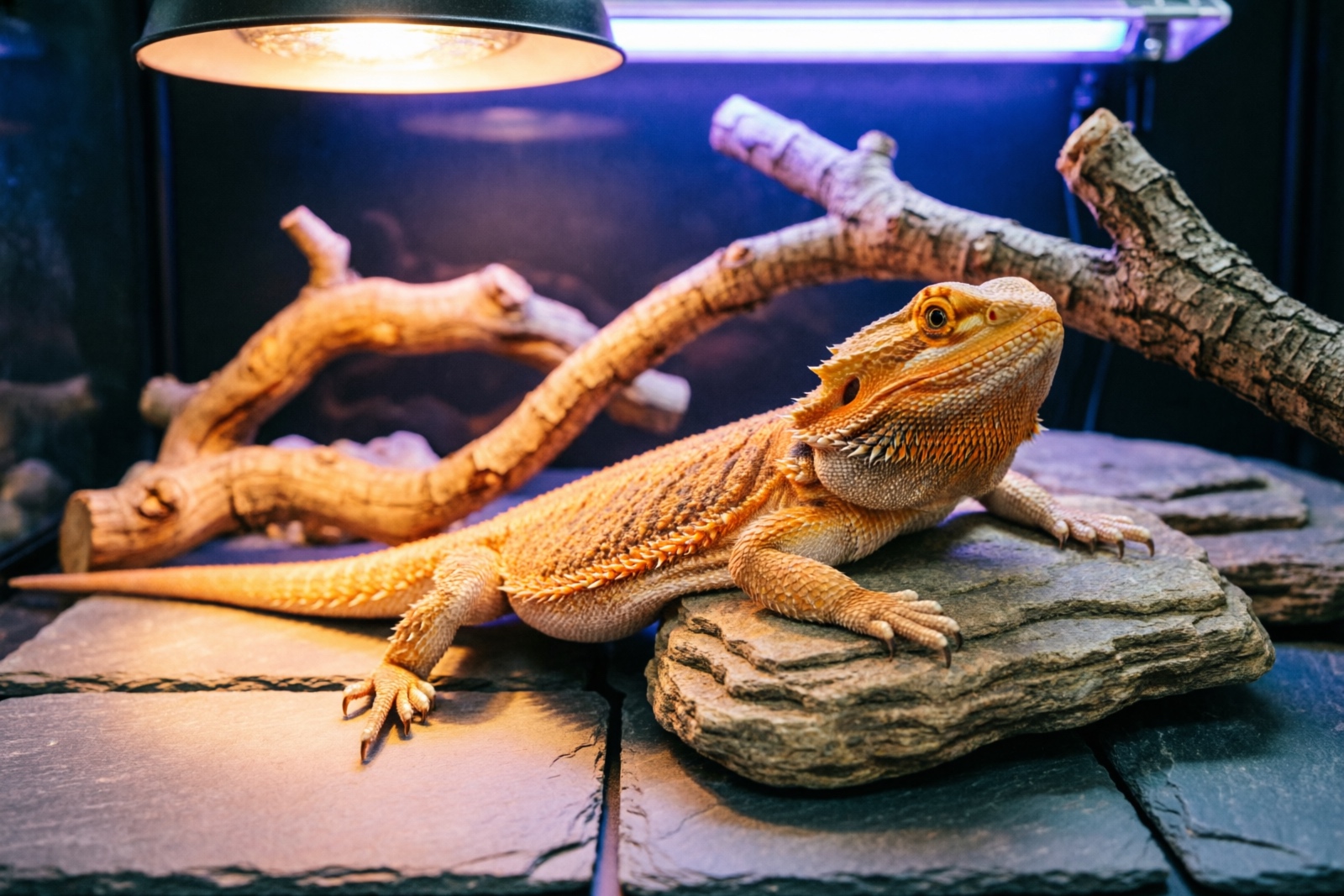
The Complete Bearded Dragon Care Guide
Bearded dragons have become one of the most popular reptile pets worldwide, and it’s easy to understand why. These fascinating lizards from Australia combine a docile temperament with relatively straightforward care requirements, making them ideal for both beginner and experienced reptile enthusiasts.
If you’re wondering how to take care of a bearded dragon, you’ve come to the right place. This comprehensive bearded dragon care guide covers everything you need to know about these remarkable creatures: from proper habitat setup and diet to daily care routines and common health issues. Whether you’re considering getting your first bearded dragon or looking to improve your current pet’s quality of life, this guide provides expert-backed advice to help your scaly friend thrive.
What You’ll Learn:
- ✅ Understanding bearded dragon behavior and needs
- ✅ Complete habitat setup with product recommendations
- ✅ Proper diet and nutrition guidelines
- ✅ Daily care and handling techniques
- ✅ Common health issues and prevention
- ✅ Shopping list for new owners
Proper bearded dragon care requires investment in the right equipment and knowledge, but the reward is a healthy, interactive pet that can live 8-12 years with good care.
Understanding Bearded Dragons
What Are Bearded Dragons?
Bearded dragons (Pogona vitticeps) are medium-sized lizards native to the arid and semi-arid regions of Australia. They get their name from the “beard” of spiny scales under their throat, which they can puff up when threatened or during territorial displays.
In the wild, bearded dragons inhabit dry forests, scrublands, and deserts where they bask on rocks and branches to regulate their body temperature. Understanding their natural habitat is crucial for providing proper bearded dragon care in captivity.
Key Facts:
- Scientific Name: Pogona vitticeps (Central Bearded Dragon)
- Natural Habitat: Australian deserts and dry forests
- Adult Size: 18-24 inches (45-60 cm) total length
- Lifespan: 8-12 years with proper care
- Weight: 300-600 grams (adults)
Why Choose a Bearded Dragon?
Bearded dragons make excellent pets for several reasons:
1. Docile Temperament Unlike many other reptiles, bearded dragons are known for their calm and gentle nature. They rarely bite and typically tolerate handling well, making them suitable for families with children (with supervision).
2. Interactive Personality These lizards recognize their owners and often display curiosity and engagement. Many bearded dragons enjoy being handled and will “arm wave” or bob their heads as forms of communication.
3. Manageable Size At 18-24 inches fully grown, bearded dragons are large enough to be impressive but small enough to house comfortably in a reasonable enclosure.
4. Diurnal Activity Bearded dragons are active during the day, which aligns with most owners’ schedules. You’ll see them basking, exploring, and hunting during daylight hours.
5. Relatively Easy Care While bearded dragon care requires specific habitat conditions and diet, they’re considered one of the easier reptile species to care for compared to more exotic or demanding reptiles. Also see our leopard gecko care guide for another popular beginner reptile, or our ball python care guide if you’re considering a pet snake.
For general reptile habitat principles beyond bearded dragons specifically, see our comprehensive reptile habitat setup guide.
Bearded Dragon Habitat Setup
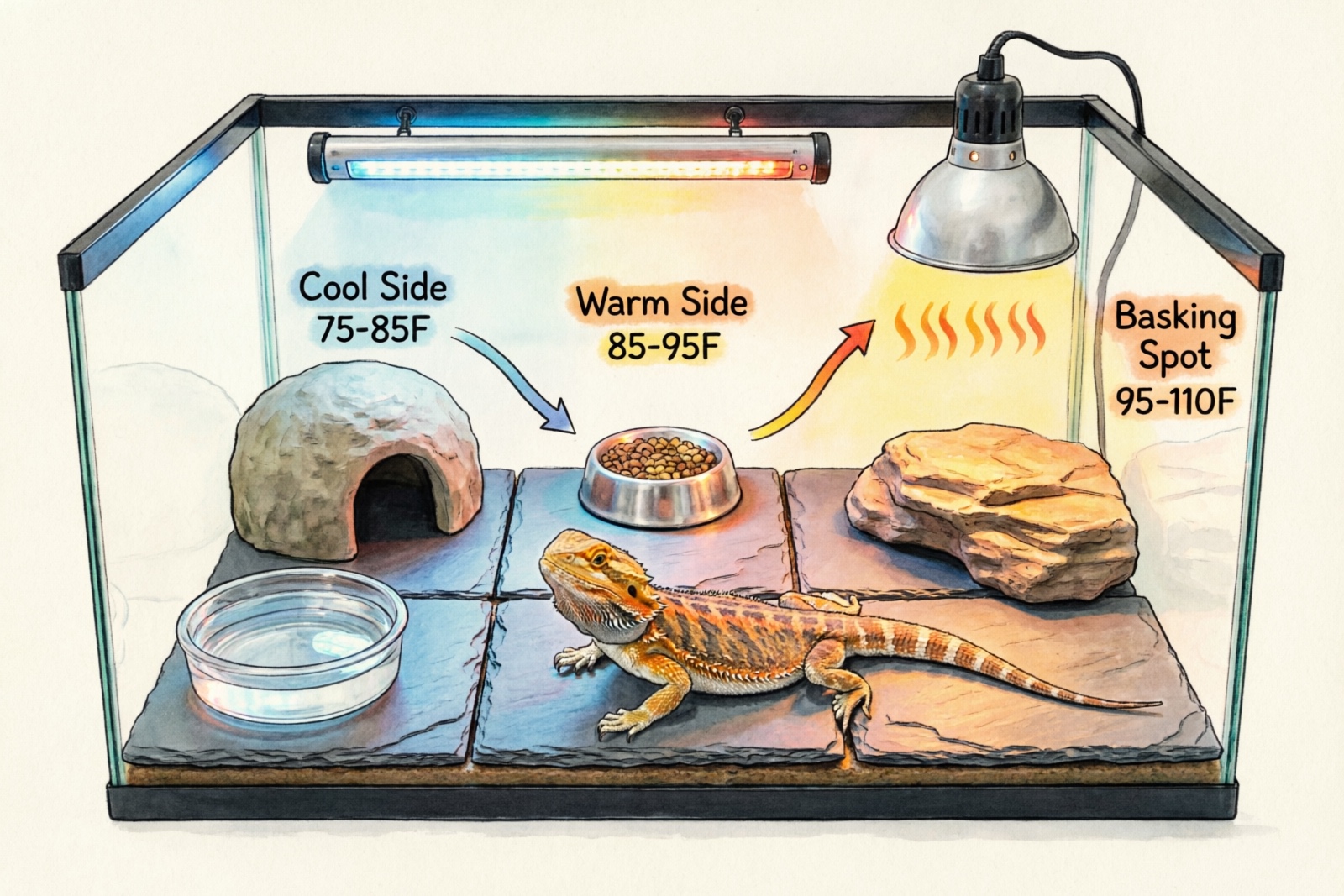
Creating the proper habitat is the most critical aspect of bearded dragon care. A well-designed enclosure mimics their natural Australian desert environment and provides everything they need for a healthy life.
Tank Size & Type
Minimum Tank Size Requirements:
- Baby/Juvenile (0-6 months): 20-40 gallon tank
- Juvenile (6-12 months): 40-75 gallon tank
- Adult (12+ months): Minimum 75 gallons, ideally 100-120 gallons
Why Tank Size Matters: Bearded dragons are active lizards that need space to thermoregulate (move between warm and cool areas), explore, and exercise. A tank that’s too small leads to stress, obesity, and health problems.
Tank Types Comparison:
| Tank Type | Pros | Cons | Best For |
|---|---|---|---|
| Glass Aquarium | Affordable, widely available, easy to clean | Poor insulation, heavy, limited ventilation | Beginners on budget |
| PVC Enclosure | Excellent insulation, lightweight, customizable | Expensive, limited availability | Serious keepers |
| Wood/Melamine | Good insulation, custom sizes | Heavy, can warp, needs waterproofing | DIY enthusiasts |
Product Recommendation: Best Premium Enclosure
unipaws 110 Gallon Reptile Tank - $199.99 ⭐ 4.5/5 This spacious 110-gallon tank provides ample room for adult bearded dragons. Features include:
- ✅ Stackable design for multiple setups
- ✅ Glass sliding doors with lock for security
- ✅ Front opening for easy access
- ✅ Cable port for wire management
- ✅ Professional appearance
Why It’s Worth It: At $199.99, this tank is an investment, but the 110-gallon capacity means you won’t need to upgrade as your bearded dragon grows. The stackable feature is excellent for owners planning multiple reptiles.
Lighting Requirements
UVB lighting is NON-NEGOTIABLE for bearded dragon care. Without proper UVB, bearded dragons cannot synthesize vitamin D3, leading to metabolic bone disease (MBD)—a serious, often fatal condition.
Bearded Dragon Lighting Requirements:
- UVB Type: T5 HO (High Output) linear bulbs
- Strength: 10.0-12.0 UVB output (desert species rating)
- Coverage: 75% of tank length
- Distance: 8-12 inches from basking spot
- Duration: 12-14 hours daily
UVB Bulb Comparison:
| Bulb Type | Output | Lifespan | Best For |
|---|---|---|---|
| T5 HO Linear | High, consistent | 6-12 months | Adult bearded dragons (recommended) |
| T8 Linear | Medium | 6 months | Smaller setups |
| Compact Coil | Lower, focused | 3-6 months | Temporary/budget use |
Product Recommendation: Best Overall UVB Kit
REPTI ZOO T5 HO UVB Lighting Combo Kit - $49.99 ⭐ 4.4/5 Complete UVB lighting solution including:
- ✅ T5 HO fixture with built-in reflector
- ✅ 24W Desert 10.0 UVB lamp included
- ✅ Easy installation
- ✅ Ideal for bearded dragons
Why It’s Great: This all-in-one kit eliminates guesswork. The T5 HO technology provides optimal UVB output, and the included fixture means you don’t need to buy components separately.
Product Recommendation: Best Value UVB Bulbs
Zoo Med ReptiSun 10.0 UVB Lamp 2-Pack - $54.84 ⭐ 4.6/5 - ✅ Industry-leading Zoo Med brand
- ✅ T5 HO bulbs, 2-pack value
- ✅ 6-12 month lifespan per bulb
- ✅ 24 watt, 22 inch length
Why It’s Smart: Buying a 2-pack saves money and ensures you always have a replacement on hand when bulbs need changing.
Temperature & Heating
Bearded dragons are ectotherms—they rely on external heat sources to regulate body temperature. Creating a proper temperature gradient is essential for bearded dragon care.
Temperature Requirements:
- Basking Spot: 95-110°F (35-43°C) for adults, 105-110°F (40-43°C) for babies
- Warm Side: 85-95°F (29-35°C)
- Cool Side: 75-85°F (24-29°C)
- Nighttime: Can drop to 65-75°F (18-24°C)
Heating Equipment:
Primary Heat Source: Basking bulb or ceramic heat emitter Secondary Heat Source (if needed): Under-tank heater for night warmth
Product Recommendation: Essential Heat Source
LUCKY HERP 150W Ceramic Heat Emitter - $15.99 ⭐ 4.5/5 - ✅ 150W ceramic heat emitter
- ✅ No light emitted (won’t disturb sleep)
- ✅ 10,000-hour lifespan
- ✅ Ideal for 24/7 heating
Why You Need This: Ceramic heat emitters provide consistent heat without light, making them perfect for maintaining nighttime temperatures without disrupting your bearded dragon’s day/night cycle.
Product Recommendation: Essential Fixture
Fluker’s Repta-Clamp Lamp - $16.99 ⭐ 4.4/5 - ✅ Heavy-duty clamp design
- ✅ On/off switch for convenience
- ✅ UL safety approved
- ✅ Fits bulbs up to 150W
Why It’s Essential: This clamp lamp securely holds your heat emitter or basking bulb. The on/off switch makes daily operation convenient.
Temperature Monitoring: Always use two thermometers—one on the warm side, one on the cool side. A digital thermometer with a probe provides the most accurate readings. For more on proper reptile heating principles, see our reptile habitat setup guide.
Substrate Options
Choosing the right substrate is crucial for bearded dragon care. The wrong substrate can cause impaction if ingested.
Recommended Substrates:
| Substrate | Pros | Cons | Rating |
|---|---|---|---|
| Tile (Slate/Ceramic) | Easy to clean, natural look, no impaction risk | Hard surface, requires cutting to fit | ⭐⭐⭐⭐⭐ Best |
| Paper Towels | Cheap, safe, easy to replace | Not attractive, frequent changes needed | ⭐⭐⭐⭐ Good for babies |
| Reptile Carpet | Reusable, soft, safe | Can harbor bacteria, difficult to clean | ⭐⭐⭐ Acceptable |
| Shelf Liner | Affordable, easy to clean, safe | Not natural looking | ⭐⭐⭐⭐ Good option |
AVOID These Substrates:
- ❌ Sand/Calcium Sand: Causes impaction, deadly if ingested
- ❌ Wood Shavings: Can cause respiratory issues
- ❌ Gravel: Impaction risk
- ❌ Walnut Shells: Sharp, causes internal injuries
Our Recommendation: Tile is the best substrate for adult bearded dragons—it’s easy to clean, looks natural, and poses zero impaction risk. For babies and juveniles, paper towels are safest.
Habitat Accessories
Essential Accessories:
- Basking Platform: Rock, log, or branch under heat lamp
- Hiding Spots: At least 2 hides (warm side and cool side)
- Water Dish: Shallow, large enough to soak in
- Food Dish: For vegetables and insects
Product Recommendation: Budget Starter Kit
Fluker’s Bearded Dragon Deluxe Starter Kit - $95.99 ⭐ 3.7/5 Includes essential items:
- ✅ Terrarium
- ✅ Basic lighting
- ✅ Food dish, water dish
- ✅ Decorations
Why Consider It: If you’re on a tight budget, this starter kit provides basics. However, you’ll eventually need to upgrade the tank and UVB lighting for proper bearded dragon care.
Bearded Dragon Diet & Nutrition
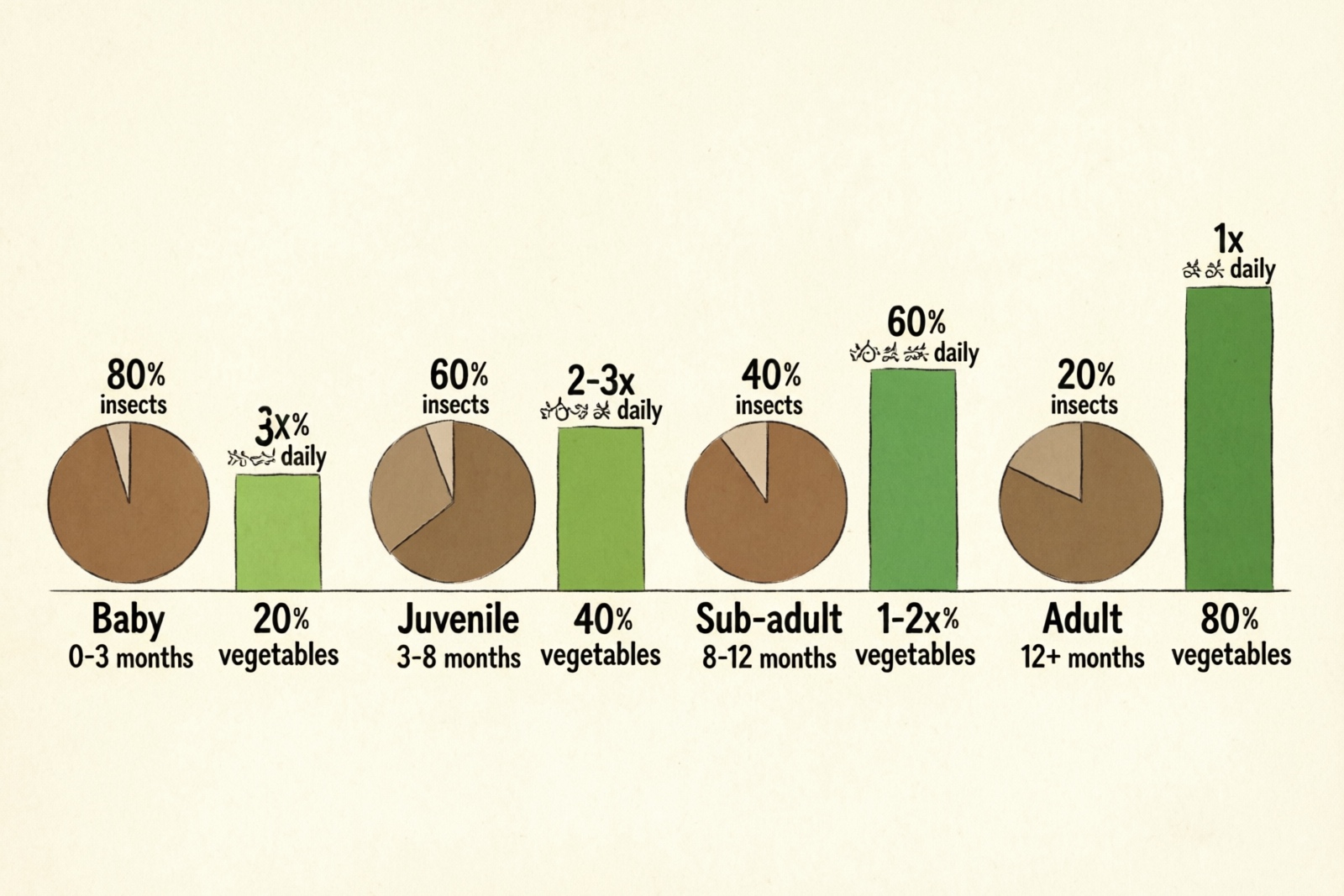
Understanding what bearded dragons eat is fundamental to their care. These omnivorous lizards require a carefully balanced diet of insects and vegetables, with ratios changing as they age.
What Do Bearded Dragons Eat?
Bearded dragons are omnivores, meaning they eat both animal and plant matter. Their diet in captivity should mimic their natural feeding habits.
Age-Based Feeding Ratios:
| Age | Insects | Vegetables | Frequency |
|---|---|---|---|
| Baby (0-3 months) | 80% | 20% | 3x daily |
| Juvenile (3-8 months) | 60% | 40% | 2-3x daily |
| Sub-adult (8-12 months) | 40% | 60% | 1-2x daily |
| Adult (12+ months) | 20% | 80% | 1x daily |
Staple Insects (Protein Sources)
Best Insects for Bearded Dragons:
- Dubia Roaches (Best overall)
- High protein, low fat
- Easy to digest
- Can’t infest your home
- Crickets (Most common)
- Readily available
- Stimulate hunting behavior
- Can gut-load easily
- Black Soldier Fly Larvae (Nutritious)
- High calcium content
- Good for babies
- Low fat
- Silkworms (Soft-bodied)
- High protein
- Easy to digest
- Good for sick dragons
Occasional Treats (Adults Only):
- Superworms (high fat)
- Mealworms (hard exoskeleton)
- Waxworms (very high fat—use sparingly)
Insect Feeding Tips:
- Gut-load insects 24-48 hours before feeding (feed them nutritious foods)
- Dust with calcium 3-4x per week for babies, 2-3x for adults
- Size matters: Never feed insects larger than the space between your dragon’s eyes
Safe Vegetables & Fruits
Staple Greens (Feed Daily):
- Collard greens
- Mustard greens
- Dandelion greens
- Turnip greens
- Endive
- Escarole
Occasional Vegetables (2-3x per week):
- Squash (butternut, yellow)
- Bell peppers
- Carrots (grated)
- Green beans
- Snap peas
Fruits (Treats Only, <10% of diet):
- Berries (strawberries, blueberries, raspberries)
- Melon (cantaloupe, honeydew)
- Apple (no seeds)
- Mango (small pieces)
Why Limit Fruit? Fruits are high in sugar and can cause diarrhea and tooth decay if fed too often.
Foods to AVOID
NEVER Feed These to Your Bearded Dragon:
| Food | Reason | Danger Level |
|---|---|---|
| Avocado | Contains persin (toxin) | ☠️ FATAL |
| Rhubarb | High oxalates, toxic | ☠️ FATAL |
| Fireflies/Lightning Bugs | Contain lucibufagin (toxin) | ☠️ FATAL |
| Wild-Caught Insects | May contain pesticides/parasites | ⚠️ HIGH |
| Onions/Garlic | Can cause anemia | ⚠️ HIGH |
| Spinach | Binds calcium absorption | ⚠️ MEDIUM |
| Iceberg Lettuce | No nutritional value, causes diarrhea | ⚠️ MEDIUM |
| Citrus | Too acidic, causes digestive upset | ⚠️ MEDIUM |
Supplements
Bearded dragons require calcium and vitamin supplements to prevent nutritional deficiencies.
Essential Supplements:
- Calcium Powder (with D3): Dust on insects 3-4x weekly
- Multivitamin: Dust on insects once weekly
- Calcium without D3: If using UVB properly
How to Dust Insects:
- Place insects in plastic bag
- Add small amount of supplement powder
- Shake gently to coat
- Feed immediately
For more information about reptile health beyond diet, see our reptile health care guide.
Daily Care & Handling
Proper daily care routines ensure your bearded dragon stays healthy and happy. Consistent handling also builds trust and creates a bond with your pet.
Daily Routine
Morning (When Lights Turn On):
- Turn on UVB and basking lights
- Check temperatures (warm side, cool side, basking spot)
- Offer fresh vegetables
- Provide fresh water in clean dish
- Feed insects (if feeding day)
Afternoon:
- Remove uneaten vegetables (after 4-6 hours)
- Spot clean enclosure (remove poop)
- Offer water if needed
Evening:
- Turn off lights (12-14 hours after morning on-time)
- Final check on bearded dragon
- Ensure nighttime temperatures are appropriate
Weekly Tasks:
- Clean water dish thoroughly
- Remove and clean decorations
- Check UVB bulb (replace every 6-12 months)
- Weigh your bearded dragon
Handling Your Bearded Dragon
Building Trust:
- Wait 1-2 weeks after bringing home a new bearded dragon before handling
- Start with 5-10 minute sessions and gradually increase
- Never grab from above—this mimics predator attacks
- Always support the entire body when holding
Proper Handling Technique:
- Approach slowly from the side
- Slide your hand under the chest/belly
- Support the tail with your other hand
- Hold close to your body for security
- Keep sessions positive (end before stress occurs)
Signs of Stress:
- Puffing up beard
- Opening mouth (hissing)
- Trying to escape
- Dark coloration
- Tail twitching
If you see these signs, gently return your bearded dragon to the enclosure and try again later.
Bathing & Hygiene
Weekly Baths (Recommended):
- Water Temperature: 85-90°F (lukewarm)
- Depth: Belly-deep only (never submerge head)
- Duration: 10-15 minutes
- Frequency: Once weekly (more often during shedding)
Benefits of Bathing:
- Helps with hydration
- Aids in shedding
- Keeps skin clean
- Provides exercise
- Many bearded dragons enjoy it!
Bathing Tips:
- Never leave unattended
- Use a dedicated reptile tub (not your bathtub)
- Gently mist if they don’t like standing water
- Pat dry with towel before returning to enclosure
Common Health Issues
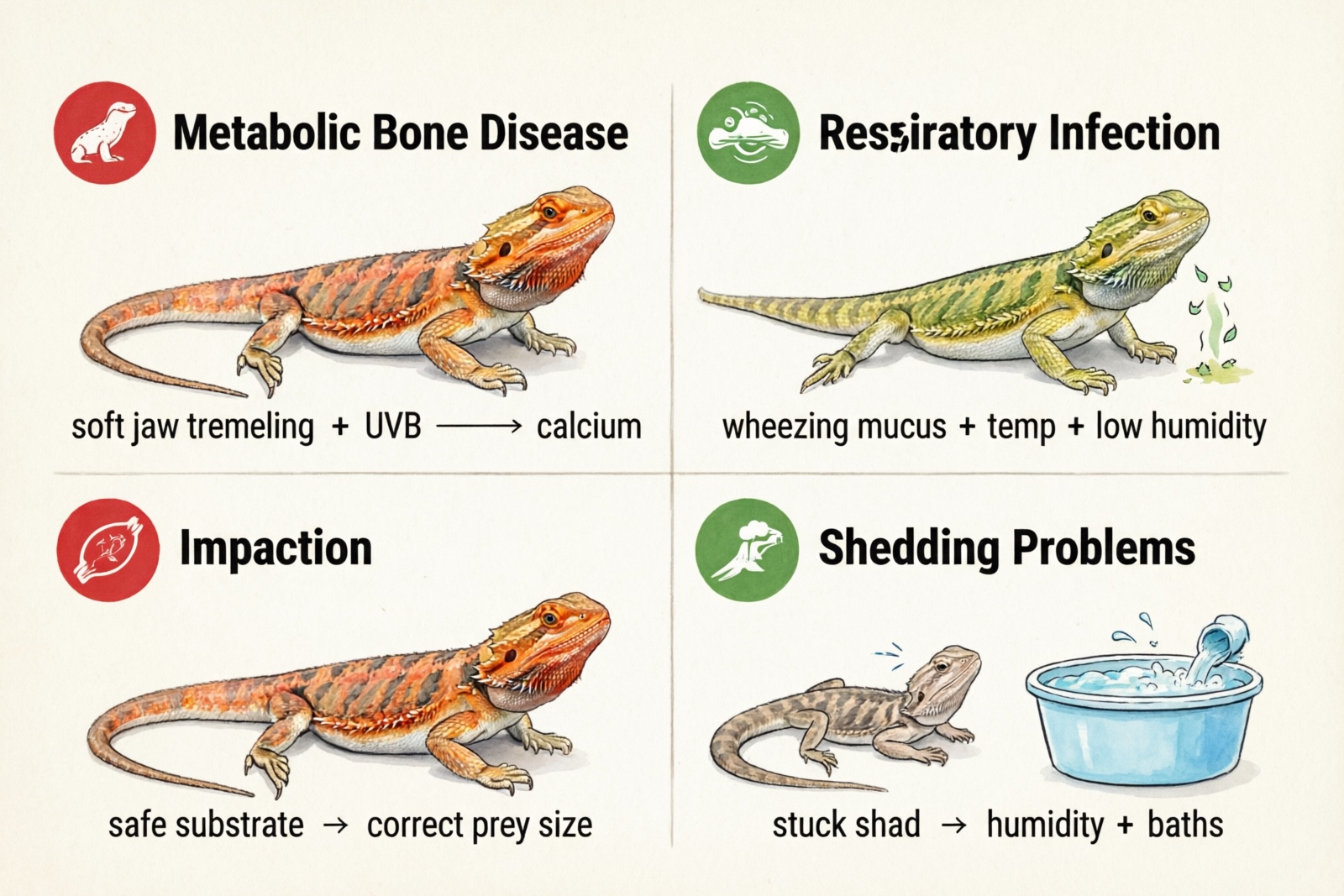
Understanding common health problems helps you identify issues early and seek veterinary care when needed. Regular observation is a key part of bearded dragon care.
Shedding Problems
Normal Shedding Process:
- Baby bearded dragons shed frequently (every few weeks)
- Adults shed every 4-6 weeks
- Shedding takes 1-2 weeks typically
- Color becomes dull before shedding
Signs of Problem Shedding:
- Stuck shed on toes, tail, or spikes
- Incomplete shedding after 2 weeks
- Discomfort or rubbing against objects
How to Help:
- Increase humidity slightly during shedding
- Provide warm baths (85-90°F)
- Never pull stuck shed (can damage new skin)
- Use a soft toothbrush to gently remove stuck shed
Metabolic Bone Disease (MBD)
Cause: Lack of UVB lighting and/or calcium supplementation
Symptoms:
- Soft or rubbery jaw
- Trembling or twitching
- Difficulty walking
- Curved limbs
- Swollen legs
Prevention:
- ✅ Provide proper UVB lighting (T5 HO bulbs)
- ✅ Dust insects with calcium 3-4x weekly
- ✅ Replace UVB bulbs every 6-12 months
- ✅ Ensure proper temperature gradient
Treatment: See a reptile veterinarian immediately. MBD is serious and requires professional care.
Respiratory Infections
Causes:
- Temperatures too low
- High humidity
- Poor ventilation
Symptoms:
- Wheezing or clicking sounds
- Mucus around nose/mouth
- Open-mouth breathing
- Lethargy
- Loss of appetite
Prevention:
- Maintain proper temperatures
- Keep humidity low (30-40%)
- Ensure good ventilation
- Regular enclosure cleaning
Treatment: See a reptile veterinarian. Respiratory infections require antibiotics.
Impaction
Causes:
- Ingesting loose substrate (sand, gravel)
- Eating prey that’s too large
- Dehydration
Symptoms:
- Not pooping for several days
- Bloated appearance
- Straining to defecate
- Loss of appetite
- Lethargy
Prevention:
- Use safe substrate (tile, paper towels)
- Feed appropriately-sized insects
- Ensure proper hydration
- Provide warm baths
Treatment:
- Warm baths can help mild cases
- See a vet if no improvement in 24-48 hours
- Severe impaction may require surgery
Shopping List for New Owners
Getting started with bearded dragon care requires specific equipment. Here’s a complete shopping list organized by priority.
Essential Items (Must-Have)
1. Enclosure (75-120 gallon)
- unipaws 110 Gallon Tank - $199.99
- Alternative: 75-gallon glass aquarium ($100-150)
2. UVB Lighting
- REPTI ZOO T5 HO UVB Kit - $49.99
- Replacement bulbs: Zoo Med UVB 2pk - $54.84
3. Heating
- LUCKY HERP Ceramic Heat Emitter - $15.99
- Fluker’s Clamp Lamp - $16.99
4. Substrate
- ZeeDix Reptile Carpet - $19.99 ⭐ 4.4/5 🔥
- Tile (slate or ceramic): $20-40
- Paper towels: $5-10
5. Thermometer/Hygrometer
- PAIZOO LED Digital Hygrometer - $15.99 ⭐ 4.3/5 🔥
- Digital with probe: $15-25
6. Food & Water Dishes
- Exo Terra Water Dish - $14.84 ⭐ 4.4/5 🔥
- Shallow ceramic dishes: $10-15
Budget Starter Kits
Fluker’s Bearded Dragon Starter Kit - $95.99
- Includes terrarium, lighting, and accessories
- Good for beginners on a budget
- Will need upgrades as dragon grows
BINANO Reptile Tank Kit - $42.99
- Budget-friendly starter option
- Includes heat lamp and accessories
- Best for temporary housing or small reptiles
Optional Accessories
RUNANIA Tank Accessories 10-Piece Set - $20.49
- Includes hammock, vines, plants
- Great for habitat enrichment
- Easy to install and rearrange
Total Cost Estimate
| Budget Level | Enclosure | Lighting | Heating | Accessories | Total |
|---|---|---|---|---|---|
| Budget | $100 (75gal) | $50 | $35 | $50 | ~$235 |
| Standard | $150 (100gal) | $55 | $35 | $75 | ~$315 |
| Premium | $200 (110gal) | $55 | $35 | $100 | ~$390 |
Ongoing Monthly Costs:
- Insects: $20-40
- Vegetables: $10-20
- Supplements: $5-10
- Electricity: $10-15
- Total Monthly: $45-85
Frequently Asked Questions
How long do bearded dragons live?
With proper bearded dragon care, these reptiles typically live 8-12 years in captivity. Some well-cared-for individuals reach 14+ years. Lifespan depends on genetics, diet, habitat quality, and veterinary care.
Do bearded dragons bite?
Bearded dragons rarely bite. They’re docile by nature and usually only bite if they feel threatened, are in pain, or mistake your finger for food. Their bite is not dangerous to humans but can be startling.
How often should I feed my bearded dragon?
- Babies (0-3 months): 3 times daily
- Juveniles (3-8 months): 2-3 times daily
- Sub-adults (8-12 months): 1-2 times daily
- Adults (12+ months): Once daily (insects 2-3x per week)
Do bearded dragons need heat at night?
If your home stays above 65°F (18°C) at night, additional heat isn’t necessary. If temperatures drop below 65°F, use a ceramic heat emitter (no light) to maintain 65-75°F.
Can bearded dragons eat fruit?
Yes, but only as occasional treats. Fruits should comprise less than 10% of their diet. Safe options include berries, melon, and apple (no seeds). Too much fruit causes diarrhea due to high sugar content.
How do I know if my bearded dragon is healthy?
Signs of a healthy bearded dragon:
- ✅ Active and alert during the day
- ✅ Clear eyes (no discharge)
- ✅ Clean nostrils (no mucus)
- ✅ Eating and pooping regularly
- ✅ Normal body weight (not too thin or obese)
- ✅ Smooth movements
- ✅ Regular shedding
Why is my bearded dragon not eating?
Common reasons include:
- Brumation (hibernation-like state in winter)
- Incorrect temperatures
- Stress from environment changes
- Illness
- Shedding
- Food preferences
If your bearded dragon stops eating for more than a few days and shows other symptoms, see a reptile veterinarian.
Can bearded dragons swim?
They can “swim” in shallow water but are not natural swimmers. Never place them in deep water. Bathing in belly-deep water is safe and beneficial.
Conclusion
Proper bearded dragon care requires dedication, but these remarkable reptiles make rewarding pets for owners willing to invest in their needs. By providing the right habitat, diet, and daily care, you’ll enjoy 8-12 years with your scaly companion.
Key Takeaways for Successful Bearded Dragon Care:
- Habitat First: Invest in a large enclosure (75-120 gallons) with proper UVB lighting and temperature gradient
- Balanced Diet: Feed age-appropriate ratios of insects and vegetables with calcium supplements
- Daily Attention: Maintain consistent light cycles, temperatures, and feeding schedules
- Health Monitoring: Watch for signs of illness and establish a relationship with a reptile veterinarian
- Patience with Handling: Build trust gradually—bearded dragons become more handleable over time
Getting Started Checklist:
- Purchase proper enclosure (75-120 gallons)
- Set up UVB lighting (T5 HO)
- Install heating equipment with thermostat
- Add safe substrate (tile recommended)
- Provide hiding spots and basking platforms
- Stock up on insects and vegetables
- Purchase calcium supplements
Starting your bearded dragon journey requires an initial investment of $300-500 for quality equipment, but this investment pays off in your pet’s health and longevity. These fascinating lizards recognize their owners, display unique personalities, and provide years of companionship when cared for properly.
For more reptile care information, explore our reptile habitat setup guide and other care articles. Also check our Box Turtle Care Guide if you’re interested in other fascinating reptile pets. Your bearded dragon will thank you for the excellent care!
Additional Bearded Dragon Care Tips
Understanding Bearded Dragon Behavior
Proper bearded dragon care involves understanding their unique behaviors and body language. These fascinating lizards communicate through various gestures and postures.
Common Behaviors:
Head Bobbing: Bearded dragons bob their heads to show dominance or during courtship. Rapid head bobbing indicates dominance, while slower bobbing can be a sign of submission.
Arm Waving: This submissive gesture often appears when a bearded dragon acknowledges a dominant dragon or when they feel threatened. It’s also common in babies.
Beard Puffing: When threatened or displaying dominance, bearded dragons puff out their throat area (their “beard”), often turning it black. This is a defensive posture.
Glass Surfing: If your bearded dragon constantly scratches at the glass, they may see their reflection or want to come out. This can also indicate the tank is too small.
Brumation: Bearded dragons may enter a hibernation-like state during winter months. They eat less and sleep more. This is normal bearded dragon behavior.
Creating the Perfect Environment
Beyond basic habitat setup, several environmental factors affect bearded dragon care quality.
Humidity Control:
- Ideal humidity: 30-40%
- Too high humidity causes respiratory infections
- Use a hygrometer to monitor humidity levels
- Increase ventilation if humidity exceeds 50%
Light Cycle Importance: Bearded dragons need consistent light cycles to maintain their circadian rhythm. Proper bearded dragon lighting requirements include:
- 12-14 hours of light during spring/summer
- 10-12 hours of light during fall/winter
- Use a timer for consistency
- Complete darkness at night (no colored bulbs)
Cage Placement: Where you place your bearded dragon tank affects bearded dragon care:
- Avoid direct sunlight (causes overheating)
- Keep away from drafty areas
- Place in a room with stable temperatures
- Choose a quiet location (avoid TV rooms or high-traffic areas)
Advanced Bearded Dragon Diet Tips
Taking bearded dragon diet to the next level involves understanding nutritional content and variety.
Gut Loading Insects: Before feeding insects to your bearded dragon, “gut load” them with nutritious foods:
- Cricket diet: Dark leafy greens, carrots, sweet potato
- Dubia roach diet: High-quality roach chow, vegetables
- Wait 24-48 hours after gut loading before feeding
Creating a Feeding Schedule:
| Age | Morning | Afternoon | Evening |
|---|---|---|---|
| Baby | Insects + Veggies | Insects | Remove uneaten food |
| Juvenile | Insects + Veggies | Veggies | Remove uneaten food |
| Adult | Veggies + occasional insects | - | Remove uneaten food |
Hydration Tips: Bearded dragons often don’t drink from standing water. Ensure proper hydration:
- Mist vegetables lightly before serving
- Provide weekly baths
- Use a dropper to offer water (some dragons learn to drink this way)
- Monitor for dehydration signs (sunken eyes, wrinkled skin)
Seasonal Care Considerations
Bearded dragon care changes with seasons:
Spring/Summer:
- Longer light cycles (14 hours)
- More active behavior
- Increased appetite
- Breeding season behaviors may appear
Fall/Winter:
- Shorter light cycles (10-12 hours)
- Possible brumation
- Decreased appetite
- Less activity
Brumation Care: If your bearded dragon enters brumation:
- Don’t force feed
- Reduce light cycle to 10 hours
- Maintain temperatures (don’t let drop below 65°F)
- Offer water occasionally
- Don’t handle frequently
- Weigh weekly to ensure health
Socialization and Enrichment
Enriched environments improve bearded dragon care quality:
Tank Enrichment Ideas:
- Rearrange decorations monthly
- Add new climbing branches
- Provide dig boxes (with safe substrate)
- Introduce new hiding spots
- Rotate toys and accessories
Outside-the-Tank Time:
- Create a safe, enclosed play area
- “Dragon-proof” the room (block escape routes)
- Supervise at all times
- 30-60 minutes of exploration time
- Great exercise opportunity
Long-Term Health Monitoring
Ongoing bearded dragon care includes regular health checks:
Weekly Health Check:
- Weigh your bearded dragon (track trends)
- Check eyes (clear, no discharge)
- Examine skin (no unusual spots or injuries)
- Observe appetite and poop
- Check mobility (no limping or difficulty moving)
When to See a Vet: Establish a relationship with a reptile veterinarian for routine care. Seek immediate care for:
- Not eating for 7+ days (adults) or 2+ days (babies)
- Lethargy or unresponsiveness
- Difficulty breathing
- Swollen limbs or soft jaw
- Prolonged not pooping (5+ days)
- Visible injuries or abnormalities
Annual Vet Visits:
- Fecal exam for parasites
- General health check
- Discussion of diet and care
Understanding Bearded Dragon Lifespan Factors
Several factors influence bearded dragon lifespan:
Genetics: Some bloodlines live longer than others Diet Quality: Proper nutrition prevents many health issues UVB Lighting: Essential for calcium metabolism Temperature Control: Proper thermoregulation prevents illness Stress Levels: Chronic stress weakens immune system Veterinary Care: Early treatment of health issues
Maximizing Lifespan Through Proper Bearded Dragon Care:
- Provide optimal habitat conditions
- Feed balanced, varied diet
- Maintain consistent light/temperature cycles
- Minimize stress through proper handling
- Regular health monitoring
- Prompt veterinary care when needed
Common Mistakes to Avoid
New owners often make these bearded dragon care mistakes:
1. Inadequate Tank Size
- Mistake: Using tanks that are too small
- Consequence: Stress, poor thermoregulation, health issues
- Solution: Start with appropriate size or upgrade quickly
2. Insufficient UVB
- Mistake: Using weak UVB bulbs or placing them too far away
- Consequence: Metabolic bone disease
- Solution: Use T5 HO bulbs, replace every 6-12 months
3. Wrong Temperatures
- Mistake: Basking spot too cool or too hot
- Consequence: Poor digestion, suppressed immune system
- Solution: Use digital thermometers, create proper gradient
4. Poor Diet
- Mistake: Feeding too many insects to adults, or too few to babies
- Consequence: Obesity or malnutrition
- Solution: Follow age-appropriate feeding ratios
5. Dangerous Substrate
- Mistake: Using sand or calcium sand
- Consequence: Impaction (can be fatal)
- Solution: Use tile, paper towels, or reptile carpet
6. Skipping Vet Care
- Mistake: Waiting too long to seek veterinary help
- Consequence: Preventable conditions become serious
- Solution: Establish vet relationship early, seek care promptly
Bearded Dragon Care for Different Life Stages
Bearded dragon care varies significantly by age:
Hatchlings (0-2 months):
- Very small and fragile
- Need higher temperatures (105-110°F basking)
- Feed 3x daily, mostly insects
- Use paper towels as substrate
- Handle minimally
Juveniles (2-8 months):
- Rapid growth period
- Gradually increase vegetable proportion
- Feed 2-3x daily
- Transition to larger tank
- Begin regular handling
Sub-adults (8-12 months):
- Growth slowing
- Shift diet toward adult ratios
- Feed 1-2x daily
- Should be in adult-sized tank
- Establish handling routine
Adults (12+ months):
- Fully grown
- Adult diet: 80% vegetables, 20% insects
- Feed once daily
- Monitor for obesity
- Regular handling and interaction
Seniors (7+ years):
- May slow down
- Watch for age-related health issues
- May need diet adjustments
- Gentler handling
- More frequent vet checks
Each life stage requires adjusted bearded dragon care approaches for optimal health.
Product Comparison Table
Here’s a quick comparison of recommended products for bearded dragon care:
UVB Lighting Comparison
| Product | Price | Rating | Type | Coverage | Best For |
|---|---|---|---|---|---|
| REPTI ZOO T5 HO Kit | $49.99 | ⭐ 4.4/5 | T5 HO Complete | 24” tank | Best Overall |
| Zoo Med ReptiSun 2pk | $54.84 | ⭐ 4.6/5 | T5 HO Bulbs | Replacement | Best Value |
Heating Equipment Comparison
| Product | Price | Rating | Type | Wattage | Best For |
|---|---|---|---|---|---|
| LUCKY HERP Ceramic | $15.99 | ⭐ 4.5/5 | Ceramic Emitter | 150W | Essential Heat |
| Fluker’s Clamp Lamp | $16.99 | ⭐ 4.4/5 | Fixture | Up to 150W | Essential Fixture |
Enclosure Options
| Product | Price | Rating | Size | Features | Best For |
|---|---|---|---|---|---|
| unipaws 110 Gallon | $199.99 | ⭐ 4.5/5 | 110 gal | Stackable, lockable | Best Premium |
| Fluker’s Starter Kit | $95.99 | ⭐ 3.7/5 | 20 gal | Complete kit | Budget Starter |
| BINANO Tank Kit | $42.99 | ⭐ 3.8/5 | Small | Basic accessories | Budget Option |
Accessories
| Product | Price | Rating | Pieces | Features | Best For |
|---|---|---|---|---|---|
| RUNANIA Tank Set | $20.49 | ⭐ 4.5/5 | 10 pieces | Hammock, plants, vines | Enrichment |
Total Estimated Setup Cost:
- Budget Setup: ~$235 (75-gal tank, basic lighting, heating)
- Standard Setup: ~$315 (100-gal tank, quality lighting, heating)
- Premium Setup: ~$390 (110-gal tank, best lighting, heating, accessories)
Quick Reference: Bearded Dragon Care Checklist
Daily Checklist
- Turn on lights (morning)
- Check temperatures (all zones)
- Offer fresh vegetables
- Feed insects (if feeding day)
- Provide fresh water
- Spot clean enclosure
- Turn off lights (evening)
Weekly Checklist
- Deep clean water dish
- Clean decorations
- Weigh bearded dragon
- Check UVB bulb (plan replacement)
- Bath your bearded dragon
Monthly Checklist
- Full enclosure cleaning
- Replace substrate (if using disposable)
- Check all equipment
- Review diet and feeding schedule
- Health assessment
Quarterly Checklist
- Replace UVB bulb (every 6-12 months)
- Deep clean entire setup
- Vet check-up (optional)
- Review and update bearded dragon care routine
This comprehensive bearded dragon care guide provides everything you need to raise a healthy, happy pet. Remember: consistent, proper care leads to a long, rewarding relationship with your bearded dragon. Start with quality equipment, maintain daily routines, and always prioritize your pet’s health and wellbeing.
Ready to begin your bearded dragon journey? Use this guide as your roadmap, invest in quality equipment, and enjoy years of companionship with one of the most rewarding reptile pets available!
Expert Tips for Optimal Bearded Dragon Care
Temperature Management Best Practices
Proper bearded dragon care requires precise temperature control throughout the enclosure. Here are expert recommendations for maintaining optimal temperatures:
Using Thermostats: A thermostat is essential for safe bearded dragon care. It prevents overheating and ensures consistent temperatures. Connect your ceramic heat emitter or basking bulb to a thermostat set to maintain proper temperatures automatically.
Temperature Monitoring Tools:
- Digital thermometers with probes (most accurate)
- Temperature guns for quick surface readings
- Hygrometer/thermometer combos for comprehensive monitoring
Seasonal Temperature Adjustments:
- Summer: May need less heating, monitor carefully
- Winter: May need supplemental heating, especially at night
- Room temperature affects enclosure temperature significantly
Proper bearded dragon care includes adapting to seasonal changes while maintaining optimal conditions year-round.
Lighting Optimization for Health
UVB lighting is the cornerstone of bearded dragon care. Without adequate UVB, bearded dragons cannot properly metabolize calcium, leading to serious health issues.
UVB Bulb Replacement Schedule:
- T5 HO bulbs: Replace every 12 months
- T8 bulbs: Replace every 6 months
- Compact bulbs: Replace every 4-6 months
- Mark your calendar for replacement dates
UVB Distance Guidelines: The effectiveness of UVB lighting in bearded dragon care depends on proper distance:
- T5 HO with reflector: 12-18 inches from basking spot
- T5 HO without reflector: 8-12 inches
- T8 bulbs: 6-8 inches
- Compact bulbs: 5-7 inches
Signs of Inadequate UVB: If your bearded dragon care routine lacks proper UVB, watch for:
- Lethargy and decreased activity
- Poor appetite
- Soft bones or jaw
- Trembling or twitching
- Difficulty walking
These symptoms require immediate veterinary attention and UVB improvement.
Diet Optimization Strategies
Advanced bearded dragon care involves understanding nutritional content and optimizing diet for different life stages and health conditions.
Creating a Feeding Calendar: Organize your bearded dragon care feeding schedule:
- Monday: Staple insects (Dubia roaches)
- Tuesday: Dark leafy greens
- Wednesday: Variety insects (crickets)
- Thursday: Mixed vegetables
- Friday: Staple insects with calcium
- Saturday: Fruit treat (small amount)
- Sunday: Greens with multivitamin dust
Rotation for Variety: Bearded dragon care improves with dietary variety. Rotate:
- Insects: Crickets, Dubia roaches, black soldier fly larvae
- Greens: Collard, mustard, dandelion, turnip
- Vegetables: Squash, bell peppers, carrots
- Fruits: Berries, melon (treats only)
Feeding Techniques:
- Hand-feeding builds trust and bonding
- Tong-feeding prevents accidental bites
- Free-ranging insects provides exercise and stimulation
- Bowl feeding works for vegetables
Each technique has benefits for bearded dragon care.
Advanced Habitat Customization
Taking bearded dragon care to the professional level involves habitat customization:
Creating Microclimates: Within the temperature gradient, create specific zones:
- Hot basking zone (105-110°F)
- Warm activity zone (90-95°F)
- Moderate zone (80-85°F)
- Cool retreat zone (75-80°F)
Vertical Space Utilization: Bearded dragon care benefits from vertical space:
- Install multiple levels and platforms
- Provide climbing branches
- Create basking platforms at different heights
- Ensure safe climbing surfaces
Background and Visual Barriers: Reduce stress in your bearded dragon care routine by:
- Adding background to back and sides of tank
- Creating visual barriers with decorations
- Providing multiple hiding options
- Reducing external visual stressors
Professional Handling Techniques
Advanced bearded dragon care includes proper handling for health checks and bonding:
Health Check Handling: Weekly handling sessions for health assessment:
- Support entire body
- Check eyes, nose, mouth
- Examine skin and scales
- Feel for lumps or abnormalities
- Check limbs and tail
- Observe breathing
Socialization Handling: For well-adjusted bearded dragons, handling should be:
- Regular: Daily or every other day
- Gentle: Never squeeze or restrain tightly
- Positive: End sessions before stress occurs
- Short: 10-15 minutes initially, longer over time
Proper handling is essential for comprehensive bearded dragon care.
Record Keeping for Optimal Care
Serious bearded dragon care enthusiasts maintain detailed records:
Daily Log:
- Food offered and eaten
- Poop frequency and appearance
- Behavior observations
- Temperature readings
- Lighting duration
Weekly Log:
- Weight measurement
- Health observations
- Shedding progress
- Appetite changes
Monthly Log:
- UVB bulb replacement dates
- Equipment maintenance
- Vet visits
- Diet changes
This documentation improves bearded dragon care by identifying patterns and potential issues early.
Emergency Preparedness
Professional bearded dragon care includes emergency planning:
Power Outage Plan:
- Have backup heat sources (hand warmers, hot water bottles)
- Know safe temperature ranges
- Plan for extended outages (24+ hours)
- Keep vet contact information accessible
First Aid Kit for Bearded Dragon Care:
- Sterile saline solution
- Cotton swabs
- Bandage material
- Digital thermometer
- Emergency vet contact
- Reptile-safe antiseptic
When to Seek Emergency Care: Contact a reptile vet immediately for:
- Severe lethargy or unresponsiveness
- Not eating for extended periods
- Difficulty breathing
- Visible injuries
- Prolapse
- Seizures
Quick action is crucial in bearded dragon care emergencies.
Final Thoughts on Bearded Dragon Care
Successful bearded dragon care combines proper knowledge, quality equipment, consistent routines, and genuine care for your pet’s wellbeing. These remarkable reptiles reward dedicated owners with years of companionship, unique personalities, and fascinating behaviors.
The Three Pillars of Excellent Bearded Dragon Care:
- Proper Environment: Correct tank size, UVB lighting, temperature gradient, and safe substrate
- Balanced Nutrition: Age-appropriate diet with proper supplements
- Consistent Attention: Daily care routines, regular handling, and health monitoring
By following this comprehensive bearded dragon care guide, you’re equipped with the knowledge to provide optimal care for your scaly companion. Remember that bearded dragon care is a long-term commitment—these pets can live 8-12 years with proper care.
Start your bearded dragon journey today, invest in quality equipment, maintain consistent care routines, and enjoy the rewarding experience of sharing your life with one of the most fascinating reptile pets available!
For more information on reptile care, explore our reptile habitat setup guide and other comprehensive care guides.
This bearded dragon care guide represents current best practices based on veterinary recommendations and experienced keeper knowledge. Always consult a reptile veterinarian for specific health concerns.