What Is a Ball Python?
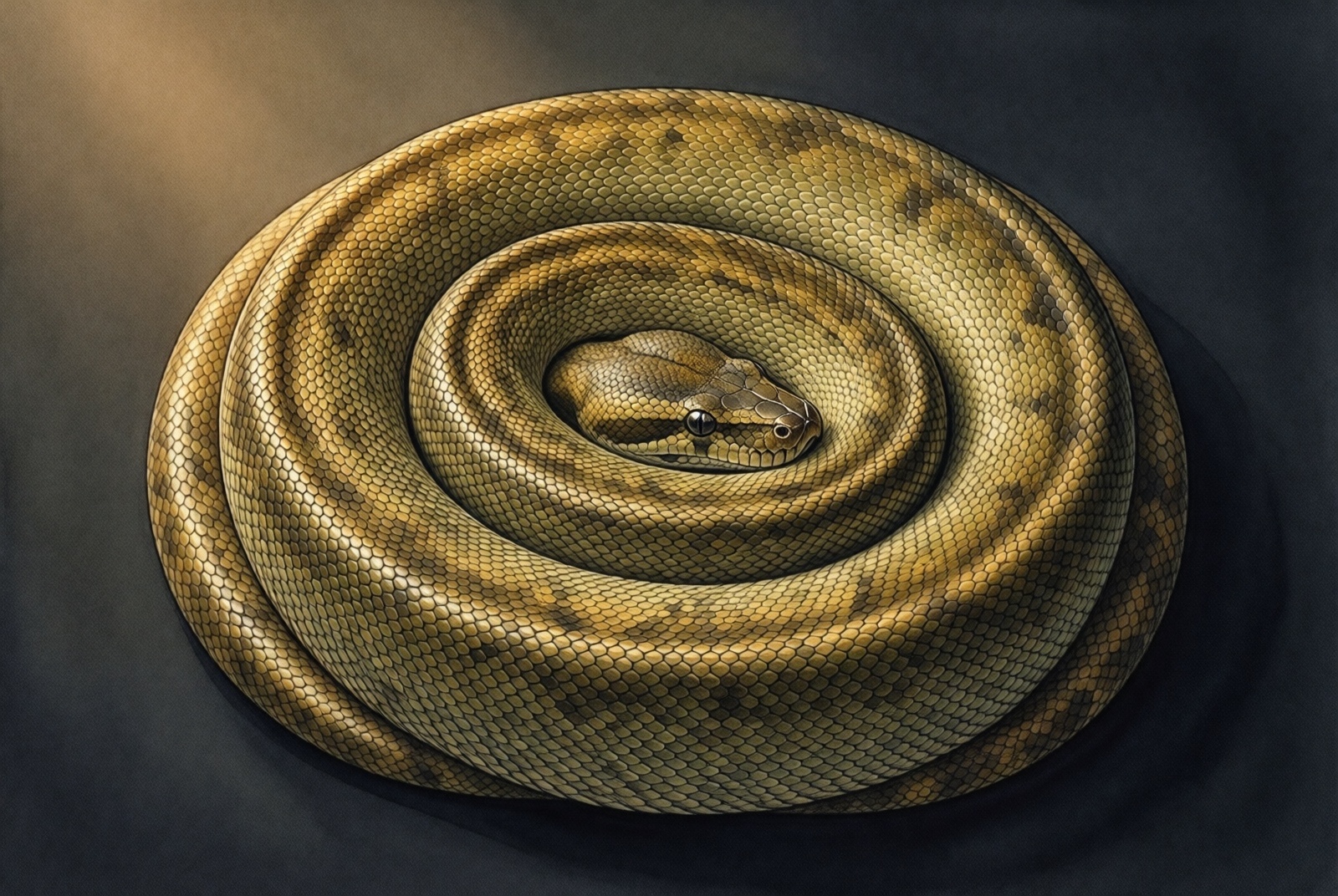
The ball python (Python regius) is a non-venomous constrictor snake native to West and Central Africa. It is the smallest of the African python species, typically reaching 3-5 feet in length. The species is named for its characteristic defensive behavior — when threatened, the snake coils tightly into a ball with its head protected at the center.
The scientific name Python regius translates to “royal python,” a reference to the legend that African rulers wore live snakes of this species as jewelry. In the United Kingdom, the species is still widely called the “Royal Python” rather than the common American name. For complete husbandry requirements — enclosure setup, temperature, humidity, feeding, and health — see our ball python care guide.
| Attribute | Detail |
|---|---|
| Scientific name | Python regius |
| Common name | Ball Python / Royal Python |
| Family | Pythonidae |
| Adult size | 3-5 feet (90-152 cm) |
| Adult weight | 1,000-2,500 grams |
| Lifespan | 20-30 years (captivity) |
| Activity pattern | Nocturnal / Crepuscular |
| Native range | West & Central Africa |
| Temperament | Docile, calm, handles well |
| Venom | Non-venomous (constrictor) |
Ball Python Species & Types
Mazuri Aquatic Turtle Diet is a quality option worth considering for your setup.
Python regius is the sole recognized species within its taxonomic placement. Unlike some reptile genera that contain multiple species (such as the bearded dragon’s genus Pogona with eight species), this snake is a single species. When people discuss ball python types, they are referring to morphs — genetic color and pattern variations — not separate species or subspecies.
The species was originally described as Boa regia by George Shaw in 1802 before being reclassified into the Python genus. It belongs to the Pythonidae family, which includes all true pythons found across Africa, Asia, and Australia.
Other African Pythons
For context, this species is the smallest member of its family in Africa. Understanding how it compares to relatives helps explain why it became the most popular pet python:
| Species | Max Length | Native Range | Pet Availability |
|---|---|---|---|
| Ball Python (P. regius) | 5 ft | West/Central Africa | ✅ Most popular pet snake |
| African Rock Python (P. sebae) | 20 ft | Sub-Saharan Africa | ❌ Dangerous, restricted |
| Angolan Python (P. anchietae) | 6 ft | Angola/Namibia | ❌ Very rare |
| Southern African Python (P. natalensis) | 16 ft | Southern Africa | ❌ Large, powerful |
Only this species has the manageable size and docile temperament suitable for the average pet owner. For comparison with other beginner reptiles, see our leopard gecko care and corn snake care guides.
Ball Python Size & Weight
Many owners find that Pure Water Pebbles works well for their pet’s needs.
Adult Size
The size is one of its most appealing traits for pet owners. Adults reach 3-5 feet (90-152 cm), with females consistently larger than males. For comparison with bearded dragon size — bearded dragons reach 18-24 inches, making these snakes roughly twice as long but far more slender.
- Females: 4-5 feet, 1,500-2,500 grams
- Males: 3-4 feet, 1,000-1,800 grams
This size places them firmly in the “medium-small” category for pet snakes — large enough to be visually impressive but small enough to handle comfortably and house in a reasonably sized enclosure.
Ball Python Size Chart by Age
Growth is fastest during the first year. The size chart below tracks typical development from hatchling to full adult:
| Age | Length | Weight | Growth Phase |
|---|---|---|---|
| Hatchling | 10-17” (25-43 cm) | 50-100 g | Rapid growth |
| 3 months | 14-22” (35-56 cm) | 150-300 g | Fast growth |
| 6 months | 18-26” (45-66 cm) | 400-700 g | Steady growth |
| 1 year | 24-36” (60-91 cm) | 600-1,200 g | Near-adult |
| 2 years | 30-48” (76-122 cm) | 1,000-2,000 g | Adult size |
| 3+ years | 36-60” (91-152 cm) | 1,200-2,500 g | Full adult |
Ball Python Weight Chart
A healthy specimen should feel firm and muscular — you should be able to feel the spine with gentle pressure but not see it protruding through the skin. Visible spine ridges indicate underweight, while skin folds around the neck and excessive fat deposits near the tail base indicate overweight. Females typically weigh 15-30% more than males of the same age due to their larger overall frame.
Ball Python Lifespan
For this purpose, JIHAQUA Resin Cave is a popular choice among pet owners.
The lifespan is one of the longest among common pet reptiles, making ownership a multi-decade commitment.- Wild: 10-15 years — predators, habitat loss, disease, and food scarcity take their toll.
- Captivity: 20-30 years with proper care — consistent temperature, humidity, and diet eliminate most wild threats.
- Verified record: 62 years — a female at the Saint Louis Zoo lived over 62 years, 59 of those at the zoo [Wikipedia]. This is the longest verified lifespan for any snake in captivity.
Key longevity factors include stable temperatures (75-80°F ambient, 88-92°F basking), proper humidity (50-60%), regular feeding with appropriately sized prey, and annual veterinary checkups. For detailed husbandry requirements, see our ball python care guide.
| Snake Species | Average Lifespan | Max Recorded |
|---|---|---|
| Ball Python | 20-30 years | 62+ years |
| Corn Snake | 15-20 years | 23+ years |
| King Snake | 15-20 years | 30+ years |
| Western Hognose | 12-18 years | 18+ years |
| Leopard Gecko | 15-20 years | 25+ years |
Ball Python Morphs & Colors
Ball Python Morphs Explained
Morphs explained simply: a morph is a genetic variation that alters the snake’s color, pattern, or scale texture. Morphs are not separate species — every morph is Python regius. The variation comes from breeding snakes that carry specific recessive, dominant, or co-dominant genes. Ball python colors range from the natural black-brown and gold to striking combinations like pure white, bright yellow, and silver-gray.
The scale of morph diversity in this species is unmatched among pet reptiles. Over 7,800 morphs have been documented, with hundreds more created each year by breeders worldwide [MorphMarket]. This genetic diversity has made breeding one of the most active areas in the reptile hobby.
Popular Ball Python Morphs List
The morphs list below covers the most common and sought-after morphs. For a visual reference, search “ball python morphs with pictures” on MorphMarket or reptile forums.
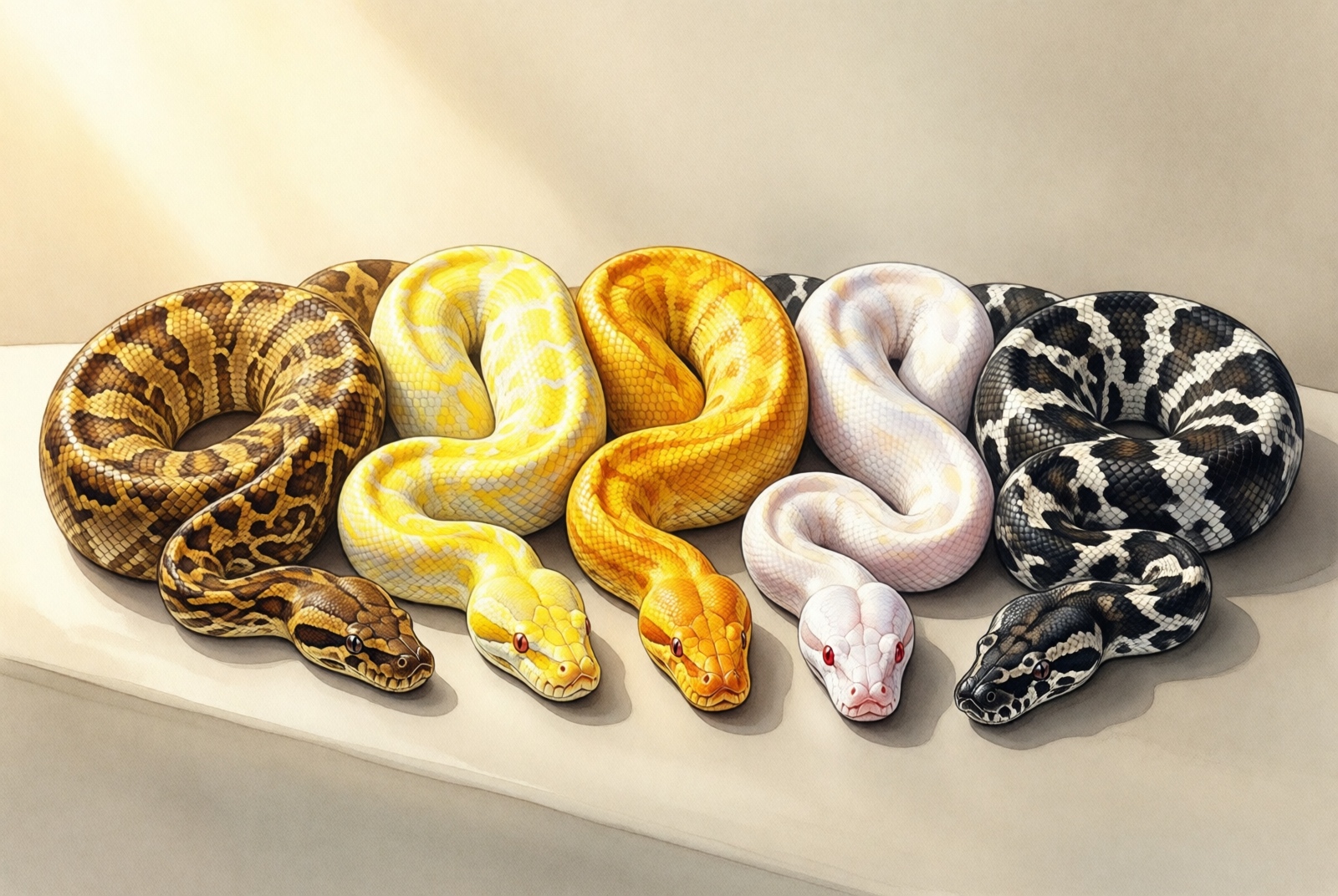
| Morph | Appearance | Rarity | Price Range | Genetics |
|---|---|---|---|---|
| Normal/Wild Type | Black-brown with gold-brown sides | Common | $40-80 | N/A |
| Pastel | Brighter yellow/gold, cleaner pattern | Common | $75-150 | Co-dominant |
| Mojave | Brown/yellow with faded pattern | Common | $100-200 | Co-dominant |
| Clown | Golden background, reduced markings | Uncommon | $200-500 | Recessive |
| Piebald | Large white patches with normal markings | Moderate | $150-400 | Recessive |
| Banana | Yellow-orange body, lavender spots | Common | $150-300 | Co-dominant |
| Spider | Reduced pattern with distinctive head | Common | $100-200 | Dominant |
| Albino | White/yellow, red eyes, no black pigment | Common | $100-250 | Recessive |
| Axanthic | Silver-gray/black, no yellow/red pigment | Uncommon | $200-500 | Recessive |
| Blue Eyed Leucistic (BEL) | All white with blue eyes | Moderate | $400-1,000 | Double recessive |
Important note on the Spider morph: Spider specimens carry a dominant neurological condition known as “wobble syndrome.” Affected snakes exhibit head tremors, difficulty righting themselves, and corkscrew movements. The severity varies from mild (barely noticeable) to severe (difficulty striking prey). Ethical considerations around breeding this morph are actively debated in the reptile community.
Ball Python Behavior & Temperament
Natural Behavior
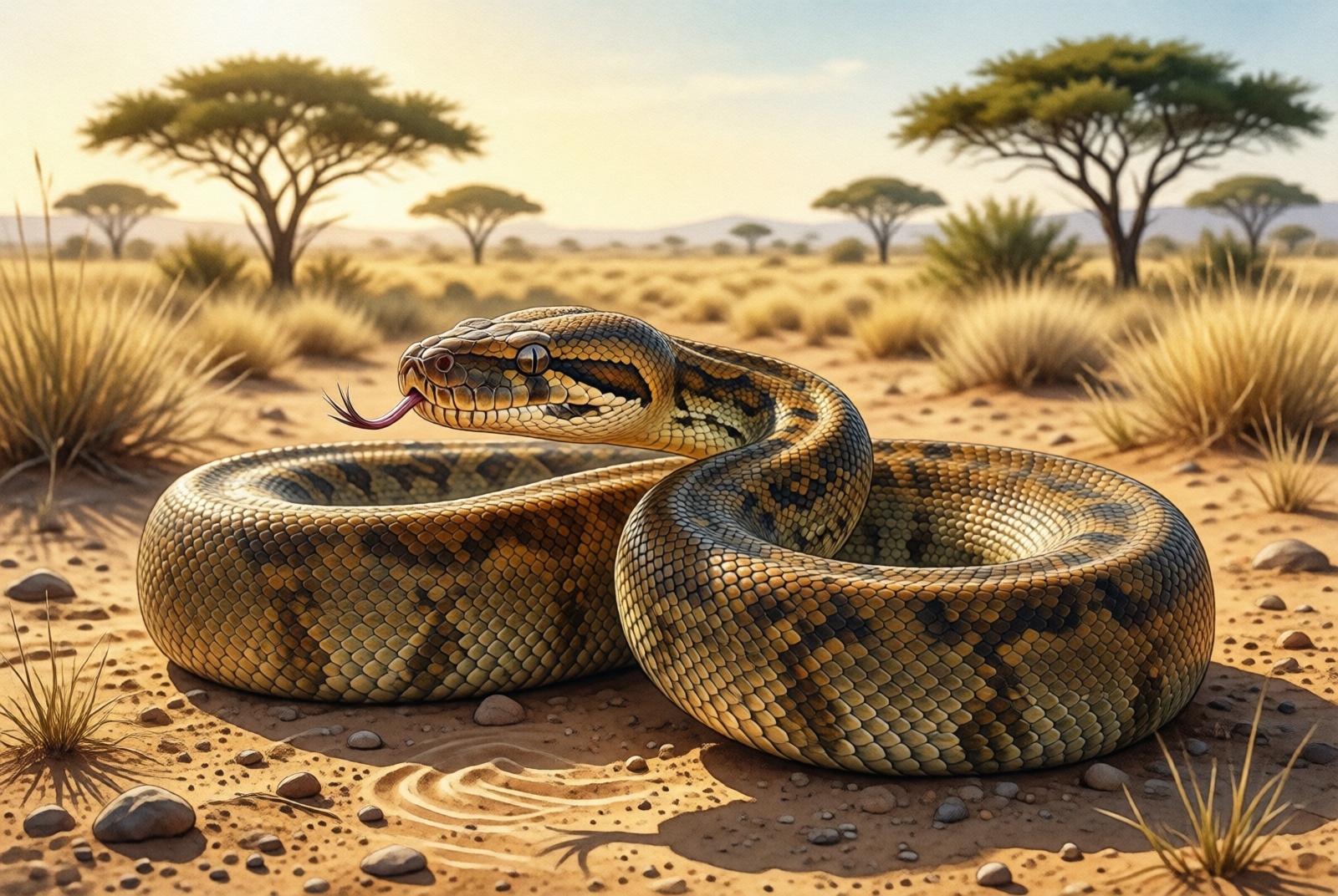
The behavior profile is one of the reasons for the species’ popularity. These snakes are primarily nocturnal and crepuscular — most active at night and during dawn/dusk. They are terrestrial snakes that spend most of their time on the ground, though they will climb low branches and explore their environment when given the opportunity.
Their most famous behavior gives the species its name: when threatened, the snake coils into a tight ball with its head tucked at the center. This passive defense is remarkably effective against predators but also makes them easy to handle — a stressed individual curls up rather than biting.
They explore their environment using a Jacobson’s organ on the roof of their mouth. They flick their tongue to collect airborne chemical particles, then transfer these to the Jacobson’s organ for analysis. This “smelling” system allows them to locate prey, navigate, and identify other snakes.
Shedding occurs every 4-6 weeks in adults and more frequently in growing juveniles. For detailed shedding guidance and troubleshooting, see our care guide.
Ball Python Teeth & Bite
These teeth are small, recurved (curved backward), and arranged in multiple rows — approximately 25-30 teeth total across four rows on the upper jaw and two on the lower. These teeth are designed for gripping prey, not tearing. They are non-venomous constrictors that subdue prey by wrapping around it and tightening.
The ball python bite is rare. These snakes are among the most docile pet snakes available, and bites typically occur only when the animal is severely stressed or mistakes a hand for food (usually because the handler’s hands smell like prey). When a bite does occur, it is minor — the small teeth create shallow punctures similar in severity to a paper cut or cat scratch. Treatment involves washing the wound with soap and water. Bites rarely require medical attention.
Male vs Female Ball Python
The male vs female differences are consistent and useful for keepers to understand, especially when selecting a snake. The ball python male vs female size difference is one of the most noticeable traits — females consistently outgrow males by 1-2 feet in length and several hundred grams in weight.
| Trait | Male | Female |
|---|---|---|
| Average length | 3-4 ft | 4-5 ft |
| Average weight | 1,000-1,800 g | 1,500-2,500 g |
| Tail shape | Thick base, tapered | Longer, thinner |
| Pelvic spurs | Larger, more prominent | Smaller |
| Growth rate | Slower | Faster |
| Temperament | Slightly more active | Slightly calmer |
| Breeding role | Initiates breeding | Carries eggs |
The most reliable sexing method is probing, which should only be performed by experienced handlers or veterinarians. Males have larger pelvic spurs (vestigial hind limb remnants) near the vent, though spur size alone is not a definitive identifier.
For feeding and dietary requirements, see our care guide.
Ball Python Habitat in the Wild
Natural Range & Origin
The ball python origin spans West and Central Africa. Primary range countries include Ghana, Togo, Benin, Nigeria, Cameroon, and extending into Senegal and the Central African Republic. These snakes inhabit grasslands, savannas, open forests, and agricultural areas.
A common misconception is that these snakes live in dense tropical rainforests. In reality, they prefer drier, more open habitats — savannas and sparsely wooded grasslands where temperatures are warm and humidity is moderate. They often take refuge in abandoned rodent burrows, termite mounds, and hollow logs.
Climate & Environment
The ball python habitat in the wild experiences distinct seasonal cycles:
- Dry season: Little to no rain, temperatures 85-95°F during the day, reduced prey availability. Wild snakes may fast for extended periods during this time.
- Wet season: Regular rainfall, abundant prey, temperatures 80-90°F.
- Night temperatures: Consistently drop to 68-78°F year-round.
These snakes are listed under CITES Appendix II, meaning international trade is regulated to protect wild populations. However, the vast majority of pet specimens are captive-bred, many generations removed from wild-caught ancestors. For more on creating appropriate captive environments, see our reptile habitat guide.
Ball Python Fun Facts
Some interesting facts worth knowing:
“Royal” name — The species name regius (royal) comes from the legend that African rulers, including Cleopatra, wore live snakes of this species as bracelets and necklaces. This tradition is referenced in the British common name “Royal Python.”
62-year lifespan — The longest verified snake lifespan record belongs to a female at the Saint Louis Zoo that lived over 62 years, with 59 of those years at the zoo [Wikipedia].
Heat-sensing pits — They have infrared-sensing labial pits along their upper and lower lips. These organs detect temperature differences as small as 0.003°C, allowing the snake to locate warm-blooded prey in complete darkness.
7,800+ morphs — More morphs exist for this species than any other reptile species, with new combinations created annually.
No eyelids — They have a transparent scale called a “spectacle” or “brille” over each eye instead of eyelids. This scale is shed along with the rest of the skin.
Jacobson’s organ — The forked tongue is not for “tasting” but for collecting airborne chemical molecules, which are then analyzed by the Jacobson’s organ on the roof of the mouth.
300+ bones — A specimen has over 300 bones, the vast majority being vertebrae and ribs (they can have 400+ vertebrae).
Fasting ability — Adults can go weeks to months without eating, an adaptation to the dry season in their native habitat. See our care guide for guidance on when fasting becomes a concern.
Egg-layers — They are oviparous. Females coil around their eggs for the 55-60 day incubation period, using muscular contractions to generate heat and regulate egg temperature.
Cultural significance — In parts of West Africa, they are considered sacred. In some Nigerian communities, killing one is culturally taboo.
For ball python facts for kids, the heat-sensing pits, 300+ bones, and defensive balling behavior are usually the most engaging topics.
Conclusion
This snake is the world’s most popular pet snake for good reason. At 3-5 feet and 20-30 years, it offers a manageable size with an impressively long lifespan. The unmatched diversity of 7,800+ morphs provides visual variety that no other reptile species can match. Their docile temperament and passive defensive behavior (balling up rather than striking) make them one of the easiest snakes to handle.
Ready to bring one home? Start with our ball python care guide for complete enclosure setup, feeding schedules, and health management. For alternative beginner reptiles, compare with leopard gecko care or bearded dragon care.