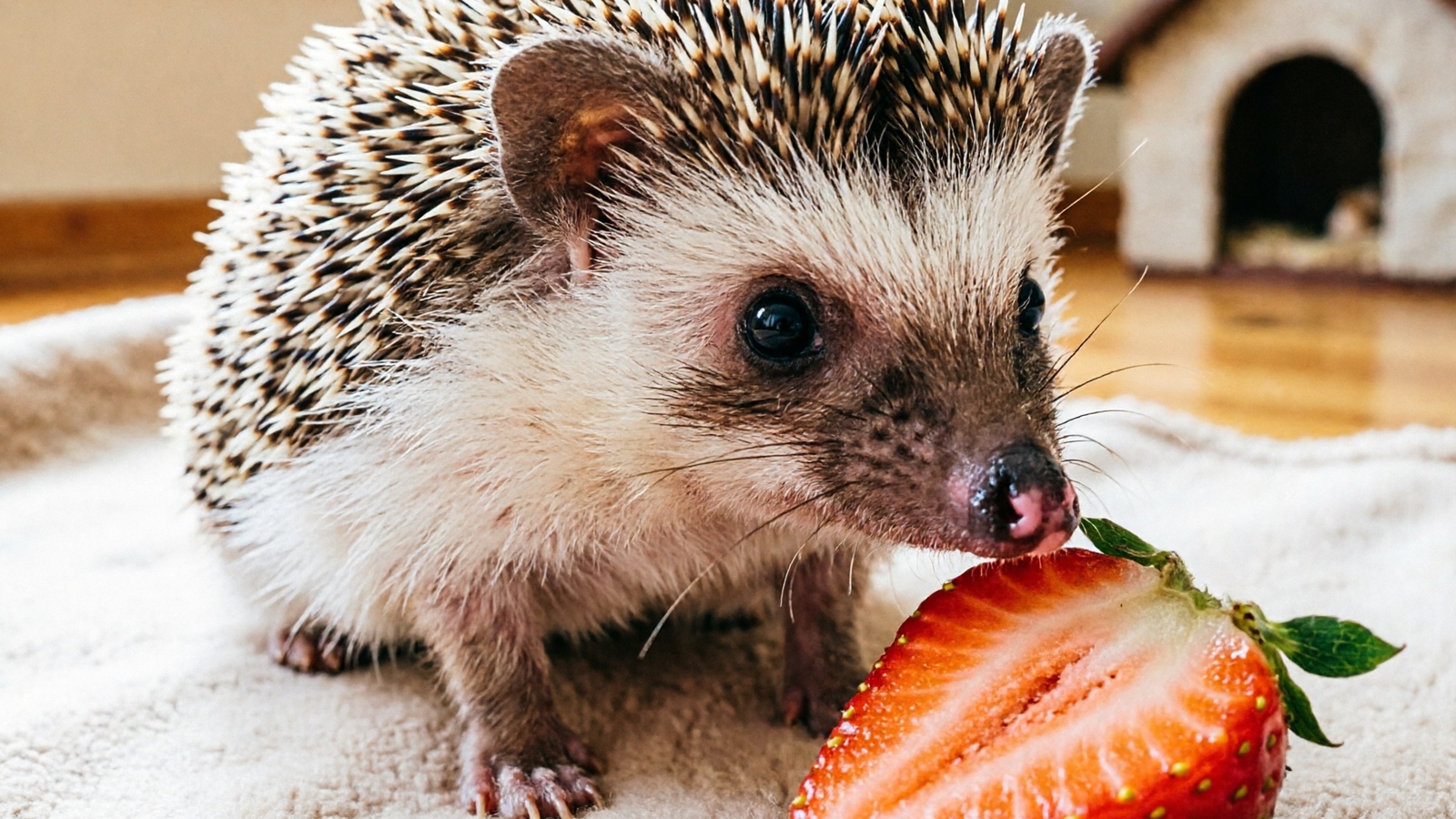
Can hedgehogs eat strawberries? This is one of the most common questions from new hedgehog owners, and the answer is straightforward — yes, in strict moderation. A safe serving is roughly 1 teaspoon of fresh diced strawberry, offered once per week as a treat. Strawberries are non-toxic and provide beneficial vitamin C, manganese, and fiber. However, their natural sugar content (around 4.9g per 100g [USDA FoodData Central, NDB #09150]) makes them unsuitable as a regular food item.
Obligate insectivore: An animal whose digestive system and nutritional requirements are evolutionarily adapted to a diet consisting primarily or exclusively of insects and other invertebrates. African pygmy hedgehogs (Atelerix albiventris) fall into this category — their short digestive tract and gut microbiome are optimized for processing chitin and animal protein, not plant sugars or fiber.
Hedgehogs are obligate insectivores whose digestive systems evolved for high-protein, low-sugar diets.
Nutritional Value of Strawberries for Hedgehogs
Understanding what strawberries actually provide helps you decide how — and whether — to include them in your hedgehog’s treat rotation. Here is the nutritional breakdown of raw strawberries per 100g, with relevance notes for hedgehogs (data source: USDA FoodData Central, NDB #09150).
| Nutrient | Amount (per 100g) | Hedgehog Relevance |
|---|---|---|
| Calories | 32 kcal | Low calorie — good for a treat |
| Sugar | 4.9 g | ⚠️ Moderate — limit frequency |
| Fiber | 2.0 g | ✅ Beneficial — supports digestion |
| Vitamin C | 58.8 mg | ✅ High — supports immune function |
| Manganese | 0.39 mg | ✅ Good — supports bone metabolism |
| Calcium | 16 mg | Moderate — adequate for a fruit |
| Phosphorus | 24 mg | Moderate — Ca:P ratio 0.67:1 |
| Potassium | 153 mg | ✅ Good — supports muscle function |
| Water | 91 g | High — good hydration, excess causes loose stool |
What this means for your hedgehog: Strawberries offer meaningful vitamin C and manganese, both of which support immune health and metabolic function. The fiber content aids digestion. Compared to grapes (16g sugar per 100g) and bananas (12g sugar per 100g), strawberries are among the lowest-sugar fruits available — which is why they rank as one of the better fruit treats for hedgehogs.
The catch is that hedgehogs are obligate insectivores. In the wild, their diet consists almost entirely of insects, worms, slugs, and other small invertebrates.
Fruit makes up a negligible fraction of their natural intake. Their digestive system is optimized for processing chitin and protein, not fruit sugars.
For a complete overview of what a healthy hedgehog diet looks like, see our complete hedgehog diet guide.
How to Prepare Strawberries for Your Hedgehog
Proper preparation minimizes risks and makes the strawberry easier for your hedgehog to eat. Follow these steps every time.
1. Wash thoroughly. Run the strawberry under cool running water for 15–20 seconds, gently rubbing the surface with your fingers. Conventional strawberries are among the EWG Dirty Dozen crops for pesticide residue. Organic strawberries are preferable but still require washing.
2. Remove the stem, leaves, and hull. Strawberry tops are tough, fibrous, and difficult for a hedgehog’s small digestive tract to process. They pose an impaction risk. Slice off the entire green calyx and the white hull just beneath it.
3. Cut into bite-sized pieces. Dice the strawberry into pieces roughly the size of a pencil eraser or smaller. Hedgehogs have small mouths and cannot bite off chunks from large pieces. Pieces that are too large are a choking hazard.
4. Serve at room temperature. Cold food directly from the refrigerator can cause digestive upset. If using frozen strawberries, thaw completely and let them reach room temperature before serving. Drain any excess liquid after thawing.
5. Place in a clean shallow dish. Use a small ceramic or stainless steel dish. Avoid deep bowls — hedgehogs can tip them over or struggle to reach food at the bottom.
Fresh vs. frozen vs. dried: Fresh strawberries are the best option. Frozen strawberries retain most nutrients but become mushy after thawing, which some hedgehogs dislike. Dried strawberries should be avoided — the dehydration process concentrates sugar to roughly 65g per 100g, making them far too sweet. Some commercial hedgehog soft food options include dried fruit pieces in controlled portions, which is a safer way to offer dried fruit treats.
How Much and How Often Can Hedgehogs Eat Strawberries?
How much strawberry can a hedgehog eat? The safe serving is approximately 1 teaspoon of diced fresh strawberry, once per week. This translates to roughly one-quarter to one-third of a medium strawberry depending on size.
Age-based feeding guidelines:
| Age | Serving Size | Frequency | Notes |
|---|---|---|---|
| Baby (<6 months) | None recommended | — | Developing digestive system needs strict protein focus |
| Juvenile (6–12 months) | ½ teaspoon diced | Once every 2 weeks | Introduce gradually, watch for reactions |
| Adult (>12 months) | 1 teaspoon diced | Once per week | As a reward or enrichment treat only |
Signs of overfeeding: Loose or runny stools are the most common indicator. Other signs include weight gain (check for fat deposits around the legs and tail base), refusal to eat staple food in favor of waiting for sweet treats, and increased activity level from sugar intake followed by a crash. If you notice any of these, eliminate fruit from the diet for 1–2 weeks and return to a strict staple food routine.
Strawberries are among the easiest fruits to introduce to a hedgehog. Most hedgehogs show interest in the smell immediately, and the soft texture is easy for them to manage when properly diced. Start with a half-teaspoon portion and increase only if your hedgehog’s stool stays firm.
Risks of Feeding Strawberries to Hedgehogs
While strawberries are safe in moderation, there are five specific risks every hedgehog owner should understand.
Sugar and obesity. At 4.9g of sugar per 100g [USDA FoodData Central, NDB #09150], strawberries are low-sugar for a fruit — but still high-sugar for an insectivore. A hedgehog’s natural diet contains almost zero sugar. Regular fruit feeding beyond the once-per-week guideline contributes to weight gain, fatty liver disease, and dental problems over time.
Pesticide residue. Strawberries consistently rank at or near the top of the EWG Dirty Dozen™ list for pesticide contamination. Even after washing, trace residues may remain. Organic strawberries significantly reduce this risk and are worth the extra cost for a pet that weighs less than 600 grams.
Choking hazard. Hedgehogs cannot chew large pieces of food — they bite and swallow. A strawberry piece larger than a pencil eraser can lodge in the throat. Always dice into small, uniform pieces.
Digestive upset. The high water content (91%) in strawberries can cause loose stools, especially if fed in large quantities or combined with other watery foods. Start with a half-teaspoon portion for first-time feeding and increase gradually.
Allergic reactions. Food allergies are uncommon in hedgehogs but possible. Watch for vomiting, diarrhea, facial swelling, or lethargy after the first feeding. If any symptoms appear, discontinue strawberries immediately and consult an exotic pet veterinarian.
Strawberry leaves and stems are not recommended. They are tough, fibrous, and difficult to digest. They offer no meaningful nutritional benefit and pose an impaction risk. Remove them completely before serving.
Quick safety checklist for strawberry feeding:
| ✅ Safe Practice | ❌ Avoid |
|---|---|
| Fresh strawberries, washed and diced | Dried strawberries (65g sugar per 100g) |
| 1 teaspoon serving, once per week | Daily or large servings |
| Room temperature serving | Cold or frozen pieces |
| Organic strawberries when possible | Unwashed conventional strawberries |
| Pieces smaller than a pencil eraser | Large chunks (choking hazard) |
| Remove all stems, leaves, and hull | Feeding leaves or tops |
| Introduce gradually, monitor stool | Force-feeding if hedgehog refuses |
| Wait until 6+ months for babies | Giving fruit to young hedgehogs |
Safe Alternatives to Strawberries
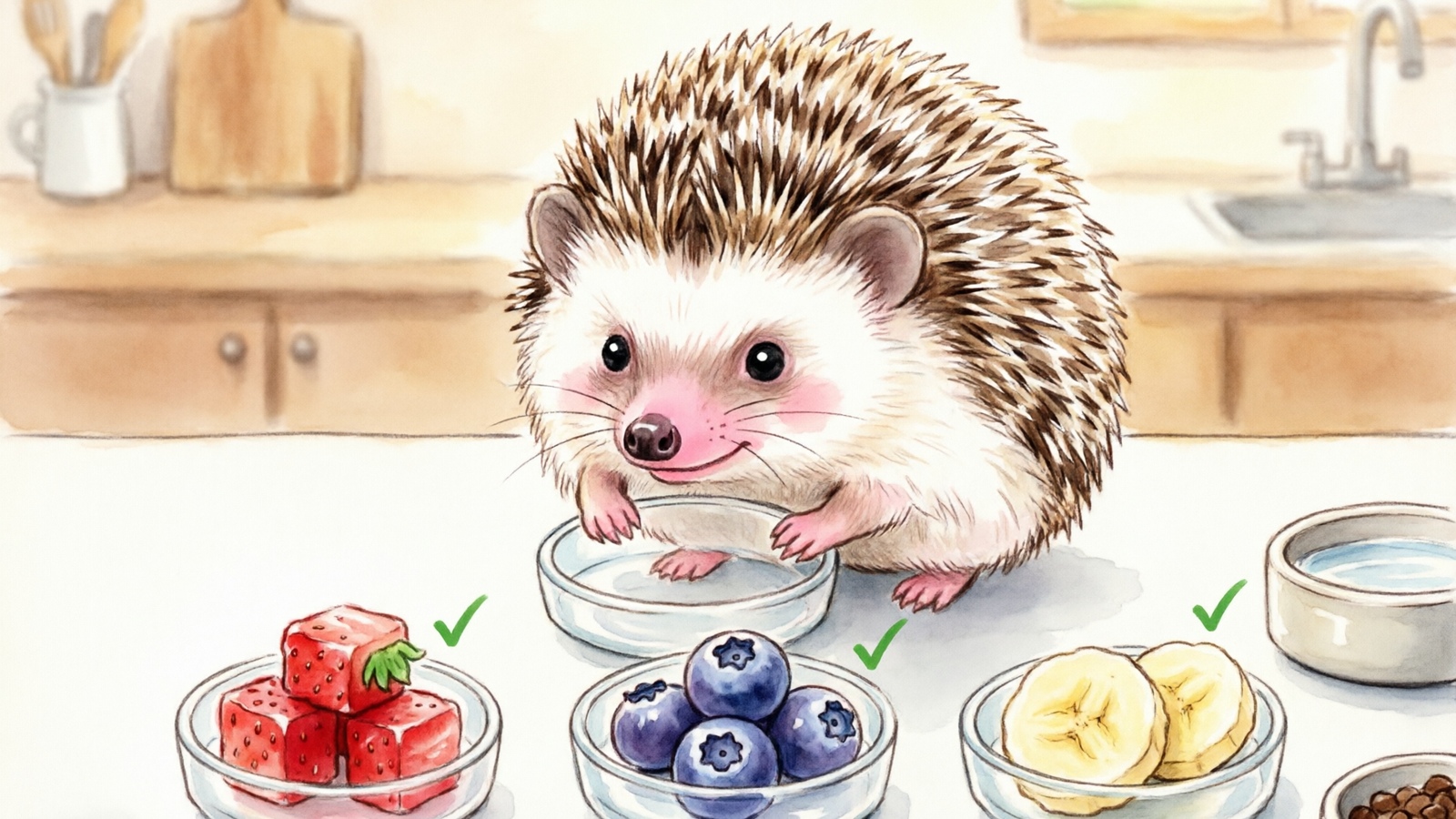
If your hedgehog doesn’t enjoy strawberries or you want to rotate treats for variety, several other fruits and protein-based treats work well.
Safe fruits for hedgehogs:
| Fruit | Sugar (per 100g) | Serving | Notes |
|---|---|---|---|
| Blueberries | 10 g | 1–2 berries | Easy to serve, no prep needed |
| Banana | 12 g | ½ teaspoon mashed | Very high sugar — use sparingly |
| Apple | 10.4 g | 1 teaspoon diced | Must remove all seeds (contain cyanide compound) |
| Watermelon | 6 g | 1 teaspoon diced | Very watery — can cause loose stool |
| Cantaloupe | 7.9 g | 1 teaspoon diced | Good vitamin A content |
Blueberries are the simplest alternative — no peeling, no seeding, no cutting required. Blueberries are the go-to daily treat for new hedgehog owners because they require zero preparation and most hedgehogs love them.
Apples require seed removal but are otherwise straightforward. Bananas should be used sparingly due to their high sugar content despite being a hedgehog favorite.
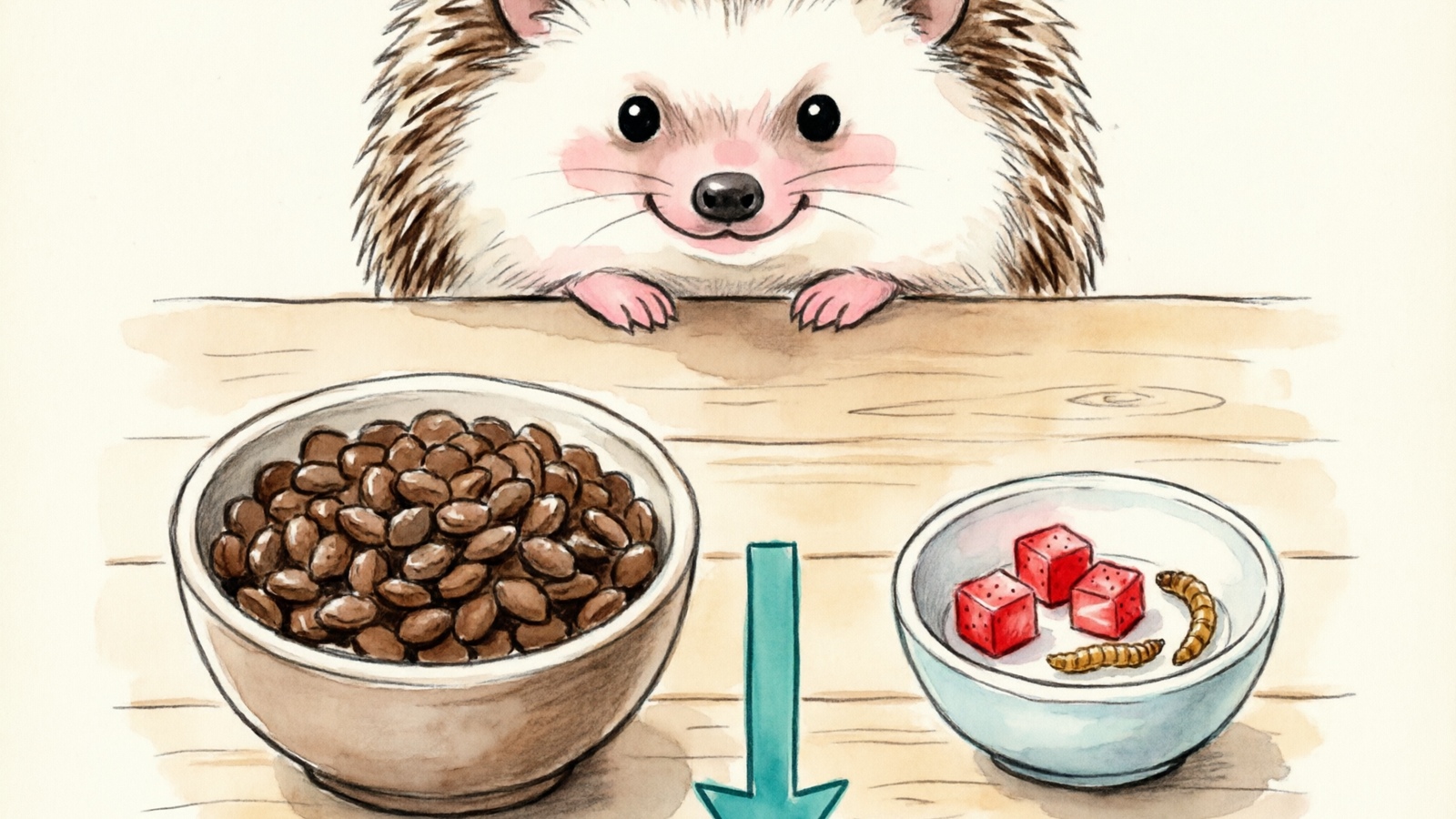
For protein-based treats, mealworms are a closer match to a hedgehog’s natural diet and can be offered 3–4 times per week in moderation. Insects should always make up the bulk of treat feeding over fruit.
Strawberries are not unique to hedgehogs — many small pets can enjoy them safely. If you also keep reptiles, our guide covers whether bearded dragons can eat strawberries and how their nutritional needs differ from hedgehogs.
Recommended Hedgehog Food and Treats
A proper staple diet is far more important than any treat. Strawberries should complement — never replace — a nutritionally complete hedgehog food. For detailed comparisons, see our best commercial hedgehog foods guide.
Best Staple Hedgehog Foods
Sunseed Vita Prima Hedgehog Food — A high-protein blend of poultry, seafood, and mealworms with added vitamins. The smaller, softer pellets are easier for hedgehogs to eat than standard cat kibble. Priced around $10.39. Some owners report strong-smelling waste with this food, and a small percentage of hedgehogs reject the artificially colored fruit pieces.
Suncoast Spike’s Delite Premium Hedgehog Diet — One of the original hedgehog-specific foods on the market Nutritionally balanced for insectivores and widely recommended by hedgehog care guides. Around $39.75. Some picky hedgehogs may prefer the Ultra formula over this regular version.
Best Hedgehog Treats
Sunseed Vita Prima Wigglers & Berries Hedgehog Treats — A variety mix containing dried strawberries, mealworms, and oats. This is the most relevant product for strawberry-feeding hedgehogs since it includes dried strawberry pieces in controlled portions. Around $22.13. Some hedgehogs selectively eat only the mealworms and strawberries while ignoring the oats.
Supplements
Exotic Nutrition Hedgehog Booster Complete Multivitamin — A vet-recommended multivitamin powder designed specifically for hedgehogs. Sprinkle on food twice per week to supplement nutrition, particularly useful if your hedgehog eats fruit regularly since fruit displaces some nutrient-dense staple food. Around $22.13. A small container lasts a long time since only a small amount is needed per serving.
Frequently Asked Questions
Can hedgehogs eat strawberry tops and leaves? No. Strawberry tops and leaves are not recommended for hedgehogs. They are tough and fibrous, difficult for a hedgehog’s small digestive system to break down, and may cause impaction. Always remove stems and leaves before serving.
Can baby hedgehogs eat strawberries? Baby hedgehogs under 6 months should not eat strawberries. Their digestive systems are still developing and they need a strictly high-protein diet. Introduce fruit only after 6 months, starting with a tiny piece and monitoring for adverse reactions.
Can hedgehogs eat frozen strawberries? Yes, but thaw them completely first and bring to room temperature. Frozen strawberries lose some texture but retain most nutrients. Never serve cold food — it can cause digestive upset. Drain excess water after thawing before cutting into pieces.
What fruits are toxic to hedgehogs? Grapes and raisins are toxic to hedgehogs and must be avoided entirely — they can cause kidney failure. Citrus fruits (oranges, lemons, grapefruit) are too acidic and cause mouth irritation and digestive distress. Avocado contains persin, which is toxic to many animals including hedgehogs.
How do I know if my hedgehog is allergic to strawberries? Watch for diarrhea, vomiting, swelling around the face or mouth, lethargy, or skin irritation after feeding. If any of these appear, stop feeding strawberries immediately. For severe reactions (difficulty breathing, facial swelling), contact an exotic pet vet right away.
Final Verdict
Strawberries are a safe and enjoyable treat for hedgehogs when fed in strict moderation. The recommended serving is 1 teaspoon of fresh diced strawberry once per week for adults. Baby hedgehogs under 6 months should not receive any fruit.
Key takeaways:
- Yes, hedgehogs can eat strawberries — they are non-toxic and offer vitamin C, manganese, and fiber
- Limit to once per week — sugar content (4.9g per 100g) is manageable but not negligible for an insectivore
- Always wash, hull, and dice — remove stems and leaves, cut pieces to pencil-eraser size
- Staple food comes first — the 90/10 rule means 90% quality staple food, 10% treats (strawberries included)
- Watch for reactions — diarrhea, refusal to eat staple food, or weight gain signal overfeeding
- Avoid dried strawberries — dehydration concentrates sugar to dangerous levels
- Rotate with other safe fruits — blueberries and apples are excellent alternatives
A healthy hedgehog diet starts with a quality staple food and uses treats like strawberries as enrichment, not nutrition. When in doubt, less fruit is always better than more.