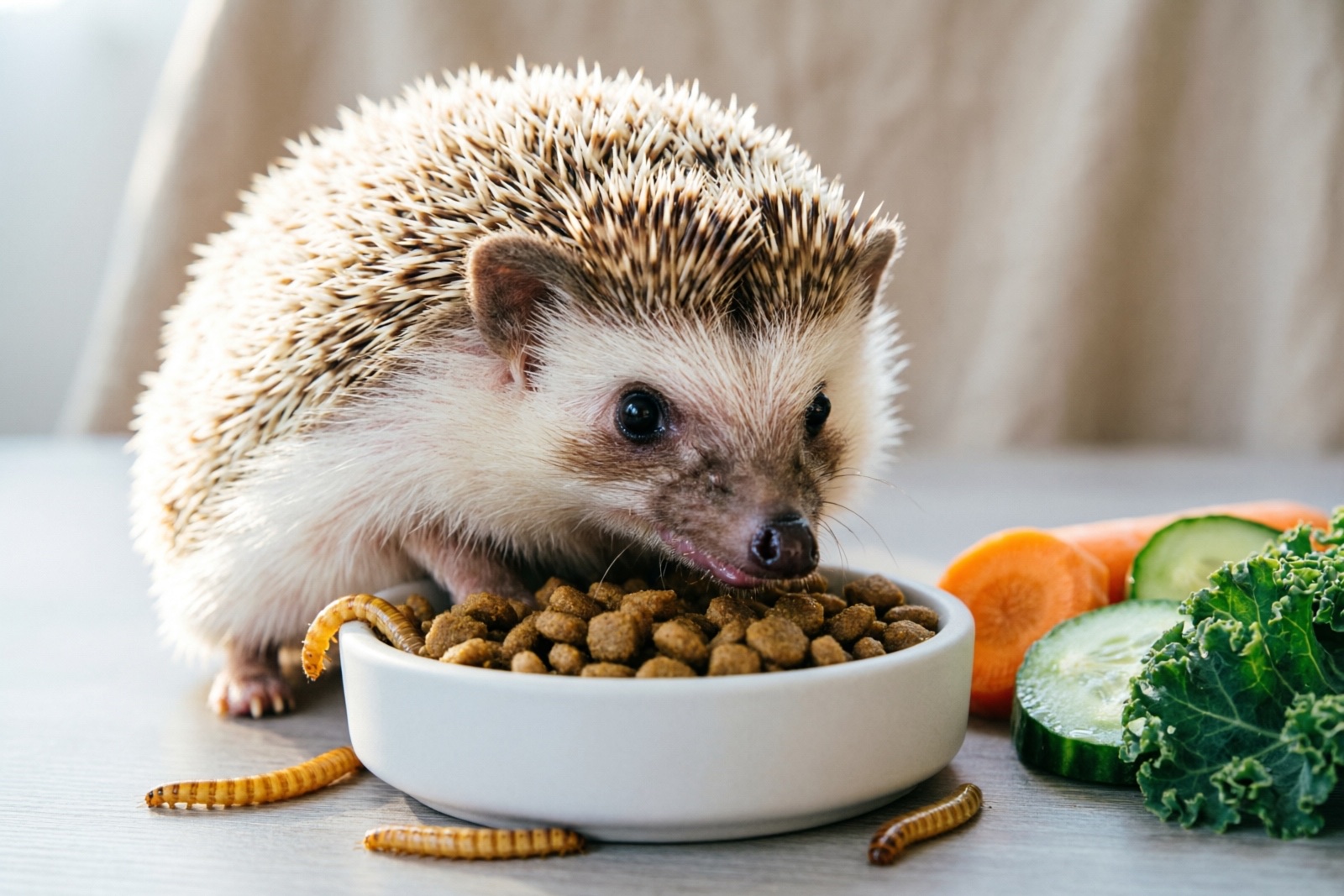
Proper nutrition is the cornerstone of hedgehog health. As insectivores by nature, pet hedgehogs have specific dietary requirements that differ significantly from other small pets. This comprehensive guide covers everything you need to know about feeding your hedgehog a balanced, healthy diet.
Understanding Hedgehog Nutritional Needs
Natural Diet
In the wild, hedgehogs are insectivores/omnivores that primarily consume:
- Insects and larvae (beetles, caterpillars, worms)
- Small invertebrates (slugs, snails)
- Occasional small vertebrates (frogs, mice)
- Some plant matter (fruits, berries) This natural diet is:
- High in protein (30-50%)
- Low in fat (10-15%)
- Low in fiber (2-5%)
- High in chitin (from insect exoskeletons) [Journal of Nutrition]
Pet Hedgehog Requirements
For captive hedgehogs, aim for:
- Protein: 30-35% (minimum 28%)
- Fat: 10-15% (maximum 20%)
- Fiber: 4-8%
- Calcium/Phosphorus ratio: 1.5:1 to 2:1
Main Diet: High-Quality Cat or Hedgehog Food
Why Cat Food?
Commercial hedgehog foods are often of lower quality than premium cat foods. Many experienced owners and veterinarians recommend high-quality cat food as the dietary base [Hedgehog Welfare Society].
Choosing the Right Cat Food
Look for:
- High protein (30%+)
- Low fat (under 15%)
- Real meat as first ingredient
- No artificial colors or preservatives
- Small kibble size Avoid:
- Foods with corn, wheat, or soy as primary ingredients
- Foods with by-products as first ingredient
- High-fat foods (over 20% fat)
- Foods with artificial colors
Top Recommended Cat Foods
| Brand | Protein | Fat | Price | Rating |
|---|---|---|---|---|
| Wellness CORE Indoor | 38% | 12% | $$$ | ⭐⭐⭐⭐⭐ |
| Blue Buffalo Indoor Hairball | 32% | 14% | $$ | ⭐⭐⭐⭐ |
| Merrick Purrfect Bistro | 36% | 13% | $$$ | ⭐⭐⭐⭐⭐ |
| Nature’s Variety Instinct | 37% | 15% | $$$ | ⭐⭐⭐⭐ |
| Royal Canin Indoor | 30% | 14% | $$$ | ⭐⭐⭐⭐ |
Looking for detailed product reviews and comparisons? See our complete guide to the best hedgehog food with in-depth analysis of 10 top-rated options.
Wellness CORE Indoor Cat Food ($26.59, 4.3⭐, 🔥)
Commercial Hedgehog Foods
While most are lower quality, some acceptable options include:
- SunSeed Hedgehog Formula - Better than most commercial hedgehog foods
- Mazuri Hedgehog Diet - Zoo-quality formula
- Pretty Pets Hedgehog Food - Formulated specifically for hedgehogs
Note: Even with commercial hedgehog food, supplement with insects and fresh foods for a complete diet.
Insects: The Essential Supplement
Insects should make up 10-20% of your hedgehog’s diet and provide:
- Natural protein source
- Chitin (important for digestion)
- Mental stimulation through hunting
Safe Insects
Staple Insects (feed regularly):
- Mealworms - High in fat, feed in moderation
- Crickets - Good protein, lower fat
- Dubia roaches - Excellent protein-to-fat ratio
- Waxworms - Very high fat, treat only
- Silkworms - Good nutritional balance Occasional Treats:
- Hornworms
- Phoenix worms
- Butterworms
Feeding Guidelines
- Frequency: 3-4 insects, 3-4 times per week
- Size: Appropriate for hedgehog size (avoid oversized prey)
- Live vs. freeze-dried: Live or canned preferred for moisture content
- Gut-loading: Feed insects nutritious foods 24 hours before feeding to hedgehog
Where to Buy Insects
- Rainbow Mealworms - Bulk insects
- Local pet stores (call ahead for availability)
Fresh Foods: Fruits and Vegetables
Safe Fruits (Feed in Small Quantities)
Recommended (1-2 tsp, 2-3 times per week):
- 🍎 Apple (no seeds)
- 🍌 Banana
- 🫐 Blueberries
- 🍈 Cantaloupe
- 🥝 Kiwi
- 🍑 Peach (no pit)
- 🍐 Pear (no seeds)
- 🍓 Strawberry
- 🍉 Watermelon Avoid:
- ❌ Grapes/raisins (toxic)
- ❌ Citrus fruits (too acidic)
- ❌ Avocado (toxic)
Safe Vegetables
Recommended (1-2 tsp, 2-3 times per week):
- 🥕 Carrots (cooked or raw)
- 🥬 Leafy greens (spinach, kale, romaine)
- 🥒 Cucumber
- 🎃 Pumpkin (cooked)
- 🍠 Sweet potato (cooked)
- 🥦 Broccoli (small amounts)
- 🌽 Corn (occasionally)
- 🟢 Green beans (cooked) Avoid:
- ❌ Onions/garlic (toxic)
- ❌ Raw potatoes
- ❌ Tomato leaves/stems
Protein Sources Beyond Insects
Cooked Meats (Occasional)
- Chicken - Boiled, no seasoning
- Turkey - Lean, cooked
- Eggs - Scrambled or hard-boiled (no salt)
- Salmon - Cooked, boneless Guidelines:
- Small amounts (1 tsp)
- No seasoning, oil, or butter
- Cooked thoroughly
- Serve at room temperature
Foods to Avoid Completely
Toxic Foods
- ❌ Grapes and raisins - Can cause kidney failure
- ❌ Avocado - Contains persin (toxic)
- ❌ Chocolate - Theobromine is toxic
- ❌ Onions and garlic - Can cause anemia
- ❌ Citrus fruits - Too acidic, can cause digestive upset
- ❌ Raw meat/eggs - Bacterial risk
- ❌ Nuts and seeds - Choking hazard, high fat
- ❌ Dairy products - Most hedgehogs are lactose intolerant
- ❌ Bread and pasta - Low nutritional value, can cause impaction
- ❌ Sugary foods - Can cause obesity and dental problems
Feeding Schedule and Portions
Daily Feeding Routine
Evening feeding (hedgehogs are nocturnal):
- Main food: 1-2 tablespoons of dry cat food
- Fresh water: Always available in shallow dish or water bottle
- Insects: 3-4 insects, 3-4 times per week
- Fresh foods: 1-2 tsp, 2-3 times per week
Portion Sizes by Weight
| Hedgehog Weight | Dry Food (daily) | Insects (per feeding) | Fresh Food (per feeding) |
|---|---|---|---|
| Under 300g | 1 tbsp | 2-3 | 1 tsp |
| 300-500g | 1.5 tbsp | 3-4 | 1.5 tsp |
| Over 500g | 2 tbsp | 4-5 | 2 tsp |
Monitor weight: Adjust portions based on your hedgehog’s weight. Obese hedgehogs are prone to fatty liver disease.
Hydration: Water Requirements
Water Sources
Water Bottle vs. Bowl:
- Water bottle: Keeps water clean, prevents spills
- Shallow bowl: More natural, easier access Recommendation: Provide both, especially for new hedgehogs.
Daily Requirements
- Amount: 30-50ml per day (varies with diet and temperature)
- Fresh water: Change daily
- Check: Verify bottle is working properly each day
Signs of Dehydration
- Lethargy
- Sunken eyes
- Dry skin/mucous membranes
- Decreased urination
Special Dietary Considerations
Baby Hedgehogs (Under 6 months)
- Higher protein needs (35-40%)
- Smaller, more frequent meals
- Softer food may be needed
- Monitor growth closely
Senior Hedgehogs (Over 3 years)
- May need lower fat diet
- Softer food if dental issues present
- Monitor for weight loss
- Consider joint supplements
Pregnant/Nursing Females
- Increase food by 25-50%
- Higher protein and calcium needs
- Free-feed dry food
- Supplement with extra insects and calcium-rich foods
Overweight Hedgehogs
Signs of obesity:
- Cannot roll into a ball
- Fatty deposits around neck/limbs
- Difficulty walking Weight management:
- Reduce food portions by 10-20%
- Switch to lower fat cat food
- Increase exercise opportunities
- Limit high-fat treats
Common Feeding Mistakes
1. Overfeeding
Obesity is one of the most common health issues in pet hedgehogs. Stick to recommended portion sizes.
2. Too Many Mealworms
Mealworms are high in fat. Limit to a few per feeding.
3. Feeding Only Dry Food
Variety is important. Supplement with insects and fresh foods.
4. Leaving Fresh Food Too Long
Remove fresh food after 4 hours to prevent spoilage.
5. Not Providing Fresh Water Daily
Stale water can grow bacteria. Change daily.
6. Feeding Cold Food
Always serve food at room temperature.
Supplements
When Needed
Most hedgehogs on a balanced diet don’t need supplements, but consider: Calcium supplement if:
- Feeding lots of insects without gut-loading
- Hedgehog is pregnant/nursing
- Vet recommends for deficiency Probiotics if:
- Hedgehog has been on antibiotics
- Digestive issues present Always consult a veterinarian before adding supplements.
Sample Weekly Menu
Monday
- 1.5 tbsp dry cat food
- 3 crickets
Tuesday
- 1.5 tbsp dry cat food
- 1 tsp cooked chicken
Wednesday
- 1.5 tbsp dry cat food
- 1 tsp blueberries
Thursday
- 1.5 tbsp dry cat food
- 3 mealworms
Friday
- 1.5 tbsp dry cat food
- 1 tsp carrots
Saturday
- 1.5 tbsp dry cat food
- 3 Dubia roaches
Sunday
- 1.5 tbsp dry cat food
- 1 tsp scrambled egg
Product Recommendations
Complete Feeding Kit
- Main Food: Wellness CORE Indoor Cat Food ($35/5lb)
- Wellness CORE Indoor Cat Food ($26.59, 4.3⭐, 🔥)
- Insects: Live Mealworms ($15/500ct)
- Fluker’s Gourmet Canned Mealworms ($17.99, 4.0⭐, 🔥)
- Food Dish: Ceramic Bowl ($8)
- Ceramic Pet Food Bowl 2-Pack ($8.99, 4.6⭐, 🔥)
- Water Bottle: 8oz Glass Bottle ($12)
- Kaytee Clear View Water Bottle 8oz ($11.31, 4.1⭐, 🔥) Total Cost: ~$70 for initial setup
FAQ
Q: Can hedgehogs eat cat food exclusively?
A: While high-quality cat food can be the main diet, hedgehogs benefit from variety. Add insects 3-4 times per week and small amounts of fresh foods for optimal health.
Q: How much should I feed my hedgehog?
A: Most adult hedgehogs need 1-2 tablespoons of dry food per day, plus insects and occasional fresh foods. Adjust based on your hedgehog’s weight and activity level.
Q: Can hedgehogs eat fruits every day?
A: No. Fruits should be limited to 2-3 times per week in small amounts (1-2 tsp) due to their sugar content.
Q: Why is my hedgehog not eating?
A: Common reasons include: illness, stress, temperature too cold, food changes, or old food. If your hedgehog stops eating for more than 24 hours, consult a veterinarian.
Q: Can I feed my hedgehog baby food?
A: Plain meat baby foods (chicken, turkey) can be given occasionally as a treat. Avoid those with onion/garlic or added ingredients.
Q: Do hedgehogs need vitamins?
A: Most hedgehogs on a balanced diet don’t need additional vitamins. Consult your vet before adding supplements.
Q: Can hedgehogs drink milk?
A: No. Most hedgehogs are lactose intolerant. Milk can cause severe digestive upset.
Q: How do I know if my hedgehog is overweight?
A: Signs include: inability to roll into a ball, visible fat deposits, difficulty walking, and weight over 600g. Consult your vet for weight management advice.
Conclusion
Feeding your hedgehog a balanced diet requires attention to:
- High-quality main food (cat or hedgehog food with 30%+ protein, under 15% fat)
- Regular insects (3-4 times per week for protein and chitin)
- Fresh foods (fruits and vegetables in moderation)
- Proper portions (adjust based on weight and activity)
- Fresh water (always available) Avoid common mistakes like overfeeding, too many treats, and toxic foods. With proper nutrition, your hedgehog can live a healthy, active life for 4-6 years.
For a complete overview of hedgehog care beyond diet, check our Hedgehog Care Guide. If you notice health issues related to diet, our Hedgehog Health Guide covers common conditions and when to see a vet. For cage setup tips that complement proper nutrition, see our Hedgehog Cage Setup Guide.