Warning: Medical Disclaimer: This article is not a substitute for professional veterinary care. If your hedgehog is showing signs of illness, mobility issues, or nutritional deficiency, consult a qualified exotic veterinarian.
Quick Answer — Yes, But Only as a Rare Treat
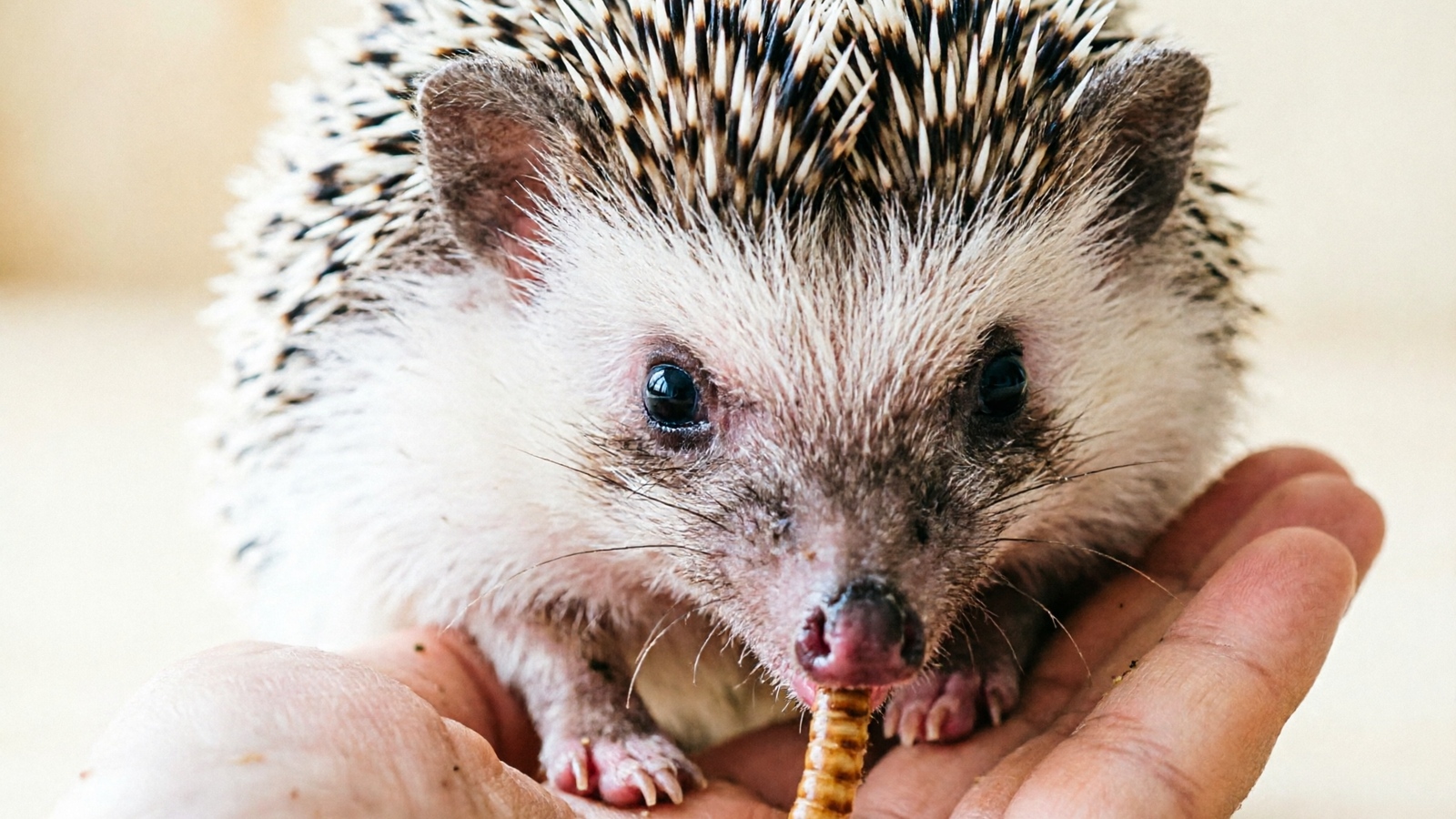
Can hedgehogs eat mealworms? Yes — but they should be treated as occasional treats, never as a staple food. The safe limit is three or four mealworms per week for adults, and even that is pushing the upper boundary.
Here’s why mealworms deserve caution, not enthusiasm:
- Dangerous Ca:P ratio of ~1:13.5 — the safe range is 1:1 to 2:1. This massive phosphorus excess forces the body to drain calcium from bones, leading to metabolic bone disease over time.
- High fat content (~13%) — hedgehog staple food should stay below 15% fat, and mealworms eaten on top of regular food push the total intake too high.
- Addictive — hedgehogs love mealworms the way kids love candy. Once they develop a preference, many will refuse their nutritionally balanced kibble entirely.
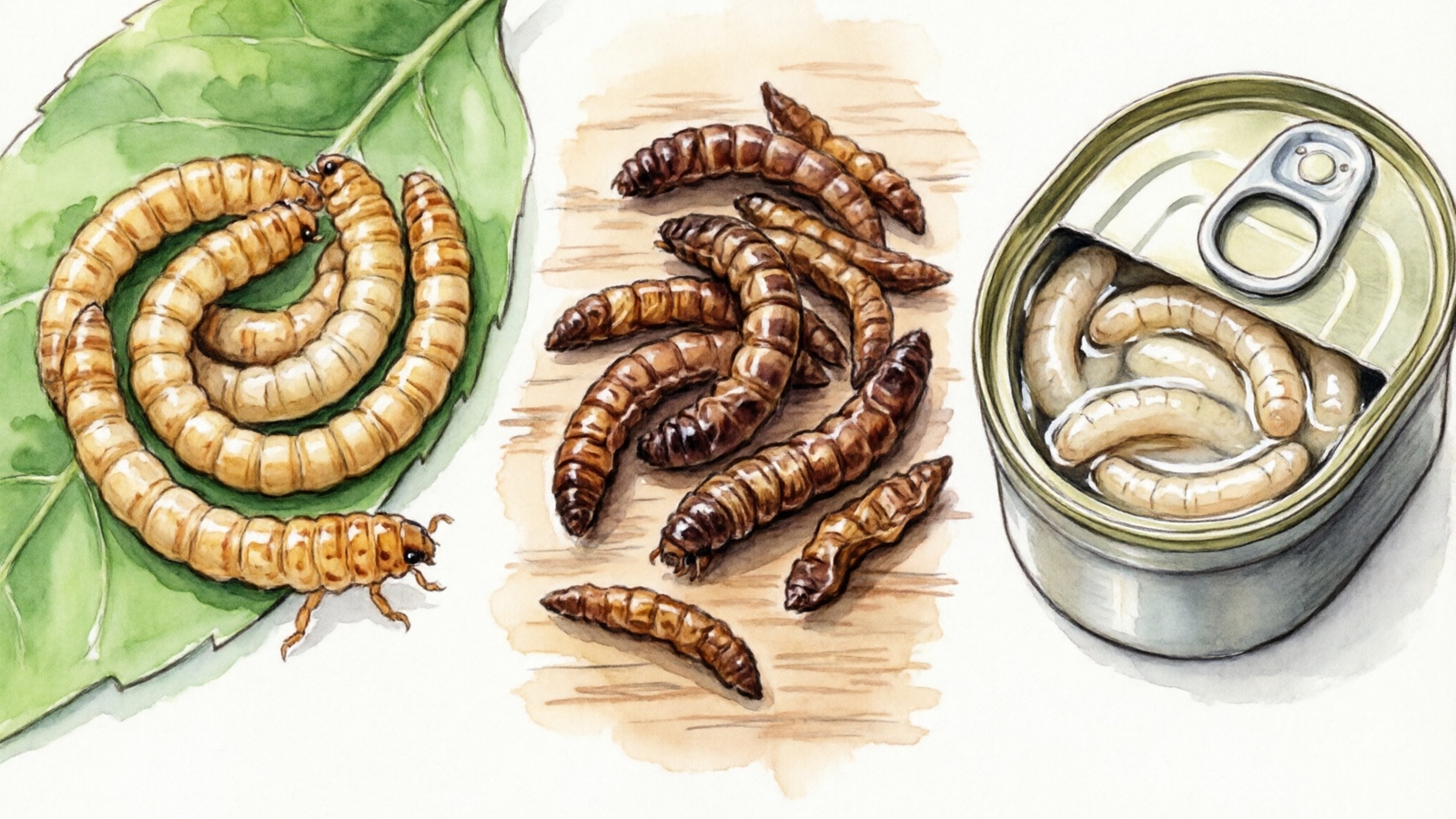
The hierarchy of safety: Live (gut-loaded) > Canned > Dried. If you’re going to offer mealworms at all, live ones with a calcium boost are the least harmful option. For a complete overview of what hedgehogs should and shouldn’t eat, see our hedgehog diet guide.
Nutritional Facts — Why Mealworms Are a Double-Edged Sword
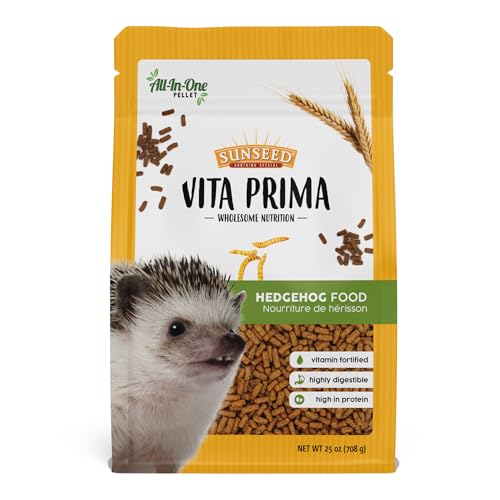
Sunseed Vita Prima Hedgehog Food is a quality option worth considering for your setup.
Mealworms look like a perfect hedgehog food on the surface — high protein, easy to find, and hedgehogs go crazy for them. But while can hedgehogs eat mealworms is technically a yes, the real question is whether they should — and the problem is hiding in the mineral profile.
Mealworms — nutritional profile per 100g (dried):
| Nutrient | Amount | Assessment |
|---|---|---|
| Protein | ~19-20g | Good — hedgehogs need 25-35% dietary protein |
| Fat | ~13g | Warning: Borderline — staple food should stay under 15% |
| Fiber | ~1.7g | From chitin exoskeleton |
| Calcium | ~20mg | Critically low |
| Phosphorus | ~270mg | Dangerously high |
| Ca:P Ratio | ≈ 1:13.5 | Warning: Severely imbalanced (safe range: 1:1–2:1) |
| Moisture | ~60% (live) | — |
Why the Ca:P Ratio Matters
This is the most critical concept in this article, so it deserves a clear explanation.
A safe calcium-to-phosphorus ratio is 1:1 to 2:1 — meaning calcium should be equal to or greater than phosphorus. Mealworms sit at roughly 1:13.5 — that’s thirteen and a half times more phosphorus than calcium.
When a hedgehog consumes excess phosphorus, the body must maintain a specific calcium-to-phosphorus balance in the bloodstream. Since there isn’t enough calcium coming in from the food, the body compensates by pulling calcium directly out of the bones and teeth. Over weeks and months, this progressive calcium depletion weakens the skeletal system — leading to metabolic bone disease (MBD).
This is the one nutritional topic that surprises hedgehog owners the most. Most people assume that because hedgehogs eat insects in the wild, all insects are equally good for them. They’re not. The Ca:P ratio varies wildly between insect species, and mealworms happen to be one of the worst options for regular feeding.
Are Mealworms Bad for Hedgehogs? — The Risks Explained
Many owners find that Exotic Nutrition Veggie Blend works well for their pet’s needs.
Are mealworms bad for hedgehogs? Not in the sense of being toxic — a hedgehog won’t die from eating a few. But they are nutritionally unbalanced, and feeding them regularly creates four real problems:
- Metabolic Bone Disease (MBD) — This is the most serious risk and gets its own section below. The calcium-phosphorus imbalance in mealworms directly causes bone demineralization over time.
- Obesity — At roughly 13% fat, mealworms are calorie-dense. African pygmy hedgehogs are prone to obesity in captivity (they run far less than their wild counterparts), and high-fat treats compound the problem. A healthy adult weighs 400-600g; anything above 600g is overweight.
- Addiction and Food Refusal — Hedgehogs that get mealworms daily start holding out for them and refusing their kibble. It’s the equivalent of a child who won’t eat dinner because they know there’s ice cream later. Once a hedgehog develops this preference, it can take weeks of strict mealworm withdrawal to reset their eating habits.
- Nutritional Imbalance — When mealworms displace balanced kibble in the diet, the hedgehog misses out on essential vitamins and minerals that quality staple food provides. It’s not just about what mealworms add — it’s about what they crowd out.
Mealworms and Metabolic Bone Disease in Hedgehogs — The Hidden Danger
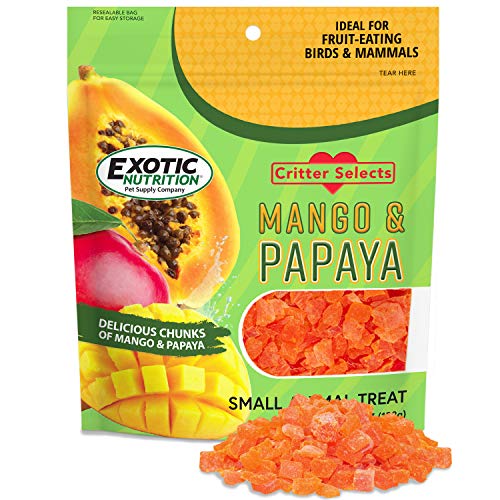
For this purpose, Exotic Nutrition Mango & Papaya is a popular choice among pet owners.
The connection between mealworms and metabolic bone disease (MBD) in hedgehogs is the specific health risk that makes overfeeding genuinely dangerous. MBD is a progressive, irreversible condition that weakens bones, loosens teeth, and in severe cases causes paralysis.
Metabolic Bone Disease (MBD) is a nutritional disorder caused by an imbalanced calcium-to-phosphorus ratio in the diet, leading to progressive bone demineralization. According to the Merck Veterinary Manual, MBD in insectivorous mammals occurs when high dietary phosphorus forces the body to mobilize calcium from skeletal stores to maintain blood homeostasis. In African pygmy hedgehogs (Atelerix albiventris), the most common cause is overfeeding mealworms, which have a Ca:P ratio of approximately 1:13.5 — far below the safe minimum of 1:1. Early stages are reversible with dietary correction, but advanced MBD with fractures or spinal deformity is largely irreversible.
The four stages of MBD:
| Stage | Symptoms | Reversibility |
|---|---|---|
| Early | Reduced appetite, slight limping, decreased activity | Reversible with diet correction |
| Mid | Loose teeth, weak hind legs, difficulty walking | Warning: Partially reversible with vet treatment |
| Late | Spontaneous fractures from normal movement, spinal deformity | Largely irreversible |
| Severe | Inability to walk, paralysis, death | Irreversible |
Warning signs to watch for:
- Trembling or shaking without a temperature cause
- Reluctance to climb or walk normally
- Bones that feel softer than they should
- Teeth appearing loose or misaligned
The tragedy of MBD is that it develops silently. By the time you see visible symptoms, significant bone loss has already occurred. Prevention is far more effective than treatment. If your hedgehog shows any of these signs — particularly trembling or difficulty walking — see an exotic vet immediately. For more on hedgehog health warning signs, see our hedgehog health guide and our article on why hedgehogs shake.
Live vs Dried vs Canned Mealworms — Which Is Best?
Can hedgehogs eat dried mealworms? Technically yes, but they’re the worst option. Can hedgehogs eat live mealworms? Yes — and this is the preferred form if you’re going to offer mealworms at all. Here’s how all three compare:
| Feature | Live Mealworms | Dried Mealworms | Canned Mealworms |
|---|---|---|---|
| Moisture | ~60% | ~5% | ~70% |
| Protein | High | High (concentrated) | Medium |
| Fat | Medium | High (concentrated) | Medium |
| Ca:P Ratio | ~1:13.5 | ~1:13.5 (worse after dehydration) | ~1:13.5 |
| Nutrient retention | Best | Processing losses | Warning: Moderate |
| Convenience | Requires keeping live colonies | Easy storage | Ready to serve |
| Parasite risk | Warning: Possible | None | None |
| Price | Medium | Low | High |
| Recommendation | Best choice (if gut-loaded) | Warning: Worst choice | Warning: Safe compromise |
How to Improve Live Mealworms
If you’re feeding live mealworms, two techniques can partially offset the calcium-phosphorus problem:
Gut-loading: Feed the mealworms a high-calcium diet (commercial calcium gut-load, carrots, dark leafy greens) for 24 hours before offering them to your hedgehog. The mealworms absorb the nutrients, passing improved calcium content to your hedgehog when eaten.
Calcium dusting: Lightly coat live mealworms in a calcium + vitamin D3 supplement powder immediately before feeding. This adds a direct calcium boost that helps counteract the phosphorus excess. I’d recommend doing this every time you offer mealworms — it’s a small effort for a meaningful nutritional improvement.
How Many Mealworms Can a Hedgehog Eat? — Safe Feeding Guidelines
How many mealworms can a hedgehog eat? The answer depends on age and weight. Here’s a practical guide:
| Age | Weight | Max per Week | Frequency | Notes |
|---|---|---|---|---|
| Baby (<6 months) | 100-250g | 1-2 worms | 1x per week | Growing bones are most vulnerable to Ca:P imbalance |
| Juvenile (6-12 months) | 250-400g | 2-3 worms | 1-2x per week | Introduce gradually |
| Adult (1-5 years) | 400-600g | 3-4 worms | 1-2x per week | Maximum safe amount |
| Senior (>5 years) | <500g | 1-2 worms | 1x per week | Slower metabolism, higher obesity risk |
Can Baby Hedgehogs Eat Mealworms?
Can baby hedgehogs eat mealworms? I’d recommend waiting until at least 6 months of age. Baby hedgehogs are growing rapidly, and their bones are actively mineralizing. A Ca:P imbalance during this critical window can cause lasting skeletal problems. When you do introduce mealworms, start with a single worm per week and monitor for any signs of food refusal or digestive upset.
How to Feed Mealworms Safely — Step-by-Step
Step one: Choose the right form. Live mealworms (gut-loaded with calcium-rich food) are the best option. Canned mealworms are an acceptable alternative. Avoid dried mealworms whenever possible — the dehydration process concentrates phosphorus and removes hydration benefits.
Step two: Calcium dust before feeding. Lightly coat live mealworms in a calcium + vitamin D3 supplement powder immediately before offering. This adds a direct calcium boost that helps counteract the phosphorus excess.
Step three: Feed the right amount. Use the table above for your hedgehog’s age and weight. Never give more than two mealworms per feeding session.
Step four: Separate from regular meals. Offer mealworms at a different time than kibble — never alongside it. If your hedgehog learns to hold out for treats, they will refuse their nutritionally complete staple food.
Step five: Monitor for kibble refusal. If your hedgehog stops eating kibble, cut out mealworms entirely for at least two weeks to reset their food preferences. Hedgehogs can develop a kibble-refusal pattern in as little as one mealworm per day for a fortnight — the habit forms faster than most owners expect.
For kibble recommendations that hedgehogs actually enjoy eating (so they’re less tempted to hold out for treats), see our guide to the best hedgehog food. Our hedgehog care guide also covers general feeding schedules and nutrition principles.
Signs Your Hedgehog Is Eating Too Many Mealworms
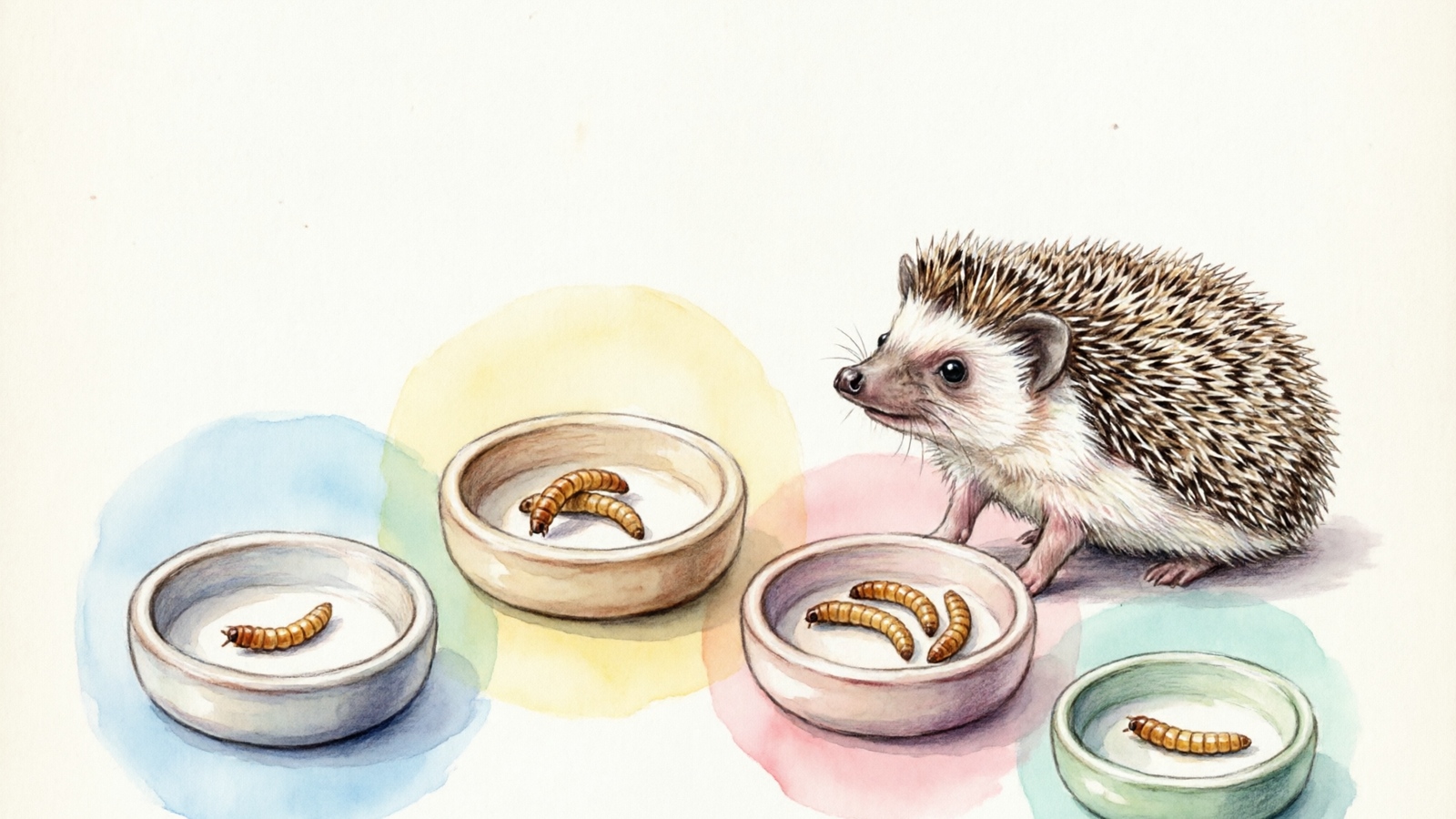
If you’ve been offering mealworms more frequently than recommended, watch for these five warning signs:
- Refusing staple food — Your hedgehog sniffs the kibble, walks away, and waits near the cage door for mealworms. This is the most common and earliest sign.
- Unexplained weight gain — If your adult hedgehog exceeds 600g, excess fat from treats is the likely culprit.
- Greasy or abnormal stool — High-fat mealworms can cause oily, loose, or foul-smelling droppings.
- Increased pickiness — Your hedgehog loses interest in other foods it previously enjoyed, like cooked chicken or scrambled egg.
- Long-term skeletal signs — Trembling, difficulty climbing, or reluctance to walk — these are early MBD symptoms that require immediate veterinary attention.
Nutritional deficiencies from a mealworm-heavy diet can also contribute to quill loss, which is another sign that your hedgehog’s overall nutrition needs rebalancing.
Hedgehog owners often underestimate how quickly food addiction develops — one mealworm per day for two weeks is enough to create a kibble-refusal pattern in some hedgehogs. It’s much easier to prevent this habit than to break it. For more on understanding hedgehog food-related behaviors, see our hedgehog behavior guide.
Better Alternatives to Mealworms — Safer Insect Treats
Crickets and silkworms beat mealworms on calcium balance, fat content, and feeding frequency. Here’s how common feeders compare:
| Insect | Protein | Fat | Ca:P Ratio | Max Frequency | Why It’s Better |
|---|---|---|---|---|---|
| Crickets | ~15-20% | ~5-8% | ~1:1 | 3-4x/week | Best Ca:P, low fat, easy to find |
| Dubia Roaches | ~20-23% | ~7-9% | ~1:3 Warning: | 2-3x/week | High protein, most hedgehogs love them |
| Silkworms | ~15-20% | ~10% | ~1:1 | 3-4x/week | Great Ca:P, low fat, but harder to source |
| Waxworms | ~15% | ~25% Warning: | ~1:5 | 1x/week (1-2 max) | Very high fat — occasional reward only |
| Superworms | ~20% | ~16% | ~1:7 | 1-2x/week (1-2 max) | Similar to mealworms but larger |
| Mealworms | ~20% | ~13% | ~1:13.5 Warning: | 1-2x/week (3-4 max) | Worst Ca:P of all common feeders |
For seniors or picky eaters, the soft food guide covers the alternatives.
Product Recommendations
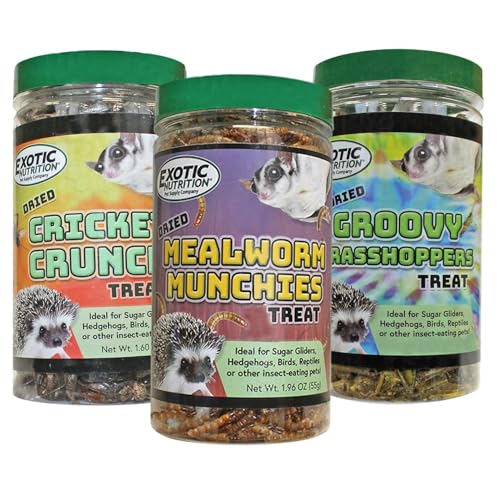
Here are some products mentioned in this guide:
Frequently Asked Questions
Can hedgehogs eat mealworms?
Yes, but only as an occasional treat — a maximum of three or four per week for adults. Mealworms carry a calcium-to-phosphorus ratio of roughly 1:13.5 — far outside the safe window. Overfeeding leads to metabolic bone disease. Live, gut-loaded mealworms are the safest form.
How often can hedgehogs have mealworms?
No more than once or twice per week, with a maximum of three or four total mealworms per week for adults. Baby hedgehogs under 6 months should get no more than one or two per week. Daily feeding of mealworms will cause progressive calcium depletion and eventually metabolic bone disease.
Are dried mealworms safe for hedgehogs?
Dried mealworms are the least recommended form. The dehydration process concentrates phosphorus while removing moisture, making the already-poor Ca:P ratio even worse. They provide no hydration benefit and have reduced overall nutritional value compared to live or canned options. If dried is all you have access to, limit to one or two per week and pair with calcium-dusted kibble.
Can mealworms cause metabolic bone disease in hedgehogs?
Yes — this is the primary health risk of feeding mealworms too frequently. The extreme phosphorus load causes the body to leach calcium from bones to maintain blood mineral balance. Over weeks to months, this produces metabolic bone disease: soft bones, loose teeth, difficulty walking, and in severe cases, spontaneous fractures and paralysis. MBD is largely irreversible once it reaches advanced stages.
What are the best alternatives to mealworms for hedgehogs?
Crickets and silkworms are the safest and most nutritious insect treats. Both have a near-ideal Ca:P ratio of approximately 1:1 and moderate fat content, allowing them to be fed three or four times per week. Dubia roaches are another solid option with higher protein content. All three are nutritionally superior to mealworms and can be offered more frequently without health risks.