Warning: Medical Disclaimer: This article is not a substitute for professional veterinary care. If your hedgehog is showing signs of abnormal quill loss, skin irritation, or behavioral changes, consult a qualified exotic veterinarian.
Quick Answer — Is Quill Loss Normal?
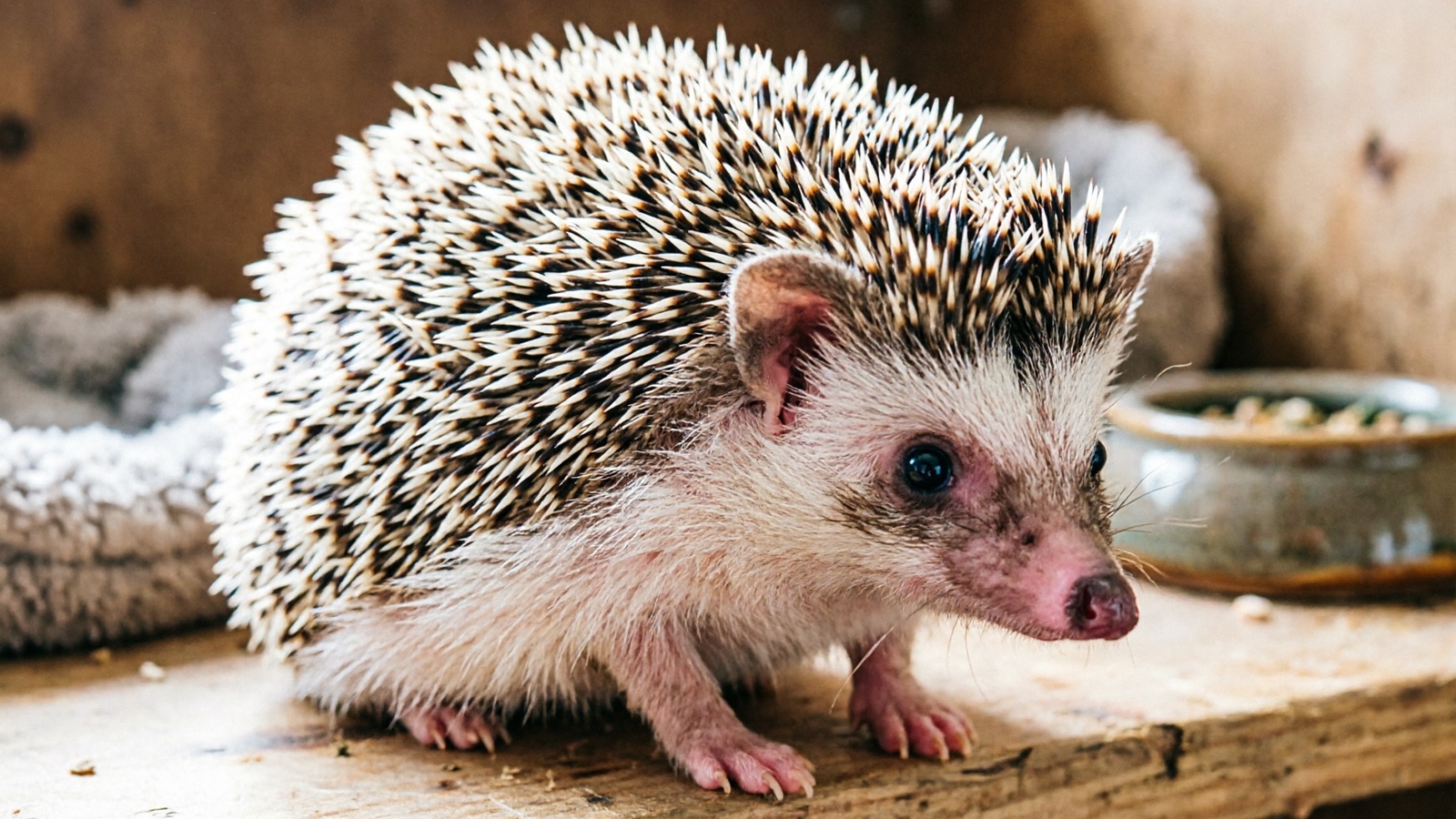
If you’re finding quills everywhere and asking why is my hedgehog losing quills, the short answer is: it’s probably normal. Most quill loss in hedgehogs is a natural growth process called quilling — the hedgehog equivalent of a child losing baby teeth. It happens at specific ages (4-12 weeks and again at 4-6 months) and lasts 2-4 weeks before resolving on its own. Knowing what to expect at these ages will save you a lot of worry.
But there’s an important exception. If you notice bald spots, crusty or red skin, or constant frantic scratching, the cause is likely mites or a skin infection — not normal quilling. These require a vet visit for proper diagnosis and treatment.
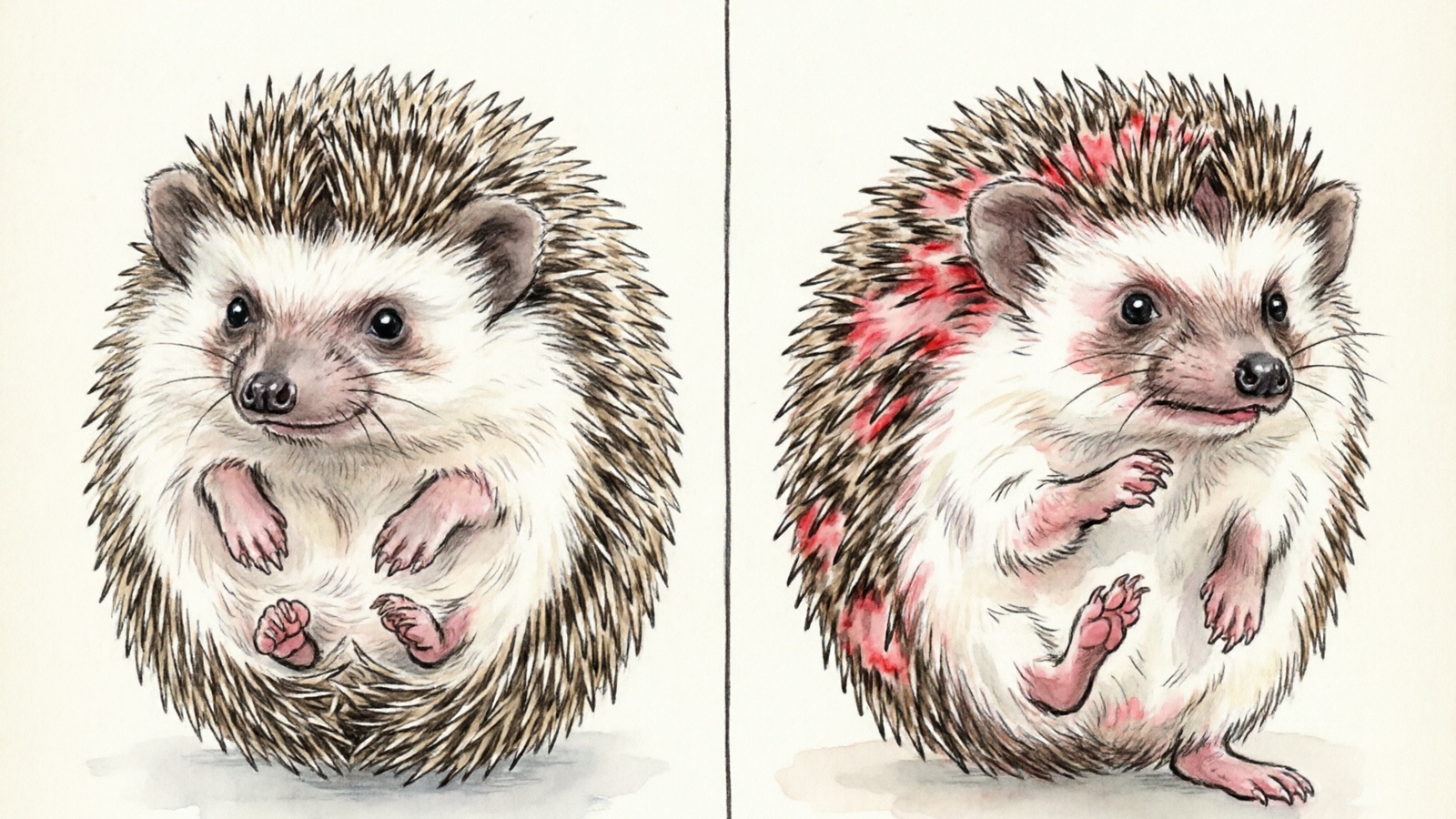
The key distinction is simple: normal quilling is even (quills fall out all over the body) and temporary (2-4 weeks). Abnormal quill loss is patchy (concentrated in specific areas) and persistent (doesn’t improve over time). When in doubt, always check with an exotic vet — it’s better to be safe than sorry.
What Is Quilling?
Quilling is the natural process where a hedgehog sheds its baby quills and replaces them with stronger, thicker adult quills. Think of it as the hedgehog version of teething — it’s a normal developmental milestone, not an illness.
Quilling (quill replacement) is a cyclical process in African pygmy hedgehogs (Atelerix albiventris) where old quills are shed and replaced by new ones from the same follicle. According to the Association of Exotic Mammal Veterinarians (AEMV), hedgehogs undergo their heaviest quill replacement at 4-12 weeks of age, with a second smaller wave at 4-6 months. Unlike mammals with continuous hair growth, each hedgehog follicle produces one quill at a time, meaning new quills must physically push out old ones — causing the discomfort that makes quilling hedgehogs irritable.
Here’s what’s happening beneath the surface: baby hedgehogs are born with approximately 100 soft, short quills that are replaced over the first several months of life. During a quilling phase, the old quills fall out and new adult quills push through the skin from follicles underneath. These new quills are thicker, longer, and sharper than the ones they’re replacing.
What it feels like for your hedgehog: Imagine dozens of tiny needles simultaneously pushing through your skin. It’s uncomfortable — like growing pains — but not dangerous. During quilling, you may notice your hedgehog becoming more irritable, hissing more than usual, or being less eager to be handled. These behavioral changes are a direct response to the physical discomfort of new quills breaking through the skin. For a complete guide to understanding these changes, see our hedgehog behavior guide.
Even adult hedgehogs lose a few quills daily as part of their natural shedding cycle. This is completely normal and barely noticeable — you might find 1-3 quills in the bedding during routine cage cleaning. Active quilling, by contrast, involves hundreds of quills falling out over a period of weeks.
I’ve been through quilling with several hedgehogs, and the first time is always the scariest. Finding that many quills scattered around the cage makes it look like your hedgehog is falling apart. But in every case I’ve seen, the hedgehog came through it just fine with a fresh, full coat of adult quills.
Hedgehog Quilling Timeline
Not all quilling phases are the same. Hedgehogs go through distinct stages, and the intensity varies dramatically between phases. Here’s the complete timeline:
| Stage | Age | Duration | Quills Lost | What You’ll Notice |
|---|---|---|---|---|
| First quilling | 4–6 weeks | 2–3 weeks | Few dozen | Mild irritability, a few loose quills in bedding |
| Major quilling | 7–12 weeks | 3–4 weeks | Hundreds | Heavy quill loss, cranky, hissing, reduced appetite, finds quills everywhere |
| Adult quilling | 4–6 months | 1–2 weeks | Dozens | Mild discomfort, slight behavior change |
| Ongoing replacement | Throughout life | A few days at a time | A few | Barely noticeable, normal maintenance |
The Major Quilling Phase (7-12 Weeks)
This is the phase that sends most new owners into a panic — and for good reason. If your hedgehog is 8-12 weeks old, this is almost certainly why. The major quilling phase is the most intense period of quill replacement your hedgehog will ever experience. During these 3-4 weeks, hundreds of baby quills fall out and are replaced by larger, stronger adult quills.
What you’ll see: quills scattered across the cage floor, tucked into the sleeping bag, embedded in fleece liners. Your hedgehog may look thinner or patchy in places. You might notice small white tips poking through the skin where new quills are emerging. The hedgehog will likely be grumpier than usual — more hissing, more balling up, and less interested in exploring or eating.
What you need to know: this is temporary. The major quilling phase is the worst it gets, and once it’s over, your hedgehog will have a full, healthy adult coat. Individual hedgehogs vary — some sail through with barely any fuss, while others are genuinely miserable. Neither extreme is unusual.
Baby Hedgehog Quilling Age — What to Expect
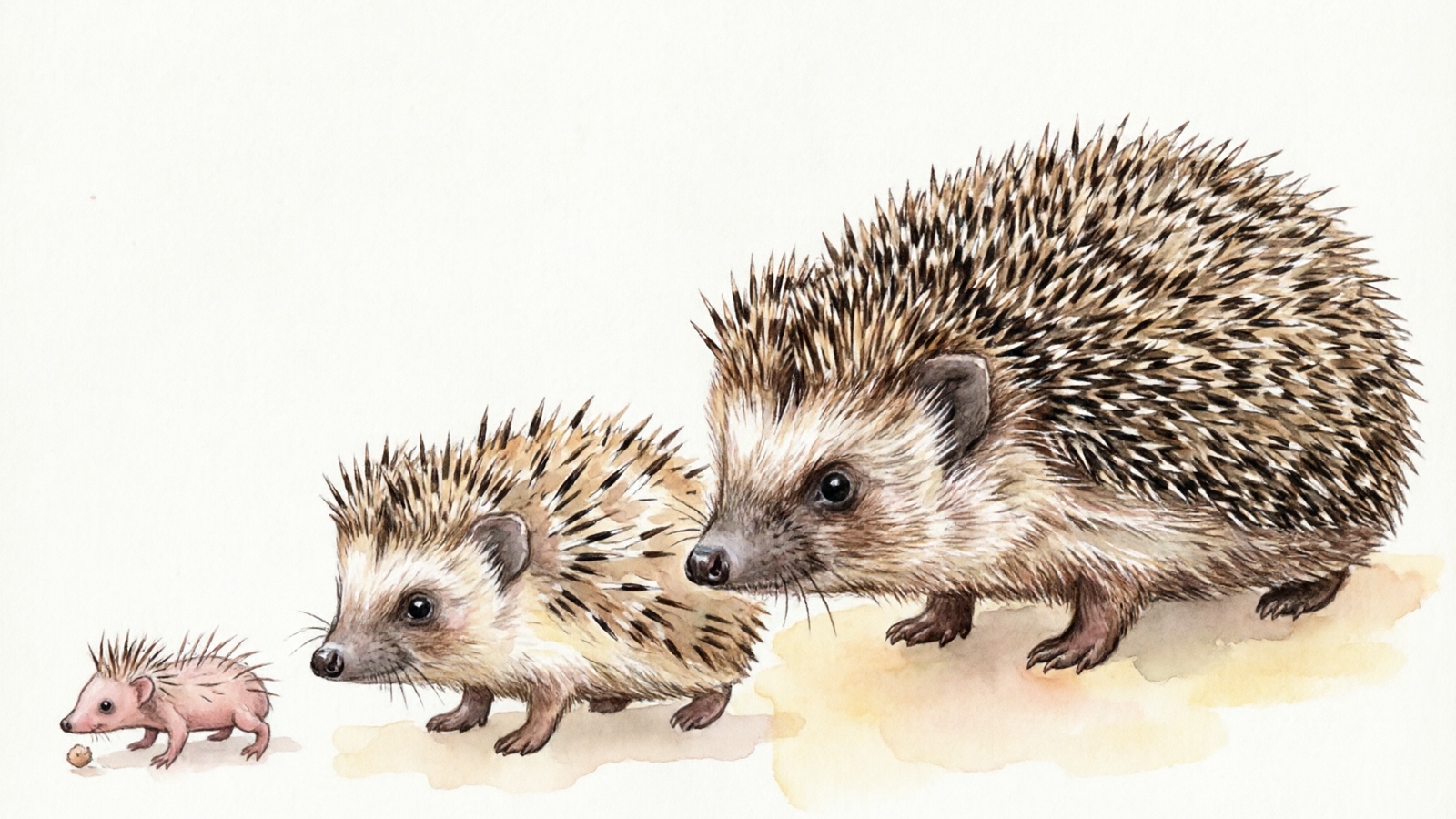
If you’re asking about baby hedgehog quilling age, the critical window is 4-12 weeks. The first phase (4-6 weeks) is mild and often goes unnoticed, especially if you just brought your hedgehog home. The second phase (7-12 weeks) is impossible to miss. By 6 months, quilling is essentially complete, and any further quill loss should be minimal and even.
Normal Quilling vs. Abnormal Quill Loss
This is the distinction every hedgehog owner needs to understand. Normal quilling is healthy. Abnormal quill loss means something is wrong. Here’s how to tell the difference:
| Sign | Normal Quilling | Abnormal Quill Loss |
|---|---|---|
| Quill loss pattern | Even, all over the body | Patchy, concentrated areas |
| Bald spots | None — quills replace evenly | Visible bald patches |
| Scratching | Minimal to none | Constant, frantic scratching |
| Skin appearance | Normal, maybe slightly dry | Red, crusty, scabby, irritated |
| Age | 4–12 weeks or 4–6 months | Any age |
| Duration | 2–4 weeks, then resolves | Persists or worsens over time |
| Behavior | Cranky but eats and is active | Increasingly lethargic, losing weight |
| Quill tips | New quills poking through skin | No new quill growth visible |
| Dandruff | Light, minimal flaking | Heavy, visible crusts and scales |
Let me walk you through the most important rows:
Quill loss pattern is the single most reliable indicator. Normal quilling affects the entire body evenly — you’ll see quills falling out from the back, sides, and rump in roughly equal amounts. Abnormal quill loss from mites tends to concentrate behind the ears, at the base of the quills, and in specific patches.
New quill growth is your confirmation signal. During normal quilling, you should be able to see (and feel — carefully) small, sharp new quill tips emerging through the skin. If quills are falling out but nothing is growing back, that’s a red flag.
Age matters. If your hedgehog is 8 weeks old and losing quills, it’s almost certainly normal quilling. If your hedgehog is 2 years old and suddenly losing quills with no history of quilling issues, it’s almost certainly not normal — it’s likely mites, an infection, or another health problem.
Hedgehog Losing Quills and Dry Skin
Dry skin during quilling is common and usually harmless. As new quills push through, the skin stretches and can become flaky. A light dusting of what looks like dandruff on the quill shafts is normal during an active quilling phase.
However, hedgehog losing quills and dry skin together in excess can signal a problem. If the flaking is heavy — forming visible crusts, scales, or waxy buildup on the skin — and it’s accompanied by scratching or bald spots, it points toward mites or a fungal infection rather than normal quilling.
Hedgehog Bald Spots
Normal quilling does not leave bald spots. If you can see distinct patches of exposed skin with no quills at all, that’s abnormal. The most common cause of bald spots is mites, followed by fungal infection (ringworm). Both require veterinary treatment.
In my experience, the fastest way to assess whether a bald spot is concerning is to look at the surrounding skin. If the skin in the bald area looks red, inflamed, crusty, or scabby, it needs vet attention. If the skin looks normal and you can see tiny new quill tips emerging, it may just be a temporary gap during quilling — but it’s still worth monitoring closely.
How to Help Your Hedgehog Through Quilling
You can’t stop quilling from happening, but you can make your hedgehog more comfortable during the process. These tips come from veterinary recommendations and my own experience with multiple quilling phases.
Diet Adjustments
During quilling, your hedgehog’s body is working hard to grow hundreds of new quills. Supporting that process through diet makes a real difference.
Add olive oil — 2-3 drops of extra virgin olive oil on your hedgehog’s food once every 2-3 days helps moisturize the skin from the inside, reducing the dryness and flaking that accompany new quill growth. Don’t overdo it — too much oil causes loose stool.
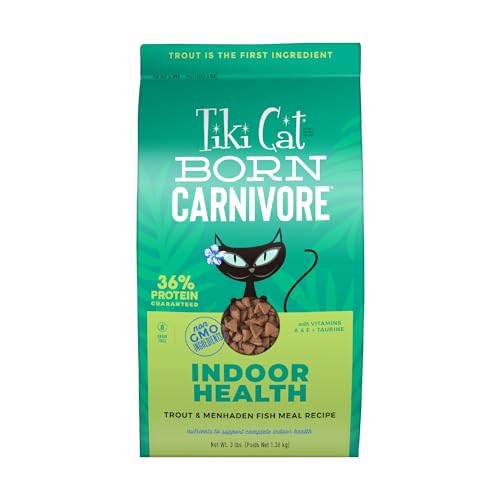
Offer soft foods — new quills pushing through the gums can make eating hard kibble uncomfortable. Offering soft alternatives like scrambled egg, wet cat food such as Tiki Cat Born Carnivore or Fancy Feast Poultry, or cooked plain chicken gives your hedgehog a break while still maintaining nutrition. For specific soft food recommendations, see our hedgehog soft food guide.
Maintain high protein — quills are made primarily of keratin, a protein. A diet with 28-35% protein supports healthy quill growth. If your current food is below 25% protein, consider switching to a higher-quality option. Check our best hedgehog food guide for recommended brands and protein comparisons.
Handling During Quilling
Some owners stop handling their hedgehog during quilling because the hedgehog seems grumpy. I’d recommend the opposite approach — keep handling gentle but consistent. A hedgehog that isn’t handled during quilling can become skittish and difficult to bond with long after the quilling ends.
Practical tips:
- Use a fleece blanket or small towel as a barrier between your hands and the sharp new quills
- Limit handling sessions to 10-15 minutes if your hedgehog seems particularly irritated
- Scoop from below rather than reaching down from above (the overhead approach triggers a predator response)
- Talk softly and move slowly — sudden movements make an already-uncomfortable hedgehog more defensive
Bathing and Skin Care
An oatmeal bath during quilling can soothe irritated skin and help remove loose quills that are hanging on by a thread. Give 1-2 baths during the peak of the quilling phase.
How to give an oatmeal bath:
- Fill a shallow container with warm (not hot — aim for body temperature, around 98°F) water, about 1 inch deep
- Add a small handful of colloidal oatmeal or grind plain, unflavored oats into a fine powder and stir in
- Gently place your hedgehog in the water and let them walk around for 5-10 minutes
- Use a soft toothbrush to gently brush along the quill lines — this removes loose quills and soothes the skin
- Rinse with clean, warm water if needed
- Dry thoroughly with a towel, then keep your hedgehog in a warm spot until completely dry. Cold + wet hedgehog is dangerous
Important: Don’t use human shampoos, soaps, or bubble bath products. These strip natural oils and can worsen skin irritation. Stick to plain colloidal oatmeal.
Environment
A stable, stress-free environment helps your hedgehog cope with quilling discomfort. Maintain the enclosure temperature between 75-80°F — temperatures below 72°F can trigger hibernation attempts, which are dangerous for African pygmy hedgehogs and compound the stress of quilling.
Provide at least two hiding spots (one on the warm side, one on the cool side) so your hedgehog always has a secure retreat. Keep the cage clean — soiled bedding harbors bacteria that can cause skin infections on the already-irritated quilling skin. For proper enclosure setup, see our hedgehog cage setup guide.
Common Causes of Abnormal Quill Loss
When quill loss falls outside the normal quilling pattern, many owners find themselves asking why is my hedgehog losing quills at the wrong age — one of these causes is usually responsible:
Mites
Mites are the most common cause of abnormal quill loss in hedgehogs. These microscopic parasites burrow into the skin and around the quill follicles, causing intense itching, inflammation, and quill loss.
Signs of mites: constant scratching (not just occasional grooming), patchy quill loss especially behind the ears and at the quill base, crusty or scabby skin, visible dandruff or waxy debris, and quills falling out in clusters rather than individually.
Treatment: requires prescription anti-parasitic medication from a vet — typically ivermectin or selamectin. Over-the-counter mite sprays from pet stores are generally ineffective against hedgehog mites and can sometimes make the problem worse by further irritating the skin.
Prevention: quarantine any new hedgehog for at least 30 days before introducing them to your existing pets. Freeze bedding and cage accessories for 48 hours before use to kill mite eggs. Clean the cage thoroughly at least once a week.
Fungal Infection (Ringworm)
Ringworm is a fungal infection that causes circular bald patches with flaky, crusty skin borders. It’s one of the more common causes of abnormal quill loss and is zoonotic — meaning it can spread to humans. If you suspect ringworm, handle your hedgehog with gloves and wash your hands thoroughly afterward.
Ringworm thrives in humid, poorly ventilated enclosures. Treatment requires antifungal medication from a vet, usually in the form of topical creams or oral medication depending on severity.
Nutritional Deficiency
Quills are made of keratin, and producing healthy keratin requires adequate protein, fat, and essential vitamins. A diet below 25% protein can lead to weak, brittle quills that break or fall out prematurely. Low fat intake (below 10%) causes dry, dull quills and flaky skin.
If your hedgehog’s quills look thin, dull, or break easily, the diet may be the culprit. Switch to a high-quality hedgehog food with 28-35% protein and 10-15% fat. For detailed nutritional guidance, see our hedgehog diet guide.
Stress
Environmental stressors — loud noises, frequent handling, cage mates, temperature fluctuations, recent moves — can trigger excessive quill loss. Stress-induced quill loss is usually diffuse (spread across the body rather than concentrated in patches), but the volume of quills lost exceeds what you’d see in normal daily shedding.
The fix is straightforward: identify and remove the stressor. Reduce handling temporarily, move the cage to a quieter location, stabilize the temperature, and provide more hiding spots. Once the stress resolves, quill loss typically stops within 1-2 weeks.
Hormonal Imbalance
Hormonal issues — particularly in unspayed females — can cause symmetrical quill thinning that resembles slow, diffuse quill loss. This is less common than mites or nutritional deficiency but is worth considering if other causes have been ruled out. Diagnosis requires blood work and veterinary examination.
Allergies
Bedding allergies are an underappreciated cause of quill loss. Pine and cedar shavings should never be used for hedgehogs — the aromatic oils cause respiratory irritation and skin reactions that lead to quill loss. Even some paper beddings with added fragrances or dust can trigger reactions. Switch to unscented paper-based bedding or fleece liners. For bedding recommendations, see our best hedgehog bedding guide.
Quilling vs. Mites — The Complete Breakdown
This is the number one question owners have when they notice unusual quill loss, so I’m giving it a full dedicated section. The distinction matters because the treatment is completely different — quilling requires patience and supportive care, while mites require medication.
| Feature | Quilling | Mites |
|---|---|---|
| Age of hedgehog | 4–12 weeks or 4–6 months | Any age (including adults) |
| Quill loss pattern | Even, symmetrical, all over | Patchy, worst behind ears and at quill base |
| New quills visible? | Yes — small sharp tips poking through skin | No — quills fall out, nothing grows back |
| Scratching | Minimal, occasional | Constant, frantic, obsessive |
| Skin condition | Normal or slightly dry | Red, crusty, scabs, dandruff |
| Behavior | Cranky, irritable, but still active and eating | Increasingly distressed, lethargic, weight loss |
| Duration | 2–4 weeks, self-resolving | Won’t resolve without treatment |
| Contagious? | No | Yes — to other hedgehogs (not to humans) |
| Treatment | Supportive care (oil, soft food, patience) | Prescription anti-parasitic medication from vet |
| Diagnosis | Based on age and pattern | Skin scraping at the vet |
The three fastest ways to tell:
-
Age. Is your hedgehog between 4-12 weeks or 4-6 months old? If yes, quilling is far more likely. If your hedgehog is over a year old with no previous quilling history, it’s almost certainly not quilling.
-
Scratching intensity. A quilling hedgehog might scratch occasionally because the skin is irritated. A hedgehog with mites scratches frantically and obsessively — often to the point of keeping you awake at night. The difference in intensity is unmistakable once you’ve seen both.
-
New quill growth. Look closely at the skin (a flashlight helps). During quilling, you’ll see small, sharp white or clear tips emerging where new quills are growing in. With mites, quills fall out but nothing replaces them — the follicles are damaged.
When in doubt, always see a vet. A skin scraping takes minutes and can definitively confirm or rule out mites. The cost of an unnecessary vet visit is far less than the cost of letting a mite infestation go untreated for weeks.
When to See a Vet
If you’ve read this far and you’re still not sure whether your hedgehog’s quill loss is normal, use this decision table:
| Symptom | Urgency | Action |
|---|---|---|
| Bald spots with crusty/scabby skin | Warning: High | Vet within 24-48 hours |
| Constant scratching + quill loss at any age | Warning: High | Vet within 24-48 hours (mites) |
| Quills not growing back after 4+ weeks | 🟠 Medium | Vet within 1 week |
| Quill loss + lethargy + weight loss | Warning: High | Vet within 24 hours |
| Quill loss + visible dandruff/scales | 🟠 Medium | Vet within 1 week |
| Even quill loss at 7-12 weeks, eating normally | Low | Normal quilling — monitor |
Check these signs before scheduling a vet visit:
Bald spots with crusty or scabby skin
Constant, frantic scratching at any age
Quills falling out but no new quills growing back after 4+ weeks
Quill loss combined with lethargy or weight loss
Visible dandruff, heavy scaling, or red irritated skin
Do not apply over-the-counter mite treatments without a vet diagnosis — many are toxic to hedgehogs
What to Expect at the Vet
The vet will perform a physical examination and likely do a skin scraping — a quick, painless procedure where they gently scrape the skin surface and examine the sample under a microscope. This can confirm or rule out mites within minutes.
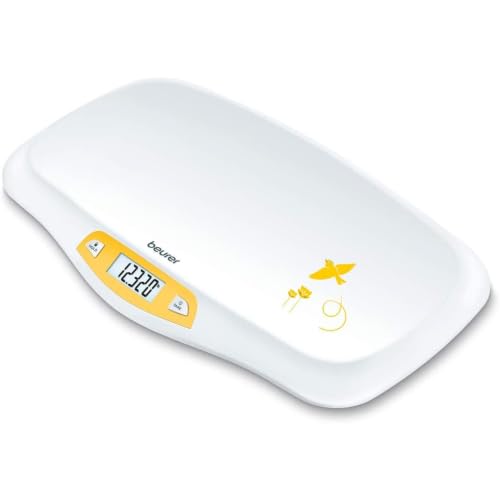
If mites are confirmed, treatment typically involves 2-3 doses of prescription anti-parasitic medication spaced 2-3 weeks apart. The cost for an exotic vet visit runs $50-150 for the exam and skin scraping, plus $20-50 for medication. I’d also recommend a digital kitchen scale like the Beurer BY80 for weekly weigh-ins — catching weight loss early is one of the simplest things you can do to protect your hedgehog’s health. It’s a small price for peace of mind and your hedgehog’s comfort.
Finding an Exotic Vet
Not all veterinarians treat hedgehogs. Look for an exotic mammal veterinarian — the Association of Exotic Mammal Veterinarians (AEMV) directory is a good starting point. If you don’t have an exotic vet nearby, call local small-animal practices and ask if they have experience with hedgehogs. Many will still see hedgehogs even if they don’t specialize in exotics.
For broader health concerns, see our hedgehog health guide. If your hedgehog is losing quills and shaking, this combination could indicate mites, nutritional deficiency, or an infection — see our guide on why hedgehogs shake for more details.
Frequently Asked Questions
Is it normal for hedgehogs to lose quills?
Yes — but the amount and pattern matter. Normal daily shedding involves a few quills per day, which you’ll find scattered in the bedding during routine cleaning. Active quilling phases (at 4-12 weeks and 4-6 months) involve much heavier quill loss — sometimes hundreds of quills over 2-4 weeks — but the loss is even across the body and new quills grow back quickly. What’s not normal is quills falling out in clumps, leaving visible bald patches, or falling out at any age without regrowth.
How long does hedgehog quilling last?
The major quilling phase at 7-12 weeks lasts about 3-4 weeks. A second, milder quilling occurs at 4-6 months and lasts 1-2 weeks. After that, quill replacement slows to a gradual, barely noticeable process where individual quills are shed and replaced throughout the hedgehog’s life. The entire quilling period is finite — your hedgehog won’t be losing quills like this forever.
How can I tell if my hedgehog is quilling or has mites?
The three key differences are age, scratching intensity, and new quill growth. Quilling happens at specific ages (4-12 weeks, 4-6 months) while mites can appear at any age. Quilling causes minimal scratching while mites cause constant, frantic scratching. During quilling, you can see and feel new quill tips emerging; with mites, quills fall out but nothing grows back. When in doubt, a vet can confirm with a quick skin scraping.
At what age do baby hedgehogs start quilling?
Baby hedgehogs begin their first minor quilling at 4-6 weeks, which is often so mild that new owners don’t notice it — especially if the hedgehog was just brought home during this window. The major quilling phase follows at 7-12 weeks and is impossible to miss due to the volume of quills lost and the behavioral changes. A second adult quilling occurs at 4-6 months. After 6 months, active quilling is essentially complete.
What causes abnormal quill loss in hedgehogs?
The most common cause is mites — microscopic parasites that burrow into the skin and damage quill follicles. Other causes include fungal infection (ringworm), nutritional deficiency (especially low protein), environmental stress, hormonal imbalance (more common in unspayed females), and bedding allergies. Each has distinct symptoms and treatments, which is why a vet visit is important for accurate diagnosis.
How do I help my hedgehog through quilling?
Add 2-3 drops of olive oil to their food every 2-3 days to soothe the skin. Offer soft foods like scrambled egg or wet cat food if hard kibble seems uncomfortable for them to eat. Keep handling gentle but consistent — use a fleece blanket as a barrier and limit sessions to 10-15 minutes if your hedgehog is irritable. Maintain a stable temperature of 75-80°F and provide plenty of hiding spots to reduce stress.
Why does my hedgehog have bald spots?
Normal quilling does not leave bald spots — it replaces quills evenly across the entire body. Bald spots indicate an abnormal cause, most commonly mites or a fungal infection (ringworm). If you see distinct patches of exposed skin with no quills, especially if the skin looks red, crusty, or irritated, schedule a vet visit. Bald spots without veterinary treatment can worsen and lead to secondary skin infections.
Why are my hedgehog’s quills not growing back?
If quills have been missing for more than 4-6 weeks with no visible regrowth, something is preventing the follicles from producing new quills. The most common causes are mites (which damage or destroy quill follicles), fungal infection, and nutritional deficiency — particularly diets below 25% protein. Hormonal issues can also slow or stop quill regrowth. Consult a vet to determine the underlying cause and start appropriate treatment.