Quick Answer: Can Hamsters Eat Celery?
Yes — hamsters can eat celery, but only if you prepare it correctly. The problem isn’t toxicity — it’s fiber.
💡 TL;DR: Cut celery into 1-inch pieces, remove all visible strings, and feed 1 piece once a week for Syrians (½ piece every two weeks for dwarfs). Celery leaves are actually safer and more nutritious than the stalks. Never feed a whole celery stick.
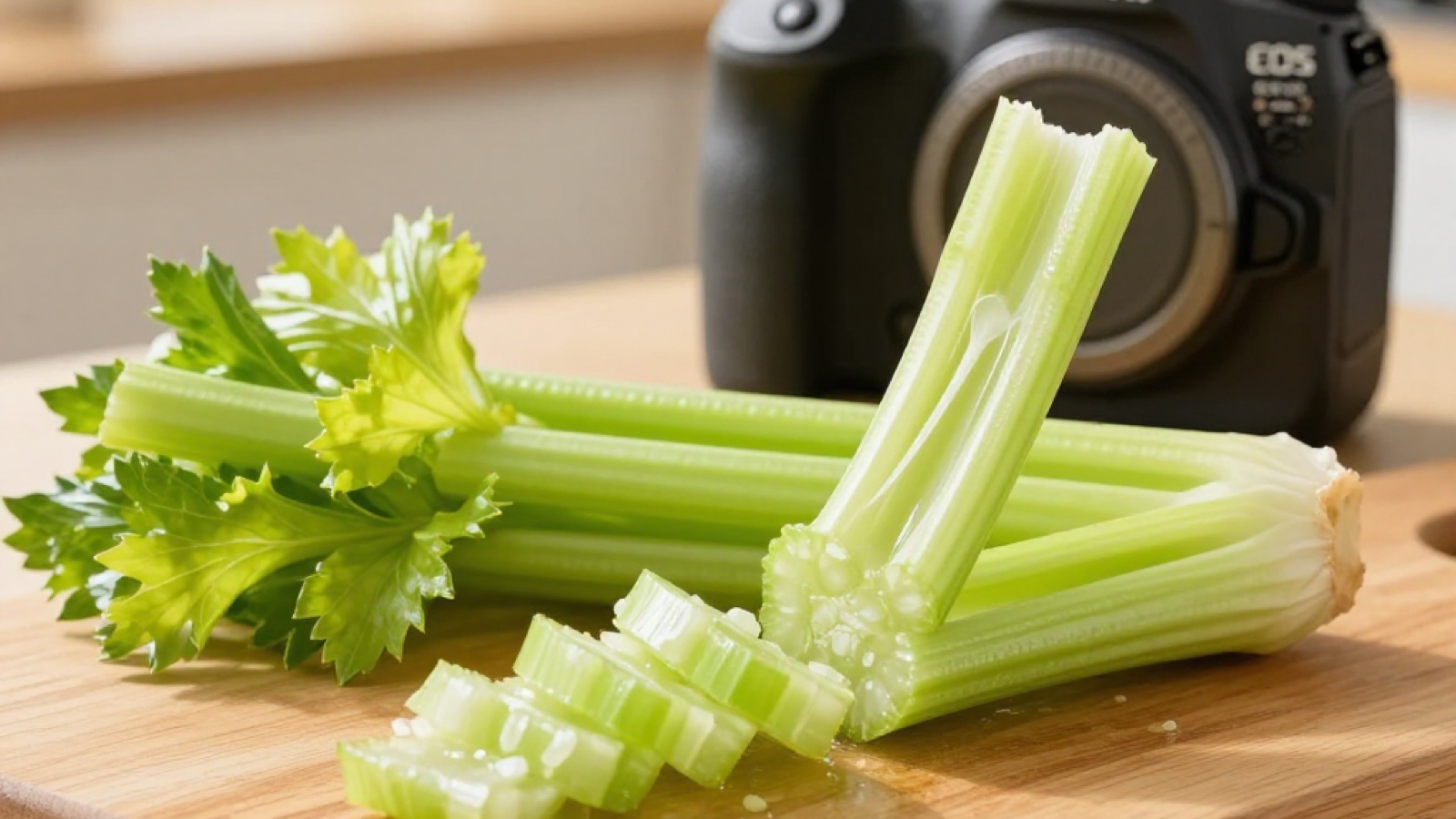
Celery is one of those foods where the risk isn’t what you’d expect. It’s not poisonous, it’s not high in sugar, and it’s not toxic. The danger is mechanical — those tough, stringy fibers that run through every stalk can cause serious problems in a digestive tract the size of a marble. I’ve always taken the approach of either cutting celery meticulously or just feeding the leaves instead. Both work, but the leaves are simpler. For your hamster’s overall hamster diet, celery is an occasional vegetable treat — not a daily food.
Nutritional Value of Celery for Hamsters
Key Nutrients
Raw celery nutritional data from the USDA USDA FoodData Central — Celery, raw:
| Nutrient | Per 100g Celery | Per 1-inch Piece (~10g) | Benefit for Hamsters |
|---|---|---|---|
| Calories | 16 kcal | ~1.6 kcal | Very low calorie |
| Sugar | 1.3g | ~0.13g | Very low — safer than fruits |
| Fiber | 1.6g | ~0.16g | Digestive aid (but tough strings) |
| Vitamin A | 449 IU | ~45 IU | Eye health and immune |
| Vitamin C | 3.1 mg | ~0.3 mg | Moderate immune support |
| Vitamin K | 29.3 mcg | ~2.9 mcg | Blood clotting and bones |
| Folate | 36 mcg | ~3.6 mcg | Cell function |
| Potassium | 260 mg | ~26 mg | Heart and muscle |
| Calcium | 40 mg | ~4 mg | Bones and teeth |
| Water | ~95% | ~9.5g | Excellent hydration |
One standout number: at just 1.3g of sugar per 100g, celery has the lowest sugar of any common hamster vegetable — important for dwarf hamsters. The challenge isn’t nutritional. It’s physical.
Celery vs Other Safe Vegetables
| Vegetable | Water | Sugar | Fiber | Vitamin A | Key Risk |
|---|---|---|---|---|---|
| Celery | 95% | 1.3g | 1.6g | 449 IU | Stringy fiber blockage |
| Cucumber | 95% | 1.7g | 0.5g | 105 IU | Minimal |
| Romaine lettuce | 95% | 2.3g | 2.1g | 8,710 IU | Diarrhea if overfed |
| Broccoli | 89% | 1.7g | 2.6g | 623 IU | Gas if overfed |
| Carrots | 88% | 4.7g | 2.8g | 16,706 IU | Sugar (moderate) |
Key insight: celery has the lowest sugar of all these vegetables. The risk isn’t nutritional — it’s structural. The same fiber that makes celery healthy for humans (promotes regularity in a large digestive tract) is problematic for an animal the size of a tennis ball with intestines just a few inches long.
The Fiber Risk: Why Celery Needs Special Preparation
This is the most important section in this article. Understanding the fiber risk is what separates informed hamster owners from those who feed celery incorrectly and end up at the vet.
What’s the Problem with Celery Fiber?
Celery stalks contain long, tough, stringy fibers called collenchyma strands — the familiar “strings” you notice when eating celery. These fibers run the entire length of the stalk and give celery its rigidity. In humans, we chew through them easily or they pass through our much larger digestive tracts.
In a hamster, these strings behave differently. A hamster’s entire intestinal tract is only a few inches long. When collenchyma strands enter that system, they can:
- Wrap around the intestines — causing partial or complete blockage
- Cause rectal prolapse — the most serious complication, where the rectum protrudes due to straining against blocked fiber
- Create choking hazards — long, uncut fibers can lodge in the throat
- Lead to impaction — undigested fiber accumulates in the gut
This is a well-documented risk in small animal veterinary medicine. The good news is that the entire risk is preventable through proper preparation. For more on hamster health emergencies, see our hamster health guide.
How to Tell If Fiber Is the Problem
Signs of digestive blockage:
- Sudden loss of appetite — your hamster stops eating entirely
- Small, dry droppings or no droppings at all
- Bloated or swollen abdomen
- Lethargy and hunched posture
- Visible straining or distress when trying to pass droppings
Signs of rectal prolapse (veterinary emergency):
- Red or pink tissue protruding from the rectum
- Straining to defecate
- Bleeding from the rectal area
- Visible distress and discomfort
If you see any signs of blockage or prolapse, contact an exotic vet immediately — intestinal blockage can be fatal within 24-48 hours.
The Solution: Proper Cutting
The entire fiber risk is preventable. If you cut celery into small pieces and remove the visible strings before feeding, it becomes a perfectly safe vegetable. The preparation method below takes about 60 seconds and eliminates the danger entirely.
Celery Leaves vs Stalks: Which Is Better?
Spoiler: the leaves win. This is one of the lesser-known facts about celery nutrition, and it’s the reason I almost always recommend leaves over stalks for hamsters.
| Characteristic | Celery Leaves | Celery Stalks |
|---|---|---|
| Vitamin A | Higher concentration | Lower concentration |
| Vitamin C | Higher concentration | Lower concentration |
| Vitamin K | Higher concentration | Lower concentration |
| Calcium | Higher concentration | Lower concentration |
| Fiber type | Short, soft, digestible | Long, stringy (risk!) |
| Water content | ~90% | ~95% |
| Digestibility | Easy | Difficult if not prepared |
| Preparation | Wash and serve | Must cut + remove strings |
| Hamster preference | Most enjoy the flavor | Variable |
The practical takeaway is clear: celery leaves are more nutritious and safer than stalks. They contain higher concentrations of every major vitamin and mineral, and their shorter, softer fibers are easily digestible even for dwarf hamsters. The stalks require meticulous preparation to be safe. The leaves don’t.
My recommendation: if you want to feed celery without the fiber hassle, just give the leaves. You can buy a bunch of celery, pick off the leaves for your hamster, and use the stalks in your own cooking. It’s the simplest solution and arguably the better one nutritionally.
Can Syrian Hamsters Eat Celery?
Yes — 1-inch piece (strings removed) or 2-3 leaves, once a week.
Syrian hamsters (120-200g) handle celery well if properly prepared. Their larger digestive tracts can process small pieces of cut celery stalk without issue, though I still recommend removing the strings even for Syrians. The extra 30 seconds of preparation isn’t worth skipping.
Recommended Serving for Syrians
- Stalk: 1-inch piece, strings removed, outer layer peeled
- Leaves: 2-3 small leaves
- Frequency: Once per week
- Preparation: Raw, washed, strings removed, room temperature
If this is your Syrian’s first time with celery, start with just the leaves and watch for any digestive reaction before introducing stalk pieces.
Can Dwarf Hamsters Eat Celery?
Yes, but leaves are strongly preferred — 1 leaf every two weeks.
Dwarf hamsters (25-45g) are much more vulnerable to fiber blockages due to their tiny digestive systems. Their intestines are a fraction of the length of a Syrian’s, and a fiber strand that might pass through a Syrian could cause a blockage in a dwarf. I’d recommend feeding only celery leaves to dwarf hamsters, not stalk pieces. If you do feed stalk, it should be a tiny ½-inch piece with every visible string removed — and even then, the leaves are the safer choice.
Recommended Serving for Dwarf Hamsters
- Stalk: ½-inch piece, all strings removed (optional — leaves are safer)
- Leaves: 1 small leaf
- Frequency: Once every two weeks
- Extra caution: Watch for small droppings or straining after the first serving
Roborovski hamsters (20-25g, the smallest common species): follow dwarf guidelines, or skip celery stalks entirely and offer only an occasional leaf.
How to Prepare Celery for Your Hamster
Step 1: Choose Fresh Celery
Select crisp, bright green stalks with no yellowing or wilting. Leaves should be vibrant green, not limp or brown. Organic is preferred to reduce pesticide exposure on a vegetable your hamster will eat whole. Avoid stalks that feel rubbery or have a hollow center — these are past their prime.
Step 2: Wash Thoroughly
Separate the stalks and rinse each one individually under cool running water for 15-20 seconds. Pay extra attention to the base where soil and grit collect — celery grows in sandy soil and traps dirt in the root end. Pat dry with a paper towel.
Step 3: Cut Into Small Pieces
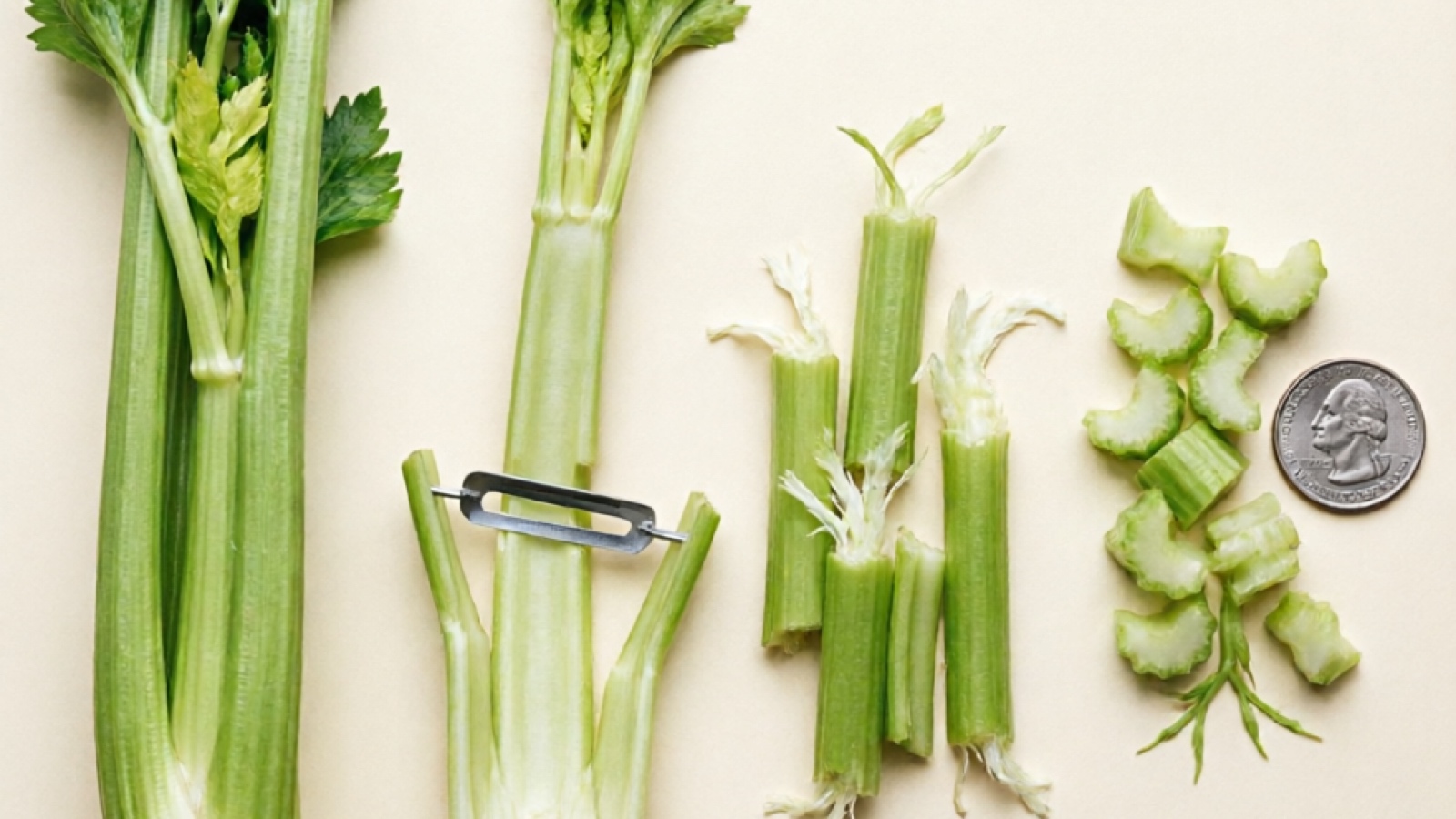
For stalks: cut into pieces no larger than your hamster’s paw — roughly 1 inch for Syrians, ½ inch for dwarfs. Cut across the grain (perpendicular to the length of the stalk). This is critical: cutting across the fibers shortens them, which is what makes them safe to pass through the digestive tract.
For leaves: wash and serve whole — 2-3 leaves for Syrians, 1 leaf for dwarfs. No cutting needed.
Step 4: Remove the Strings (Critical Step)
After cutting, you’ll see visible fiber strings at the cut edges of each piece. Pinch each string with your fingernails and peel it away from the piece, pulling toward you. Most pieces will have 2-4 strings per cut edge.
Alternatively — and I find this easier — use a vegetable peeler to strip the outer layer off the entire stalk before cutting. A good swivel peeler like this one makes this step effortless. It removes the toughest fibers in one pass. Then cut the peeled stalk into small pieces. This method is especially useful for dwarf hamsters, where every fiber matters.
Step 5: Serve at Room Temperature
Never serve celery straight from the refrigerator. Cold vegetables can cause digestive upset in hamsters. Let the pieces sit at room temperature for 5-10 minutes before offering.
Step 6: Remove Uneaten Celery After 2 Hours
Celery wilts and dries out quickly in the warm environment of a hamster enclosure. Dried celery becomes even more fibrous and harder to digest than fresh pieces. Check hiding spots — hamsters hoard food, and a forgotten piece of celery tucked into bedding becomes a choking hazard as it dries.
How Often Can Hamsters Eat Celery?
| Breed | Frequency | Serving Size | Notes |
|---|---|---|---|
| Syrian Hamster | 1x per week | 1-inch piece or 2-3 leaves | Well tolerated |
| Dwarf Hamster (WW/CC) | 1x per 2 weeks | ½-inch piece or 1 leaf | Leaves preferred |
| Chinese Hamster | 1x per 2 weeks | ½-inch piece or 1 leaf | Same caution as dwarfs |
| Roborovski | 1x per 2 weeks | 1 leaf only | Skip stalks |
Don’t feed celery on the same day as other fibrous vegetables like carrots or broccoli. Space fibrous vegetables throughout the week.
Signs Your Hamster Ate Too Much Celery
Fiber blockage symptoms (more serious than typical vegetable overeating):
- Small, dry droppings or no droppings at all
- Loss of appetite lasting more than 12 hours
- Bloated abdomen — swollen or distended belly
- Lethargy and hunched posture
- Straining to defecate
Rectal prolapse (veterinary emergency):
- Red or pink tissue protruding from the rectum
- Visible distress and bleeding
Watery diarrhea (from excess water content — less serious):
- Loose stools from the 95% water content
- Usually resolves in 12-24 hours with dry food only
What to do: for mild diarrhea, remove all fresh food and provide only dry seed mix and fresh water. For any sign of blockage, straining, or rectal prolapse — contact an exotic vet immediately. Don’t wait to see if it resolves. Intestinal blockage progresses quickly in small animals.
Safe Vegetable Alternatives
Lower-risk alternatives to celery for days when you want a vegetable treat without the fiber preparation:
If you want a zero-prep vegetable treat that’s already safe-sized for hamsters, Small Pet Select Pea Flakes are a convenient option — no cutting, no string removal, and most hamsters love them.
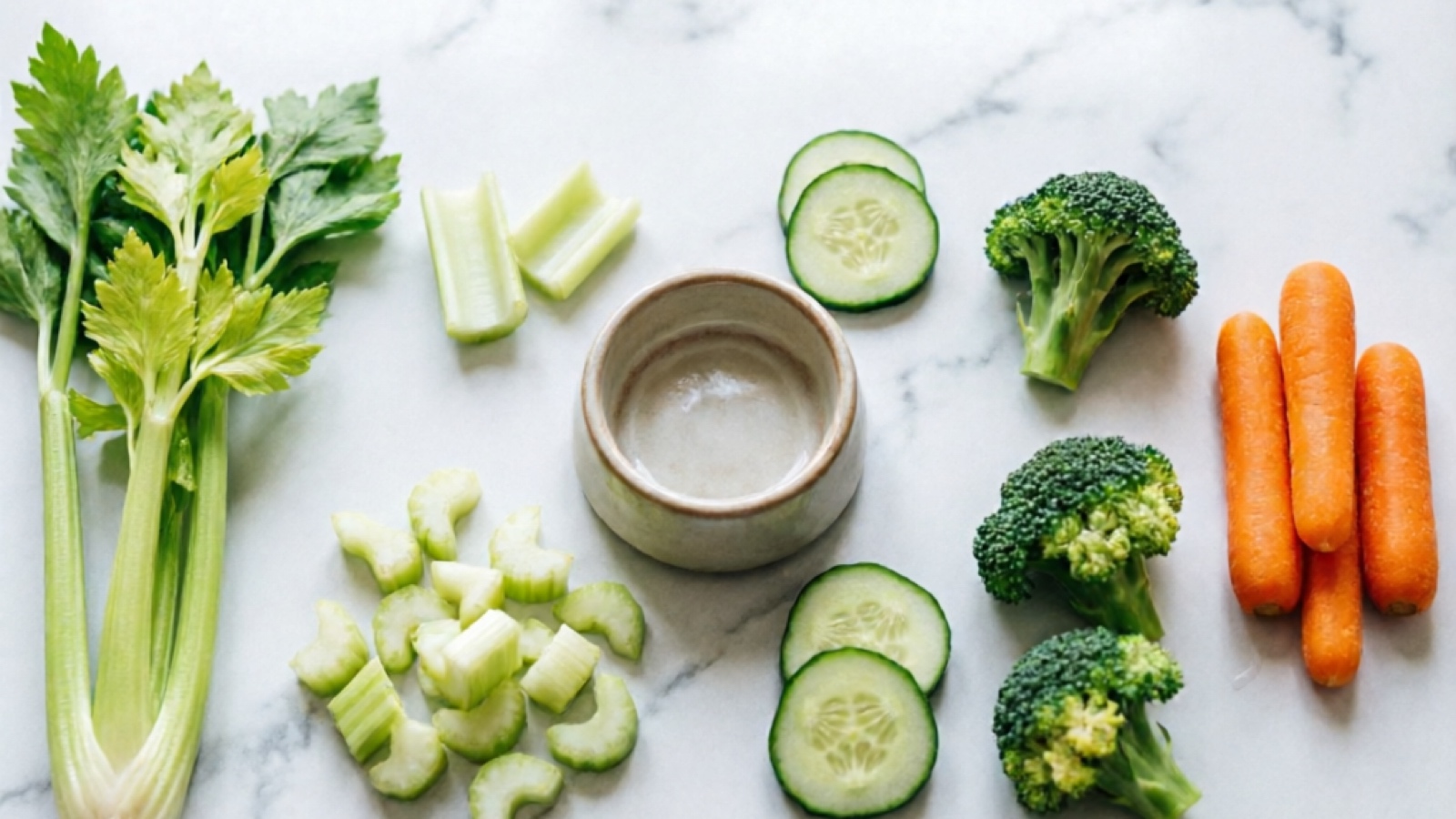
- Cucumber — 95% water, minimal fiber, the safest high-water vegetable. No preparation beyond washing.
- Broccoli florets — 89% water, fiber is soft and digestible. Excellent nutrition.
- Romaine lettuce — 95% water, soft fiber, good vitamin A content. Gentle on digestion.
- Carrots — 88% water, higher sugar but very safe when cut into small pieces. Good crunch for dental health.
- Spinach — low water, very high nutrients, but watch for oxalate content.
Other Foods Your Hamster Can Eat
Each link leads to a full safety guide with breed-specific serving recommendations.
Vegetables
- Can Hamsters Eat Carrots?
- Can Hamsters Eat Broccoli?
- Can Hamsters Eat Cucumbers?
- Can Hamsters Eat Lettuce?
- Can Hamsters Eat Tomatoes?
- Can Hamsters Eat Spinach?
Fruits
- Can Hamsters Eat Grapes?
- Can Hamsters Eat Strawberries?
- Can Hamsters Eat Blueberries?
- Can Hamsters Eat Bananas?
Proteins and Treats
Frequently Asked Questions
Can hamsters eat celery?
Yes, with proper preparation. Cut celery into small pieces (1 inch for Syrians, ½ inch for dwarfs), remove all visible fiber strings, and feed once a week at most. Celery leaves are actually safer and more nutritious than the stalks — they contain more vitamins A, C, and K, and their shorter fibers are easily digestible. Never feed a whole celery stick.
Can hamsters eat celery leaves?
Yes — celery leaves are the best part of celery for hamsters. They contain higher concentrations of vitamins A, C, K, and calcium than the stalks, and their shorter, softer fibers are much easier to digest. You can offer 2-3 small leaves once a week for Syrian hamsters, or 1 leaf every two weeks for dwarf hamsters. Wash thoroughly before serving.
Can hamsters eat celery sticks?
Celery sticks (stalks) are safe only if properly prepared. Never feed a whole stick — the long fibers can wrap around intestines or cause choking. Cut into paw-sized pieces, peel the outer layer, and pull off visible fiber strands at each cut edge. For dwarf hamsters, I’d recommend skipping stalks entirely and feeding only leaves.
Can hamsters eat celery every day?
No. Max once a week for Syrians, once every two weeks for dwarfs. Celery is 95% water and can cause loose stools if overfed. The fiber also requires careful management — even properly cut celery should be occasional, not daily.
Can hamsters eat celery tops?
Yes — same as celery leaves. The leafy green tops contain higher vitamin concentrations than stalks and have a softer, safer texture. Treat them the same way in terms of portion size.
Can hamsters eat raw celery?
Yes, raw is the only safe form. Never cook celery — cooking softens fibers into clumps that actually increase blockage risk. Serve raw, properly cut pieces at room temperature.
Can hamsters eat celery and carrots together?
Yes, but on different days. Both are fibrous — combining them doubles the fiber load in one sitting. I’d recommend carrots one day and celery a few days later.
How much celery can a hamster eat?
Syrians: 1-inch piece (strings removed) or 2-3 leaves, once a week. Dwarfs: ½-inch piece or 1 leaf, once every two weeks. Always remove fiber strings, wash, and serve at room temperature. When in doubt, give leaves instead of stalk pieces.
Why is celery dangerous for hamsters?
Celery itself isn’t dangerous — it’s the long, tough fibers (collenchyma strands) that run through the stalks. These fibers can wrap around a hamster’s intestines, cause blockages, or in severe cases lead to rectal prolapse. The risk is entirely preventable by cutting celery into small pieces and removing the strings before feeding. If you only feed the leaves, this risk doesn’t exist.
Can baby hamsters eat celery?
I’d recommend waiting until a hamster is at least 3 months old before introducing celery. Baby hamsters have very small digestive systems that are more vulnerable to fiber blockages. Until then, stick to their regular seed mix and very soft vegetables like cucumber. When you do introduce celery, start with leaves only.