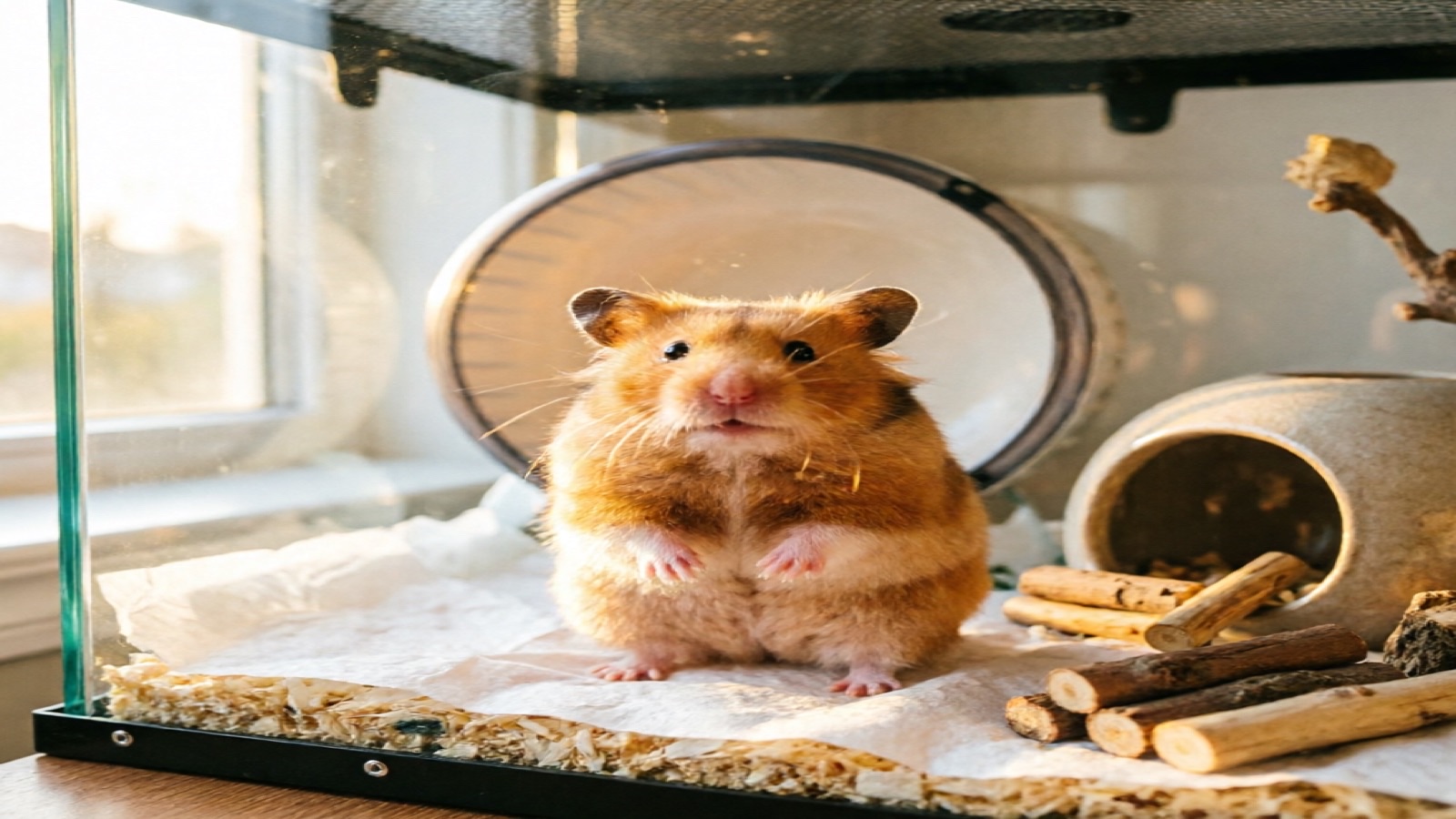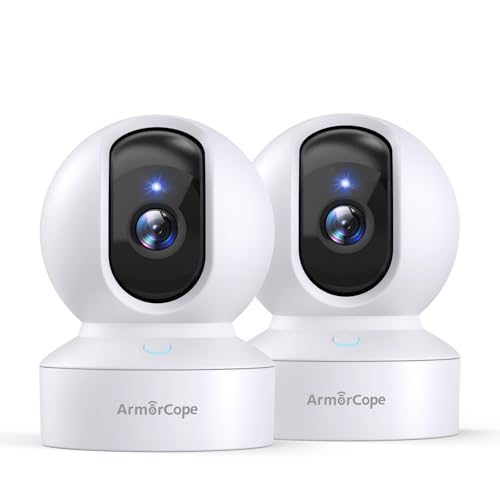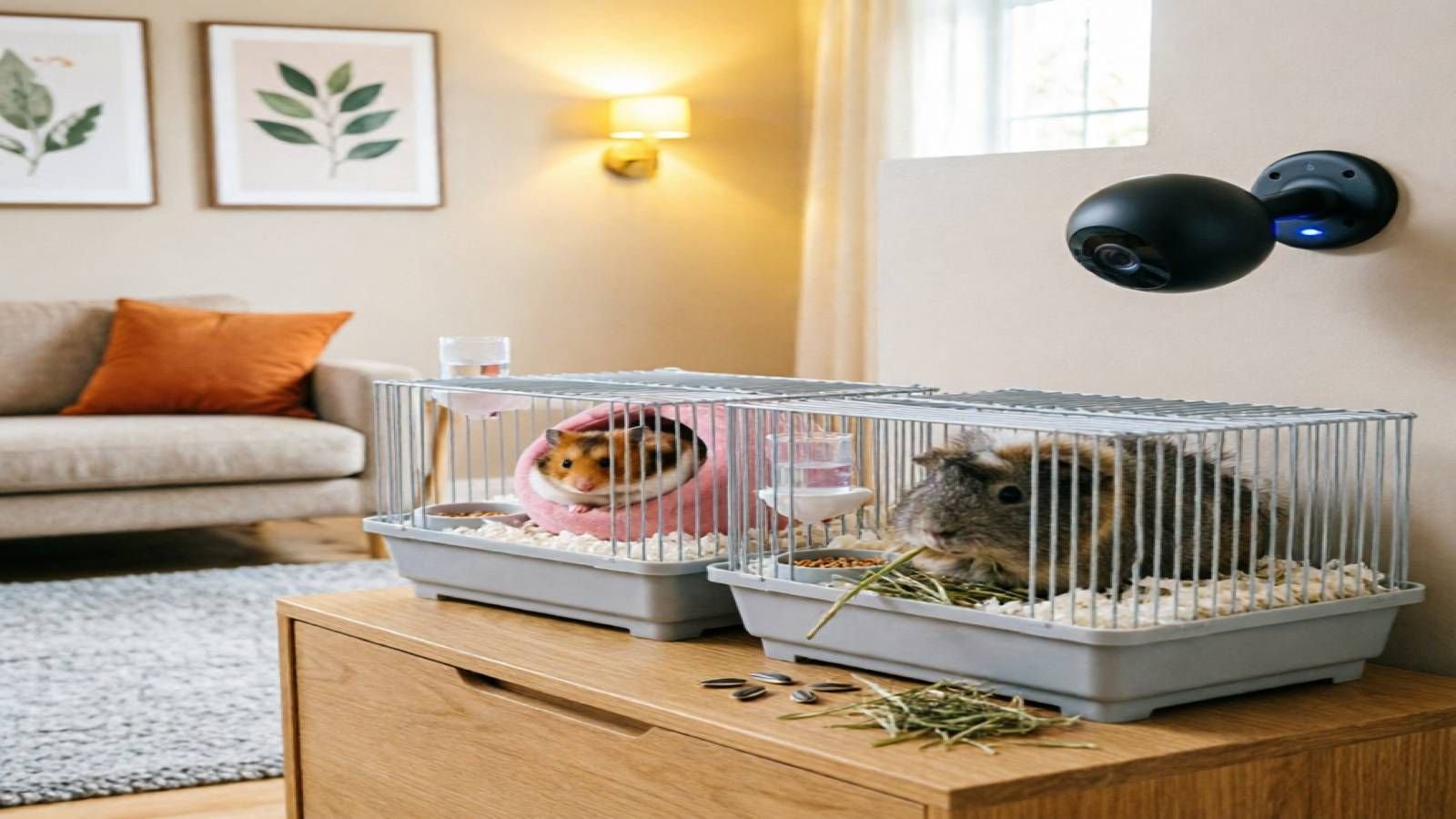
Hamsters are nocturnal — that’s exactly why a pet camera is so valuable for small pet owners — the moment you turn off the lights and settle into bed is exactly when they wake up and start exploring. A pet camera lets you watch your hamster run the wheel, dig through their bedding, and stuff their cheeks without disturbing their natural schedule. Guinea pigs, while not nocturnal, spend 16+ hours in their cages daily, and a pet camera helps you monitor eating, activity, and overall well-being while you’re at work or traveling.
Whether you’re a first-time small pet owner wanting peace of mind or a hamster YouTuber looking for the best way to film your content, this guide covers the best pet camera options for hamsters and guinea pigs from budget picks under $20 to premium setups with 360° rotation and 2K resolution.
For general pet camera setup and small pet care information, see our hamster care guide and guinea pig care guide.
Why You Need a Pet Camera for Small Pets
The best pet camera for your setup depends on what you want to accomplish. Here’s why small pet owners invest in cameras:
Nocturnal behavior monitoring. Hamsters are most active between 9 PM and 4 AM. Without a pet camera with night vision, you’re missing the most interesting part of your hamster’s day. Many owners report that watching their hamster at night is when they discover behavioral patterns — where they hoard food, which toys they ignore, whether they seem stressed.
Health monitoring. Guinea pigs are prey animals that hide illness until it’s advanced. A camera lets you track eating frequency, water intake, and activity levels throughout the day. If you notice your guinea pig hasn’t approached the hay pile by afternoon, that’s an early warning sign worth catching.
Peace of mind while away. Small pets need daily check-ins, but life happens. Whether you’re at work, on vacation, or just running errands, a pet camera eliminates the anxiety of not knowing if your pet is okay.
Content creation. If you want to film your hamster’s antics for YouTube or social media, a dedicated camera gives you consistent, high-quality footage without having to physically be near the cage (which would scare the hamster anyway).
For complete health monitoring guidance, see our guinea pig care guide.
What to Look for in a Small Pet Camera — Pet Camera Buying Guide — Buying Guide
Pet cameras marketed for dogs and cats don’t always work well for small pets. Here’s what matters for hamsters and guinea pigs specifically:
-
Night vision — The single most important feature for hamster monitoring. Without it, nighttime footage is just darkness. Infrared night vision (black-and-white) is standard; full-color night vision is available on premium models but not essential.
-
Close-range clarity — Hamsters are tiny. A camera optimized for a 15-foot room view might produce blurry footage at 1 foot from a cage. Look for cameras with sharp close-up performance.
-
Compact size and mounting options — Small pet cages are on desks, shelves, or stands. You need a camera that clips to a shelf, sits on a surface, or mounts to the cage exterior without being bulky.
-
Quiet operation — Hamsters are sensitive to mechanical noise. PTZ (pan-tilt-zoom) cameras that whir constantly can stress your pet. Budget on/off-style cameras are quieter.
-
Wide-angle coverage — Guinea pig cages (C&C or large terrariums) need wider field of view than hamster setups. A 130°+ angle covers most guinea pig enclosures.
Here’s a quick checklist ranked by importance:
| Priority | Feature | Why It Matters |
|---|---|---|
| 1 | Night vision quality | Hamsters are nocturnal — this is non-negotiable |
| 2 | Resolution (1080P min) | Small pets need close-up clarity |
| 3 | Field of view / PTZ | Determines how much of the cage you can see |
| 4 | Mounting flexibility | Must fit near small pet cages |
| 5 | Power type (wired vs battery) | Wired is more reliable near cages |
| 6 | Storage (SD card vs cloud) | SD card avoids subscription fees |
| 7 | Two-way audio | Useful for guinea pigs, less so for hamsters |
| 8 | Price | $20-100 covers most needs |
Warning: Features you don’t need for small pets — Many pet camera models are designed for dogs and cats: Treat dispensers are designed for dog/cat-sized treats and don’t work with small pet food pellets. Laser pointers can stress hamsters — they’re designed for cats, not rodents.
Best Pet Camera for Hamsters — Top Picks
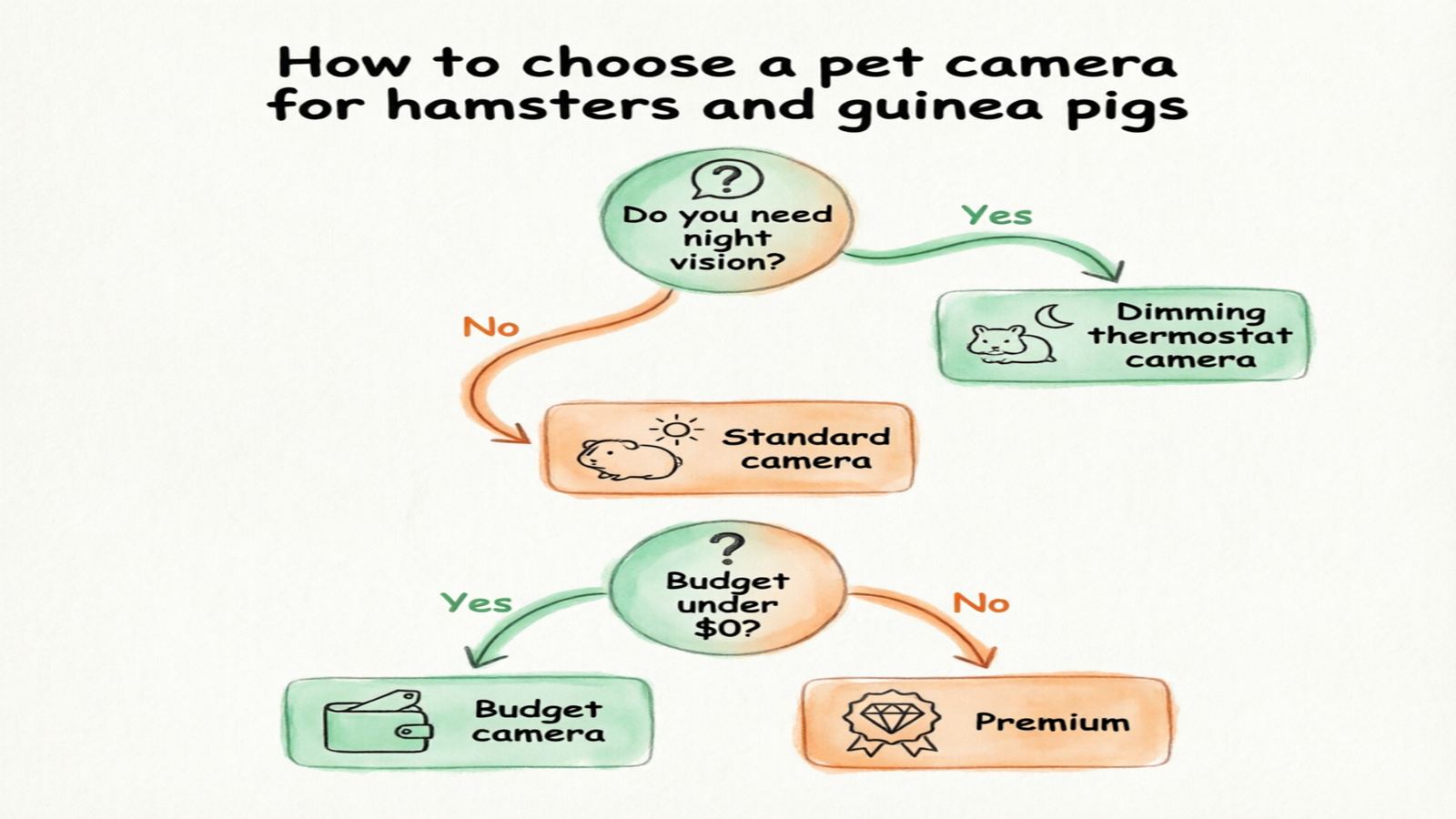
Hamster cameras need three things above all: night vision (hamsters are active at night), compact size (fit near a small cage), and quiet operation (don’t stress a noise-sensitive animal). Here are the three best options for hamster monitoring.
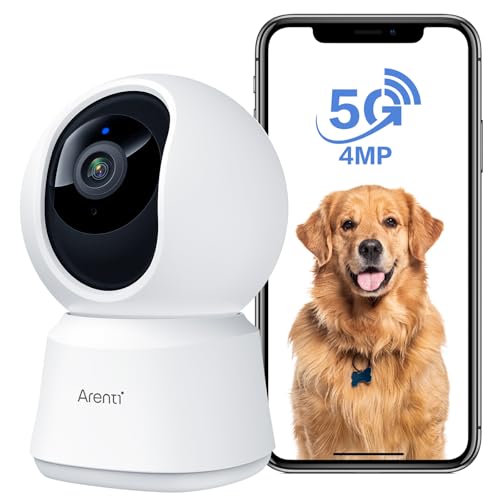
ARENTI 5G Indoor Security Camera — Budget Pick
Price: $19.98 | Resolution: 4MP
The ARENTI 5G is the cheapest camera on this list that delivers genuinely useful features for hamster monitoring. At 4MP resolution, the picture quality is noticeably sharper than 1080P cameras — important when you’re trying to see a hamster that’s only 4-6 inches long. Night vision is clear enough to watch nighttime activity from across the room.
The standout feature is local SD card storage with no required subscription. Plug in a micro SD card, and you can review footage without paying monthly fees. For hamster owners who just want to check in occasionally, this is the most cost-effective setup available.
The tracking (auto-follow) feature is inconsistent — several reviewers report having to manually control the pet camera through the app instead. There’s also roughly a one-second delay on the live feed, which is noticeable but not disruptive for pet monitoring. For $20, these limitations are acceptable.
Pros: Extremely affordable, 4MP sharp image, clear night vision, SD card storage without subscription Cons: Sporadic tracking, 1-second live feed delay Best for: Budget-conscious hamster owners who want reliable night vision without a subscription
2K HD Pet Camera with 360° Pan/Tilt — Best Value
Price: $34.99 | Resolution: 2K
If you want to see every corner of your hamster’s enclosure without repositioning the pet camera, this 360° pan/tilt model is the best value in its price range. The 2K resolution produces noticeably sharper footage than standard 1080P, and the motorized rotation lets you follow your hamster as they move from wheel to hide to food bowl.
Motion tracking works well enough for small pets — when the hamster triggers the sensor, the camera pans to follow. Setup is straightforward through the companion app, and the app interface is intuitive for casual users.
The subscription requirement for cloud video storage is the main catch. At approximately $50/year, it’s not trivial. However, you can use a micro SD card for local recording and skip the subscription entirely. Some users report occasional glitching when multiple cameras share the same WiFi network, which is worth noting for multi-pet households.
Pros: 2K sharp resolution, 360° rotation covers entire cage, motion tracking, affordable Cons: Cloud storage requires $50/year subscription, occasional WiFi glitches Best for: Hamster owners who want flexible pet camera angles and don’t mind SD card management
Amouu 2K HD Aquarium & Terrarium Camera — Small Pet Specific
Price: $36.50 | Resolution: 2K (live), 640x360 (recorded)
This is the only camera marketed specifically for small enclosures like aquariums and terrariums, making it relevant for hamster cage monitoring. It comes with multiple mounting accessories — clips, suction cups, and adhesive mounts — that make it easy to attach to or near a cage. The 140° wide-angle lens and anti-glare coating help reduce reflections from glass cage walls.
However, there are significant caveats. The rating is the lowest on this list, and with only the sample size is small. Multiple reviewers report that recorded videos are 640x360 resolution rather than the advertised 2K — the live view is 2K, but saved clips are severely downscaled. Night vision is reportedly ineffective through glass, which eliminates one of the main use cases for a terrarium-mounted camera. Battery life is also short.
Buy this only if you specifically need a camera with cage-mounting hardware. Otherwise, the ARENTI or 2K Pan/Tilt are better value and more reliable.
Pros: Multiple mounting accessories, 140° wide-angle, anti-glare lens, designed for small enclosures Cons: rating, only recorded video is 640x360 (not 2K), night vision fails through glass, short battery life Best for: Owners who need cage-mounting accessories and can work around the quality limitations
Best Pet Camera for Guinea Pigs — Top Picks
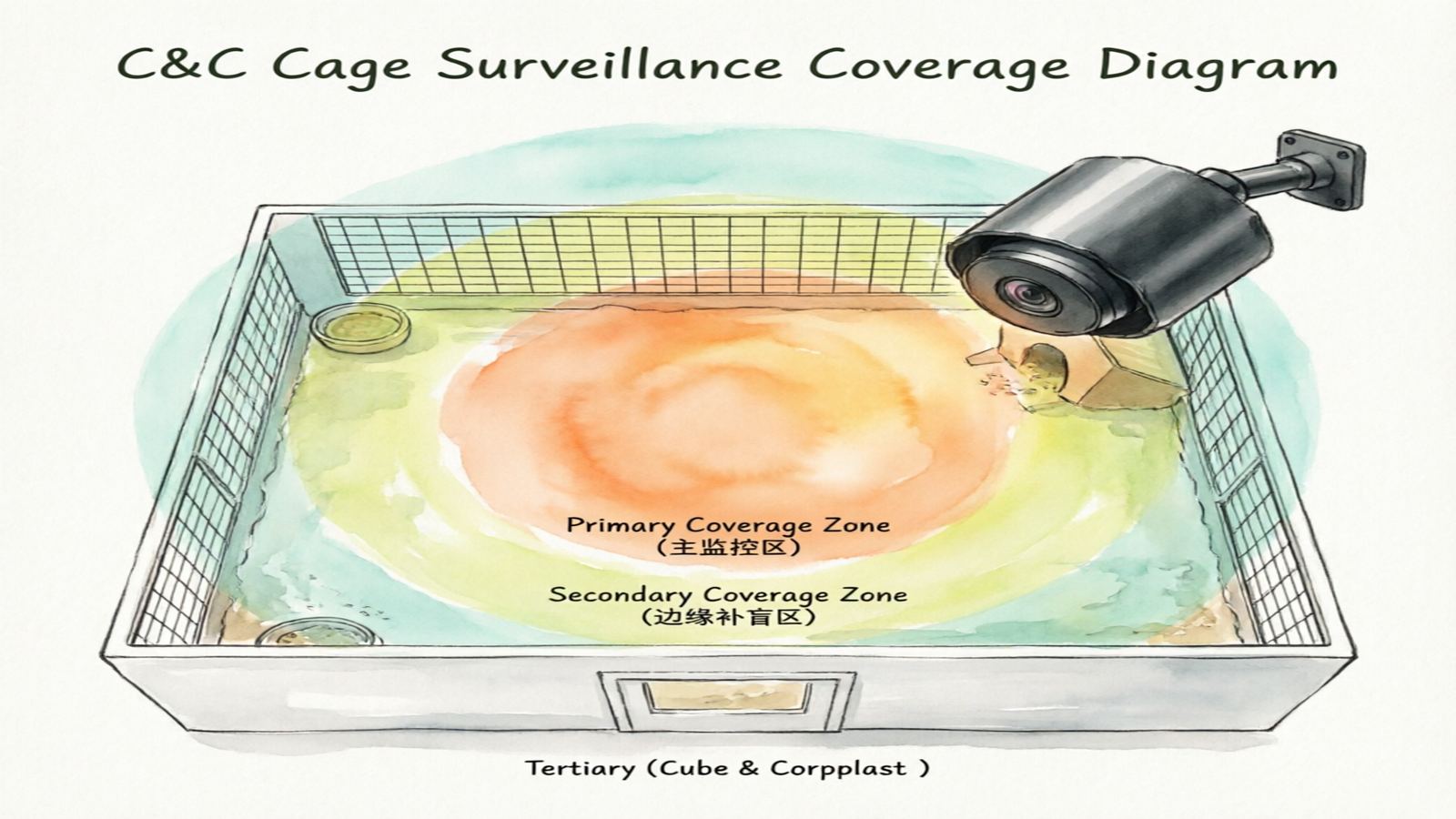
Guinea pig cages are significantly larger than hamster setups, so the pet camera needs change. Here you need wide coverage (C&C cages can be 2-6 feet long), reliable daytime clarity, and — for owners who travel — motion alerts so you know if your guinea pigs are moving normally.
WYZE Cam Pan v3 — Best Overall for Large Cages
Price: $44.97 | Resolution: 1080P
The WYZE Cam Pan v3 is one of the most widely used indoor cameras on the market, and for good reason. The 360° pan and 93° tilt cover even the largest C&C guinea pig cages from a single vantage point. IP65 weather resistance means you can use it outdoors or in humid environments without worry.
The 1080P resolution is adequate but not as sharp as the 2K options above. However, at this price point and with this level of reliability, it’s hard to beat. The WYZE app is polished and offers both local SD card storage and affordable cloud subscription options ($2/month for person/pet detection).
The main trade-off is resolution — for guinea pig monitoring, 1080P is fine. But if you’re recording content for social media, the 2K options above produce noticeably better footage.
Pros: 360° pan covers large cages, IP65 weatherproof, massive user base , affordable cloud storage, local SD card option Cons: 1080P resolution (lower than 2K competitors) Best for: Guinea pig owners with large C&C cages who need reliable wide-area coverage
Petcube Cam 360 — Best Pet Brand Option
Price: $34.99 | Resolution: 1080P
Petcube builds cameras specifically for pet monitoring, and it shows in the app design and feature set. The 360° rotation covers large guinea pig cages, and the two-way audio lets you talk to your pets while away — guinea pigs will often perk up and vocalize when they hear their owner’s voice.
The human detection feature reduces false alerts from shadows or light changes, which is helpful for busy households. The app is pet-focused with features like activity tracking and daily highlights.
WiFi connectivity is the main issue. Multiple reviewers report that the camera frequently goes offline and requires reconnection. Without a Petcube subscription, features are limited — cloud storage and advanced detection require a monthly fee.
For complete cage sizing guidance, see our guinea pig cage size guide.
Pros: Pet-specific brand, 360° rotation, two-way audio (guinea pigs respond to voices), human detection reduces false alerts Cons: WiFi connectivity issues, features limited without subscription Best for: Guinea pig owners who want a pet-dedicated camera with voice interaction
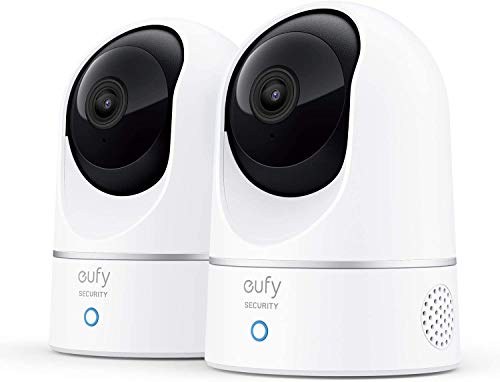
eufy Security Indoor Cam C210 — Best Privacy-Focused Option
Price: $29.99 | Resolution: 1080P
Eufy’s reputation for local storage and no mandatory subscriptions makes this a solid pick for privacy-conscious pet owners. The C210 offers PTZ pan-tilt functionality, 1080P resolution, and night vision — all without requiring a monthly fee. Plug in an SD card and you’re set.
The PTZ mechanism is slow but functional. Some reviewers note that night vision can be overly sensitive, triggering in rooms with ambient light. The eufy HomeBase integration lets you connect multiple cameras to a single hub, useful if you’re monitoring multiple guinea pig enclosures.
Pros: No subscription required, local storage, PTZ pan-tilt, eufy brand reliability Cons: Slow PTZ movement, night vision can be overly sensitive Best for: Privacy-conscious guinea pig owners who want local storage without subscription fees
Best Indoor Pet Cameras for Small Pets Under $50
For small pet monitoring, you don’t need to spend more than $50. Here’s how the five best budget options stack up:
| # | Product | Price | Resolution | Night Vision | Best For |
|---|---|---|---|---|---|
| 1 | ARENTI 5G Indoor Camera | $19.98 | 4MP | Yes | Budget pick — cheapest reliable option |
| 2 | GoodBaby 5” Split Screen Baby Monitor with 2 Cameras and Audio | $85.49 | 1080P | Yes | 2.8” built-in screen |
| 3 | eufy Indoor Cam C210 | $79.99 | 1080P | Yes | No subscription needed |
| 4 | Petcube Cam 360 | $34.99 | 1080P | Yes | Pet brand, 360° coverage |
| 5 | 2K HD Pan/Tilt Camera | $34.99 | 2K | Yes | Best picture quality |
The ARENTI 5G is the best indoor camera for pets on a budget — 4MP resolution, clear night vision, and SD card storage for under $20. It’s hard to find a more capable camera at this price point.
The Two Way Screen Camera ($28.96) has a unique 2.8-inch built-in screen that lets your pet see you when you call — a nice feature for guinea pigs that respond to visual contact. However, the microphone quality is reportedly poor, and the app is unstable. Limited review data available.
The 2K HD Pan/Tilt Camera produces the sharpest footage in this price range and is the best indoor camera for pets if you care about image quality. The motion tracking is useful for active hamsters.
Interactive Pet Cameras — Worth the Extra Cost?
Interactive features like laser pointers and treat dispensers sound appealing, but their usefulness for small pets is questionable.
ZUMIMALL Pet Camera with Laser Toy
Price: $39.99 |
This camera includes a built-in laser pointer for interactive play. For cats, laser toys are a hit. For hamsters and guinea pigs, the value is much lower. Hamsters may briefly investigate a laser dot, but the sudden movement of a laser point can cause stress — it doesn’t trigger the same predatory instinct it does in cats. Some owners report their hamster becoming agitated when the laser is active.
The laser function itself is buggy according to multiple reviewers — it’s dim, doesn’t aim properly (points at the ceiling when placed on a mantle), and the app control is unreliable. With only slow-loading app, this pet camera is better suited for cat owners than small pet keepers.
Verdict: Skip the laser feature for hamsters. If you want this pet camera for night vision and video, the laser is a gimmick that may stress your pet.
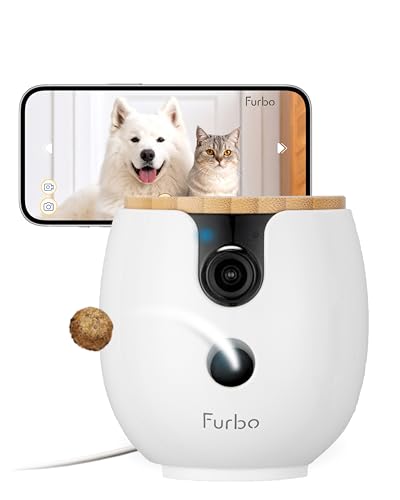
Furbo Mini 360° — Treat Dispenser Cameras
Two Furbo models are worth comparing:
P9: Furbo Mini 360° (Subscription Required) — $40.00 | P10: Furbo Mini 360° (New) — $99.00 |
The Furbo’s headline feature is the treat dispenser — a 360° rotating camera that can launch treats toward your pet on command. For dogs and cats, this works well. For hamsters and guinea pigs, it does not. The treat dispenser is designed for dog/cat-sized treats, and small pet food pellets are too tiny to be dispensed reliably. They can jam the mechanism.
Additionally, the P9 model requires a subscription ($69-83/year) for most features beyond basic live viewing. The P10 model is newer, has 2K QHD resolution, and doesn’t require a mandatory subscription, but at $99 it’s the most expensive camera on this list.
Verdict: If you’re buying a Furbo for the treat dispenser, don’t — it won’t work for hamsters or guinea pigs. If you want the 360° rotation and 2K quality of the P10 and can justify the $99 price, it’s a capable monitor. But for small pet purposes, the $20-40 options above are better value.
How to Set Up a Pet Camera for Small Pets
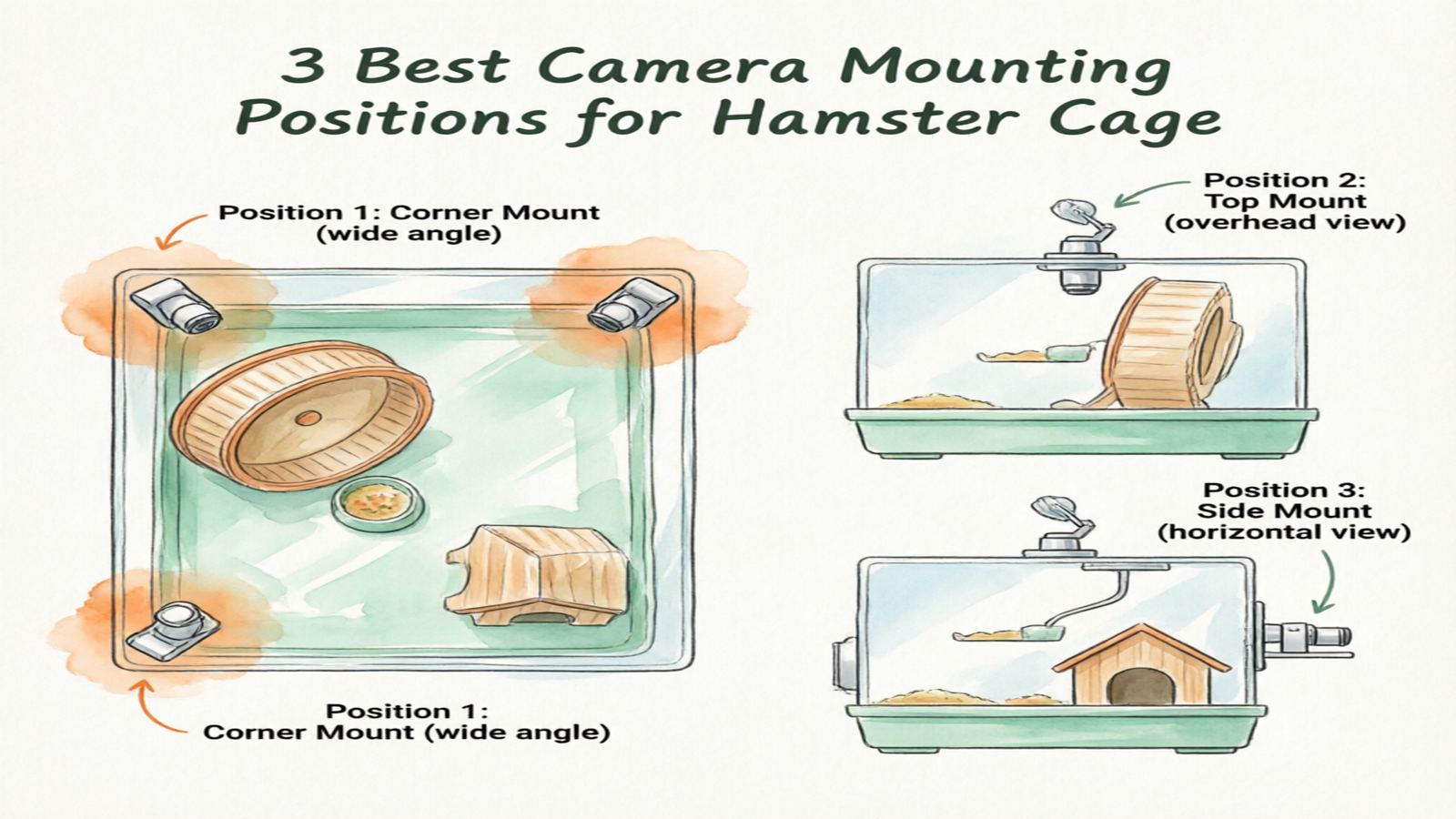
Getting the camera positioned correctly is more important than the camera itself. A poorly placed $100 camera gives worse footage than a well-placed $20 one.
Cage Mounting Options
Outside the cage (recommended): Place the camera next to or above the cage, pointed inward. This is the safest option because your pet can’t reach wires or the camera body. Most hamster and guinea pig cages sit on desks, shelves, or dedicated stands, making it easy to position a camera at eye level with the enclosure.
Inside the cage (use caution): Some small-pet-specific cameras like the Amouu come with mounting hardware for this. The critical safety rule: all cables must stay outside the cage. Hamsters will chew through anything they can reach, including power cords. A chewed live wire is a serious safety hazard. If you must mount inside, use a battery-powered camera and secure it well above bedding level.
High-angle overhead: The best position for observing overall activity. Mount the camera above the cage pointing down. You’ll see everything — where your pet sleeps, eats, plays, and uses the bathroom. For guinea pigs in large cages, this angle captures the full enclosure.
Side-level viewing: Best for close-up content creation. This is the angle you see in hamster YouTube videos — the pet camera is at the same level as the bedding, giving an intimate view of the hamster’s activities. Pair this with a 2K or 4MP camera for the sharpest footage.
For help integrating a camera into your enclosure layout, see our hamster cage setup guide and hamster cage enrichment guide. The best hamster cage designs also make camera mounting easier — cages with mesh tops or solid panels provide better mounting surfaces than wire-bar cages.
Night Vision — Essential for Nocturnal Hamsters
Hamsters are most active between 9 PM and 4 AM. A pet camera with night vision is essential for hamster monitoring. Without it, your nighttime footage will be completely black.
Infrared night vision (the standard on most cameras) produces black-and-white or slightly green-tinted footage. It’s clear enough to see your hamster’s movements and is invisible to the hamster — the infrared light doesn’t disturb their sleep cycle. Most cameras offer 10-30 feet of night vision range, which is more than enough for cage-side monitoring.
Full-color night vision uses a built-in warm light to illuminate the scene in color. The effect is more visually pleasing, but the warm light may disturb your hamster’s nighttime routine. For guinea pigs (which are diurnal), color night vision is fine since they’re active during the day.
Wireless vs Wired — Which Is Better for Small Pets?
Wired cameras (most options on this list) plug into a wall outlet. They offer stable, lag-free video with no battery concerns. Since small pet cages are usually placed near furniture and outlets, wired power is typically convenient.
Wireless/battery cameras offer flexibility but have drawbacks. Battery life is limited (especially with continuous recording), connection can be delayed, and some models produce lower-resolution recordings. The Amouu is the only battery option on this list, and its short battery life is frequently mentioned in reviews.
Recommendation: If your cage is near an outlet, choose wired. The reliability advantage is significant.
What Camera Do Hamster YouTubers Use?
Most hamster YouTubers use compact cameras with 2K+ resolution, good low-light performance, and stable app control. The typical setup is:
- A 2K or 4MP camera mounted outside the cage at side level
- A small LED accent light (warm white, not bright) for daytime content
- Remote monitoring via app so you can record without disturbing the hamster
For the best YouTube-quality footage, the 2K HD Pan/Tilt Camera ($34.99) is the best value — 2K resolution, motion tracking, and 360° rotation for dynamic shots. The Furbo Mini 360° (New) at $99 produces the highest quality footage on this list, but the price is hard to justify for content creation alone.
The key to hamster YouTube content is consistency — set up the camera once, leave it in place, and let your hamster act naturally. Hamsters that know a camera is there will eventually ignore it and behave normally. For enclosure design that works well with pet camera placement, see our hamster cage setup guide.
Common Questions About Pet Cameras for Small Pets
What is the best pet camera for hamsters?
For hamster monitoring, the ARENTI 5G Indoor Camera ($19.98) is the best budget option — 4MP resolution, clear night vision, and no subscription required. If you want better quality, the 2K HD Pan/Tilt Camera ($34.99) offers 2K resolution and 360° rotation to follow your hamster around the cage. Night vision is the single most important feature for hamster cameras.
What is the best pet camera for guinea pigs?
The WYZE Cam Pan v3 ($44.97) is the best overall choice for guinea pigs. Its 360° pan covers large C&C cages, and with 31 it’s one of the most tested cameras available. The Petcube Cam 360 ($34.99) is a good alternative if you want pet-specific features like two-way audio that guinea pigs respond to.
Can I put a camera inside my hamster’s cage?
You can, but all cables must stay outside the cage. Hamsters will chew through power cords, creating a serious electrocution and fire risk. The safest approach is outside-the-cage mounting. If you need an in-cage solution, use a battery-powered camera and mount it well above bedding level.
Do hamster cameras need night vision?
Yes. Hamsters are nocturnal and most active at night. Without night vision, your pet camera is useless during the hours when your hamster is actually doing interesting things. Infrared night vision is standard on all cameras in this guide and doesn’t disturb your hamster’s sleep cycle.
Are pet cameras safe for hamsters and guinea pigs?
Yes, as long as the camera is placed outside the cage and your pet cannot reach it, the power cord, or the power adapter. Avoid cameras with loud mechanical sounds (some PTZ motors whir constantly), as hamsters are sensitive to noise. Cameras with infrared night vision are safe — the infrared light is invisible to your pet.
How to set up a pet camera for a small pet cage?
Place the camera outside the cage, 12-24 inches away, aimed at the area where your pet spends most time (food area, wheel, or hide). Mount it at cage height or slightly above. Connect to power, download the app, and connect to WiFi. Test night vision by turning off the room lights. See the full setup guide above for detailed mounting options.
What camera do hamster YouTubers use?
Most hamster content creators use compact 2K+ cameras mounted outside the cage at side level. The 2K HD Pan/Tilt Camera ($34.99) is the best value for content creation. For the highest quality footage, the Furbo Mini 360° (New) ($99) produces the sharpest 2K QHD video, though the price is premium.
Can I use a pet camera with a treat dispenser for my hamster?
Not recommended. Treat dispensers like the Furbo are designed for dog and cat-sized treats. Small pet food pellets are too small for the mechanism and can cause jamming. Additionally, hamsters don’t benefit from the interactive treat-tossing feature the way dogs and cats do. If you want a Furbo for its 360° monitoring capabilities, that’s fine — just don’t expect the treat dispenser to work for hamsters or guinea pigs.
Conclusion
The right pet camera depends on your pet, your cage setup, and your budget. Here are the quick picks:
- Best for hamsters (budget): ARENTI 5G at $19.98 — 4MP, night vision, no subscription. The cheapest camera that actually works well for small pets.
- Best for hamsters (quality): 2K HD Pan/Tilt Camera at $34.99 — 2K resolution, 360° rotation, motion tracking.
- Best for guinea pigs: WYZE Cam Pan v3 at $44.97 — 360° pan covers large cages, proven reliability.
- Best for cage mounting: Amouu at $36.50 — multiple mounting accessories, designed for small enclosures (but note quality limitations).
- Best for content creation: Furbo Mini 360° (New) at $99 — 2K QHD resolution, smooth 360° rotation.
Key reminders: night vision is essential for hamsters, treat dispensers don’t work for small pets, and always keep cables outside the cage. A $20 camera properly positioned beats a $100 camera pointed at the wrong spot.
Whether you need a budget pet camera under $30 or a premium pet camera with advanced features, the key is choosing the right pet camera for your small pet’s specific needs. For more on small pet health monitoring and daily care, see our hamster care guide and guinea pig care guide.