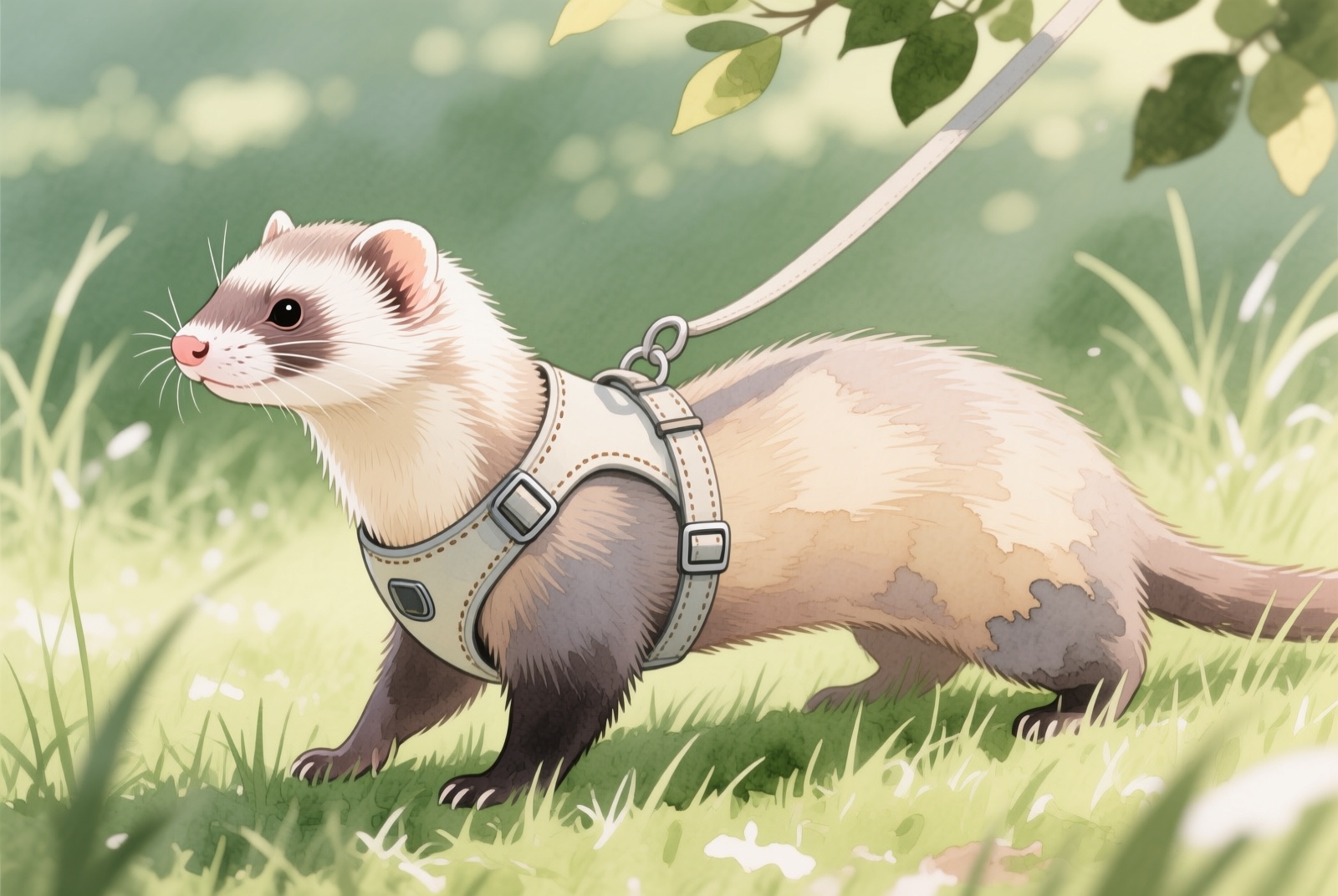
As of mid-2026, ferret owners have more escape-proof harness options than ever before. The latest designs feature double-buckle closures, padded chest panels, and reflective stitching that older models simply didn’t offer. With ferret ownership continuing to grow in 2026 — especially among apartment dwellers looking for interactive pets — finding a harness that actually stays on a determined ferret has never been more important.
Walking your ferret is one of the most rewarding activities you can share together. It provides exercise, mental stimulation, and bonding time that indoor play simply can’t match. But here’s the problem that every ferret owner runs into: ferrets are escape artists, and most harnesses on the market aren’t designed with their noodle-like bodies in mind.
After analyzing over 4,500 reviews to find the best ferret harness options, I found that the number one complaint across every single harness is the same — ferrets slipping out. Whether it’s Velcro closures, loose neck holes, or stiff materials that restrict movement, finding the best ferret harness is harder than it should be.
In this guide, I’ll walk you through the five most popular ferret harnesses on Amazon, explain why most of them fail at the one thing they’re supposed to do, and give you a realistic training plan so your ferret actually enjoys wearing one.
Quick Comparison: 5 Best Ferret Harnesses
| # | Product | Type | Price |
|---|---|---|---|
| Rypet Soft Mesh Vest | Vest | $7.99 | Most Reviewed |
| Dinosaur Shaped Vest | Vest | $12.99 | Best Design |
| Outus 5-Pack Escape Proof | 5-Pack | $13.99 | Best Value Pack |
| Gray Sweater + Harness Set | Sweater | $16.99 | Cold Weather |
| Military Style Vest | Vest | $12.99 | Avoid |
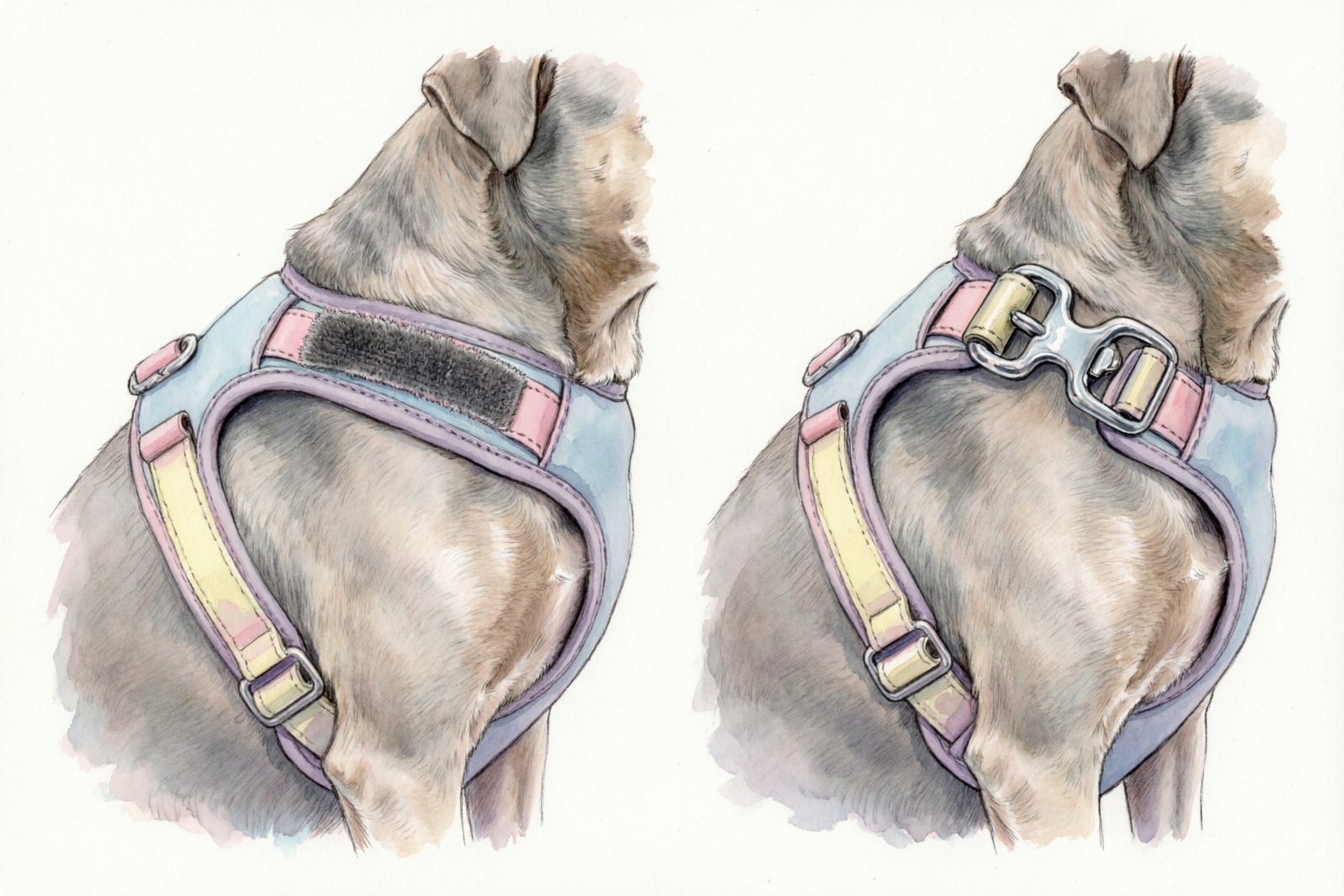
The critical finding from my research: after reading hundreds of reviews, the single biggest issue with every best ferret harness pick is escape. Ferrets are long, flexible, and determined — they can reverse out of loose harnesses in seconds. The three factors that matter most are closure type (buckle closures beat Velcro every time), fit (snug enough for just one finger gap), and material (soft and breathable, not stiff nylon). For a complete overview of ferret care beyond walks, check out our ferret care guide. For nutrition, see our best ferret food guide.
Best Ferret Harness and Leash Picks
Best Budget: Rypet Soft Mesh Vest
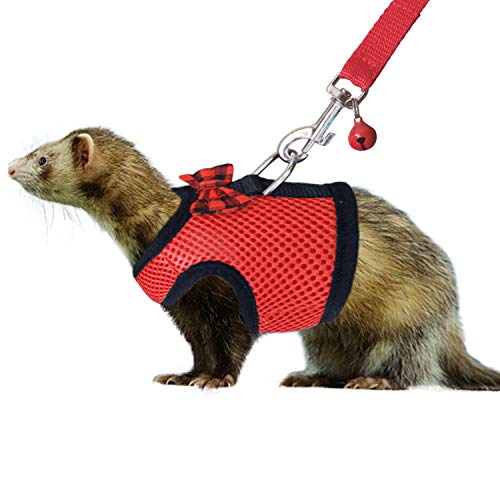
The Rypet Small Animal Harness is the most-reviewed ferret harness on Amazon with over 3,000 ratings, and at $7.99 it’s hard to argue with the price. The soft mesh padded vest comes with a safe bell attachment and adjustable straps that make it easy to get a decent fit on most ferrets.
I’d recommend this as the best ferret harness for indoor training — it’s cheap enough that you won’t feel bad if your ferret chews on it, and the soft material means most ferrets tolerate it better than stiffer options. The bell is actually a nice touch for keeping track of your ferret during supervised indoor play, which pairs well with ferret toys and enrichment activities.
Here’s the honest truth though: the Velcro closure is a real problem. I’ve read dozens of reviews from owners whose ferrets figured out how to peel the Velcro open within minutes. One owner said it took their ferret exactly two minutes to undo the belly strap. The thick straps can also restrict movement in smaller ferrets — one reviewer noted that the strap width made their ferret tumble over while trying to walk. If you’re planning outdoor walks, this isn’t the harness I’d trust. But it’s a solid starting point and arguably the best ferret harness under $10 for getting your ferret used to wearing something.
Best Design: Dinosaur Shaped Vest
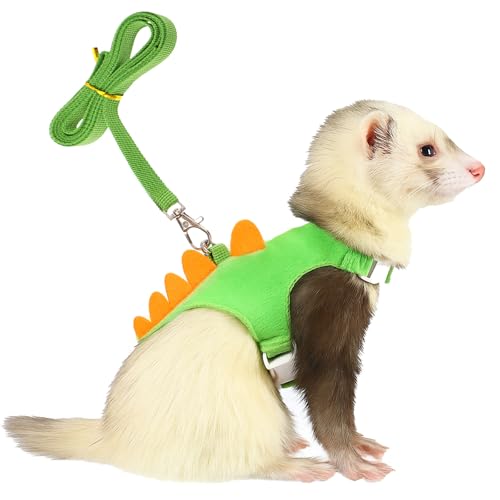
The Ferret Harness Dinosaur Shaped Walking Vest is the highest-rated option in our lineup , and honestly, it’s the best ferret harness that makes people stop and ask on walks. The dinosaur design is genuinely adorable — great for photos, social media, and starting conversations with other pet owners.
The soft material is one of its real strengths. Unlike stiff nylon harnesses that make ferrets freeze up or walk awkwardly, this vest uses a flexible fabric that doesn’t restrict natural movement. It’s easy to adjust, simple to put on, and the included bell adds visibility. In my experience, ferrets seem to tolerate this one slightly better than the Rypet, probably because the material is less bulky around the shoulders.
But I have to be upfront about the escape risk. Despite the cute design, multiple owners report their ferrets slipping out within seconds. One particularly alarming review described losing their ferret inside a minivan when it escaped the harness — thankfully they found the ferret, but it’s a scary situation no owner wants to experience. Durability is another concern, with at least one owner reporting the harness falling apart after just two uses. I’d suggest this one for supervised indoor wear and photos, but not as your go-to for outdoor adventures.
Best for Cold Weather: Gray Sweater + Harness Set
If you live somewhere with cooler temperatures and want to take your ferret outside, the Gray Ferret Sweater, Harness, and Leash Set solves two problems at once. It’s a 3-in-1 combo that includes a hoodie sweater, an integrated harness, and a matching leash. The sweater design actually makes a lot of sense for outdoor walks in autumn or spring.
The hoodie itself is well-made — several owners commented on the quality of the stitching and materials. One reviewer said their ferret looked “like a little Eminem” in it, which tells you everything about the aesthetic. For ferrets that get cold easily (and many do, since they have short fur and low body fat relative to their size), this provides warmth — the best ferret harness choice for cold weather.
The sizing issue is significant though. This only comes in one size, and it runs large. Multiple owners of Marshall ferrets — the most common breed in the US — reported that it was too big. One review specifically called out that “Marshall ferrets bred in the US are smaller” and the set didn’t fit. Another owner said their ferret slipped out of both the collar and harness sections. If you have a larger ferret (3+ lbs), this could work well for cold-weather walks. If your ferret is on the smaller side, I’d skip it — the fit is too loose to be safe.
Escape-Proof Ferret Harness Guide
Understanding escape risk is essential before choosing the best ferret harness. Ferrets are built like furry noodles — long, flexible, and surprisingly strong for their size. They can compress their ribcages, reverse their bodies, and squeeze through openings that seem impossibly small. When a harness doesn’t fit snugly, a determined ferret will find the gap and exploit it.
After going through hundreds of escape reports, the pattern is clear: Velcro is the enemy. Every single product in this roundup that uses Velcro closures has multiple reviews describing ferrets slipping out. Ferrets are smart enough to learn how to peel Velcro open, and once they figure it out, they’ll do it consistently. It’s not a matter of if — it’s when.
| Feature | Escape-Proof | Escape Risk |
|---|---|---|
| Closure type | Buckle or snap | Velcro |
| Fit around neck | Snug (one finger gap) | Loose or gappy |
| Body coverage | Full wrap behind front legs | Collar-style only |
| Leg holes | Snug around shoulders | Wide or stretchy |
| Material | Non-stretch, durable | Stretchy or thin |
Figure-8 Harnesses — The Gold Standard
If you’re serious about outdoor walks, the truly best ferret harness is found beyond Amazon for figure-8 designs. These designs wrap around both the neck and body in a continuous loop, making them significantly harder to escape. The pressure is distributed more evenly across the ferret’s body, and there are fewer weak points where a clever ferret can exploit a gap.
None of the five products in our Amazon comparison use a figure-8 design, which is a real gap in the market. Pet specialty stores like Chewy and Petco typically carry figure-8 harnesses designed for small animals. The price is usually higher ($15-25), but the escape prevention is worth every penny when you’re walking near roads, other animals, or open spaces.
A proper ferret cage setup provides a safe indoor environment with comfortable ferret bedding, but once you step outside, you need equipment you can actually trust. For outdoor walks specifically, figure-8 harnesses with buckle closures are the only style I’d feel confident recommending.
Outus 5-Pack — Best Value with Caveats
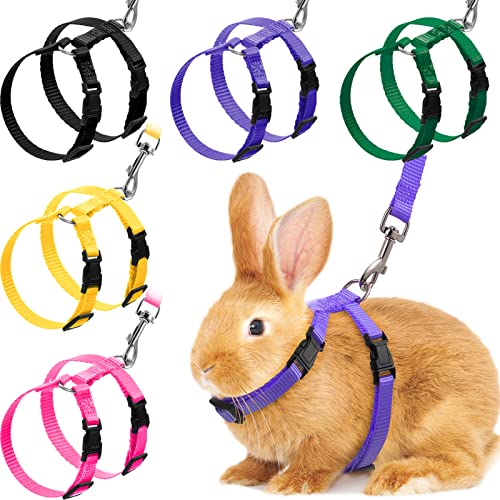
The Outus 5 Pieces Adjustable Harness Set takes a different approach — instead of one premium harness, you get five colorful harnesses for under three dollars each. For multi-ferret households, this is genuinely useful because you can try different sizes and colors on each of your ferrets.
The bright colors are actually a practical benefit for visibility during walks, and the adjustable design means you have some room to find the right fit. I’ve found that this set works best as an indoor training tool — you can afford to go through a few harnesses while your ferret learns to tolerate wearing one, without spending much money.
Quality control is the main concern here. Several owners reported receiving fewer than five harnesses in their package, and the stitching quality varies significantly between pieces. One review described them as “very small and not put together very well” with visible fraying. Another simply said “dangerous beyond belief,” though without specific details about what went wrong. The sizing also runs quite small — one reviewer joked they “might be large enough for a gerbil.” For larger ferrets, these may not fit at all. I’d recommend this set for indoor experimentation only, not for outdoor walks where escape means a lost ferret.
Ferret Harness and Leash Sets
Buying a harness and leash separately often leads to mismatched clip sizes, different weight ratings, and an overall awkward experience. A set ensures the leash clip actually fits the harness D-ring, and the materials are designed to work together. All five products in our comparison include a leash, which simplifies the buying process.
When choosing a leash, keep these factors in mind: aim for 4-6 feet in length — anything longer and your ferret will get tangled around your legs, anything shorter and they have no freedom to explore. The clip should be lightweight, since heavy clips can drag down a small ferret and make them uncomfortable. Most importantly, avoid retractable leashes entirely. Ferrets move in sudden, erratic bursts and stop unpredictably. A retractable leash can snap back and cause injury, and the constant tension doesn’t give your ferret the natural exploration experience that makes walks enjoyable for them.
Military Style Vest — Why I’d Skip It
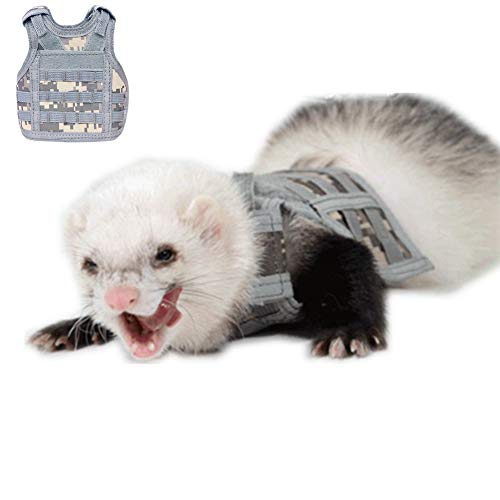
The Ferret Clothes Military Style Vest Harness looks cool in the product photos — the military design with adjustable shoulder straps gives it a tactical aesthetic that stands out. But after reading through the reviews, I can’t recommend this one for ferrets.
The core problem is sizing. Multiple owners confirmed that it’s “sized for a small dog, not a ferret like advertised.” One reviewer with two bigger male ferrets said it didn’t fit either of them. Another described the material as having “no stretch to it” — so either the ferret slides right out, or you tighten it enough to stay on and the ferret literally can’t walk. That’s a lose-lose situation. The stiff nylon construction restricts natural ferret movement, and the design doesn’t stay secure on a ferret’s body shape. Save your money and choose one of the other options instead.
How to Put a Harness on a Ferret
Most ferrets hate harnesses at first — that’s completely normal. The key is gradual desensitization. Never force a harness onto a ferret, because that creates a fear association that can last for weeks or months. I’ve seen ferrets that were forced into harnesses as kits refuse to go near one even as adults. Take it slow and make every interaction positive.
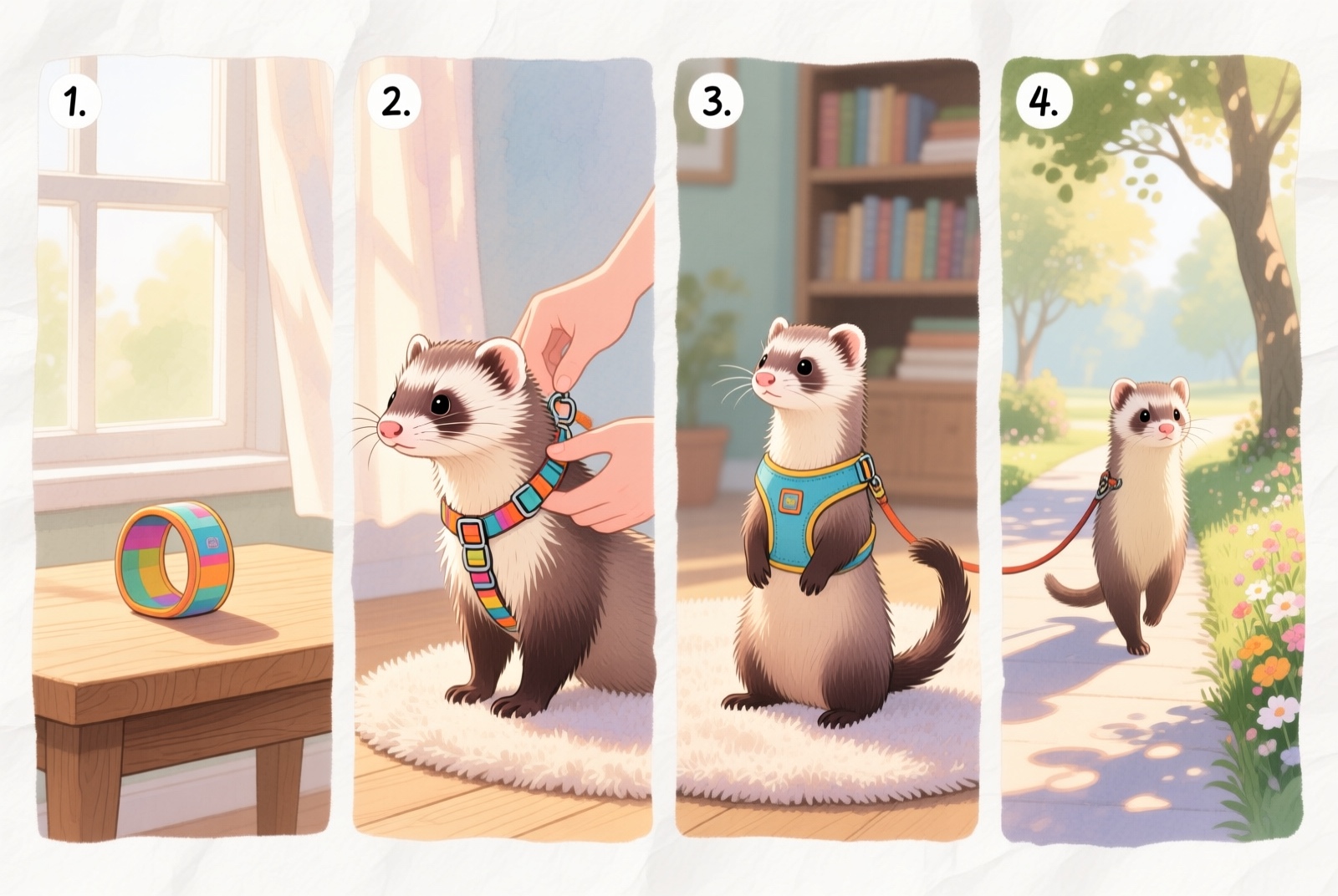
Step 1: Introduce the Harness (Days 1-3)
Place the harness near your ferret’s sleeping area or favorite hiding spot. Let them investigate it at their own pace — sniffing, pawing, and even dragging it around are all good signs. The goal is for your ferret to associate the harness with their safe space. Leave it there for two to three days, and offer a treat whenever your ferret shows interest in it. Some ferrets will ignore it entirely for the first day, and that’s fine. Don’t push it.
Step 2: First Fitting (Days 4-5)
Once your ferret is comfortable around the harness, try putting it on loosely while offering a high-value treat (ferret-specific treats or a tiny bit of meat-based baby food work well). Only leave it on for two to three minutes the first time. If your ferret freezes, struggles, or shows signs of distress (flattened ears, hissing, frantic scratching), remove it immediately and try again later. Repeat this two to three times per day, gradually increasing the wear time. Most ferrets start tolerating the harness after three to five sessions.
Step 3: Indoor Practice (Days 6-10)
Attach the leash indoors in a safe, enclosed room — preferably a ferret-proofed space with no small gaps they could squeeze through. Let your ferret walk around while you follow with the leash, don’t try to lead them. Gradually apply gentle pressure and see if your ferret follows. If they resist, stop and wait — never drag a ferret. Practice for ten to fifteen minutes per session, and always end on a positive note with a treat. This is also a good time to check for signs of stress. If your ferret is panting, flattening their ears, or trying to burrow under furniture to hide, they’re overwhelmed and need a break. Learning to read these ferret care signals takes practice but makes a huge difference in training success.
Step 4: First Outdoor Walk (Day 11+)
Choose a quiet, low-traffic area for the first outdoor experience. A fenced backyard is ideal — sidewalks near roads are not. Keep the first walk under ten minutes. Let your ferret set the pace and direction. They’ll probably spend the first few minutes just sniffing everything, which is enrichment in itself. Watch closely for signs of stress or escape attempts, and always have a carrier nearby as a safe retreat. Never walk your ferret near dogs, loud traffic, or crowded areas. The goal is to make outdoor time fun and safe, not stressful.
Common mistakes to avoid: skipping indoor training and going straight outside (overwhelming for the ferret), walking near dogs (triggers predator response), using a retractable leash (injury risk from sudden stops), and leaving the harness on unattended (ferrets can get tangled or caught on furniture).
Frequently Asked Questions
What’s the best harness to take ferrets on a walk?
After analyzing reviews across all five harnesses, no budget Amazon option is truly escape-proof for outdoor walks. The Dinosaur Shaped Vest is the best-rated for comfort and design, but still has documented escape reports. For reliable outdoor walks, I’d look for figure-8 or H-style harnesses with buckle closures from pet specialty stores. The most important factor is closure type — avoid Velcro and choose buckle or snap closures that ferrets can’t peel open.
How do you put a harness on a ferret?
Follow a gradual four-step desensitization process. First, leave the harness near your ferret for two to three days so they get used to its smell. Then do short fitting sessions with treats, starting at two to three minutes. Next, practice walking on leash indoors in a ferret-proofed room for ten to fifteen minute sessions. Finally, move to a quiet outdoor area for short walks under ten minutes. The entire process typically takes one to two weeks. Never force a harness on a ferret — this creates lasting fear and makes future training much harder.
Can ferrets wear cat harnesses?
Some larger ferrets might fit into the smallest cat harness sizes, but most cat harnesses are designed for a different body shape. Cats have shorter, more compact bodies compared to ferrets, which are longer and more flexible. The neck and leg openings on cat harnesses tend to be too loose for ferrets, creating the same escape risk. If you want to try a cat harness, look for a figure-8 style in the smallest available size and test it thoroughly indoors first. A figure-8 cat harness has a better chance of working than a vest-style one, since the continuous loop design is harder to slip out of.
What size harness for a ferret?
Most ferrets weigh between 1.5 and 4 pounds and measure 12 to 16 inches including their tail. The tricky part is that many Amazon harnesses labeled “for ferrets” are actually sized for small dogs and run large. Marshall ferrets, which are the most common breed in the United States, tend to be on the smaller end. Before buying anything, measure your ferret’s neck circumference and chest girth with a soft measuring tape. The harness should be snug enough that you can fit just one finger between it and your ferret’s body — any looser and they’ll slip out. When in doubt, size down. A slightly tight harness is much safer than one your ferret can escape.
Do ferrets like walking on a leash?
Most ferrets don’t naturally enjoy leash walks — it’s a learned behavior that requires patience and positive reinforcement. However, once trained, many ferrets genuinely seem to enjoy exploring outdoor environments. The key factors are starting young if possible, keeping walks short (ten to fifteen minutes), choosing safe quiet locations, and never forcing the issue. Some ferrets never accept a harness despite consistent training, and that’s completely normal. For these ferrets, supervised free-roam time in a ferret-proofed room with plenty of ferret toys and enrichment is a great alternative that provides exercise and mental stimulation without the stress of harness training.
How do I stop my ferret from escaping its harness?
The single most effective prevention is choosing the right harness style. Figure-8 and H-style harnesses with buckle closures are significantly harder to escape than Velcro vest harnesses, because there are fewer gaps and the closure can’t be peeled open. Always check the fit before every walk using the one-finger test — if you can fit more than one finger between the harness and your ferret, tighten it. Monitor your ferret constantly during walks, especially in the first five minutes when they’re most determined to get free. If your ferret consistently escapes regardless of harness style, consult your veterinarian for recommendations — some vets carry escape-proof harnesses designed specifically for exotic small animals.