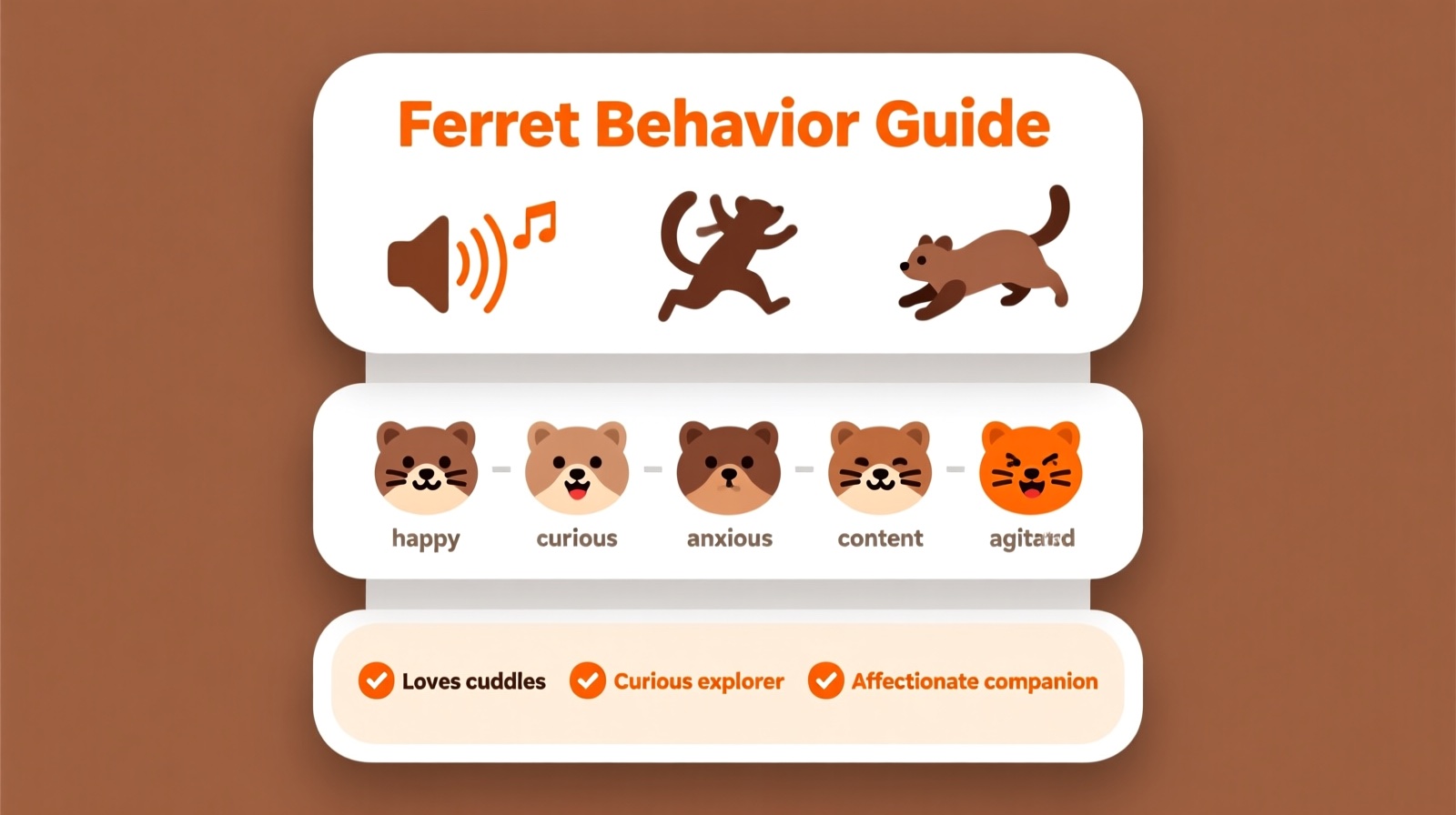
The first time I saw a ferret war dance, I was convinced something was wrong. This little creature was bouncing off the walls sideways, making bizarre clucking noises, and generally acting like it had completely lost its mind. Then I learned — that’s just a happy ferret.
Ferrets are the most expressive small pets you can own. Their ferret behavior is loud, physical, and genuinely funny in a way that hamsters and guinea pigs simply aren’t. But that expressiveness has a flip side: when a ferret stops being active and goes quiet, it often means something is wrong. This guide covers every ferret behavior you’ll encounter — the entertaining ones, the confusing ones, and the ones that mean you need to call a vet. Understanding ferret behavior is the key to being a good ferret owner.
Quick Reference: Ferret Body Language Chart
Use this table to quickly identify any ferret behavior and decide what action to take. The golden rule of ferret behavior: a happy ferret makes noise, dances, and bounces. A sick ferret hides, sleeps more, and goes quiet. A quiet ferret is often a sick ferret. Monitoring your ferret’s behavior daily using this chart helps you catch problems early.
| Behavior | What It Looks Like | Meaning | Normal? | Action |
|---|---|---|---|---|
| Dooking | Soft clucking “dook dook” sound | Happy, excited | Normal | Join the fun! |
| War dance | Sideways bouncing, arched back, puffed tail | Excited, playful | Normal | Let them dance, offer a toy |
| Licking you | Gentle tongue on skin/hand | Affection or grooming | Normal | They like you |
| Sleeping on back | Flat on back, legs in the air | Deep sleep, totally relaxed | Normal | Cute but normal |
| Tongue out while sleeping | Tongue hanging slightly out | Deep REM sleep | Normal | Very common |
| Eyes open while sleeping | Eyes open but unresponsive | Light sleeping | Normal | Ferrets do this often |
| Nipping/biting (kit) | Play biting, not breaking skin | Playing, learning bite inhibition | Normal (kits) | Scruff + “no” |
| Biting (adult, hard) | Breaking skin, drawing blood | Fear, pain, or aggression | Problem | Redirect, vet if new |
| Hissing | Sharp hiss | Fear, anger, warning | Context-dependent | Back off if new; OK with other ferrets |
| Sneezing | Occasional sneeze | Dust, exploring | Normal | 1-2 sneezes fine |
| Sneezing (constant) | Repeated sneezing, discharge | URI or allergy | Abnormal | Vet visit |
| Shaking (brief) | Quick tremor when waking | Normal sleep transition | Normal | None |
| Shaking (persistent) | Continuous trembling | Low blood sugar, insulinoma | Emergency | Sugar treat + vet NOW |
| Hair loss (tail first) | Thinning fur, starting at tail base | Adrenal disease | Abnormal | Vet diagnosis needed |
| Backing into corners | Repeatedly backing up | Possible anal gland issue or fear | Check context | Vet if persistent |
| Pacing, cage biting | Frantic bar biting, circling | Boredom, too small cage | Problem | More out-of-cage time, bigger cage |
| Food aggression | Growling, biting over food | Resource guarding | Manageable | Hand-feed, separate during meals |
Normal Ferret Behavior: What Happy Looks Like
Ferrets are the clowns of the small pet world. Temperament can vary slightly by color variety — Sable Ferrets are often described as the most energetic and curious. If your ferret is doing these things, their ferret behavior is right where it should be — happy and healthy:
A happy ferret checklist helps you monitor normal ferret behavior over time. If your ferret stops doing these things, it’s often the first sign that something is wrong with their health or environment.
- Dooking (happy clucking sound)
- War dancing (frantic sideways bouncing)
- Exploring everything with their nose
- Playing with toys and with you
- Eating and drinking normally
- Using litter box consistently
- Active during dawn and dusk hours
- Responding to your voice and arrival
Normal daily pattern: Ferrets sleep 14–18 hours per day, often in clusters of 4–6 hours. They’re crepuscular — most active at dawn and dusk. They need at least 4 hours of supervised out-of-cage time daily for healthy ferret behavior. They’ll stash food and toys in hidden “treasure” spots around the room, steal anything they can carry, and investigate every corner — this stashing and stealing is a natural ferret behavior trait that shows your ferret is mentally stimulated and healthy.
What ferrets need to be happy: A ferret friend (they’re social animals — two is better than one), a large multi-level cage with room to climb and play, daily out-of-cage time, interactive toys and tunnels for enrichment, and a harness for safe outdoor exploration.
For comprehensive care information, see our ferret care guide and best ferret cage guide.
Dooking and the War Dance: The Happy Ferret
These are the behaviors that make ferrets famous — and they’re the reason ferret owners can’t stop talking about their pets. Dooking and the war dance are the quintessential ferret behavior that sets them apart from every other small pet.
What Is Dooking?
Dooking is a soft, rhythmic clucking sound — often described as “dook dook dook dook.” It’s the ferret equivalent of laughing or giggling. Ferrets dook when they’re excited, playful, and having fun. If you hear your ferret dooking, they’re in a good mood.
When you’ll hear it: During play sessions, when they see you after being alone, when exploring a new room or tunnel, and right before the war dance starts. Dooking almost always accompanies the war dance — the two go hand in hand as the most recognizable ferret behavior.
What Is the War Dance?
The war dance (also called the “weasel war dance”) is one of the most entertaining animal behaviors you’ll ever witness. I’ve shown ferret war dance videos to non-pet people and watched them crack up every time. Here’s what happens:
- The ferret arches their back into an inverted U shape
- They puff their tail until it looks like a bottle brush
- They hop sideways with stiff legs, bouncing off walls and furniture
- They make dooking sounds the entire time
- Often they open their mouth in a “play face” — not aggression, just excitement
Despite the name, this is NOT aggression. It’s pure excitement and playfulness. A war-dancing ferret is a happy ferret. This ferret behavior is unique to mustelids and one of the most entertaining things you’ll see in the pet world.
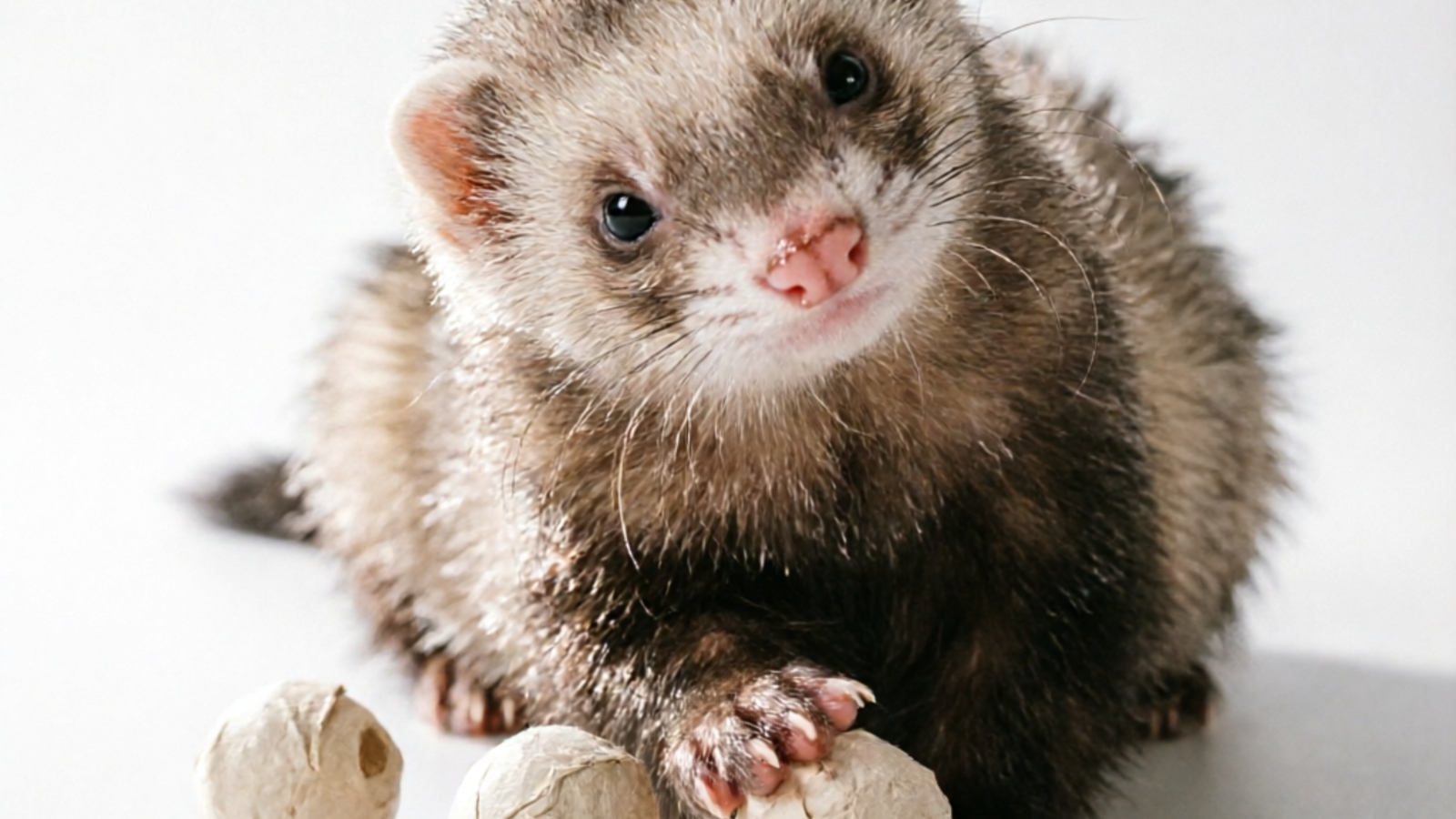
How to respond: Join in! Offer a crinkle ball or tunnel toy, play chase, or just enjoy the show. A Marshall Pop-N-Play Ball Pit is another great option for interactive play. This war dance ferret behavior is the best sign that your ferret is happy and well-adjusted.
Ferret Body Language: How They Communicate
Ferret body language is surprisingly expressive once you learn to read it. Ferrets communicate through posture, movement, sound, and physical contact — reading ferret body language accurately prevents misunderstandings and helps you respond appropriately to your ferret’s behavior.
Affectionate Behaviors
- Licking: Ferrets groom each other by licking. If your ferret licks you, they’re treating you as family — it’s a sign of trust and bonding.
- Rubbing against you: Scent-marking behavior. They’re claiming you as theirs by spreading their scent on you.
- Sleeping on you: The ultimate trust display. Ferrets are vulnerable when asleep, so sleeping on you means they feel completely safe.
- Bringing you “gifts”: Stolen socks, toys, food items — they’re sharing their treasure with you. It’s a compliment.
- Nudging your hand: “Pay attention to me” or “Pick me up.” Persistent nudging means they want interaction.
Playful Behaviors
- Chasing your feet: Inviting you to play. They want you to chase them back.
- Sideways hopping: A lighter version of the war dance — they’re in a playful mood.
- Stalking and pouncing: Normal hunting play behavior. They’ll stalk you, other pets, or toys.
- Wrestling with other ferrets: Social bonding through play-fighting. It looks rough but is normal.
- Stealing things and running: The classic ferret game. They steal for the joy of the chase.
Stressed or Fearful Behaviors
- Hissing: Fear or warning — give them space.
- Teeth chattering: Aggression warning. This is different from dooking — it’s faster, harder, and sounds more threatening.
- Flat ears, hunched posture: Fear or pain. The ferret is trying to make itself small.
- Running to hide: Overwhelmed or scared. Let them decompress in their safe space.
- Tail between legs: Fear — unusual for ferrets, who are normally bold. This means something genuinely frightened them.
Understanding Ferret Sounds
Ferrets are vocal animals with a surprisingly wide range of sounds. Each sound has a distinct meaning in ferret behavior, and learning to distinguish between them helps you respond correctly.
| Sound | Description | Meaning | When to Worry |
|---|---|---|---|
| Dooking | Soft, rhythmic clucking | Happy, excited | Never a concern |
| Hissing | Sharp, forceful exhale | Fear, anger, warning | Normal in new situations; constant = stress |
| Teeth chattering | Rapid jaw clicking | Aggression warning | Separate from other pets if directed at them |
| Whimpering/whining | Soft, plaintive cry | Wanting attention or mildly distressed | Check on them |
| Screaming | Loud, piercing shriek | Extreme pain or terror | Immediate vet |
| Sneezing | Quick nasal expulsion | Dust, normal exploration | Constant = URI |
| Wheezing | Whistling sound when breathing | Possible respiratory issue | Vet — could be respiratory infection |
| Choking sound | Gagging, retching | Hairball or object stuck | Vet if persistent |
The “Choking” Sound That Isn’t Choking
Ferrets sometimes make a dramatic gagging or retching sound that sounds exactly like choking. In most cases, this is actually a reverse sneeze, an attempt to clear phlegm after waking up, or swallowing something too fast. It looks alarming but resolves on its own within a few seconds.
However: If the sound persists for more than 30 seconds, the ferret is pawing at their mouth, or their gums turn blue — this is a real emergency. Ferrets cannot cough up hairballs the way cats do, and blockages require immediate veterinary intervention. Don’t wait — any ferret behavior involving respiratory distress needs urgent attention.
Biting: Causes, Prevention, and Training
Ferret biting is the most common ferret behavior concern among new owners. For a dedicated deep dive into causes and solutions, see our full guide on ferret biting. Understanding why ferrets bite — and that the reasons change with age — is the key to solving this ferret behavior problem. The approach to stopping ferret biting depends entirely on the cause, so accurate identification is step one.
| Type | Age | Cause | Solution |
|---|---|---|---|
| Play biting | Kits (<6 months) | Normal play, learning bite inhibition | Scruff gently + firm “no” |
| Taste biting | Any | Food/smell on hands | Wash hands before handling |
| Fear biting | Any | Sudden movements, being startled | Approach calmly, from below |
| Rough play | Any | Overstimulated during play | Time-out in cage for 2 min |
| Pain biting | Adult (new) | Illness or injury | Vet visit |
| Adrenal aggression | 2+ years | Hormonal changes from adrenal disease | Vet — adrenal treatment |
| Food aggression | Any | Resource guarding | Hand-feed, separate during meals |
Training a Kit Not to Bite
Kits bite during play — it’s how they interact with littermates and how they explore the world. Teaching bite inhibition takes consistency but works quickly if you’re diligent:
- When they bite too hard: Scruff firmly — grab the loose skin on the back of the neck
- Say “NO” firmly but without yelling
- Drag them gently across the floor for 2–3 seconds — this mimics what mother ferrets do
- Release and offer a toy — redirect the biting to something appropriate
- Be consistent — every time, every person in the household, no exceptions
What NOT to do: Don’t flick their nose, don’t squeeze them, and don’t hit. These responses destroy trust, can escalate aggression, and don’t teach bite inhibition. Positive reinforcement works better than punishment for correcting unwanted ferret behavior. For ferret food aggression specifically, hand-feed treats and meals to associate your hands with positive things.
Cage Biting
Cage biting is one of the most common ferret behavior problems, and it almost always means the same thing: boredom and insufficient out-of-cage time. This destructive ferret behavior can damage teeth and cage bars over time.
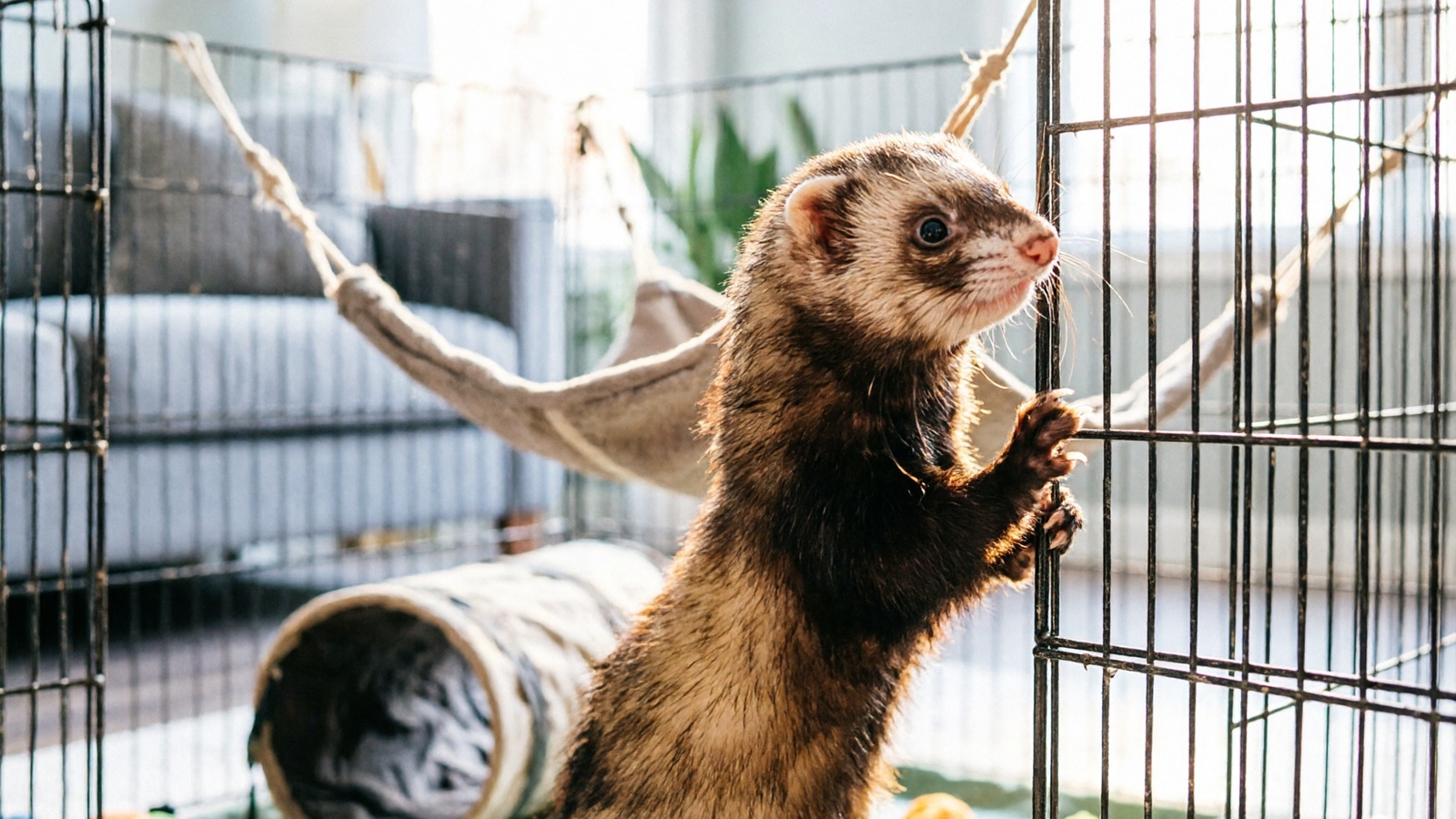
Solutions include more out-of-cage playtime, more interactive toys rotated regularly to prevent boredom, a larger cage with more levels and space, and covering the lower portion of cage bars with a towel to remove the satisfying biting surface. A Ferplast Ferret Tower or a multi-level cage with ramps and hammocks provides more environmental enrichment than a single-level setup. For cage setup ideas, see our ferret cage ideas guide. A harness and leash like the Rypet Soft Mesh Vest for supervised outdoor exploration also helps burn energy and satisfies their curiosity.
Ferret Sleep Behavior: Positions, Habits, and What’s Normal
Ferrets sleep more than almost any other pet — 14–18 hours per day is completely normal ferret behavior. And they sleep in the most ridiculous positions imaginable. Understanding normal ferret sleep behavior helps you distinguish between a peacefully sleeping ferret and one that needs medical attention.
| Sleep Behavior | Description | Normal? | Notes |
|---|---|---|---|
| On their back | Flat on back, legs spread | Normal | Deep REM sleep, total relaxation |
| Tongue out | Tongue slightly protruding | Normal | Deep sleep, jaw muscles relaxed |
| Eyes open | Eyes open but glassy, unresponsive | Normal | Light sleeping — very common in ferrets |
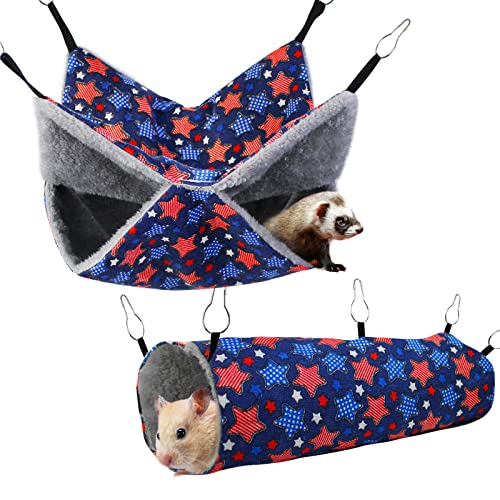
| In a pile (multiple ferrets) | Curled together in a ferret heap | Normal | Social bonding, shared warmth — a ferret hammock makes this even cozier |
| In small spaces | Stuffed into bags, boxes, shoes | Normal | They prefer enclosed sleeping spots |
| Sleeping more than usual | Hard to wake, lethargic | Abnormal | Possible illness, insulinoma |
| Won’t wake for food | Unresponsive to favorite treats | Emergency | Vet immediately |
The “dead ferret sleep” — flat on their back, tongue hanging out, eyes wide open — is terrifying the first time you see it. I’ve had new ferret owners call me in a panic thinking their pet had died. A gentle touch or calling their name usually gets a response. If not, check for breathing and contact a vet — any change from your ferret’s normal sleep behavior that doesn’t resolve quickly warrants investigation. For more on ferret life stages, see our ferret lifespan guide.
Abnormal Ferret Behavior: When to See a Vet
Some ferret behavior changes signal medical emergencies. Knowing the difference between normal ferret behavior and a real problem is critical — it can save your ferret’s life.
| Abnormal Behavior | Possible Cause | Urgency |
|---|---|---|
| Persistent shaking | Insulinoma (low blood sugar) | Sugar treat NOW, then vet |
| Screaming | Severe pain, blockage | Vet immediately |
| Hair loss (tail → body) | Adrenal disease | 🟠 Vet within 1-2 weeks |
| Lethargy, won’t wake up | Insulinoma, infection, organ failure | Vet immediately |
| Wheezing, labored breathing | Respiratory infection, heart disease | 🟠 Vet same week |
| Straining to poop | Blockage (ferrets eat EVERYTHING) | Vet immediately |
| Sudden aggression (adult) | Pain, adrenal disease | 🟠 Vet within 1 week |
| Excessive thirst/urination | Insulinoma, kidney disease | 🟠 Vet within 1 week |
| Dragging back legs | Spinal injury, insulinoma | Vet immediately |
| Swollen vulva (female) | Adrenal disease | 🟠 Vet within 1-2 weeks |
| Persistent sneezing + discharge | URI | 🟠 Vet same week |
The insulinoma warning: Ferrets are uniquely prone to insulinoma — a pancreatic tumor that causes dangerous drops in blood sugar. This is the most important ferret health emergency to recognize because abnormal ferret behavior related to blood sugar drops can become fatal quickly. Shaking + glazed eyes + not eating = give sugar immediately. A Honey Nut Cheerio, a dab of Karo syrup on the gums, or any sugar source buys you time. Then get to a vet. For more on ferret health, see our ferret health problems and ferret diet guides.
Environmental Factors That Affect Ferret Behavior
Your ferret’s environment directly impacts their behavior. Problems in the setup show up as behavioral issues before they become physical health problems. Understanding how environment affects ferret behavior helps you prevent problems before they start.
Temperature: Ferrets overheat easily above 80°F (27°C) — they lack sweat glands and can die from heatstroke. Keep their environment between 60–75°F. This environmental factor directly affects ferret behavior — overheated ferrets become lethargic and stop eating.
Light: 12–14 hours of consistent light daily maintains a healthy circadian rhythm. Too little light exposure has been linked to depression and possible adrenal issues. A simple lamp on a timer near the cage works well. Light exposure is an often-overlooked factor in ferret behavior.
Cage size: Too small = cage biting, pacing, depression, and aggression. A multi-level cage with ramps and hammocks provides the vertical space ferrets enjoy. For recommendations, see our best ferret cage and critter nation vs ferret nation comparison.
Bar biting that does not stop after more playtime usually means the multi-level footprint is too small.
Social needs: Ferrets are social animals. Loneliness causes depression and behavioral problems. Two ferrets are genuinely better than one — they groom each other, play together, and sleep in piles. A single ferret can develop problematic behavior without enough social interaction. If you have a single ferret, you need to compensate with extra interaction time.
Out-of-cage time: 4+ hours daily is the minimum. Less than this leads to boredom, cage aggression, depression, and destructive ferret behavior. This is non-negotiable for healthy ferret behavior.
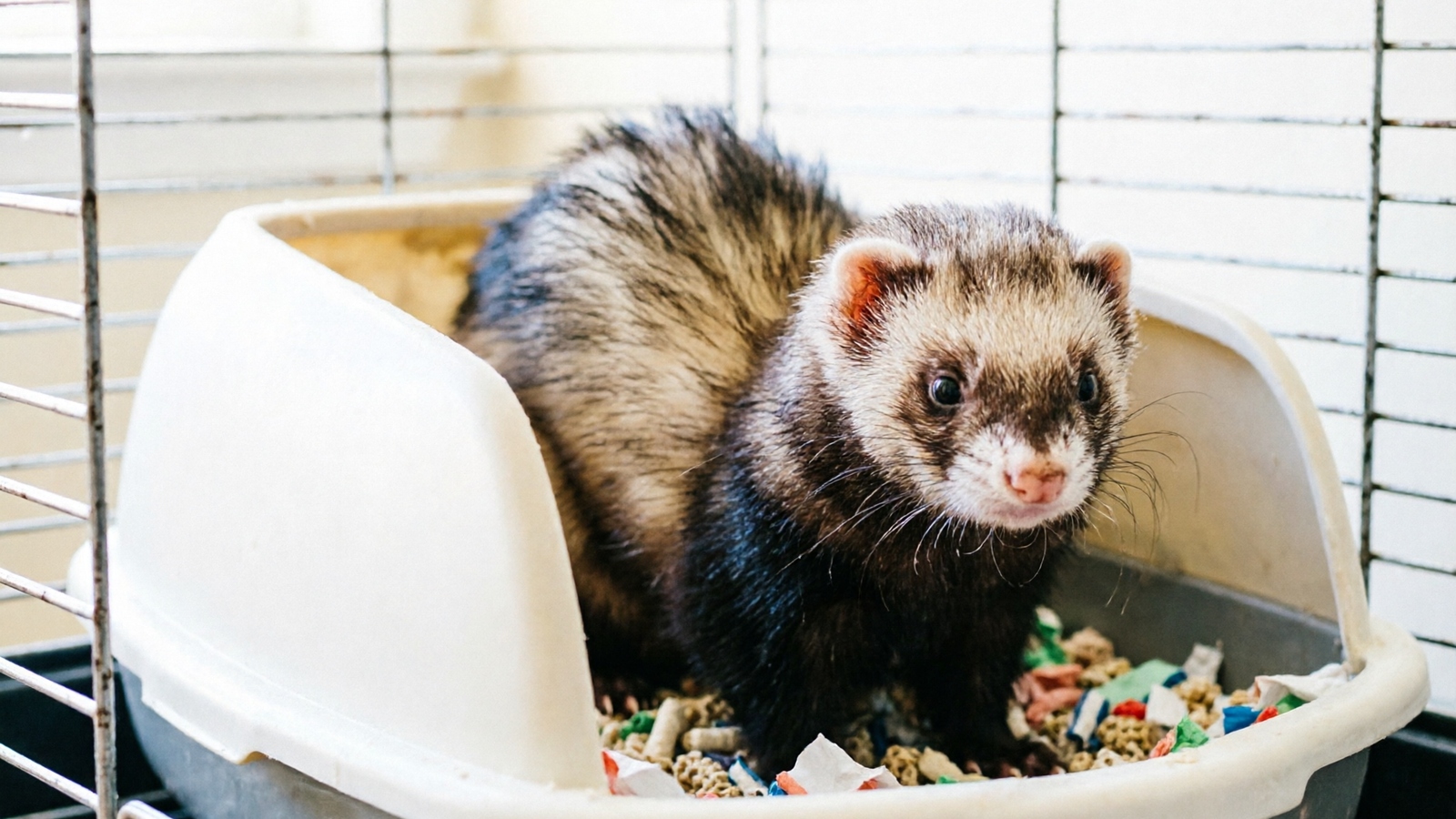
Bedding: Low-dust, absorbent bedding keeps your ferret comfortable and reduces respiratory irritation. Carefresh paper bedding and Kaytee Clean & Cozy are both excellent low-dust options. For more options, see our best ferret bedding guide.
For litter training tips, see our ferret litter training guide.
Frequently Asked Questions
Why is my ferret shaking?
Brief shaking (1–2 seconds) while waking up is normal — ferrets often tremble when transitioning from deep sleep. However, persistent shaking can indicate hypoglycemia (low blood sugar, common in ferrets), adrenal disease, insulinoma, or pain. If shaking is continuous and the ferret hasn’t eaten, offer a high-sugar treat (Honey Nut Cheerio, Karo syrup) immediately — this could be an insulinoma episode. If it doesn’t stop within 5 minutes, see a vet.
What does it mean when a ferret dooks?
Dooking is a soft, clucking “dook dook dook” sound ferrets make when they’re excited and happy. It almost always accompanies the war dance — that frantic, bouncing, sideways-running display of pure joy. Dooking is the ferret equivalent of laughing. If your ferret is dooking, they’re having a great time.
Why is my ferret biting me?
Ferrets bite for different reasons at different ages. Kits (baby ferrets under 6 months) bite during play — they haven’t learned bite inhibition yet. Adult ferrets bite from fear, pain, or poor training. Other causes include food on your hands, being startled, adrenal disease, or rough play. Wash hands before handling. For kits, scruff gently and say “no.” For sudden new biting in an adult, see a vet.
Why does my ferret bite the cage bars?
Cage biting usually means boredom, frustration, or a desire for attention. Ferrets need 4+ hours of out-of-cage playtime daily — if they’re not getting enough, they’ll take it out on the bars. Other causes: they see something interesting outside the cage, they want to come out, or the cage is too small. Solutions: more out-of-cage time, more toys, larger cage, and cover the lower portion of cage bars with a towel.
Do ferrets recognize their owners?
Yes — ferrets recognize their owners by scent and voice. They’ll often run to the door when they hear you, dook when you approach, and show excitement they don’t show for strangers. Ferrets can learn their name and respond to it, especially if you use it consistently with treats. Expect 2–4 weeks for a new ferret to fully recognize and trust you.
Why does my ferret sleep so much?
Ferrets sleep 14–18 hours per day — this is completely normal. They’re crepuscular, most active at dawn and dusk. However, if your ferret is sleeping MORE than usual, is hard to wake up, or seems lethargic during active hours, it could indicate illness, adrenal disease, insulinoma, or old age. A ferret that won’t wake up for a favorite treat needs a vet visit.
Why is my ferret losing hair?
Hair loss in ferrets, especially starting at the tail, is the classic sign of adrenal disease — one of the most common ferret illnesses. It’s caused by an overactive adrenal gland producing too much sex hormone. Other symptoms include swollen vulva in females, aggressive behavior in males, and itchy skin. Adrenal disease is treatable with surgery or medication. See an exotic vet for diagnosis.
What does it mean when a ferret licks you?
Licking is usually a sign of affection or grooming behavior — ferrets groom each other by licking, so if your ferret licks you, they’re treating you as family. It can also mean they taste something interesting on your skin. Some ferrets lick before gently biting — this is play behavior, not aggression. If the licking turns into persistent biting, redirect with a toy.