Introduction
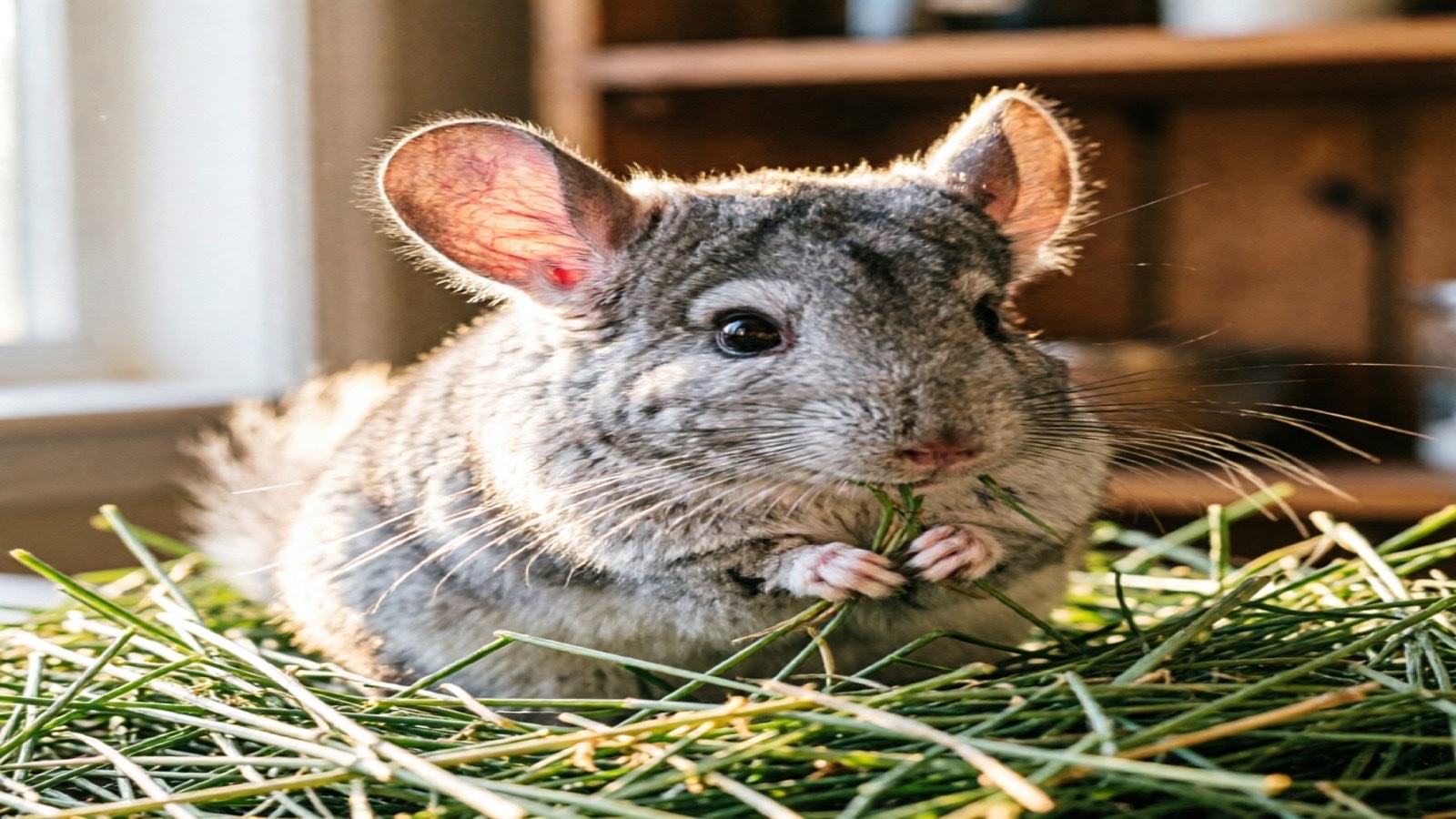
Chinchilla hay should be available to your pet around the clock. The best chinchilla hay makes up roughly 80% of a pet’s complete diet guide, and restricting it is one of the most harmful things an owner can do to their chinchilla hay supply.
Chinchillas have open-rooted (elodont) teeth that never stop growing — incisors and cheek teeth grow roughly 2 to 3 millimeters per week. Long-strand chinchilla hay is the only natural way to grind those teeth down while keeping the digestive tract moving.
Yet most owners grab whatever bag is cheapest or closest. The problem is that chinchilla hay quality varies enormously between brands and even between batches from the same brand.
Dusty chinchilla hay triggers respiratory flare-ups. Stale chinchilla hay gets rejected outright. And feeding the wrong type — alfalfa to an adult chinchilla — can cause bladder stones that require surgery. The difference between a premium Timothy and a budget bag is visible in how quickly your chin empties the rack and how much ends up on the cage floor as waste.
This guide covers 10 chinchilla hay products across four types: Timothy, orchard grass, oat hay, and alfalfa. Whether you need a daily chinchilla hay staple, a dental wear booster, or a kit-friendly option, the best chinchilla hay is here. This article is part of our best chinchilla hay cross-species cluster — see our best guinea pig hay and best rabbit hay guides for species-specific comparisons.
Chinchilla Hay Types — Which Hay for Which Situation?
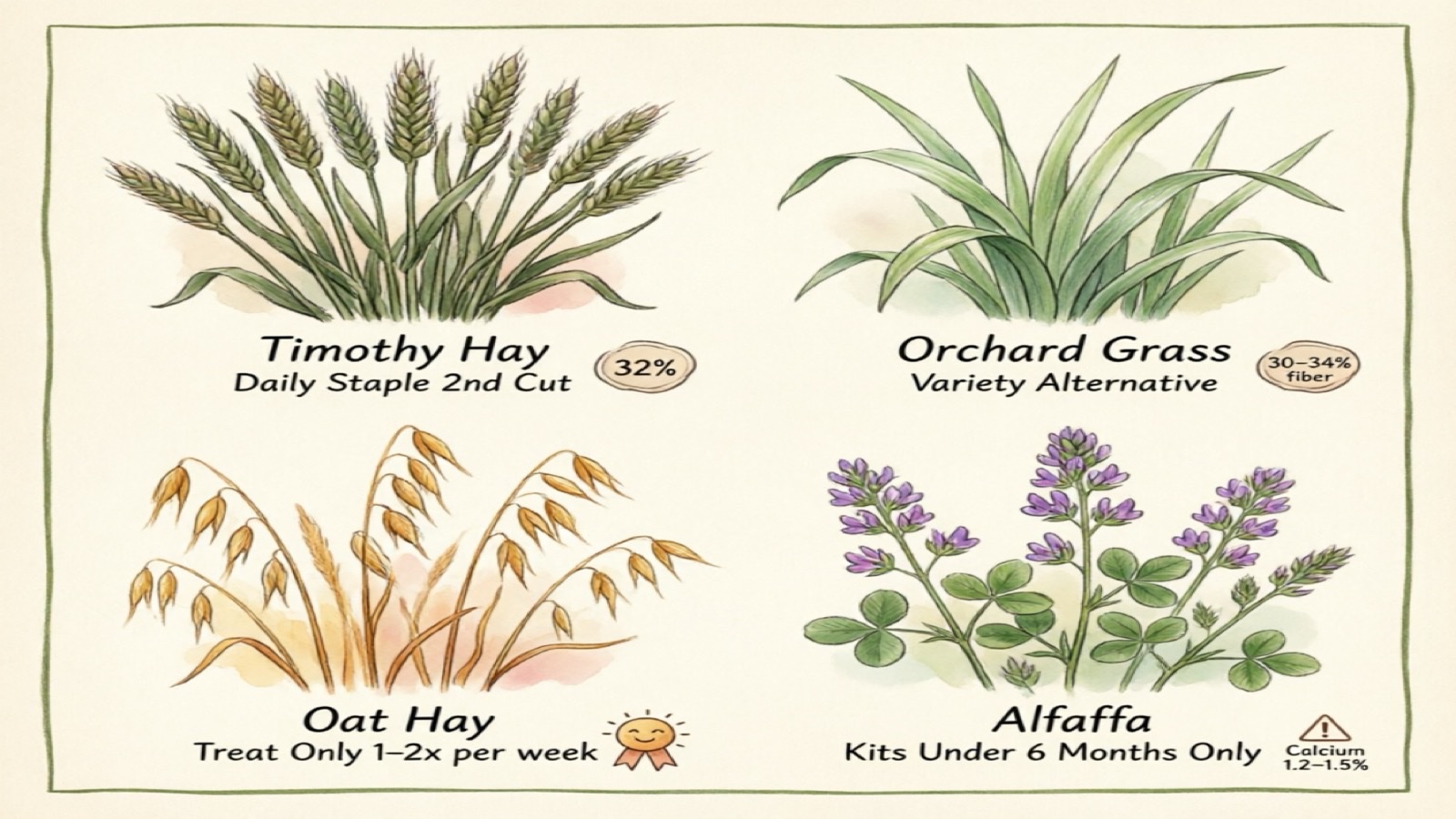
Chinchilla hay is dried grass that serves as the primary food source for chinchillas, making up approximately 80% of their total diet. Unlike pellets, long-strand chinchilla hay provides the coarse fiber needed for dental wear and gut motility. The four main types are Timothy hay (daily staple), orchard grass (variety alternative), oat hay (treat), and alfalfa (kits under six months only).
Timothy Hay — The Staple
Timothy hay is the gold standard chinchilla hay for adult pets. Second cutting Timothy offers the ideal balance of roughly 32% fiber, moderate protein, and low calcium between 0.2% and 0.4%. First cutting is coarser and better for dental wear, while third cutting is too soft for adults.
Timothy hay chinchilla diets should always use second cut as the base. First cut can be mixed in at roughly a 50/50 ratio for extra tooth grinding. Third cut Timothy is appropriate only for kits or recovering chinchillas that need softer food.
Orchard Grass — The Variety Alternative
Orchard grass chinchilla feeding is growing in popularity. It has nearly identical calcium and protein levels to Timothy but a sweeter, softer texture.
Picky eaters who reject Timothy often accept orchard grass. It works as a full staple replacement or as a rotation to prevent chinchilla hay boredom.
Oat Hay — Treat Only
Oat chinchilla hay contains seed heads that pets love as enrichment. The high carbohydrate content makes it unsuitable as a staple.
Offer oat hay chinchilla treats one to two times per week at most. Scatter the seed heads around the cage for foraging enrichment.
Alfalfa — Kits Under Six Months ONLY
Alfalfa chinchilla feeding is a common beginner mistake. Alfalfa contains 1.2% to 1.5% calcium — three to four times the level in Timothy chinchilla hay.
Growing kits need that extra calcium for bone development. Adult chinchillas cannot process the excess, and it forms bladder stones called urolithiasis.
| Hay Type | Role | Fiber | Calcium | Feed Frequency |
|---|---|---|---|---|
| Timothy (2nd cut) | STAPLE | 32% | 0.2–0.4% | Unlimited 24/7 |
| Orchard Grass | VARIETY | 30–34% | 0.2–0.3% | Unlimited 24/7 |
| Timothy (1st cut) | DENTAL | 35%+ | 0.2% | Mix with 2nd cut |
| Oat Hay | TREAT | 25–30% | 0.3% | 1–2x per week |
| Alfalfa | KIT FOOD | 28% | 1.2–1.5% | Under 6 months ONLY |
Quick Comparison — All 10 Products
The best chinchilla hay depends on your specific situation. A new owner testing preferences has different needs than someone buying a six-month staple supply.
| # | Product | Type | Price | Best For |
|---|---|---|---|---|
| 1 | Oxbow Western Timothy 90oz | Timothy 2nd cut | $21.68 | Best Overall |
| 2 | Kaytee Timothy 48oz | Timothy 2nd cut | $12.95 | Best Budget |
| 3 | SPS 2nd Cut Timothy 12lb | Timothy 2nd cut | $36.99 | Best Premium |
| 4 | Kaytee Timothy Wafer-Cut | Timothy wafer cut | $13.95 | Best Dental |
| 5 | Small Pet Select Orchard Grass Hay | Orchard Grass | $34.99 | Best Orchard |
| 6 | SPS Orchard Grass 10lb | Orchard Grass | $34.99 | Premium Bulk |
| 7 | Kaytee Wild Meadow Blend 24oz (2-Pack) | Hay Blend | $17.98/2pk | Highest Rated |
| 8 | SPS Oat Hay 10lb | Oat Hay | $34.99 | Treat Only |
| 9 | Kaytee Alfalfa 24oz | Alfalfa | $5.99 | Kits Under 6mo |
| 10 | SPS Sampler Box | Sampler | $29.99 | Variety Discovery |
Timothy Hay Reviews (Staple Hay)
Timothy hay chinchilla diets start here — Timothy hay is the backbone of chinchilla nutrition. The four products below cover every budget and need — from the vet-recommended standard to a budget option and a premium bulk buy.
If your chinchilla suddenly stops eating hay, that is a chinchilla hay refusal red flag. Read our guide on why your chinchilla might stop eating to rule out dental disease or GI stasis.
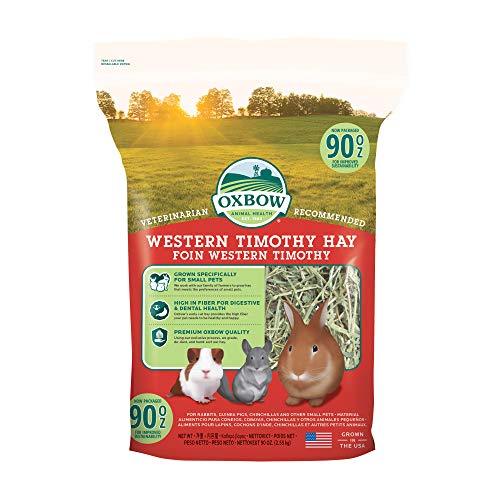
1. Oxbow Western Timothy Hay — Best Overall
Oxbow is the number one veterinarian-recommended hay brand in the United States. Their Western Timothy is a second cutting with the ideal fiber, protein, and calcium balance for adult chinchillas.
The 90 ounce bag provides roughly three to four weeks of hay for a single chinchilla. Long strand fiber promotes natural foraging behavior while grinding down continuously growing teeth. Oxbow grows and hand-sorts all hay in the USA, which explains the consistent chinchilla hay quality across batches.
What could be better: at $21.68 for 90 ounces, this costs more per pound than budget options. Some bags arrive with excess dust, especially the bottom portions. The review count is shared across multiple Oxbow Timothy sizes, so individual bag feedback is harder to gauge.
An owner wrote that Oxbow is THE brand vets recommend and their chinchilla has been on it for three years with healthy teeth and great digestion.
The best chinchilla hay for most owners is Oxbow Western Timothy. It combines vet trust with wide availability and consistent quality.
Oxbow Western Timothy Hay → Shop Now
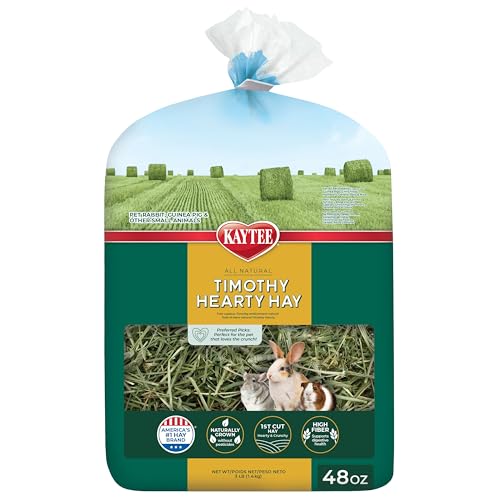
2. Kaytee Timothy Hay — Best Budget
Kaytee Timothy is the cheapest established-brand Timothy available. At $12.95 for 48 ounces, the per-ounce cost is hard to beat. Kaytee is also widely stocked in physical pet stores, making it a convenient backup when online orders are delayed.
With strong community validation, this is one of the most widely available small animal hay products. High fiber content supports digestive health and dental wear just like any quality Timothy should.
What could be better: quality consistency is the number one complaint. Some bags arrive green and fresh while others from the same order are brown and dusty with visible weed stems. Several reviewers report their chinchillas wasting the coarse stems and eating only the leafy portions.
A verified buyer noted: “Quality varies wildly between bags. Some are green and fresh, others are brown and dusty.”
Kaytee Timothy works for budget-conscious owners willing to accept some batch variability. Inspect each bag at delivery and return anything that smells off or looks excessively brown.
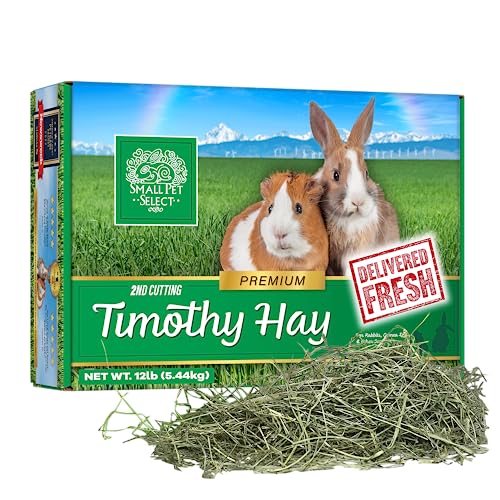
3. Small Pet Select 2nd Cut Timothy — Best Premium
Small Pet Select sources hay directly from family farms. The hay is harvested, boxed, and shipped to consumers without the warehouse aging that degrades most commercial chinchilla hay. This farm-direct chinchilla hay model produces noticeably fresher hay compared to mass-market brands.
The 12 pound box at $36.99 works out to roughly $3.08 per pound — the best per-pound value among premium options. The chinchilla community on online forums frequently recommends SPS for freshness. A subscription option on their website offers even faster turnaround.
What could be better: the 12 pound box is bulky and needs dedicated storage space. Some bags compress during shipping, making the contents appear smaller than the listed weight despite being accurate on a scale. The review count is shared across multiple SPS Timothy sizes.
SPS Timothy is the closest thing to farm-fresh hay available online. The difference in smell and color compared to store-bought brands is immediately noticeable.
SPS 2nd Cut Timothy → Shop Now
4. Kaytee Timothy Wafer-Cut — Best Dental Wear
Wafer-cut Timothy takes sun-cured Timothy hay and compresses it into dense, bite-sized wafers. That density is an advantage for dental health — the compressed fiber makes chinchillas chew harder and longer, grinding down their continuously growing teeth more effectively than softer hay.
At $13.95 for a 60-ounce tub, the per-pound cost sits close to standard bagged Timothy — dense wafers mean little of what you pay for gets wasted as bedding fluff. The high fiber content also supports healthy gut motility.
Most owners offer wafers as a dental supplement alongside loose second-cut hay rather than as the sole forage.
What could be better: some chinchillas treat wafers as treats rather than staple food and beg for more instead of eating loose hay, so portion control matters. It should not serve as the sole forage because chewing through loose hay stcut for low quality when they see the thick woody stems.
An owner reported that their chinchilla’s vet recommended harder forage for dental health, and the dense wafers filled that role without the mess of loose stems.
Wafer-cut Timothy is a strong choice for any chinchilla showing early dental wear issues or for owners who want to supplement a softer staple with tougher fiber.
Kaytee First Cut Timothy → Shop Now
 ## Orchard Grass, Blend & Oat Hay Reviews
Beyond staple Timothy, chinchillas benefit from variety. Orchard grass offers a softer texture for picky eaters.
Meadow blends prevent hay boredom. Oat hay serves as a high-value treat when scattered around the cage.
Hay is a staple food, but treats like blueberries should stay minimal. Our guide to chinchillas and blueberries covers safe treat moderation alongside a hay-centered diet.
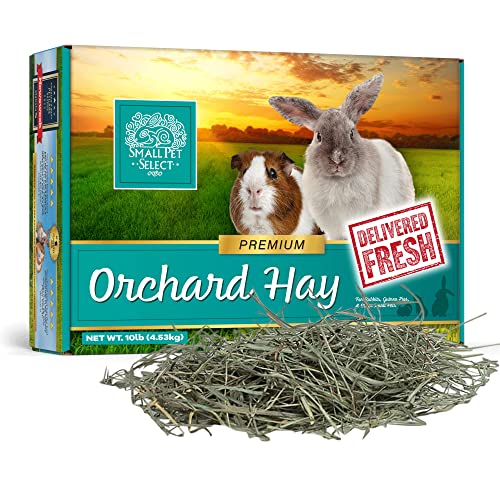
5. Small Pet Select Orchard Grass Hay — Best Orchard
Orchard grass chinchilla diets are increasingly common among experienced owners. This Small Pet Select Orchard Grass is a widely popular option with strong community feedback. The texture is sweeter and softer than Timothy, making it ideal for chinchillas that reject coarser hay.
Nutritionally, orchard grass matches Timothy with low calcium and adequate fiber. It is safe as a full staple replacement or as a rotation hay to add dietary variety. The 10 pound bag at $34.99 is a solid value for regular feeding of multi-chinchilla households.
What could be better: some chinchillas simply prefer Timothy and ignore orchard grass entirely. SPS ships directly from their warehouse, so delivery takes longer than Amazon Prime. Pricier per ounce than bulk hay from feed stores.
An owner reported: “My chinchilla was rejecting Timothy but loves orchard grass. Sweeter taste wins.”
Small Pet Select Orchard Grass is the best chinchilla hay for picky eaters. Start with a single bag to test preference before committing to bulk.
Small Pet Select Orchard Grass → Shop Now
6. Small Pet Select Orchard Grass Hay — Premium Bulk
SPS applies the same farm-direct sourcing to their orchard grass as they do to Timothy. The result is noticeably fresher and more fragrant than mass-market alternatives. The sweet, leafy texture makes this a hit with chinchillas that enjoy softer hay.
At a 10 pound bag at $34.99, the per-pound cost is competitive with Oxbow. Online small pet communities frequently recommend SPS orchard grass for picky eaters.
What could be better: this product has less community validation compared to Oxbow. The hay is only available through online retailers, not in physical stores. Some bags arrive less green than expected depending on the harvest season.
SPS orchard grass maintains its freshness longer than bagged supermarket hay — likely because the farm-direct process skips warehouse aging.
7. Kaytee Wild Meadow Blend
The Kaytee Wild Meadow Blend earns the highest rating on this list. It combines Timothy, orchard grass, and natural meadow grasses into a single blend.
The variety in every handful prevents hay boredom and encourages more consistent consumption.
At $17.98 for a two-pack of 24-ounce bags, this is an affordable supplement rather than a staple replacement. The blend composition varies by batch, which adds natural variety but also introduces some inconsistency. The diverse fiber types from multiple grass species support optimal gut health.
What could be better: each 24 ounce bag is very small and disappears in two to three days for one chinchilla, though the two-pack format helps. Because the blend varies between batches, some bags contain more Timothy while others lean heavier on orchard. This is not suitable as a sole hay — it should supplement a Timothy or orchard staple.
An owner described great variety in every handful with Timothy, orchard, and meadow grasses keeping their chin interested.
Use the Wild Meadow Blend as a rotation hay two to three times per week to break up the monotony of a single-grass staple.
Kaytee Wild Meadow Blend → Shop Now
8. Small Pet Select Oat Hay — Treat Only
Oat hay chinchilla feeding is purely for enrichment. The golden seed heads are irresistible to most chinchillas. SPS farm-direct sourcing means the oat heads arrive intact rather than shattered, which matters because chinchillas selectively eat the seed clusters.
The high carbohydrate content makes oat hay unsuitable as a staple. Limit it to one or two times per week. Scatter the seed heads around the cage for foraging enrichment — chinchillas spend considerable time hunting down each piece.
What could be better: the rating reflects the limited use case, which frustrates buyers expecting a staple hays expecting a staple hay. The 10 pound box is far too much for a treat supplement.
Overfeeding oat hay causes weight gain, especially in less active chinchillas.
An owner warned: “My chinchilla gained weight when I offered too much. Only give one to two times per week.”
Buy the smaller 2 pound size if available. Ten pounds of treat hay is excessive for a single chinchilla.
Alfalfa Hay — Kits Under 6 Months ONLY
Warning: Safety Warning: Alfalfa hay contains 1.2% to 1.5% calcium — three to four times the calcium level in Timothy hay. Feeding alfalfa to adult chinchillas causes bladder stones (urolithiasis) that often require surgical removal. Alfalfa is safe ONLY for chinchillas under six months of age. Transition to Timothy hay gradually over two weeks once your kit reaches six months.
Alfalfa chinchilla feeding is one of the most misunderstood topics in chinchilla care. The high calcium and protein content supports rapid bone growth in kits. But that same mineral density becomes dangerous once the chinchilla reaches adulthood.
Diet quality directly impacts how long your pet lives. A proper hay-based diet is one reason chinchillas can reach 15 to 20 years — see our chinchilla lifespan guide for the full picture on nutrition and longevity.
9. Kaytee Alfalfa Mini Bale
This compact 24 ounce mini bale is affordable at $5.99 and perfectly sized for the short kit-feeding stage. Most chinchillas only need alfalfa for two to four months before transitioning to Timothy. The mini bale format stores easily without taking up shelf space.
Kaytee alfalfa is consistent in quality and widely available. This provides adequate validation for this specific use case. High calcium and protein support the rapid growth that kits undergo in their first six months.
What could be better: the 24 ounce portion is more than most kits will finish. A significant portion of the bale typically goes to waste.
Chinchilla breeders often prefer fresh-cut alfalfa over packaged hay for their kits, citing better palatability.
One verified buyer confirmed: “My kit was done with alfalfa in two months. Most of the bale went to waste.”
If you are raising a kit, buy this mini bale and transition to Timothy by six months. If you have an adult chinchilla, skip this entirely and stick with Timothy or orchard grass.
Kaytee Alfalfa Mini Bale → Shop Now
Sampler Box — Find Your Chinchilla’s Preference
New chinchilla owners often do not know which hay their pet will prefer. A sampler box solves this problem by offering multiple types in a single purchase.
10. Small Pet Select Sampler Box
This sampler includes four hay types: second cut Timothy, third cut Timothy, oat hay, and orchard grass. It matches the highest rating on this list.
The educational chinchilla hay value is significant — new owners learn the texture and smell differences between hay types firsthand. At $29.99, the per-ounce cost is higher than buying individual bulk bags. Each portion is small, so this is a one-time discovery tool rather than a recurring purchase. The SPS freshness standard applies across all four hay types in the box.
What could be better: the individual portions are too small for long-term feeding. The included third cut Timothy is too soft and low-fiber for adult chinchillas — it is included for completeness but will likely go unused. The review count is lower than established single-type products.
An owner described the experience: “Best way to find out what your chinchilla prefers. Mine loved the oat hay section.”
This sampler is a great choice for anyone bringing home a newly adopted chinchilla. Once you identify the preferred type, switch to bulk ordering from the same brand.
Hay Storage & Freshness Guide
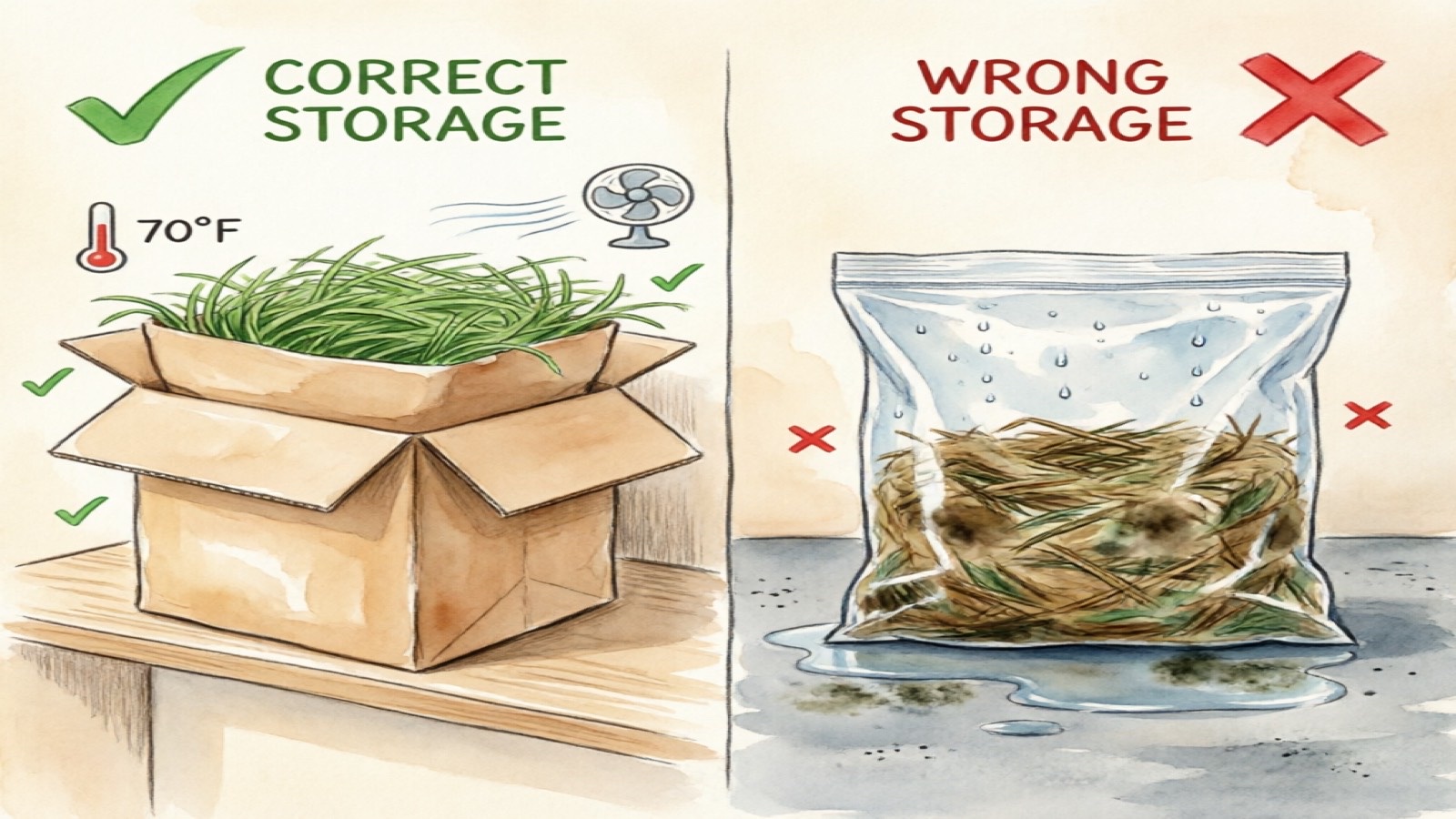
Proper chinchilla hay storage and handling directly affects how much your pet actually eats. Hay that sits in a damp garage or sealed plastic bin can develop mold — and moldy hay poses a fatal respiratory risk to chinchillas. Following a consistent chinchilla hay storage routine prevents waste and keeps every handful fresh.
 ### Step 1: Store in a Cool, Dry Place
Keep chinchilla hay below 75°F in a well-ventilated area. Use breathable containers like cardboard boxes or paper bags.
Never store hay in airtight plastic bins — trapped moisture promotes rapid mold growth. Place containers on a shelf or pallet, never directly on concrete floors which wick moisture upward.
Step 2: Inspect Hay Before Each Feeding
Run a quick three-point check every time you refill the rack. Smell the hay — fresh hay has a sweet, grassy scent while stale hay smells earthy or odorless and moldy hay smells musty or sour.
Check the color — fresh hay is green to light green. Brown or yellow hay is past its prime. Dark spots indicate mold and mean the entire batch should be discarded immediately.
Feel the texture — dry and crisp strands are good. Damp or limp hay goes straight to the trash.
Step 3: Manage Hay Inside the Cage
Refill the rack daily rather than dumping large amounts at once. Remove soiled or wet hay each time you top up.
A wall-mounted chinchilla hay rack keeps hay off the floor and away from urine. Position the rack opposite the water bottle to encourage natural foraging movement across the cage.
Your chinchilla hay rack setup depends on your chinchilla cage design. Multi-level cages benefit from one rack per level.
Step 4: Know the Shelf Life
Properly stored chinchilla hay — Timothy and orchard grass hay lasts six to twelve months from harvest. Oat hay has a shorter shelf life of roughly six months because the seed heads go stale faster. Alfalfa also lasts about six months before nutritional quality degrades.
Check the bag for a harvest or pack date when available. Buying hay in quantities your chinchilla can finish within two to three months is the safest approach.
Chinchilla Hay Do’s and Don’ts
** Safe Feeding Practices**
- Offer hay free choice 24/7 — Hay should be the main component of a chinchilla’s diet, available at all times. (VCA Animal Hospitals)
- Use Timothy or orchard grass as the staple — Low-calcium grass hays provide the fiber and dental wear chinchillas need. (Merck Veterinary Manual)
- Add wafer-cut Timothy for dental health — Dense compressed fiber forces harder chewing, grinding down open-rooted teeth that grow 2-3mm per week. (Animal House of Chicago)
- Limit pellets to 1-2 tablespoons per day — Pellets supplement hay but never replace it. (VCA Animal Hospitals)
- Store hay in a cool, dry, ventilated place — Use breathable containers, never airtight plastic. (Merck Veterinary Manual)
- Inspect hay before every feeding — Check smell, color, and texture. Discard anything musty, brown, or damp.
** Dangerous Feeding Mistakes**
- Feeding alfalfa to adult chinchillas — Alfalfa contains 3-4x the calcium of Timothy and causes bladder stones (urolithiasis) requiring surgery. (Merck Veterinary Manual)
- Restricting hay access — Chinchillas need unlimited hay for digestion and dental wear. Never limit hay to control weight.
- Using moldy or damp hay — Mold spores cause fatal respiratory infections like Histoplasmosis. Chinchillas are obligate nasal breathers and cannot filter spores. (VCA Animal Hospitals)
- Offering seeds, nuts, or grains — These upset the digestive system and provide excess fat. (VCA Animal Hospitals)
- Switching hay types suddenly — Diet changes must be done slowly over several days to prevent GI problems. (VCA Animal Hospitals)
- Storing hay in airtight plastic bins — Trapped moisture promotes rapid mold growth. Use breathable cardboard or paper containers.
Frequently Asked Questions
What is the best hay for chinchillas?
Timothy hay, specifically second cut, is the best hay for chinchillas. It provides roughly 32% fiber with low calcium between 0.2% and 0.4%, which is the ideal nutritional profile for adult chinchillas.
Oxbow Western Timothy is the most vet-recommended brand with consistent quality and widespread availability.
Second cut Timothy balances dental wear from coarse fiber with palatability from leafy portions. First cut Timothy can be mixed in for extra tooth grinding, but second cut should always form the base of the diet.
Can chinchillas eat alfalfa hay?
Alfalfa hay is safe only for chinchillas under six months old. It contains 1.2% to 1.5% calcium, which growing kits need for bone development.
Adult chinchillas cannot excrete excess calcium. The mineral builds up in the bladder and forms stones called urolithiasis. These stones often require surgical removal and can be fatal if untreated.
Transition your kit from alfalfa to Timothy hay gradually over two weeks starting at five to six months of age. Mix increasing amounts of Timothy into the alfalfa each day until the transition is complete.
How much hay should a chinchilla eat daily?
Chinchillas should have unlimited access to the best chinchilla hay 24 hours a day, seven days a week. Hay makes up approximately 80% of their total diet. An adult chinchilla typically consumes one to two tablespoons of pellets plus as much hay as they want daily.
Never restrict hay access to control weight or reduce waste. Chinchillas self-regulate hay consumption. If your chinchilla is not eating hay, that is a medical emergency requiring immediate veterinary attention.
Is orchard grass OK for chinchillas?
Orchard grass chinchilla hay is completely safe and offers nearly identical nutritional value to Timothy. The main difference is texture — orchard grass is sweeter and softer than Timothy, which makes it appealing to picky eaters.
Orchard grass chinchilla diets work as a full Timothy replacement or as a rotation hay. Some owners feed Timothy during the week and offer orchard grass on weekends to add variety without compromising nutrition.
How do I know if chinchilla hay is fresh?
Fresh chinchilla hay has three clear indicators. It smells sweet and grassy, similar to a freshly mowed lawn.
It appears green to light green in color with visible long strands. It feels dry and crisp to the touch.
Discard any hay that smells musty or sour, looks brown or dark, feels damp or limp, or shows visible mold spots. Moldy hay releases spores that cause fatal respiratory infections in chinchillas. When in doubt, throw it out — the risk is not worth a few dollars of saved chinchilla hay.