Introduction
Chinchillas have one of the most sensitive digestive systems of any common small pet. Choosing the best chinchilla treats matters because the wrong treat — too much sugar, dairy, or fat — can cause diarrhea, bloating, or even fatal GI stasis. Yet a search for chinchilla treats returns product listings with yogurt drops, fruit mixes, and sugary snacks that experienced owners consider dangerous.
The problem runs deeper than individual products. This contradiction is the most confusing thing for new owners.
Major retailers sell fruit-based chinchilla treats that the chinchilla community warns against. One well-known pet charity even suggests “dried fruit” as a safe option — a claim that contradicts what most breeders and experienced owners advise.
Treats are supplements to a chinchilla’s staple best chinchilla food, not a replacement for pellets and hay. The right chinchilla treat strengthens the bond between you and your pet while providing mental enrichment. The wrong chinchilla treat can land your chinchilla at the emergency vet.
This guide evaluates eight chinchilla treats across five safety-vetted categories. Each product is assessed through a community safety consensus lens — with honest warnings about controversial ingredients, recommended portion limits, and a clear hierarchy of what is safe versus what to avoid entirely
Chinchilla Treat Safety — What You Must Know First
Chinchilla treats are small supplemental foods given to reward, bond with, or enrich a chinchilla’s diet. Unlike treats for dogs or cats, the best chinchilla treats must be extremely low in sugar, fat, and moisture to avoid disrupting their sensitive hindgut fermentation digestive system. (PMC10893296: Chinchillas are hindgut-fermenting herbivores that rely on their cecum to house specialized bacteria for breaking down dense plant fiber. High-sugar treats disrupt this fermentation, leading to fatal GI stasis.)
Warning: CRITICAL SAFETY RULE: Limit ALL treats to 1-2 small pieces per day maximum. Chinchillas cannot process sugar, dairy, fat, or excess moisture. Too many treats causes GI stasis — a potentially fatal condition where the digestive system shuts down.
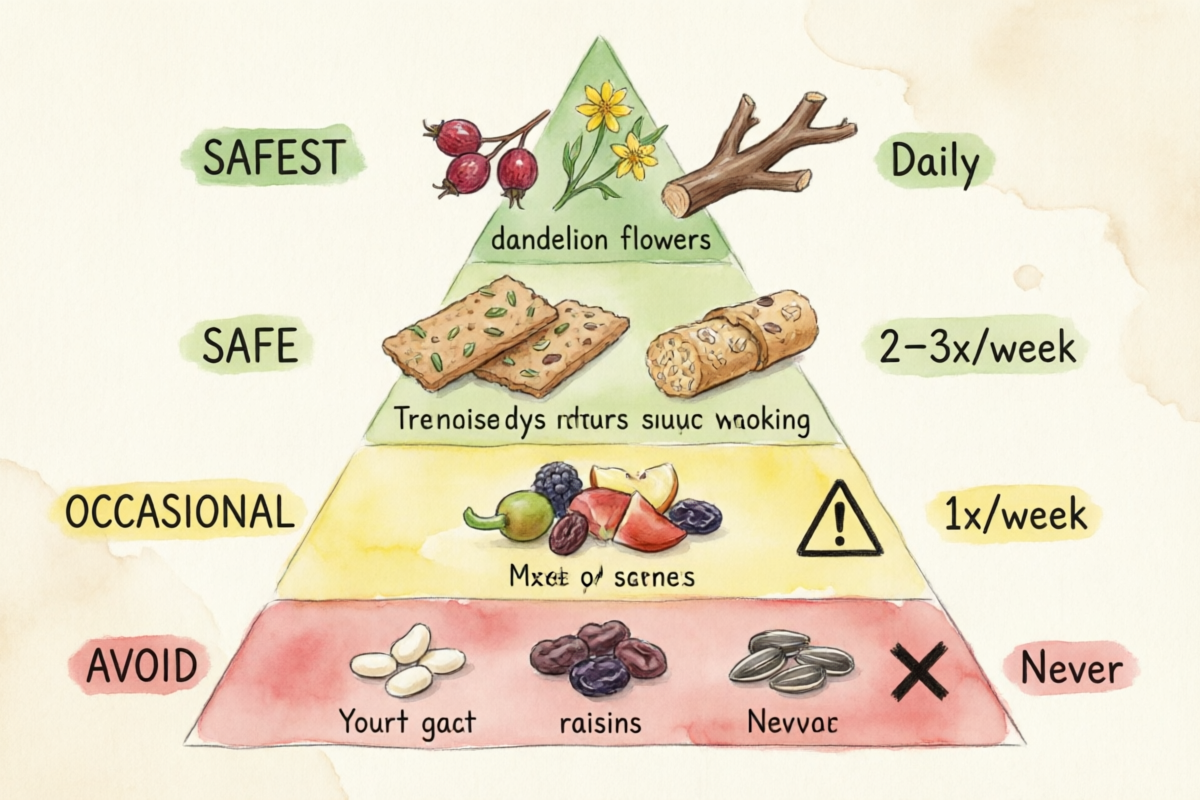
Treat Safety Hierarchy
This hierarchy is based on community consensus from experienced owners and breeders. It categorizes treats from safest to most dangerous.
The SAFEST tier includes natural plant-based chinchilla treats that chinchillas would encounter in their native Andean habitat. The SAFE tier includes processed but acceptable options. The OCCASIONAL tier includes formulated treats designed specifically for chinchillas but with ingredients that require moderation. The AVOID tier contains items commonly sold in pet stores that should never be given to a chinchilla under any circumstances
| Tier | Safety Level | Examples | Frequency |
|---|---|---|---|
| SAFEST | Dried rose hips, dried flowers, apple wood | Rose hips, dandelion, calendula | 1-3 pieces daily |
| SAFE | Timothy hay biscuits, rolled oats | Hay biscuits, plain oats | 1 piece daily |
| OCCASIONAL | Chinchilla-specific formulated treats | Vitakraft Cocktail, Dandelion Drops | 1-2 pieces, 2-3x/week |
| AVOID | Yogurt drops, fresh or dried fruit, seeds, nuts | Any yogurt drop, raisins, sunflower seeds | NEVER |
What the “Experts” Get Wrong
One major retailer’s top-rated chinchilla treat contains dried cranberry — fruit that many owners avoid entirely. A well-known UK animal welfare charity recommends “dried fruit and root vegetables” as treats, which directly conflicts with the community consensus against fruit.
Several products labeled “for chinchillas” contain ingredients that vets have warned against. The Vitakraft Cocktail treat, reviewed below, has raisins and puffed wheat — ingredients that multiple veterinarians have flagged as problematic for chinchilla digestion.
Understanding treat safety matters because GI stasis can develop quickly. The condition causes the digestive tract to slow down or stop entirely, and it is one of the leading causes of death in pet chinchillas. Prevention through proper diet is far easier than treatment.
Understanding these conflicts helps you make informed choices. Too many new owners feed unsafe treats simply because the packaging said “for chinchillas.” Your chinchilla diet should consist primarily of pellets and hay. Treat limits are part of your daily chinchilla care routine and should never be skipped.
Healthy chinchilla treats follow a simple rule: if it contains sugar, dairy, fat, or moisture, it is not safe for daily feeding. The eight products below all pass this basic safety test, though some require more moderation than others.
How to Introduce Chinchilla Treats Safely
Introducing treats to a new chinchilla requires a gradual approach. Chinchillas have sensitive digestive systems adapted to a sparse, fibrous wild diet, and sudden dietary changes can trigger GI stasis.
Step 1: Start with the Safest Option
Begin with dried rose hips — the community gold standard for chinchilla treats and the one treat universally considered safe. Break one rose hip in half and offer a small piece.
Step 2: Wait 24 Hours and Monitor Droppings
Check your chinchilla’s droppings for 24 hours after introducing any new chinchilla treats. Look for changes in consistency (soft, wet, or misshapen), frequency (fewer droppings), or size. (VIN: “A common cause for gastrointestinal stasis is lack of fiber in the diet.”)
Step 3: Introduce One Treat at a Time
When introducing new best chinchilla treats, never offer multiple new types simultaneously. If your chinchilla has a reaction, you need to know exactly which treat caused it. Wait at least 48 hours between introducing different treat types.
Step 4: Establish a Treat Schedule
Once you have identified 2-3 safe chinchilla treats your chinchilla enjoys, create a fixed schedule. Offer treats at the same time each day — ideally during bonding sessions — and stick to the 1-2 piece daily maximum. (VCA Animal Hospitals: GI stasis and bloat are common conditions in chinchillas directly linked to improper diet.)
Step 5: Discontinue Immediately If Problems Occur
If droppings become soft, wet, or less frequent, stop all chinchilla treats immediately and return to hay and pellets only. If normal digestion does not resume within 12-24 hours, contact an exotic pet veterinarian. (PetMD: Untreated GI stasis can become fatal within hours or days.)
Quick Comparison — All 8 Chinchilla Treats
| # | Product | Price | Safety Tier | Best For |
|---|---|---|---|---|
| 1 | Vitakraft Cocktail Mixed Fruit | $12.62 | OCCASIONAL Warning: | Top Pick (controversial) |
| 2 | Exotic Nutrition Rose Hips | $8.99 | SAFEST | Community #1 |
| 3 | Exotic Nutrition Dandelion Delicacy | $12.99 | SAFEST | Best Flower |
| 4 | Exotic Nutrition Flower Fusion | $7.99 | SAFEST | Premium Blend |
| 5 | Vitakraft Dandelion Drops 2-Pack | $19.99 | OCCASIONAL | Best Drops |
| 6 | Kaytee Timothy Biscuits, Timothy Hay Bunny Treats for Rabbits, 10 Oz | $7.95 | SAFE | Editor’s pick |
| 7 | Exotic Nutrition Herbivore 6-Pack | $12.99 | SAFEST | Best Sampler |
| 8 | Bojafa Apple Sticks | $8.99 | SAFEST | Best Dental |
The chinchilla treats hub-spoke cluster connects to six species: hamster treats, ferret treats, guinea pig treats, rabbit treats, hedgehog treats, and now chinchilla treats. This article completes the cross-species chinchilla treats cluster — providing a comprehensive resource for small pet owners who keep multiple species.
Many products — especially Kaytee Timothy Biscuits — appear across multiple guides because they are safe for several small animal species.
Best Chinchilla Treats — Rose Hips and Chinchilla-Specific
Warning: Vitakraft Cocktail Controversy: This product carries strong ratings, BUT multiple negative reviews come from owners whose vets advised against feeding it. Contains raisins, puffed wheat, and dried mountain ash berries. We include it because it is the most purchased chinchilla-specific treat, but recommend using it sparingly — one to two pieces maximum, two to three times per week.
1. Vitakraft Cocktail Mixed Fruit Chinchilla Treat — $12.62 (OCCASIONAL Warning:)
The Vitakraft Cocktail is the most purchased chinchilla-specific treat available. Owners report their chinchillas “love this mix” and hide pieces in the food bowl for foraging enrichment. The variety of shapes and textures keeps chinchillas engaged during bonding sessions.
However, this treat sits in the OCCASIONAL safety tier for good reason. It contains raisins, puffed wheat, puffed rice, and dehydrated potato — ingredients that veterinarians have flagged as problematic.
A negative reviewer stated their vet confirmed these ingredients are “high in sugar” and contribute to gastrointestinal issues. Another owner reported their vet said this product was “not for chinchillas.”
What we like: Widely used chinchilla-formulated treat with strong owner engagement. Variety mix provides foraging enrichment when scattered in food. Good bonding tool when used sparingly. Under $13 for a 13.5 oz bag, this is the most engaging chinchilla treat for bonding purposes.
What could be better: Contains raisins (high sugar), puffed wheat (gas risk), and dehydrated potato. Multiple vet warnings in negative reviews. Community debate about safety is genuine and well-documented.
Check Vitakraft Cocktail price →
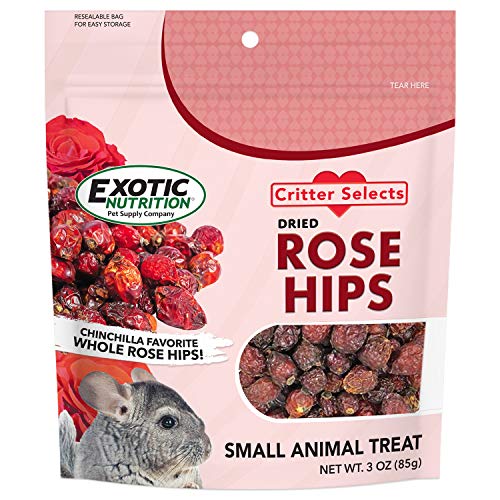
2. Exotic Nutrition Dried Rose Hips — $8.99 (SAFEST )
Among all commercially available chinchilla treats, dried rose hips stand alone as the unanimous community top pick.
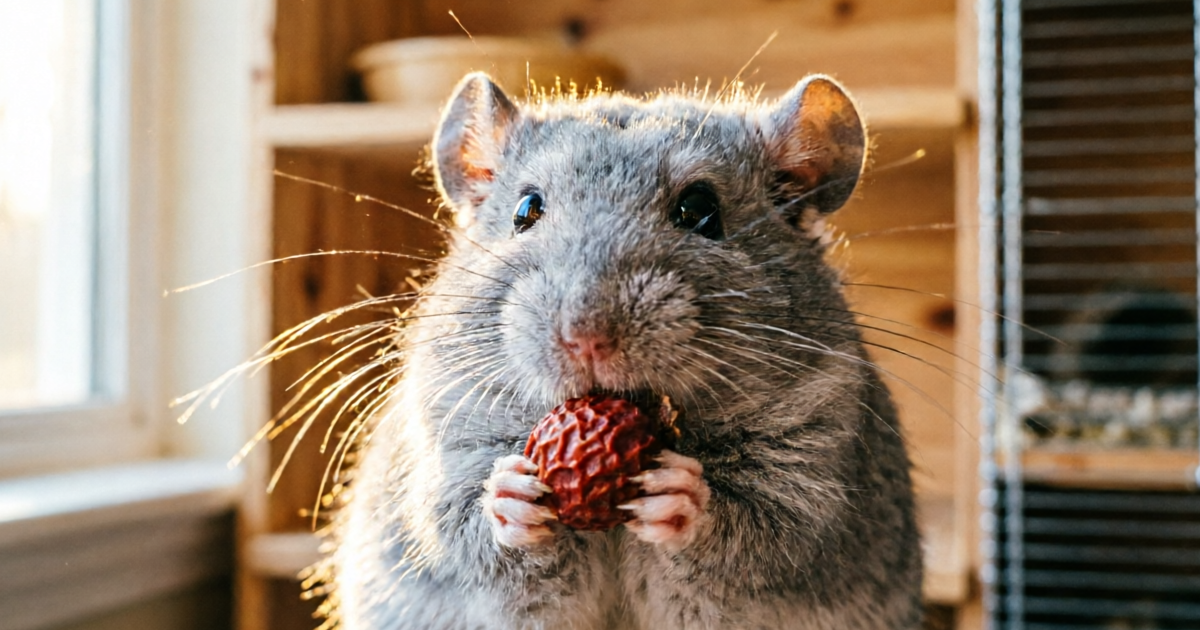
Dried rose hips for chinchillas are the community gold standard. An owner described their chinchilla as “absolutely crazy about these” and praised the consistent quality. Rose hips are natural sources of vitamin C and fiber, with zero added sugar — exactly what a chinchilla’s digestive system needs. (Google AI Overview: “You can safely feed your chinchilla up to 1 to 3 whole dried rosehips or 1 teaspoon of dried rosehip shells per day.” — Small Pet Select)
The main drawback is quality inconsistency across batches. A recent reviewer reported that rose hips in 2025 were “too gummy or hard as rocks and inedible.”
Another owner found live bugs in the product package — a serious quality control failure. Some chinchillas eat only the inside of the hip and leave the outer shell
What we like: Number one community-recommended treat with zero safety controversy. Natural vitamin C and fiber with no additives. Up to three whole hips per day is considered safe. Chinchillas either love them or learn to love them quickly.
What could be better: Quality consistency issues reported in 2025 batches — some too hard, some too gummy. Live bugs found in one sealed package. Some chinchillas eat only the inside and waste the shell.
Check Exotic Nutrition Rose Hips price →
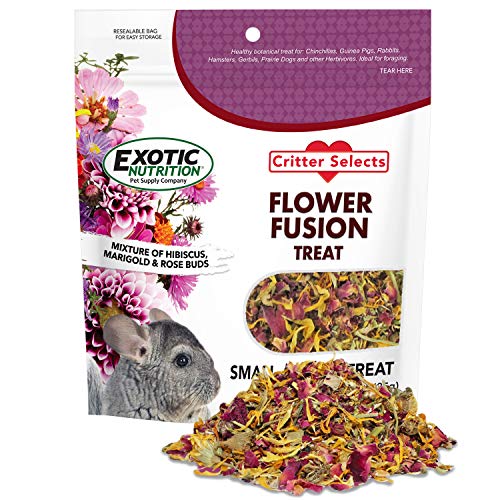
4. Exotic Nutrition Flower Fusion Treat — $7.99 (SAFEST )
The Flower Fusion is a premium blend of multiple flower types designed for herbivore small animals. One chinchilla owner shared that their pet “loves it so much” and munches the flowers instantly when mixed into pellets. The variety of flower types provides natural enrichment and mental stimulation.
The bag is a modest 0.85 ounces — enough for a week of treat rotation. A reviewer reported receiving carpet beetles after a flower fusion order. This pest issue persisted in the room even after removing the product. Another buyer found their bag underweight, and the product is nonreturnable
What we like: Premium multi-flower blend with hibiscus, calendula, and rose petals at an affordable $7.99. Small bag matches a chinchilla’s modest treat needs. Mix with rose hips for enrichment variety. Natural dried ingredients with no artificial additives or preservatives
What could be better: Very small bag for the price — 0.85 ounces, though priced lower than the previous version. Carpet beetles reported in one order. Some bags arrive underweight. Nonreturnable product makes quality issues frustrating.
Check Exotic Nutrition Flower Fusion price →
5. Vitakraft Dandelion Drops 2-Pack — $19.99 (OCCASIONAL)
The Vitakraft Dandelion Drops are a chinchilla-formulated drop-style treat. An owner said their chinchilla is “obsessed with these” and gets visibly upset when the supply runs out. The dandelion base is a safe herb, and the 2-pack format provides better per-unit value than buying single packs.
Quality inconsistency is the main problem with this treat.
Multiple recent reviews report batches with a “potent smell” that chinchillas refuse. The drops can melt during shipping in warm weather. The product is nonrefundable, so a bad batch means a total loss.
What we like: Chinchilla-specific formulation with dandelion as the base ingredient. Many chinchillas run to their owners when they hear the packaging crinkle. 2-pack value compared to single-pack pricing. Good bonding tool for picky chinchillas who recognize the packaging sound
What could be better: Recent batches show quality decline — strong smell rejected by chinchillas. Melts in heat during shipping. Nonrefundable policy means no recourse for defective batches. Priced higher per treat than other options.
Check Vitakraft Dandelion Drops price →
Best Chinchilla Treats — Dried Flowers, Hay Biscuits and Wood Chews
3. Exotic Nutrition Dandelion Delicacy — $12.99 (SAFEST )
The Dandelion Delicacy is a widely reviewed dried flower treat. A reviewer praised the “nice size with whole flowers” that stand out from competitors who sell crumbled pieces. Whole dandelion flowers and leaves provide natural high-fiber forage that mirrors what chinchillas would encounter in the wild.
Bag size inconsistency is a recurring complaint. A buyer reported their second order was “super small” compared to the first.
Another reviewer noted the bag was “mostly timothy hay” rather than flowers. Pesticide-free status remains unconfirmed
What we like: Widely used dried flower treat with strong track record. Whole flowers and leaves provide authentic foraging experience. Large bag lasts over a month with moderate use. Can be scattered for enrichment or mixed with pellets.
What could be better: Bag size inconsistent between orders. Some bags contain more timothy hay than actual flowers. Pesticide-free status is not clearly certified. Quality varies across production batches.
Check Exotic Nutrition Dandelion Delicacy price →
6. Kaytee Timothy Biscuits, Timothy Hay Bunny Treats for Rabbits, 10 Oz — $7.95 (SAFE )
The Kaytee Timothy Biscuits are a widely used small animal treat with strong community validation. An owner called them “bunny crack” because their pets come running when they hear the bag shake — the same enthusiasm applies to chinchillas. Timothy hay is the foundation of a chinchilla’s diet, so a hay-based biscuit is one of the safest treat formats available.
These biscuits contain a light apple flavoring — minimal but present. Some guinea pig owners have raised health concerns, though these do not directly apply to chinchillas. Shorted bags have been reported where the received count does not match the order quantity. Timothy hay biscuits also support dental health — chinchillas require constant chewing to wear down their open-rooted teeth. (PMC7172800 (Reavill 2014, 11 citations): “Chinchillas have continuously growing open-rooted (hypsodontic) teeth.” PetMD: If dental pain causes a chinchilla to stop eating, GI stasis can develop and become fatal within hours.)
What we like: Widely used small animal treat with strong community validation. Timothy hay-based — mirrors chinchilla’s natural diet perfectly. Supports dental health through required chewing. Cheapest safe option at under nine dollars.
What could be better: Light apple flavoring present — not 100% plain timothy. Some owners report shorted bag counts. Not chinchilla-specific — designed for all small animals. A few chinchillas may not show interest at first — try crumbling a biscuit over pellets to encourage sampling
Check Kaytee Timothy Biscuits, Timothy Hay Bunny Treats for Rabbits, 10 Oz price →
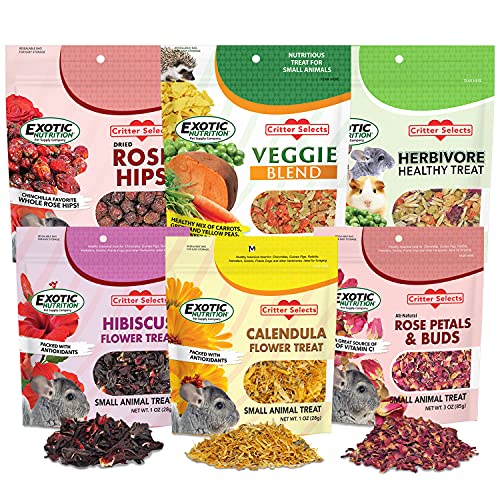
7. Exotic Nutrition Herbivore Treats 6-Pack — $12.99 (SAFEST )
The Herbivore 6-Pack is a variety sampler with six different treat types. An owner called it a “great purchase to see what our guineas would like” — the same discovery benefit applies to new chinchilla owners. Rose petals are consistently the crowd favorite across all six varieties.
Pest contamination is the most serious concern. A reviewer found live weevils in the sealed flower packages.
Another discovered mealworms in the herbivore pack — an insect that should never appear in a chinchilla treat. Not all six bags are equally safe
What we like: Six different treat types in one purchase — ideal for discovering your chinchilla’s preferences. Rose petals are the standout favorite. Good value compared to buying individual full-size bags. Great for mixing with pellets to add daily treat variety without overfeeding
What could be better: Weevils and mealworms reported in sealed packages — serious quality control issue. Not all six treat types are equally safe for chinchillas. Some chinchillas only like one or two varieties. Pest risk requires inspecting every bag before serving.
Check Exotic Nutrition Herbivore 6-Pack price →
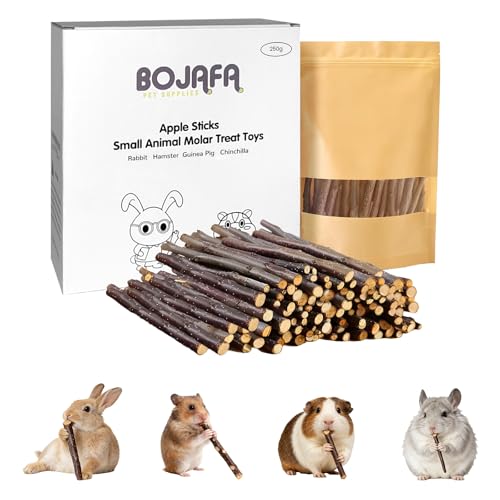
8. Bojafa Apple Sticks — $8.99 (SAFEST )
The Bojafa Apple Sticks serve a dual purpose as both a treat and a dental wear tool. Apple wood is safe for chinchillas and provides the chewing action that keeps their continuously growing teeth in check. (Google AI Overview: “Chinchillas have open-rooted teeth that grow up to 7.5 cm per year. Constant, side-to-side grinding of coarse hay naturally wears their teeth down.” — PetMD) An owner praised them as their pet’s “favorite treat toy” that supports dental health after a professional filing procedure.
Recent quality issues have surfaced. A long-time buyer reported a “noticeable chemical smell” in recent batches. Another owner said their chinchilla stopped chewing them and “seemed to act lethargic for a few days” after the most recent order — a concerning signal that warrants caution.
Wood chews serve as both chinchilla toys and treats, making them the most practical option on this list.
What we like: Dual-purpose dental wear and bonding treat. Apple wood is safe and natural for chinchillas. 250-gram bag lasts months with moderate use. Chinchillas instinctively chew wood — high acceptance rate.
What could be better: Chemical smell reported in recent batches. An owner reported lethargy after chewing — discontinue if this occurs. Some chinchillas lose interest over time. Quality has declined according to repeat buyers. Always inspect new batches before offering to your chinchilla
Check Bojafa Apple Sticks price →
Unsafe Chinchilla Treats to Avoid
Warning: UNSAFE TREATS — DO NOT BUY:
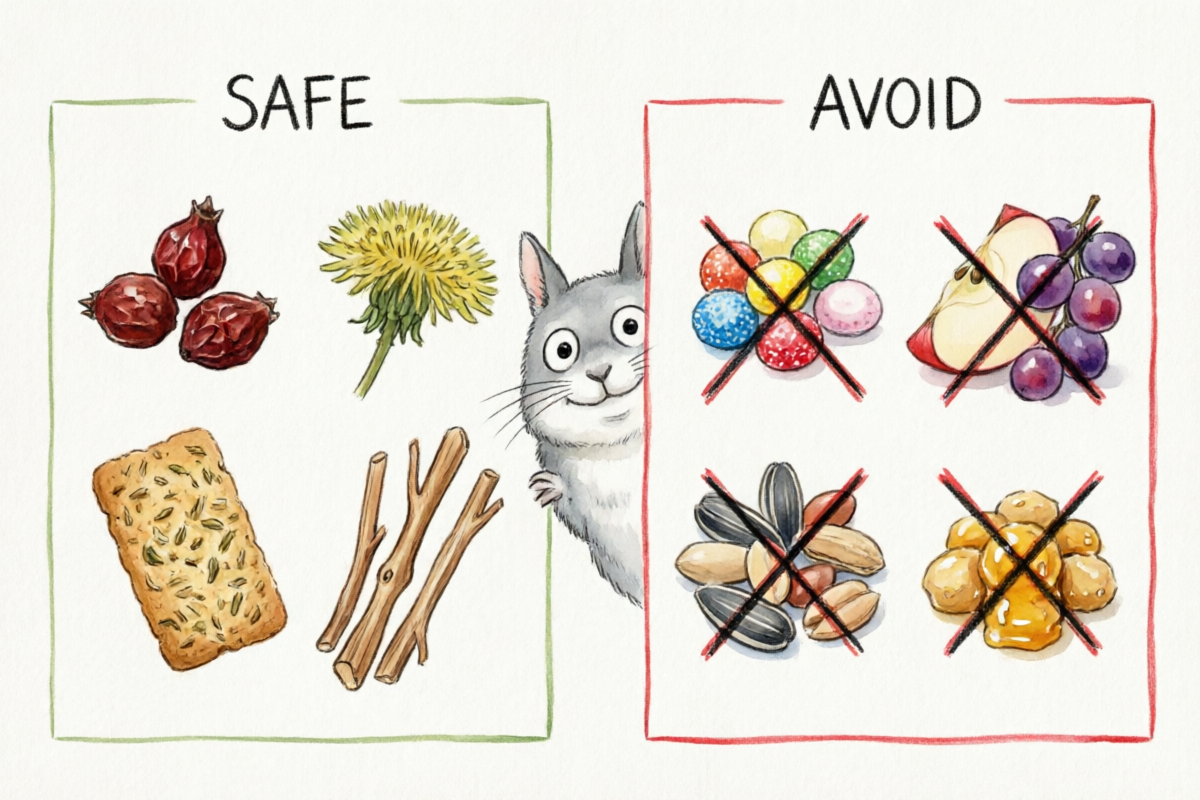
- Yogurt drops (any brand): Sugar plus dairy causes GI distress. Vet-confirmed unsafe.
- Fresh or dried fruit: Too much sugar and moisture. Community consensus: never feed fruit.
- Seed and nut mixes: High fat leads to fatty liver disease. Sunflower seeds and peanuts are dangerous.
- Honey-coated treats: Added sugar disrupts hindgut fermentation.
- Mixed small animal treat bags: Often contain raisins, banana chips, or yogurt pieces unsafe for chinchillas.
Many products marketed as safe chinchilla treats are actually repackaged small animal treats designed for hamsters or guinea pigs, which tolerate more sugar. Always read ingredient lists carefully before purchasing. If you see sugar, honey, dried fruit, or dairy anywhere in the first five ingredients, the product is not safe for chinchillas — regardless of what the packaging claims
DIY Chinchilla Treat Ideas
If you want to avoid commercial products entirely, several household options qualify as safe chinchilla treat ideas:
- Plain rolled oats — one teaspoon maximum, plain Quaker oats with no flavored packets
- Dried rose petals from your garden — pesticide-free only, air-dried completely
- Shredded wheat — half a bite-size piece, plain with no frosting or coating
- Plain Cheerios — original variety only, no flavored or honey-coated versions
These homemade chinchilla treats are free from processing additives and let you control exactly what your chinchilla consumes. Start with the smallest possible portion when introducing any new treat — even safe ones — and monitor your chinchilla’s droppings for 24 hours for any changes in consistency or frequency.
If droppings become soft, wet, or less frequent, discontinue the new treat immediately and return to hay and pellets only until digestion normalizes. This gradual introduction approach applies to commercial treats as well.
Chinchilla Treat Do’s and Don’ts
** Safe Feeding Practices**
- Limit all chinchilla treats to 1-2 small pieces per day — Treats must never exceed 5% of total daily food intake. Hay and pellets must remain at least 95%. (VCA Animal Hospitals: GI stasis and bloat are common diet-related conditions.)
- Start with dried rose hips — The safest and most universally recommended of all chinchilla treats. Up to 3 whole hips per day is considered safe. (Little Chintas)
- Introduce one new treat at a time — Wait 48 hours between different treat types to identify any adverse reactions.
- Monitor droppings for 24 hours after any new chinchilla treats — Soft, wet, or less frequent droppings signal digestive distress — discontinue the treat immediately.
- Provide apple wood sticks for dental wear — Chinchilla teeth grow up to 7.5 cm per year and require constant chewing to prevent overgrowth. (Google AI Overview; PetMD)
- Maintain 75%+ roughage (hay) in daily diet — Hindgut fermentation requires constant fiber. Low fiber disrupts cecal bacteria and triggers stasis. (PMC10893296)
- Read ingredient lists carefully — Many commercial chinchilla treats hide sugar in ingredient lists. If sugar, honey, dried fruit, or dairy appear in the first five ingredients, the product is not safe regardless of packaging claims.
- Inspect packaged treats for pests — Check sealed bags for weevils, mealworms, or other contamination before serving.
** Dangerous Feeding Mistakes**
- Feeding yogurt drops — Among the most dangerous commercial chinchilla treats. Sugar plus dairy overwhelms hindgut fermentation, causing digestive shutdown and potentially fatal GI stasis. (Google AI Overview)
- Giving fresh or dried fruit — A common beginner mistake when selecting the best chinchilla treats — Too much sugar and moisture disrupts the cecal pH and bacterial balance. Most experienced owners avoid fruit entirely.
- Feeding seed and nut mixes — High fat leads to fatty liver disease. Sunflower seeds and peanuts are particularly dangerous.
- Offering chinchilla treats “free-choice” — Chinchillas will overeat sugary treats and self-select a diet deficient in fiber, leading to GI stasis within hours.
- Making sudden dietary changes — Rapid introduction of new treats disrupts cecal microorganism populations. (Chicago Exotics Animal Hospital)
- Trusting packaging that says “for chinchillas” — Many products labeled as chinchilla treats contain raisins, fruit, or yogurt pieces that vets have flagged as unsafe.
- Feeding honey-coated or sweetened treats — Added sugar directly disrupts hindgut fermentation and can cause fatal bloat. (chinchilladiary.com: “Bloat from fermentable carbohydrates.”)
- Ignoring changes in droppings after treat introduction — GI stasis can become fatal within hours or days without veterinary treatment. (PetMD)