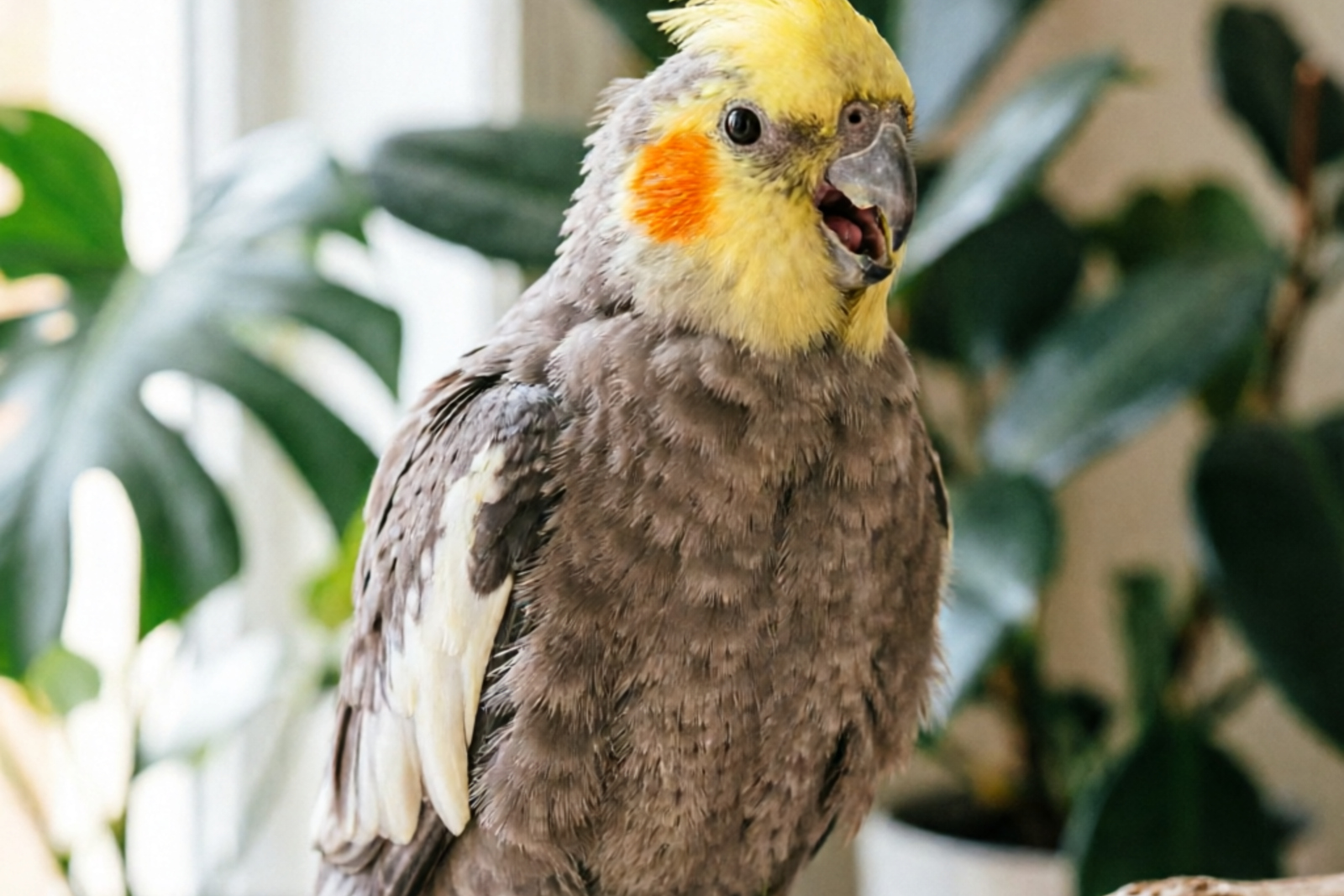
If your cockatiel suddenly lets out a sharp, snake-like hiss, it can feel alarming — especially if you’re a new bird owner. But before you panic, know this: hissing is one of the most common and natural ways cockatiels communicate discomfort. It doesn’t mean your bird hates you. In fact, it means they’re telling you exactly how they feel.
Understanding why cockatiels hiss is one of the first steps in building a strong, trusting relationship with your pet. These intelligent and sensitive birds have a rich vocabulary of body language and vocalizations, and hissing is one of their clearest signals. Once you learn to read the context — what was happening right before the hiss, what other body language accompanied it, and how your bird behaved afterward — you’ll be much better equipped to respond in a way that strengthens your bond.
In this guide, we’ll break down the 5 most common reasons your cockatiel hisses, what their body language is telling you, and the steps you should (and shouldn’t) take.
What Does It Mean When a Cockatiel Hisses?
A cockatiel hiss is a defensive vocalization — essentially your bird’s way of saying “please back off.” Unlike screaming, which is often attention-seeking, hissing is almost always a sign that your bird feels uncomfortable, scared, or protective of something.
Cockatiels in the wild use hissing to ward off predators and protect their territory. Your pet cockatiel retains this instinct, even in a safe home environment. The key is understanding what triggered the response so you can address the root cause rather than react to the symptom.
Hissing is often accompanied by other body language signals. A cockatiel hiss is rarely just a sound — it’s part of a larger communication package. A hissing cockatiel may flatten its crest against its head, puff up its feathers to appear larger, crouch low, or lean away from you. These combined signals give you a clearer picture of what your bird is experiencing.
For more on understanding cockatiel behavior, recognizing these patterns early helps you respond appropriately and build trust faster.
5 Reasons Your Cockatiel Is Hissing
Hagen Tropimix is a quality option worth considering for your setup.
1. Fear or Feeling Threatened
This is the most common reason cockatiels hiss. Sudden movements, approaching hands, loud noises, or unfamiliar objects can all trigger a fear response. When your cockatiel hisses from fear, it’s a clear sign they feel vulnerable.
Common triggers include:
- Reaching into the cage quickly
- A stranger approaching the bird
- Loud appliances (vacuum, blender)
- Sudden changes in lighting
When a cockatiel is scared, the hiss is usually accompanied by flattened crest feathers, wide eyes, and a crouched posture. The bird is essentially trying to make itself look smaller and less noticeable while simultaneously warning you to stay away.
What to do: Freeze, speak softly, and slowly back away. Don’t force interaction. Let your bird calm down on its own terms. Understanding why your cockatiel hisses in these moments helps you respond better next time.
2. Territorial Behavior
Cockatiels can be surprisingly territorial, especially around their cage, food bowl, or a favorite perch. This behavior often intensifies during breeding season (typically spring in the Northern Hemisphere).
A territorial hiss usually happens when you reach into the cage or near a prized possession. The bird may also lunge or bite if you ignore the warning. This is your cockatiel saying “this is my space.” Some birds are more territorial than others — males tend to be more territorial during breeding season, while females may defend nesting areas more fiercely.
Choosing the right cockatiel cage with adequate space and multiple entry points can help reduce territorial aggression. A cage that’s too small or has only one door makes your bird feel cornered when you reach in.
3. New Environment or Change
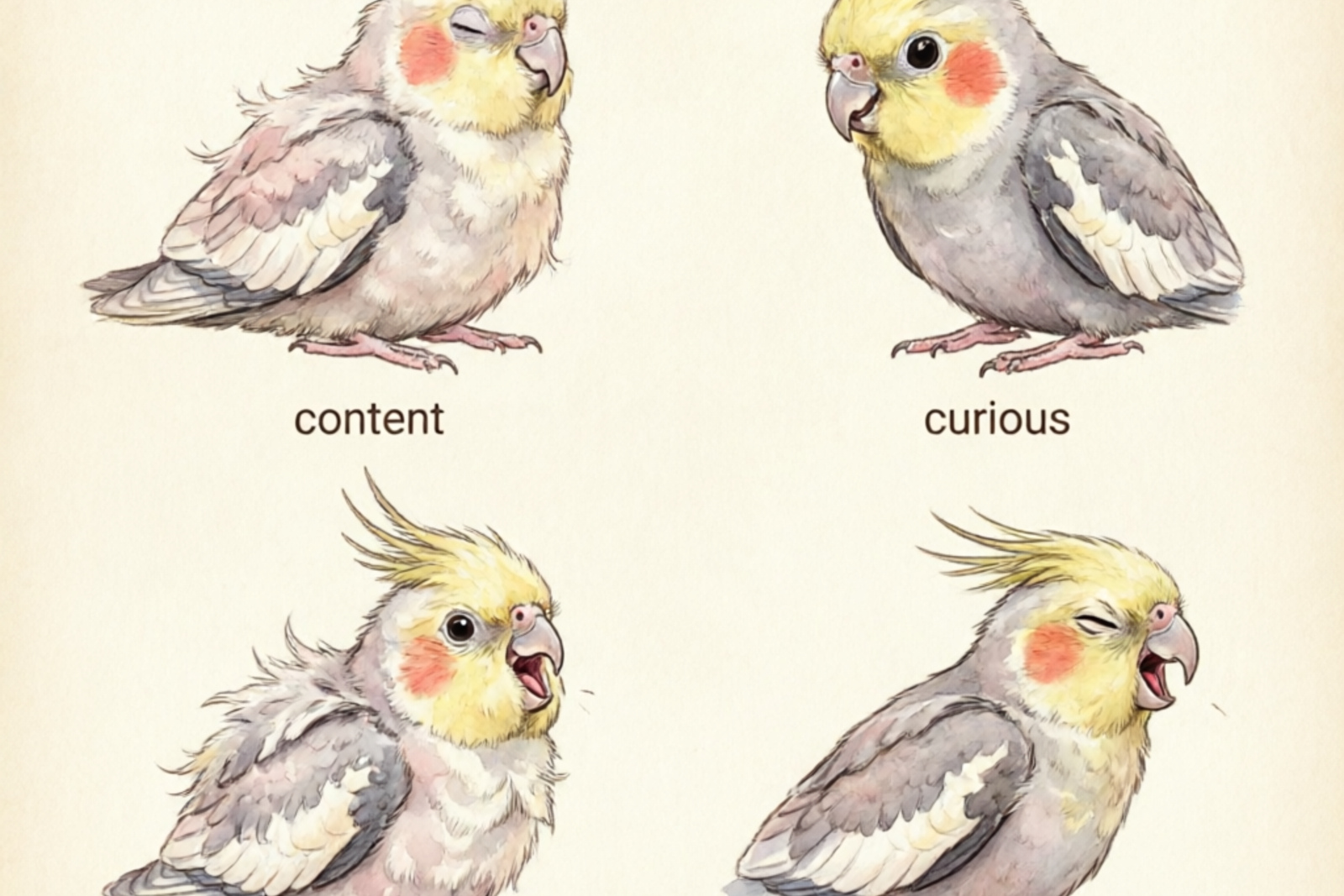
Cockatiels are creatures of habit, and any disruption to their routine can trigger hissing. A cockatiel hissing at a moved cage or new furniture is simply reacting to the unexpected. This is especially common in newly rehomed birds or after moving the cage to a new room.
Changes that may cause hissing:
- Moving to a new home (very common in the first 1-2 weeks)
- Rearranging the room or cage layout
- Introducing a new pet or family member
- Changing food or feeding schedule
- Even something as simple as replacing a favorite perch or toy with a new one
A cockatiel adjusting to a new environment may hiss every time you approach for the first few days. This is completely normal and usually resolves within 1-2 weeks as the bird learns its new routine and begins to trust its surroundings. Young birds and hand-reared cockatiels tend to adapt faster than older birds or those rehomed multiple times.
What to do: Maintain a consistent routine. Sit near the cage and talk softly without trying to handle the bird. Offer treats through the bars. Let them come to you.
4. Protecting Personal Space
Sometimes your cockatiel simply doesn’t want to be touched or handled. Just like humans, birds have personal boundaries, and hissing is their clearest way of communicating “not right now.”
This type of hissing is usually short and directed at a specific action — like when you reach toward them or try to pick them up. The bird may otherwise seem relaxed with a normal crest position. A cockatiel hissing to protect its personal space is simply setting a boundary.
What to do: Respect the boundary. Withdraw your hand and try again later. Forcing interaction when your bird has clearly said “no” damages trust and can escalate to biting. Some cockatiels are more independent than others and simply prefer to observe from a distance rather than being handled constantly. Learning your individual bird’s personality and preferences is part of being a good owner.
5. Stress or Discomfort
Sometimes hissing is a sign of an underlying issue that needs attention. Chronic stress, poor sleep, illness, or environmental discomfort can all cause a cockatiel to become irritable and hiss more frequently. If your cockatiel’s hissing seems to increase without an obvious trigger, stress or illness may be the culprit.
Red flags that suggest stress or illness:
- Hissing that’s new or unusual for your bird
- Hissing combined with feather plucking
- Loss of appetite or changes in droppings
- Lethargy or sleeping more than usual
- Fluffed feathers for extended periods (not just during a hiss)
- Tail bobbing or difficulty breathing
- Discharge from the nares (nostrils) or eyes
Diet plays a bigger role in bird stress than many owners realize. A poor diet can lead to irritability and health problems. Make sure you’re offering a varied diet — and yes, cockatiels can safely eat apples as part of a balanced nutrition plan.
Cockatiel Hissing vs Other Sounds
Many owners find that Higgins Mayan Harvest works well for their pet’s needs.
Understanding the difference between a hiss and other common cockatiel vocalizations helps you respond appropriately:
| Sound | Description | Meaning | When It Happens | What to Do |
|---|---|---|---|---|
| Hiss | Sharp, sustained “ssss” | Fear, warning, discomfort | When approached, threatened, or startled | Stop, give space, identify the trigger |
| Scream | Loud, piercing call | Attention-seeking, alarm, excitement | When lonely, bored, or responding to loud sounds | Check for danger; if attention-seeking, ignore briefly |
| Chirp | Soft, melodic notes | Contentment, contact calling | Throughout the day when relaxed | Continue what you’re doing; bird is happy |
| Beak Clicking | Rapid clicking of the beak | Contentment, exploring, mild annoyance | While perching, grooming, or investigating | Usually no action needed; observe context |
| Growl | Low, rumbling sound | Strong displeasure, anger | When handled against their will | Put the bird down immediately |
Notice that hissing and growling are the two sounds that clearly signal “leave me alone.” Screaming and chirping, on the other hand, often mean the opposite — your bird wants interaction or is simply expressing itself.
What to Do When Your Cockatiel Hisses
For this purpose, Wild Harvest Advanced Nutrition is a popular choice among pet owners.
Follow these steps when your cockatiel hisses:
1. Stop immediately. Don’t continue reaching or talking loudly. Freeze your movement.
2. Give them space. Slowly step back or move your hand away. Let your bird calm down.
3. Read the full picture. Look at the crest, feathers, eyes, and posture. Is the crest flat (fear)? Crest raised and eyes pinning (aggression)? Fluffed and still (illness)?
4. Identify the trigger. Was there a sudden noise? A new object? Did you approach too quickly? Understanding what causes your cockatiel to hiss helps prevent future episodes.
5. Rebuild trust gradually. Once your bird has calmed down (usually 5-10 minutes), approach slowly with a treat. Let them choose to step up. Never force contact.
Don’ts:
- ❌ Don’t punish your bird for hissing — it’s a natural communication
- ❌ Don’t force interaction after a hiss — this teaches them that warning signals don’t work
- ❌ Don’t yell or make sudden movements — this escalates the fear response
- ❌ Don’t ignore chronic hissing — if it’s new or persistent, investigate underlying causes
Cockatiels that bob their heads are usually showing excitement or attention-seeking behavior — the opposite of a hiss. Learning to distinguish these signals helps you understand your bird’s emotional state much more accurately.
When to Worry: Signs Your Cockatiel Needs a Vet
Most hissing is normal cockatiel behavior. However, you should consult an avian vet if you notice your cockatiel hissing along with any of the following:
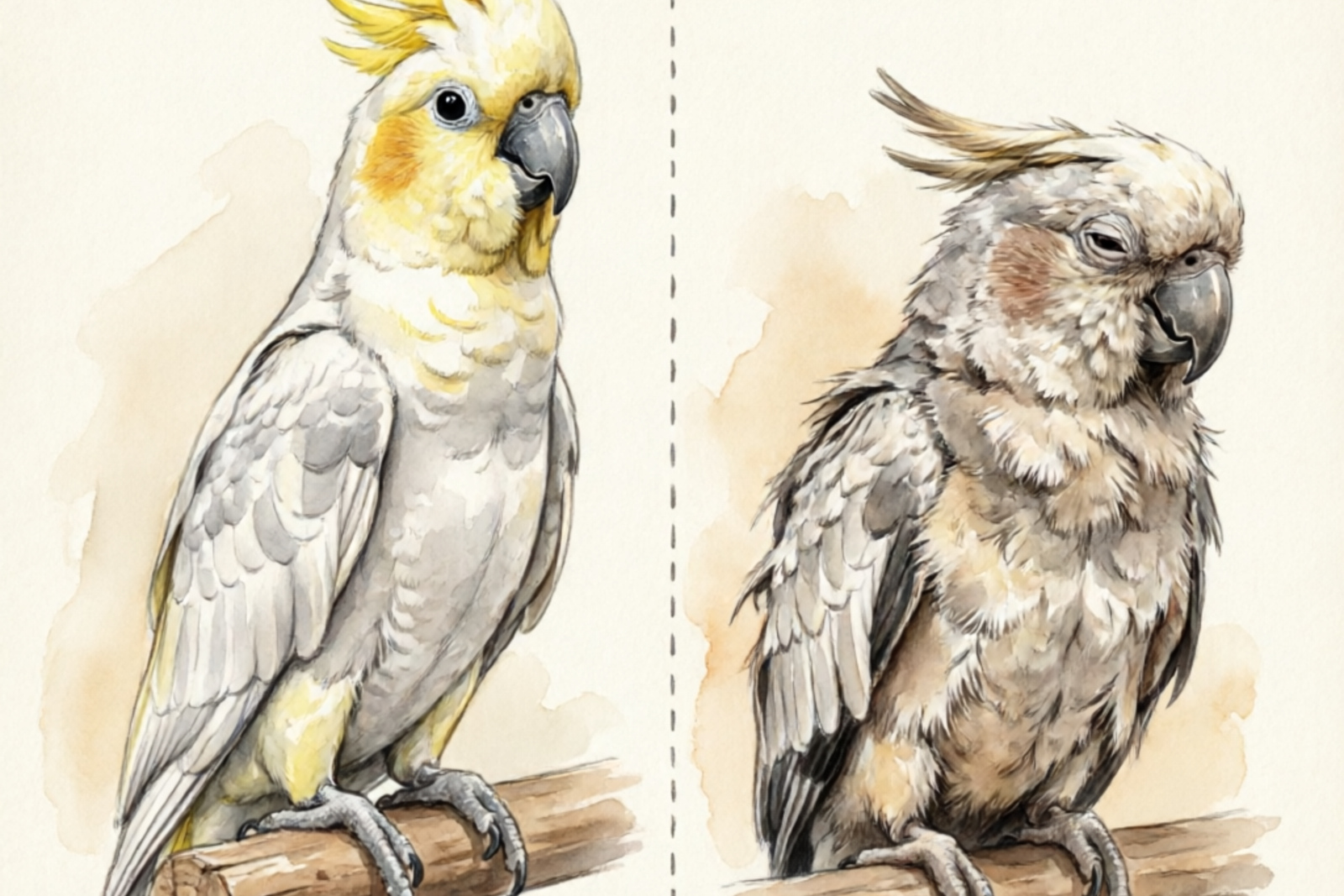
- Hissing + feather plucking — often a sign of stress, boredom, or skin parasites
- Hissing + lethargy — your bird sits puffed up at the bottom of the cage, sleeps excessively
- Hissing + loss of appetite — refusing favorite foods or not eating for more than 24 hours
- Hissing + changes in droppings — watery, discolored, or unusually small droppings
- Sudden onset in an adult bird — if your normally calm bird starts hissing at everything overnight
Birds hide illness instinctively, so by the time you notice your cockatiel hissing more than usual, the condition may already be advanced. Don’t wait — an avian vet visit is always better than waiting to see if it resolves.
Product Recommendations
Here are some products mentioned in this guide:
Frequently Asked Questions
Why does my cockatiel hiss at me when I approach the cage? This is almost always a fear or territorial response. Your bird may feel threatened by your approach, especially if you move quickly or reach directly toward them. Try approaching from the side rather than head-on, move slowly, and offer a treat to create a positive association.
Is cockatiel hissing a sign of aggression? Not usually. Hissing is primarily a defensive behavior — it means “I’m uncomfortable” rather than “I want to attack.” Aggression in cockatiels more often looks like lunging, biting, or feather-flaring with pinned eyes. That said, if you ignore a hiss, it can escalate to aggression.
Why does my cockatiel hiss at his toys? New toys can be scary! Cockatiels are naturally cautious about unfamiliar objects. Place the new toy near (but not inside) the cage for a few days so your bird can observe it. Gradually move it closer. Most cockatiels warm up to new toys and enrichment within a week.
How long does it take a new cockatiel to stop hissing? Most newly rehomed cockatiels stop hissing at their owner within 1-3 weeks, once they learn your routine and begin to trust you. Some nervous birds may take up to 6 weeks. Patience and consistency are key — don’t rush the bonding process. A cockatiel that hisses at first but gradually stops is simply learning that you’re safe.
Should I ignore my cockatiel when he hisses? Yes and no. You should respect the hiss by immediately stopping whatever triggered it — don’t ignore the message. But don’t give the bird excessive attention for hissing either, as some birds learn to use it manipulatively. Simply back off, wait a few minutes, and try a calmer approach.
Conclusion
Cockatiel hissing is a completely natural behavior that serves an important purpose — it’s your bird’s clearest way of telling you they’re uncomfortable. Rather than viewing it as a problem, treat it as valuable communication. By understanding the 5 common triggers (fear, territorial behavior, new environments, personal space, and stress), reading accompanying body language, and responding with patience, you’ll build a stronger bond with your bird.
The goal isn’t to stop your cockatiel from ever hissing — it’s to create an environment where they feel safe enough that they rarely need to. A cockatiel that never hisses may actually be suppressing fear, which isn’t healthy either. With time, consistency, and respect for their boundaries, most cockatiels become confident, affectionate companions that reserve their hisses for genuinely scary situations — which is exactly how nature intended.