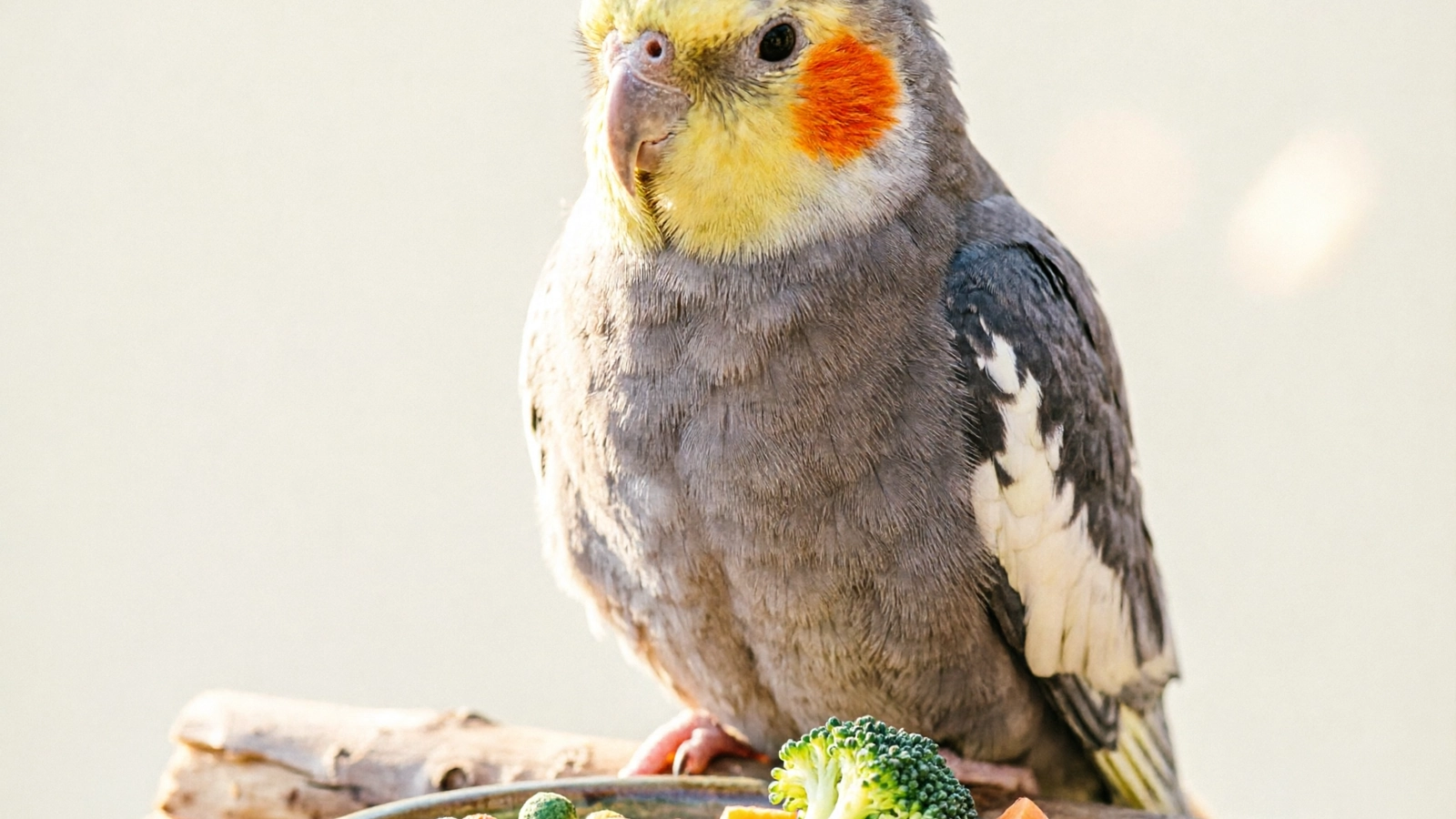
Cockatiels are the second most popular pet bird in America — but most owners are feeding them wrong. Seed-only diets lead to malnutrition, obesity, fatty liver disease, and shortened lifespans. The science from avian veterinarians is clear: a cockatiel’s ideal diet is 60-70% formulated pellets, 20-30% fresh vegetables and grains, and only 10% seeds as treats.
The pet store shelves tell a different story — they’re 90% seed mixes, which is confusing for new owners trying to find the best cockatiel food. I’ve spent years working with cockatiels, and the good news is that transitioning from seeds to pellets is completely doable with the right approach. We researched 10 of the highest-rated cockatiel foods across pellets, seed mixes, and specialty blends to help you build the perfect diet plan.
Below you’ll find real owner feedback, a pellet vs seed comparison table, a 6-week transition guide, ideal diet ratio chart, and FAQ answers sourced from avian veterinarians. Whether you’re bringing home a new baby bird or switching an adult off seeds, this guide has you covered. For everything beyond food, check our complete cockatiel care guide.
Quick Answer: Top 4 Picks
Out of dozens of products compared, these four represent the best cockatiel food options across every budget and need.
| Pick | Product | Price | Best For |
|---|---|---|---|
| Best Overall | Kaytee Forti-Diet Pro Health 5lb | $12.95 | Most reviewed cockatiel food — seed mix with probiotics + superfoods |
| Best Pellets | ZuPreem FruitBlend Medium 2lb | $15.29 | Most accepted pellet — fruit flavor wins over picky eaters |
| Best Premium | Harrison’s High Potency Maximum 1lb | $74.36 | USDA Organic, vet-developed — the gold standard in avian nutrition |
| Best Specialty | Lafeber’s Nutri-Berries 4lb | $19.95 | Berry shape encourages foraging — takes 2x longer to eat than pellets |
Cockatiel Pellets vs Seeds: What Vets Recommend
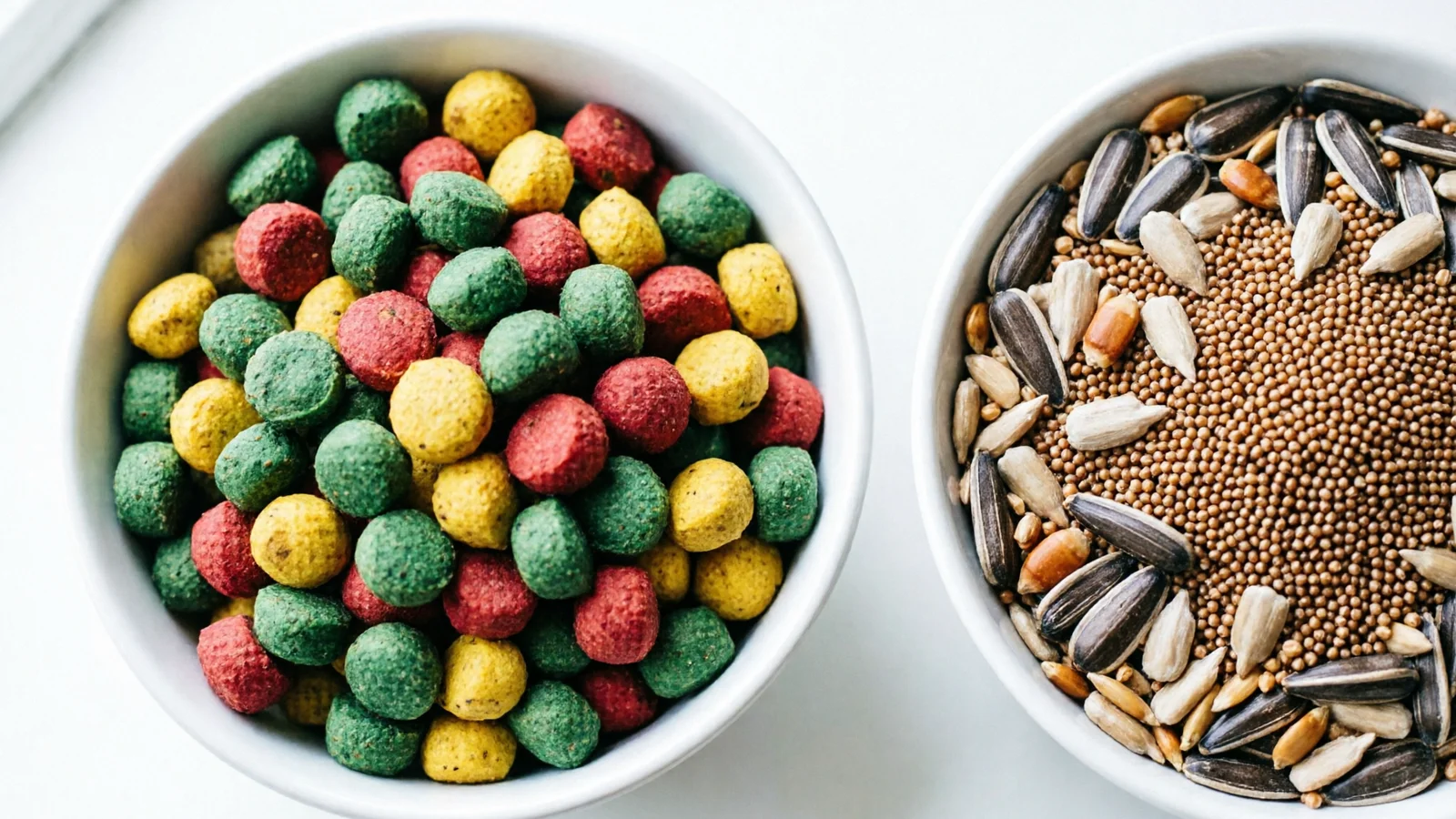
Hepatic lipidosis (fatty liver disease) is the leading nutrition-related cause of death in pet cockatiels. When a bird’s diet is dominated by high-fat seeds — sunflower seeds contain up to 50% fat — the liver becomes overwhelmed processing excess lipids and begins storing them in liver cells. According to the Association of Avian Veterinarians (AAV), seed-only diets are the primary risk factor, and converting to a pellet-based diet is the single most effective intervention. The AAV recommends pellets constitute 60–70% of daily caloric intake for adult cockatiels, with 20–30% fresh vegetables and only 10% seeds reserved as treats. Left untreated, hepatic lipidosis causes lethargy, overgrown beak, breathing difficulty, and liver failure — but it is fully preventable with proper diet.
This is the single most important decision for your cockatiel’s health. Here’s how the two compare:
| Factor | Pellets | Seed Mixes |
|---|---|---|
| Nutrition | Complete, balanced formula | Incomplete — birds pick favorites, miss nutrients |
| Fat content | Low (3-8%) | High (15-40% from sunflower/safflower) |
| Vitamins | Added and consistent | Lost in hulling, inconsistent |
| Lifespan impact | Cockatiels on pellets live 15-20 years | Seed-only cockatiels average 5-10 years |
| Vet recommendation | 60-70% of diet | Warning: Max 10% as treats |
| Picky eater? | Harder to convert | Easy — birds love seeds (like candy) |
| Cost | $8-18/lb | $2-4/lb |
| Best brands | Harrison’s, ZuPreem, TOP’s, Kaytee Exact | Kaytee Forti-Diet, Higgins, Sweet Harvest |
The consensus from avian veterinarians is clear: pellets should form 60-70% of your bird’s daily diet. Seeds are high-fat treats — not a dietary staple. Google’s AI Overview specifically recommends a “pellet-based diet” with Harrison’s, ZuPreem, Roudybush, and Lafeber as top brands.
Why seeds seem “fine” but aren’t: cockatiels love seeds the way children love candy. They’ll happily eat them exclusively while slowly developing nutritional deficiencies. Fatty liver disease, vitamin A deficiency, and obesity are the #1 consequences of seed-only diets seen by avian vets.
For a deeper dive into bird nutrition basics, see our guide to bird diet fundamentals.
Ideal Cockatiel Diet Ratio
┌─────────────────────────────────────────────┐
│        IDEAL COCKATIEL DAILY DIET            │
│                                              │
│  ████████████████████████░░░░░░░░░  60-70%   │
│  │     Formulated Pellets         │          │
│  │  Harrison's / ZuPreem / TOP's  │          │
│  │                                │          │
│  ██████████░░░░░░░░░░░░░░░░░░░░░  20-30%   │
│  │   Fresh Vegetables & Grains    │          │
│  │  Broccoli, carrots, corn, rice │          │
│  │                                │          │
│  ███░░░░░░░░░░░░░░░░░░░░░░░░░░░░   5-10%   │
│  │      Seeds (Treats Only)       │          │
│  │  Safflower, millet, canary     │          │
│  │                                │          │
│  █░░░░░░░░░░░░░░░░░░░░░░░░░░░░░░    <5%    │
│  │        Fresh Fruits            │          │
│  │  Apples, berries, mango        │          │
└─────────────────────────────────────────────┘
Daily feeding amount: 1.5-2 tablespoons of pellets per cockatiel, plus 1 tablespoon fresh vegetables. Seeds limited to 1 teaspoon as a training reward.
For specific fruit safety, see our guides on whether cockatiels can eat apples and whether cockatiels can eat grapes.
10 Top Cockatiel Food Products Reviewed
PELLETS (60-70% of diet)
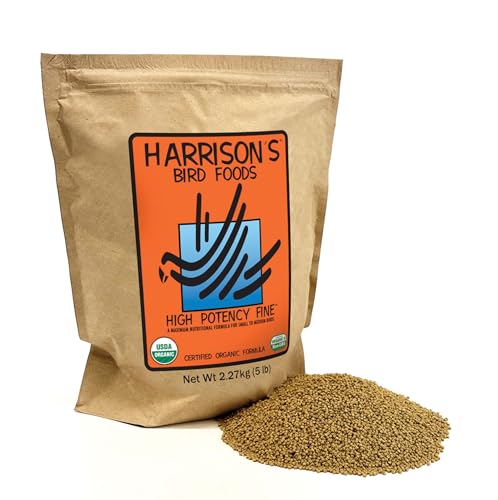
Harrison’s Bird Foods High Potency Maximum Nutritional Formula
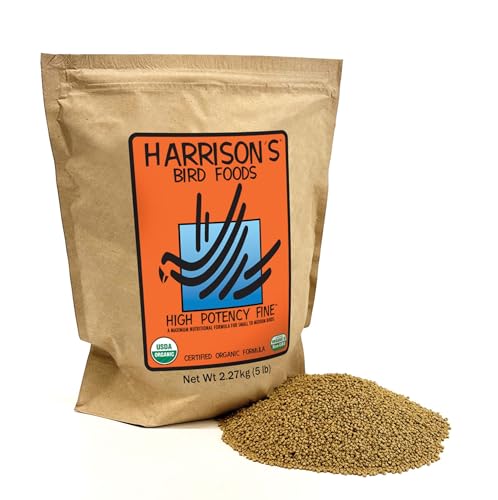
Best Premium Pellet — USDA Organic, vet-developed gold standard
Harrison’s is widely considered the premium choice for owners who want the highest quality nutrition. It’s the #1 vet-recommended bird food worldwide — certified organic, non-GMO, and made with human-grade ingredients. It was developed by avian veterinarians specifically for small to medium birds.
The high-potency formula is ideal for molting, recovering, and weaning cockatiels who need extra nutritional support.
One owner who has ordered this food 10+ times over 8 years says: “Our birds absolutely love it! It’s also the healthiest and best food we’ve been able to find for them. Our vet stopped carrying it but we’re grateful it’s available on Amazon.” Another confirms their vet recommended it: “I could see the difference in a week of how healthy my birds are.
And somehow my birds bond with me faster and they are in better mood too!”
Pros: USDA Organic + Non-GMO, highest quality ingredients, complete nutrition without supplements, vet-developed formula, suitable for molting/recovering/weaning birds
Cons: Premium price ($35/lb), strong smell some birds dislike, requires refrigeration after opening, difficult pellet conversion for seed-addicted birds
In my experience, Harrison’s is worth every penny if your bird accepts it. The ingredient quality is unmatched among Harrison’s cockatiel food products — but you’ll need patience during the transition from seeds.
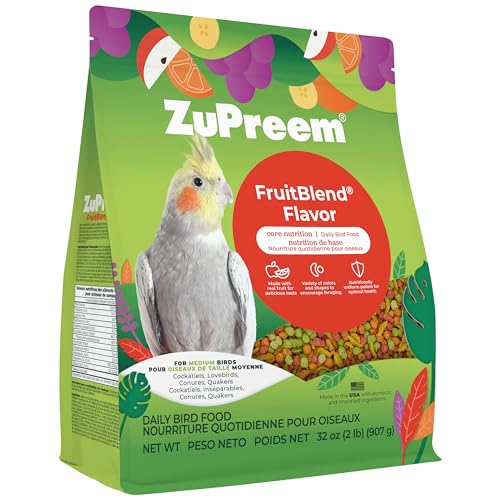
ZuPreem FruitBlend Bird Food Medium
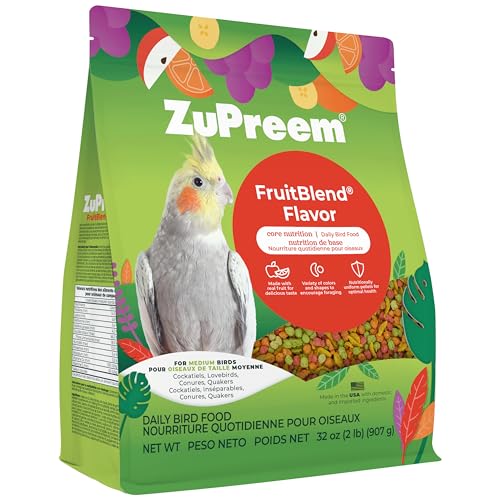
Best for Picky Eaters — Fruit flavor wins over reluctant pellet converts
ZuPreem FruitBlend consistently ranks as the top pellet choice for picky eaters transitioning from seeds. The natural fruit flavors, fun shapes, and bright colors make conversion significantly easier. It’s made in the USA with essential vitamins and minerals already included.
A reviewer who tried multiple brands says: “Birds can be very picky and I found this is the best food for my bird. He loves this. I’ve tried several different pellet brands and this is the one he seems to eat the most.
It doesn’t cause any stomach issues.” Another owner shares: “My Sun Conure has been eating these pellets for 3 years and she is healthy and happy. She just had blood work done for her annual and she is super healthy!”
Pros: Most accepted pellet by picky eaters, affordable ($7.65/lb), fun shapes/colors encourage eating, made in USA, essential vitamins + minerals
Cons: Contains artificial food coloring, some birds pick out favorite shapes, not organic, contains soy and corn
I’d recommend ZuPreem as your starting pellet if your cockatiel currently eats seeds. Among all ZuPreem cockatiel food products, FruitBlend is the one that converts the most seed-addicted birds thanks to its fruity flavor.
Kaytee Exact Rainbow Cockatiel
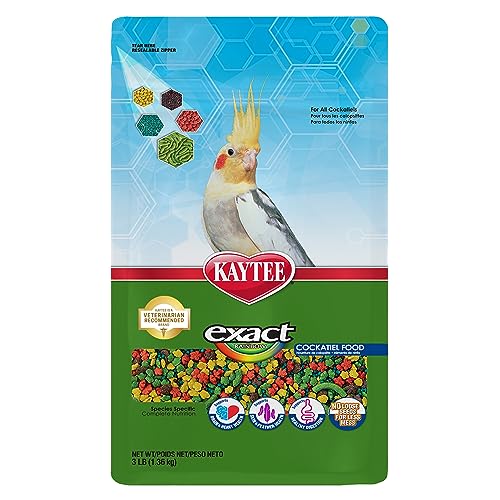
Best Budget Pellet — Cheapest quality pellet option at $4.32/lb
Kaytee Exact Rainbow is a solid entry-level pellet for budget-conscious owners looking for a quality pellet without the premium price tag. It includes omega-3 fatty acids for brain and heart health and is naturally preserved. The 3-pound bag makes it the most affordable quality pellet at just $4.32 per pound.
One happy owner notes: “My pet cockatiel loves these and they are a healthy alternative to seeds. Sometimes she doesn’t like a certain color but I almost always go for this product because it’s the best bang for your buck.”
Pros: Best value pellet ($4.32/lb), omega-3 supplementation, good for seed-to-pellet transition, trusted Kaytee brand, naturally preserved
Cons: Contains artificial colors, some birds refuse rainbow pellets, lower protein than premium brands, not organic
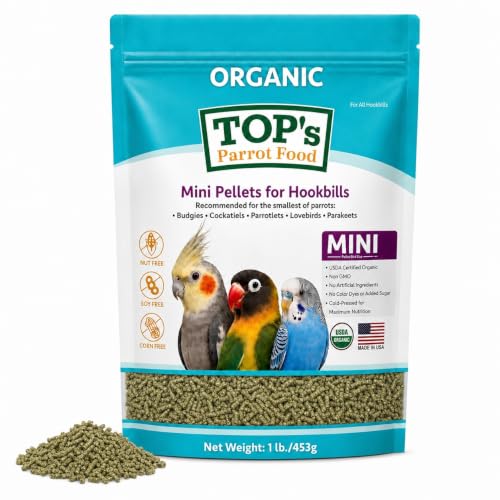
TOP’s Parrot Food Mini Pellets
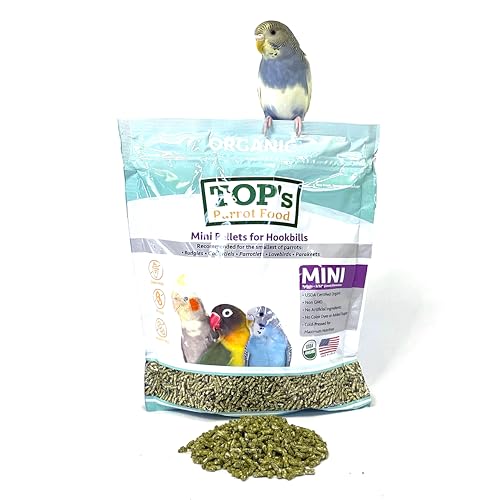
Best Organic Alternative — Corn-free, soy-free, cold-pressed
TOP’s Mini Pellets are USDA Certified Organic with zero corn, soy, peanuts, or artificial ingredients. The cold-pressed processing retains more nutrients than traditional extruded pellets, and all ingredients are human-grade.
One passionate reviewer writes: “THIS is what your bird should be eating! Most bird pellets and seed mixes are not good for birds — high in fat, rancid seeds, soybean oil, sugar, synthetic vitamins that birds were never made to digest. Finally a clean, healthy option.” Another notes: “These are the best quality pellets I’ve found so far, the ingredients are simply amazing!
No soy, no corn, full of greens and vitamins.”
Pros: 100% organic, corn-free + soy-free, cold-pressed retains nutrients, no artificial anything, human-grade ingredients
Cons: Smaller brand, small 1lb bag needs frequent reordering, $15/lb premium, some birds find pellets too hard
The pellet size is worth noting — several reviewers mention the “mini” pellets are still quite long, and some cockatiels drop pieces while eating. I’d suggest breaking them in half initially.
SEED MIXES (≤10% of diet — treats only)
Kaytee Forti-Diet Pro Health Cockatiel Food
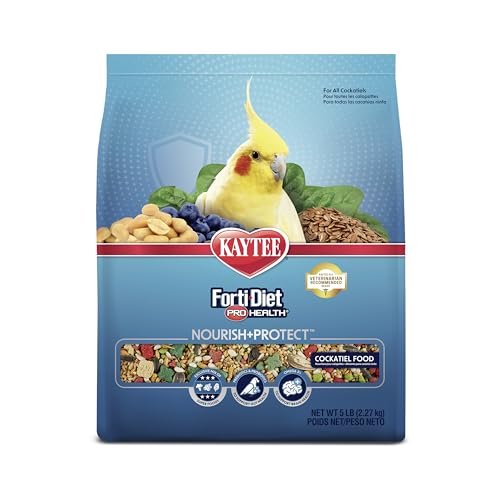
Most Popular — The most reviewed cockatiel food on Amazon
Kaytee Forti-Diet Pro Health is the top choice if you want a widely trusted seed mix to supplement your bird’s pellet diet. Enhanced with superfoods (flaxseed, blueberries, spinach) plus probiotics and prebiotics for digestive health, the 5-pound bag offers excellent value.
One owner shares an impressive result: “Our bird is over 15 and she is crawling around her cage and flipping around and hanging upside down like never before. He used to injure himself and now everything is healed.” Another who took in a rescue cockatiel says: “I went with this since the reviews were good, she loves it.”
Pros: Most reviewed cockatiel food, best value ($2.59/lb), superfood-enriched, probiotics for digestion, DHA omega-3
Cons: Warning: Seed mix — not nutritionally complete alone, birds may pick favorites, contains sunflower seeds (high fat), some dust at bag bottom
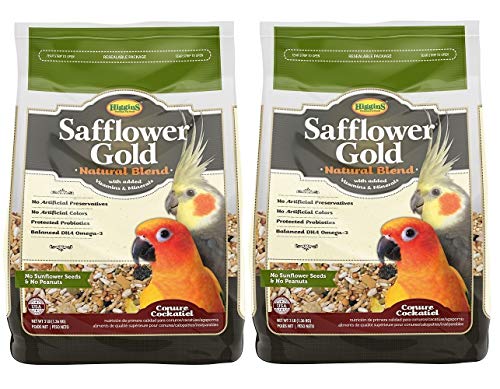
Higgins Safflower Gold Natural Blend
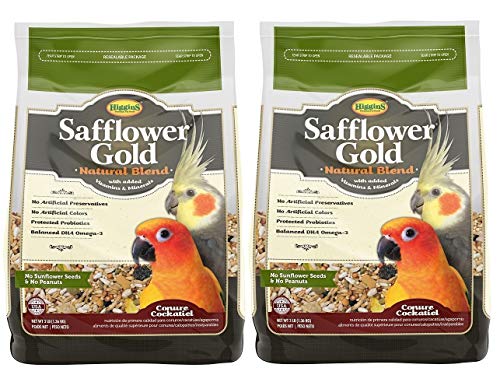
Best Natural Seed Mix — Safflower-based, no artificial colors
Higgins Safflower Gold uses safflower seeds instead of sunflower, which means a healthier fat profile for your cockatiel food choices. There are no artificial colors or preservatives, and the 6-pound twin-pack bundle is a great value.
A reviewer confirms: “The birds seem to love this mix. They find it tasty and it has some extra nutritious things aside from seed. Doesn’t appear to have added color and is good quality for the price.
The cockatiels have spoken!”
Pros: Safflower healthier than sunflower, no artificial colors, 6lb value bundle ($2.82/lb), naturally preserved
Cons: Some birds don’t recognize safflower initially, seed-only needs supplementation, bulk packaging may not reseal well
Sweet Harvest Cockatiel Bird Food (No Sunflower)
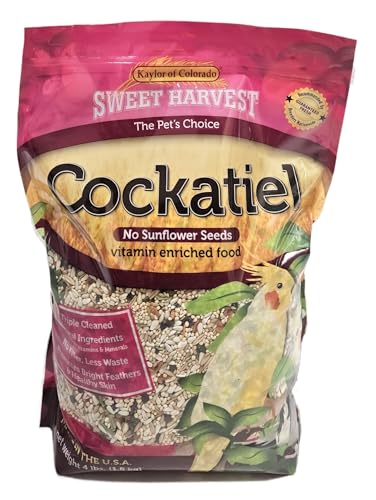
Best No-Sunflower Option — Healthier fat profile, triple-cleaned
Sweet Harvest removes sunflower seeds entirely for a healthier fat profile in this seed blend. The seeds are triple-cleaned to reduce dust and debris, and the nitrogen-flushed packaging keeps everything fresh. At $2.75/lb, it’s the most affordable option.
One owner who switched from generic food says: “I was buying generic cockatiel food with sunflower seeds and they didn’t like it. Found this — they absolutely love it. When I empty their bowl it’s usually just empty shells.
The value for the money is excellent.” Another uses it as a dietary base: “This seed mixture is the base of my six cockatiels’ diet — two adults and four juveniles.”
Pros: No sunflower = healthier fat, triple-cleaned, nitrogen-freshness packaging, most affordable ($2.75/lb)
Cons: Basic seed mix without fruits/veggies, not nutritionally complete alone, limited brand recognition
Kaytee Fiesta Cockatiel Food
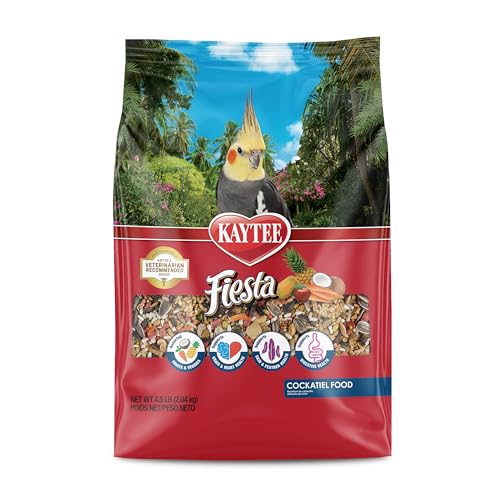
Most Variety — Fruits, vegetables, seeds, and grains in one mix
Kaytee Fiesta packs the most variety of any seed mix — fruits, vegetables, seeds, and grains in different shapes, colors, and textures. Probiotics and omega-3 are added, and the mix encourages natural foraging behavior.
A reviewer with a picky Quaker says: “I really like the variety of ingredients. I have several different kinds of birds that eat this food but my pickiest is a beautiful pastel blue Quaker. I mix a little Higgins Safflower Gold with this and he enjoys the variety.”
Pros: Most ingredient variety, fun mix keeps birds engaged, probiotics included, affordable ($2.88/lb)
Cons: Birds selectively eat favorite pieces, contains artificial colors, higher sugar from dried fruits, not complete alone
SPECIALTY BLENDS
Lafeber’s Classic Nutri-Berries for Cockatiels
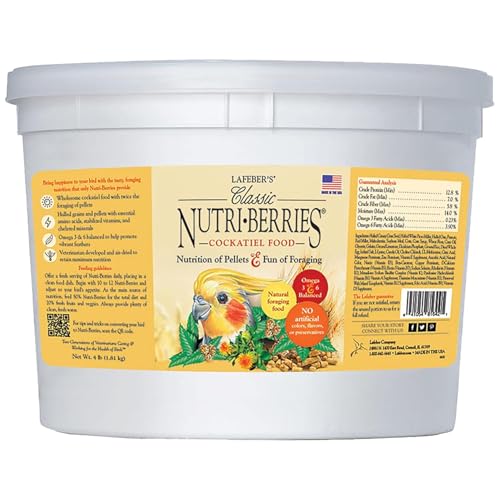
Best Foraging Food — Berry shape takes 2x longer to eat than pellets
Lafeber’s Nutri-Berries offer an excellent option for mental enrichment. They use non-GMO, human-grade ingredients formulated by avian veterinarians. The unique berry shape encourages natural foraging behavior and provides mental stimulation.
Each berry delivers complete nutrition — it takes about twice as long for a cockatiel to eat compared to loose pellets, making this cockatiel food a great enrichment tool.
A cockatiel owner shares: “My cockatiels love this food. I do have to use a small chopper to break the round balls up as they throw the balls on the floor. They happily chomp away at the broken up pellets.
Much better than straight seed as they offer vitamins.” Another with 20+ year old cockatiels reports: “They seem to be more active eating this. They go to this mostly.”
Pros: Unique shape = mental stimulation, scientifically complete nutrition, non-GMO human-grade, slower eating prevents overconsumption
Cons: Some berries crumble in shipping, birds may drop pieces, more expensive than seed mixes, may need breaking up for smaller birds
HARI Tropimix Enrichment Food
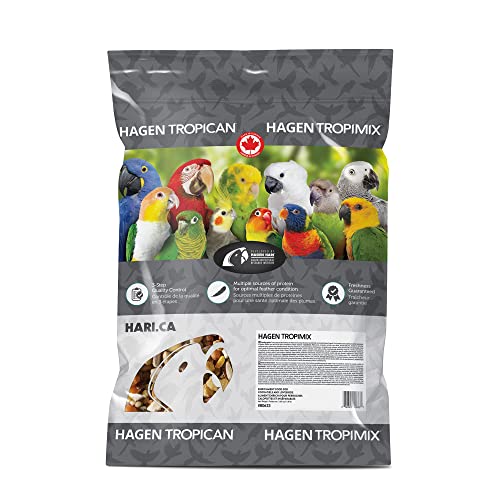
Best for Pellet Conversion — Seeds + premium Tropican pellets in one mix
HARI Tropimix is designed specifically for the seed-to-pellet transition, making it essential cockatiel food for beginners. It contains premium Tropican food sticks mixed with seeds, fruits, nuts, vegetables, grains, and legumes. The 8-pound bag offers the best bulk value at $3.12/lb.
One reviewer using it for conversion says: “My bird absolutely loves this food. It’s the first pelleted food I’ve gotten him to eat. Great variety of fruits and veggies too.” This cockatiel food bridges the gap between a seed-only diet and full pellet conversion.
Pros: Excellent for pellet transition, premium Tropican pellets included, 8lb best value ($3.12/lb), great ingredient variety
Cons: Birds may pick out seeds and leave pellets, bulkier storage, some waste of pellet portion
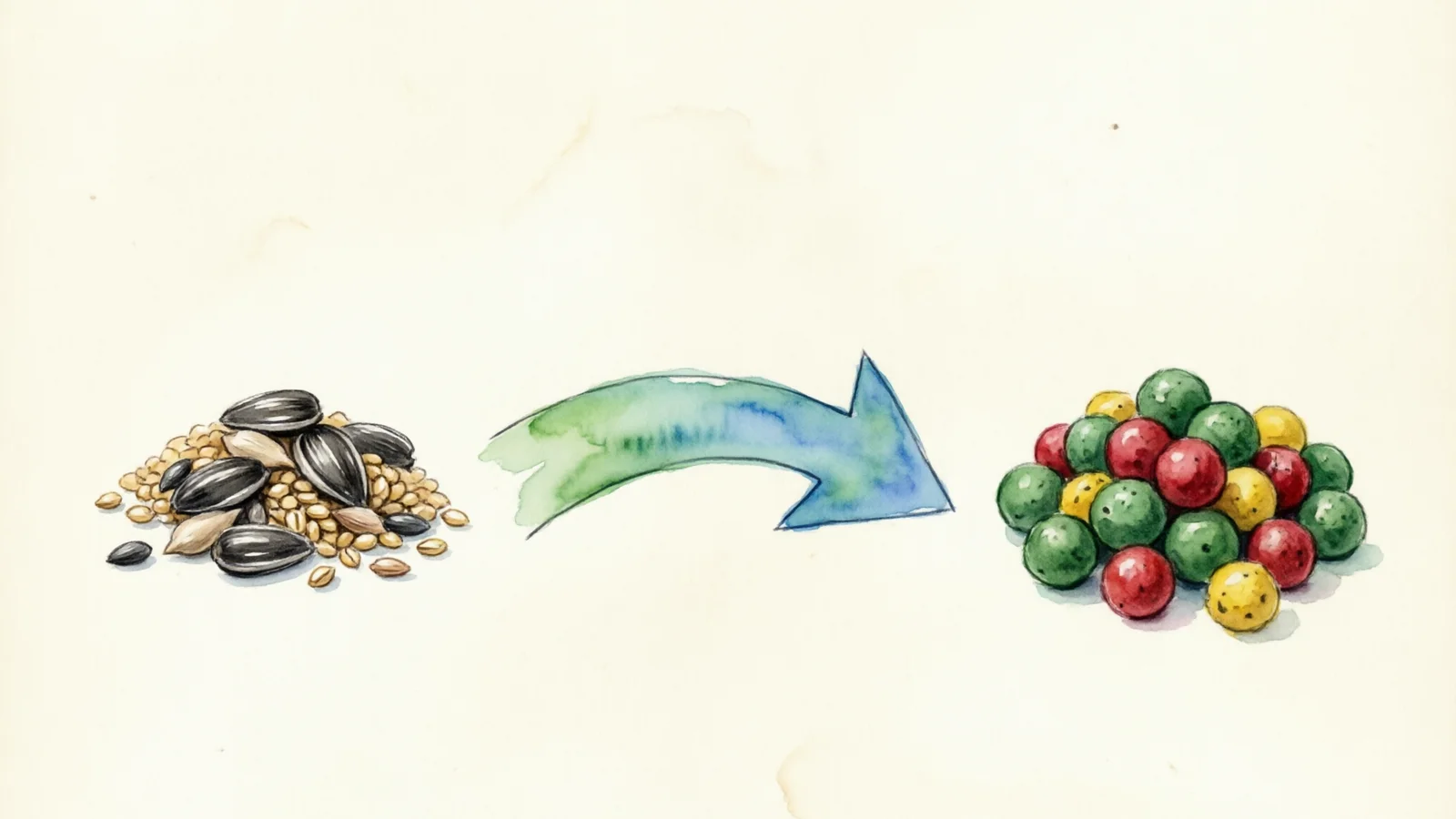
Seed-to-Pellet Transition Guide (6-Week Plan)
Cockatiels are notoriously stubborn about switching from seeds to pellets. I’ve seen owners give up after three days — don’t be that person. Finding the right product is only half the battle; getting your bird to actually eat it is the real challenge.
A slow transition prevents starvation stress and gives your bird time to accept the new food.
| Week | Pellet % | Seed % | Method |
|---|---|---|---|
| Week 1 | 10% | 90% | Mix pellets into familiar seed mix. Birds explore but mostly eat seeds |
| Week 2 | 20% | 80% | Increase pellets slightly. Offer pellets in a separate dish at the cage’s highest perch (cockatiels prefer eating high) |
| Week 3 | 35% | 65% | Reduce seeds noticeably. Measure uneaten food — if weight stays stable, continue |
| Week 4 | 50% | 50% | Equal mix. Weigh your bird weekly — healthy cockatiels weigh 75-125g |
| Week 5 | 70% | 30% | Major shift. Offer seeds only in evening as training reward |
| Week 6 | 85% | 15% | Nearly there. Seeds become treats only, not a food group |
Tips for Stubborn Converters
Moisten pellets with warm water or fruit juice — the softer texture is more appealing to seed-addicted birds 2. Crush pellets over seed mix — birds accidentally taste them while eating seeds 3. Use HARI Tropimix ($24.99) — it’s literally designed for this transition, mixing premium pellets with seeds 4.
Act excited — cockatiels are social eaters. Pretend to eat pellets yourself; your bird will want to try what you’re having 5. Morning hunger — offer pellets first thing when appetite is highest, add seeds later in the day
For more enrichment ideas during the transition, check out our best cockatiel toys for foraging guide.
What Do Cockatiels Eat? Complete Diet Guide
Beyond commercial cockatiel food, your bird needs fresh foods daily. Here’s what’s safe and what’s dangerous.
Safe Fresh Vegetables (20-30% of diet)
| Frequency | Vegetables | Notes |
|---|---|---|
| Daily | Broccoli, carrots, sweet potato, corn | Chop finely. These are dietary staples |
| Often (3-4x/week) | Spinach, kale, peas, green beans | Dark leafy greens = vitamin A + calcium |
| Sometimes (1-2x/week) | Bell peppers, zucchini, squash | Good variety nutrients |
| Never | Avocado, onion, garlic, mushrooms, tomato leaves | Toxic to birds — can be fatal |
Safe Fresh Fruits (≤5% — rare treats)
| Safe (1-2x/week) | Never |
|---|---|
| Apples (no seeds), grapes (seedless), berries, mango, melon, banana | Avocado, chocolate, caffeine, alcohol, fruit seeds/pits |
Healthy Grains & Legumes (occasional)
Cooked brown rice, quinoa, whole wheat pasta, cooked lentils, and cooked beans all make excellent occasional additions to your bird’s diet rotation. Serve plain — no salt, oil, or seasoning.
For more on safe fruits, see our detailed guides on can cockatiels eat apples and can cockatiels eat grapes.
How to Choose the Right Cockatiel Food
Five key factors to consider when choosing the best cockatiel food for your bird:
1. Pellets vs Seeds
If your cockatiel currently eats seeds, start with HARI Tropimix ($24.99) for gradual transition. If already on pellets, Harrison’s ($74.36) or ZuPreem ($15.29) are your best bets.
2. Bird’s Age
Young and weaning birds benefit from Harrison’s High Potency Maximum, which has higher fat content to support growth. Adult cockatiels do well on any of the best cockatiel pellets — ZuPreem, Kaytee Exact, or TOP’s Organic are all solid choices.
3. Picky Eater?
ZuPreem FruitBlend is the most accepted pellet by reluctant birds. Lafeber’s Nutri-Berries ($19.95) offer complete nutrition in a fun berry shape that picky eaters often prefer over traditional cockatiel food pellets.
4. Budget
Kaytee Exact Rainbow ($12.95/3lb) is the cheapest quality pellet. Sweet Harvest ($11.01/4lb) is the cheapest seed mix. Both deliver good value without sacrificing safety.
5. Health Concerns
For birds with fatty liver disease or obesity, switch to TOP’s Organic ($15) — zero corn, soy, or artificial ingredients. For recovering or molting birds, Harrison’s High Potency Maximum is the ideal option because it’s specifically formulated for those needs.
Need the right setup for food bowls and cage accessories? See our best cockatiel cage guide.
Cockatiel diet safety checklist:
- Pellets make up 60–70% of daily diet — complete nutrition in every bite (AAV recommendation)
- Fresh vegetables 20–30% daily — broccoli, carrots, sweet potato, corn provide vitamin A
- Seeds limited to 10% as treats — prevents hepatic lipidosis from excess fat
- Transition from seeds to pellets over 4–6 weeks — gradual ratio shift prevents starvation
- Monitor weight weekly during pellet transition — catch problems early
- Fresh water changed daily — cockatiels dehydrate quickly
- Dark leafy greens and orange vegetables daily — highest vitamin A content
- Never feed a seed-only diet — #1 cause of hepatic lipidosis in pet cockatiels (AAV)
- Never feed avocado, onion, garlic, chocolate, caffeine, or alcohol — all acutely toxic to birds
- Never feed fruit seeds or pits — contain cyanide compounds
- Never remove seeds entirely before confirming pellet consumption — cockatiels will starve themselves
Frequently Asked Questions
What is the best thing to feed cockatiels?
The best cockatiel diet is 60-70% formulated pellets (Harrison’s or ZuPreem), 20-30% fresh vegetables (broccoli, carrots, sweet potato), and only 10% seeds as treats.
Can cockatiels eat pellets or seeds?
Both — but in the right ratio. Pellets should be 60-70% of daily intake, while seeds should be limited to 10% as treats. Cockatiels on seed-only diets develop vitamin A deficiency, obesity, and fatty liver disease.
Quality cockatiel food in pellet form provides complete, balanced nutrition that seeds cannot. If your bird refuses pellets, use the 6-week transition guide above or try HARI Tropimix ($24.99), which is specifically designed for seed-to-pellet conversion.
How much should I feed my cockatiel?
Feed 1.5-2 tablespoons of pellets per cockatiel daily, plus 1 tablespoon of chopped fresh vegetables. Limit seeds to 1 teaspoon as training rewards. A healthy cockatiel weighs 75-125 grams — weigh yours weekly when switching cockatiel food to make sure your bird isn’t losing weight.
Overfeeding seeds is the most common mistake new cockatiel food shoppers make — birds will overeat sunflower seeds like children overeat candy.
What fresh foods can cockatiels eat?
Safe daily vegetables: broccoli, carrots, sweet potato, and corn. Safe weekly vegetables: spinach, kale, peas, green beans. Safe fruits (treats only, 1-2x/week): apples (no seeds), seedless grapes, berries, mango, and melon.
Never feed: avocado (fatal), onion, garlic, chocolate, caffeine, or alcohol. Always wash produce thoroughly and remove uneaten fresh food after 2-3 hours.
Do cockatiels need vitamin supplements?
If your cockatiel eats 60-70% formulated pellets, additional vitamin supplements are generally not needed — pellets already contain balanced vitamins and minerals. However, seed-only birds absolutely need avian vitamin supplements sprinkled on their cockatiel food or fresh foods. Consult an avian veterinarian before supplementing — over-supplementation can be harmful.
Why is my cockatiel not eating pellets?
Cockatiels are notoriously stubborn about new foods. Try these approaches: (1) moisten pellets with warm water for softer texture, (2) crush pellets over familiar seed mix so they accidentally taste them, (3) offer pellets in the morning when appetite is highest, (4) pretend to eat pellets yourself — cockatiels are social eaters who mimic their owners. The full 6-week transition guide above has detailed steps.
ZuPreem FruitBlend ($15.29) is the easiest pellet for conversion due to its fruity flavor.
Is Harrison’s or ZuPreem better for cockatiels?
Harrison’s ($74.36) is higher quality — USDA Organic, vet-developed, human-grade ingredients — and is the #1 vet-recommended brand. ZuPreem ($15.29) is more affordable and more readily accepted by picky eaters due to fruit flavor. If budget allows and your bird accepts it, Harrison’s is the premium choice.
Many owners mix both for variety.
How long do cockatiels live on different diets?
Cockatiels on a balanced pellet + fresh food diet typically live 15-20 years. Seed-only cockatiels average 5-10 years due to malnutrition, fatty liver disease, and related health complications. Choosing the best cockatiel food — and sticking with a pellet-based diet — can add 10+ years to your bird’s lifespan.
If your cockatiel is showing stress behaviors during diet changes — like unusual hissing or head movements — check our guides on why cockatiels bob their heads and why cockatiels hiss to understand what’s normal and when to be concerned.