Seeing your budgie suddenly puff up like a little feathered ball can be alarming — especially if it’s your first time as a bird owner. But puffing up is actually one of the most common budgie body language signals you’ll encounter. The key is understanding when it’s completely normal and when it might mean something is wrong.
In this guide, we’ll walk through every reason your budgie might puff up, how to tell the difference between a comfortable bird and a sick one, and exactly what steps to take if you’re concerned.
What Does It Mean When a Budgie Puffs Up?
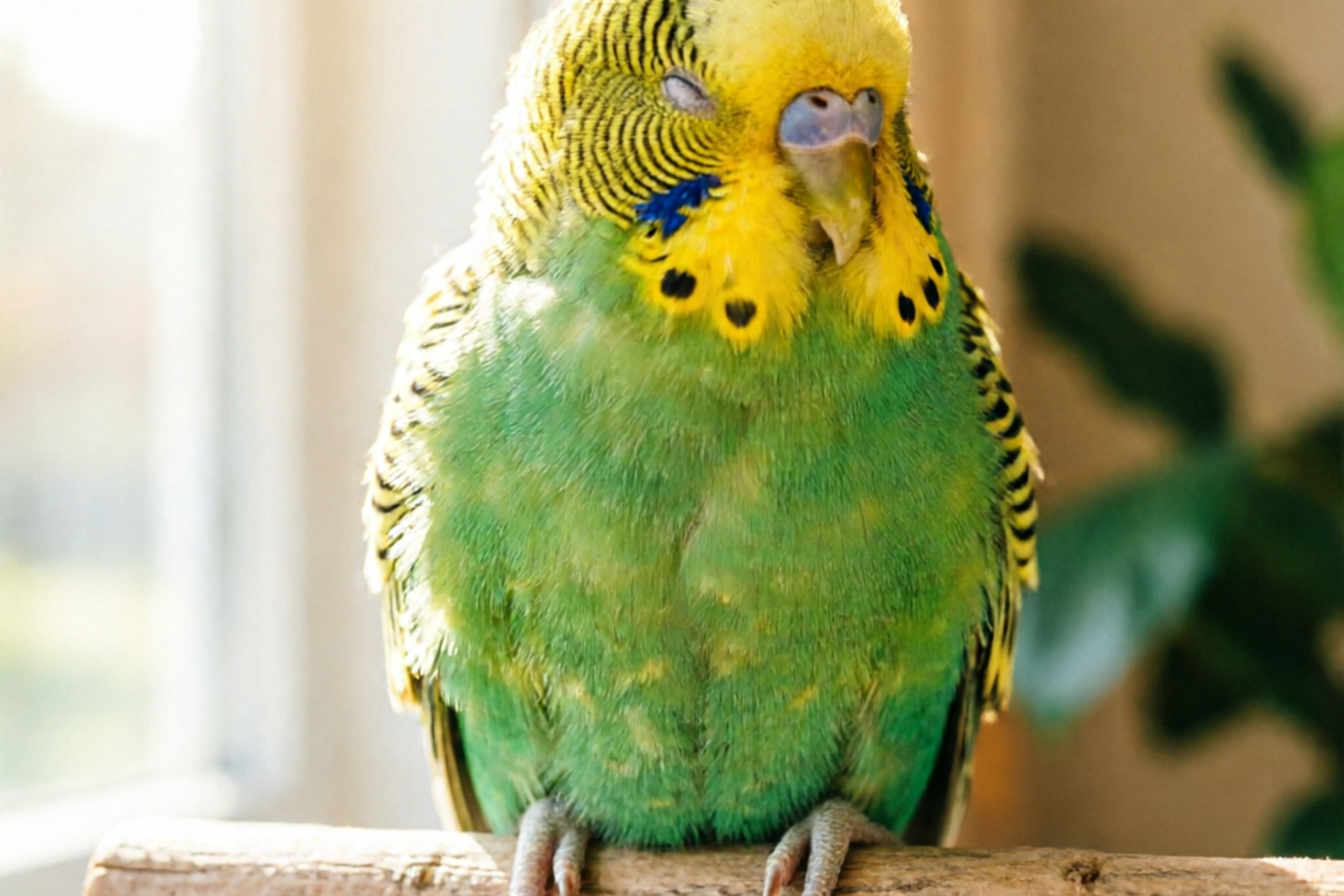
Puffing up — also called fluffing — is a behavior where a budgie raises and separates its feathers to trap a layer of air between them. This serves multiple purposes: insulation against cold, comfort during rest, and even as a sign of illness in some cases.
Because the same physical action can mean very different things, context is everything. A budgie that puffs up for a few minutes while napping is likely just comfortable. But if you’re asking yourself why does my budgie puff up and stay that way for hours while sitting at the bottom of the cage, that needs immediate attention.
Let’s break down the six most common reasons your budgie might puff up.
6 Reasons Your Budgie Is Puffing Up
Kaytee Forti-Diet Pro Health is a quality option worth considering for your setup.
1. They’re Feeling Cold
This is the simplest and most common reason. When a budgie gets cold, it instinctively fluffs its feathers to create an insulating layer of trapped air. Just like how a down jacket keeps you warm by trapping air, your budgie’s feathers work the same way.
Signs your budgie is cold:
- Puffed up for extended periods
- Sitting in one spot without moving much
- Tucking one or both feet into their breast feathers
- Room temperature is below 65°F (18°C)
What to do: Check for drafts near windows, doors, or air conditioning vents. Move the cage to a warmer location and consider covering part of the cage at night. The ideal room temperature for budgies is between 65–80°F (18–27°C). If you live in a cold climate, a ceramic heat emitter (not a heat lamp — too bright and stressful) placed outside the cage can provide gentle overnight warmth.
2. They’re Relaxing or About to Sleep
This is the most harmless — and honestly, the cutest — reason for puffing up. When budgies settle down to sleep, they naturally fluff up and often tuck one leg into their chest feathers. It’s their version of pulling up a blanket.
Signs of a relaxed, sleeping puff:
- One foot tucked into chest feathers
- Eyes slightly closed or pinning (rapid pupil constriction)
- Puffed up but still perching securely
- Happens at night or during quiet afternoon naps
- They un-puff quickly when disturbed
If your budgie puffs up at night like this, it’s a positive sign — it means they feel safe and comfortable in their environment.
3. They’re Bathing or Preening
After a bath, budgies will puff up and shake their feathers to remove excess water and help them dry more efficiently. This is a completely normal post-bath behavior.
Similarly, during preening sessions, budgies may briefly puff up individual feather groups to clean and realign them. Preening is essential for feather health — it distributes natural oils from the preen gland (uropygial gland) at the base of the tail across all feathers.
Signs of bathing/preening puff:
- Brief puffing followed by vigorous shaking
- Running their beak through feathers systematically
- Happens after a misting session, bath, or during regular grooming time
- The puffing is temporary — they return to normal within minutes
4. They’re Molting
Molting is a natural process where budgies shed old feathers and grow new ones. This typically happens once or twice a year, often in spring and fall, and can last anywhere from 2 to 6 weeks.
During a molt, your budgie may puff up more frequently because:
- New pin feathers (blood feathers) growing in are sensitive and uncomfortable
- Temporary feather loss reduces their natural insulation
- The process is physically taxing, making them tire more easily
Signs of molting:
- Lots of small feathers on the cage floor
- Visible pin feathers (small shaft-like growths) on head and body
- Increased preening and scratching
- Slight mood changes — more irritable or quieter than usual
- May eat more to support feather regrowth
A healthy diet with extra protein and calcium during molting helps support new feather growth. Offer egg food, boiled egg, or calcium-rich vegetables like kale and broccoli.
5. They’re Feeling Stressed or Anxious
Just as humans might tense up under stress, budgies may puff up when they feel threatened, anxious, or overwhelmed. This is different from the relaxed puff — a stressed puff is often accompanied by other warning signs.
Common stress triggers include:
- New environment: Moving to a new cage, new room, or a new home
- Loud noises: Vacuums, construction, loud music, fireworks
- Other pets: A cat staring at the cage, a dog barking nearby
- Handling: Being grabbed or chased by hands
- Changes in routine: New feeding schedule, different family members
Signs of a stressed puff:
- Puffed up with eyes wide open and alert
- Head bobbing, pacing, or rapid beak grinding
- Hissing or screaming
- Refusing to eat or drink
- Flattened against the cage bars
If your budgie is puffing up due to stress, identify and remove the stressor. Give them space, cover part of the cage for privacy, and allow them to calm down on their own. For bonding with your bird, always move at the bird’s pace and watch for these body language signals.
6. They Might Be Sick Warning:
This is the reason that requires the most attention. A persistently puffed-up budgie is one of the most common signs of illness in pet birds. When a budgie is sick, it puffs up to conserve body heat because its immune system is working hard and its body temperature may drop.
Signs your puffed-up budgie might be sick:
- Stays puffed for hours — not just during sleep
- Lethargic — sitting at the bottom of the cage or on a low perch
- Tail bobbing — visible up-and-down tail movement with each breath (sign of respiratory distress)
- Loss of appetite — food dish stays full
- Watery or abnormal droppings — green, yellow, or very loose
- Discharge from eyes, nostrils, or beak
- Fluffed with feathers slightly raised but eyes dull or half-closed
- Weight loss — feel the keel bone (breastbone) — if it’s sharp and prominent, your bird is underweight
If you notice several of these signs together, contact an avian vet immediately. Birds hide illness extremely well — by the time they show obvious symptoms, they may have been sick for days. Early treatment dramatically improves outcomes.
Common illnesses that cause persistent puffing include:
- Respiratory infections: Bacterial or fungal infections affecting the air sacs — very common in budgies and often triggered by poor ventilation, damp bedding, or dusty environments
- Mites: Scaly face mites or feather mites causing discomfort and irritation, leading to excessive preening and persistent fluffing
- Psittacosis: A bacterial infection (Chlamydia psittaci) that can also affect humans — causes respiratory symptoms, lethargy, and greenish droppings
- Crop stasis: Slow or stopped digestion, often caused by sour crop or yeast infection — the crop feels swollen and the bird may regurgitate
Good Puff vs. Sick Puff — How to Tell the Difference
Many owners find that Sweet Harvest Canary Food works well for their pet’s needs.
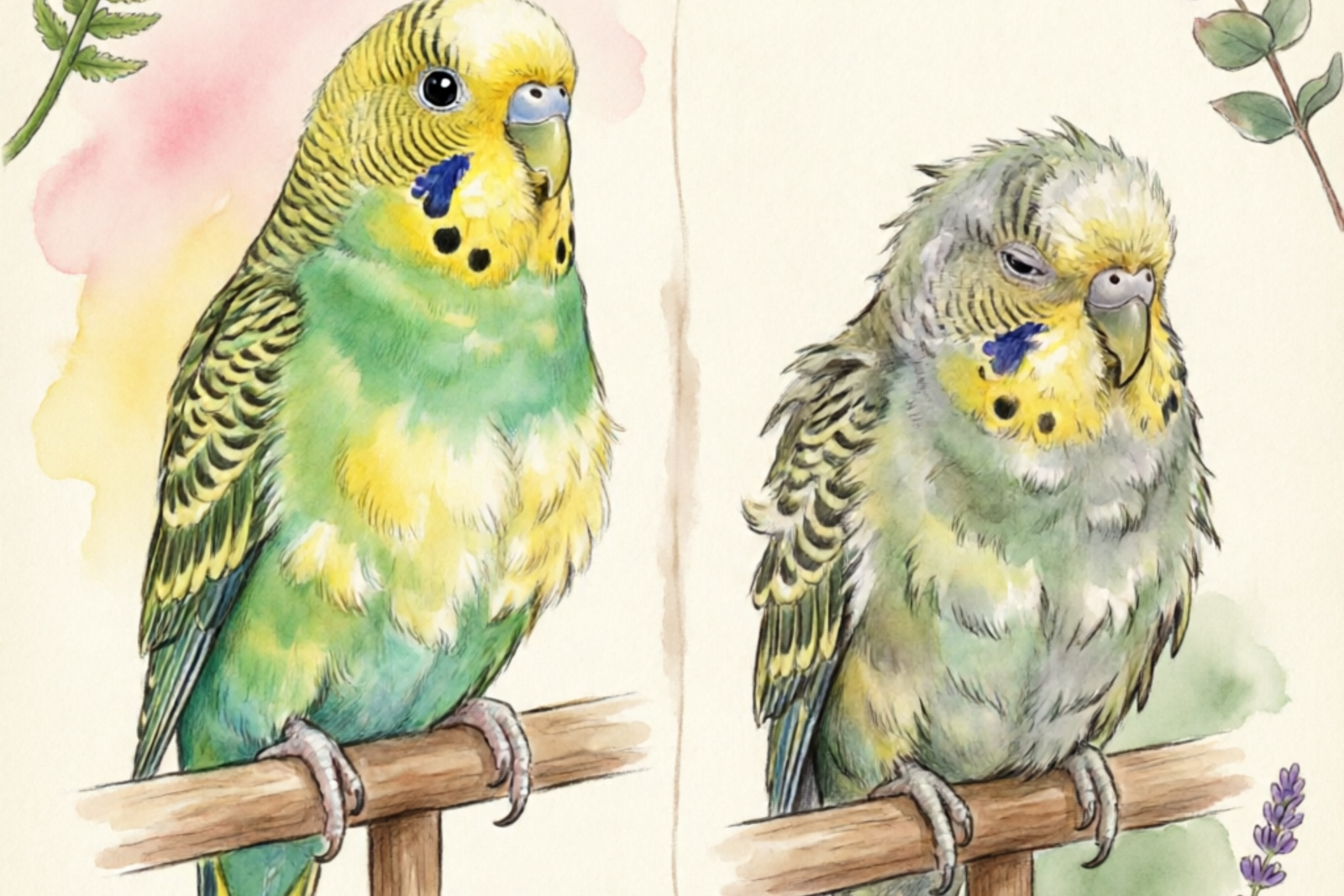
This is the most important skill for any budgie owner to develop. Here’s a quick-reference comparison:
| Sign | Normal Puff | Sick Puff |
|---|---|---|
| Duration | Temporary (minutes) | Persistent (hours+) |
| Context | Sleeping, relaxing, cold | No clear trigger |
| Eyes | Bright, alert, or relaxed | Dull, half-closed |
| Posture | Upright, secure perch | Hunched, low perch or cage floor |
| Activity | Active when un-puffed | Lethargic, minimal movement |
| Appetite | Normal eating/drinking | Reduced or no interest in food |
| Droppings | Normal | Abnormal color, texture, or frequency |
| Response | Un-puffs when stimulated | Stays puffed regardless |
The 2-3 Hour Rule: If your budgie has been puffed up continuously for more than 2–3 hours and there’s no obvious reason (like cold or sleep time), it’s time to observe more closely and consider a vet visit.
What to Do If Your Budgie Won’t Stop Puffing Up
For this purpose, ZuPreem Smart Selects is a popular choice among pet owners.
If you’re worried about persistent puffing and keep asking why does my budgie puff up no matter what you try, follow these steps:
-
Check the temperature. Ensure the room is 65–80°F (18–27°C) and there are no drafts. A simple thermometer near the cage helps.
-
Observe for 2–3 hours. Watch your bird’s behavior. Does it un-puff when active? Is it eating and drinking? Are droppings normal?
-
Check for other symptoms. Look for tail bobbing, discharge, changes in droppings, weight loss, and lethargy.
-
Warm up the environment. Move the cage to a warmer spot. You can use a heating pad on LOW setting under half the cage (so the bird can move away if too warm). Never place heat directly inside the cage.
-
Contact an avian vet. If the puffing persists with other symptoms, don’t wait. Find an avian veterinarian — regular cat/dog vets often don’t have bird expertise. Call ahead, as many avian vets see birds on specific days.
Common Questions About Budgie Puffing
Why does my budgie puff up when I talk to him?
This is usually a positive sign! Your budgie is excited and showing engagement with you. Many budgies puff up slightly, pin their eyes (rapid pupil constriction), and bob their heads when they’re stimulated or happy to see you. This is a social behavior, not a stress response.
Why does my budgie puff up and shake?
Shaking combined with puffing can mean several things. If it happens briefly after a bath, it’s just drying off. If it happens during handling, your bird may be nervous. However, if the shaking is persistent — especially if combined with tail bobbing or lethargy — it could indicate illness, particularly a respiratory infection. Persistent shaking warrants a vet visit.
Is it normal for my budgie to puff up at night?
Yes, completely normal. Budgies naturally puff up when sleeping to stay warm. A sleeping budgie with one foot tucked in and feathers slightly fluffed is a comfortable, content bird. This is actually a sign that your bird feels safe in its environment.
Why does my budgie puff up and stay puffed?
If you’ve noticed your bird fluffed up and you’re wondering why does my budgie puff up constantly without an obvious reason, this is a red flag. If your budgie stays puffed up for hours, isn’t eating, seems lethargic, or shows other symptoms like tail bobbing or abnormal droppings, it’s likely sick. Contact an avian vet as soon as possible — birds are very good at hiding illness, and visible symptoms often mean the condition has progressed.
How do I know if my puffed-up budgie is sick?
Look at the full picture, not just the puffing. A sick budgie will show multiple signs together: persistent puffing (hours, not minutes), dull or half-closed eyes, hunched posture, reduced appetite, changes in droppings, tail bobbing when breathing, and weight loss. If you notice two or more of these signs, schedule a vet appointment right away.
One practical tip: weigh your budgie regularly using a small digital kitchen scale. A healthy budgie typically weighs 25–35 grams. A weight loss of more than 1–2 grams in a few days is significant and warrants investigation. Many experienced bird owners weigh their birds weekly as part of their routine health monitoring.
Conclusion
Most of the time, a puffed-up budgie is completely fine — it’s just sleeping, staying warm, or enjoying a good preen. The key is paying attention to context and duration. Now that you understand why does my budgie puff up in different situations, you can tell the difference between a brief puff during a nap and hours of persistent puffing with dull eyes and no appetite.
As a budgie owner, the best thing you can do is learn your bird’s normal behavior patterns. Once you know what “normal” looks like for your specific bird, you’ll quickly notice when something is off. Trust your instincts — if something feels wrong, it’s always better to check with a vet than to wait and hope it passes.
Quick prevention checklist:
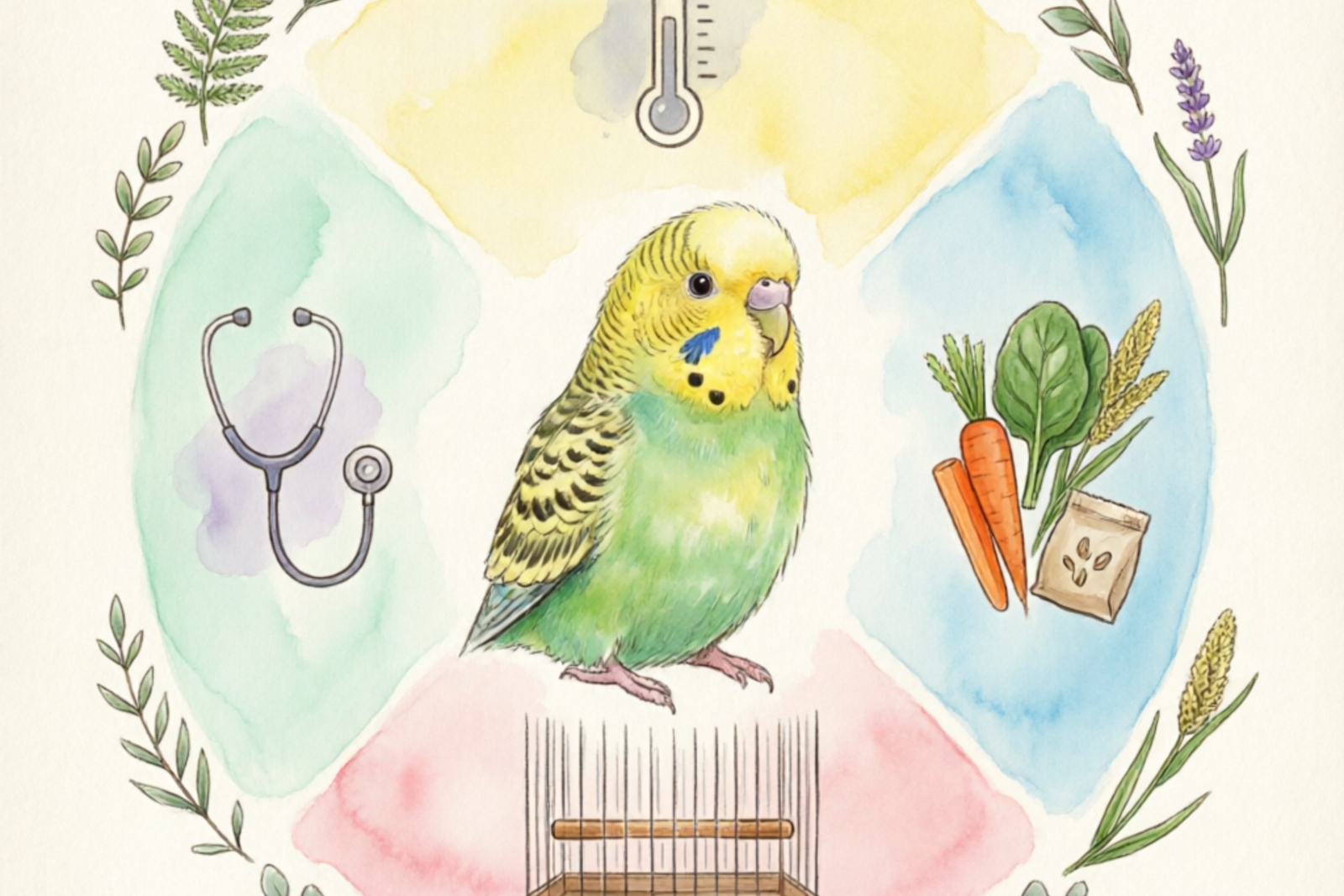
- Keep room temperature stable (65–80°F / 18–27°C)
- Avoid placing the cage near drafts, windows, or AC vents
- Provide a varied, nutrient-rich diet with fresh vegetables
- Cover the cage partially at night for warmth and security
- Schedule regular checkups with an avian vet (at least once a year)
- Monitor droppings daily — they’re the best early indicator of health changes
- Keep the cage clean to prevent bacterial and fungal infections
Your budgie depends on you to notice the small changes that could signal a big problem. The more you observe and interact with your bird daily, the faster you’ll recognize when something isn’t right — and the better your chances of catching any health issues early.