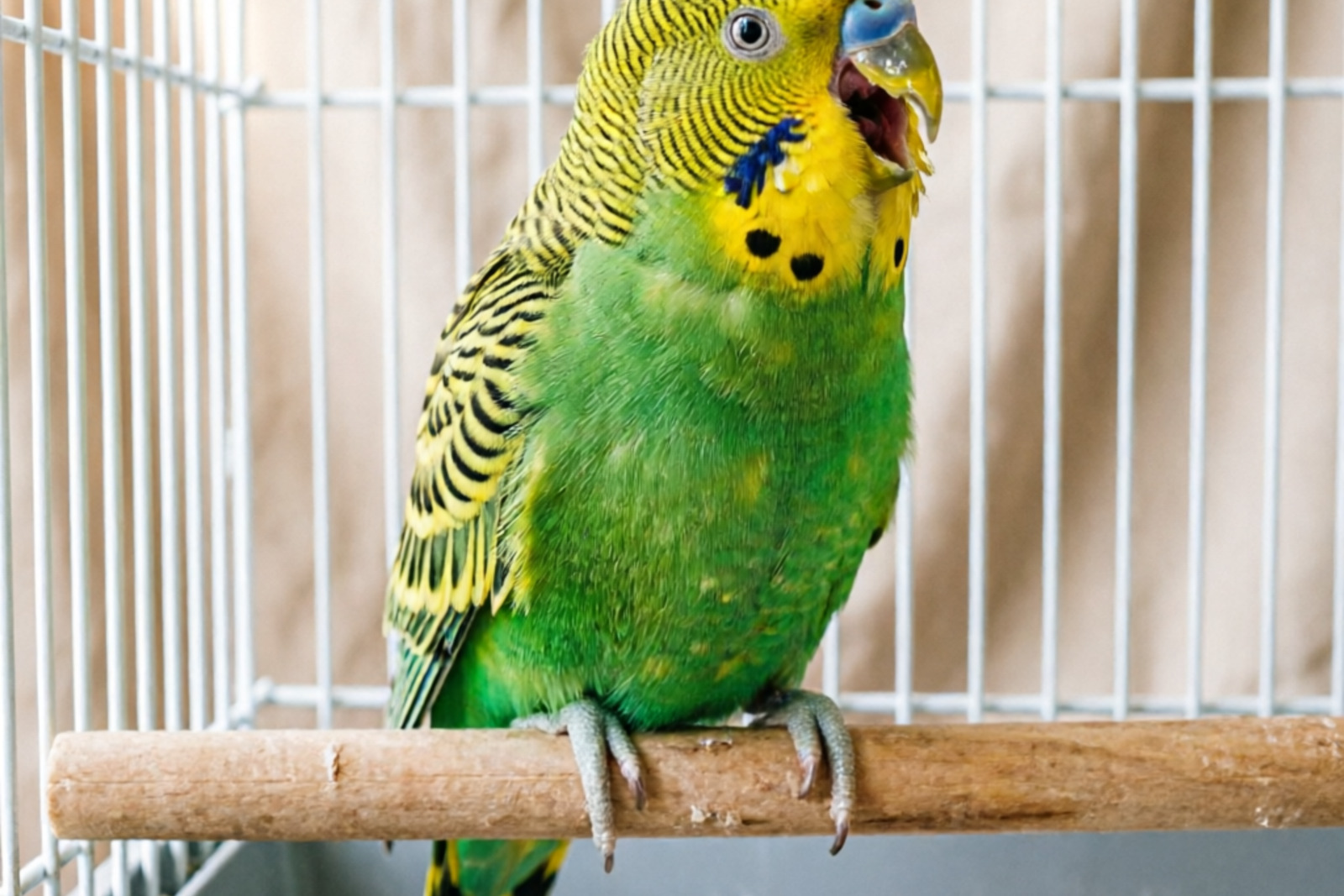
If your budgie has ever woken you up at sunrise with a piercing scream that sounds nothing like the cute chirping you expected, you are not alone. Budgie screaming is the number one behavioral complaint from new budgie owners. But here is the thing: not all screaming is a problem. In fact, some screaming is completely healthy and normal.
The trick is knowing the difference between a happy, vocal budgie and one that is screaming because something is wrong. In this guide on why is my budgie screaming, I will walk you through every reason a budgie screams, how to tell if it is normal or a red flag, and what you can actually do about budgie screaming that has become excessive.
Why Budgies Scream: It Is Not Just Noise
Budgies (also called parakeets) are highly social flock animals. In the wild, Australian budgerigars live in flocks of hundreds — sometimes thousands — of birds. They communicate constantly through calls, chirps, and yes, screams. When you bring a budgie into your home, you become its flock. Every vocalization is an attempt to communicate with you.
Understanding why budgies scream starts with recognizing that vocalization is their primary language. A budgie that never makes any sound at all is actually more concerning than a vocal one. The question is not whether your budgie should scream — it is whether the budgie screaming behavior is appropriate for the situation.
The Budgie Vocalization Spectrum
Budgies have an entire range of sounds, and it helps to know the difference:
| Sound | What It Means | Normal? |
|---|---|---|
| Soft chirping | Content, relaxed | Yes |
| Singing/melodic warbling | Happy, comfortable | Yes |
| Chattering/babbling | Social, playful | Yes |
| Beak grinding | Relaxed, about to sleep | Yes |
| Loud sustained screaming | Distress, attention-seeking, or normal flock call | Warning: Depends on context |
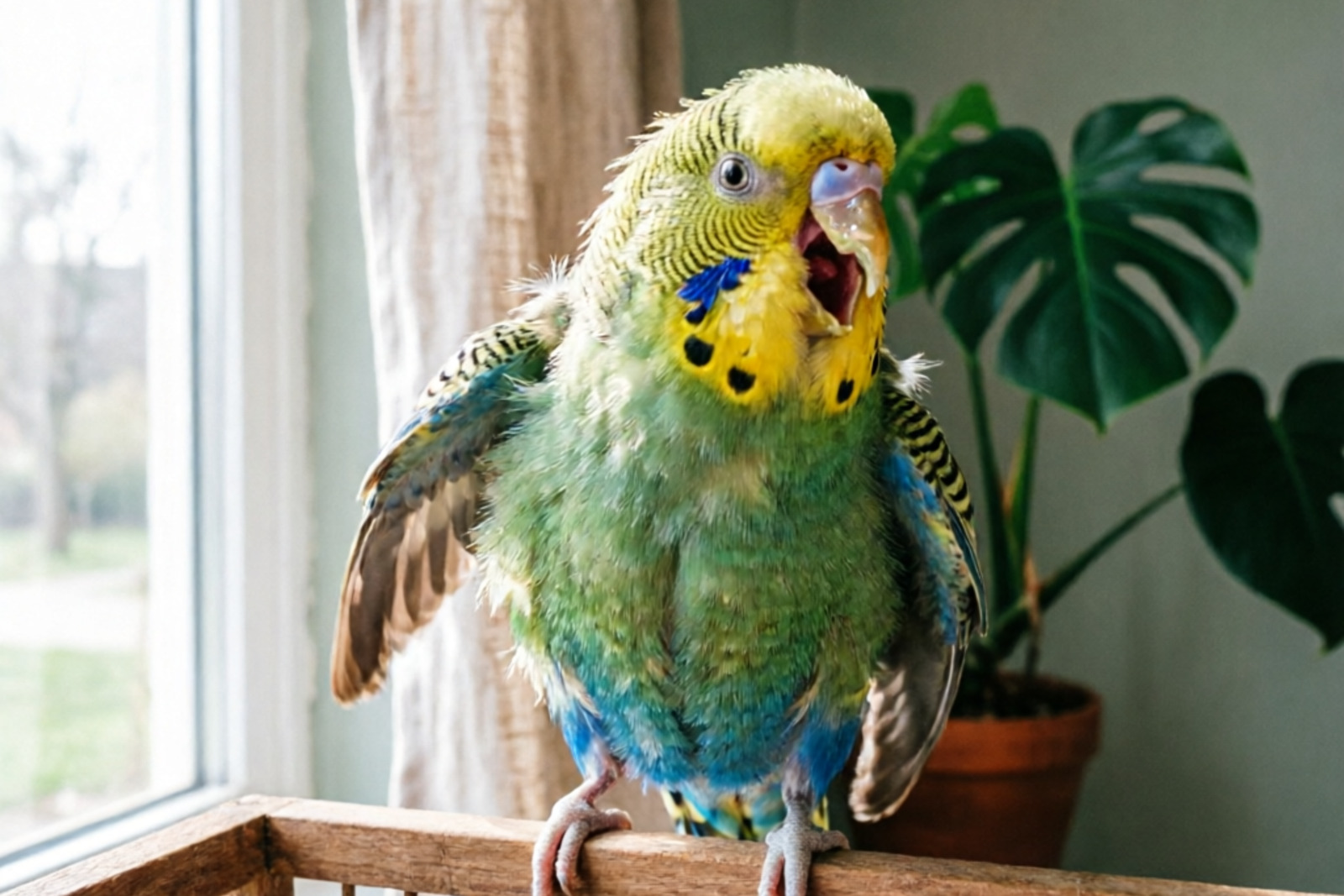
| Sharp single shriek | Fear, pain, sudden alarm | Warning: Requires attention |
| Constant high-pitched screeching | Severe stress or illness | Problem |
Normal Budgie Screaming — When You Should Not Worry
Hagen Tropimix is a quality option worth considering for your setup.
Morning and Evening Flock Calls
The most common reason budgies scream is morning and evening flock calls. In the wild, budgies call out at dawn and dusk to locate flock members and coordinate group activities. Your budgie does the same thing.
Morning screaming typically starts at sunrise (or when the lights come on) and lasts 5 to 15 minutes. Evening calls happen before settling down for the night. This behavior is:
- Instinctive — your budgie cannot control it
- Healthy — it means your budgie is energetic and engaged
- Temporary — it should not last more than 15-20 minutes
If your budgie screams for 10 minutes every morning and then settles into pleasant chirping, that is a happy, normal budgie. Trying to stop this behavior is like trying to stop a rooster from crowing — it goes against their nature.
Excitement and Play
Budgies scream when they are excited. Did you just put a new toy in the cage? Open the door for out-of-cage time? Bring out a favorite treat? A sudden burst of loud vocalization during these moments is your budgie expressing enthusiasm.
Excitement screaming is usually:
- Short-lived (a few seconds to a minute)
- Accompanied by active behavior (flapping, climbing, playing)
- Context-appropriate (happens during positive events)
Calling to You — The Social Bond
If your budgie screams when you leave the room, it is essentially calling for its flock member — you. This is especially common in single budgies that have bonded closely with one person. The budgie is checking your location and asking you to come back.
This type of screaming usually stops once you respond (even with a simple “I am here!” from the other room). For more on building trust and training your budgie to feel secure, see our bird training basics guide.
Problematic Budgie Screaming — When to Take Action
Many owners find that ZuPreem Smart Selects works well for their pet’s needs.
Attention-Seeking Screaming
This is the most common type of problematic budgie screaming and the one most owners accidentally create. Here is how it works:
- Budgie screams
- Owner goes over and talks to the budgie (or gives it a treat)
- Budgie learns: screaming = attention
- Budgie screams more
You have just trained your budgie to scream. Every time you respond to screaming with attention — even negative attention like yelling “be quiet!” — you are reinforcing the behavior. Your budgie does not understand that you are upset. It understands that screaming makes you show up.
How to break the cycle:
- Ignore the screaming completely. Do not look at the budgie, do not speak, do not react. Walk away if necessary.
- Reward quiet behavior immediately. The moment your budgie stops screaming and is calm, go over and give attention, talk softly, or offer a small treat.
- Be consistent. If one person in the household ignores screaming and another responds, the budgie will keep screaming because it still works sometimes.
- Prevent boredom. A budgie with nothing to do will scream for entertainment. See the section below on enrichment.
For cage setup tips that can reduce boredom-related screaming, check our best parakeet cage guide.
Fear and Stress Screaming
A frightened budgie screams differently than an attention-seeking one. Fear screaming is:
- Sharp and sudden — like a single shriek
- Triggered by a specific event — a loud noise, a predator (cat, dog, hawk shadow), a new object, or being handled roughly
- Accompanied by defensive body language — flattened feathers, wide eyes, backing away, or attempting to fly away frantically
Common fear triggers include:
- Ceiling fans — a top killer of pet birds
- Sudden loud noises — slamming doors, vacuum cleaners, shouting
- Predators — cats and dogs near the cage
- New environments — moving to a new home, new cage location
- Night frights — sudden panic in the dark, often caused by shadows from passing cars or flickering lights
If your budgie is screaming from fear, remove the trigger and give the bird space to calm down. Do not grab or force-handle a frightened budgie — this will make it worse. Speak in a soft, low voice and let the budgie approach you when ready.
Pain and Illness Screaming
A budgie in pain may scream, but this is usually not the primary symptom. Sick budgies more commonly become quiet, fluffed up, and lethargic. However, certain conditions can cause painful vocalizations:
- Injury — broken leg, torn wing, cut from a sharp object in the cage
- Egg binding (females) — inability to pass an egg is extremely painful and life-threatening
- Internal issues — infections, tumors, or organ problems
- Beak or nail overgrowth — making perching or eating painful
If your budgie is screaming AND showing any of these signs, see an avian veterinarian immediately:
- Sitting fluffed up on the cage bottom
- Loss of appetite or not drinking
- Discharge from eyes, nostrils, or beak
- Changes in droppings (color, consistency, frequency)
- Labored breathing or tail bobbing
- Swelling or visible injury
Boredom and Loneliness
A bored budgie is a screaming budgie. This is one of the most overlooked causes of excessive vocalization. Budgies are intelligent birds that need mental and physical stimulation every day.
Signs that boredom is causing the screaming:
- Screaming starts after a period of inactivity
- Stops temporarily when a toy is introduced
- Returns after the budgie loses interest in the toy
- Accompanied by other destructive behaviors like feather plucking or bar chewing
The fix is enrichment — and it is not just about buying more toys:
- Rotate toys weekly — budgies get bored of the same toys
- Include foraging toys — hide treats in puzzle toys or wrap food in paper for the budgie to unwrap
- Provide chewable items — natural wood blocks, mineral blocks, cuttlebone
- Ensure social interaction — at least 2-3 hours of out-of-cage time daily
- Consider a companion — a second budgie can dramatically reduce loneliness-related screaming
For ideas on what to feed your budgie as part of a stimulating routine, see our budgie diet guide.
Proven Ways to Reduce Budgie Screaming
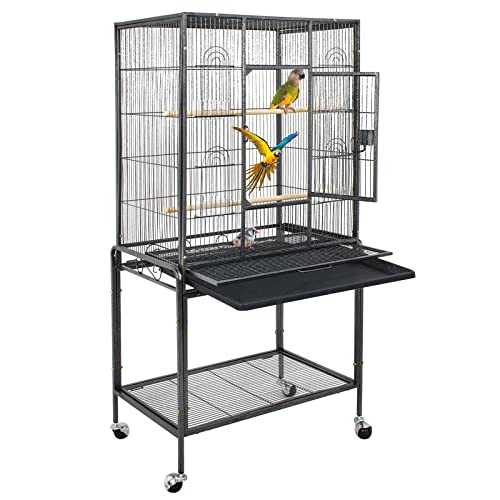
For this purpose, ZENY 53” Flight Cage is a popular choice among pet owners.
1. Cover the Cage at Night
Budgies need 10 to 12 hours of sleep in a dark, quiet environment. Inadequate sleep is one of the most common causes of irritability and excessive screaming. Use a breathable cage cover and keep the room dark during sleeping hours.
2. Establish a Routine
Budgies thrive on predictability. Feed at the same times, let the bird out at consistent hours, and maintain a regular sleep schedule. A budgie that knows what to expect is a calmer budgie.
3. Ignore Bad Behavior, Reward Good Behavior
This cannot be emphasized enough. Never reward screaming with attention. Reward quiet, calm behavior with interaction, treats, and praise. This is the single most effective technique for reducing attention-seeking screaming.
4. Provide Mental Stimulation
A mentally engaged budgie does not have time to scream. Invest in:
- Foraging toys — make your budgie work for treats
- Training sessions — teach tricks, target training, step-up commands (see our parakeet care guide for basics)
- Environmental variety — change the cage layout periodically, move perches, add new safe items to explore
5. Check the Environment
Make sure the cage is in a location where the budgie can:
- See household activity (budgies want to be part of the flock)
- Has a safe retreat corner (not exposed on all sides)
- Away from drafts, direct sunlight, kitchen fumes (Teflon/PTFE is toxic to birds)
- Away from high-traffic areas where sudden movements startle the bird
6. Address Loneliness
If you are away from home for most of the day and your budgie is alone, consider getting a second budgie. A bonded pair will entertain each other and often scream less than a single budgie that is desperately seeking companionship.
That said, introducing a new budgie requires patience and proper quarantine. Do not simply put two budgies in the same cage — they need a gradual introduction period.
7. Use Background Noise
Some owners find that leaving a radio on low volume or playing calming nature sounds reduces excessive screaming. The ambient noise mimics the constant background sound of a wild flock and can be comforting for a solo budgie.
When to See a Vet — Red Flags Not to Ignore
Most budgie screaming is behavioral and can be addressed with training and environmental changes. But do not ignore these warning signs:
| Symptom | Urgency | Action |
|---|---|---|
| Screaming + fluffed feathers + lethargy | Emergency | Vet today — bird may be critically ill |
| Screaming + visible injury | Emergency | Vet immediately |
| Screaming + not eating for 24+ hours | Urgent | Vet within 24 hours |
| Screaming + feather plucking | Soon | Vet within a week |
| Screaming only at specific times (morning/evening) | Normal | No vet needed |
| Screaming when excited or playing | Normal | No vet needed |
Understanding Your Budgie Is the Key
Budgie screaming is not a defect — it is communication. The goal is not to create a silent budgie (that would be an unhealthy, unhappy bird). The goal is to understand what your budgie is telling you and respond appropriately. Once you understand why is my budgie screaming, you can take action to reduce excessive noise while keeping your bird happy.
A budgie that screams for 10 minutes at sunrise and then spends the day chirping, playing, and interacting is a healthy budgie. A budgie that screams constantly, destructively, or in response to fear or pain needs your help.
Pay attention. Learn the difference between normal flock calls and distress signals. Adjust your budgie’s environment, routine, and your own responses. Most screaming problems can be resolved within 2 to 4 weeks of consistent training.
For comprehensive information on keeping your budgie happy and healthy, our complete parakeet care guide covers everything from diet to cage setup to health monitoring.