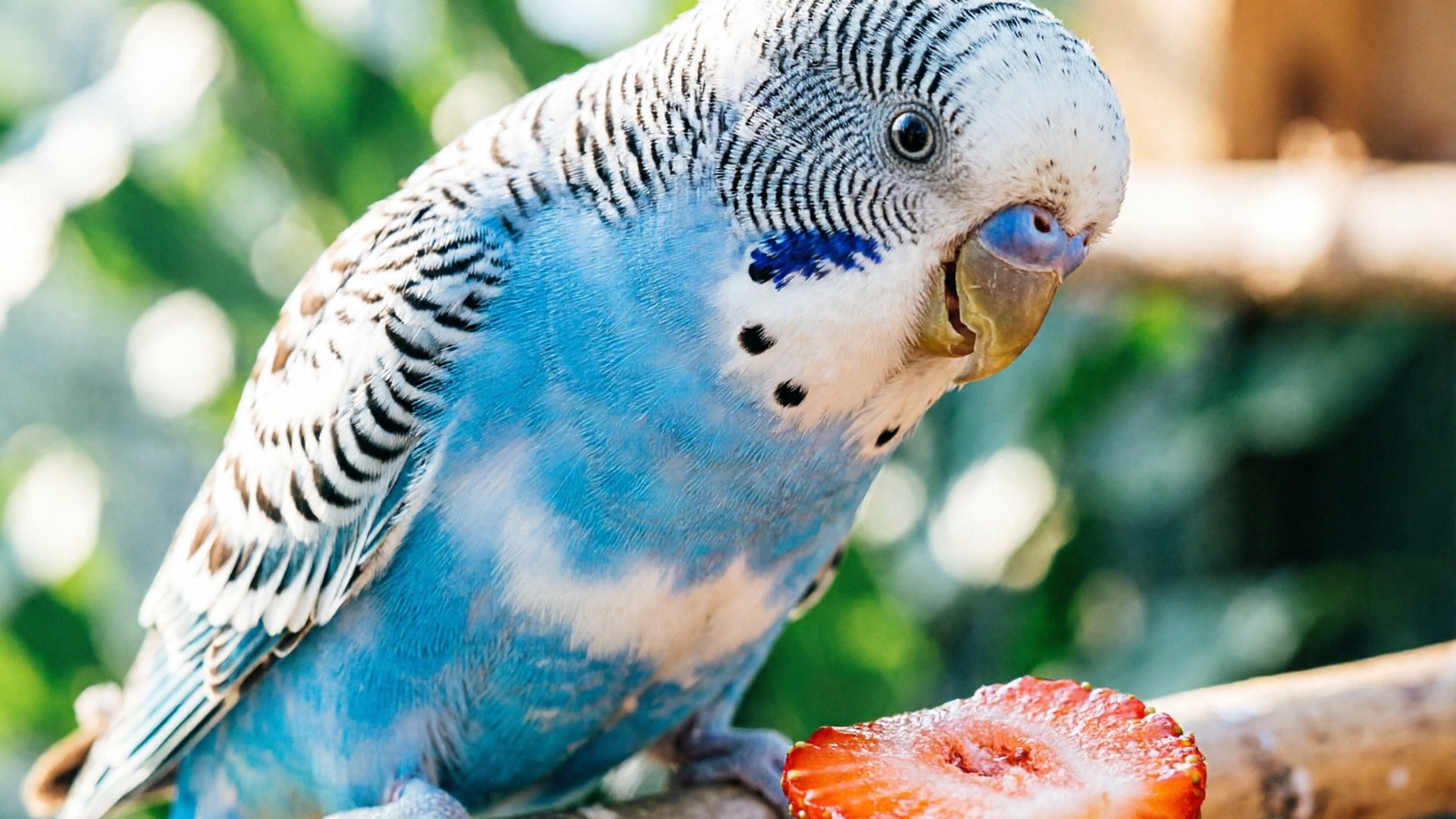
Quick Answer — Yes, But Strawberries Are a Treat, Not a Staple
Can budgies eat strawberries? Yes — as an occasional treat. Offer one or two small pieces (about a quarter of a medium strawberry), once or twice per week. Strawberries provide vitamin C (58.8mg per 100g), antioxidants, and manganese, but their sugar content (4.9g per 100g) means they should never exceed 5-10% of your budgie’s daily diet. Always wash thoroughly, remove the green hull, and cut into bite-sized pieces.
Technically, strawberries are non-toxic and most budgies enjoy them. Practically, 4.9g sugar per 100g combined with pesticide risk (strawberries rank third on the EWG’s Dirty Dozen list) means portion control is essential. Best practice: adults get strawberries 1-2 times per week; babies get far less or none.
One quick note: “budgie” and “parakeet” refer to the same species — Melopsittacus undulatus. “Budgie” is the common name in the UK and Australia, while “parakeet” is used more often in the United States. The feeding advice applies equally to both.
Red droppings are normal. Strawberries contain anthocyanins — red pigments that pass through the digestive system intact. Red or pinkish droppings after eating strawberries are completely normal and not a sign of blood. If you see red droppings without having fed red foods, that warrants a vet visit.
For a complete breakdown of daily nutrition requirements, see our budgie diet guide. When it comes to whether can budgies eat strawberries safely, the answer depends on portion size and frequency.
Strawberry Nutrition Facts — What’s Actually in Them
Dr. Harvey’s Incredible Canary Blend is a quality option worth considering for your setup.
Here is what 100g of raw strawberry contains and how each value relates to budgie dietary needs:
| Nutrient | Strawberry (per 100g) | Budgie Relevance | Assessment |
|---|---|---|---|
| Sugar | 4.9g | <2-3g/day total fruit | ⚠️ Moderate |
| Water | 91g | Budgies tolerate well | ✅ Acceptable |
| Protein | 0.7g | Seed/pellet provides | ❌ Negligible |
| Fat | 0.3g | <5% dry weight | ✅ Minimal |
| Fiber | 2.0g | Aids digestion | ✅ Beneficial |
| Calcium (Ca) | 16mg | — | ⚠️ Low |
| Phosphorus (P) | 24mg | — | ⚠️ Elevated |
| Ca:P Ratio | 0.67:1 | Ideal 1.5:1 to 2:1 | 🔴 Unfavorable |
| Vitamin C | 58.8mg | Budgies cannot synthesize VC | ✅ High |
| Manganese | 0.39mg | Bone health, antioxidant | ✅ Beneficial |
| Oxalates | Low-moderate | Binds calcium mildly | ⚠️ Minor concern |
| Anthocyanins | High (red pigment) | Strong antioxidant | ✅ Beneficial |
| Folate | 24µg | Cell health | ✅ Present |
| Potassium | 153mg | Fluid balance | ✅ Present |
The vitamin C advantage
Vitamin C is the standout nutrient. Budgies, like most parrots, cannot synthesize their own vitamin C and must obtain it from food. At 58.8mg per 100g, strawberries deliver significantly more vitamin C than most other common fruits — for comparison, our article on can budgies eat apples notes that apples contain only 4.6mg of vitamin C per 100g, making strawberries roughly 13 times richer in this essential nutrient. For owners researching whether can budgies eat strawberries, this nutritional edge is a key advantage.
The anthocyanins that give strawberries their red color are potent antioxidants that support immune function and reduce cellular damage. Manganese contributes to bone health and enzyme function.
The Ca:P ratio of 0.67:1 is not ideal, but budgies are less sensitive to Ca:P imbalance than reptiles. Unlike bearded dragons, budgies do not rely on UVB-triggered vitamin D3 synthesis for calcium absorption, so the impact of a single high-phosphorus treat is less severe.
The Three Real Risks — Sugar, Pesticides, and Oxalates
Many owners find that ZuPreem Smart Selects works well for their pet’s needs.
| # | Risk | Mechanism | Severity | Controllability |
|---|---|---|---|---|
| 1 | Sugar (4.9g/100g) | Excess → obesity, fatty liver disease, diabetes, rejection of staple foods | 🟡 Moderate | ✅ Limit frequency |
| 2 | Pesticide residue | Strawberries = EWG Dirty Dozen #3; budgies weigh 30-40g, so toxins hit harder | 🔴 High | ✅ Organic + thorough washing |
| 3 | Oxalates | Mild calcium binding; lower than raspberries/blackberries | 🟡 Low-moderate | ✅ Strawberry oxalate is low |
Can Budgies Eat Too Many Strawberries?
Yes — and the consequences go beyond a stomachache. A budgie weighs roughly 30-40 grams. Even a small amount of excess sugar has an outsized effect on such a tiny body.
Signs of excess fruit include:
- Red or loose droppings — normal after strawberries (anthocyanins), but persistent loose stool is a concern
- Weight gain — fuller breast area
- Food rejection — refusing seeds or pellets while waiting for fruit
- Lethargy — sugar crash after a fruit-heavy meal
In severe cases, chronic excess sugar contributes to hepatic lipidosis (fatty liver disease), one of the most common causes of death in pet budgies. This is why the question of whether can budgies eat strawberries must always include a strong emphasis on moderation.
Hepatic Lipidosis (fatty liver disease) is the excessive accumulation of triglycerides in the liver cells of birds, most commonly caused by chronic overconsumption of simple carbohydrates and dietary fat relative to energy expenditure. According to the Association of Avian Veterinarians (AAV), hepatic lipidosis is the leading preventable cause of death in captive budgerigars (Melopsittacus undulatus). The condition develops insidiously — a budgie may appear normal externally while its liver becomes pale, enlarged, and fragile. Advanced stages cause acute liver failure, hemorrhage, and sudden death. Early signs include overgrown beak, lethargy, and green-tinted droppings (biliverdin staining). Weight management and a diet limited to 5-10% fruit are the primary prevention strategies.
The AAV identifies diet-related obesity and fatty liver disease as leading preventable health problems in captive parrots.
Correcting dangerous competitor advice: several competing articles recommend practices that can harm your budgie. Never add strawberry jam to drinking water — jam contains 40-50g of sugar per 100g, which is potentially lethal for a 30g bird. Never offer ice cubes — cold food slows budgie digestion and causes discomfort. And avoid mixing strawberries with citrus fruits like oranges, whose citric acid can irritate a budgie’s crop.
If your budgie develops persistent behavioral changes like food refusal or unusual vocalization patterns after dietary changes, diet is often a contributing factor. When determining whether can budgies eat strawberries without negative side effects, monitor your bird’s behavior closely. For budgie behavior problems, nutritional imbalance should be one of the first things you investigate.
Strawberry Seeds, Leaves, and Preparation — What’s Safe?
For this purpose, Harrison’s Adult Lifetime Fine (TOP PICK) is a popular choice among pet owners.
Can Budgies Eat Strawberry Seeds?
Yes. Strawberry seeds (called achenes) are tiny, non-toxic, and completely safe.
Some competitors recommend removing strawberry seeds — this is incorrect. Unlike apple seeds, which contain amygdalin (a cyanide precursor), strawberry achenes are harmless. The seeds contain small amounts of fiber and antioxidants, and a budgie’s digestive system handles them without difficulty.
Can Budgies Eat Strawberry Leaves?
Strawberry leaves (the green calyx) are not toxic, but removing them is the safer choice. The primary concern is pesticide residue — leaves are exposed throughout the growing season and accumulate more pesticide than the fruit. If you use organic strawberries, the green tops are technically safe, but offer minimal value compared to leafy greens like spinach or kale.
Can Budgies Eat Frozen Strawberries?
Frozen strawberries are fine once fully thawed to room temperature. Never feed cold or icy food — it slows digestion and can cause crop stasis. Avoid freeze-dried strawberries entirely (sugar concentrates ~10x). Never feed processed forms: no jam, no juice, no flavored foods.
Safe Preparation Protocol
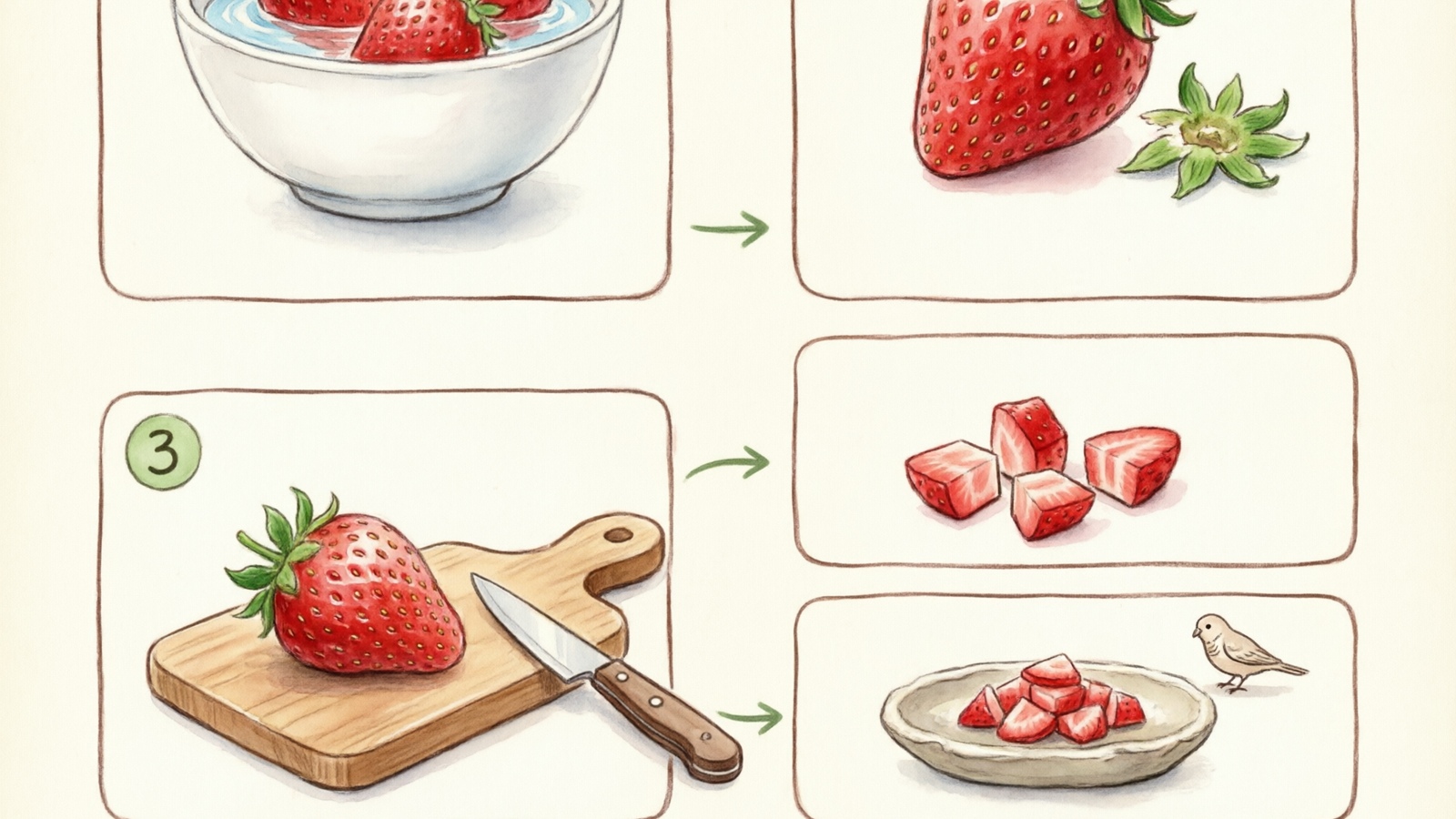
When asking whether can budgies eat strawberries, proper preparation is just as important as portion control. Follow these steps:
- Choose organic when possible — strawberries are EWG Dirty Dozen number three
- Soak in baking soda solution (1 tsp per 2 cups water) for 5-10 minutes — more effective than plain water at removing pesticide residue
- Remove the green hull — reduces pesticide and oxalate exposure
- Cut into small pieces — roughly 1cm or budgie-beak-sized
- Thaw frozen strawberries completely to room temperature before serving
- Remove uneaten portions within 2 hours to prevent bacterial growth
Feeding Frequency — Adult vs Baby Budgies
How Often Can Budgies Eat Strawberries?
For healthy adult budgies (over 16 weeks), strawberries can be offered once or twice per week — one or two small pieces, roughly a quarter of a medium strawberry.
Can Baby Budgies Eat Strawberries?
Baby budgies (under 4 weeks) should not receive strawberries. Chicks depend entirely on crop milk from their parents or a hand-feeding formula designed for their specific needs.
Juvenile budgies (4-16 weeks) can have strawberries no more than once per week, in an extremely small amount. Young budgies are in a rapid growth phase requiring maximum protein and calcium for bone and feather development. Every feeding slot matters — a low-protein, sugary treat displaces the nutrients a growing bird needs. ARAV guidelines recommend fruit comprise less than 5% of a juvenile parrot’s diet. This reinforces why the answer to whether can budgies eat strawberries must consider the bird’s age and developmental stage.
| Age | Strawberry Frequency | Per Serving | Reason |
|---|---|---|---|
| Baby (0-4 weeks) | ❌ Avoid entirely | None | Chicks need crop milk or formula only |
| Juvenile (4-16 weeks) | <1x/week max | 1 tiny piece | Growth phase — high protein and calcium needed |
| Adult (>16 weeks) | 1-2x/week | 1-2 small pieces (~1/4 strawberry) | Occasional treat for variety |
| Senior (>5 years) | 1x/week | 1 small piece | Slower metabolism — sugar harder to process |
For comprehensive guidance on all life stages, see our parakeet care guide.
Product Recommendations
Here are some products mentioned in this guide:
Frequently Asked Questions
Can budgies eat strawberries?
Yes, budgies can eat strawberries as an occasional treat. Feed one or two small pieces (about a quarter of a medium strawberry) once or twice per week for adults. Strawberries provide vitamin C (58.8mg per 100g), antioxidants, and manganese, but their sugar content (4.9g per 100g) means they should never exceed 5-10% of your budgie’s daily diet. Always wash thoroughly, remove the green hull, and cut into bite-sized pieces.
Can budgies eat strawberry seeds?
Yes, strawberry seeds (achenes) are completely safe for budgies. Unlike apple seeds, which contain amygdalin (a compound that converts to cyanide), strawberry seeds are tiny, harmless, and actually contain beneficial fiber and antioxidants. There is no need to remove seeds before feeding.
Can budgies eat strawberry leaves?
Strawberry leaves are not toxic to budgies, but most avian veterinarians recommend removing them. The main concern is pesticide residue — strawberry leaves tend to accumulate more pesticides than the fruit itself. If you use organic strawberries, the green tops are technically safe, but they offer minimal nutritional value compared to dedicated leafy greens.
Can budgies eat frozen strawberries?
Frozen strawberries are safe once fully thawed to room temperature. Never feed cold or icy food to a budgie, as it can slow their digestion and cause discomfort. Avoid freeze-dried strawberries — the dehydration process concentrates sugar roughly 10 times. Never feed strawberries with added sugar, syrup, or in processed forms like jam.
What happens if a budgie eats too many strawberries?
Eating too many strawberries can cause loose droppings (which may appear red — this is normal and not a sign of blood), weight gain, and a preference for sweet foods over their staple seed or pellet diet. In severe cases, excess sugar can contribute to fatty liver disease. If your budgie shows persistent diarrhea or lethargy after eating strawberries, consult an avian veterinarian.
Best Fruits for Budgies — A Nutritional Comparison
What Fruits Can Budgies Eat
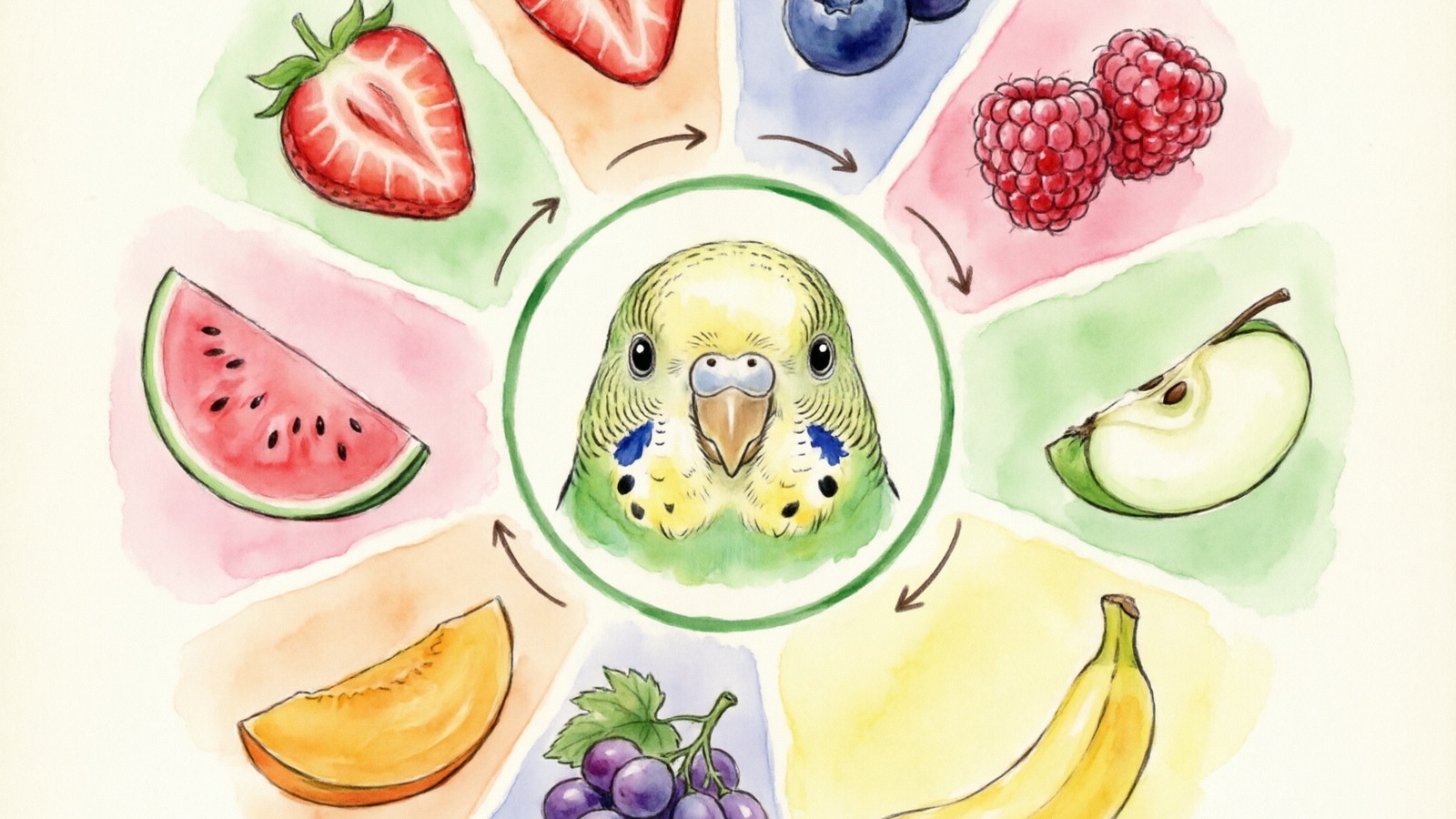
No single fruit is perfect. When considering whether can budgies eat strawberries alongside other fruits, sugar content is the deciding factor. The healthiest approach is rotation — alternate between different fruits weekly so your budgie gets the benefits of each without cumulative drawbacks.
| Fruit | Sugar/100g | VC/100g | Fiber/100g | Ca:P | Oxalates | Frequency | Best Quality | Biggest Risk |
|---|---|---|---|---|---|---|---|---|
| Blueberry | 10.0g ⚠️ | 9.7mg | 2.4g ✅ | ~1:1.1 | Low ✅ | 1-2x/week | Best Ca:P + lowest oxalates | ❌ Highest sugar |
| Raspberry | 4.4g ✅ | 26.2mg ✅ | 6.5g ✅✅ | ~1:1.2 | High 🔴 | 1-2x/week | Highest fiber + lowest sugar | 🔴 High oxalates |
| Strawberry | 4.9g ⚠️ | 58.8mg ✅✅ | 2.0g | 0.67:1 🔴 | Low-mod | 1-2x/week | Highest vitamin C | 🔴 Worst Ca:P |
| Apple (seedless) | 10.4g ⚠️ | 4.6mg | 2.4g ✅ | ~1:1.5 | Low ✅ | 1-2x/week | Best Ca:P of common fruits | ❌ High sugar, seeds toxic |
| Banana | 12.2g 🔴 | 8.7mg | 2.6g | ~1:3 🔴🔴 | Low | 1-2x/month | High potassium | 🔴 Worst Ca:P + high sugar |
| Grape | 16.3g 🔴🔴 | 3.2mg | 0.9g | ~1:2 | Low | 1-2x/month | High moisture | 🔴🔴 Highest sugar + tough skin |
| Mango | 13.7g 🔴 | 36.4mg ✅✅ | 1.6g | ~1:1.1 | Low | 1x/week | Highest vitamin A | ❌ High sugar |
| Watermelon | 6.2g | 8.1mg | 0.4g | ~1:1 | Low | 1-2x/month | Highest water (92%) | ❌ Extremely low fiber |
Complete Safe Fruit List for Budgies
| Frequency | Fruits | Key Reason |
|---|---|---|
| 1-2x/week | Blueberry, Raspberry, Strawberry, Apple (seedless) | Berry nutrition density + apple’s balanced Ca:P |
| 1x/week | Mango, Kiwi | Good nutrients but higher sugar |
| 1-2x/month | Banana, Grape, Watermelon | Sugar too high, poor Ca:P, or minimal fiber |
| ❌ Never | Avocado (persin — toxic), Citrus (acid irritates crop), Rhubarb (extreme oxalates), Cherry pits (cyanide) | Toxic or dangerous |
Grapes deserve special caution — at 16.3g of sugar per 100g, they contain more than three times the sugar of strawberries. Our article on can budgies eat grapes covers the specific risks in detail.
If you can only stock one fruit for regular rotation, apples (always seedless) offer the most balanced nutritional profile with a favorable Ca:P ratio and moderate fiber. Most budgies readily accept strawberries, blueberries, and apple pieces, making rotation straightforward once you establish the routine.