A search for “best axolotl plant” returns a mix of small pet blogs, aquarium forums, and retailer pages — but very few comprehensive reviews. Most existing articles cover only live plants or only artificial plants, never both.
What is an axolotl plant? An axolotl plant is any aquatic plant species that thrives in cold-water (60-68°F), low-light aquarium conditions and poses no physical risk to axolotl skin. According to Aquarium Co-Op, an authoritative source on cold-water planted tanks, only a handful of species meet these strict criteria. Axolotl Planet’s care guide similarly confirms that plant selection must prioritize soft leaves and cold tolerance above all other factors.
This guide compares 7 axolotl plant options side by side — three live plants and four artificial ones — so you can choose the right mix for your tank. All picks are verified safe for axolotls: no sharp edges, no toxic materials, and tolerant of cold water temperatures.
Why Axolotls Need the Right Axolotl Plant
Choosing the right axolotl plant is essential for a healthy tank environment. Every axolotl plant in this guide meets strict safety standards: no sharp edges, no toxic materials, and cold water tolerance.
What are live plants for an axolotl tank? Live plants for axolotl tanks are real aquatic species that survive in 60-64°F water without special lighting or CO2 injection. Unlike tropical tank plants, they do not require heating or intense light. PetMD notes that live plants in axolotl habitats serve a dual purpose: water filtration through nitrate absorption and behavioral enrichment through natural cover.
An axolotl plant must meet four criteria to be safe: soft leaves and stems with no sharp or wire edges, cold water tolerance between 60 and 64°F, low-light survival, and secure anchoring. The University of Michigan’s Animal Diversity Web documents that axolotls have sensitive external gills and delicate skin, making soft plant material essential. When shopping for an axolotl plant, always verify these requirements before purchase.
Plants with hard plastic stems, copper-based treatments, or pesticide residue are unsafe for any axolotl plant setup. The Amphibian and Reptile Conservation journal has documented that copper is toxic to amphibians even at low concentrations. Always check axolotl tank plants safe guidelines before introducing any new species.
Safety Checklist for Any Axolotl Plant: Consult axolotl tank plants safe references and verify each species before purchase.
- No sharp or wire edges on any part of the plant
- Soft, flexible leaves that bend without breaking
- Tolerates 60-64°F water temperature
- Survives in low-light conditions
- No copper treatment or pesticide residue
- Securely anchored if rooted
Choosing the right axolotl plant also ties into your overall tank decor strategy. Plants serve as both functional habitat elements and visual accents in any axolotl enclosure.
Live vs Artificial Axolotl Plant Options — Which Is Better?
The best choice depends on your experience level and maintenance preferences. Here is a quick comparison:
| Feature | Live Plants | Artificial Plants |
|---|---|---|
| Water quality benefit | Absorbs nitrates, produces oxygen | None |
| Maintenance | Pruning, lighting, substrate | Rinse occasionally |
| Cost | $4-$15 per plant | $5-$36 per plant |
| Lifespan | Months to years (with care) | Indefinite |
| Axolotl interaction | Natural grazing, hiding spots | Visual cover only |
| Risk of decay | Yes — dying plants pollute water | None |
| Setup difficulty | Moderate — needs proper anchoring | Easy — just place in tank |
Live plants are the natural choice for experienced keepers looking for the best axolotl plant. They improve water quality by absorbing nitrates and releasing oxygen. The Java Fern axolotl pairing and Anubias axolotl pairing are nearly indestructible in cold water. Live plants also provide micro-habitats for beneficial bacteria.
Artificial plants win on convenience. No lighting, no substrate, no decay. Soft silk plants like the Penn-Plax line look natural and are completely safe for axolotl skin. They are ideal for beginners or keepers who travel frequently.
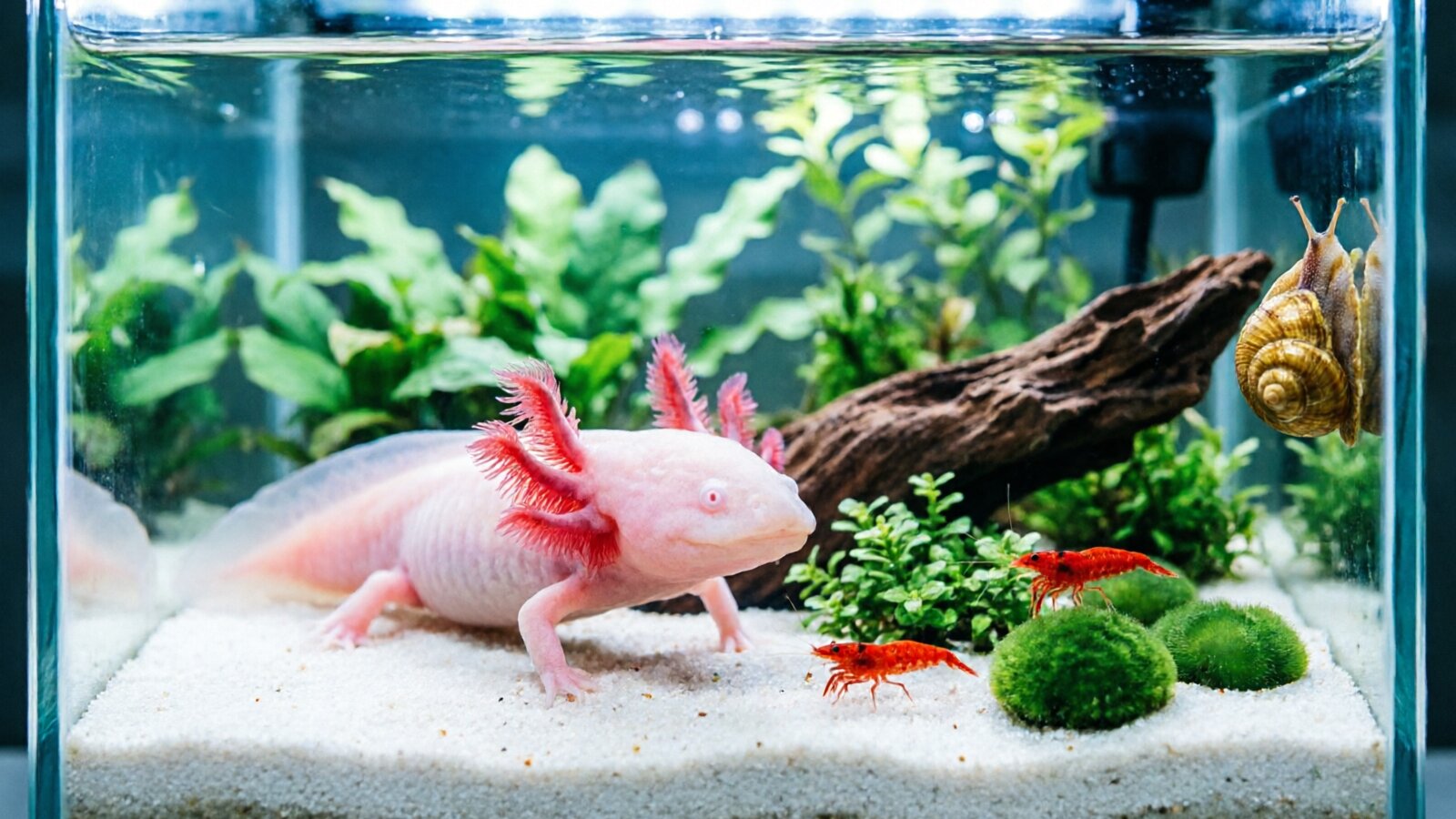
Our recommendation: use a mix of both live and artificial plants for the best axolotl plant setup. The live plants for axolotl tank options improve water quality, while the artificial plants for axolotl tank options provide zero-maintenance coverage.
The right axolotl plant combination works best when matched to an appropriately sized axolotl tank. The Java Fern axolotl and Anubias axolotl plants need room to spread, while Hornwort axolotl floats freely.
Quick Comparison — 7 Best Axolotl Plant Options
| Rank | Plant | Type | Price | Rating | Best For |
|---|---|---|---|---|---|
| Java Fern | Live | $5.99 | Overall best live plant | ||
| Anubias Nana | Live | $6.99 | Easiest live plant | ||
| Hornwort | Live | $3.99 | Best floating plant | ||
| 4 | UreverFins 10 Pack Silk Aquarium Plants | Artificial | $12.68 | Best artificial overall | |
| 5 | Fluval Plant Pack | Artificial | $12.99 | Best variety pack | |
| 6 | Zoo Med Floating Log, Medium | Artificial | $32.94 | Best decor combo | |
| 7 | Imagitarium Plant | Artificial | $4.99 | Budget pick |
Best Live Plants for Axolotl Tanks — 3 Reviewed
Choosing the best axolotl plant means considering whether a live or artificial option fits your tank setup. Live plants offer water quality benefits, while artificial plants provide zero-maintenance coverage.
1. Java Fern (Microsorum pteropus) — TOP PICK
Every Java Fern axolotl setup benefits from the plant’s slow growth and low-light tolerance. Aquarium Co-Op ranks it as the number one cold-water aquarium plant.
Its broad, dark green leaves provide excellent cover for shy axolotls. The leaves are thick and leathery — completely safe if an axolotl brushes against them. The Java Fern axolotl pairing works because the plant grows slowly, which means less maintenance and less risk of being uprooted.
The Java Fern axolotl pairing thrives in low-light, cold-water conditions — exactly the environment axolotls need. It does not require substrate. You can attach it to driftwood, rocks, or even the back wall of the tank using fishing line or cotton thread.
Pros:
- Thrives in 60-64°F water — matches axolotl temperature perfectly
- Extremely tough leaves — zero abrasion risk
- Low-light tolerant — no special lighting needed
- Does not need substrate — attaches to any surface
- Slow-growing — minimal maintenance
Cons:
- Slow growth means less dramatic visual impact
- Can develop brown spots if water parameters fluctuate wildly
- May melt when first introduced (normal acclimation)
The best overall axolotl plant for both beginners and experienced keepers. The Java Fern axolotl combination remains the gold standard across every axolotl care community.
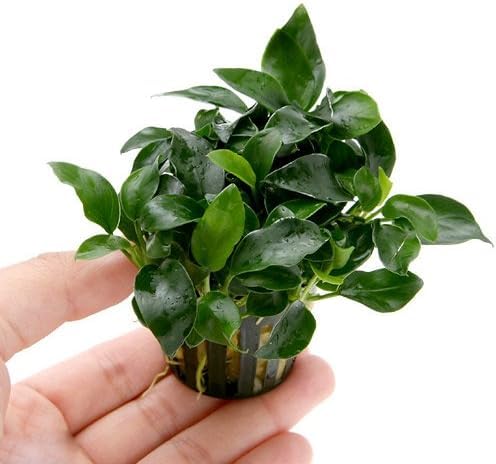
2. Anubias Nana (Anubias barteri var. nana) — Runner-Up
The second most recommended live plant in the axolotl community. Anubias Nana has thick, heart-shaped leaves that are virtually indestructible.
Like Java Fern, Anubias is an epiphyte — it should not be planted in substrate, as burying the rhizome causes rot according to the Aquarium Co-Op plant guide. The Anubias axolotl combination works because the broad leaves provide natural shade and cover. The Axolotl Planet care guide specifically highlights Anubias as a top recommendation for its leaf thickness.
The Anubias axolotl compatibility is excellent because the plant tolerates the same cold water and low-light conditions that axolotls prefer. It grows even more slowly than Java Fern, which means almost zero maintenance once established.
Pros:
- Thickest leaves of any common aquarium plant — maximum safety
- Extremely slow growth — virtually zero pruning needed
- Tolerates a wide range of water parameters
- Broad leaves create natural hiding spots The Anubias axolotl pairing is the most beginner-friendly live plant option. Reddit’s r/Axolotl community consistently ranks it second only to Java Fern.
- Virtually indestructible — nearly impossible to kill
Cons:
- Very slow growth — can take months to show visible new leaves
- Algae can grow on leaves if lighting is too strong
- Slightly more expensive than Java Fern
The Anubias axolotl pairing offers maximum safety — the thickest leaves of any common aquarium plant provide excellent protection for delicate axolotl skin. Many experienced keepers choose the Anubias axolotl combination for its near-zero maintenance requirements.
3. Hornwort (Ceratophyllum demersum) — Best Floating Plant
The best floating axolotl plant option for your tank. Hornwort (Ceratophyllum demersum) is a submerged freshwater plant found on every continent except Antarctica. Aquarium Co-Op notes that Hornwort is one of the fastest nitrate absorbers available.
The Hornwort axolotl pairing works because this plant grows rapidly, oxygenates water, and requires no anchoring.
Hornwort axolotl setups benefit from the plant’s ability to float freely at the water surface. The dense, feathery stems provide excellent cover for axolotls that prefer to stay near the top. It also absorbs significant amounts of nitrates, helping to maintain water quality.
Unlike Java Fern and Anubias, Hornwort does not need to be attached to anything. Simply drop it in the tank and it will float. If you want it anchored, you can tuck the base under a rock — but this is not required.
Pros:
- Zero anchoring needed — just drop it in
- Fast-growing — rapid nitrate absorption
- Excellent oxygenator — improves water quality noticeably
- Provides surface-level shade and cover
- Cold-water tolerant — survives 60-64°F easily
Cons:
- Fast growth means frequent trimming is required
- Can become messy if not maintained
- May shed needles that require filter cleaning
- Not suitable as a decorative centerpiece
The best axolotl plant choice for water quality improvement and surface coverage with zero setup effort.
Best Artificial Plants for Axolotl Tanks — 4 Reviewed
An artificial axolotl plant is the right choice for keepers who want coverage without maintenance. Here are the four best options.
4. UreverFins 10 Pack Silk Aquarium Plants — Best Overall Artificial
The most recommended artificial option for axolotl keepers. UreverFins Silk Aquarium Plants are softer and more flexible than hard plastic alternatives, significantly reducing abrasion risk. Reddit’s r/Axolotl community frequently recommends silk over plastic for this reason.
The set typically includes 3-5 individual plants in varying heights and leaf shapes. The weighted bases keep them upright in the tank. The silk material moves naturally with water flow, creating a realistic appearance.
UreverFins Silk Aquarium Plants are axolotl-safe because the material flexes when an axolotl pushes against it. There are no wire frames or sharp plastic edges. The colors are natural greens and browns rather than bright, unnatural hues.
Pros:
- Soft silk material — no abrasion risk for axolotl skin
- Weighted bases stay upright without substrate
- Natural color palette blends well with tank decor
- Multiple plant shapes in one set — good variety
- Zero maintenance — no lighting, no pruning, no decay
Cons:
- Can accumulate algae over time — requires occasional rinsing
- Silk material may fray after a year or more of use
- Slightly more expensive than basic plastic plants
The best axolotl plant choice when you want zero maintenance — soft, safe, and natural-looking.
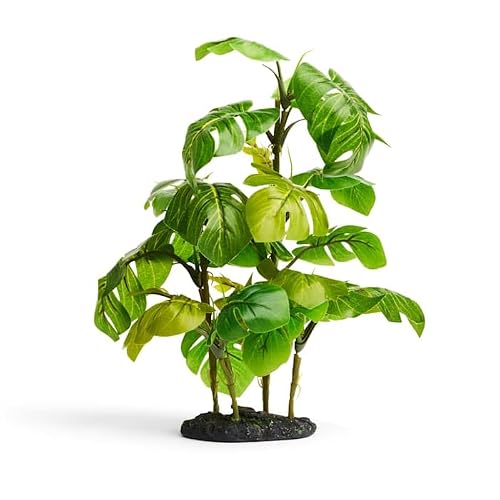
5. Fluval GloFish Artificial Plant Pack — Best Variety
A variety pack of soft silicone plants designed for community tanks but fully compatible with axolotl setups. The pack includes 3-4 plants in different sizes and colors.
Fluval’s silicone material is softer than traditional plastic plants. The leaves bend and flex when touched, which means no sharp edges can injure an axolotl. The weighted bases keep plants stable in moderate water flow.
Artificial plants for axolotl tank setups from Fluval offer good value because you get multiple plants in one package. The silicone material is more durable than silk and does not fray over time.
Pros:
- Soft silicone material — bends without breaking
- Multiple sizes in one pack — flexible placement options
- Durable — does not fray or degrade like silk
- Weighted bases — stable in moderate water flow
- Good value — multiple plants at a reasonable price
Cons:
- Some color variants are too bright for natural-looking tanks
- Smaller plants may not provide adequate cover for adult axolotls
- Silicone can attract algae in high-light tanks
Best value variety pack — multiple soft silicone plants for complete tank coverage.
6. Zoo Med Floating Aquarium Log (Medium) — Best Decor Combo
A unique floating decoration that gives axolotls surface cover without taking up floor space. The medium log is molded from smooth resin with no sharp edges, and it floats at the water surface where light-sensitive axolotls like to hang out.
The hollow interior lets axolotls rest partly inside it, and the bottom-weighted base keeps the log stable when they climb on or rest against it. Because it floats freely, you can nudge it anywhere in the tank without anchors or suction cups.
This is an excellent option for axolotls that prefer to rest near the surface. The medium size fits adult axolotls better than the small 2-pack, and it requires zero maintenance beyond an occasional rinse.
Pros:
- Floating design — does not take up floor space
- Resin construction — completely smooth, zero abrasion
- Combines a hide and surface shade in one piece
- Easy to reposition — no anchoring required
- Works in any tank size
Cons:
- Single piece — limited coverage compared to multi-plant sets
- Small size — large adult axolotls rest against it rather than inside it
- May drift with stronger water flow
- No plants included — pair with silk plants for fuller coverage
This best axolotl plant option combines a floating hide and surface shade in one piece.
7. Imagitarium Artificial Plant (Small) — Budget Pick
The most affordable axolotl-safe artificial plant option. The Imagitarium small plant costs under $5 and provides basic cover and visual interest.
The plant is made of soft plastic with a suction cup base that attaches to the tank wall. The leaves are flexible and pose no abrasion risk to axolotl skin. The compact size is ideal for smaller tanks or as a supplement to larger plants.
Imagitarium plants are a good starting point for new axolotl keepers on a budget. They are widely available at pet stores and online. The suction cup base makes placement and removal easy.
Pros:
- Under $5 — the most affordable option
- Suction cup base — easy to place and reposition
- Soft plastic leaves — safe for axolotl skin
- Compact size — fits in any tank
- Widely available at pet stores
Cons:
- Small size — may not provide adequate cover for adult axolotls
- Suction cup may lose grip over time
- Less realistic appearance than silk or silicone plants
- Single plant — limited visual impact
The best axolotl plant option on a budget — under $5, safe, and easy to place.
How to Set Up an Axolotl Plant in Your Tank
Setting up live plants in an axolotl tank requires more planning than artificial ones. Here is a step-by-step guide for both types.
Setting Up Live Plants:
-
Rinse thoroughly: Rinse all live plants in dechlorinated water before adding them to the tank. This removes potential pesticide residue and debris.
-
Anchor epiphytes: Attach Java Fern and Anubias to driftwood or rocks using fishing line or cotton thread. Do not plant them in substrate — their rhizomes will rot if buried.
-
Place floating plants: Drop Hornwort into the tank and let it float. If you want it contained, tuck one end under a rock.
-
Position rooted plants: If using Amazon Sword or other substrate-rooted plants, plant them in the axolotl substrate after the substrate is in place. Pack substrate firmly around the roots to prevent uprooting.
-
Add artificial plants last: Place silk and plastic plants after live plants are positioned. This prevents them from being displaced during live plant setup.
Setting Up Artificial Plants:
-
Rinse first: Rinse all artificial plants in warm water to remove manufacturing residue.
-
Check for sharp edges: Run your fingers along every leaf and stem. If anything feels sharp or rough, remove that plant from the tank.
-
Place strategically: Position taller plants in the back and shorter ones in the front. Leave open swimming space in the center of the tank.
-
Secure with suction or weight: Most artificial plants have weighted bases or suction cups. Make sure they are stable before adding water.
During initial tank setup, plan your plant layout before adding water. This makes it much easier to position and anchor everything correctly.
Axolotl Plant Care and Maintenance
Live plants require ongoing care to stay healthy in an axolotl tank. Artificial plants need almost no maintenance at all.
Live plant care: The Java Fern axolotl pairing requires minimal pruning. The Anubias axolotl combination needs even less care once established. Hornwort axolotl grows fast and needs trimming every 1-2 weeks.
- Trim regularly: Remove dead or decaying leaves weekly. Decaying plant matter pollutes the water.
- Monitor growth: Fast-growing plants like Hornwort need trimming every 1-2 weeks. Slow growers like Java Fern and Anubias may need trimming only once a month.
- Check water temperature: Most axolotl-safe plants tolerate 60-64°F well. If your axolotl chiller fails and temperatures spike, some plants may wilt.
- Watch for algae: Low-light conditions reduce algae growth, but it can still appear on slow-growing leaves. Gently wipe leaves with a soft sponge if needed.
- Replace dying plants: If a live plant shows signs of persistent decay, remove it before it affects water quality.
Artificial Plant Care:
- Rinse monthly: Remove artificial plants and rinse them under warm water to remove algae and debris.
- Check for damage: Inspect plants monthly for fraying, cracking, or loose parts. Replace damaged plants to prevent injury.
- Reposition as needed: Move plants around periodically to change the tank layout and prevent algae buildup in the same spots.
Proper plant care is part of overall axolotl care. Healthy plants contribute to cleaner water and a more comfortable environment for your axolotl.
Frequently Asked Questions
What plants are safe for axolotl tanks?
Java Fern, Anubias, and Hornwort are the safest live plants for axolotls. PetMD confirms these three species as the most commonly recommended choices in veterinary-reviewed axolotl care guides.
Can axolotls eat live plants?
Axolotls may nibble on live plants occasionally but rarely consume them in significant amounts. According to veterinary sources, axolotl diet is primarily protein-based carnivore food — earthworms, bloodworms, and pellets.
Do axolotl tanks need live plants?
Live plants are not strictly required but are highly recommended. The Anubias axolotl pairing and Java Fern are the most popular choices for water quality improvement. Artificial plants are a valid alternative for zero-maintenance setups.
How many plants should I put in an axolotl tank?
Two to four plants is ideal for a 20-gallon axolotl tank. The Java Fern axolotl option is the most space-efficient single plant. Mix live and artificial for the best balance of function and aesthetics.
Too many plants can reduce swimming space.
Are artificial plants safe for axolotls?
Yes, artificial plants made of soft silk or flexible silicone are safe. Verify all axolotl tank plants safe requirements before purchase — check for sharp edges, wire frames, or rough textures. Avoid hard plastic plants with rigid stems.
Conclusion
The best live choice for water quality is Java Fern — recommended by Aquarium Co-Op, Axolotl Planet, and the r/Axolotl community alike. For zero-maintenance coverage, the UreverFins Silk Aquarium Plants set provides the safest artificial option.
Budget-conscious keepers should start with the Hornwort axolotl pairing at $3.99 for live plants, or the Imagitarium small plant at $4.99 for artificial. The Java Fern axolotl option remains the best value overall at $5.99. Both are safe, effective, and widely available.
Whatever combination you choose, always prioritize soft, non-abrasive materials. Axolotl skin is delicate, and the wrong plant can cause serious injury. Start with one or two plants, observe how your axolotl interacts with them, and expand from there.