Chameleons are among the most visually striking reptiles you can keep — and among the most misunderstood. Proper chameleon care starts with understanding what makes these animals unique. Most new owners expect a handleable, interactive pet like a bearded dragon.
The reality of chameleon care is very different from what most new owners expect. Chameleons are display animals that thrive on observation, not handling. Proper chameleon care demands precise environmental control that goes well beyond what most beginner reptile keepers expect.
Is a Chameleon Right for You?
Too many new owners buy a chameleon on impulse because of the colors, only to rehome it within months when the chameleon care commitment becomes clear.
Difficulty: HIGH. Chameleons are significantly more demanding than bearded dragons, leopard geckos, or corn snakes.
They need specific UVB lighting, chameleon humidity cycles, screen enclosures, and daily misting routines — all essential to successful chameleon care. Small mistakes in chameleon care compound quickly into health problems.
Lifespan: 3-7 years depending on species and sex. Panther females live only 2-4 years due to the physical toll of egg production. Veiled chameleon care focuses on providing adequate calcium to prevent egg binding. This is shorter than most commonly kept pet reptiles.
Handling: Minimal. Chameleons stress from handling — limit interaction to 1-2 times per week for 5-10 minutes maximum.
Chronic stress suppresses the immune system and leads to illness — a common outcome of poor chameleon care (Mader, 2006 — Reptile Medicine and Surgery; Chameleon Academy — Chameleon Stress). If you want a pet you can hold daily, a bearded dragon is a better choice.
Time commitment: 15-30 minutes daily, mostly spent on chameleon humidity management. Feeding, misting, and spot cleaning are everyday tasks. Monthly deep cleans of the enclosure and drainage system take additional time.
The most common beginner mistake is spending heavily on the chameleon itself while under-budgeting the enclosure and lighting. The cage, UVB, and misting system combined typically cost more than the animal.
Quick Answer: Chameleons are “display pets” — watch them, don’t touch them. Color change communicates mood and temperature, not background matching (that is a common myth). Your first purchase should be a proper screen cage — see our chameleon cage guide for recommendations.
Best beginner species ranking: Veiled chameleons are the hardiest and most forgiving of minor husbandry errors. Panther chameleons are more colorful but slightly more sensitive to humidity fluctuations. Panther chameleon care requires more frequent misting sessions compared to veileds. Panther chameleon care also demands stricter humidity monitoring than veileds. Jackson’s chameleons are docile but have the strictest humidity requirements.
Chameleon Enclosure Setup
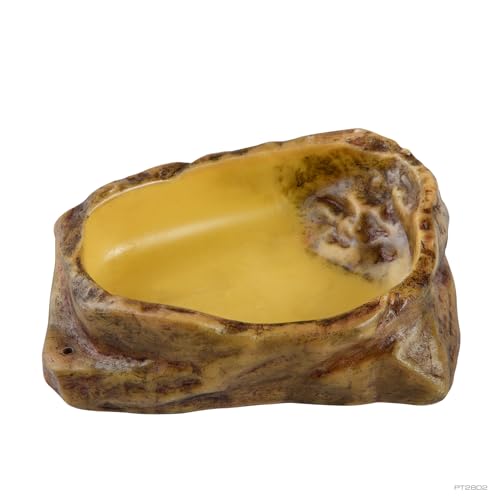
Exo Terra Water Dish Medium is a quality option worth considering for your setup.

Chameleon enclosure: Chameleons must be housed in all-screen or hybrid mesh enclosures — never glass tanks. Screen allows full UVB penetration, 360-degree ventilation, and eliminates reflection stress (Chameleon Academy — Chameleon Cage Selection; Mader, 2006 — Reptile Medicine and Surgery).
The enclosure must be taller than wide (minimum 36 inches height for adults) to accommodate their arboreal nature and proper chameleon temperature gradients. Inside the cage you need diagonal climbing branches, live plants for cover and humidity, a drainage system, a dripper for drinking, and proper chameleon temperature monitoring.
Glass tanks are dangerous for chameleons. They block 50-70% of UVB output, trap moisture which causes respiratory infections, and prevent proper chameleon humidity cycling (Ferguson et al., 2010 — Ferguson Zone classification; Mader, 2006 — Reptile Medicine and Surgery)., and create reflection stress. Your chameleon cage guide covers specific product recommendations.
Size progression by age:
- Hatchling (0-3 months): 16-inch nano cage
- Juvenile (3-8 months): 16-20-inch small cage
- Adult (8+ months): 36-inch minimum (large or XL)
Branch arrangement: Install at least three horizontal perches at different heights. This creates the vertical temperature gradient chameleons use to thermoregulate — warm basking zone at the top, cooler zone at the bottom.
Safe wood species: Oak, maple, birch, and bamboo. Never use pine or cedar — both release phenolic compounds and aromatic oils that are toxic to reptiles (Mader, 2006 — Reptile Medicine and Surgery; ASPCA — Toxic Plants for Reptiles).
Live plants: Pothos, ficus benjamina, and hibiscus provide humidity, visual cover, and additional climbing surfaces. Pothos is the most forgiving and tolerates the high chameleon humidity environment well.
Drainage: Place a plastic tray or cat litter box beneath the cage to catch water from misting and dripper systems. Proper drainage is essential for chameleon humidity control. Standing water at the cage bottom must be emptied daily to prevent bacterial growth that can disrupt chameleon humidity balance.
For specific cage product recommendations, see our best chameleon cage article. While ball pythons need steady ambient humidity, chameleons rely on chameleon humidity cycles from misting — compare approaches in our ball python humidity guide.
Lighting, Temperature & Humidity
Many owners find that Inkbird ITC-308 Thermostat works well for their pet’s needs.
UVB lighting and chameleon temperature management are the most critical elements of chameleon care. Chameleons synthesize vitamin D3 through UVB exposure at proper chameleon temperature, while chameleon humidity keeps their skin and respiratory systems healthy. — without adequate UVB, metabolic bone disease develops.
MBD softens bones, causes tremors, and eventually becomes fatal — meeting chameleon lighting requirements is the best prevention (Mader, 2006 — Reptile Medicine and Surgery; VCA Hospitals — Metabolic Bone Disease in Reptiles). Meeting chameleon lighting requirements means replacing UVB bulbs every 6-12 months even if they still produce visible light, because UVB output degrades over time.
Key rules for chameleon lighting requirements and heating:
- NO heat mats. Chameleons are arboreal and regulate chameleon temperature by moving up and down branches. Heat mats under the cage floor serve no purpose.
- NO red or night bulbs. Chameleons can see red light — a fact that complicates chameleon temperature management. Reptile visual pigment research confirms sensitivity to long-wavelength light (Gerrish et al., 2022 — Visual Pigments in Reptiles). Allow a natural temperature drop at night instead.
- Basking bulb: Use a standard incandescent or halogen bulb on the same side as the UVB fixture. This creates the warm-to-cool gradient essential for proper chameleon temperature control.
Side-by-side comparison of T5 HO fixtures with cheaper compact fluorescent bulbs reveals a substantial UVB output difference — T5 HO fixtures deliver noticeably stronger UVB at greater distances (Ferguson et al., 2010 — Ferguson Zone classification; Arcadia — UVB output degradation data).
A thermostat protects your chameleon from dangerous temperature swings — see our reptile thermostat guide for recommendations.
Species husbandry requirements:
| Parameter | Veiled Chameleon | Panther Chameleon (panther chameleon care focuses on humidity) | Jackson’s Chameleon |
|---|---|---|---|
| Difficulty | Moderate (easiest for veiled chameleon care) | Moderate-High | High |
| Chameleon Temperature (Basking) | 90-100°F (32-38°C) | 85-95°F (29-35°C) | 80-85°F (27-29°C) |
| Chameleon Temperature (Ambient) | 72-80°F (22-27°C) | 70-80°F (21-27°C) | 65-75°F (18-24°C) |
| Chameleon Temperature (Night Low) | 60-70°F (16-21°C) | 60-65°F (16-18°C) | 55-65°F (13-18°C) |
| Chameleon Humidity | 40-50% | 60-80% | 60-80% |
| UVB Bulb | T5 HO, 5.0 or 6% | T5 HO, 6% | T5 HO, 6% |
| UVB Distance | 6-8 inches from branch | 8-12 inches from branch | 8-12 inches from branch |
| UVB Schedule | 12 hrs on / 12 hrs off | 12 hrs on / 12 hrs off | 12 hrs on / 12 hrs off |
| Misting Frequency | 2x daily | 3x daily | 3x daily |
| Lifespan (Male) | 5-8 years | 5-7 years | 5-10 years |
| Lifespan (Female) | 4-6 years | 2-4 years | 5-9 years |
| Adult Size | 14-24 inches | 14-21 inches | 10-14 inches |
Chameleon temperature monitoring: Position one thermometer at basking branch height, one at mid-cage, and one near the bottom. Air temperature differs significantly from surface chameleon temperature at the branch level where the chameleon rests.
Chameleon humidity cycles mimic natural dew patterns — high humidity during misting sessions, then a gradual drop between sessions. This cycle is more important than maintaining a constant chameleon humidity reading.
Leopard geckos and chameleons both need UVB, but geckos are crepuscular while chameleons are diurnal with higher chameleon lighting requirements — compare full lighting setups in our leopard gecko lighting guide.
What Do Chameleons Eat?
For this purpose, Zilla Rock Lair Medium → is a popular choice among pet owners.
Chameleons are insectivores — understanding what do chameleons eat is the first step to a healthy diet. Their diet revolves around gut-loaded, properly supplemented feeder insects. The feeding process has five key steps.
Step 1: Choose the right prey. Crickets and dubia roaches form the staple diet. These two feeders are always the starting point. Hornworms provide excellent hydration, supplementing chameleon humidity levels when offered as treats.
Superworms are acceptable occasionally but high in fat. Waxworms should be rare treats only. Silkworms and black soldier fly larvae are outstanding staples when available and help maintain chameleon humidity through proper gut loading.
Step 2: Gut load the insects. Feed your feeder insects nutritious food 24-48 hours before offering them to your chameleon. Commercial gut load products work well, or use a fresh vegetable mix of carrots, sweet potato, collard greens, and apples.
Step 3: Dust with supplements. Calcium with D3 twice per week, plain calcium without D3 twice per week, and a multivitamin once per week.
Juveniles need more frequent supplementation than adults. Adjust the schedule based on your UVB quality — weaker bulbs require more D3 supplementation.
Step 4: Size prey correctly. The prey width should not exceed the space between the chameleon’s eyes. This rule prevents choking and impaction.
Hatchlings eat pinhead crickets at lower chameleon temperature requirements, juveniles eat quarter-inch crickets, and adults handle half to three-quarter inch crickets.
Step 5: Choose your feeding method. Cup feeding (a small cup attached inside the cage) reduces escapes and makes it easy to monitor intake.
Free-roam feeding (releasing insects into the cage) encourages natural hunting behavior. Use cup feeding for daily meals and free-roam one or two times per week for enrichment.
Feeding frequency by age:
- Hatchlings (0-3 months): Twice daily, 10-15 small crickets per feeding
- Juveniles (3-8 months): Once daily, 10-15 medium crickets
- Adults (8+ months): Every other day, 5-8 large crickets or equivalent
Critical safety notes: Never feed wild-caught insects — they carry pesticides and parasites, which is why knowing what do chameleons eat in captivity matters. Fireflies and lightning bugs contain lucibufagins — cardiotoxins that are fatal to chameleons within hours of ingestion (ASPCA — Firefly Toxicity in Reptiles; Merck Veterinary Manual — Insectivore Toxicology). Mealworms have poor nutritional value and hard exoskeletons — avoid as a staple food.
Water: Chameleons drink water droplets off leaves, not from standing bowls. Install a dripper system and mist two to three times daily. Pothos and ficus leaves in the cage provide supplemental hydration as water beads on their surfaces, boosting chameleon humidity at the micro level.
How to Handle a Chameleon
Handling causes stress. Learning how to handle a chameleon properly is essential because even brief improper handling causes lasting harm. Learn the proper technique to minimize harm when handling is necessary.
Step 1: Approach slowly. Move toward the chameleon from below or the side, never from above.
Approaching from above mimics a predator. Place one hand at branch level in front of the chameleon and wait.
Step 2: Let them step onto you. Gently touch or tickle the back foot. The chameleon will usually step forward onto your hand.
Never grab or pull them off the branch — their grip is extremely strong and you risk dislocating toes or damaging lamellae on their feet (Chameleon Academy — Chameleon Handling; Mader, 2006 — Reptile Medicine and Surgery).
Step 3: Support the body. Once the chameleon is on your hand, keep your other hand ready underneath. They grip tightly, and a fall from chest height can cause serious injury — chameleons are adapted for arboreal locomotion but have no defense against falls from human-hand height (Chameleon Academy — Chameleon Handling).
Step 4: Move slowly. Walk at a calm pace, keep the chameleon at chest height, and avoid sudden movements or loud noises. Keep other pets out of the room during handling sessions.
Step 5: Return to the cage. Place your hand back on a branch inside the enclosure. Let the chameleon step off on its own.
Never drop or place them — allow them to grip the branch naturally.
Warning: Never grab a chameleon by the tail. Unlike many lizards, chameleon tails do not regenerate. Tail injury is permanent.
Key handling rules:
- Handle once or twice per week maximum, for 5-10 minutes only
- Do not handle hatchlings under three months old — they are too fragile
- Stress signs include darkening color, gaping mouth, hissing, lunging, or eyes closed during handling (this is a surrender response indicating extreme stress)
Bearded dragons tolerate daily handling — chameleons do not. For contrast on a more interactive reptile, see our bearded dragon care guide.
Common Chameleon Health Problems

Recognizing early warning signs is a critical part of chameleon care that prevents most health crises. These five conditions account for the majority of captive chameleon deaths, and most are preventable with proper chameleon care.
Metabolic Bone Disease (MBD): A progressive, irreversible bone disorder caused by inadequate UVB exposure or calcium deficiency. In chameleons, MBD softens the jaw, spine, and limbs, causing tremors, difficulty climbing, and pathological fractures. MBD is the number one preventable killer of captive chameleons (Mader, 2006 — Reptile Medicine and Surgery; VCA Hospitals — Nutritional Secondary Hyperparathyroidism). 1. Metabolic Bone Disease (MBD)
MBD is the number one preventable killer of captive chameleons. Inadequate UVB exposure or insufficient calcium supplementation causes bones to soften and deform (Mader, 2006 — Reptile Medicine and Surgery; Chameleon Academy — Chameleon Metabolic Bone Disease).
Early signs include rubbery jaw, difficulty gripping branches, and tremors in the limbs. Advanced MBD is irreversible — one of the most devastating chameleon health problems (Mader, 2006 — Reptile Medicine and Surgery; VCA Hospitals — Nutritional Secondary Hyperparathyroidism). Prevention requires proper T5 HO UVB at the correct distance, consistent calcium supplementation, and the correct dusting schedule.
Respiratory Infection (RI): A bacterial or fungal infection of the upper or lower respiratory tract, primarily caused by poor ventilation (glass tanks) or persistently low ambient temperatures. Presents with nasal bubbles, wheezing, open-mouth breathing, and visible mucus. Requires veterinary antibiotics and is often fatal if untreated (Mader, 2006 — Reptile Medicine and Surgery). 2. Respiratory Infection (RI)
Poor ventilation or persistently low temperatures cause respiratory infections — the second leading cause of death in captive chameleons after MBD (Mader, 2006 — Reptile Medicine and Surgery; Chameleon Academy — Chameleon Respiratory Infection). Watch for bubbles from the nostrils, clicking or wheezing sounds when breathing, open-mouth breathing, and visible mucus. Upper respiratory tract infections (URTI) in chameleons present with these hallmark signs and require immediate veterinary antibiotic therapy (Mader, 2006 — Reptile Medicine and Surgery; VCA Hospitals — Respiratory Infections in Reptiles).
Screen cages and proper temperature gradients are the primary prevention for respiratory infections and many other chameleon health problems. Respiratory infections require veterinary antibiotics and can be fatal if left untreated.
3. Dehydration
Chameleons rarely drink from standing water, making them particularly vulnerable to dehydration. Signs include sunken eyes, wrinkled skin, and yellow or orange urates (healthy urates are white) (Chameleon Academy — Chameleon Hydration; Mader, 2006 — Reptile Medicine and Surgery — fluid therapy in reptiles).
Chronic dehydration leads to kidney failure and gout — a painful condition where uric acid crystals deposit in joints and organs (Mader, 2006 — Reptile Medicine and Surgery — visceral gout in reptiles). Daily misting, a reliable dripper system, and proper chameleon humidity levels prevent most dehydration issues.
Dystocia (Egg Binding): A life-threatening condition where a female chameleon cannot pass eggs. Females produce infertile clutches even without mating. Signs include persistent digging, swollen abdomen, and lethargy. Requires calcium supplementation, egg-laying bin, and veterinary intervention if eggs are not passed within 48 hours (Mader, 2006; VCA Hospitals — Dystocia in Reptiles). 4. Egg Binding (Dystocia)
Females produce eggs even without mating — these are infertile clutches that still require proper conditions to pass (Mader, 2006 — Reptile Medicine and Surgery; Chameleon Academy — Egg Laying in Chameleons). Signs include persistent digging behavior, restlessness, a swollen abdomen, and lethargy.
Prevention requires adequate calcium levels and an egg-laying bin — a standard part of veiled chameleon care for female keepers. If egg passage fails after 48 hours of digging, veterinary intervention is required — dystocia is a life-threatening emergency requiring oxytocin injection or surgical intervention (Mader, 2006 — Reptile Medicine and Surgery; VCA Hospitals — Dystocia in Reptiles).
Chronic Stress: Prolonged elevation of corticosterone due to handling, cohabitation, poor enclosure setup, or inadequate cover. In chameleons, chronic stress suppresses immune function, causes anorexia, dark coloration, and daytime sleeping. Chameleons are particularly stress-sensitive due to their solitary, arboreal ecology (Mader, 2006; Chameleon Academy — Chameleon Stress). 5. Chronic Stress and Immune Suppression
Handling, cage mates, poor enclosure setup, and inadequate hiding spots all contribute to chronic stress. Stressed chameleons show dark coloration, refuse food, sleep during daylight hours, and may become aggressive — chronic stress elevates corticosterone and suppresses immune function (Mader, 2006 — Reptile Medicine and Surgery — stress physiology in reptiles). Prevention of chameleon health problems related to stress is straightforward: proper enclosure size, screen cages, no cage mates (chameleons are strictly solitary), and minimal handling (Chameleon Academy — Chameleon Stress; Mader, 2006 — Reptile Medicine and Surgery).
Warning: Chameleons are strictly solitary. Housing two chameleons together causes chronic stress, competition for resources, and often death. Pet stores sometimes sell pairs — this is dangerous. The only exception is temporary pairing for breeding under close supervision.
Chameleon Care Safety Checklist
Before bringing a chameleon home, verify you can meet all requirements:
- Screen or hybrid enclosure (36”+ height for adults) — glass tanks block UVB, trap moisture, and cause reflection stress
- T5 HO UVB bulb with 6-12 month replacement schedule — UVB output degrades even when the bulb still produces visible light
- UVB mounted externally, 6-12” from basking branch — distance varies by species; follow Ferguson Zone guidelines
- Basking bulb + thermostat on same side as UVB — creates proper warm-to-cool vertical gradient
- Misting system (2-3x daily, 30-60 seconds) — chameleons drink leaf droplets, not standing water
- Dripper system installed — daily hydration is critical; dehydration causes kidney failure and gout
- Safe wood branches (oak, maple, birch, bamboo) — three horizontal perches at different heights for thermoregulation
- Chameleon-safe live plants (pothos, ficus, hibiscus) — provide cover, humidity, and climbing surfaces
- Calcium + D3 (2x/wk), plain calcium (2x/wk), multivitamin (1x/wk) — juveniles need more frequent supplementation
- Exotic/reptile vet located within driving distance — emergency visits cost $100-300+; not all vets treat chameleons
- Egg-laying bin for females (6-8” deep, moist soil/sand) — females lay infertile eggs even without mating
- Do NOT use glass tanks — respiratory infections, UVB blockage (50-70%), and reflection stress
- Do NOT use heat mats — chameleons are arboreal and thermoregulate by branch position, not floor contact
- Do NOT use red/night bulbs — chameleons see red light; allow natural nighttime temperature drop instead
- Do NOT house two chameleons together — strictly solitary; cohabitation causes stress, aggression, and death
- Do NOT feed wild-caught insects or fireflies — pesticides, parasites, and lucibufagins (firefly cardiotoxin) are fatal
- Do NOT use pine or cedar branches — phenolic compounds and aromatic oils cause respiratory distress
- Do NOT handle daily — limit to 1-2x per week, 5-10 minutes; chronic stress suppresses immunity
- Do NOT handle hatchlings under 3 months — too fragile; wait until 5-6 inches total length
Chameleon Care FAQ
Are chameleons good pets for beginners?
No — chameleons are among the most demanding beginner reptiles, requiring specific UVB lighting, humidity cycles, screen enclosures, and daily misting. Better beginner reptiles include leopard geckos, bearded dragons, or corn snakes.
How often should I mist my chameleon?
Mist two to three times daily for 30-60 seconds per session using room-temperature water. An automated misting system is recommended over manual spray bottles. Chameleons drink water droplets off leaves, not from bowls.
Can chameleons live together?
No — chameleons are strictly solitary and territorial. Housing two together causes chronic stress, aggression, and often death from competition for food, water, and basking spots.
Why is my chameleon turning dark?
Dark coloration usually indicates stress, improper chameleon temperature, or illness. Bright, vivid colors signal a healthy, comfortable chameleon. If your chameleon stays dark during the day while awake, check chameleon temperature, UVB, and enclosure setup immediately.
How long do chameleons live?
Lifespan varies by species and sex: veiled males 5-8 years (females 4-6), panther males 5-7 years (females 2-4), Jackson’s males 5-10 years (females 5-9). Females of all species have shorter lifespans due to the physical toll of egg production.