Introduction
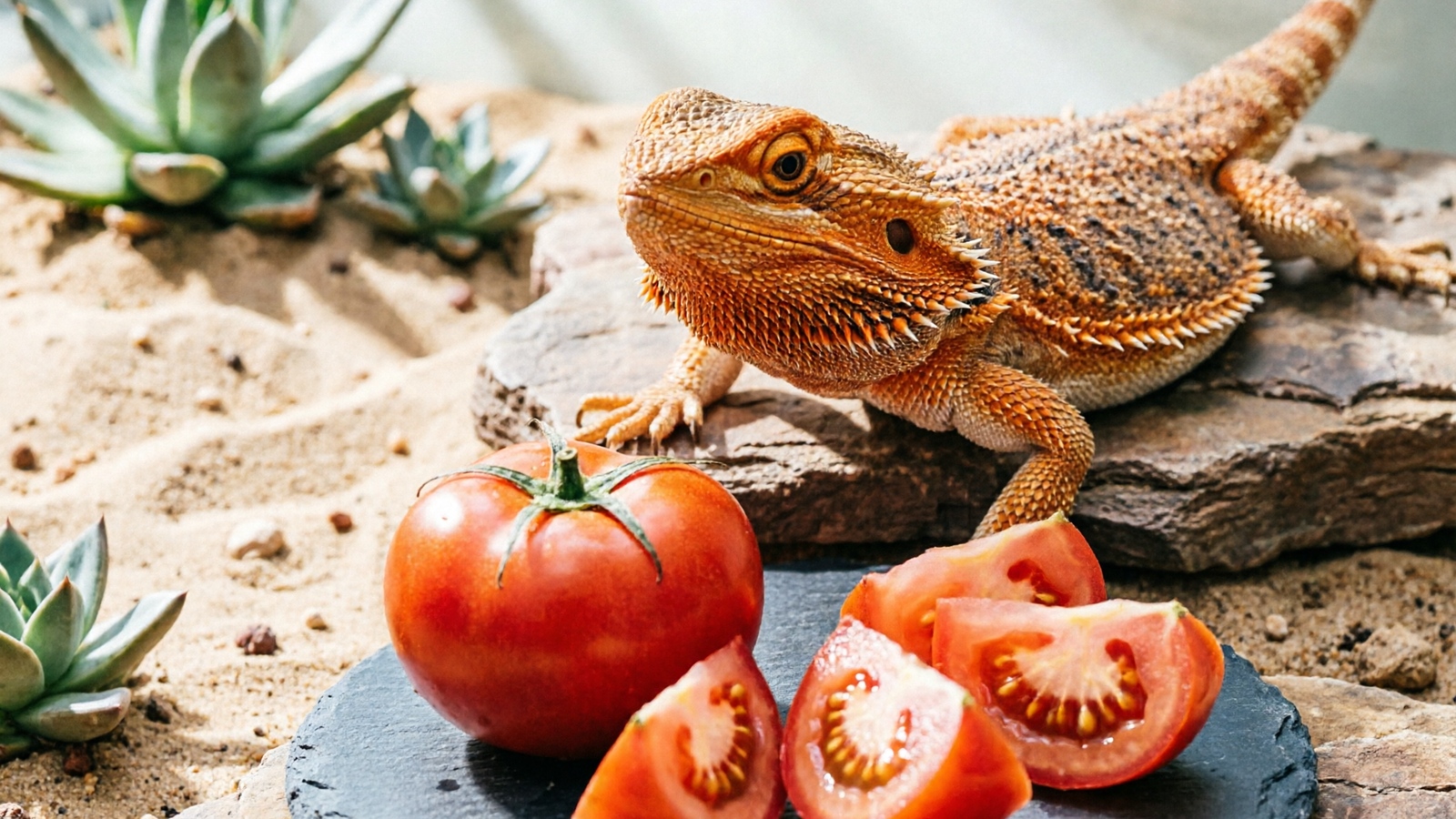
If you’re slicing tomatoes for a salad and your bearded dragon is staring at you with those curious eyes, you’ve probably wondered: can bearded dragons eat tomatoes? It’s one of the most common questions new keepers ask, and for good reason — tomatoes seem like they should be healthy. They’re a fruit (botanically speaking), they’re full of water, and most bearded dragons show interest in anything red and moving.
To answer directly — are tomatoes safe for bearded dragons? Yes, but only in very small amounts, and only the ripe red flesh. Tomatoes belong to the nightshade family (Solanaceae), which includes plants that produce solanine and tomatine — toxic compounds found in the leaves, stems, vines, and green unripe fruit. The ripe red flesh is safe in moderation, but the rest of the plant is not.
This guide breaks down the nutritional profile of tomatoes for bearded dragons, explains exactly how often and how much to feed, covers the toxicity risks of non-fruit parts, and recommends calcium supplements to offset tomatoes’ nutritional shortcomings. For a complete overview of what your dragon should eat daily, see our best bearded dragon food guide.
Can Bearded Dragons Eat Tomatoes?
The short answer is yes — ripe, red tomato flesh is safe for bearded dragons in small, occasional amounts. However, “safe” doesn’t mean “ideal.” Tomatoes are far from a staple food for bearded dragons, and understanding why helps you make better feeding decisions.
Key facts about tomatoes and bearded dragons:
- Calcium is extremely low (1.5mg per 100g) — bearded dragons need a 2:1 calcium-to-phosphorus ratio, and tomatoes fall far short
- Phosphorus is relatively high (2.3mg per 100g) — excess phosphorus blocks calcium absorption, increasing the risk of metabolic bone disease over time
- Acidity is high (pH 4.2-4.9) — too much can irritate a bearded dragon’s digestive tract
- Water content is very high (94.5%) — excessive hydration from food causes loose stools
- Sugar content is moderate (2.6g per 100g) — not dangerous in tiny amounts but adds up if overfed
The bottom line: Tomatoes are an acceptable occasional treat, not a regular food. I’d compare them to feeding a dog a piece of cheese — fine once in a while, harmful as a daily staple. The risks aren’t acute toxicity but long-term nutritional imbalance.
Nutritional Value of Tomatoes for Bearded Dragons
Understanding exactly what’s in a tomato helps explain why it’s a “sometimes” food rather than an “anytime” food. Here’s the nutritional breakdown based on USDA data for 100 grams of raw red tomato:
| Nutrient | Amount per 100g | Bearded Dragon Relevance |
|---|---|---|
| Calcium | 1.5mg | Too low — bearded dragons need calcium-dense foods |
| Phosphorus | 2.3mg | Too high — blocks calcium absorption when Ca:P ratio is poor |
| Vitamin C | 13.7mg | Beneficial — supports immune function |
| Vitamin A | 42μg | Beneficial — supports eye health and skin |
| Potassium | 237mg | Moderate — helps with nerve function |
| Water | 94.5% | Excessive — causes loose stools in large amounts |
| Sugar | 2.6g | Moderate — not dangerous in tiny servings |
| Fiber | 1.2g | Low — insufficient for regular feeding |
| Ca:P Ratio | 0.65:1 | Poor — ideal is 2:1 or higher for bearded dragons |
The calcium-to-phosphorus ratio is the critical metric for bearded dragon nutrition. A healthy Ca:P ratio is 2:1 or higher — meaning at least twice as much calcium as phosphorus. Tomatoes come in at roughly 0.65:1, which is inverted. Every phosphorus molecule competes with calcium for absorption in your dragon’s intestines, so feeding calcium-poor, phosphorus-rich foods regularly contributes to calcium deficiency over time.
That said, tomatoes aren’t completely without merit. The vitamin C and vitamin A content is genuinely beneficial, and the high water content can help with hydration during hot weather. The key is treating tomatoes as a supplement to an already balanced diet, not as a food group.
Can Baby Bearded Dragons Eat Tomatoes?
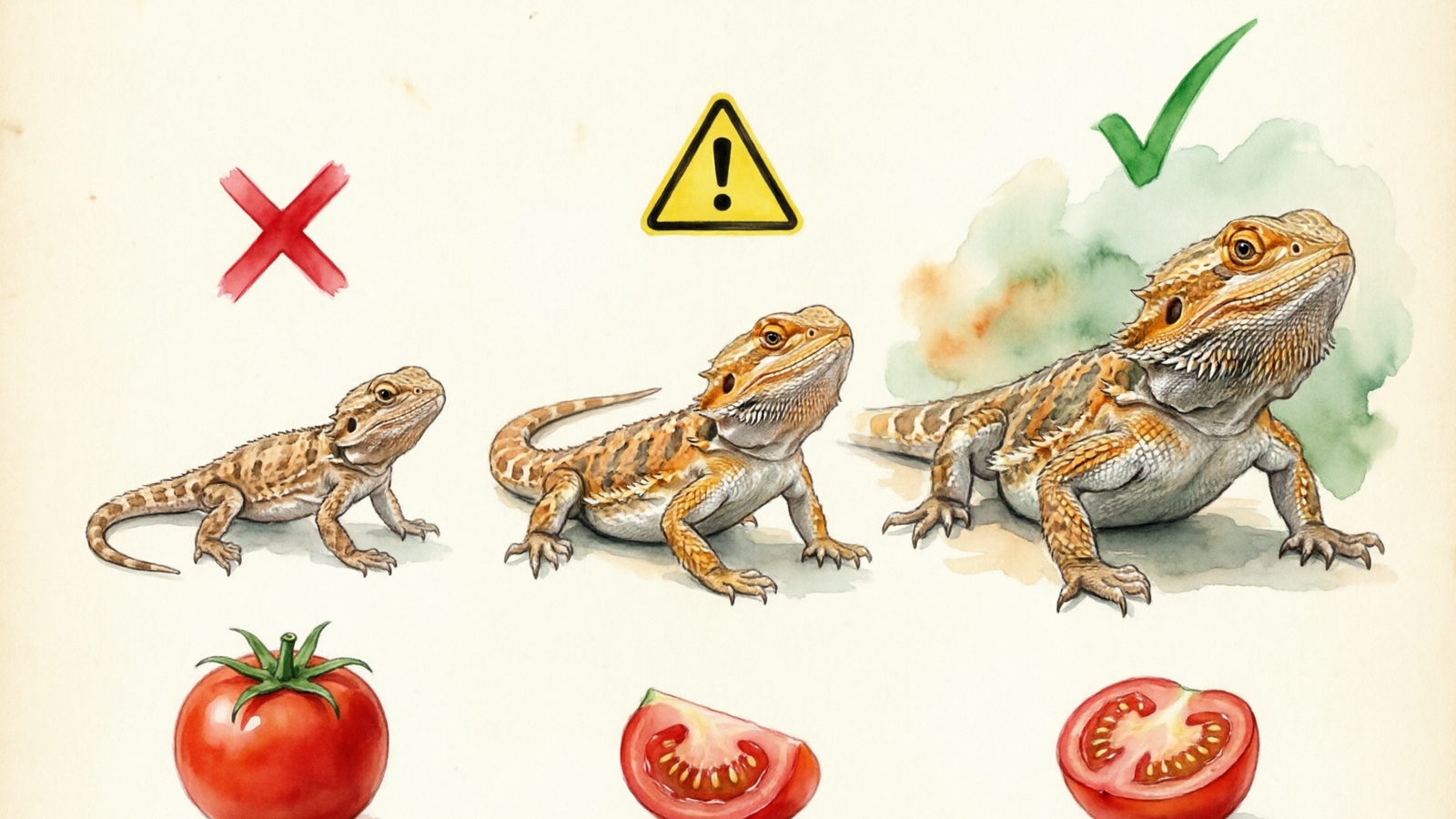
No — if you’re asking can baby bearded dragons eat tomatoes, the answer is no for dragons under 6 months. Here’s why:
Baby dragons are in rapid growth phase and need a diet overwhelmingly dominated by protein (insects) and calcium. Their bones are developing quickly, and even small amounts of phosphorus-rich, calcium-poor foods can disrupt the calcium balance they need for healthy skeletal development.
Age-based guidelines for tomatoes:
Step 1: Check your dragon’s age. Under 6 months? Skip tomatoes entirely.
Step 2: For juveniles (6-12 months), you can offer a tiny piece — roughly a quarter of a cherry tomato — no more than once every 2-3 weeks.
Step 3: For adults (12+ months), a half cherry tomato or small wedge once every 2-4 weeks is acceptable.
Step 4: Monitor stool quality. If you notice loose or runny droppings after feeding tomato, reduce the serving size or frequency.
Step 5: Always pair with calcium. Dust any insects offered in the same feeding session with calcium powder to help offset the phosphorus load.
How to Prepare Tomatoes for Your Bearded Dragon
Preparation matters as much as frequency. Here’s the step-by-step process I follow when offering tomato to my own dragons:
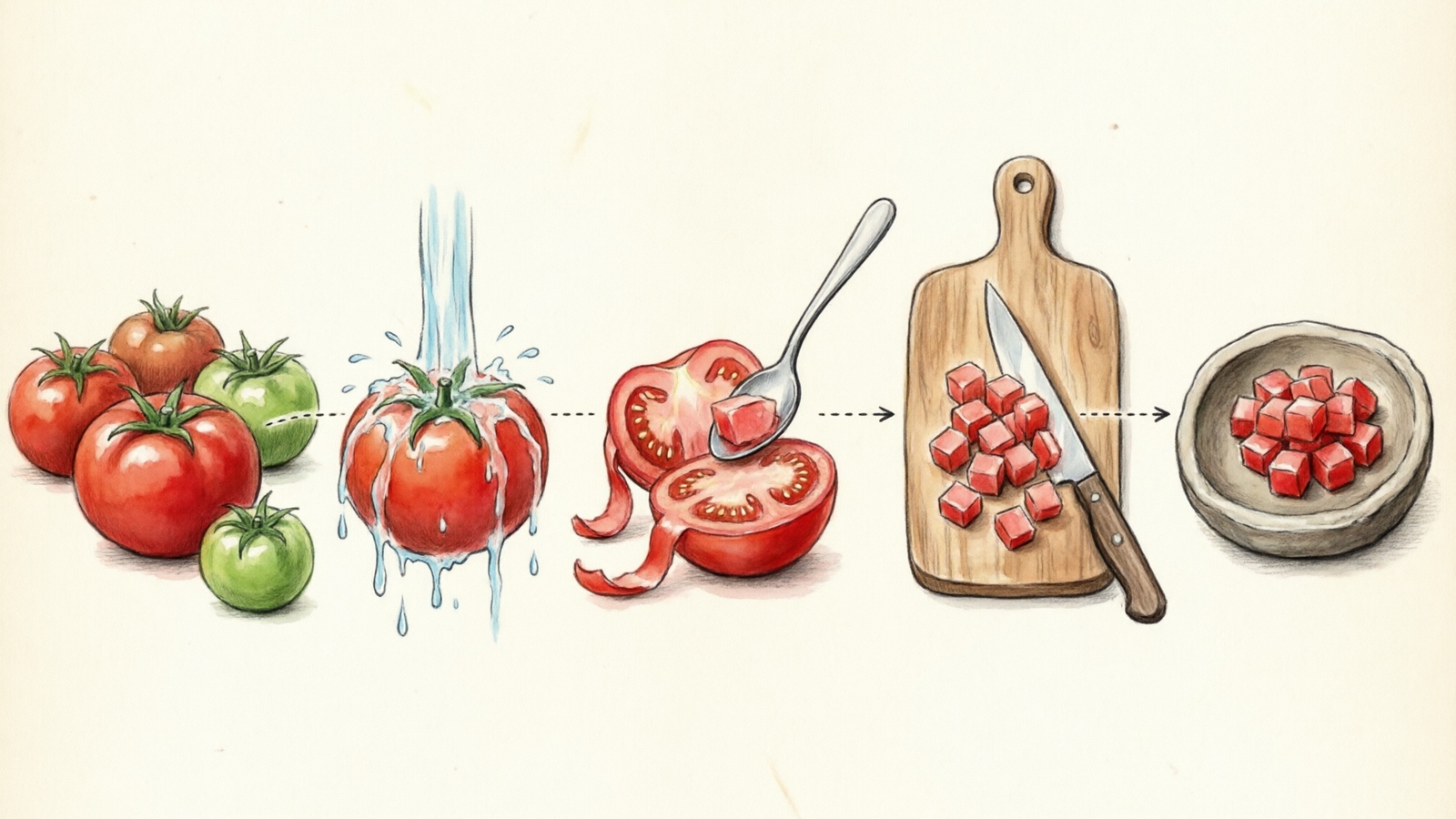
Step 1: Choose the right tomato. Only ripe, fully red tomatoes are safe. Green tomatoes, partially ripe tomatoes, and any yellowish-orange specimens contain elevated levels of tomatine and should be avoided. Organic is preferable to minimize pesticide exposure.
Step 2: Wash thoroughly. Run the tomato under cool water and rub the skin to remove any pesticide residue, dirt, or debris. Even organic produce should be washed.
Step 3: Remove the skin and seeds. The skin is difficult for bearded dragons to digest and offers no nutritional benefit. Seeds can cause impaction in small dragons. Slice the tomato open, scoop out the seeds, and peel away the skin. This also reduces acidity.
Step 4: Cut into small pieces. The rule of thumb applies here too — pieces should be no wider than the space between your dragon’s eyes. For an adult dragon, a cherry tomato cut in half or a regular tomato cut into small wedges works well.
Step 5: Serve and supplement. Place the pieces in a clean dish and offer them alongside dusted insects. Use feeding tongs to offer pieces if your dragon is picky about food placed in dishes.
A good serving dish makes a real difference — Zoo Med Reptile Rock Food Dish is heavy enough that dragons can’t flip it, and the natural rock look blends into most terrarium setups. One keeper noted: “Heavy enough that my dragon can’t flip it. Perfect for the price.” The main downside is that crickets can sometimes climb out of the low edges, but for feeding vegetable pieces it works well.
For tong-feeding, OLIISS Stainless Steel Reptile Feeding Tongs include both straight and curved tips in a 2-pack.
Check Price on Amazon →
Check Price on Amazon →
What about cherry tomatoes? Cherry tomatoes are perfectly fine — and actually easier to portion. If you’re wondering can bearded dragons eat cherry tomatoes regularly, the answer is no — but a half cherry tomato is roughly the ideal serving for an adult bearded dragon. The same rules apply: red and ripe only, wash thoroughly, remove skin and seeds. The convenience of built-in portion control is the one advantage cherry tomatoes have over larger varieties.
How Often Can Bearded Dragons Eat Tomatoes?
When it comes to bearded dragon tomato intake, frequency matters more than most keepers realize. It’s tempting to offer tomato every week since dragons usually love the taste, but overfeeding carries real consequences.
| Age | Frequency | Maximum Serving Size |
|---|---|---|
| Baby (under 6 months) | Avoid entirely | 0 |
| Juvenile (6-12 months) | Every 2-3 weeks | Quarter cherry tomato |
| Adult (12+ months) | Every 2-4 weeks | Half cherry tomato / small wedge |
Why such strict limits? Two primary reasons:
-
Acidity — A bearded dragon’s digestive system isn’t designed for acidic foods. Regular tomato feeding causes stomach irritation, leading to reduced appetite and altered gut flora. When considering are tomatoes safe for bearded dragons, this is the key concern — chronic acidity contributes to digestive problems that affect nutrient absorption across the board.
-
Phosphorus accumulation — Each tomato serving adds phosphorus without meaningful calcium. Over weeks and months, this shifts the overall dietary Ca:P ratio in the wrong direction. Metabolic bone disease develops gradually, and you won’t see symptoms until significant bone loss has occurred.
The practical approach: offer tomato as a rare treat, maybe when you’re eating one yourself and want to share a tiny piece. Think of it as a bonding activity, not a meal component. In my experience, dragons get excited about the red color and movement — I’ve had picky eaters snap up a tomato piece while ignoring their greens. Always dust any insects in the same feeding session with Zoo Med Reptile Calcium without Vitamin D3 to help maintain calcium levels.
Can Bearded Dragons Eat Tomato Leaves and Stems?
Absolutely not. If you’re asking can bearded dragons eat tomato leaves, the answer is a clear no — leaves, stems, and vines all contain solanine and tomatine — glycoalkaloid compounds that are toxic to reptiles. These are the same compounds that make raw potatoes and eggplant leaves dangerous.
Why these parts are toxic:
Solanine is a natural defense chemical produced by nightshade plants. It interferes with nervous system function and can cause gastrointestinal distress even in small amounts. Tomatine is specific to tomato plants and serves a similar defensive purpose.
Toxicity symptoms to watch for:
- Excessive drooling or foaming at the mouth
- Lethargy or unusual stillness
- Vomiting or regurgitation
- Diarrhea, often watery
- Loss of coordination or muscle tremors
If your bearded dragon eats any green tomato part: remove any remaining plant material from the enclosure, offer fresh water, and contact an exotic veterinarian immediately. Don’t wait for symptoms to appear — tomatine poisoning can progress quickly.
Green (unripe) tomatoes also contain elevated levels of these toxins and should never be fed. Only fully ripe, deep red tomatoes with no trace of green are safe for the flesh portion.
Quick Reference — Tomato Safety for Bearded Dragons:
✅ Safe: Ripe red tomato flesh (skin removed, seeds scooped) ✅ Safe: Cherry tomatoes (same rules, easier portioning) ✅ Safe: Tomatoes paired with calcium-dusted insects ❌ Unsafe: Green or partially ripe tomatoes ❌ Unsafe: Tomato leaves, stems, and vines ❌ Unsafe: Tomato sauce, ketchup, or any cooked tomato product ❌ Unsafe: Sun-dried tomatoes (concentrated acidity and solanine) ❌ Unsafe: Feeding to dragons under 6 months old
For more on identifying and responding to health emergencies, see our comprehensive bearded dragon care guide.
Best Calcium Supplements for Balanced Nutrition
Since tomatoes pull your dragon’s diet toward phosphorus-heavy, calcium-light territory, a reliable calcium supplement becomes especially important on tomato-feeding days. Here are three solid options:
| # | Product | D3 Included? | Best For |
|---|---|---|---|
| 1 | Zoo Med Calcium without D3 | No | Dragons with proper UVB lighting |
| 2 | Zoo Med Calcium with D3 | Yes | Indoor dragons or inadequate UVB |
| 3 | Rep-Cal Calcium Ultrafine with D3 | Yes | Keepers wanting better powder adhesion |
Zoo Med Reptile Calcium without Vitamin D3 is the workhorse supplement for dragons housed under proper UVB lighting. Without D3, there’s no overdose risk when your dragon synthesizes its own D3 from UVB exposure. One reviewer called it “Huge container, amazing value for the price.” The main complaint is packaging — multiple buyers reported receiving containers with broken seals, so inspect your shipment on arrival.
Zoo Med Reptile Calcium with Vitamin D3 covers dragons that lack adequate UVB. The D3 enables calcium absorption without UVB, but be careful — using D3 calcium alongside strong UVB can lead to vitamin D toxicity over time. One customer warned: “Overdosing D3 can be dangerous.”
Rep-Cal Phosphorous-Free Calcium Ultrafine offers a finer powder that sticks to insects and greens more effectively than Zoo Med. A reviewer noted: “Ultrafine powder coats insects perfectly.” The trade-off is a higher price and smaller container. One customer said: “Price is high for the amount you get.”
For a complete supplement comparison across brands, check our bearded dragon supplements guide.
Check Price on Amazon →
Check Price on Amazon →
Check Price on Amazon →
Safer Alternatives to Tomatoes
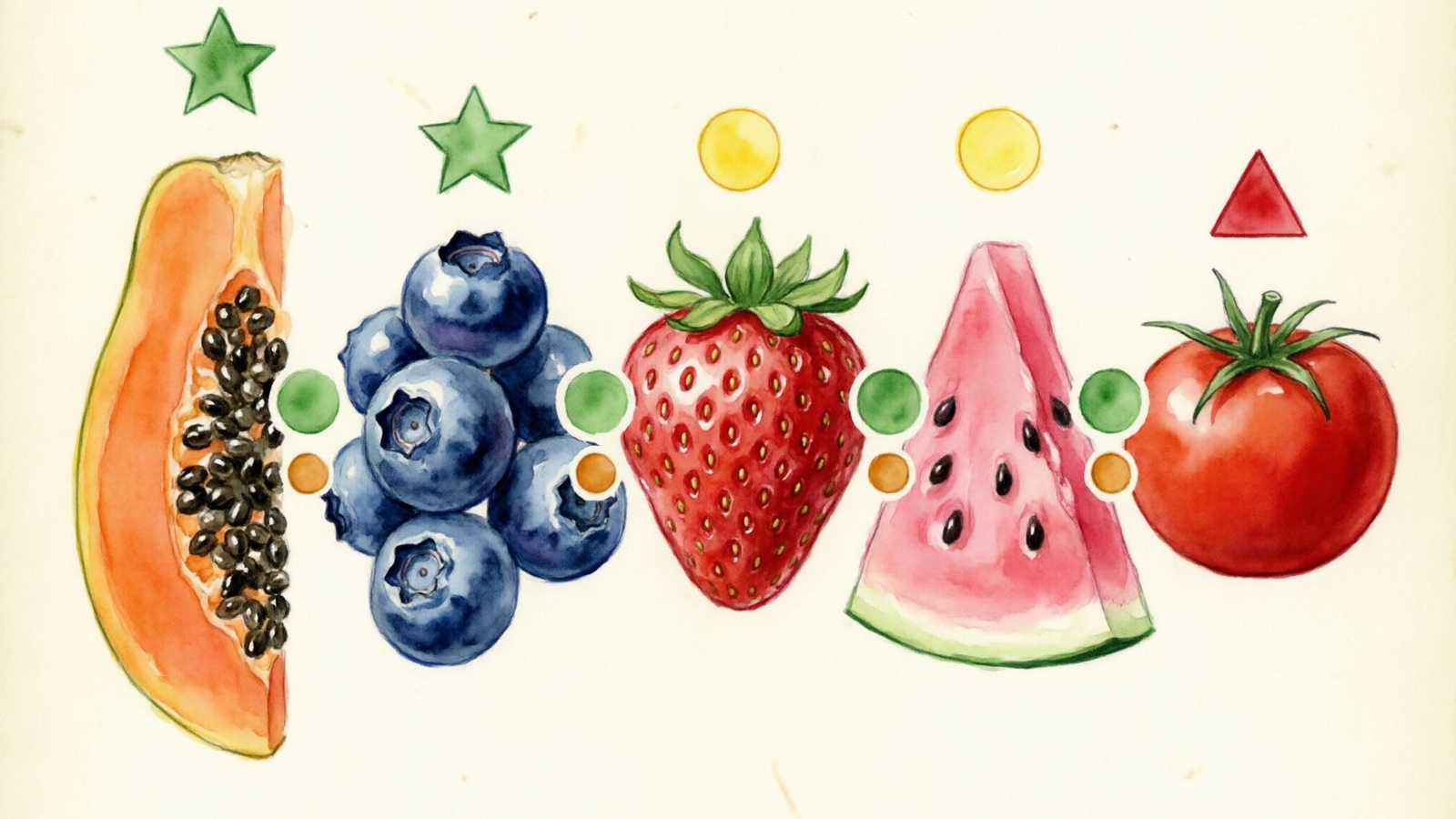
If you’re wondering what fruits can bearded dragons eat beyond tomatoes, several options have better nutritional profiles and should form your regular rotation:
| Fruit | Ca:P Ratio | How Often | Why It’s Better |
|---|---|---|---|
| Papaya | ~2:1 | Weekly | Excellent Ca:P ratio, digestive enzymes |
| Blueberries | 0.5:1.5 | Weekly | Antioxidants, lower acidity |
| Strawberries | 1.0:1.3 | Weekly | Vitamin C, moderate calcium |
| Watermelon | 0.3:0.6 | Monthly | Great hydration, very low acidity |
| Tomatoes | 0.65:1 | Every 2-4 weeks | Lowest priority fruit option |
Papaya stands out as the best fruit treat for bearded dragons — its Ca:P ratio is actually favorable, and the natural enzymes support digestion. Strawberries and blueberries offer more variety with lower acidity than tomatoes.
For detailed guides on other fruits, check whether can bearded dragons eat strawberries or can bearded dragons eat bananas — both are popular questions with different answers.
Frequently Asked Questions
Can bearded dragons eat raw tomatoes?
Yes, bearded dragons can eat raw, ripe red tomato flesh in moderation. Remove the skin and seeds before serving, and limit portions to half a cherry tomato or a small wedge for adults. Avoid feeding raw tomatoes to babies under 6 months.
Can bearded dragons eat cherry tomatoes?
Yes, cherry tomatoes are fine in small amounts — the same rules as regular tomatoes apply. Their small size makes portion control easier. Feed no more than half a cherry tomato per serving to adults, once every 2-4 weeks.
Can bearded dragons eat tomato sauce?
No — tomato sauce, ketchup, and pasta sauce all contain added salt, sugar, garlic, and onion that are harmful to bearded dragons. Only plain, raw, fresh tomato flesh is safe.
What happens if my bearded dragon eats too much tomato?
Excess tomato causes diarrhea from the high water and acidity content, along with lethargy. Offer fresh water and monitor your dragon for 24 hours. If symptoms persist beyond 24 hours, your dragon stops eating entirely, or you notice abdominal swelling, contact an exotic veterinarian.
Can tomatoes replace greens in a bearded dragon’s diet?
No — tomatoes should never replace greens or insects. Greens and insects should make up 80-90% of a bearded dragon’s diet, while fruit including tomatoes should be less than 5%. See our best bearded dragon food guide for a complete breakdown of what fruits can bearded dragons eat safely and how to build a balanced diet around staple greens and insects.