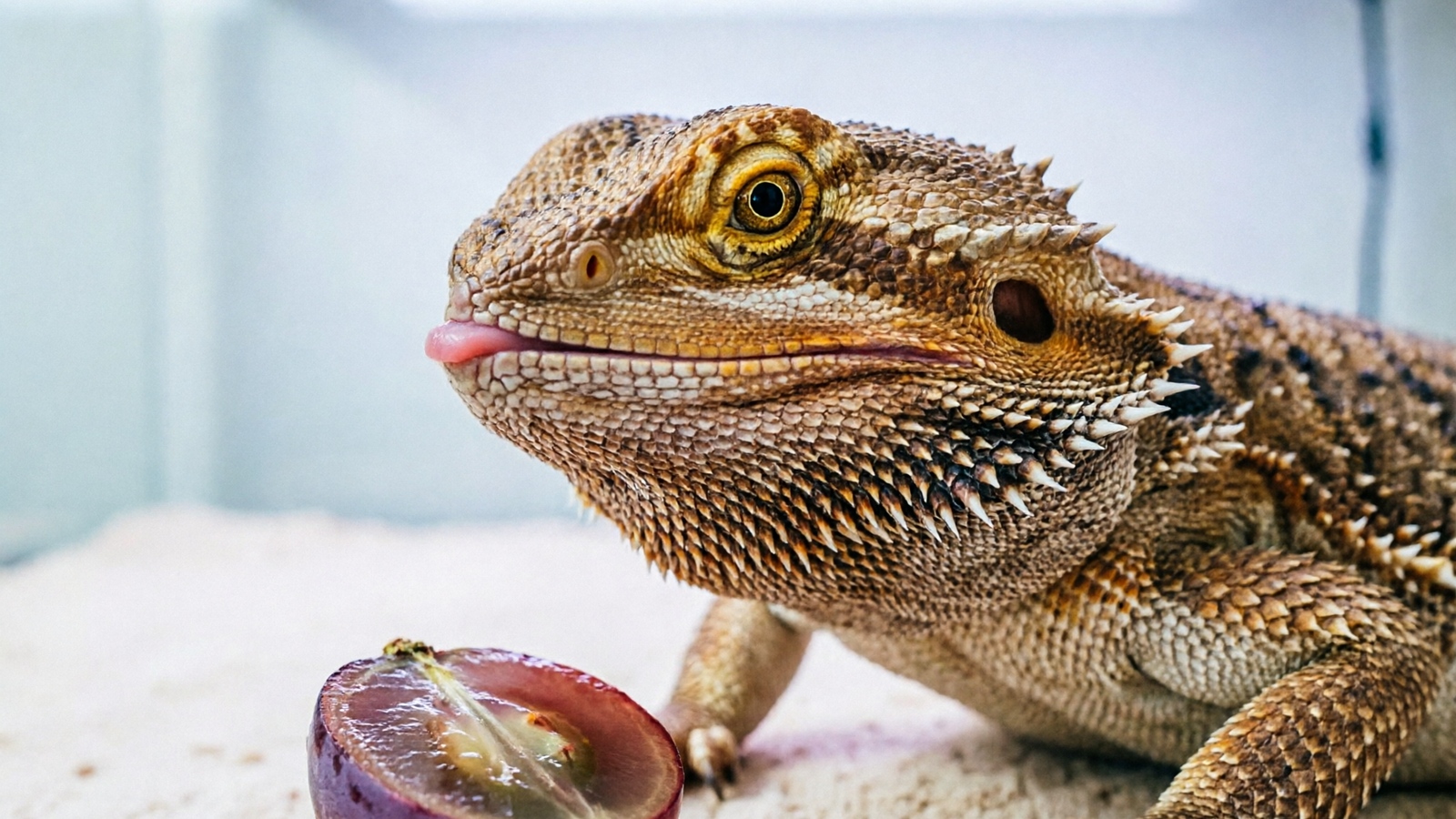
Yes, bearded dragons can eat grapes — but only in moderation. When owners ask can bearded dragons eat grapes, the short answer is yes, but with strict limits. Offer 2–3 small pieces of seedless grapes once per week for adults. Grapes are high in sugar (16g per 100g) and have a poor calcium-to-phosphorus ratio (Ca:P ≈ 0.5:1), which can contribute to Metabolic Bone Disease if overfed. Always choose seedless varieties, wash thoroughly, and cut into bite-sized pieces.
Quick Answer: Can Bearded Dragons Eat Grapes?
Are Grapes Safe for Bearded Dragons?
Gargeer Calcium D3 4 oz → is a quality option worth considering for your setup.
Are grapes safe for bearded dragons? Yes — as an occasional treat, not a dietary staple. Grapes are non-toxic to bearded dragons and most will eagerly eat them. However, they carry three key concerns that limit their role in a healthy diet.
Four safety facts to understand:
- High sugar content: At 16g of sugar per 100g, grapes are one of the sweetest fruits commonly offered to bearded dragons. In the wild, bearded dragons inhabit arid scrublands where sugary fruit is virtually nonexistent. Their digestive system is not designed to process large amounts of sugar.
- Poor calcium-to-phosphorus ratio: Grapes contain roughly 10mg calcium and 20mg phosphorus per 100g, giving a Ca:P ratio of approximately 0.5:1. The ideal ratio for reptiles is 2:1 or higher. When phosphorus exceeds calcium, it actively blocks calcium absorption — a direct pathway to Metabolic Bone Disease.
- Moderate oxalate levels: Oxalates bind to calcium in the digestive tract, further reducing how much calcium your dragon actually absorbs. Combined with the already poor Ca:P ratio, this double-punch makes grapes a calcium-negative food.
- ARAV guidelines: The Association of Reptilian and Amphibian Veterinarians recommends that fruit comprise no more than 10–15% of a bearded dragon’s overall diet. Grapes should be a small fraction of that fruit allowance.
For a complete overview of a healthy bearded dragon diet, see our bearded dragon care guide. Understanding can bearded dragons eat grapes helps you plan treats alongside their staple greens and insects.
Grape Nutrition Facts for Bearded Dragons
Many owners find that Exo Terra Heat Mat → works well for their pet’s needs.
Understanding exactly what grapes provide — and what they lack — helps you make informed feeding decisions. Here is the full nutritional breakdown per 100g of raw grapes, with relevance notes for bearded dragons.
| Nutrient | Amount (per 100g) | BD Relevance |
|---|---|---|
| Calories | 69 kcal | Treat only — too calorie-dense for regular feeding |
| Sugar | 16 g | ⚠️ High — limits frequency to once per week |
| Calcium | 10 mg | ❌ Very low — far below daily requirements |
| Phosphorus | 20 mg | ⚠️ High — creates Ca:P ratio of 0.5:1 |
| Oxalates | Moderate | Binds calcium, further reducing absorption |
| Vitamin C | 3.2 mg | Trace benefit — dragons synthesize most of their own |
| Vitamin K | 14.6 mcg | Trace benefit — supports blood clotting |
| Potassium | 191 mg | Beneficial — supports muscle and nerve function |
| Water | 81 g | Good hydration but excess causes loose stools |
| Fiber | 0.9 g | Low — grape skin adds some roughage |
The Ca:P ratio of 0.5:1 is the single most important number on this table. For comparison, staple greens like collard greens have a Ca:P ratio of 14.5:1 and mustard greens 2.4:1.
This means every gram of grape your dragon eats actually reduces the net calcium available from other foods in the same meal.
Metabolic Bone Disease (MBD) is the most common preventable disease in captive bearded dragons (Pogona vitticeps), caused by chronic calcium deficiency or an imbalanced calcium-to-phosphorus ratio (Ca:P) in the diet. According to the Association of Reptilian and Amphibian Veterinarians (ARAV), the ideal dietary Ca:P ratio for bearded dragons is between 1.5:1 and 2:1. Grapes have a Ca:P ratio of approximately 0.5:1 — meaning they contain twice as much phosphorus as calcium. When phosphorus intake consistently exceeds calcium, the body leaches calcium from bone tissue to maintain blood calcium levels, leading to soft, rubbery bones, deformities, tremors, and in severe cases, death. Grapes are not inherently toxic, but their poor Ca:P ratio means they must be balanced with calcium-dusted staple greens and limited to occasional treats. For comprehensive husbandry guidance, see the ARAV’s bearded dragon care guidelines.
Practical takeaway: If you feed grapes on a given day, lightly dust the entire salad with calcium powder to partially offset the phosphorus load. The question of can bearded dragons eat grapes should always be followed by “and am I balancing calcium?” Never feed grapes on consecutive days.
Red vs Green vs Black Grapes — Which Is Best?
For this purpose, Penn-Plax Reptology Turtle Pier (Best Overall) is a popular choice among pet owners.
Can bearded dragons eat green grapes? Yes. Can bearded dragons eat red grapes? Also yes. All three common grape varieties are safe, but there are meaningful nutritional differences worth knowing.
| Variety | Sugar (per 100g) | Oxalates | Antioxidants | Recommendation |
|---|---|---|---|---|
| Green (Thompson) | ~15 g | Lower | Moderate | ✅ Best choice — lowest sugar |
| Red (Flame) | ~16 g | Moderate | High (resveratrol) | ✅ Good — antioxidant benefit |
| Black (Concord) | ~17 g | Higher | Highest | ⚠️ Occasional only — highest sugar + oxalates |
Green grapes are marginally the best option due to their slightly lower sugar content and reduced oxalate levels. Red grapes offer the highest antioxidant value thanks to resveratrol, but the difference is small enough that variety matters far less than feeding frequency.
All three types share a similar Ca:P ratio around 0.5:1, so the calcium concern applies equally regardless of color. The differences between varieties are incremental — feeding the right amount matters more than picking the right color.
For comparison with another common fruit treat, see our guide on whether bearded dragons can eat strawberries — strawberries have lower sugar (4.9g per 100g) but higher oxalate levels.
How Often Can Bearded Dragons Eat Grapes?
How often can bearded dragons eat grapes? Once per week for adults, once every two weeks for juveniles, and essentially never for babies. The feeding frequency must account for your dragon’s age, size, and growth stage.
| Age | Serving Size | Frequency | Notes |
|---|---|---|---|
| Baby (<6 months) | Not recommended | — | Growing dragons need protein and calcium, not sugar. One tiny piece max to encourage eating greens. |
| Juvenile (6–12 months) | 1 small piece | Once every 2 weeks | Growth phase — insects and greens should dominate (80/20 ratio). |
| Adult (>12 months) | 2–3 small pieces | Once per week | Maintenance phase — grapes as reward or treat only. |
Step-by-step preparation guide:
- Select seedless grapes — Thompson Seedless or Flame Seedless varieties are widely available.
- Wash thoroughly — run under cool water for 15–20 seconds to remove pesticide residue. Conventional grapes rank among the EWG Dirty Dozen for pesticide load.
- Peel for juveniles — adult dragons handle skin fine, but juveniles under 12 months benefit from peeling for easier digestion.
- Cut to eye-width size — pieces should be no larger than the space between your dragon’s eyes. This is the universal portion guide for bearded dragon food.
- Dust with calcium powder — a light coating helps offset the poor Ca:P ratio. Use calcium without D3 for this purpose since the feeding frequency is low.
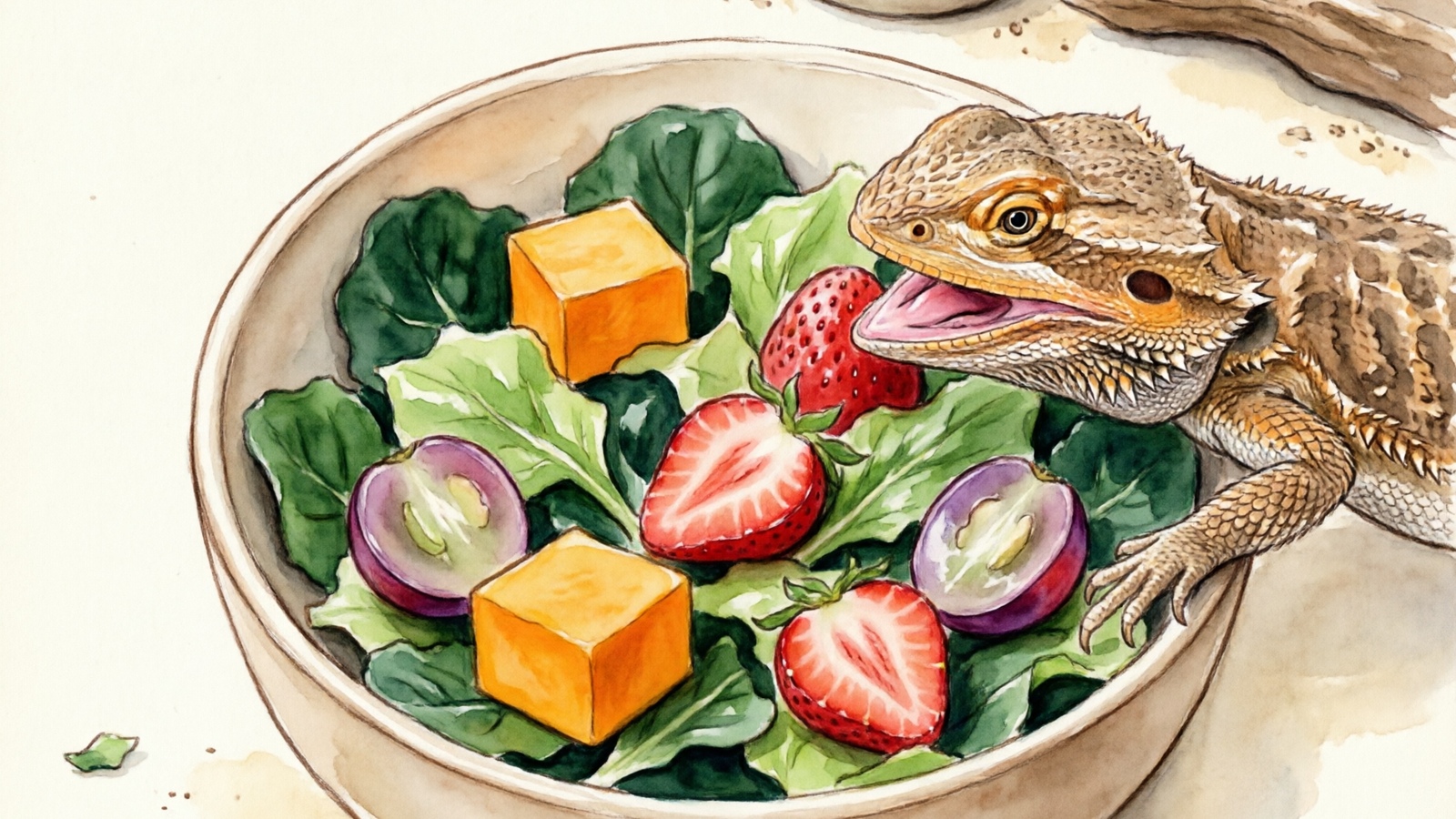
- Mix into the salad bowl — always offer grapes alongside greens, never alone. This prevents your dragon from picking out only the sweet pieces.
Proper digestion requires correct basking temperatures. If your dragon’s heating setup is inadequate, food — including grapes — may not digest properly, leading to impaction risk.
Can Bearded Dragons Eat Grape Leaves?
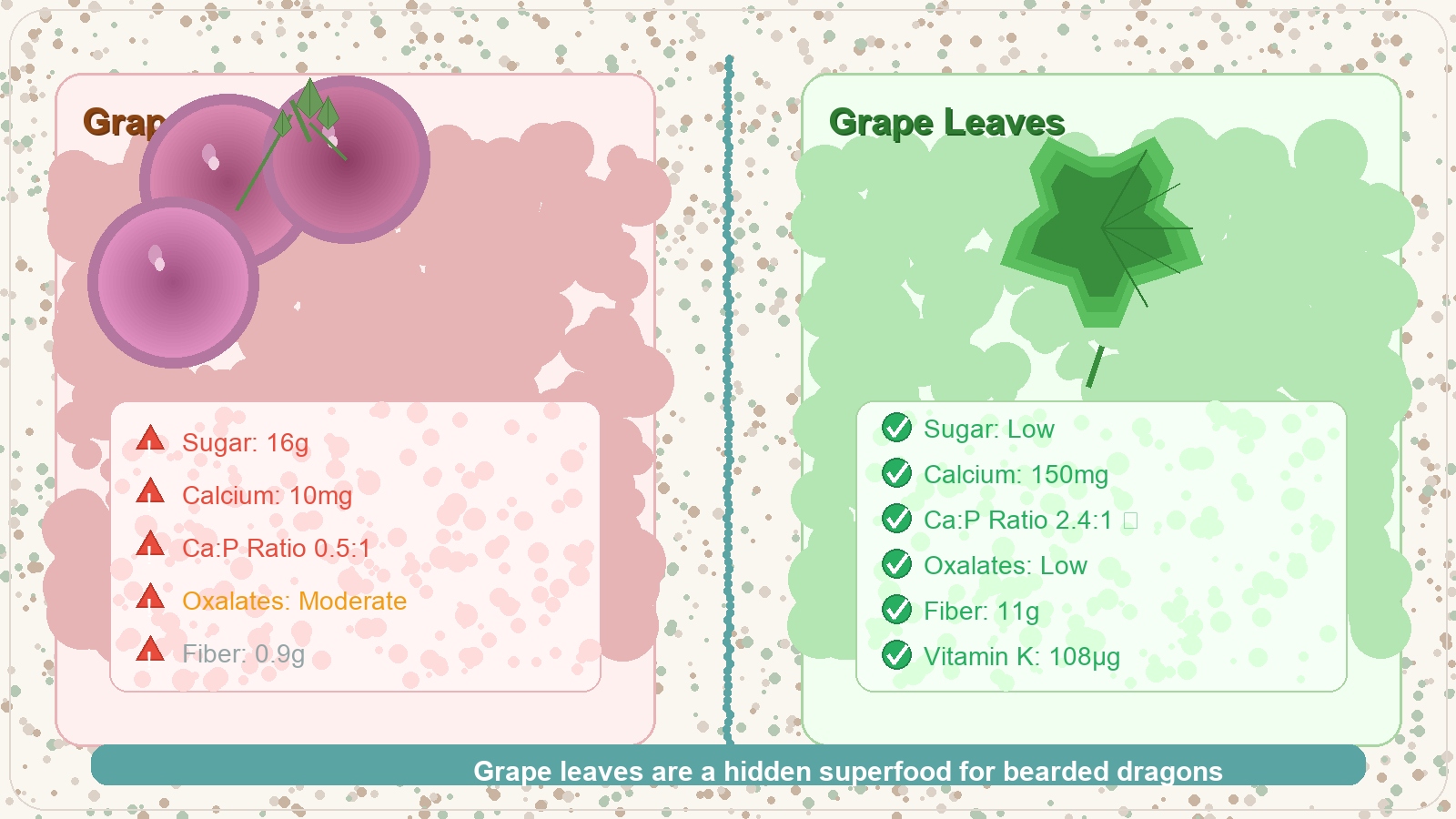
Can bearded dragons eat grape leaves? Yes — and surprisingly, grape leaves are significantly more nutritious than grape fruit for bearded dragons. This is one of the most underused salad greens available to reptile keepers.
| Nutrient | Grape Leaves (per 100g) | Grape Fruit (per 100g) | Winner |
|---|---|---|---|
| Calcium | 150 mg | 10 mg | 🏆 Leaves (15× more) |
| Phosphorus | 63 mg | 20 mg | Leaves |
| Ca:P Ratio | 2.4:1 | 0.5:1 | 🏆 Leaves (near ideal 2:1) |
| Oxalates | Low | Moderate | 🏆 Leaves (less calcium binding) |
| Fiber | 11 g | 0.9 g | 🏆 Leaves (12× more) |
| Sugar | Low | 16 g | 🏆 Leaves (much lower) |
| Vitamin K | 108 mcg | 14.6 mcg | 🏆 Leaves (7× more) |
The Ca:P ratio of 2.4:1 in grape leaves is remarkably close to the ideal 2:1 target for reptiles. Only collard greens (14.5:1) and turnip greens (4.6:1) score higher among common staple greens.
Compare this to the grape fruit at 0.5:1 — the leaves are essentially the nutritional opposite of the fruit. They are a legitimate staple green that can rotate alongside collard greens, mustard greens, and dandelion greens.
Feeding guidelines for grape leaves:
- Source from unsprayed vines only — no pesticide or herbicide exposure
- Offer fresh or briefly blanched, then chopped into bite-sized pieces
- Can be included 2–3 times per week as part of the daily salad rotation
- Combine with other greens for variety — no single green should exceed 50% of the salad
Grape leaves are one of the easiest edible plants to grow at home for reptile salads. A single potted grape vine in a sunny window can provide a steady supply of fresh leaves from spring through fall.
Risks of Feeding Grapes to Bearded Dragons
Understanding the specific risks helps you enjoy feeding treats without compromising your dragon’s health. Knowing can bearded dragons eat grapes safely in moderation means being aware of these six key risks. Here are the six key risks and how to prevent each one.
| Risk | Severity | Prevention |
|---|---|---|
| Metabolic Bone Disease (MBD) | 🔴 High | Poor Ca:P (0.5:1) + oxalates block calcium. Dust food with calcium powder, limit grapes to once per week. |
| Obesity | 🟡 Medium | 16g sugar per 100g drives weight gain. Max 2–3 pieces per week for adults. |
| Diarrhea | 🟡 Medium | High water content (81%) + sugar disrupts gut flora. Reduce frequency if stools become loose. |
| Choking / impaction | 🟡 Medium | Seeds can block the intestinal tract. Seedless only, cut pieces to eye-width size. |
| Pesticide exposure | 🟡 Medium | Conventional grapes carry high residue. Wash thoroughly, peel if concerned, organic preferred. |
| Picky eating behavior | 🟠 Low | Dragons may refuse greens if they learn sweet grapes are coming. Always feed grapes after greens, never before. |
Signs of grape overfeeding to watch for: chronically loose or runny stools, refusal to eat salad greens, visible fat deposits around the tail base, and decreased activity levels. If you notice any of these signs, eliminate all fruit from the diet for 1–2 weeks and return to a strict greens-and-insects routine.
Behavioral changes can signal diet-related stress. If your dragon starts digging excessively or gaping its mouth frequently, review the overall diet — chronic calcium deficiency from too many high-phosphorus treats like grapes can manifest as stress behaviors.
Grape safety checklist:
- ✅ Seedless grapes only — seeds can cause impaction
- ✅ Washed thoroughly — conventional grapes rank high for pesticide residue
- ✅ Cut to eye-width size — prevents choking
- ✅ Maximum 1-2 pieces per feeding — adults only, once per week
- ✅ Always served with greens — never as standalone treat
- ✅ Calcium powder dusted on same meal — offsets poor Ca:P ratio
- ✅ Green grapes preferred — lowest sugar, lowest oxalates
- ❌ No grapes for juveniles under 6 months — developing dragons need Ca-rich staples
- ❌ No consecutive-day feeding — phosphorus accumulates
- ❌ No grape juice, raisins, or dried grapes — concentrated sugar is dangerous
Product Recommendations
Here are some products mentioned in this guide:
Frequently Asked Questions
Can bearded dragons eat seeded grapes? No. Always choose seedless varieties. Grape seeds pose a choking hazard and can cause intestinal impaction — a potentially fatal blockage. If you accidentally offer a seeded grape and your dragon swallows a seed, monitor for signs of distress (pawing at mouth, lethargy, refusal to eat) and contact a reptile vet immediately.
Are grapes safe for bearded dragons? Yes, grapes are safe for bearded dragons when fed in moderation — 2–3 small pieces of seedless grapes once per week for adults. They are not toxic. However, their high sugar content (16g per 100g) and poor calcium-to-phosphorus ratio (0.5:1) mean they should be an occasional treat, not a regular part of the diet. Baby and juvenile bearded dragons should rarely or never eat grapes.
Can baby bearded dragons eat grapes? Baby bearded dragons (under 6 months) should not be fed grapes. During their rapid growth phase, they need a diet dominated by protein-rich insects (80%) and calcium-rich leafy greens (20%). The sugar and poor calcium content of grapes offer no nutritional benefit for growing dragons and can displace the foods they actually need. A single tiny piece can be used occasionally to encourage a baby to eat greens, but this should be rare.
Do I need to peel grapes for my bearded dragon? For adults, peeling is optional — grape skin contains fibre and antioxidants and is safe to eat. For juveniles under 12 months, peeling is recommended because the skin can be tough to digest. Always wash grapes thoroughly regardless of whether you peel them, as conventional grapes are among the top fruits for pesticide residue (EWG Dirty Dozen list). Organic grapes are preferable if available.
What fruits are better than grapes for bearded dragons? Berries are generally better choices than grapes due to lower sugar content. Blueberries (10g sugar per 100g vs grapes’ 16g), raspberries (4.4g), and blackberries (4.9g) are all lower in sugar and some have better calcium ratios. See our complete guide to bearded dragon safe fruits for a full comparison.