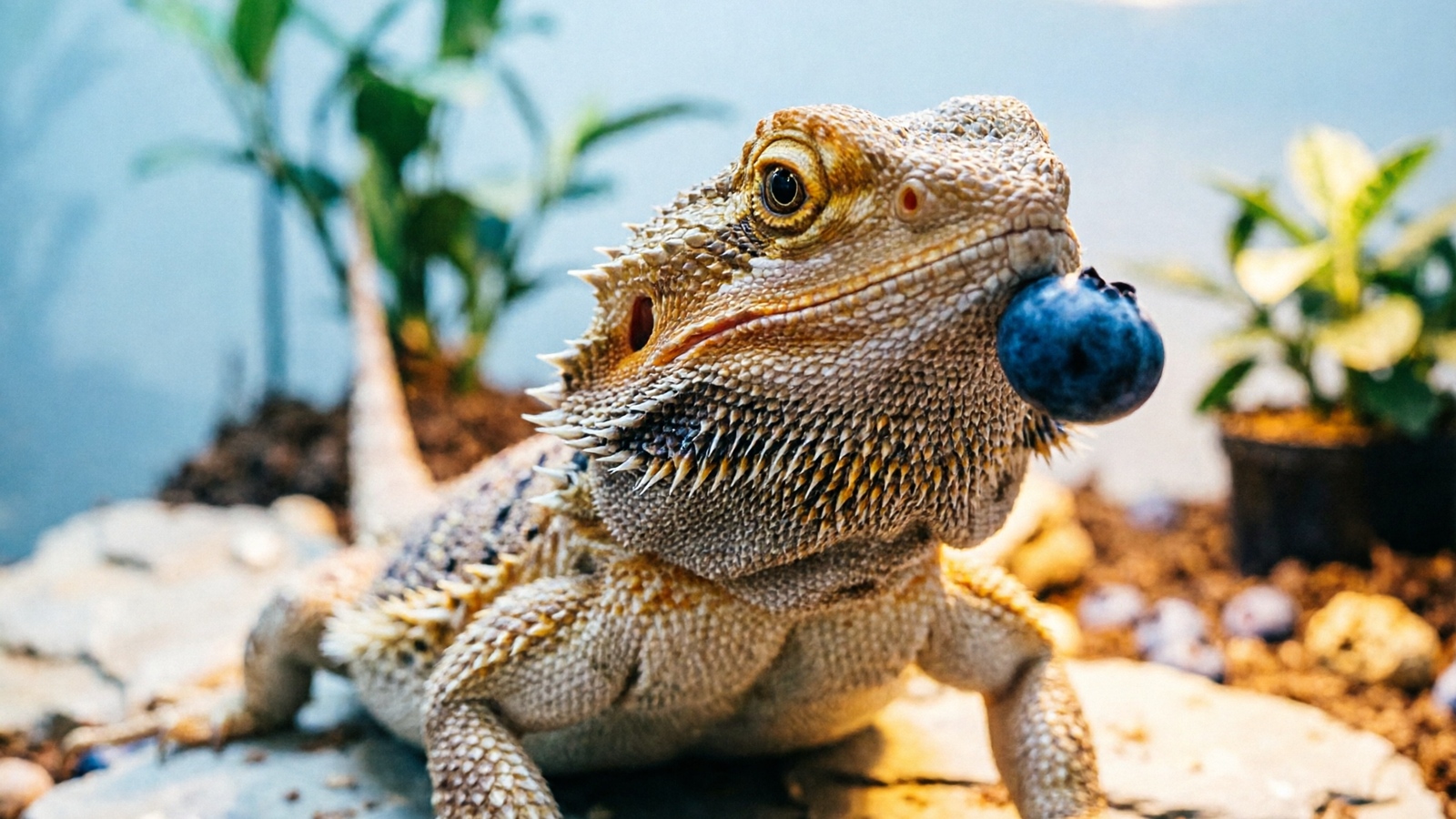
Yes — can bearded dragons eat blueberries safely? The short answer is 1–2 berries once or twice per week for adult dragons. Blueberries are non-toxic and offer useful antioxidants, but their high sugar content (approximately 10g per 100g) and poor calcium-to-phosphorus ratio (Ca:P ≈ 0.4:1) make them unsuitable as a regular food. Baby and juvenile dragons should rarely or never eat them.
Can Bearded Dragons Eat Blueberries?
Yes — blueberries are not toxic to bearded dragons, and with strict portion control they make a fine occasional treat. However, understanding why moderation matters is essential for responsible feeding.
Blueberries are a fruit, and fruit should comprise no more than 10–15% of a bearded dragon’s overall diet according to the Association of Reptilian and Amphibian Veterinarians (ARAV). Within that fruit allowance, blueberries are a reasonable choice — but they carry three specific concerns that limit their role.
- High sugar: At roughly 10g of sugar per 100g, blueberries are one of the sweeter berries commonly offered. In the wild, bearded dragons inhabit arid Australian scrublands where sugary fruit is virtually absent. Their digestive system is not built for regular sugar intake.
- Poor Ca:P ratio: The calcium-to-phosphorus ratio (Ca:P) measures how much calcium a food provides relative to phosphorus — the higher the number, the better for reptiles, who need at least 2:1 for healthy bone development. Blueberries contain approximately 6mg calcium and 15mg phosphorus per 100g, giving a Ca:P ratio of roughly 0.4:1. The ideal ratio for reptiles is 2:1 or higher. When phosphorus consistently exceeds calcium, it actively blocks calcium absorption.
- Oxalate content: Blueberries contain moderate oxalate levels that bind to calcium in the digestive tract, further reducing net calcium absorption.
The practical rule: if you feed blueberries on a given day, dust the salad with Rep-Cal Calcium Ultrafine Powder with Vitamin D3 to partially offset the phosphorus load. For a full overview of what bearded dragons should eat daily, see our best bearded dragon food guide.
Nutritional Value of Blueberries for Bearded Dragons
Understanding exactly what blueberries provide — and what they lack — helps you make informed feeding decisions. When it comes to bearded dragon diet blueberries, they are a clear treat-category food — not a staple. Here is the nutritional breakdown per 100g of raw blueberries (USDA FoodData Central) with relevance notes for bearded dragons.
| Nutrient | Amount (per 100g) | BD Relevance |
|---|---|---|
| Calories | 57 kcal | Treat only — too calorie-dense for regular feeding |
| Sugar | 10 g | ⚠️ High — limits frequency to 1–2x per week |
| Calcium | 6 mg | ❌ Very low — far below daily requirements |
| Phosphorus | 15 mg | ⚠️ Creates Ca:P ratio of 0.4:1 |
| Oxalates | Moderate | Binds calcium, further reducing absorption |
| Vitamin C | 9.7 mg | Trace benefit — dragons synthesize most of their own |
| Vitamin K | 19.3 mcg | Trace benefit — supports blood clotting |
| Manganese | 0.336 mg | Useful — supports bone development |
| Water | 84 g | Good hydration but excess causes loose stools |
| Fiber | 2.4 g | Moderate — skin adds some roughage |
Key nutrition facts for bearded dragon owners:
- 84% water content — good for hydration, but excess water combined with sugar can cause loose stools
- 10g sugar per 100g — moderate for fruit, but high by reptile standards where natural sugar intake is near zero
- Ca:P ratio of 0.4:1 — this is worse than grapes (0.5:1) and far worse than staple greens like collard greens (14.5:1)
- Antioxidant benefit — blueberries are rich in anthocyanins, which support immune function. This is a genuine nutritional advantage over less nutrient-dense treats
- Manganese content — supports metabolic function and bone development in growing dragons
Metabolic Bone Disease (MBD) is the most common preventable disease in captive bearded dragons (Pogona vitticeps), caused by chronic calcium deficiency or an imbalanced Ca:P ratio. The ARAV recommends an ideal dietary Ca:P ratio between 1.5:1 and 2:1. Blueberries at 0.4:1 are firmly in the calcium-negative zone — every gram of blueberry your dragon eats reduces the net calcium available from other foods in the same meal.
How Many Blueberries Can a Bearded Dragon Eat?
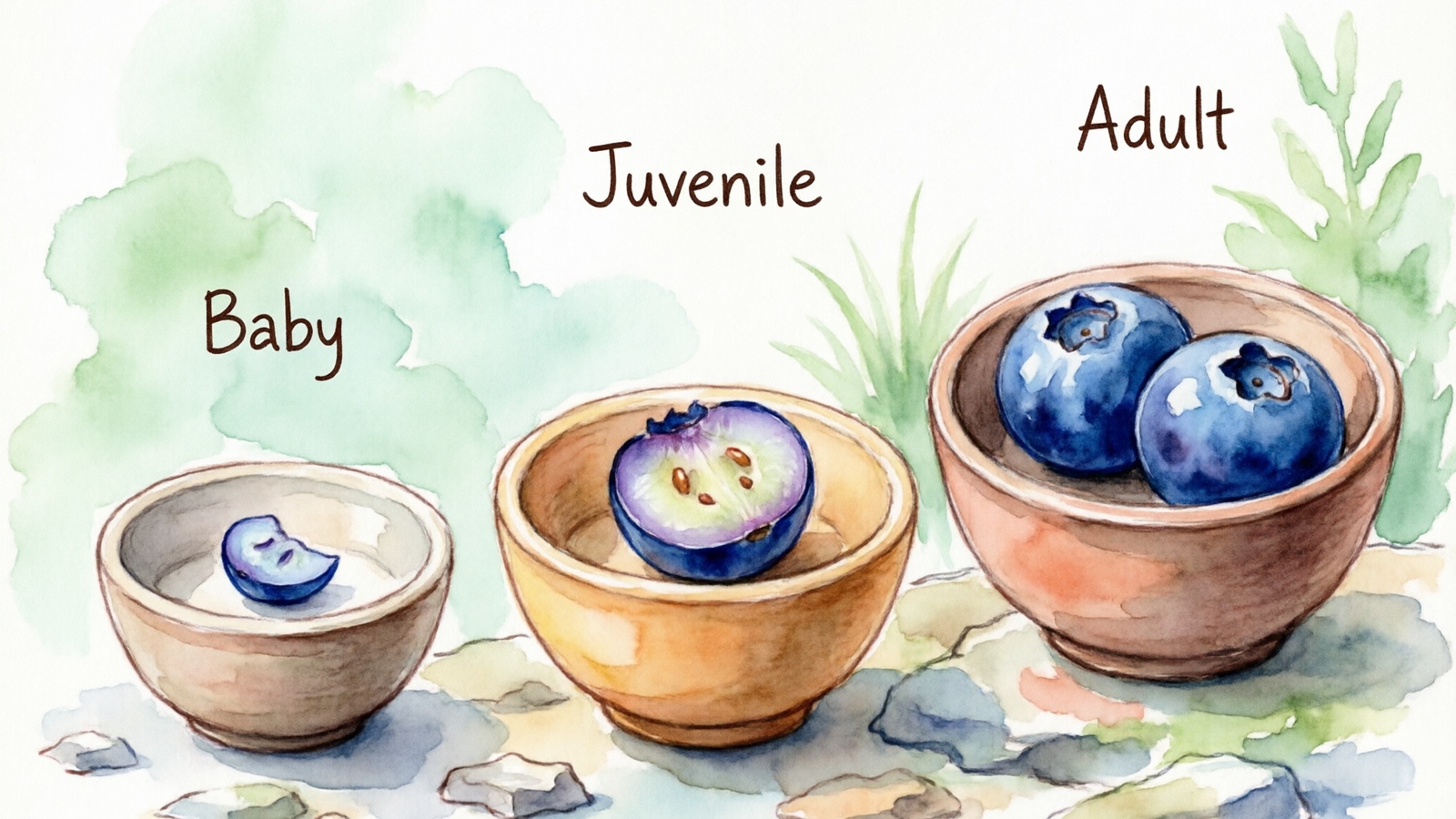
How often can bearded dragons eat blueberries? Once or twice per week for adults, once every two weeks for juveniles, and essentially never for babies. Feeding frequency must account for age, size, and growth stage.
| Age | Serving Size | Frequency | Notes |
|---|---|---|---|
| Baby (<6 months) | Not recommended | — | Growing dragons need protein (80%) and calcium-rich greens (20%). One tiny piece max to encourage salad eating. |
| Juvenile (6-12 months) | 1 small piece | Once every 2 weeks | Growth phase — insects and greens dominate. Sugar displaces nutrients they need. |
| Adult (>12 months) | 1–2 berries | Once or twice per week | Maintenance phase — blueberries as reward or enrichment treat only. |
Signs of blueberry overfeeding to watch for:
- Loose or runny stools — high water content (84%) plus sugar disrupts gut flora
- Refusal to eat salad greens — dragons learn to hold out for sweet treats if overfed
- Weight gain — fat deposits visible around the tail base and jowls
- Lethargy — sugar spikes followed by energy crashes
If you notice any of these signs, eliminate all fruit from the diet for 1–2 weeks and return to a strict greens-and-insects routine. For additional guidance on bearded dragon calcium supplements, a calcium dusting schedule is non-negotiable for any dragon receiving fruit treats.
Blueberries vs Other Safe Fruits for Bearded Dragons
When considering bearded dragons and blueberries, it helps to see how this fruit stacks up against other options. Not all fruits are equal when it comes to bearded dragon nutrition. Comparing blueberries against other commonly fed fruits helps you choose the best treats for your dragon’s health.
| Fruit | Sugar (per 100g) | Ca:P Ratio | Frequency | Water | Best For |
|---|---|---|---|---|---|
| Blueberries | 10 g | 0.4:1 | 1–2x/week | 84% | Antioxidant benefit |
| Raspberries | 4.4 g | 0.7:1 | 2–3x/week | 86% | Lowest sugar berry |
| Blackberries | 4.9 g | 0.6:1 | 2–3x/week | 88% | Fiber + moderate sugar |
| Strawberries | 4.9 g | 0.7:1 | 2–3x/week | 91% | Vitamin C boost |
| Bananas | 12 g | 0.3:1 | Once/week max | 75% | Potassium — worst Ca:P |
| Grapes | 16 g | 0.5:1 | Once/week | 81% | Most popular but highest sugar |
Takeaways from the comparison:
- Raspberries and blackberries are the best regular treats — lower sugar, better Ca:P ratios, and similar water content
- Strawberries offer the best balance of vitamin C and moderate sugar, making them our top pick for frequent treat feeding. See our full guide on whether bearded dragons can eat strawberries
- Blueberries sit in the middle — better than grapes and bananas for sugar, but worse than raspberries and strawberries for Ca:P
- Bananas have the worst Ca:P ratio (0.3:1) and should be the most limited fruit treat. Learn more in our can bearded dragons eat bananas guide
- Grapes are the sweetest option at 16g sugar — see can bearded dragons eat grapes for full details
I’d recommend rotating between berries rather than feeding the same fruit every week. This provides broader nutrient coverage and prevents picky eating behavior.
How to Prepare Blueberries for Your Bearded Dragon
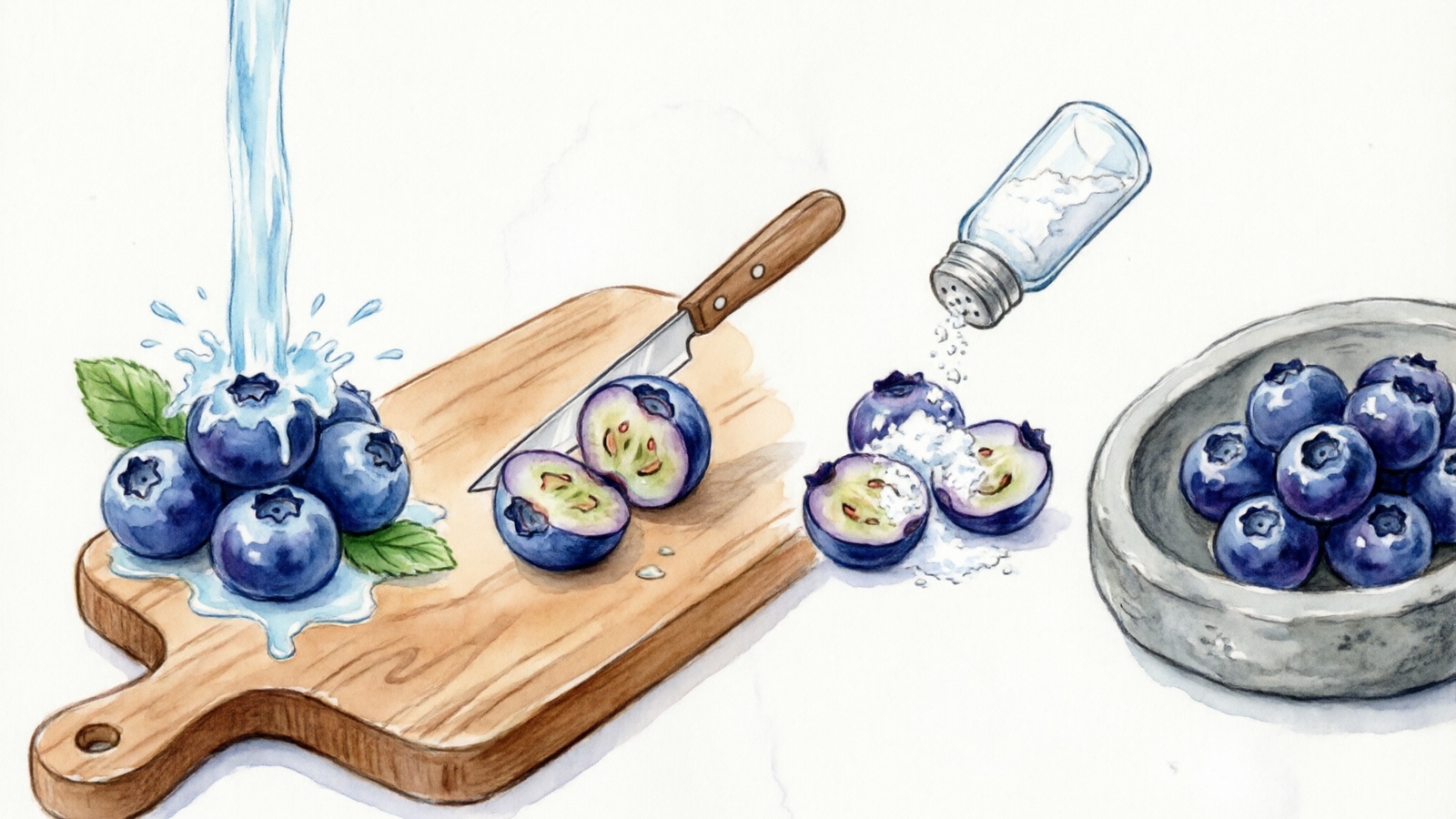
Proper preparation maximizes nutrition and minimizes risk. Here is a step-by-step guide based on current best practices for reptile feeding.
Step 1: Wash thoroughly. Run blueberries under cool water for 15–20 seconds, gently rubbing each one. Conventional blueberries rank among the EWG Dirty Dozen for pesticide residue. Organic blueberries are preferable if available.
Step 2: Cut in half or quarters. This is non-negotiable. Whole blueberries are a choking hazard — especially for juveniles. Cut each berry so the pieces are no larger than the space between your dragon’s eyes. This is the universal portion guide for bearded dragon food.
Step 3: Remove stems and leaves. Any green parts should be discarded. While not toxic, they add no nutritional value and can cause mild digestive irritation.
Step 4: Serve fresh or thawed. Frozen blueberries are safe — thaw completely at room temperature before serving. Do not microwave, as this destroys heat-sensitive vitamins and creates uneven temperature zones.
Step 5: Dust with calcium powder. Place the blueberry pieces in a small dish and lightly dust with calcium powder. This is critical because blueberries have a Ca:P ratio of 0.4:1 — without calcium supplementation, each berry actively depletes calcium from your dragon’s system. We use Rep-Cal Calcium Ultrafine Powder with Vitamin D3 for this purpose — the ultrafine texture adheres well to fruit surfaces.
Step 6: Serve in a stable dish. Use a shallow, tip-resistant dish like the Zoo Med Reptile Rock Food Dish. The natural rock finish blends into terrarium decor and the stable design prevents your dragon from tipping the dish — a common issue with lightweight plastic bowls.
Frozen vs Fresh: Fresh blueberries are preferable due to slightly higher vitamin retention and better texture. However, frozen blueberries are a perfectly acceptable alternative, especially when fresh berries are out of season. The nutritional difference is small enough that frequency and portion control matter far more than fresh vs frozen.
What to Pair Blueberries With (and What to Avoid)
A common question from new keepers is, “Can beardies eat blueberries with other foods?” The answer is yes — but blueberries should never be served alone. They work best as part of a balanced salad that prioritizes calcium-rich greens and limits overall sugar.
Best salad base greens to pair with blueberries:
- Collard greens — Ca:P 14.5:1, the gold standard staple green
- Mustard greens — Ca:P 2.4:1, excellent rotation option
- Dandelion greens — Ca:P 2.0:1, widely available and nutrient-dense
- Turnip greens — Ca:P 4.6:1, high calcium with good flavor acceptance
Safe vegetable additions:
- Butternut squash (shredded)
- Bell pepper strips
- Snap peas
Foods to avoid in the same meal as blueberries:
While blueberries appear on most safe bearded dragon fruit lists, the following foods should never be combined with them in the same feeding:
- ❌ Other high-sugar fruits — do not combine blueberries with grapes, bananas, or mango in the same feeding. Multiple sugar sources compound the Ca:P problem.
- ❌ Avocado — toxic to bearded dragons
- ❌ Rhubarb — high oxalates, potentially toxic
- ❌ Fireflies/lightning bugs — highly toxic, fatal if ingested
- ❌ Iceberg lettuce — zero nutritional value, causes diarrhea
Practical feeding approach: Place the calcium-dusted blueberry pieces on top of the salad. This encourages your dragon to eat greens while hunting for the treat. Never feed blueberries before greens — your dragon will fill up on sugar and refuse the nutritious parts. A Fluker’s Buffet Blend Adult Veggie Variety Diet can supplement the fresh greens rotation on days when you are short on time, though fresh vegetables should always be the primary staple.
For a complete breakdown of daily nutrition requirements, see our best bearded dragon food guide covering staples, supplements, and feeding schedules.
Frequently Asked Questions
Can bearded dragons eat blueberries every day?
No. Feed 1–2 blueberries once or twice per week for adults. Daily feeding causes obesity, tooth decay, and calcium depletion from the poor Ca:P ratio.
How many blueberries can I feed my bearded dragon?
Adults can have 1–2 berries once or twice per week. Juveniles should get 1 small piece every two weeks. Baby dragons under 6 months should not eat blueberries — their diet must be 80% protein and 20% calcium-rich greens.
Can baby bearded dragons eat blueberries?
Rarely, if ever. Baby dragons under 6 months need 80% protein from insects and 20% calcium-rich greens. Blueberries provide sugar without usable calcium — save them for adult dragons.
Can bearded dragons eat frozen blueberries?
Yes, but thaw completely at room temperature first. Never microwave — this destroys vitamins and creates hot spots. Fresh blueberries are slightly better for vitamin retention and texture, but the nutritional difference is small.
Why does my bearded dragon love blueberries?
Bearded dragons instinctively seek sweet foods. In the wild, sugary fruit is rare, so their taste preference drives overeating in captivity where treats are freely available. This is why strict portion control is essential — most dragons will eat far more blueberries than is healthy if given the chance.
Conclusion
Blueberries are a safe and enjoyable treat for bearded dragons when fed in moderation. The key principles are straightforward: 1–2 berries per week for adults, always cut to size, always paired with calcium-rich greens, and always dusted with calcium powder to offset the poor Ca:P ratio.
For most keepers, blueberries work best as a training reward or weekly enrichment treat — something your dragon looks forward to without compromising their core nutrition. Rotate between different berries for broader nutrient coverage, and always prioritize staple greens and appropriate insects as the foundation of the diet.
If you are new to bearded dragon care, start with our bearded dragon care guide for a complete overview of diet, habitat, and health management.