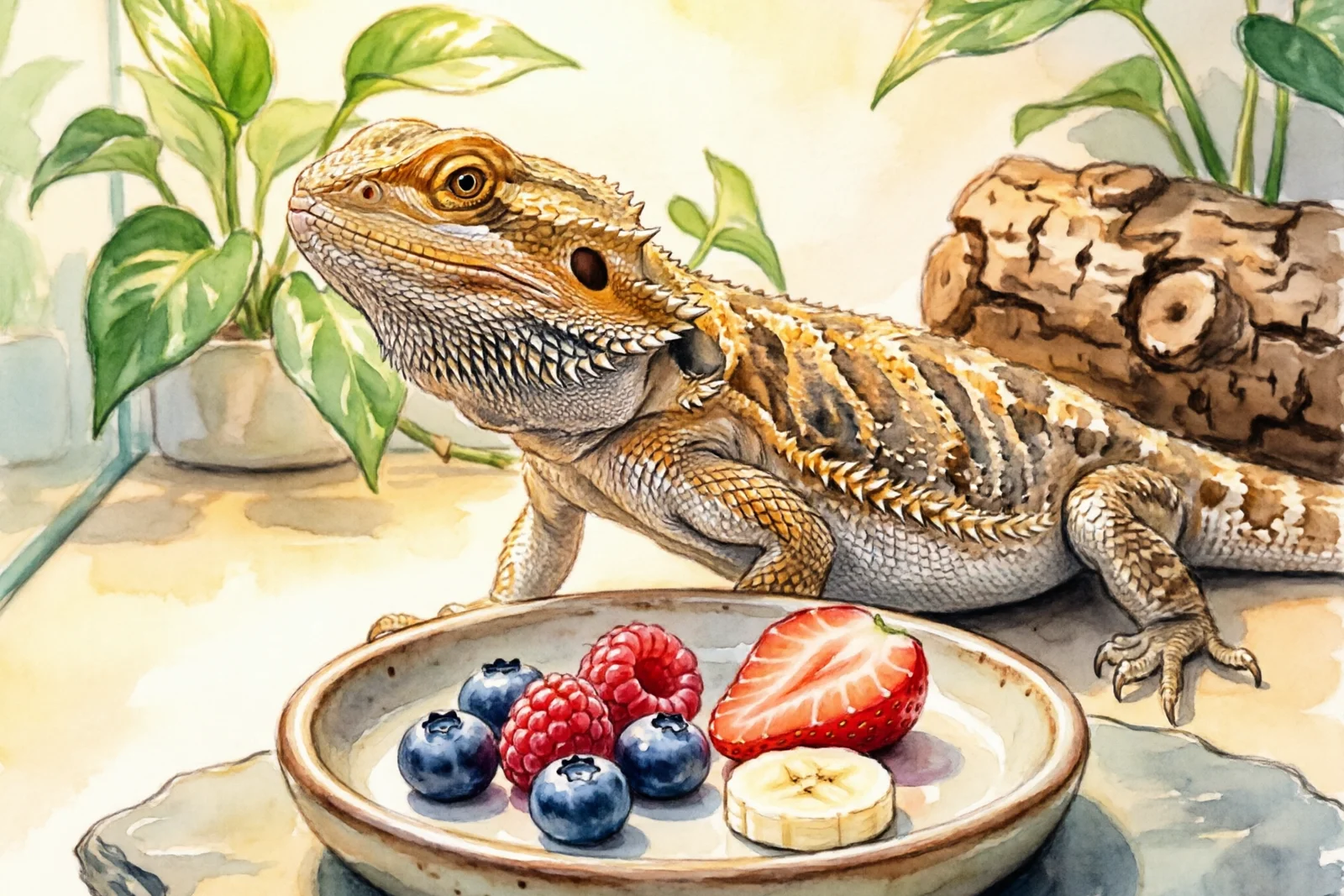
Yes, bearded dragons can eat bananas — but only in small amounts as an occasional treat. Bananas are high in sugar and phosphorus while being low in calcium, which makes them unsuitable as a regular part of a bearded dragon’s diet. For a complete overview of what bearded dragons need daily, see our bearded dragon care guide.
The safe approach: feed a coin-thin slice or roughly one tablespoon of diced banana once every 2-4 weeks to adult dragons. Baby dragons under 12 months should avoid bananas altogether.
Quick Answer
Can bearded dragons eat bananas safely? Yes, but only as an occasional treat — not a regular food. Adult dragons can have a small slice once every 2-4 weeks. Baby dragons under 12 months should not eat bananas at all.
The reason for caution comes down to nutrition. Bananas contain 12.2g of sugar per 100g and have a calcium-to-phosphorus ratio of roughly 1:4.4 — heavily skewed toward phosphorus.
Bearded dragons need calcium-dominant foods for bone health, and the high phosphorus in bananas works against that need.
Nutritional Value of Bananas for Bearded Dragons
Zilla Rock Lair is a quality option worth considering for your setup.
Bananas offer some useful nutrients, but their nutritional profile has two significant drawbacks for bearded dragons: high sugar and an unfavorable calcium-to-phosphorus ratio.
| Nutrient | Amount (per 100g) | Relevance to Bearded Dragons |
|---|---|---|
| Protein | 1.1g | Low — beardies need 20-30% protein from insects |
| Fat | 0.3g | Low — acceptable |
| Fiber | 2.6g | Moderate — aids digestion |
| Sugar | 12.2g | High — risk of obesity and dental issues |
| Calcium | 5mg | Very low — beardies need 2:1 Ca:P minimum |
| Phosphorus | 22mg | High — binds calcium, prevents absorption |
| Potassium | 358mg | Good — supports muscle and nerve function |
| Vitamin B6 | 0.4mg | Good — supports metabolism |
| Vitamin C | 8.7mg | Moderate — antioxidant, but beardies synthesize their own |
| Water | 74.9g | Good hydration content |
The calcium-to-phosphorus problem: Bananas have a Ca:P ratio of roughly 1:4.4 (5mg calcium to 22mg phosphorus). Bearded dragons need a diet with a Ca:P ratio of at least 1:1, ideally 2:1. When phosphorus intake consistently exceeds calcium, phosphorus binds to calcium in the digestive tract and prevents absorption.
Over time, this calcium deficit leads to metabolic bone disease (MBD) — a progressive condition causing soft, deformed bones, tremors, and in severe cases, death. One banana will not cause MBD, but frequent banana feeding alongside other high-phosphorus foods creates a compounding problem.
The beneficial components — potassium (358mg per 100g), vitamin B6, and vitamin C — are present in healthier feeder options. Dubia roaches, for example, provide better calcium ratios with comparable or superior vitamin content.
Can Bearded Dragons Eat Banana Peels?
Many owners find that Aivituvin Premium works well for their pet’s needs.
Banana peels are not toxic to bearded dragons, but the bearded dragon banana peel question comes up often and the answer is: feeding them is not recommended for two reasons.
Pesticide residue: Conventionally grown bananas are among the most pesticide-treated tropical fruits. While the thick peel protects the fruit inside, the peel itself retains significant pesticide residue. Even thorough washing may not remove systemic pesticides that are absorbed through the peel from the soil.
Digestibility: Banana peels are tough, fibrous, and difficult for bearded dragons to break down. Their digestive systems are adapted for processing insects and soft plant matter, not thick fruit skins. Ingested peel pieces can cause impaction or intestinal blockage, especially in younger dragons.
Oxalates: Banana peels contain oxalates — naturally occurring compounds that bind to calcium and further reduce its absorption. Combined with the peel’s already unfavorable mineral profile, this makes banana peels a double liability for calcium metabolism.
If you want to offer peel despite these risks, use only organic bananas, wash thoroughly, and cut the peel into pieces smaller than the space between the dragon’s eyes. Even then, feed peel only rarely — the fruit inside is the safer choice.
How to Safely Feed Bananas to Your Bearded Dragon
For this purpose, MLONDHSU XL Standing Dock (Best for Multi-Turtle Tanks) is a popular choice among pet owners.
Following a consistent preparation method reduces the risks associated with banana feeding. Here is a step-by-step approach.
Step 1: Choose the right banana. Select a fully ripe banana — yellow skin with small brown spots indicates peak sugar content and easiest digestibility. Avoid green bananas (higher resistant starch, harder to digest) and heavily brown or black bananas (fermenting sugars can cause digestive upset).
Step 2: Peel and cut into small pieces. Remove the peel entirely. Cut the fruit into slices no thicker than a coin, or dice into pieces smaller than the space between your dragon’s eyes. This size guideline prevents choking and ensures the pieces pass safely through the digestive tract.
Step 3: Feed as an occasional treat. How often can bearded dragons eat bananas? Once every 2-4 weeks for adults. Place the pieces in a shallow dish or hand-feed them. Remove any uneaten banana after 15-20 minutes to prevent bacterial growth in the warm enclosure. Proper digestion requires adequate basking temperatures — if your dragon is not basking normally, address the heating setup first. For guidance on maintaining proper temperatures, see our guide to choosing a bearded dragon heating lamp.
Step 4: Balance with calcium-rich foods. On days when you feed banana, offer calcium-dense foods at the next feeding. Dust feeder insects with calcium powder, or offer collard greens, mustard greens, or turnip greens — all have favorable Ca:P ratios above 2:1. This compensates for the phosphorus load from the banana.
Can Baby Bearded Dragons Eat Bananas?
Baby bearded dragons (under 12 months) have different nutritional requirements than adults. Their rapid growth demands high protein (30-40% of diet from insects) and high calcium intake to build strong bones and skeletal structure.
Bananas work against both needs. The high phosphorus content actively interferes with calcium absorption during the most critical growth period. The high sugar content fills the dragon up on empty calories, reducing appetite for the protein-rich insects and calcium-dense greens they actually need.
Recommendation: Do not feed bananas to baby bearded dragons under 12 months. If you want to offer fruit as a treat for juveniles, choose lower-sugar, higher-calcium options like papaya (Ca:P 1:0.6) or small amounts of blueberry. Even these should be limited to once per month for babies.
Juvenile dragons (12-18 months) can have a tiny piece of banana once per month at most. By 18 months, the dragon has reached near-adult size and can transition to the adult feeding schedule of once every 2-4 weeks.
If your baby dragon has eaten a small piece of banana, do not panic — a single small exposure will not cause harm. The best approach is to simply return to the regular feeding schedule and treat it as a one-time event.
Risks of Feeding Too Many Bananas
Understanding what happens when bananas are overfed helps explain why moderation matters.
Metabolic bone disease (MBD): This is the most serious long-term risk. The consistently high phosphorus intake from frequent banana feeding depletes calcium reserves. Early signs include lethargy, soft jaw, and swollen limbs. Advanced MBD causes bone fractures, tremors, and paralysis. MBD is progressive and partially reversible only in early stages with veterinary intervention and aggressive calcium supplementation.
Obesity and fatty liver disease: At 12.2g sugar per 100g, bananas are one of the highest-sugar fruits commonly offered to bearded dragons. Captive dragons are already prone to obesity due to limited space compared to their wild range. Added sugar accelerates weight gain. Fatty liver disease (hepatic lipidosis) follows — the liver becomes infiltrated with fat, reducing its ability to process toxins and store vitamins.
Dental disease: Sugar residue sticks to teeth and promotes bacterial growth. Bearded dragon teeth are acrodont — they are fused directly to the jawbone rather than sitting in sockets like mammalian teeth. This makes dental disease particularly dangerous because infection can spread directly to the jawbone. Dental issues require surgical intervention by an experienced reptile veterinarian.
Digestive upset: The high fiber and sugar content can cause loose stool or diarrhea, especially if the dragon is not accustomed to fruit. If diarrhea persists for more than 24 hours or the dragon stops eating entirely, consult a veterinarian.
Safe vs Unsafe Fruits Comparison
| Fruit | Sugar (per 100g) | Ca:P Ratio | Max Frequency | Risk Level |
|---|---|---|---|---|
| Blueberries | 10.0g | 1:0.7 | 2-3x per week | Low |
| Raspberries | 4.4g | 1:0.9 | 2-3x per week | Low |
| Strawberries | 4.9g | 1:1.4 | 1-2x per week | Low |
| Papaya | 7.8g | 1:0.6 | 1x per week | Low |
| Blackberries | 4.9g | 1:1.3 | 1-2x per week | Low |
| Mango | 13.7g | 1:0.7 | 1x per week | Moderate |
| Banana | 12.2g | 1:4.4 | 1x per 2-4 weeks | Moderate-High |
| Watermelon | 6.2g | 1:0.4 | 1x per week | Moderate (low nutrition) |
| Grapes | 16.3g | 1:1.1 | 1x per 2 weeks | Moderate |
| Apple | 10.4g | 1:1.6 | 1x per 2 weeks | Moderate |
Bananas stand out for their extremely unfavorable Ca:P ratio (1:4.4). Most safe fruits have ratios closer to 1:1 or better.
For detailed guidance on feeding other common fruits, see our articles on whether bearded dragons can eat grapes and whether bearded dragons can eat strawberries.
Safe Fruits for Bearded Dragons (Alternatives)
Fruit should make up no more than 10% of an adult bearded dragon’s diet. The remaining 80-90% should be split between live insects (for protein) and leafy greens and vegetables (for fiber and calcium).
When choosing fruit for your bearded dragon fruit list, consider what fruits can bearded dragons eat safely. Prioritize three factors: low sugar, favorable Ca:P ratio (closer to 1:1 or calcium-dominant), and high nutritional value.
Best everyday fruits (2-3x per week):
- Blueberries — low sugar (10g/100g), favorable Ca:P (1:0.7), rich in antioxidants
- Raspberries — lowest sugar of common berries (4.4g/100g), excellent fiber content
- Blackberries — moderate sugar (4.9g/100g), good Ca:P ratio (1:1.3)
Good weekly fruits (1x per week):
- Strawberries — moderate sugar (4.9g/100g), good Ca:P ratio (1:1.4), high vitamin C
- Papaya — low Ca:P ratio (1:0.6) means less calcium competition, good for hydration
- Mango — higher in sugar (13.7g/100g) but rich in vitamin A, which supports eye health
Occasional treats (1-2x per month):
- Banana — the 1:4.4 Ca:P ratio makes this strictly occasional (see nutritional breakdown above)
- Apple — peel and seed first (seeds contain trace amygdalin), moderate nutritional value
- Grapes — higher sugar (16.3g/100g) but acceptable Ca:P ratio (1:1.1)
Fruits to avoid entirely:
- Citrus fruits (oranges, lemons, grapefruit) — too acidic, can cause mouth irritation
- Avocado — contains persin, toxic to reptiles
- Rhubarb — high oxalates, toxic
Product Recommendations
Here are some products mentioned in this guide:
Frequently Asked Questions
Can bearded dragons eat dried bananas?
No. Dried bananas concentrate sugar to roughly four times the fresh amount while removing most water content. A single dried banana chip contains more sugar than an entire fresh serving portion.
The concentrated sugar causes rapid blood sugar spikes, and the chewy texture is difficult for bearded dragons to process. Stick to fresh banana only, and even then only in small amounts.
Can bearded dragons eat banana chips?
Store-bought banana chips are unsafe. Most are deep-fried in coconut or palm oil and coated in added sugar, making them far too high in fat and sugar.
Even unsweetened baked banana chips concentrate sugar too heavily. Fresh banana in small pieces is the only safe option.
What happens if my bearded dragon eats too much banana?
A single large portion may cause loose stool or mild diarrhea within 12-24 hours due to the high sugar and fiber content. Chronic overfeeding leads to more serious problems: weight gain and fatty liver disease from excess sugar, metabolic bone disease (MBD) from the high phosphorus binding calcium, and dental decay from sugar residue. If your bearded dragon shows persistent diarrhea or stops eating after banana, consult a reptile veterinarian.
How much banana can I give my bearded dragon?
Adult bearded dragons: a slice no thicker than a coin, roughly one tablespoon of diced banana, given once every 2-4 weeks as a treat. Baby and juvenile bearded dragons (under 12 months) should avoid bananas entirely — their growing bodies need calcium-dense foods, and the high phosphorus in bananas interferes with calcium absorption during this critical growth period.
Can bearded dragons eat green bananas?
Green (unripe) bananas are not toxic, but they are not recommended. Unripe bananas contain higher levels of resistant starch and tannins, which can cause digestive discomfort and constipation.
They are also lower in sugar but offer no nutritional advantage over ripe bananas for bearded dragons. Wait until bananas are fully yellow with small brown spots for the best digestibility.
Conclusion
Bearded dragons can eat bananas, but they should be treated as an occasional snack — not a diet staple. The high sugar (12.2g per 100g) and extremely unfavorable Ca:P ratio (1:4.4) make bananas one of the riskier common fruits for regular feeding.
For adult dragons, a coin-thin slice once every 2-4 weeks is the maximum safe frequency. Baby dragons under 12 months should not eat bananas at all — their calcium needs during rapid growth are too critical to compromise with high-phosphorus foods.
Safer fruit alternatives exist across all frequency tiers. Blueberries, raspberries, and blackberries can be offered 2-3 times per week with far less nutritional risk.
When you do feed banana, pair it with calcium-dusted insects or calcium-rich greens like collard greens at the next meal to offset the phosphorus load.