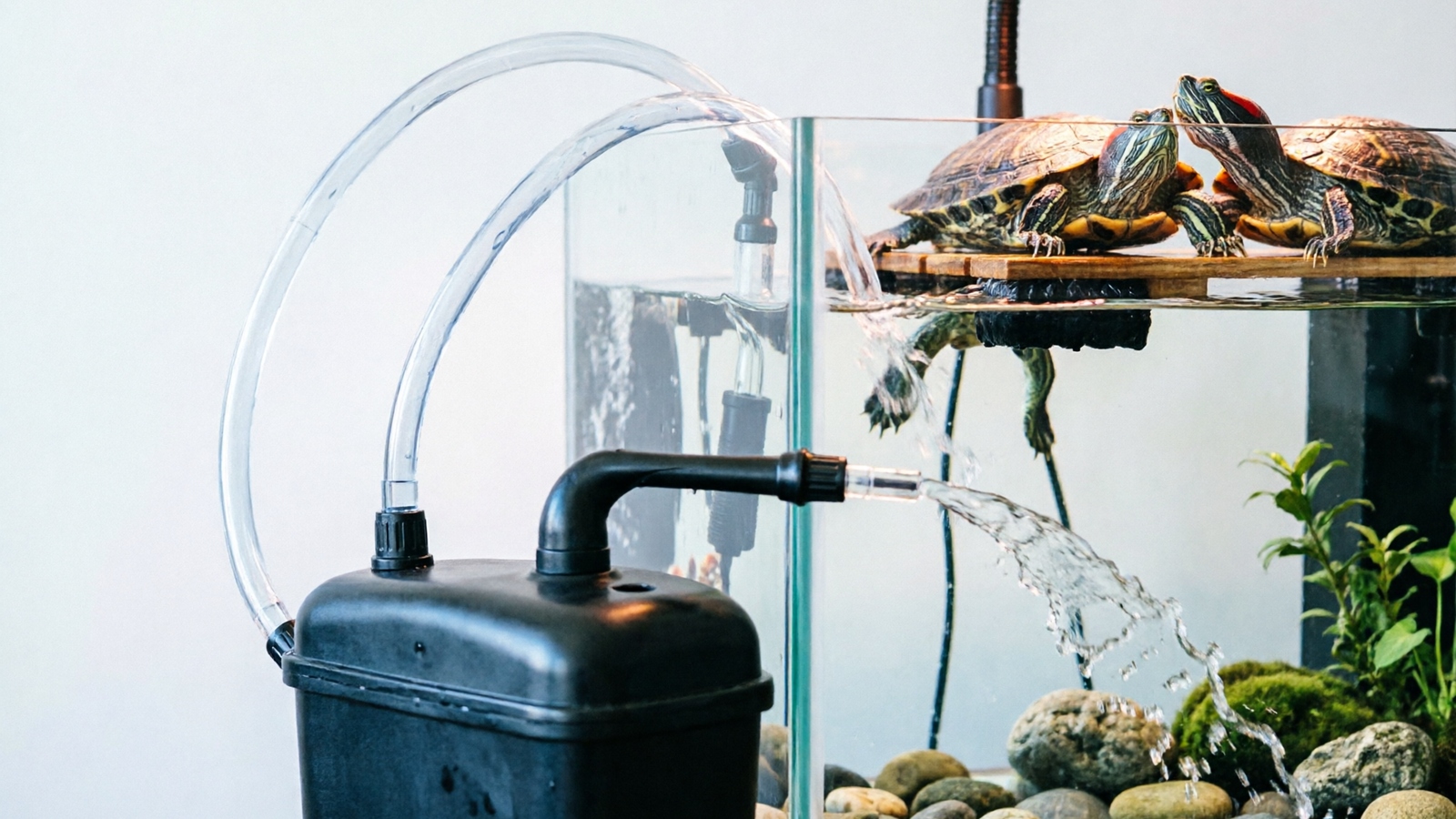
The Turtle Substrate Debate: Finding the Best Turtle Substrate for Your Tank
Ask any turtle keeping community what the best turtle substrate is, and you’ll get the same answer within the first three replies: “bare bottom is best.” Turtle sand has its supporters too — for natural aesthetics, enrichment, and species-specific benefits. Waste doesn’t get trapped, filters run more efficiently, and there’s zero risk of your turtle swallowing something it shouldn’t.
But thousands of keepers still choose substrate — for natural aesthetics, for enrichment, or because their specific turtle species benefits from it. When choosing the best turtle substrate, consider your turtle’s size, species, and willingness to maintain turtle sand.
This article presents every option honestly: turtle sand, gravel, river rocks, play sand, bare bottom, and terrestrial substrates for box turtles. We include an impaction risk table compiled from veterinary data and community reports. We also flag the one category that turtle keepers should avoid entirely.
Quick Comparison — All Options at a Glance
| # | Product | Type | Price | Impaction Risk | Best For |
|---|---|---|---|---|---|
| — | Bare Bottom | No Substrate | FREE | ZERO | Filter efficiency, easy cleaning |
| 1 | Zoo Med ReptiSand | Fine Sand | $8.99/10lb | LOW | Most popular sand |
| 2 | Carib Sea Moonlight Sand | Fine Sand | $14.99/10lb | LOW | Dark color hides waste |
| 3 | Exo Terra Desert Sand | Sand | $9.99/10lb | LOW-MEDIUM | Color variety |
| 4 | Carib Sea Torpedo Beach | Sand | $17.99/20lb | LOW | Best bulk value |
| 5 | Pure Water Pebbles | Gravel | $12.99/5lb | HIGH | Not recommended |
| 6 | Zoo Med River Pebbles | River Rocks | $14.99/10lb | ZERO | Safest solid |
| 7 | Unocho Seiryu Stone | River Rocks | $29.99/20lb | ZERO | Showpiece |
| 8 | Classic Sand & Play | Play Sand | $9.99/20lb | LOW | Budget pick |
| 9 | Zoo Med Eco Earth | Coconut Coir | $9.96/3-pack | N/A | Box turtles |
| 10 | Galápagos Mulch | Cypress Mulch | $10.99/8qt | N/A | Box turtles |
Impaction Risk by Substrate Type
Impaction — intestinal blockage from swallowing substrate — is the single biggest health risk associated with turtle tank substrate. This table summarizes risk levels based on veterinary case reports and community data from turtle keeping forums.
| Substrate Type | Impaction Risk | Why | Recommendation |
|---|---|---|---|
| Fine sand | LOW | Fine grains pass through the digestive tract naturally | Safe for aquatic turtles |
| Coarse sand | LOW-MEDIUM | Slightly larger grains may accumulate in gut | Use fine-grain only |
| Gravel | HIGH | Gravel is the leading cause of intestinal blockages in aquatic turtles | Avoid completely |
| River rocks | ZERO | Rocks too large for any turtle to swallow | Safest solid option |
| Bare bottom | ZERO | No substrate present | Safest overall |
| Coconut fiber | N/A | Terrestrial only — will rot if submerged in water | Box turtles only |
| Cypress mulch | N/A | Terrestrial only — will float and foul water | Box turtles only |
Sand Options — Best Turtle Sand for Aquatic Tanks
Fine turtle sand is the most widely used aquatic turtle substrate for aquatic turtle tanks. Turtle sand has low impaction risk, looks natural, and allows turtles to engage in digging behavior. Four products dominate the turtle sand category, each with distinct advantages.
Zoo Med ReptiSand Desert White (Top Pick)
Zoo Med ReptiSand Desert White is the most widely purchased reptile-specific turtle sand on the market. This turtle sand is specifically designed for reptile enclosures. Zoo Med has been a trusted herpetology brand for decades.
What We Liked
- Widely purchased reptile sand with an extensive track record
- Fine grain designed for reptile use — passes through digestive tract safely
- Zoo Med is an established herpetology brand with proven track record
- Natural white color creates a clean river-bottom aesthetic
- Affordable at $8.99 for 10 pounds — good value per pound
What Could Be Better
- 10-pound bag insufficient for tanks over 55 gallons at recommended depth
- Requires thorough rinsing before use to remove fine dust particles
- Fine grains can enter filter intakes — add a pre-filter sponge
- White color makes waste and algae more visible than darker sand
Zoo Med ReptiSand pairs well with a good best turtle filter to handle any turtle sand particles that reach the water column. For a complete setup, combine with a best turtle basking platform and best turtle heat lamp.
Carib Sea Super Natural Moonlight Sand
Carib Sea Moonlight Sand is the top YouTube-reviewed turtle sand for turtle tanks. This premium turtle sand was featured by Long Live Your Turtle, a popular turtle care channel with dedicated substrate reviews, in a January 2026 video. The Super Natural line uses no artificial dyes or coatings.
What We Liked
- YouTube-recommended by Long Live Your Turtle (Jan 2026 review)
- Moonlight black color hides waste significantly better than white sand
- No artificial dyes or coatings in the Super Natural line
- Fine rounded grains are safe for aquatic turtles
- Strong community validation
What Could Be Better
- More expensive per pound than Zoo Med ReptiSand
- Black sand makes it harder to spot uneaten food pellets
- Requires extensive rinsing — the fine dust cloud takes multiple rinses
- Aquarium brand, not specifically marketed for reptiles
Exo Terra Desert Sand (Red)
Exo Terra Desert Sand offers something unique in the turtle sand category: color variety. This turtle sand is available in red, yellow, black, and natural tones.
Exo Terra lets keepers customize their tank aesthetic. As a Hagen subsidiary, Exo Terra is a premium reptile brand.
What We Liked
- Available in multiple colors — red, yellow, black, and natural
- Slightly coarser grain makes spot-cleaning waste easier than ultra-fine sand
- Exo Terra is a premium reptile brand with consistent quality
- pH neutral — will not alter your tank’s water chemistry
- Strong community validation
What Could Be Better
- Slightly coarser grain means marginally higher impaction risk than fine sand
- Red color may not complement all tank setups
- 10-pound bag covers roughly 20 gallons at 1-inch depth
- Premium pricing compared to budget play sand alternatives
Carib Sea Super Naturals Torpedo Beach (Best Bulk Value)
Carib Sea Torpedo Beach Sand is the best value per pound in the turtle sand category. At $17.99 for 20 pounds, this turtle sand covers a 40-gallon tank at 1-inch depth. The natural torpedo beach color resembles a real river bottom.
What We Liked
- Best value per pound at $0.90 — half the cost of Moonlight Sand
- 20-pound single bag covers large tanks with less packaging waste
- Natural beach sand — no dyes, no coatings, no artificial colors
- Light tan is the most natural-looking option for riverbed aesthetics
- Carib Sea quality with YouTube-recommended brand trust
What Could Be Better
- Fewer owner reports than Zoo Med or Moonlight Sand options
- Light tan color shows waste more visibly than dark sand
- 20-pound bag is heavy and awkward to rinse in small buckets
- Slightly coarser than dedicated reptile sands — designed for fish aquariums
Gravel — Not Recommended for Aquatic Turtles
Pure Water Pebbles Aquarium Gravel
Pure Water Pebbles Aquarium Gravel is the most discussed aquarium gravel in competitor reviews. Despite being listed by Chewy as a recommended turtle substrate, the turtle keeping community strongly opposes gravel for aquatic turtles.
⚠️ WARNING: High Impaction Risk
Turtles naturally forage along the tank bottom, picking up small objects to investigate whether they’re food. Gravel pieces are the perfect size to be swallowed and become lodged in the intestinal tract.
Veterinary case reports consistently identify gravel as the leading cause of intestinal blockages in pet turtles. Surgery to remove impaction costs $500-$1,200 and carries significant mortality risk.
What We Liked
- Coated pebbles have smoother edges than uncoated gravel
- Easy to vacuum clean — waste sits on top rather than penetrating
- Heavier than sand — less likely to enter filter intakes
- Multiple color options for tank customization
What Could Be Better
- HIGH impaction risk — the single most dangerous substrate for turtles
- Community consensus on forums strongly advises against gravel
- Coating can chip over time, exposing sharp edges underneath
- 5-pound bag covers only 5-10 gallons — expensive for larger tanks
- Traps waste between pebbles — frequent vacuuming required
We include this product because it appears in competitor reviews and retailers still promote it. If you must use gravel, choose pebbles larger than your turtle’s head. However, large river rocks are a safer alternative that achieves the same visual effect.
River Rocks — Safest Solid Substrate Option
River rocks are the safest solid substrate for aquatic turtles because the stones are too large to swallow. Many keepers choosing the best turtle substrate pick river rocks over sand for this reason alone.
Zoo Med Aquatic River Pebbles (Safest Substrate)
Zoo Med Aquatic River Pebbles are the highest-rated substrate option for turtles. Unlike generic aquarium gravel, Zoo Med specifically markets these pebbles for turtle habitats. The large stones are impossible for any turtle species to swallow.
What We Liked
- ZERO impaction risk — pebbles are too large for any turtle to swallow
- Turtle-specific product from a trusted herpetology brand
- Easy to clean — just remove and rinse under running water
- Natural river stone appearance recommended by AI Overview
- Provides enrichment — turtles enjoy climbing and rearranging stones
What Could Be Better
- Fewer owner reports than sand options
- Gaps between large pebbles trap waste that requires weekly removal
- Covers less surface area than sand at the same depth
- Not ideal for turtles that enjoy digging and burying behavior
- Heavier than sand — more effort to reposition during tank maintenance
Unocho Natural Seiryu Stone (Premium Aesthetic)
Unocho Seiryu Stone is a premium aquascaping stone used in professional planted tank and turtle setups. The grey-blue limestone creates a striking natural river bank aesthetic. At 3-10 inches, these rocks serve double duty as both substrate and tank decoration.
What We Liked
- Grey-blue limestone creates showpiece aquascaping aesthetics
- ZERO impaction risk — rocks are massive relative to any turtle’s mouth
- Doubles as basking platforms and hiding spots
- Used in professional aquascaping — Instagram-worthy tank setups
- Creates natural caves and territories for turtles
What Could Be Better
- Most expensive option at $29.99 for 20 pounds
- Limestone can raise tank pH — monitor water parameters after adding
- Large rocks displace significant water volume in smaller tanks
- Doesn’t cover the entire tank bottom like sand
- Some stones may arrive with sharp edges — inspect before adding
Play Sand — The Budget Community Favorite
Classic Sand & Play Natural Play Sand
Classic Sand & Play Sand is the cheapest turtle sand available. At $9.99 for 20 pounds ($0.50/lb), this budget turtle sand costs half as much as branded aquarium sand per pound. Play sand is the top budget recommendation across turtle keeping forums as the best turtle substrate for budget-conscious keepers.
What We Liked
- Cheapest sand at $0.50 per pound — unbeatable value
- The turtle keeping community frequently recommends play sand for budget setups
- Natural, non-toxic, and pre-washed — safe for aquatic turtles
- 20-pound bag covers a 40-gallon tank at 1-inch depth
- Widely available at hardware stores and home improvement retailers
What Could Be Better
- Not marketed for aquariums — designed for sandboxes and play areas
- Often contains more dust than branded aquarium sand
- Grain size can vary between batches
- Natural tan color only — no customization options
- Requires extensive rinsing — expect 20-30 minutes to clear the dust cloud
Bare Bottom — Free and Community-Recommended
Bare bottom tanks use no substrate at all. For many keepers, the best turtle substrate is no substrate — glass or acrylic sits empty, and all waste is immediately visible for removal. Some keepers who initially chose turtle sand later switched to bare bottom after seeing how much easier maintenance becomes.
A keeper in a Facebook red-eared slider group with 20-plus upvotes summarized the consensus: “I have five red-eared sliders and all my tanks have bare bottoms so their filters work better.” Multiple community threads on the topic receive similar responses within the first few replies.
What We Liked
- FREE — no substrate purchase needed
- Zero impaction risk — nothing to swallow
- Easiest to clean — wipe the bottom with a sponge during water changes
- Best filter efficiency — waste doesn’t get trapped in substrate
- Clear view of turtle activity and waste output for health monitoring
What Could Be Better
- Unnatural appearance — tank looks empty and clinical
- No enrichment value — turtles cannot dig, forage, or explore
- Reflective glass bottom can stress some turtles
- No biological filtration benefit that substrate colonies provide
Terrestrial/Box Turtle Substrates — NOT for Aquatic Tanks
Box turtles and tortoises require moisture-retaining terrestrial substrates completely different from aquatic turtle options. These products will rot, float, or foul water if placed in an aquatic turtle tank. For detailed box turtle care guidance, see our box turtle care guide.
Zoo Med Eco Earth Coconut Fiber
Zoo Med Eco Earth is the gold standard for terrestrial reptile bedding. Compressed coconut fiber bricks expand to 8 quarts each when hydrated. The 3-pack provides 24 quarts total — enough for most medium-sized terrestrial enclosures.
What We Liked
- Highest-rated substrate across all categories
- Moisture-retaining — ideal for box turtles requiring 60-80% humidity
- 100% natural coconut fiber — no chemicals or additives
- Supports natural burrowing behavior in terrestrial turtles
- 24 quarts total from 3 compressed bricks — excellent value
What Could Be Better
- Will rot and destroy water quality if used in aquatic tanks
- Must be kept consistently moist — dries out in low-humidity setups
- Can develop mold or fungus if over-watered
- Lightweight material — box turtles may kick it out of the enclosure
Galápagos Cypress Tank Mulch
Galápagos Cypress Mulch provides a natural forest floor aesthetic for terrestrial enclosures. Cypress mulch resists mold and fungus better than coconut fiber, making it lower-maintenance in humid environments. The 8-quart bag covers medium terrestrial setups.
What We Liked
- Natural forest floor aesthetic for terrestrial turtle enclosures
- Resists mold better than coconut coir — less maintenance
- Good moisture retention without becoming waterlogged
- Galápagos brand specializes exclusively in reptile products
- Natural cypress mulch is rot-resistant
What Could Be Better
- Will float and clog filters if placed in aquatic turtle tanks
- Strong cypress aroma when first opened — some keepers find it overwhelming
- Fine dust when dry — must keep consistently moist
- 8 quarts may not cover larger tortoise enclosures adequately
Buying Guide: Choosing the Best Turtle Substrate for Your Setup
The best turtle substrate depends on your turtle’s size, species, and maintenance willingness.
For safety-first keepers: Bare bottom eliminates all substrate-related health risks. It’s free, easiest to clean, and recommended by the majority of experienced turtle keepers on community forums.
For natural aesthetics: Fine-grain turtle sand is the best balance of looks and safety as an aquatic turtle substrate. Good turtle sand provides the most widely discussed option, while Carib Sea Moonlight offers superior waste-hiding dark color. Play sand is an affordable turtle sand alternative at $0.50 per pound.
For maximum safety with substrate: River rocks are the only solid substrate with zero impaction risk. Zoo Med River Pebbles are specifically designed for turtles, while Unocho Seiryu Stone creates premium aquascaping aesthetics.
For terrestrial/box turtle keepers: Coconut coir (Zoo Med Eco Earth) and cypress mulch (Galápagos) are the two standard choices. Pair with proper best turtle food nutrition for a complete terrestrial habitat.
Never use: Gravel of any size in a turtle sand setup. The impaction risk is well-documented and the turtle keeping community consensus is clear. If you like the look of small stones, use river rocks that are too large to fit in your turtle’s mouth.
Substrate Setup and Maintenance Tips
Rinse all turtle sand thoroughly before adding it to your tank. Fine sand and play sand both produce significant dust clouds. Rinse in a bucket until the water runs clear — this can take 10 to 30 minutes depending on the product.
Keep sand depth to 1 inch maximum. Deeper sand creates anaerobic zones where harmful bacteria produce hydrogen sulfide gas, which is toxic to turtles. One inch is sufficient for aesthetics and natural behavior while remaining easy to maintain.
Use a pre-filter sponge on your filter intake. Fine sand particles will get sucked toward the filter. A pre-filter sponge prevents sand from entering and damaging the impeller.
Spot-clean daily, deep-clean weekly. Remove visible waste from sand surfaces daily with a turkey baster or siphon. During weekly water changes, stir the sand gently to release trapped debris, then siphon the suspended waste.
Test water pH when using limestone rocks. Seiryu stone and other limestone varieties can raise tank pH. Test your water parameters before and after adding rocks.
Cross-Species Substrate Reference
If you found this article while researching substrate for a different reptile, here are our in-depth guides for other common species. These articles cover products specific to each animal’s needs:
- Best bearded dragon substrate — sand, tile, and reptile carpet options for desert species
- Box turtle care (including substrate) — our box turtle care guide covers terrestrial enclosure setup
Aquatic turtle substrate needs differ significantly from terrestrial reptiles. Never use aquatic turtle sand in a bearded dragon enclosure, and never use coconut fiber or mulch in a turtle tank. The right turtle sand for your setup depends on species and tank size.