Best Tortoise Food — Top Picks by Species
Tortoise diet varies more by species than any other common pet reptile.
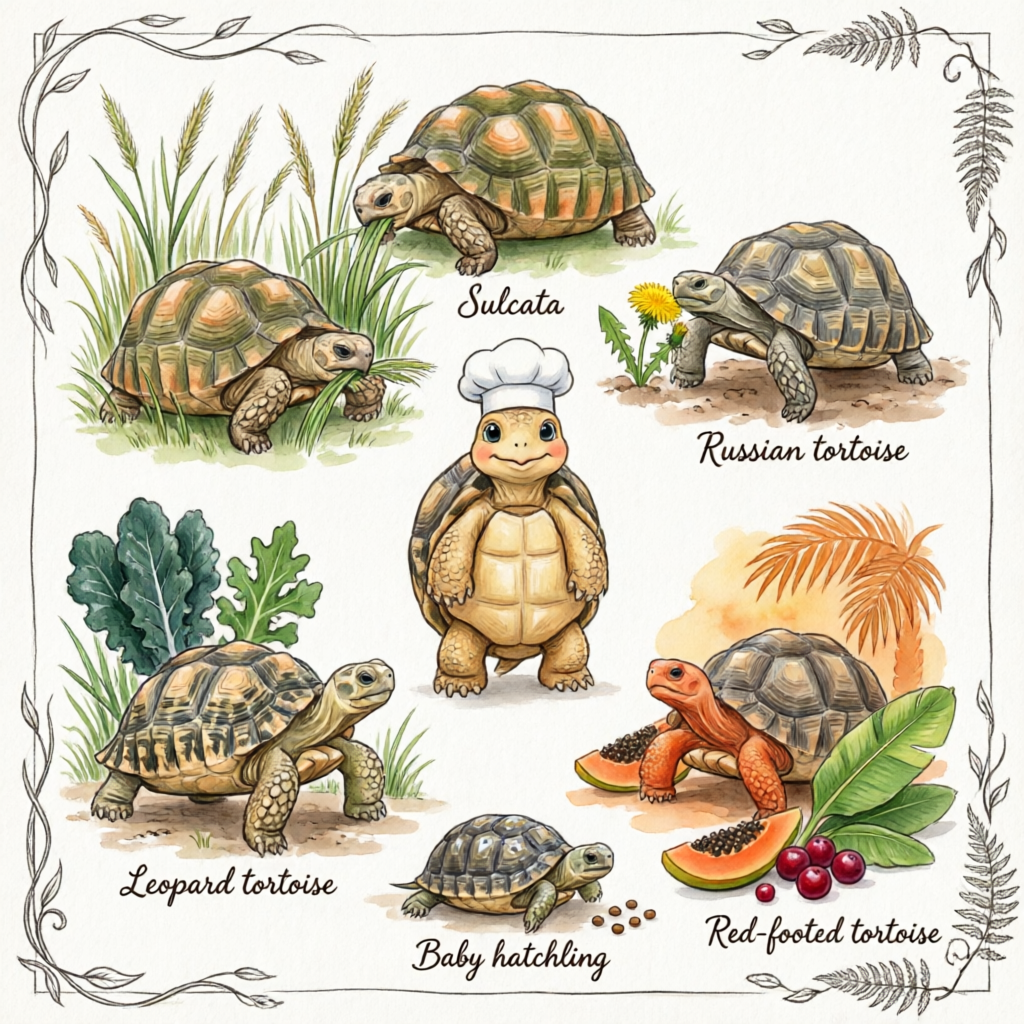
A pellet food perfect for Sulcata could harm a Red-footed tortoise. Species identification is step one before choosing any commercial food.
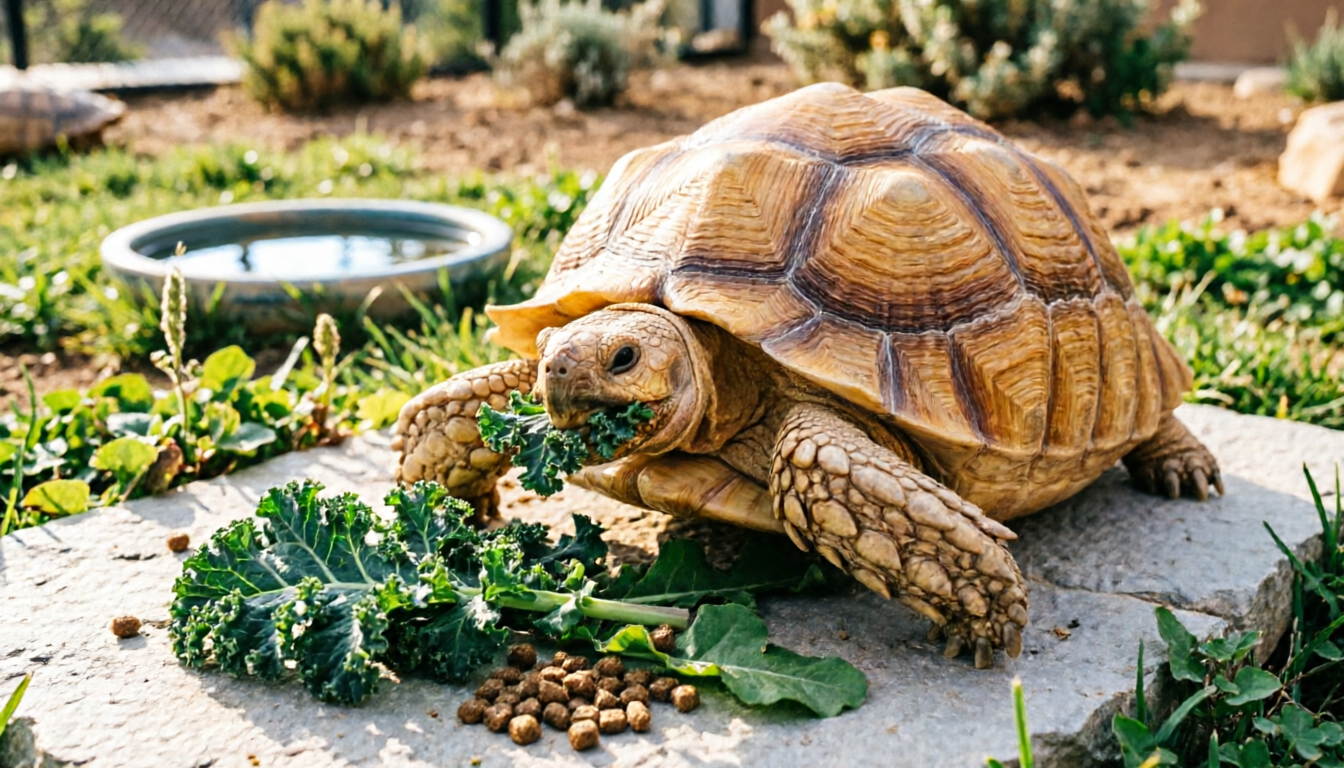 Feeding the wrong pellet to the wrong species can cause long-term health problems.
The table below shows the right pellet choice by tortoise species and diet type.
| Species | Diet Type | Top Pick | Runner-Up |
|---|---|---|---|
| Sulcata | Grassland, low-starch | Mazuri Low Starch | Zoo Med Grassland |
| Russian | Mixed grasses & weeds | Mazuri Standard | Fluker’s Small Pellet |
| Leopard | Grassland | Mazuri Standard | Zoo Med Grassland |
| Hermann’s | Mixed herbivore | Mazuri Standard | Fluker’s Small Pellet |
| Red-footed | Omnivorous | Komodo Fruit & Flower | Fluker’s Buffet Blend |
| Baby/Juvenile | Higher protein/calcium | Mazuri Juvenile | Fluker’s Small Pellet |
If you keep aquatic turtles, their nutritional needs differ from tortoises — see our best turtle food guide. For filtration needs of aquatic setups, our best turtle filter guide covers options.
Best Tortoise Food for Sulcata Tortoises
Sulcata tortoises are the third largest tortoise species in the world and can live seventy to one hundred years. They are grassland grazers native to the African Sahel region that eat enormous amounts of fibrous grasses daily. A proper sulcata tortoise food must be low in starch — high-starch diets cause shell pyramiding, a metabolic bone disease with abnormal vertical shell growth.
Top Pick: Mazuri Low Starch Tortoise Diet
Mazuri Low Starch is the community consensus number one choice for Sulcata owners. Developed by Purina animal nutrition scientists specifically to prevent shell pyramiding in grassland tortoises. It has thousands of reviews confirming its effectiveness.
What we like: The low starch formula directly addresses the number one health problem in captive Sulcata — pyramiding.
Even picky eaters accept it readily. Developed with input from exotic animal nutritionists. The affordable trial size lets new owners test it before committing.
What could be better: The bag runs out quickly for adult Sulcata who eat massive amounts.
Some bags arrive crushed into powder during shipping. The strong smell may bother sensitive owners. Store in an airtight container to minimize odor.
“Low starch prevents shell pyramiding in growing tortoises” — positive Amazon reviewer
Runner-Up: Zoo Med Grassland Tortoise Food
Zoo Med Grassland uses a timothy grass base that matches the natural grazing diet of Sulcata. The large bag offers good value for owners who prefer grass-based diets over Mazuri formulations. Zoo Med has been a trusted reptile brand since the 1970s, making it one of the longest-running companies in the reptile care industry.
What we like: The timothy grass base provides high fiber for healthy digestion. A generous bag size at a fair price.
What could be better: Less palatable than Mazuri — some tortoises reject it initially. Pellets can crumble into powder during shipping.
Feeding guide for Sulcata: Pellets should be twenty-five percent of diet maximum. The remaining seventy-five percent should be fresh grasses, weeds, and hay such as bermuda, timothy, or orchard grass. Adult Sulcata eat daily — they are grazing machines that need constant access to fibrous food.
Sulcata owners go through pellets faster than any other species. A 25lb bulk bag is the most cost-effective option for multi-tortoise households.
Best Bulk Value: Mazuri Tortoise Diet, 25lb Bag
Mazuri 25lb Bulk offers the best price per ounce for any tortoise food. Consistent quality from Purina-backed formulation.
What we like: Best price per ounce — bulk pricing saves fifty percent or more versus small bags. Lasts months for a single tortoise. Consistent quality from a trusted brand.
What could be better: Large upfront cost. The twenty-five pound bag takes significant storage space.
May go stale if stored improperly over six months. Standard formula, so use the Low Starch version specifically for Sulcata.
Best Tortoise Food for Russian Tortoises
Russian tortoises are the most popular beginner tortoise species. They stay small (six to ten inches), live forty plus years, and tolerate a wide range of temperatures including cooler conditions that would stress other species. A proper russian tortoise food needs balanced nutrition for a mixed herbivore diet of grasses and broadleaf weeds.
Top Pick: Mazuri Standard Tortoise Diet
Mazuri Standard provides balanced nutrition for Russian and other mixed-herbivore tortoises.
The standard formula offers more calories than the low-starch version, which suits indoor and outdoor active Russians.
Community forums consistently recommend it. The strong community backing gives confidence to new owners choosing their first pellet brand.
What we like: Strong community recommendation across Reddit and tortoise forums. Consistent pellet quality with minimal crumbling. The larger bag offers better value per ounce than the smaller trial sizes.
What could be better: Higher starch content means it is not ideal for Sulcata. Pellets can be too large for very small hatchlings. Not suitable for Red-footed tortoises.
“Higher calorie than low-starch — good for indoor/outdoor balance” — Amazon reviewer
Runner-Up: Fluker’s Small Pellet Tortoise Diet
Fluker’s Small Pellet is a budget-friendly alternative for small species like Russian and Hermann’s tortoises. The smaller pellet size works well for medium and small adults.
What we like: The same generous bag size as the large pellet version at a reasonable price. Easier for smaller tortoises to eat than large pellets.
What could be better: Higher price per ounce than Fluker’s large pellet version. Less protein than juvenile-specific formulas.
Budget Alternative: Fluker’s Large Pellet, 3.5lb
Fluker’s Large Pellet is the most affordable option for adult tortoises. The large pellet size works for adult Sulcata, Leopard, and Russian tortoises.
What we like: Large pellets are perfect for adult tortoises. Excellent value per ounce at a fair price. Fluker’s has been a trusted reptile brand since the 1950s.
What could be better: Large pellets are too big for juveniles and small species. Some tortoises find them too hard and may need soaking. The formula is less comprehensive than Mazuri.
Budget Pick: Fluker’s Small Pellet, 7oz Trial Size
Fluker’s Budget 7oz is the cheapest way to try tortoise pellets before committing to a larger bag. Under $8 for a trial size that lasts one to two weeks.
What we like: The most affordable entry point for new tortoise owners. Small pellets suit Russian, Hermann’s, and juvenile tortoises.
What could be better: The small bag runs out quickly. Not cost-effective long-term — buy larger bags once you confirm your tortoise accepts pellets.
Russian tortoises also need proper basking heat — indoor setups require heat lamps. See our best turtle heat lamp guide for heating options. For reptile heating across species, see our best bearded dragon heating lamp guide.
Feeding guide for Russian tortoises: Offer pellets three to four times per week. Fresh weeds and dark leafy greens should make up seventy to eighty percent of the total diet. Russian tortoises eat five to seven days per week. During winter brumation-like slowdowns, they may eat less frequently — this is normal and not cause for concern.
Best Tortoise Food for Baby & Juvenile Tortoises
Hatchlings and juveniles have different nutritional needs than adults.
They need smaller pellets, higher calcium for shell development, and more protein for rapid growth. Shell quality in the first year often determines lifelong skeletal health.
A proper baby tortoise food addresses all three requirements.
Top Pick: Mazuri Juvenile Tortoise Food
Mazuri Juvenile uses smaller pellets designed for hatchling mouths. The formula has elevated calcium for healthy shell development and higher protein to support rapid early growth.
What we like: Smaller pellets fit baby tortoise mouths perfectly. Higher calcium supports healthy shell development. Mazuri quality is trusted by breeders and exotic veterinarians worldwide.
What could be better: The small bag runs out quickly — owners of multiple juveniles need to buy frequently. More expensive per ounce than adult formulas. Some babies prefer fresh greens over pellets initially.
“Smaller pellets fit baby tortoise mouths perfectly” — Amazon reviewer
Runner-Up: Fluker’s Small Pellet
Fluker’s Small Pellet also works for juveniles due to its smaller pellet size. It is a practical option when Mazuri Juvenile is out of stock.
Feeding guide for juveniles: Feed pellets daily. Juveniles need forty percent pellets and sixty percent fresh greens. Soak pellets in warm water for two to three minutes to soften them for new hatchlings that struggle with hard food. Most hatchlings transition to dry pellets within two to three weeks — offering them alongside favorite greens speeds up the process.
Pro tip: Always soak hard pellets in warm water for two to three minutes before serving. This rehydrates the food, prevents choking hazards for small tortoises, and makes digestion easier — especially important for hatchlings and juveniles still developing their bite strength.
Switch to adult formula at twelve months or when the shell reaches four inches. Growth rate varies between species — Sulcata juveniles grow faster than Russian or Hermann’s and may need earlier transition while slower growers benefit from extended juvenile formula use.
Best Tortoise Food for Red-Footed & Leopard Tortoises
Red-Footed Tortoise Food
When choosing the right red footed tortoise food, remember that Red-footed tortoises are the omnivorous exception among common pet tortoises. In the wild across Central and South America, they eat insects, snails, carrion, and significant amounts of fallen fruit from the forest floor. Most tortoise pellet foods are designed for grassland species and are not ideal for Red-footeds.
Top Pick: Komodo Fruit & Flower Tortoise Diet
Picky Red-footeds that refused every other pellet happily eat this one — the fruit content suits their omnivorous diet profile perfectly. It has the most reviews of any tortoise food on Amazon, with a proven track record among thousands of tortoise owners.
What we like: The fruit and flower variety keeps tortoises interested in eating.
Good palatability even for picky Red-footeds. A holistic formula with natural ingredients.
The dried flower pieces add visual interest that stimulates feeding behavior.
What could be better: Contains fruit content that is not ideal for grassland species — only feed this to Red-footeds. The bag runs out faster than larger alternatives. The UK-based Komodo brand is less known among US keepers than Mazuri.
Runner-Up: Fluker’s Buffet Blend
Fluker’s Buffet Blend mixes real dried vegetables with fortified pellets. It works well as a topper to add variety to a Red-footed diet. The lowest price point makes it an easy add-on.
What we like: Dried veggies add variety to plain pellet diet. Great as a topper mixed with fresh greens. The cheapest option available.
What could be better: Not a complete diet — better as a supplement or topper. The small bag runs out quickly.
Dried vegetables can be dusty and messy. Best used as a two to three times per week variety supplement rather than a daily staple.
Red-footed feeding ratio: Pellets twenty percent. Fruit twenty percent. Leafy greens forty percent. Protein sources like worms and snails ten to twenty percent.
Leopard Tortoise Food
Leopard tortoises are grassland grazers similar to Sulcata but smaller in size. They need high-fiber, low-starch diets.
Top Pick: Mazuri Standard
Mazuri Standard works well for Leopard tortoises due to its balanced nutrition profile.
Runner-Up: Zoo Med Grassland
Zoo Med Grassland is also a strong choice — the timothy grass base matches their natural grazing diet.
Leopard feeding ratio: Same as Sulcata — pellets twenty-five percent maximum, with fresh grasses and weeds making up the rest. Adult Leopard tortoises do well with Fluker’s Large Pellet due to the pellet size matching their medium-large build. Sulcata owners buying in bulk should consider the Mazuri 25lb bag for maximum savings.
Tortoise Food Pellets vs Fresh Greens
The best tortoise food is not just about pellets. If you are wondering what to feed a tortoise beyond pellets, understanding the balance between commercial tortoise food pellets and fresh greens is essential for long-term health.
Shell pyramiding is a metabolic bone disease in tortoises caused by excessive dietary protein and starch. It manifests as abnormal vertical growth of the scutes, creating a pyramid-like appearance. While mild pyramiding is common in captivity, severe cases cause mobility problems and organ compression.
Low-starch diets and proper UVB lighting are the primary prevention (Merck Vet Manual — Nutritional Disorders of Reptiles).
| Factor | Pellet Food | Fresh Greens & Weeds |
|---|---|---|
| Convenience | Easy to store, consistent nutrition | Requires daily sourcing and washing |
| Nutrition balance | Fortified vitamins and minerals | More natural, varied |
| Fiber content | Moderate (varies by brand) | High (especially grasses and weeds like dandelion and plantain) |
| Protein | 12-18% (varies) | 10-25% (varies by plant) |
| Calcium | Added (fortified) | Naturally in leafy greens |
| Species match | One-size-fits-most | Tailored by selecting right plants |
| Cost | $0.20-0.50 per day | $0.50-2.00 per day |
| Risk | Over-reliance causes pyramiding | Pesticide exposure if not organic |
Bottom line: Pellets supplement fresh greens — they do not replace them. Best practice is seventy to eighty percent fresh food and twenty to thirty percent pellets for adults. For juveniles, sixty percent fresh and forty percent pellets. Over-reliance on pellets is the number one mistake new tortoise owners make.
Proper feeding practices matter as much as food choice.
Feed pellets in a flat dish to prevent substrate ingestion. Remove uneaten pellets after two hours to prevent mold.
Rotate pellet brands every few months to provide nutritional variety.
Substrate matters for tortoise digestion — ingested substrate can cause impaction. See our best turtle substrate guide for safe options. Basking areas also help digestion — our best turtle basking platform guide covers setups.
What NOT to Feed Your Tortoise
Some foods are toxic or harmful to tortoises.
Knowing what to avoid is as important as knowing what to feed. Some unsafe foods cause immediate illness while others contribute to long-term health decline.
When in doubt about a specific plant, check the Tortoise Table online database for safety confirmation — it is the most comprehensive free resource for identifying safe and unsafe plants for tortoise diets.
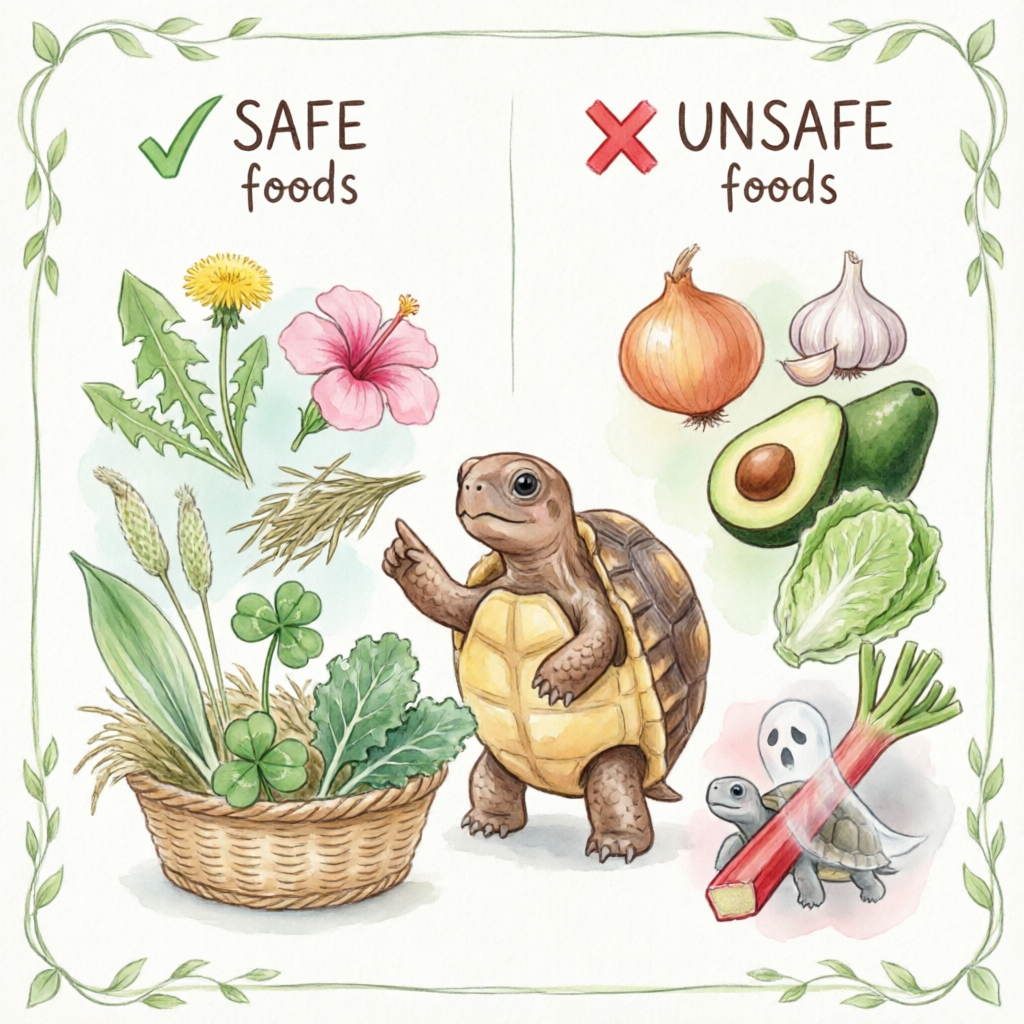
Unsafe foods checklist:
- Onions, garlic, chives, leeks — toxic compounds from the Allium family damage red blood cells (Merck Vet Manual)
- Iceberg lettuce — near-zero nutrition, high water content causes diarrhea
- Fruit for grassland species — Sulcata, Russian, and Leopard should have minimal fruit. High sugar disrupts gut flora
- Avocado — persin is toxic to reptiles
- Rhubarb — high oxalic acid content is toxic
- Beans and legumes — high protein and phytates cause digestive issues
- Bread, pasta, dairy — not part of any natural tortoise diet
- Dog or cat food — too high in protein and fat for herbivorous species
- Fireflies and lightning bugs — highly toxic, fatal to reptiles
- Pesticide-treated grass — always wash foraging or grow your own. Budget-conscious owners can start with Fluker’s Budget 7oz to test pellet acceptance before buying larger bags
**Safe foods to feed **: Dandelion greens, broadleaf plantain, mallow leaves, hibiscus flowers and leaves, timothy hay, bermuda grass, endive, escarole, turnip greens, and collard greens. These form the foundation of a healthy tortoise diet. Weeds from chemical-free lawns — dandelion, clover, plantain, and chickweed — are free and often preferred over store-bought greens.
Box turtles have similar dietary needs — see our box turtle care guide for comparison.
Tortoise Feeding FAQ
What’s the best food for tortoises?
The best tortoise food depends on species.
For Sulcata, Mazuri Low Starch prevents shell pyramiding. For Russian tortoises, Mazuri Standard provides balanced nutrition.
For Red-footed tortoises, Komodo Fruit & Flower suits their omnivorous diet — this species needs more fruit and protein than any other common pet tortoise. All tortoises should eat seventy to eighty percent fresh greens regardless of pellet brand.
What should I not feed my tortoise?
Never feed onions, garlic, avocado, rhubarb, iceberg lettuce, or fireflies.
Avoid high-sugar fruit for grassland species like Sulcata, Russian, and Leopard. Dog food, bread, dairy, and processed human food are all harmful.
See the unsafe foods list in the section above for the complete breakdown.
How often should I feed my tortoise?
Adult tortoises should eat daily or every other day depending on species and season.
Sulcata eat daily because they are constant grazers.
Russian tortoises eat five to seven days per week. During winter brumation-like slowdowns, they may eat less frequently — this is normal and not cause for concern.
Juveniles need daily feeding regardless of species. offering fresh greens every morning and pellets three to four times per week as a supplement.
Can tortoises eat fruit?
Grassland tortoises like Sulcata, Russian, Leopard, and Hermann’s should only have fruit as rare treats.
Red-footed and Yellow-footed tortoises are exceptions — they naturally eat fruit in the wild and can have it two to three times per week.
Safe fruits include berries, papaya, mango, and melon in moderation. Always remove seeds and cut fruit into small bite-sized pieces.
Do tortoises need pellet food?
No — tortoises can survive on fresh greens, weeds, and grasses alone.
However, quality pellet food provides consistent vitamin and mineral supplementation. The best approach is pellets as a supplement at twenty to thirty percent of diet, with fresh greens as the staple at seventy to eighty percent.
For new owners especially, pellets provide a nutrition safety net while learning to identify safe wild plants. Many experienced keepers use pellets even after decades of tortoise care.