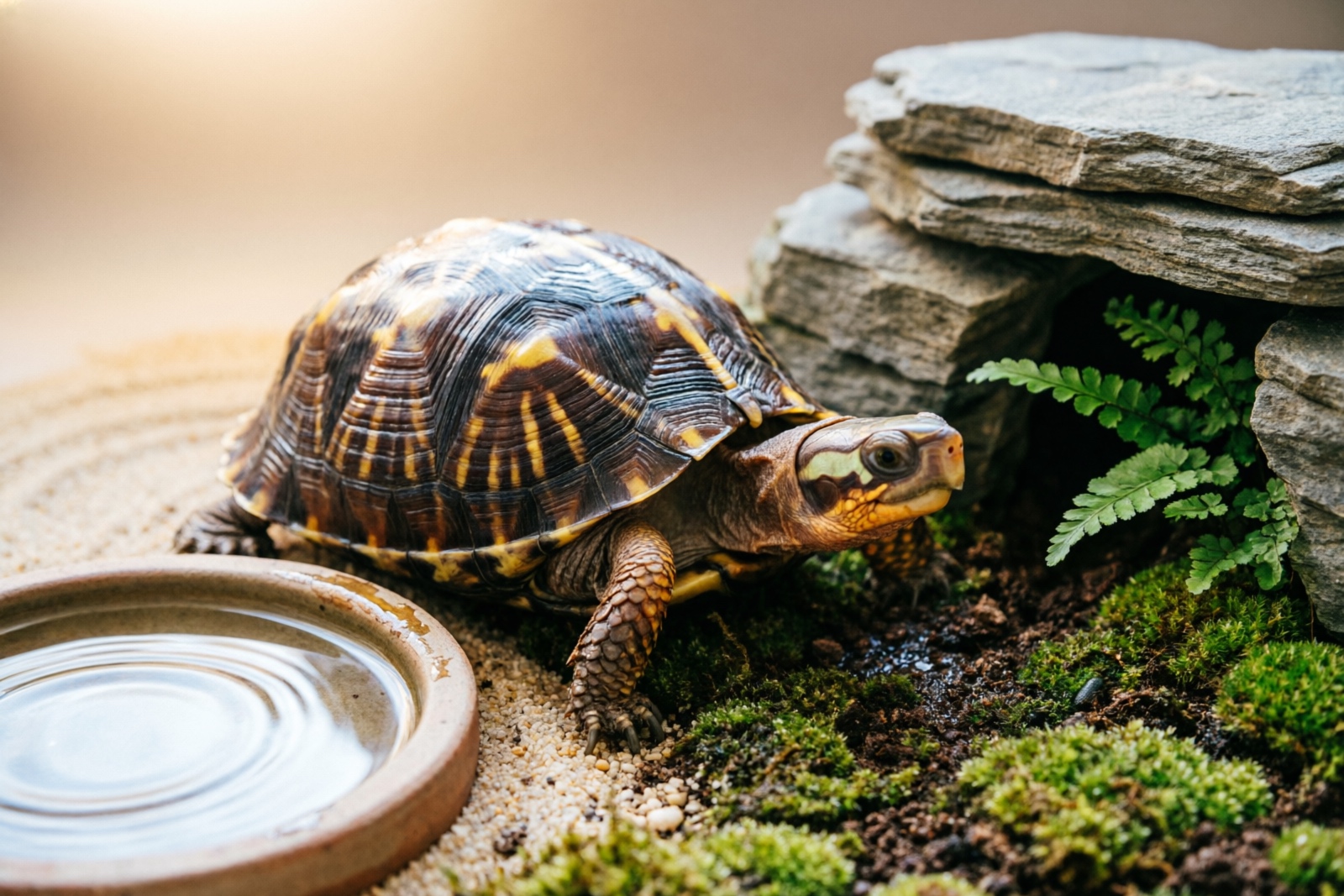
Box Turtle Care Guide: Complete Setup & Habitat (2026)
Meta Description: Learn proper box turtle care including habitat, diet, lighting & health tips. Covers Eastern, Ornate, Three-toed species for happy turtles.
Box turtles are fascinating reptiles that can live 30-50 years with proper care, making them a long-term commitment for dedicated pet owners. These terrestrial turtles are named for their unique hinged plastron (bottom shell) that allows them to close completely into their shell for protection—a remarkable defense mechanism that sets them apart from most other turtle species. Unlike aquatic turtles, box turtles spend most of their time on land, though they do need access to shallow water for drinking and soaking.
Proper box turtle care requires understanding their specific needs for temperature, humidity, diet, and habitat. Many new owners underestimate these box turtle care requirements, leading to health problems that could have been prevented with the right knowledge. Whether you’re considering your first pet turtle or looking to improve your current box turtle care routine, this guide covers everything you need to know about how to take care of a box turtle properly. From species selection to habitat design, feeding schedules to health monitoring, we’ll walk through each aspect of care that contributes to a thriving, happy reptile.
Understanding Box Turtle Species
Before bringing home a box turtle, it’s important to understand the different species and their specific box turtle care requirements. Each type of pet turtle has unique characteristics that affect their care needs, and choosing the right species for your experience level and living situation is crucial for long-term success.
Eastern Box Turtle (Terrapene carolina carolina)
The Eastern box turtle is the most common pet turtle in this group, native to the eastern United States from Maine to Georgia and west to Michigan and Tennessee. They feature a high-domed shell with colorful yellow, orange, or red markings on a dark brown or black background, creating a distinctive pattern unique to each individual. Adults typically reach 4-6 inches in length, with females generally larger than males.
These reptiles prefer forested areas with moist soil and plenty of leaf litter, where they forage for insects, fruits, and vegetation. They’re classified as vulnerable in the wild due to habitat loss and collection for the pet trade, so always choose captive-bred specimens as pets. The Eastern box turtle is an excellent choice for dedicated owners willing to provide the humid environment they require.
Ornate Box Turtle (Terrapene ornata)
Native to the central United States from Indiana to Arizona, the Ornate box turtle has a flatter shell with distinctive yellow stripes radiating from the center against a dark background. They’re slightly smaller than their Eastern cousins at 4-5 inches and prefer grasslands and prairies rather than forests. This species is more adapted to drier conditions but still requires adequate humidity in captivity—they cannot tolerate completely arid environments.
Ornate box turtles tend to be more active and may burrow more frequently than Eastern varieties, requiring deeper substrate in their enclosure. They’re also more likely to be active during daylight hours, making them engaging pets to observe.
Three-Toed Box Turtle (Terrapene carolina triunguis)
Found in the south-central United States from Missouri to Texas, the Three-toed box turtle gets its name from having three toes on each hind foot (most other box turtles have four). They grow 4-5.5 inches and are known for their more docile temperament, making them excellent pets for beginners. Their shells are typically olive or brown with less distinctive markings than other species, though some individuals show attractive yellow spotting.
The Three-toed box turtle adapts well to captivity and has a reputation for being hardier than other varieties, though they still require proper humidity and temperature control. Their calm nature makes them easier to handle and interact with.
Box Turtle Species Comparison
| Species | Size | Shell Shape | Native Region | Care Level |
|---|---|---|---|---|
| Eastern | 4-6 inches | High-domed | Eastern US | Moderate |
| Ornate | 4-5 inches | Flatter | Central US | Moderate-High |
| Three-toed | 4-5.5 inches | Dome | South-central US | Easy |
Box Turtle Habitat Setup
Creating the proper habitat is essential for successful box turtle care. A well-designed enclosure mimics their natural environment and provides all their basic needs for temperature regulation, humidity maintenance, and behavioral enrichment. Whether you choose indoor or outdoor housing, understanding the specific box turtle care requirements will help you create an ideal home.
Indoor Enclosure Requirements
For indoor housing, glass tanks, plastic tubs, or wooden enclosures all work well for a box turtle habitat. Juveniles need at least a 20-gallon tank, while adults require 40 gallons or larger—a common box turtle care mistake is providing too little space, which leads to stress and health problems. The enclosure must have adequate ventilation through a screen top or side vents to prevent stagnant, overly humid air. An escape-proof lid is essential since these reptiles are surprisingly good climbers and can easily escape from inadequately secured enclosures.
The Tetra ReptoHabitat Kit for Aquatic Reptiles and Amphibians offers an excellent all-in-one solution for beginners setting up their first box turtle enclosure. This 15-gallon kit includes a filter and heater, making box turtle care setup simple for new owners. While perfect for juvenile turtles, adults will eventually need a larger enclosure as they grow. The trusted Tetra brand ensures quality components, though the filter may need upgrading as your pet turtle grows larger and produces more waste.
Outdoor Enclosure (Recommended)
Outdoor housing is ideal for box turtles when weather permits, providing natural sunlight and a more enriching environment. The enclosure should measure at least 4x4 feet for a single adult, with walls extending 6-12 inches below ground to prevent escape by digging. Use materials like wood, brick, or landscape timbers to construct secure walls at least 12-18 inches high. Cover the enclosure with wire mesh or netting to protect against predators like raccoons, birds, and neighborhood cats.
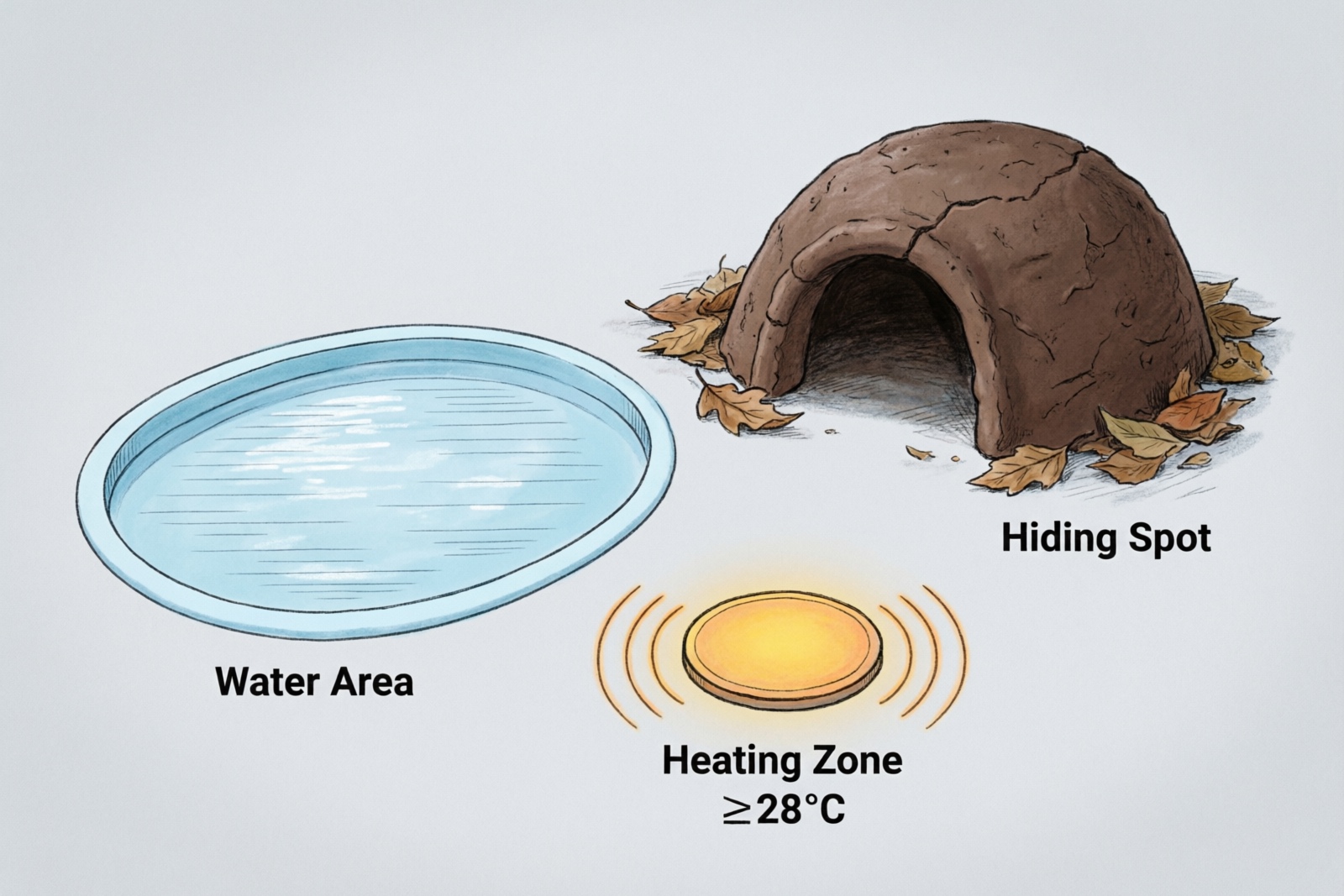
Include various microclimates within the outdoor habitat—sunny basking spots, shaded areas, shallow water dishes, and hiding places. Plant native vegetation for natural cover and foraging opportunities. The Zoo Med Reptihabitat Tortoise House provides a secure outdoor option that can be expanded as needed.
Substrate Options
The right substrate is crucial for box turtle care success, affecting humidity retention, burrowing behavior, and overall health. Avoid cedar, pine, or other aromatic wood shavings that can cause respiratory problems. Instead, consider these proven options:
Cypress Mulch: Excellent for humidity retention and natural burrowing. This substrate holds moisture well without becoming soggy, creating the damp microenvironment box turtles need. Change completely every 2-3 months, with spot cleaning as needed.
Coconut Coir: Sustainable and effective, coconut coir holds moisture well and allows for natural digging behavior. It’s inexpensive and widely available in compressed bricks that expand when soaked. Replace every 1-2 months.
Organic Potting Soil: Natural and affordable, but ensure it contains no fertilizers, perlite, or vermiculite. Mix with sphagnum moss for improved humidity retention. This option works well for planted enclosures.
Sphagnum Moss: Excellent for creating humid microclimates, especially in hide boxes. Use alone or mixed with other substrates. While more expensive, it’s highly effective for maintaining proper humidity in specific areas.
Temperature and Lighting Requirements
Proper temperature and lighting are among the most critical aspects of box turtle care, directly affecting metabolism, digestion, immune function, and overall health. Creating appropriate temperature gradients and providing adequate UVB lighting prevents serious health problems.
Temperature Gradient
Box turtles require a temperature gradient in their enclosure to thermoregulate effectively. The warm side should maintain 85-90°F during the day, while the cool side stays 70-75°F. Nighttime temperatures can drop to 65-70°F, mimicking natural conditions. Use thermometers at both ends to monitor temperatures accurately.
For heating, ceramic heat emitters work well for ambient warmth without producing light, allowing proper day/night cycles. Under-tank heaters placed on one side of the enclosure provide belly heat for digestion. Combine these with a basking lamp for a complete box turtle care heating setup.
UVB Lighting
UVB lighting is essential for vitamin D3 synthesis and calcium metabolism—without it, box turtles develop metabolic bone disease, a serious and often fatal condition. Use a high-quality UVB bulb specifically designed for reptiles, such as the Zoo Med Reptisafe UVB Bulb, positioned 12-18 inches above the basking spot.
Replace UVB bulbs every 6-12 months, even if they still produce visible light, as UVB output decreases over time. For outdoor enclosures, natural sunlight provides the best UVB, but ensure turtles can retreat to shade to prevent overheating.
Humidity Requirements
Maintaining proper humidity is crucial for successful box turtle care, affecting shedding, respiratory health, and hydration. Different species have slightly different needs, but most box turtles thrive at 60-80% humidity.
Measuring and Maintaining Humidity
Use a digital hygrometer to monitor humidity levels accurately. To increase humidity:
- Mist the enclosure 1-2 times daily
- Use a moisture-retaining substrate like cypress mulch or coconut coir
- Provide a humid hide filled with damp sphagnum moss
- Add a shallow water dish that increases ambient humidity through evaporation
- Cover part of the screen top to reduce airflow if needed
For species like the Eastern box turtle that require higher humidity, consider using an automatic misting system or fogger. The Zoo Med Repti Fogger can help maintain consistent humidity levels with minimal effort.
Box Turtle Diet and Nutrition
A balanced diet is fundamental to proper box turtle care, supporting growth, immune function, and longevity. Box turtles are omnivores that eat both plant and animal matter, with proportions varying by species and age.
Dietary Components
Animal Protein (40-60% of diet):
- Earthworms and nightcrawlers
- Crickets, dubia roaches, and mealworms
- Snails and slugs (from pesticide-free areas)
- Cooked lean meats (occasionally)
- High-quality commercial turtle pellets
Vegetables (30-40% of diet):
- Dark leafy greens (collard, mustard, dandelion)
- Squash, carrots, and sweet potatoes
- Green beans and peas
- Mushrooms
Fruits (10-20% of diet):
- Berries (strawberries, blueberries, raspberries)
- Melon, papaya, and mango
- Tomatoes and apples (remove seeds)
- Banana (sparingly due to high sugar)

Feeding Schedule
Juveniles (under 2 years): Feed daily, with higher protein content (60%) to support growth. Offer food in the morning when turtles are most active and temperatures are optimal for digestion.
Adults: Feed every other day or 4-5 times per week. Reduce protein to 40-50% and increase vegetable content. Obesity is a common problem in captive box turtles, so monitor weight and adjust portions accordingly.
Supplements
Dust food with calcium powder (without phosphorus) 2-3 times per week for adults and at every feeding for juveniles. Use a multivitamin supplement once weekly to ensure complete nutrition. Place supplements on a small rock or in a shallow dish to prevent ingestion of substrate-coated powder.
Hydration and Water Needs
Proper hydration is an often-overlooked aspect of box turtle care. While not aquatic, box turtles need constant access to fresh, clean water for drinking and soaking.
Water Dish Requirements
Provide a shallow water dish no deeper than the turtle’s chin—deep enough for soaking but shallow enough to prevent drowning. The dish should be large enough for the turtle to climb into comfortably. Clean and refill daily, as turtles often defecate in water.
Soaking is essential for hydration and helps with shedding. Many box turtles will soak themselves if provided an appropriate dish. If your turtle doesn’t self-soak, offer 15-20 minute soaks in lukewarm water 2-3 times weekly.
Handling and Temperament
Box turtles can become quite tame with regular, gentle handling, but they’re not “cuddly” pets. Understanding their temperament and handling them properly reduces stress for both turtle and owner.
Proper Handling Technique
- Support the entire body—never hold by the shell alone
- Keep handling sessions short (5-15 minutes)
- Wash hands before and after handling
- Handle at ground level to prevent fall injuries
- Avoid handling before and after feeding (24 hours)
Some box turtles enjoy gentle scratching under the chin or on the neck, while others prefer minimal interaction. Learn your turtle’s preferences and respect their boundaries.
Health Monitoring and Common Issues
Regular health monitoring is essential for successful box turtle care. Learn to recognize signs of illness early, as reptiles often don’t show symptoms until disease is advanced.
Signs of a Healthy Box Turtle
- Clear, bright eyes without swelling or discharge
- Smooth, intact shell without soft spots or damage
- Healthy appetite and regular elimination
- Active and alert behavior
- Clean nostrils without bubbling or discharge
- Firm body weight without protruding bones
Common Health Problems
Metabolic Bone Disease (MBD): Caused by inadequate UVB lighting and/or calcium deficiency. Symptoms include soft shell, lethargy, tremors, and deformities. Prevention through proper lighting and supplementation is key.
Respiratory Infections: Often caused by improper temperatures or humidity. Symptoms include wheezing, nasal discharge, and open-mouth breathing. Requires veterinary treatment with antibiotics.
Shell Rot: Fungal or bacterial infection of the shell caused by poor hygiene or excessive moisture. Appears as soft, discolored patches on the shell. Requires antiseptic treatment and improved husbandry.
Eye Infections: Swollen, crusted, or weeping eyes indicate infection. May be caused by low humidity, vitamin A deficiency, or bacteria. Requires veterinary attention.
Parasites: Internal parasites are common in wild-caught specimens. Have new turtles tested by a veterinarian and treated as needed.
When to See a Veterinarian
Seek reptile veterinary care immediately if you notice:
- Loss of appetite for more than a week
- Lethargy or unresponsiveness
- Shell softening or damage
- Respiratory symptoms (bubbling, wheezing, gaping)
- Swollen eyes or discharge
- Unusual feces or lack of elimination
Find a qualified reptile veterinarian before you need one—many general practice vets lack experience with turtles. The Association of Reptilian and Amphibian Veterinarians (ARAV) maintains a directory of qualified reptile vets.
Box Turtle Breeding
Breeding box turtles requires extensive knowledge and commitment. It’s not recommended for beginners, but understanding the process helps appreciate these remarkable creatures.
Sexing Box Turtles
Males typically have:
- Concave plastron (for mounting females)
- Longer, thicker tail with vent past the shell edge
- Red or orange eyes (in Eastern box turtles)
- Curved rear claws
Females typically have:
- Flat plastron
- Shorter tail with vent at the shell edge
- Brown or yellow eyes
- Straight rear claws
Breeding Requirements
Box turtles reach sexual maturity at 5-10 years. Successful breeding requires:
- Healthy, mature specimens
- Seasonal temperature cycling to simulate winter brumation
- Proper nutrition and supplementation
- Adequate space and nesting areas
Females can store sperm for years, producing multiple clutches from a single mating. If you don’t intend to breed, house males and females separately.
Legal Considerations
Before acquiring a box turtle, understand the legal requirements in your area:
- Many states prohibit collecting wild box turtles
- Some species are protected or require permits
- Crossing state lines with box turtles may be illegal without permits
- Always purchase captive-bred specimens from reputable breeders
The Eastern box turtle is protected in many states and listed as vulnerable internationally. Support conservation by choosing captive-bred turtles and never releasing pet turtles into the wild.
Setting Up Your Box Turtle for Success
Successful box turtle care comes down to understanding and meeting their specific needs for habitat, temperature, humidity, and diet. While they require more specialized care than many realize, dedicated owners are rewarded with a fascinating pet that can live for decades.
Key Takeaways
- Choose the right species for your experience level and environment
- Provide adequate space with both warm and cool areas
- Maintain proper humidity (60-80%) for your species
- Ensure UVB lighting for calcium metabolism
- Feed a varied diet with appropriate protein and vegetables
- Monitor health regularly and find a reptile veterinarian
With proper box turtle care, these remarkable reptiles make rewarding companions for dedicated owners willing to commit to their specialized needs. The investment in proper setup and ongoing care pays dividends in the form of a healthy, active turtle that can be part of your family for decades.
Looking for more reptile care information? Check out our guides on bearded dragon care, leopard gecko care, and reptile habitats.