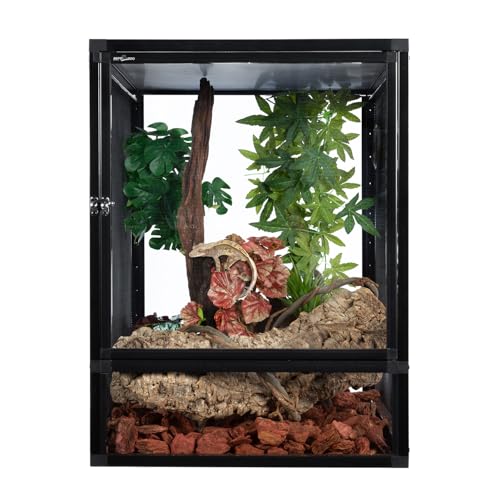
Quick Answer: Best Chameleon Enclosures
Chameleon enclosures: Chameleons require screen or mesh enclosures — not glass tanks or PVC enclosures. This is the single most important rule in chameleon husbandry. Chameleons are arboreal lizards from tropical and subtropical forests that need maximum ventilation to prevent respiratory infections and maintain proper humidity cycles.
The best chameleon cage must be tall (minimum 36 inches for adults), provide full UVB penetration through the mesh, and have horizontal climbing branches at multiple heights. Glass enclosures create stagnant air, reflected UVB glare, and stress — the top reasons a chameleon cage must never be glass.
The three acceptable cage types are: all-screen (Zoo Med ReptiBreeze style), hybrid (screen sides with glass front), and DIY mesh panel (custom-built). A chameleon screen cage provides the best ventilation for your chameleon cage. Each product below is evaluated against these core requirements.
Chameleons are often called “display pets” because their chameleon cage setups allow naturalistic setups with live plants, climbing branches, and proper lighting — unlike the sterile tub setups used for ball pythons or corn snakes. Explore our full reptile habitat guide for species-specific housing requirements.
For a contrasting approach to choosing a chameleon cage, see our ball python tank guide — ball pythons thrive in PVC tubs, which would be dangerous for chameleons. Similarly, our bearded dragon terrarium guide covers enclosures that work for bearded dragons but not for chameleons due to the ventilation difference. Our leopard gecko terrarium guide and crested gecko enclosure guide show how different reptiles have very different housing requirements.

Enclosure Size by Species
Height matters more than floor space for chameleons when determining chameleon cage size. A tall, narrow cage is always better than a short, wide cage. The table below covers five common pet species at every life stage.
| Species | Hatchling (0-3mo) | Juvenile (3-8mo) | Adult Minimum | Adult Recommended | Notes |
|---|---|---|---|---|---|
| Veiled Chameleon | 12” tall, Nano | 16-20” tall, Small | 36” tall | 18x18x36” (Large) | Widely kept pet species |
| Panther Chameleon | 12” tall, Nano | 16-20” tall, Small | 36” tall | 18x18x36” (Large) | Locality morphs vary in size |
| Jackson’s Chameleon | 12” tall, Nano | 16-20” tall, Small | 36” tall | 18x18x36” (Large) | Three-horned males, cooler temps |
| Parson’s Chameleon | 16” tall, Small | 20-24” tall | 48” tall | 24x24x48” (XL) | Largest pet chameleon species |
| Pygmy Chameleon | 8-12” tall | 12” tall | 16-18” tall | 16x16x20” (Small) | Nano or Small cage for life |
Key Rules for Sizing
Height over width, always. A 18x18x36-inch cage is better than a 24x24x24-inch cage. Chameleons climb vertically and need a temperature gradient from warm top to cool bottom.
Width only becomes critical for gravid females who need room to descend and access a laying bin.
Width matters for females. Gravid females need horizontal space to descend and lay eggs. An 18-inch minimum base width provides enough room for a laying bin.
Plan for two cage purchases minimum. Hatchlings need nano cages because overly large enclosures make it difficult to locate food. Adults need tall enclosures because small cages stunt growth and prevent natural climbing behavior.
Most keepers follow a three-stage upgrade path: nano cage for the first 2-3 months, small or medium cage for 3-8 months, then the full adult enclosure from 8 months onward. Plan your budget accordingly — the adult enclosure is the largest single investment.
Trying to raise a hatchling directly in a full 36-inch adult cage is a common beginner mistake. The baby chameleon cannot locate food reliably in that much space and will lose weight — this is documented as a leading cause of early mortality in captive-hatched chameleons (Chameleon Academy — Baby Chameleon Care; Mader, 2006 — Reptile Medicine and Surgery).
Screen vs Glass vs Hybrid — Which Is Best?
This is the most debated topic in choosing a chameleon cage. The answer is clear: screen wins for almost every situation.
| Feature | All-Screen | Hybrid (Screen+Glass) | Glass Tank |
|---|---|---|---|
| Ventilation | Excellent (360 degrees) | Warning: Good (3 sides mesh) | Poor (stagnant air) |
| UVB Penetration | 100% | 100% (mesh sides/top) | 30-50% blocked |
| Humidity Control | Warning: Drops fast, need misting | Best balance | Too humid, respiratory risk |
| Visibility | Clear from all angles | Good from glass front | Clear but reflections |
| Reflection Stress | None | Warning: Some from glass | Major stress source |
| Temperature Gradient | Easy vertical gradient | Good | Hard vertical gradient |
| Plant Growth | Excellent | Good | Poor air circulation |
| Durability | Warning: Mesh can tear | Solid front panel | Very durable |
| Verdict | BEST for most keepers | Good for display | DO NOT USE |
Why Glass Tanks Are Dangerous
Glass blocks roughly 50-70% of UVB rays from your lighting. Without adequate UVB, chameleons develop metabolic bone disease (MBD) — a painful, irreversible condition caused by calcium deficiency that leads to spinal deformities, jaw softening, and pathological fractures (Mader, 2006 — Reptile Medicine and Surgery; VCA Hospitals — Metabolic Bone Disease in Reptiles).
Stagnant air inside glass tanks promotes bacterial and fungal growth. Respiratory infections are one of the leading causes of death in captive chameleons, and poor ventilation is a primary contributor. Upper respiratory tract infections (URTI) in chameleons present with gaping, bubbling from the nares, and wheezing — early veterinary intervention is critical (Mader, 2006 — Reptile Medicine and Surgery; Chameleon Academy — Chameleon Respiratory Infection).
Chameleons also perceive their own reflection in glass as an intruder. This constant perceived threat causes chronic stress, leading to appetite loss, dull coloration, and weakened immune function. Chronic stress elevates corticosterone levels, which suppresses immune response and makes chameleons susceptible to secondary infections (Mader, 2006 — Reptile Medicine and Surgery).
The chameleon keeping community and Chameleon Academy both strongly advise against glass tanks, recommending a chameleon screen cage for the vast majority of keepers (Ferguson et al., 2010 — Ferguson Zone classification confirms arboreal reptiles require Zone 2-3 UVB exposure through unfiltered mesh, not glass). The consensus across experienced keepers is clear: screen wins.
7 Best Chameleon Cages Reviewed
| # | Product | Size (HxWxD) | Type | Best For |
|---|---|---|---|---|
| 1 | Zoo Med ReptiBreeze Nano | 12x10x12” | All-screen | Hatchling (0-3mo) |
| 2 | REPTI ZOO 18x18x24 Screen Cage Community Pick for Juveniles | 18”x18”x24” | All-screen | Juvenile (3-8mo) |
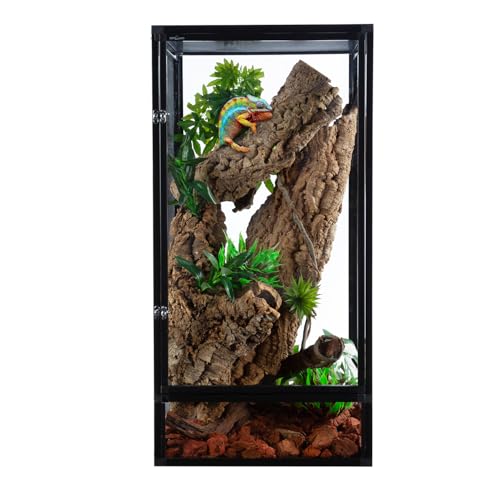
| 3 | REPTI ZOO 18x18x36” Cage Top Rated Overall | 36x18x18” | Screen w/ metal mesh | Adult veiled/panther |
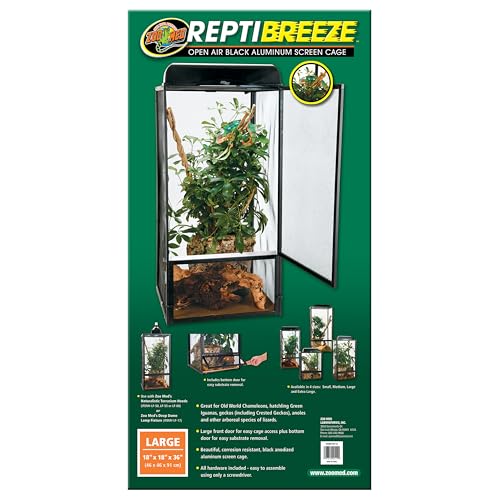
| 4 | Zoo Med ReptiBreeze Open Air Screen Cage, Large Community Pick for Extra Large | 48x24x24” | All-screen w/ LED | Parson’s/large morphs |
| 5 | REPTI ZOO 18x18x36 | 36x18x18” | Hybrid | Front-access adult |
| 6 | RunDuck 33gal Panoramic | Foldable mesh | Warning: 33gal version available | |
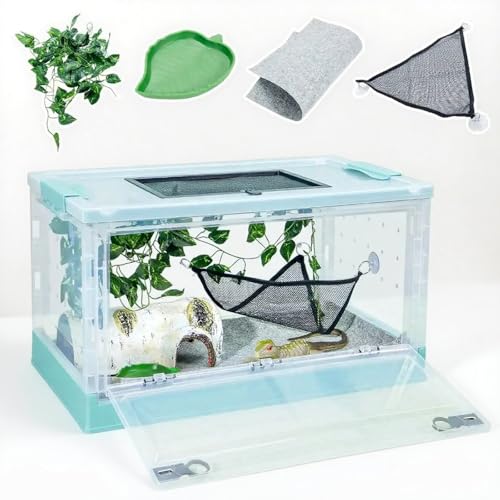
| 7 | Binano 22-Inch Foldable Mesh Reptile Terrarium | 26x17x17” | Foldable mesh | Warning: Juvenile only |
Warning: SAFETY WARNING: Products 6 (RunDuck) and 7 (BINANO) are too short for adult chameleons despite being marketed for reptiles. Volume does not equal height — a 45-gallon cage that is only 18 inches tall fails the minimum 36-inch height requirement. These are acceptable for juveniles only.
1. Zoo Med ReptiBreeze Nano (Best Hatchling Cage)
The Nano ReptiBreeze is the correct starting chameleon cage for hatchling chameleons under 3 months old. Its compact 12-inch height maintains humidity easily and keeps pinhead crickets within reach of a baby chameleon. Hatchling chameleons have poor depth perception and difficulty targeting moving prey at distance — a compact cage concentrates feeder distribution (Chameleon Academy — Baby Chameleon Care).
The aluminum frame resists rust from daily misting, and fine mesh prevents small feeders from escaping. Assembly takes about 15 minutes with clear instructions — straightforward for first-time keepers.
“Perfect size for my baby veiled,” one reviewer confirmed. Another noted: “door latches are a bit flimsy — my cat figured out how to open it.” This latch weakness is a real concern in households with curious pets.
Several keepers report the mesh developing small tears near the frame joints within the first month. The screen material is thinner than the larger ReptiBreeze models and cannot support screw-in plant hooks.
This is a significant limitation for chameleon cage setups that benefit from vertical foliage. Budget for a Small or Large cage upgrade shortly after purchase. The shallow bottom tray also allows substrate to spill when chameleons dig near the base.
One practical advantage of this chameleon cage: the small volume makes it easy to maintain the 50-70% humidity range that hatchlings need. A single manual spray bottle session is usually sufficient for this compact space. Hatchlings dehydrate faster than adults due to higher surface-area-to-volume ratio — maintain 50-70% ambient humidity (Chameleon Academy — Chameleon Hydration).
2. REPTI ZOO 18x18x24 Screen Cage Community Pick for Juveniles
The REPTI ZOO 18x18x24 Screen Cage is a solid juvenile enclosure option. The 18-inch height provides enough vertical space for 3-8 month old panther and veiled chameleons to develop proper climbing habits. The all-screen construction allows UVB penetration from external lighting for proper calcium metabolism — critical during the rapid growth phase when juveniles are most susceptible to MBD (Ferguson et al., 2010 — UVB requirements for developing reptiles; VCA Hospitals — Calcium Deficiency in Reptiles).
The 17.72-inch base provides adequate horizontal space for juvenile climbing. Three or four diagonal branches fit comfortably with room for a small potted pothos plant at the bottom.
Check current price on Amazon →
3. REPTI ZOO 18x18x36” Cage Top Rated Overall
The REPTI ZOO 18x18x36” cage is a great option for adult veiled and panther chameleons. Its 36-inch height creates the proper vertical temperature gradient that chameleons need for thermoregulation. Chameleons regulate body temperature through vertical positioning — basking at 85-95°F at the top and retreating to 70-80°F at the bottom (Mader, 2006 — Reptile Medicine and Surgery; Baines, 2022 — UV Guide UK).
This REPTI ZOO enclosure has three-sided metal mesh with a front glass panel for easy access. The large front door provides easy access for feeding, plant maintenance, and cleaning. The mesh supports UVB penetration from external lighting.
“This cage is everything my adult veiled needed,” one long-term reviewer wrote. “Two years in, zero rust, no structural issues.”
Budget brands offer larger volumes for less money, but they sacrifice the height and build quality that make this enclosure reliable long-term. The 18x18-inch base is wide enough for a laying bin for gravid females. This is an important consideration if you plan to keep a female veiled or panther chameleon.
For cage accessories, check our corn snake hide guide — while written for snakes, the hide sizing principles apply to chameleon enclosure furniture too.
Check current price on Amazon →
4. Zoo Med ReptiBreeze Open Air Screen Cage, Large Community Pick for Large Species
The XL is built for Parson’s chameleons — the largest pet chameleon species, with adult males reaching 27 inches in total length and requiring the most spacious enclosure of any commonly kept chameleon (Chameleon Academy — Parson’s Chameleon Care). Its 48-inch height and 24x24-inch base support multiple potted plants and heavy branch networks.
A built-in LED strip provides ambient illumination, though it is not UVB-rated. You still need separate UVB and basking bulbs installed on top. The wide base accommodates large ficus and pothos plants for a naturalistic setup.
“Finally a cage big enough for my Parson’s,” one reviewer confirmed. “Worth every penny for the extra height.” The downside is assembly complexity — expect over an hour even with two people.
Multiple reviewers report the aluminum frame arriving with minor dents from shipping. “Beautiful cage but three corners were bent on arrival,” one buyer noted. The 48-inch length makes it difficult to ship without damage.
Returns are cumbersome due to the size. Reserve this for large species or keepers who want maximum vertical space for elaborate plant setups. For ground-dwelling reptiles needing horizontal space instead, see our best tortoise enclosures guide.
The built-in LED provides ambient viewing light in the evening without disrupting the day-night cycle. This is a nice convenience feature that cheaper cages do not offer.
Check current price on Amazon →
5. REPTI ZOO 18x18x36 Front Opening
This REPTI ZOO chameleon cage combines three-sided mesh with a front glass panel. The front-opening design makes feeding and maintenance easier than side-access screen cages.
The metal frame feels more rigid than aluminum, with less flex during daily use. At a lower cost than the REPTI ZOO 18x18x36”, it appeals to keepers wanting front access.
“Love the front door — so much easier to clean and rearrange branches,” one reviewer noted. However, multiple reviewers report that the background sticker starts peeling at edges after weeks of regular misting.
The front glass panel is the main compromise. It reduces ventilation on one side compared to a full 360-degree screen enclosure.
Limited long-term quality data exists for this chameleon cage brand compared to Zoo Med’s extensive track record. This is recommended only if front-opening access is the top priority.
Check current price on Amazon →
6. RunDuck 45 Gallon 360 Panoramic Warning: HEIGHT WARNING
Warning: This cage is only 18 inches tall — well below the 36-inch minimum for adult chameleons. Despite being marketed as a 45-gallon cage, volume does not compensate for inadequate height. Use for juveniles only or non-chameleon reptiles.
The RunDuck offers a wide 32-inch base and 360-degree panoramic mesh panels. The foldable design collapses flat for storage, and removable mesh panels allow deep cleaning without moving the entire frame.
“Great value for the price,” one reviewer noted. “But 18 inches tall is just not enough for my adult veiled — he was constantly trying to climb higher.” Multiple keepers report folding joints developing weak points after a year of use.
The frame is coated steel, not aluminum, which creates rust risk under constant high humidity — corrosion can introduce heavy metals into the enclosure environment over time, posing ingestion risk to chameleons that tongue-flick surfaces (Mader, 2006 — Reptile Medicine and Surgery — enclosure materials safety). Poorly translated assembly instructions are a recurring complaint — several reviewers recommend watching online video tutorials instead of following the included manual.
Check current price on Amazon →
7. BINANO 33 Gallon Foldable Warning: HEIGHT WARNING
Warning: This cage is only 17 inches tall — acceptable for juveniles but not for adult chameleons. Budget for an upgrade within 6-8 months if buying for a growing chameleon.
The BINANO offers a detachable base design that makes cleaning simple. Lift the cage off the base, wipe it down, and set it back. The foldable frame collapses flat for storage between uses.
Fine mesh quality holds small feeder insects without escape — surprisingly good at this price point. The consistent positive feedback from reviewers suggests reliable quality control.
“Perfect for my juvenile panther at a great price,” one reviewer confirmed. “Just know you will need a bigger cage soon.” Multiple users report the detachable base connection developing gaps over time, allowing small feeder insects to escape.
Some keepers report rust spots on the frame after extended high-humidity exposure. BINANO offers only one size, so there is no upgrade path within the brand — you will need to switch to Zoo Med or REPTI ZOO for the adult cage.
Check current price on Amazon →
Best Enclosure by Budget
Your chameleon cage budget should plan for two purchases: a starter cage for the first 6-8 months and an adult cage for the rest of the chameleon’s life.
| Budget | Hatchling | Juvenile | Adult |
|---|---|---|---|
| Budget-Friendly | Zoo Med Nano | — | — |
| Entry-Level | Zoo Med Nano | BINANO 33gal | — |
| Mid-Range | REPTI ZOO 18x18x24 Screen Cage | REPTI ZOO 18x18x24 Screen Cage | RunDuck 33gal |
| Upper Mid-Range | REPTI ZOO 18x18x36 | REPTI ZOO 18x18x24 Screen Cage | REPTI ZOO 18x18x36 |
| Premium | REPTI ZOO 18x18x36 | REPTI ZOO 18x18x24 Screen Cage | REPTI ZOO 18x18x36 |
| High-End | REPTI ZOO 18x18x36 | REPTI ZOO 18x18x24 Screen Cage | Zoo Med ReptiBreeze Open Air Screen Cage, Large |
Money-Saving Tips
Buy the REPTI ZOO 18x18x24 Screen Cage as a “universal starter” cage — it works for hatchlings and juveniles at a similar size to the original 17-20 inch juvenile screen cages. Then upgrade to the REPTI ZOO 18x18x36” for adulthood. This two-cage strategy covers the entire lifespan.
Zoo Med ReptiBreeze chameleon cages hold value well on the used market. Check reptile classifieds and Facebook groups for secondhand cages at 30-50% off retail. Screen cages are easy to sanitize and inspect for damage before buying used.
Avoid cheap foldable chameleon cages for adults. The RunDuck and BINANO are too short for adult chameleons regardless of price. Saving money on a cage that endangers your chameleon’s health is a false economy.
Some keepers try to justify budget cages by adding climbing structures to compensate for height. This does not work — a chameleon needs open vertical space above its perch to feel secure, not cramped branches packed into a short cage.
Cage Setup Guide
A proper chameleon cage setup is just as important as choosing the right enclosure. Follow these six steps for a safe, healthy habitat.
Step 1: Position the Cage
Place the cage away from direct sunlight, air vents, drafts, and high-traffic areas. Chameleons stress easily from movement around their cage. A quiet room with ambient indirect light is ideal.
Direct sunlight through windows can overheat any chameleon cage within minutes. Even with proper basking lights, keep the enclosure out of sunbeams.
Step 2: Install Drainage
Place a plastic tray or cat litter box under the cage bottom to catch water from misting. Standing water causes bacterial growth and foot rot. Some keepers use a plastic shower curtain liner as a wider catch surface.
Drainage is often overlooked by beginners but becomes critical within the first week. A single misting session can produce several ounces of water that must be directed away from the cage bottom.
Step 3: Add Climbing Branches
Use natural branches from safe wood species: oak, maple, birch, or bamboo. Arrange branches diagonally from bottom to top with a minimum of three horizontal perches at different heights. Avoid pine and cedar — these contain phenolic compounds and volatile oils that cause respiratory irritation in reptiles (Mader, 2006 — Reptile Medicine and Surgery; ASPCA — Toxic Plants for Reptiles). This creates the temperature gradient your chameleon needs.
Avoid branches with sharp edges or rough bark that could injure your chameleon’s skin during climbing. Sand any rough spots smooth before placing them in the enclosure.
Warning: Toxic Wood Warning: Never use pine or cedar branches. These release toxic oils when heated, and the aromatic compounds can cause respiratory distress in chameleons.
Step 4: Install Live Plants
Pothos, ficus benjamina, hibiscus, and umbrella plants are chameleon-safe options. Live plants maintain humidity and provide natural cover. Avoid dieffenbachia, philodendron, ivy, and oleander — these contain calcium oxalate crystals and cardiac glycosides that are toxic to chameleons upon ingestion (ASPCA — Toxic and Non-Toxic Plant Lists; Chameleon Academy — Safe Plants for Chameleons).
Pothos is the recommended starter plant because it is nearly indestructible, tolerates low light, and grows quickly to fill empty spaces in the enclosure.
Step 5: Set Up Lighting
Install a UVB bulb on top pointing down through the mesh.
A basking bulb goes on the same side to create an 85-95 degree basking spot. Both lights should run on a 12-hour timer. Basking temperature exceeding 100°F causes thermal burns and hyperthermia — always use a thermostat to prevent overheating (Mader, 2006 — Reptile Medicine and Surgery; VCA Hospitals — Thermal Burns in Reptiles). A thermostat is essential for safe basking temperature control — see our reptile thermostat guide.
Step 6: Install a Dripper or Misting System
Chameleons drink water droplets off leaves — they rarely drink from standing water bowls. Install a dripper system or automated misting system. Dehydration is a leading cause of death in captive chameleons and presents as sunken eyes, retained shed, and urate discoloration (Chameleon Academy — Chameleon Drinking; Mader, 2006 — Reptile Medicine and Surgery). Mist 2-3 times daily for 30-60 seconds each session.
A simple dripper can be made from a plastic cup with a small hole in the bottom, placed on top of the cage. Commercial options like the Exo Terra Monsoon provide more consistent output.
While ball pythons need ambient humidity maintained steadily, chameleons need humidity cycles of wet and dry periods. See humidity methods contrasted in our ball python humidity guide.

Chameleon Cage Safety Checklist
Before purchasing or setting up a chameleon cage, verify:
- Minimum 36-inch height for adults — height is the most critical dimension; a short cage is never acceptable regardless of volume
- All-screen or hybrid enclosure — glass tanks block UVB, create stagnant air, and cause reflection stress
- UVB bulb mounted externally pointing down through mesh — internal UVB bulbs inside glass are useless
- Three horizontal perches at different heights — creates the vertical temperature gradient chameleons need
- Safe wood branches only (oak, maple, birch, bamboo) — pine and cedar release toxic oils when heated
- Chameleon-safe live plants (pothos, ficus, hibiscus) — dieffenbachia, philodendron, ivy, and oleander are toxic
- Dripper or misting system installed — chameleons drink from leaves, not standing water bowls
- Basking temp 85-95°F with thermostat — temps above 100°F cause thermal burns
- Proper drainage under cage bottom — standing water causes bacterial growth and foot rot
- Aluminum frame preferred — coated steel rusts under constant high humidity
- Do NOT house hatchlings in adult cages — babies cannot locate food in oversized enclosures
- Do NOT use glass tanks — respiratory infections, UVB blockage, and reflection stress are guaranteed problems
- Do NOT choose cages by volume alone — 45 gallons at 18 inches tall fails; 36+ inches height is mandatory
- Do NOT place cage in direct sunlight — overheats screen cage within minutes
- Do NOT skip the misting schedule — dehydration is a leading cause of captive chameleon death
Chameleon FAQ
What size cage does a chameleon need?
Adult chameleons need a minimum 36 inches (91 cm) of height in an all-screen enclosure with an 18x18-inch base. Parson’s chameleons need 48 inches. Hatchlings start in 12-inch nano cages and upgrade to full adult enclosures by 6-8 months.
Can chameleons live in glass tanks?
No. Glass blocks 50-70% of UVB light, creates stagnant air that causes respiratory infections, and triggers chronic stress from reflections. All-screen enclosures are the only safe choice.
What is the best chameleon cage brand?
Zoo Med ReptiBreeze is the most trusted brand — the REPTI ZOO 18x18x36” is a great alternative. REPTI ZOO offers a hybrid front-opening alternative, while budget brands like RunDuck and BINANO work for juveniles but are too short for adults.
Do chameleons need a tall cage?
Yes. Chameleons are arboreal and need a tall enclosure for proper thermoregulation — minimum 36 inches for adults, as a wide but short cage is not an acceptable substitute.
How often should I mist a chameleon’s cage?
Mist 2-3 times daily for 30-60 seconds using room-temperature water, and use an automated system like MistKing over manual spray bottles. Avoid over-misting to prevent bacterial growth on cage surfaces.