Feeding a bearded dragon isn’t as simple as pouring pellets into a bowl. These Australian lizards are true omnivores — they need a precise mix of fresh vegetables, live insects, and nutritional supplements at every stage of life.
Metabolic bone disease (MBD) is the most common nutritional disorder in captive bearded dragons, caused by insufficient calcium, lack of vitamin D3, or inadequate UVB exposure. According to the Association of Reptilian and Amphibian Veterinarians (ARAV), MBD causes progressive bone softening, limb deformities, jaw abnormalities (“rubber jaw”), muscle tremors, and fractures — and is fatal if left untreated. The ARAV emphasizes that MBD is entirely preventable through three measures: calcium + D3 supplementation, proper UVB lighting (Ferguson Zone 3 for bearded dragons), and a diet with correct calcium-to-phosphorus ratios. Juveniles are at highest risk due to their rapid bone growth requiring 2–3 times more calcium per body weight than adults.
Get the ratio wrong, and you’re looking at metabolic bone disease, obesity, or organ failure.
According to NC State University’s Veterinary Hospital, an adult bearded dragon needs 70-85% fresh plant matter and only 15-25% animal protein. Juveniles flip that ratio almost entirely — they require 75-80% protein to support rapid bone and muscle growth. No single commercial product covers both needs.
Finding the best bearded dragon food means understanding that no single product covers all their needs. The right strategy combines quality pellets for convenience, fresh greens for fiber and vitamins, live feeder insects for protein, and a calcium supplement to prevent deficiency. This guide reviews 10 products across all categories — plus a complete diet breakdown with daily feeding charts, safe food lists, and age-specific recommendations.
For everything beyond diet, check our complete bearded dragon care guide.
Quick Answer — Top 4 Best Bearded Dragon Food Picks
| Our Pick | Product | Price | Best For |
|---|---|---|---|
| Best Overall | Fluker’s Buffet Blend Adult 7oz | $9.99 | Daily pellet with freeze-dried veggies included |
| Best Budget | Fluker’s Adult Pellet 3.4oz | $6.49 | Affordable staple — picky eater approved |
| Best Premium | Repashy Beardie Buffet 6oz | $21.99 | Gel food for sick, recovering, or dehydrated dragons |
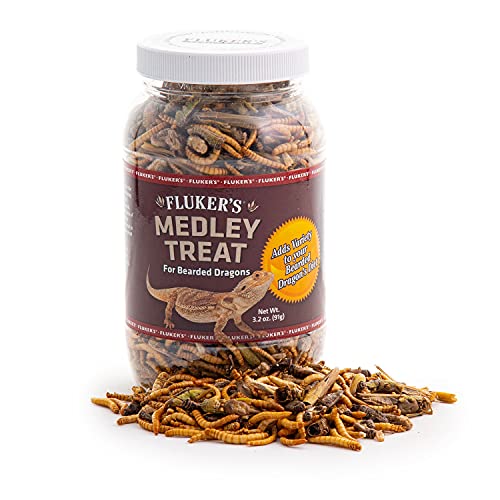
| Best Treat | Fluker’s Medley Treat 3.2oz | $9.49 | Freeze-dried insects — convenient alternative to live prey |
Juvenile vs Adult Bearded Dragon Diet
Before buying any product, you need to understand one critical fact: bearded dragon dietary needs completely reverse as they age. A food that’s perfect for a juvenile can cause obesity in an adult, and vice versa.
| Factor | Juvenile (0-12 months) | Adult (12+ months) |
|---|---|---|
| Protein (insects) | 75-80% of diet | 15-25% of diet |
| Plants (greens/veg) | 20-25% of diet | 70-85% of diet |
| Feeding frequency | 2-3 times daily | Every 1-2 days |
| Insects per feeding | 10-20 appropriately-sized | 5-10 insects |
| Calcium supplement | Daily (with D3) | 2-3x per week |
| Fruit | Rare treat (<5%) | Rare treat (<5%) |
| Pellet food | Can supplement, not replace live | Can be 20-30% of diet |
| Key concern | Growth and bone development | Obesity prevention |
Source: NC State University Veterinary Hospital
Why does this matter when choosing the best bearded dragon food? Pellet foods from Fluker’s, Zoo Med, and Mazuri are designed as supplements or convenience foods — they should never be 100% of your dragon’s diet, regardless of what the packaging claims. Fresh greens and live insects remain essential.
I’d recommend organizing your food strategy by category: staple pellets first, then gourmet blends for variety, a premium gel for special situations, treats for enrichment, and a calcium supplement that’s non-negotiable. Our product reviews below follow exactly that order.
If you’re new to bearded dragon keeping, learn more about the bearded dragon species profile to understand their natural habitat and behavior.
10 Best Bearded Dragon Foods Reviewed
Here’s a quick overview of the best bearded dragon food products of all 10 products we cover, organized by category:
| Category | Product | Price | ASIN |
|---|---|---|---|
| Staple Pellet | Fluker’s Buffet Blend Adult | $9.99 | B07GS1JL28 |
| Budget Pellet | Fluker’s Adult Pellet | $6.49 | B0002DHPQW |
| Research-Grade | Mazuri Bearded Dragon Diet | $11.19 | B00OV0WLWU |
| Gourmet Blend | Zoo Med Gourmet BD Food | $15.22 | B00VFZOXC0 |
| Natural Pellet | Zoo Med Natural Adult Formula | $15.89 | B0002DIY94 |
| Premium Gel | Repashy Beardie Buffet | $21.99 | B0D6PRPTWN |
| Treat (Medley) | Fluker’s Medley Treat | $9.49 | B01N7RY3X6 |
| Treat (Omnivore) | Fluker’s Grub Bag Omnivore | $7.34 | B0C9RR7G7Y |
| Treat (Mealworm) | Fluker’s Grub Bag Mealworm | $6.99 | B0C9RKY51D |
| Supplement | Rep-Cal Calcium + D3 | $8.49 | B00BS96G1E |
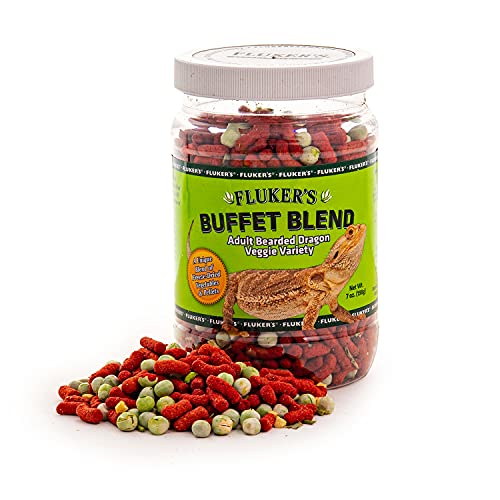
Fluker’s Buffet Blend Adult Bearded Dragon Veggie Variety 7oz
Best Overall — The most widely used staple pellet for adult bearded dragons, combining textured pellets with freeze-dried vegetable pieces in a single package.
As the best bearded dragon food pick for daily use, Fluker’s Buffet Blend stands out because it includes freeze-dried peas, squash, and alfalfa alongside the standard pellets — getting closer to a varied diet than plain pellets alone. The textured shape is designed to be easy for bearded dragons to digest, and the formula is fortified with vitamins for a balanced omnivore diet.
Owners consistently report that even picky eaters accept this blend. According to verified purchase reports, even picky dragons accept this blend — owners describe it as a reliable staple “between crickets and mealworms.”
Pros:
- Includes real freeze-dried vegetable pieces
- Balanced omnivore formula with added vitamins
- Most reviewed staple pellet on the market
- Easy to digest pellet texture
- Strong value at roughly $1.43 per ounce
Cons:
- For adults only (7+ inches) — not suitable for juveniles
- Some dragons ignore pellets initially when transitioning from live food
- Not a complete diet alone — still needs fresh greens and live insects
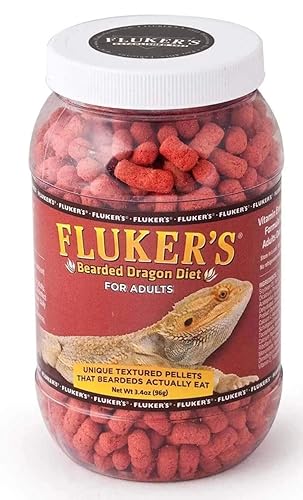
Fluker’s Adult Bearded Dragon Pellet Diet 3.4oz
Best Budget — The highest-rated pellet at the lowest entry price, making it ideal for first-time bearded dragon owners who want quality without spending much.
This is a straightforward, no-frills pellet that combines digestible animal and plant protein sources. The simple formula works well — many owners report that even extremely picky dragons scarf it down immediately.
According to verified purchase reports, even extremely picky dragons accept this pellet readily — owners report their bearded dragons “devour it” despite refusing other brands.
Pros:
- Most affordable quality pellet at $6.49
- Picky eater approved across thousands of owners
- Simple, digestible animal and plant protein blend
- Small jar size reduces waste if your dragon doesn’t take to it
Cons:
- Small 3.4oz jar runs out quickly with regular feeding
- No vegetable pieces — purely pellet form
- Needs to be supplemented with fresh greens and insects
Mazuri Bearded Dragon Diet 8oz
Best Research-Grade — Made by Mazuri, which is Purina’s exotic animal division and the same brand trusted by zoos worldwide for specialized animal nutrition.
Mazuri formulates this diet with high omega-3 fatty acids and vitamin E, and it contains no artificial flavors. The research-grade formulation means the nutrient ratios are backed by feeding trials rather than just meeting minimum requirements.
In my experience, this is the best bearded dragon food for dragons recovering from nutritional deficiency. Verified owners report that nutritionally compromised dragons recover on this diet — one documented case describes a dragon that regained health after losing toes and tail to severe malnutrition.
Their dragon had been refusing vegetables and was losing toes and tail due to severe malnutrition. After switching to Mazuri, the dragon recovered and became healthy again.
Pros:
- Research-grade formulation trusted by zoos
- Rich in omega-3 fatty acids and vitamin E
- No artificial flavors added
- Strong track record with nutritionally compromised dragons
Cons:
- Some dragons refuse it, especially those used to flavored pellets
- Slightly higher price per ounce than Fluker’s options
- Not as widely available in pet stores
Zoo Med Gourmet Bearded Dragon Food 15oz
Best Gourmet Blend — The most varied commercial diet available, combining floating pellets with blueberries, mealworms, and dried rose flower petals.
Zoo Med’s Gourmet line adds genuine enrichment and ranks among the best bearded dragon food options for variety. The inclusion of blueberries, mealworms, and rose petals creates texture and flavor variety that plain pellets simply can’t match. It’s made in the USA with no artificial colors, flavors, or preservatives.
At 15 ounces, this is the largest container in the group and offers the best value per ounce at roughly $1.01. Verified buyers consistently praise the ingredient variety — many note surprise at the quality relative to the price point.
Pros:
- Most varied commercial diet — pellets, fruit, insects, and flowers
- All natural with no artificial additives
- Made in the USA
- Best value per ounce at 15oz size
- Adds behavioral enrichment through varied textures
Cons:
- Some complaints about freshness and staleness in humid climates
- Blueberry pieces can develop mold if stored improperly
- Not all dragons eat the flower petals
Zoo Med Natural Bearded Dragon Food Adult Formula 20oz
Best Natural Pellet — A dandelion greens-based formula with the largest package size at 20 ounces (1.25 pounds), emphasizing natural ingredients over palatability additives.
This formula contains real dandelion greens and other nutritional plants with correct protein, calcium, and fiber ratios for long-term adult health. There are no artificial colors, flavors, or preservatives.
Many owners purchase this product specifically to gut-load feeder insects rather than feeding it directly to their dragons. According to verified buyers, the dandelion greens formula works well as gut-loading food for dubia roaches and superworms.
Pros:
- Natural dandelion greens formula
- Largest package at 20oz — excellent per-ounce value
- No artificial colors, flavors, or preservatives
- Doubles as feeder insect gut-loading food
- Correct nutrient ratios for adult dragons
Cons:
- Some dragons prefer flavored pellets over the natural taste
- Many buyers use it for feeder insects rather than direct feeding
- Dragons accustomed to flavored pellets may reject it
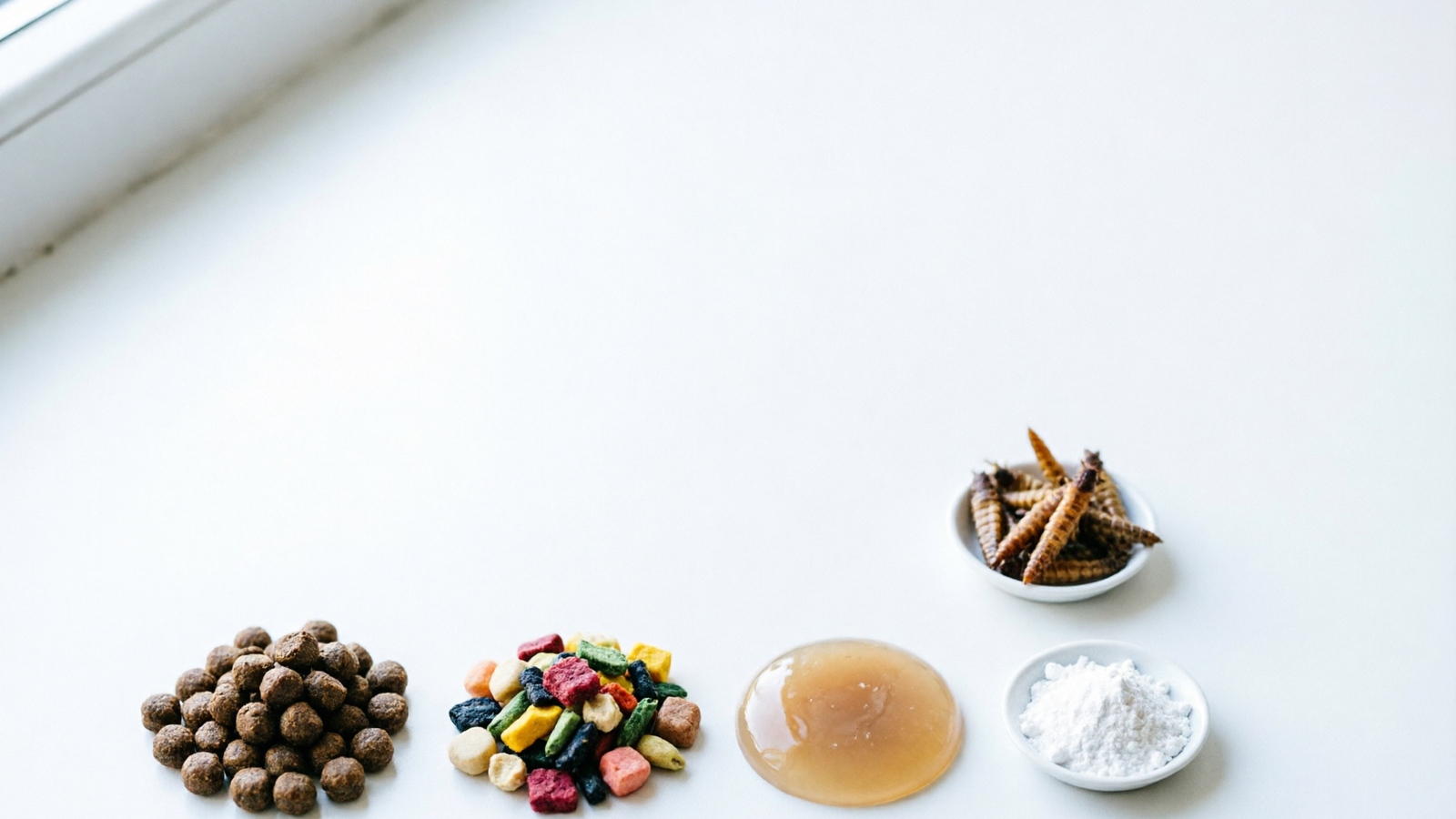
Repashy Superfoods Beardie Buffet 6oz
Best Premium — A unique gel food that you prepare by mixing powder with hot water, creating a nutrient-dense, high-moisture meal that many dragons prefer over dry pellets.
Repashy Beardie Buffet fills a specific niche and is the best bearded dragon food for sick, recovering, or dehydrated dragons that refuse dry food. The gel texture is easier to consume and digest, and the high moisture content helps with hydration. Preparation takes just 2-3 minutes — mix powder with hot water and let it set.
This product has earned strong loyalty from reptile rehabbers. Reptile rehabilitation specialists report consistent success with compromised dragons. In documented cases, dragons arriving with no prior UVB exposure, refusing vegetables, and eating only mealworms began eating and recovering after switching to this gel food.
Pros:
- Excellent for sick, recovering, or dehydrated dragons
- High moisture content aids hydration
- Easy to prepare — ready in minutes
- Nutrient-dense gel formula
- Strong track record with rehabilitation cases
Cons:
- Most expensive option at $21.99
- Requires hot water preparation each time
- Gel spoils faster than dry pellets
- Small jar size for the price
Fluker’s Bearded Dragon Medley Treat 3.2oz
Most Popular Treat — The most reviewed bearded dragon food product on Amazon, combining freeze-dried mealworms, grasshoppers, and crickets in a vitamin-enriched blend.
This medley provides natural prey variety without the hassle of keeping live insects. The freeze-drying process preserves maximum flavor and nutrition while vitamin enrichment adds essential proteins, fats, vitamins, and minerals. It stores easily — no refrigeration needed.
Owners love this product for its convenience. According to verified purchase reports, dragons consistently respond enthusiastically to this medley — owners describe it as their dragon’s favorite treat.
Pros:
- Most reviewed bearded dragon food product online
- Three insect varieties in one convenient package
- No refrigeration required
- Vitamin-enriched formula
- Great alternative when live insects aren’t available
Cons:
- Treat only — not nutritionally complete as a staple
- Freeze-dried insects have lower nutritional value than live
- Some dragons only respond to live movement
Fluker’s Grub Bag Omnivore Blend 4oz
Best Omnivore Treat — A calcium-fortified blend of vegetables, insects, and fruits that comes closer to a varied diet than other treat options.
This all-natural, preservative-free blend combines vegetables, insects, and fruits into one resealable pouch. The calcium fortification makes it a smarter choice than plain insect treats, especially for dragons that don’t eagerly eat their greens.
Verified buyers report strong acceptance across multiple dragons — the omnivore blend is frequently repurchased as a regular treat.
Pros:
- Calcium-fortified for bone health support
- Includes vegetable, insect, and fruit variety
- 100% all-natural and preservative-free
- Resealable pouch for freshness
- Versatile — suitable for other omnivore reptiles too
Cons:
- Peas can be extremely hard — some dragons can’t bite them
- Still a treat, not a complete diet replacement
- Some pieces are too large for juvenile dragons
Fluker’s Grub Bag Mealworm Treat 3oz
Best Mealworm Treat — Calcium-fortified mealworms with three times the calcium content of non-gut-loaded mealworms, in a convenient resealable pouch.
If your dragon loves mealworms (and most do), this calcium-fortified version is a smarter choice than regular dried mealworms. The 3x calcium fortification helps offset the naturally poor calcium-to-phosphorus ratio of mealworms. No refrigeration needed, and the resealable pouch keeps them fresh.
Pros:
- 3x calcium fortification compared to standard mealworms
- All natural with no preservatives
- No refrigeration required
- Resealable pouch for easy storage
- Affordable at $6.99
Cons:
- Single protein source — mealworms only
- High fat content means this should be limited to treats
- Not suitable as a dietary staple
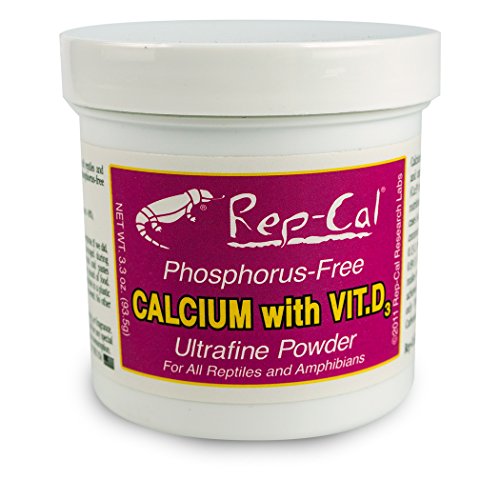
Rep-Cal Calcium + Vitamin D3 Powder 3.3oz
Essential Supplement — Not optional. Every bearded dragon needs calcium supplementation, and Rep-Cal is the most trusted brand among reptile keepers and veterinarians.
Rep-Cal’s ultrafine powder is made from 100% natural oyster shell phosphorus-free calcium carbonate with added vitamin D3 for absorption. It’s the gold standard for reptile calcium supplementation — use the “coffee can method”: put insects in a bag with the powder, shake gently until coated, then feed.
One long-time reptile keeper noted: “The best stuff out there — it’s the most commonly used vitamin supplement for reptiles and the most trusted.”
Pros:
- Most trusted reptile calcium supplement on the market
- Phosphorus-free formulation prevents mineral imbalance
- Contains vitamin D3 for proper calcium absorption
- Ultrafine powder coats insects evenly
- No other supplementation needed when used correctly
Cons:
- Must be stored in a dry environment — clumps in humidity
- Over-supplementation can cause calcification
- Needs consistent routine to be effective
Bearded Dragon Diet Guide: What to Feed Daily
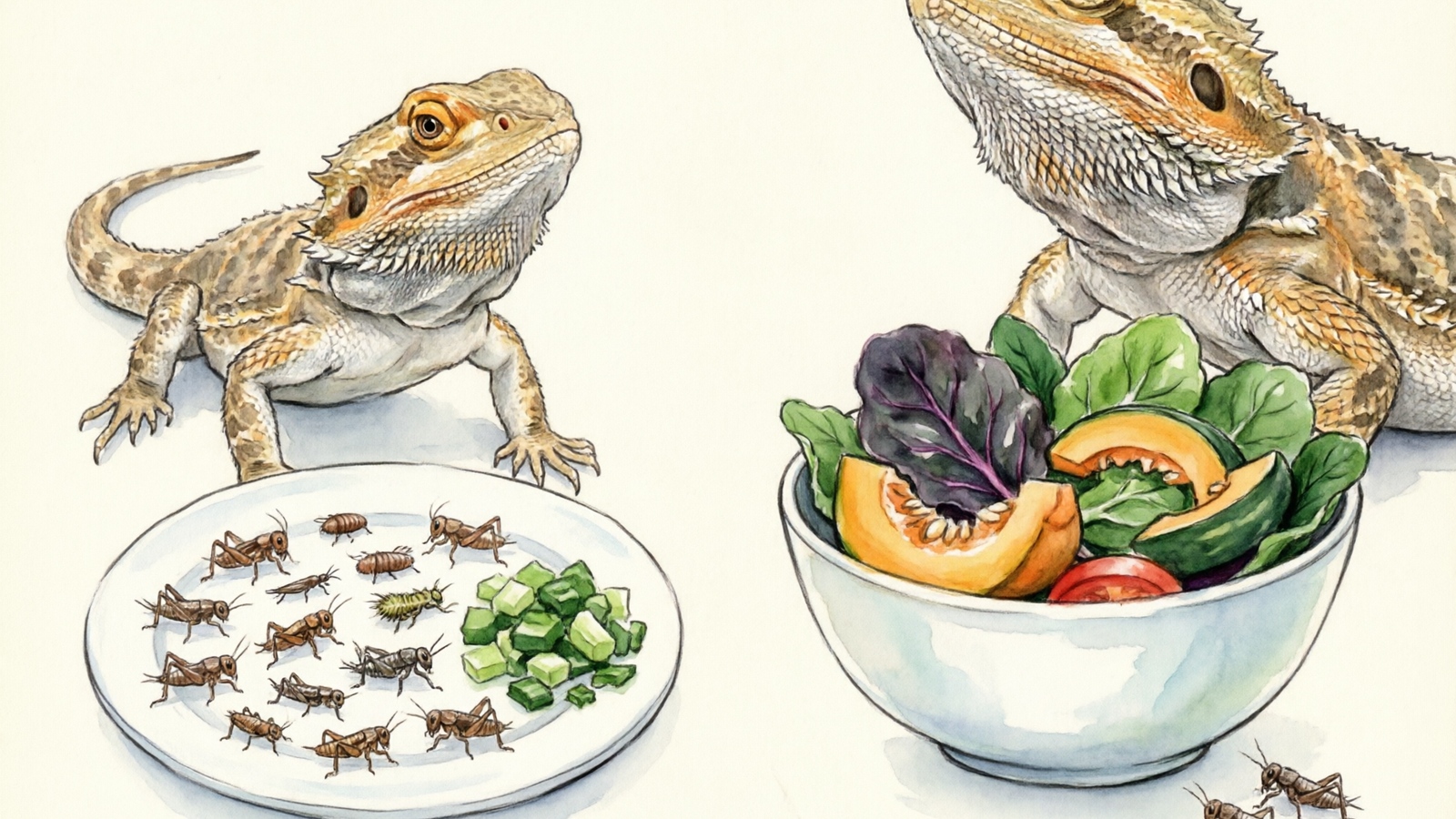
Bearded dragons are omnivores that need both animal protein and plant matter — the best bearded dragon food plan balances both. The right balance depends entirely on age. Here’s the complete daily feeding breakdown.
Daily Vegetables (70-85% of adult diet)
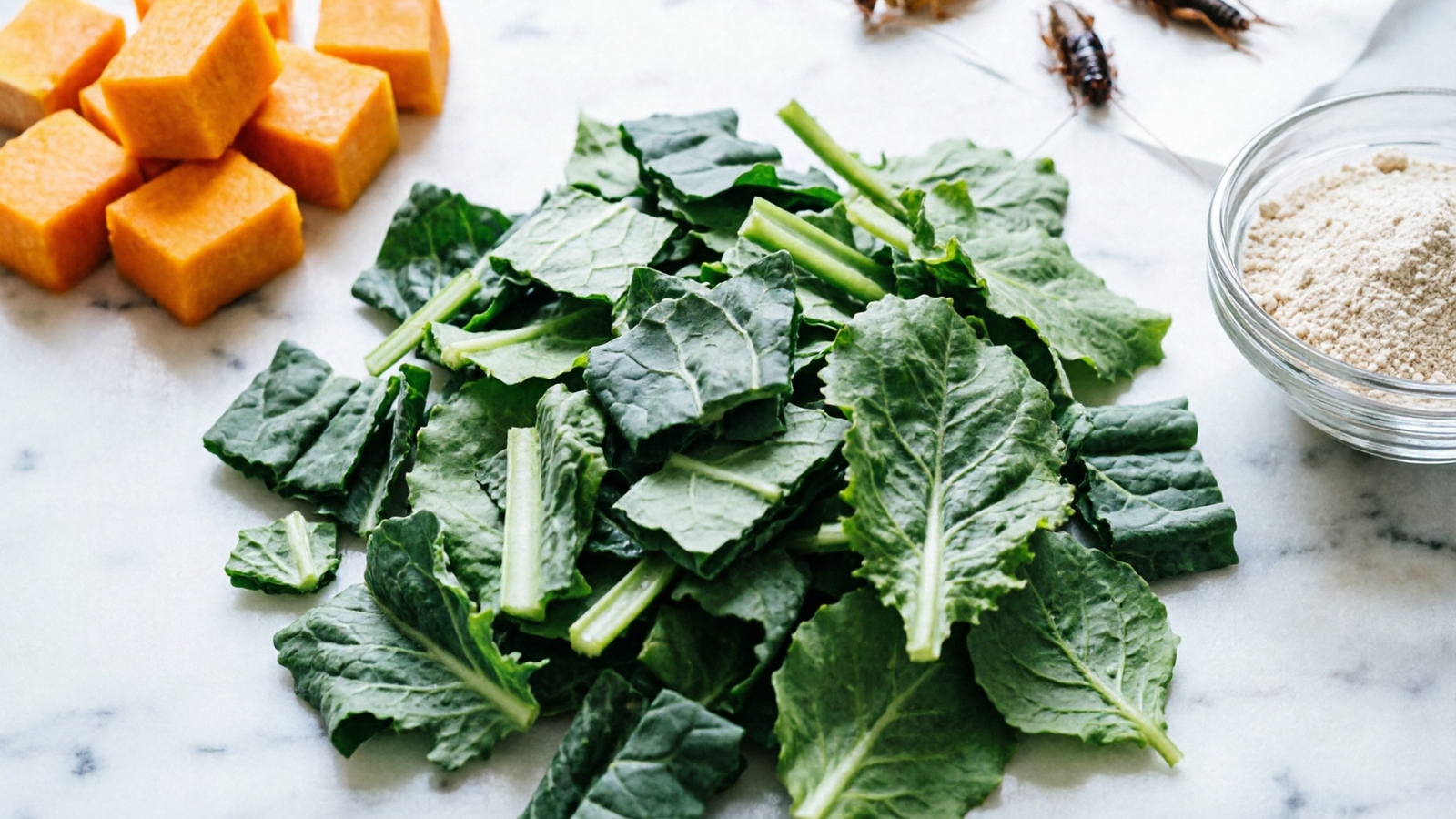
Fresh dark leafy greens should form the foundation of every adult bearded dragon’s diet. Chop vegetables to appropriate bite sizes and always wash thoroughly.
| Frequency | Vegetables | Notes |
|---|---|---|
| Every day | Collard greens, mustard greens, turnip greens, dandelion greens | Best staples — high calcium and vitamin A |
| Every day | Butternut squash, acorn squash | Grate for easy eating. Rich in vitamin A |
| Often (3-4x/week) | Green beans, snap peas, bell peppers | Good variety — chop small |
| Sometimes (1-2x/week) | Carrots, sweet potato, pumpkin | Grate or cook slightly. High vitamin A |
| Rarely | Spinach, kale | High oxalates bind calcium — small amounts only |
| Never | Iceberg lettuce, avocado, onion, garlic | Lettuce has zero nutrition. Others are toxic |
Sources: NC State University Veterinary Hospital; Veterian Key
I’ve found that chopping greens into pieces roughly the size of your dragon’s eye makes feeding easier and reduces waste. Offer a fresh salad every morning, even on days when you also feed insects.
Feeder Insects (15-25% of adult diet)
Not all insects are created equal. Some are excellent daily staples while others should be strictly limited to treats.
| Insect | Best For | Notes |
|---|---|---|
| Dubia roaches | Daily staple | Best overall feeder — high protein, easy to digest, can’t infest your home |
| Crickets | Daily staple | Widely available. Gut-load 24 hours before feeding for maximum nutrition |
| BSFL (black soldier fly larvae) | Daily staple | Excellent calcium source. Nearly self-gut-loading |
| Mealworms | Occasional treat | High fat, hard exoskeleton — limit frequency |
| Superworms | Occasional treat | High fat. Adults only — too large for juveniles |
| Waxworms | Rare treat | Very high fat. Use only for weight gain |
| Never | — | Wild-caught insects (pesticides, parasites) and fireflies (deadly toxin) |
Sources: Reddit r/BeardedDragons community consensus; NC State Vet Hospital
Always dust feeder insects with calcium + D3 powder before feeding. Juveniles need dusting at every meal; adults need it 2-3 times per week.
Fruits (5% or less — rare treats only)
Fruits should be offered no more than once or twice per month. The sugar content is too high for regular feeding.
| Safe (1-2x/month) | Never |
|---|---|
| Apples (no seeds), bananas, berries, mango, melon, papaya | Citrus fruits, rhubarb, avocado |
For detailed guides on specific fruits, see our articles on whether bearded dragons can eat bananas, whether grapes are safe, and whether strawberries make good treats.
What Should You Never Feed a Bearded Dragon?
Some foods are outright dangerous. Knowing the toxic food list is just as important as knowing what to feed.
Toxic foods that can cause illness or death:
- Avocado — Contains persin, which is toxic to reptiles and can cause organ failure
- Fireflies/lightning bugs — Contain lucibufagins, a compound that is deadly to bearded dragons even in tiny amounts
- Onion, garlic, and leeks — Damage red blood cells, leading to anemia
- Rhubarb — Extremely high oxalates that bind calcium and can cause kidney damage
- Wild-caught insects — May carry pesticides, parasites, or diseases
- Citrus fruits — Too acidic for reptile digestive systems
Dangerous feeding practices to avoid:
- Feeding insects larger than the space between your dragon’s eyes — this causes impaction, a life-threatening digestive blockage
- Leaving fresh food in the enclosure for more than 30 minutes — bacteria grows quickly at warm terrarium temperatures
- Feeding mealworms to juveniles — the hard exoskeleton is difficult for young dragons to digest
- Over-supplementing calcium — excessive calcium causes tissue calcification and organ damage
Source: Falls Road Veterinary Hospital, Baltimore
How to Build a Complete Feeding Setup
Even the best bearded dragon food won’t keep your pet healthy without the right enclosure setup to properly digest and absorb nutrients from what it eats.
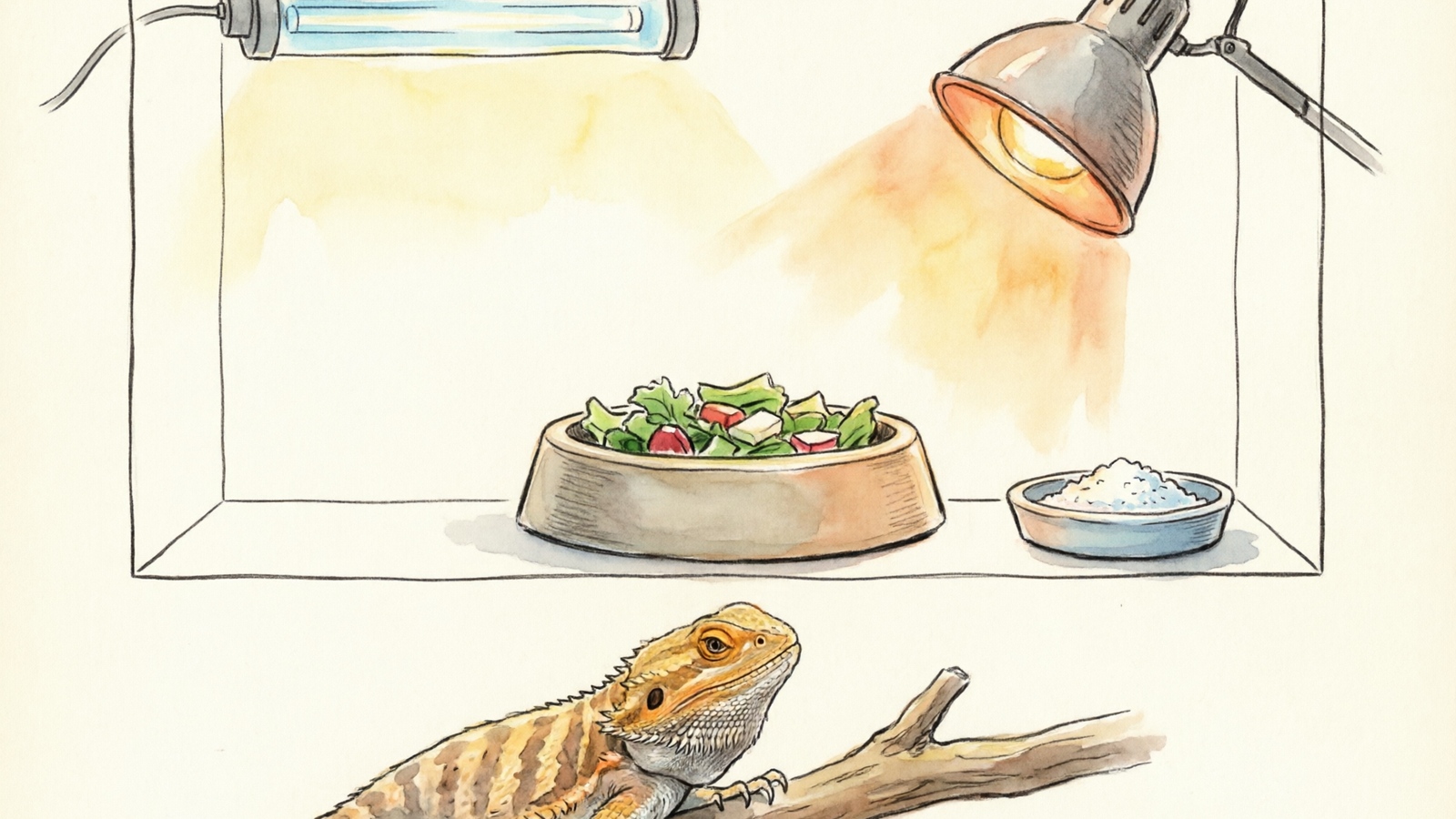
1. UVB lighting is non-negotiable. Without UVB radiation, your dragon cannot synthesize vitamin D3 and therefore cannot absorb calcium from food — regardless of how much supplement you dust on insects. This leads directly to metabolic bone disease. See our guide to the best UVB lights for bearded dragons for specific product recommendations.
2. Proper basking temperatures drive digestion. The basking spot must reach 95-105°F for adults and 100-110°F for juveniles. Bearded dragons are ectothermic — if they’re too cold, food sits undigested in their gut, leading to rot and impaction. Our best heating lamps guide covers the right heat sources for every setup.
3. Enclosure size affects appetite. Adults need a minimum 4×2×2 foot enclosure. Cramped spaces cause stress, and stressed dragons stop eating. Check our best bearded dragon terrariums for properly sized options.
4. Calcium dusting routine. The “coffee can method” is the standard approach: place feeder insects in a plastic bag or container with Rep-Cal powder, shake gently until the insects are evenly coated, then feed immediately. For juveniles, dust at every feeding. For adults, 2-3 times per week is sufficient.
Bearded dragon feeding safety checklist:
- Adult diet: 70–85% dark leafy greens + 15–25% live insects — prevents obesity and deficiency (NC State Veterinary Hospital)
- Juvenile diet: 75–80% live insects + 20–25% greens — supports rapid bone growth
- Calcium + D3 supplement at every juvenile feeding, 2–3×/week for adults — prevents MBD (ARAV)
- UVB lighting (Ferguson Zone 3) — required for vitamin D3 synthesis and calcium absorption
- Basking spot 95–110°F — bearded dragons are ectothermic; cold dragons cannot digest food
- Insects no larger than the space between your dragon’s eyes — prevents fatal impaction
- Remove uneaten fresh food after 30 minutes — bacteria grows rapidly at terrarium temperatures
- Gut-load feeder insects 24 hours before feeding — maximizes nutritional value
- Never feed avocado, fireflies, onion, garlic, or rhubarb — toxic to bearded dragons
- Never feed wild-caught insects — pesticides, parasites, and unknown toxins
- Never feed iceberg lettuce — zero nutrition, causes diarrhea
- Never use pellets as sole diet — lack fiber, moisture, and nutritional variety
- Never over-supplement calcium — causes tissue calcification and organ damage
Frequently Asked Questions
What’s the best food to feed bearded dragons?
The best bearded dragon food combines fresh dark leafy greens (collard greens, mustard greens, turnip greens — 70-85% of diet) with live feeder insects (dubia roaches or crickets — 15-25%) and a calcium + D3 supplement.
Commercial pellets like Fluker’s Buffet Blend can supplement this diet but should never replace fresh food entirely. Juveniles need 75-80% protein for growth; adults need 70-85% greens to prevent obesity.
Can bearded dragons eat pellets only?
No. Pellets should make up at most 20-30% of an adult bearded dragon’s diet. NC State University’s Veterinary Hospital recommends a diet of roughly 50% dark leafy greens, 20% fresh vegetables, and 25% animal protein, with minimal fruit.
Pellets are convenient and have their place, but they lack the fiber, moisture content, and nutritional variety that fresh greens and live insects provide. Dragons fed exclusively on pellets risk obesity — the best bearded dragon food plans always include fresh greens and live insects, vitamin deficiencies, and chronic dehydration.
What should you never feed a bearded dragon?
Never feed avocado (toxic persin), fireflies or lightning bugs (deadly lucibufagins), onion and garlic (damage red blood cells), rhubarb (dangerous oxalate levels), wild-caught insects (pesticides and parasites), citrus fruits (too acidic), or iceberg lettuce (zero nutrition, causes diarrhea).
Also avoid feeding any insect larger than the space between your dragon’s eyes — this common mistake causes fatal impaction.
How often should I feed my bearded dragon?
Juveniles under 12 months should eat 2-3 times daily with protein-heavy meals (75-80% insects). Adults over 12 months should eat every 1-2 days with plant-heavy meals (70-85% greens).
Always provide fresh vegetables daily regardless of feeding schedule. Remove uneaten fresh food after 30 minutes to prevent bacterial growth. Dust feeder insects with calcium + D3 supplement daily for juveniles and 2-3 times per week for adults.
What vegetables can bearded dragons eat every day?
Collard greens, mustard greens, turnip greens, and dandelion greens are the best daily staples. They’re rich in calcium and vitamin A, which bearded dragons need in large amounts.
Butternut squash and acorn squash are also excellent daily options when grated. Avoid feeding spinach and kale every day — their high oxalate content binds calcium and reduces absorption over time.
Do bearded dragons need calcium supplements?
Yes — calcium + vitamin D3 supplementation is essential for all bearded dragons. Without it, they develop metabolic bone disease (MBD), which causes soft bones, deformities, and eventually death.
Use a phosphorus-free calcium powder like Rep-Cal Calcium + D3 to dust feeder insects before feeding. Juveniles need it at every feeding; adults need it 2-3 times per week. Proper UVB lighting is equally important — without it, your dragon cannot process the D3 needed to absorb calcium.
Why is my bearded dragon not eating?
The most common causes are incorrect enclosure temperature, brumation (natural winter dormancy), stress from relocation or environmental changes, or underlying illness.
Check your basking spot temperature first — it must reach 95-110°F for proper digestion. Verify your UVB bulb is functioning and within its replacement lifespan. If your dragon hasn’t eaten for more than a week and isn’t brumating, consult an exotic veterinarian.
Repashy Beardie Buffet gel food can help entice sick or stressed dragons to eat during recovery. For more details, see our guide on why your bearded dragon may not be eating.