Why Tank Size Matters for Bearded Dragons
One of the biggest mistakes new bearded dragon owners make is starting with a tank that’s too small — and never upgrading.
An undersized enclosure causes stunted growth, chronic stress, and an inadequate thermal gradient. Bearded dragons rely on a temperature range across their enclosure to digest food, regulate metabolism, and stay healthy. A tank that’s too small can’t support the 30+ degree Fahrenheit difference between the basking spot and the cool side.
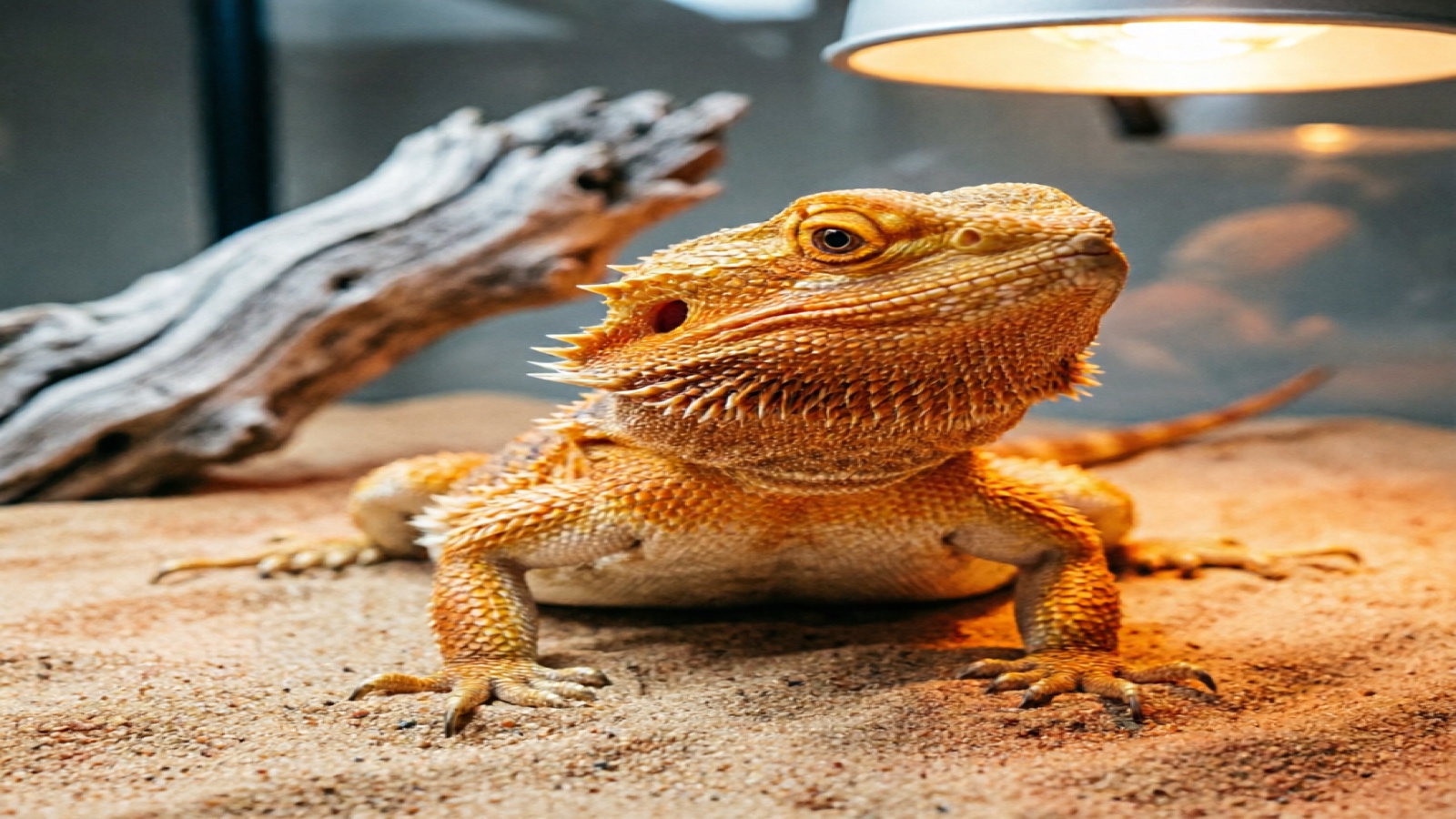
Thermoregulation is the process by which ectothermic (cold-blooded) animals like bearded dragons (Pogona vitticeps) regulate their body temperature by moving between warmer and cooler areas in their environment. According to the Association of Reptilian and Amphibian Veterinarians (ARAV), bearded dragons require a thermal gradient of at least 30°F (16°C) between the basking spot (100–110°F) and the cool side (75–80°F) to properly digest food, maintain immune function, and metabolize calcium. The ARAV emphasizes that enclosures smaller than 4×2×2 feet (120 gallons) for adults physically cannot support this gradient — the basking zone overlaps the cool zone, forcing the dragon to choose between overheating or chronic underheating. Both conditions impair digestion and suppress the immune system over time.
Adult bearded dragons need a minimum of 4×2×2 feet — that’s 120 gallons. Yet many pet stores still sell 40-gallon starter kits labeled for adults. That outdated recommendation is one of the most harmful pieces of advice in the hobby.
Bearded dragons in undersized tanks often develop glass-surfing behavior, refuse food, and show tail-biting stress responses. In most cases, moving them to a properly sized enclosure resolves these issues within days.
For a broader overview of bearded dragon biology and behavior, see our bearded dragon breed profile.
Bearded Dragon Tank Size by Age (With Chart)
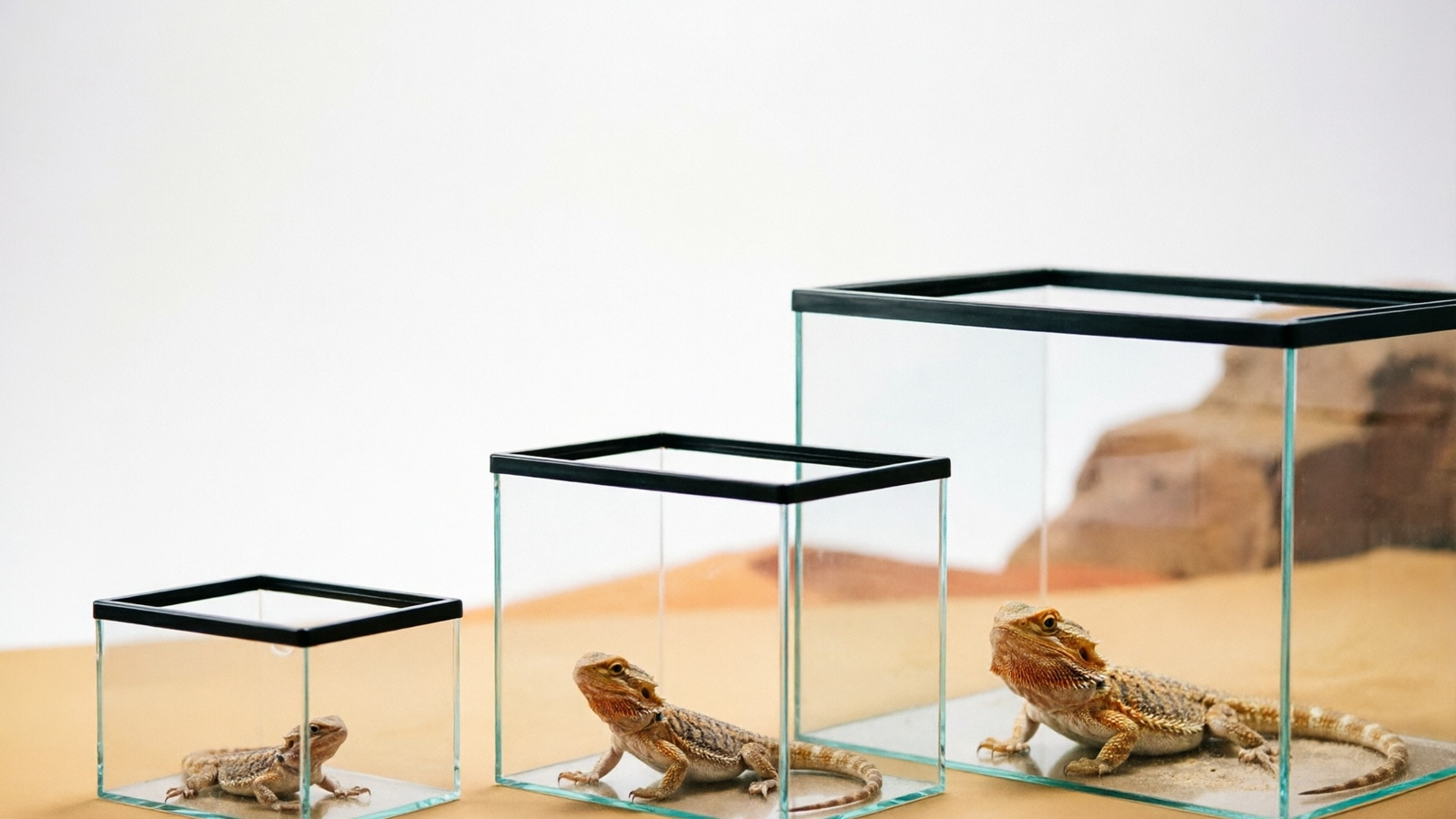
Bearded dragons grow rapidly — from 4-inch hatchlings to 18 to 24-inch adults in about 12 to 18 months. Your enclosure strategy needs to keep pace.
Here’s the complete progression:
| Age | Tank Size | Dimensions | Floor Space | Stage Duration |
|---|---|---|---|---|
| Hatchling (0-3 mo) | 20 gal | 30×12×12” | 360 sq in | 2-3 months |
| Juvenile (3-8 mo) | 40-50 gal | 36×18×18” | 648 sq in | 4-5 months |
| Sub-Adult (8-12 mo) | 67-85 gal | 48×18×18” to 47×18×24” | 864 sq in | 3-4 months |
| Adult (12+ mo) | 120+ gal | 48×24×24” | 1,152 sq in | Permanent |
Hatchling (0-3 months): 20-Gallon Tank
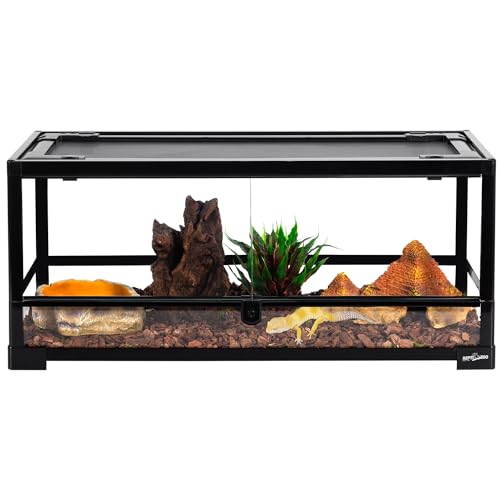
A 20-gallon terrarium (30×12×12 inches) is the right starter size for hatchlings. Babies are small — typically 4 to 6 inches — and feel more secure in a compact space where they can easily find food.
The REPTI ZOO 20 Gallon Glass Terrarium is a solid hatchling enclosure. Front-opening double doors make feeding and cleaning easy. The top screen provides ventilation and a mounting point for UVB and heat lamps.
Hatchlings grow fast — expect to upgrade within 2 to 3 months. Don’t invest too heavily in decor for this stage. Focus your budget on the next enclosure instead.
Juvenile (3-8 months): 40-50 Gallon Tank
Juvenile bearded dragons are active and growing rapidly. A 40 to 50-gallon tank gives them room to run, hunt, and thermoregulate properly. This is where inadequate space first becomes noticeable through increased glass-surfing and pacing.
The REPTI ZOO 50 Gallon Terrarium (36×18×18 inches) is the most popular juvenile enclosure. The 36-inch length provides enough space for a proper temperature gradient. Double-hinge front doors offer full access for deep cleaning.
The tempered glass panels are durable enough for daily use. This is a transition tank — your dragon will outgrow it within 4 to 5 months, but it’s an essential step between hatchling and sub-adult housing.
Sub-Adult (8-12 months): 67-85 Gallon Tank
Growth slows during the sub-adult phase, but your dragon still needs more space. This is where many owners stall on upgrading — and where behavior problems start. Sub-adults in 50-gallon tanks frequently develop chronic glass-surfing that resolves immediately after moving to a 67-gallon.
The REPTI ZOO 67 Gallon Terrarium (48×18×18 inches) is widely recommended for this life stage. The 48-inch length gives growing dragons room to stretch, exercise, and establish a proper thermal gradient.
For dragons approaching adult size, the REPTI ZOO 85 Gallon Tempered Glass Tank (47×18×24 inches) adds height for vertical enrichment. The extra height accommodates climbing branches and elevated basking platforms that sub-adults enjoy.
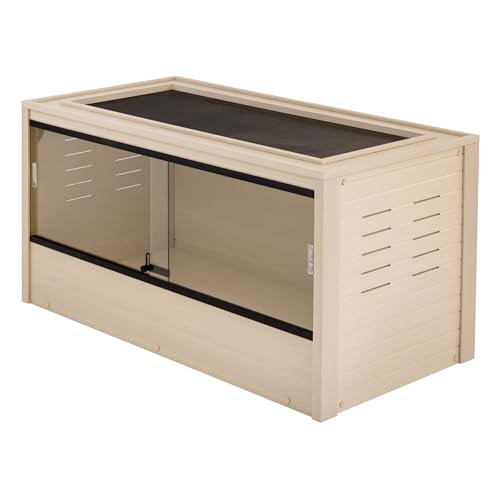
If you prefer a non-glass alternative, the New Age Pet ECOFLEX 48” Mojave offers a 4×2 foot footprint in a wood-plastic composite. It’s lighter than glass and assembles in about 20 minutes with no tools required. The ECOFLEX material resists rot and humidity damage — a real advantage in high-humidity setups.
Adult (12+ months): 120-Gallon Tank (Minimum)
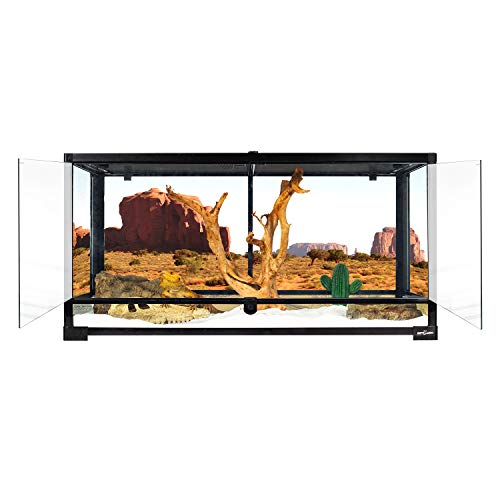
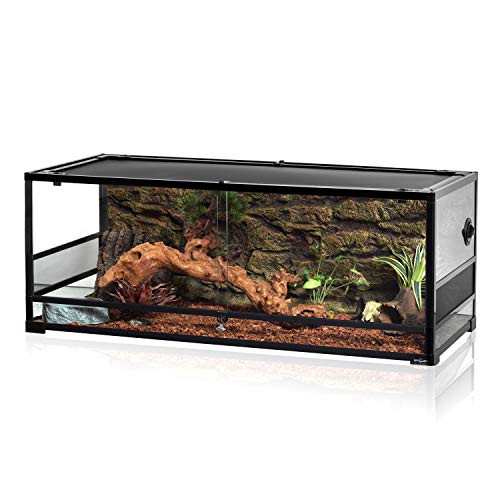
Adult bearded dragons need a minimum of 120 gallons — that’s 4×2×2 feet (48×24×24 inches). Many experienced keepers, including ReptiFiles, recommend going larger to 6×2×2 feet when space allows.
The Phailozoo 120 Gallon Tank delivers the ideal 48×24×24 dimensions. It features sliding glass front doors with a lock, top screen ventilation, and a stackable design. The 24-inch depth gives your dragon room to turn around comfortably — something narrower tanks can’t provide.
For a lighter alternative, the Reptile Habitats 4x2x2 PVC Enclosure uses PVC panels that weigh significantly less than glass. It assembles from just 12 parts and includes 6 wire ports for clean cable management. PVC also retains heat better than glass, which helps maintain the temperature gradient in cooler rooms.
For more enclosure options beyond these picks, see our best bearded dragon terrarium guide.
Minimum vs Recommended: What’s the Difference?
Pet stores often recommend 40 gallons for adult bearded dragons. This is outdated and harmful. Here’s what the community and experts actually say:
- 40 gallons: Outdated minimum. Too small for any bearded dragon over 8 months
- 75 gallons: Acceptable for sub-adults temporarily, but not for long-term adult housing
- 120 gallons (4×2×2): Modern minimum for adults, supported by Reddit’s r/BeardedDragons and beardeddragon.org consensus
- 180 gallons (6×2×2): ReptiFiles recommendation for optimal adult welfare
5 reasons a larger tank benefits your bearded dragon:
-
Proper thermal gradient. A 120-gallon tank allows a basking spot of 95 to 110°F and a cool side of 75 to 85°F — a 25+ degree difference that’s impossible in smaller enclosures.
-
Exercise and enrichment. Bearded dragons in larger enclosures are more active, explore more, and display natural behaviors like digging and climbing.
-
Reduced stress.
Glass-surfing, tail-biting, and appetite loss are common stress signs in undersized tanks.
- Better UVB coverage. A T5 HO UVB bulb spanning two-thirds of a 48-inch tank provides even exposure.
In smaller tanks, the UVB zone is either too concentrated or too close.
- Easier maintenance. Larger tanks are easier to clean because waste is more dispersed.
Smaller tanks concentrate mess in a tiny area.
Glass vs PVC vs Wood: Which Tank Type Is Best?
The material you choose affects weight, insulation, visibility, and price. Here’s how they compare:
| Factor | Glass | PVC | Wood/ECOFLEX |
|---|---|---|---|
| Weight | Heavy (50-80 lbs assembled) | Light (15-30 lbs) | Medium (25-40 lbs) |
| Visibility | Excellent (360° view) | Good (front only) | Good (front only) |
| Heat Retention | Moderate | Excellent | Good |
| Price Range | $90-380 | $250-330 | $200-270 |
| Stackable | No | Yes | Some models |
| Assembly | Moderate | Easy (12 parts) | Easy (20 min) |
| Durability | Fragile (glass breaks) | Good | Good (won’t rot) |
| Best For | First-time owners | Multi-dragon keepers | Budget-conscious |
Glass is the most common choice and offers the best visibility. You can observe your dragon from every angle, making health monitoring straightforward. The downsides are weight and fragility — a 120-gallon glass terrarium weighs 60 to 80 pounds assembled.
PVC enclosures are significantly lighter and retain heat better than glass. They’re ideal for keepers with multiple dragons since they’re stackable.
PVC is recommended for anyone living in a cooler climate where heat retention matters. The trade-off is limited visibility — you can only see through the front panel.
Wood/ECOFLEX composite enclosures offer a middle ground. They’re lighter than glass and easier to assemble.
The ECOFLEX material resists rot and humidity damage. However, corner gaps often need silicone sealant to prevent substrate from leaking out.
How to Set Up Your Bearded Dragon Tank Properly
Getting the right tank size is only half the battle. Proper setup determines whether your dragon actually benefits from the space.
Temperature Gradient
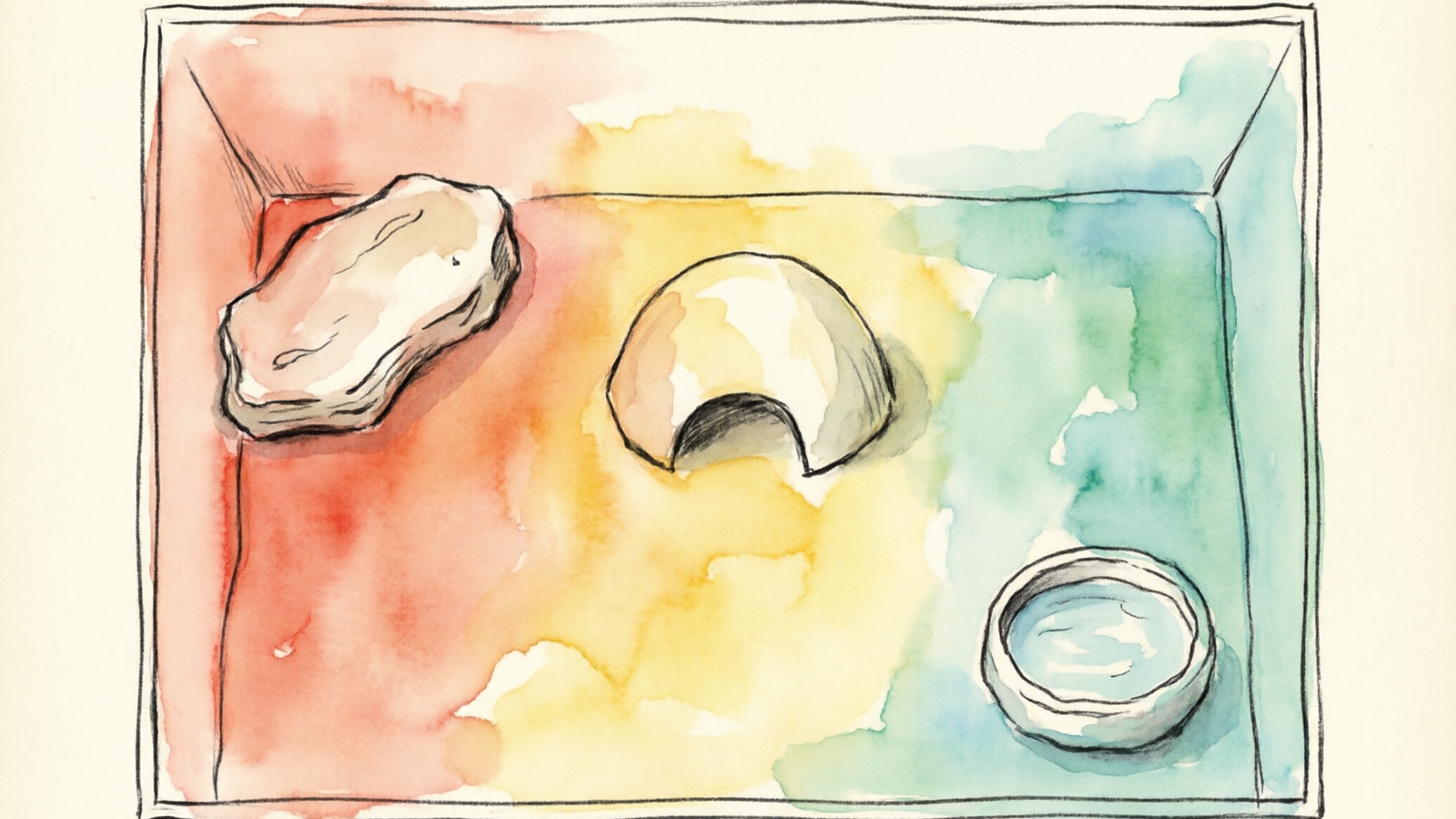
Bearded dragons need a dramatic temperature difference across their enclosure:
| Zone | Temperature | Equipment |
|---|---|---|
| Basking spot | 95-110°F | Halogen basking bulb |
| Warm side (air) | 85-95°F | Overhead heat |
| Cool side (air) | 75-85°F | No heat source |
| Nighttime | 65-75°F | Ceramic heat emitter if needed |
A 120-gallon tank is the minimum size that supports this gradient. In smaller enclosures, the warm and cool zones overlap, preventing proper thermoregulation. For heat source recommendations, see our bearded dragon heating lamp guide.
Use two digital thermometers — one on each end — at floor level. An infrared temperature gun is essential for checking the basking surface temperature. Avoid analog stick-on thermometers, which are notoriously inaccurate.
UVB Lighting
UVB is non-negotiable for bearded dragons. Without it, they develop metabolic bone disease — a painful, often fatal condition caused by calcium deficiency.
Use a T5 HO 10. 0 or 12% UVB bulb spanning two-thirds of the enclosure length.
The bulb should overlap with the basking zone so your dragon gets UVB while warming up. The remaining one-third should be UVB-free to allow self-regulation.
The most common UVB mistake is using a compact bulb in a large enclosure. Compact UVB bulbs don’t provide adequate coverage for 48-inch tanks. A T5 HO tube is the right choice for any enclosure 40 gallons or larger.
For detailed UVB bulb recommendations and placement guides, see our bearded dragon UVB light guide.
Substrate and Decor
Safe substrate options include paper towels (for hatchlings and quarantine), non-adhesive shelf liner, ceramic tile, or a bioactive mix. Avoid loose substrates like sand and calcium sand for juveniles — they cause impaction if ingested.
Every enclosure needs at minimum: one basking platform, two hides (warm and cool side), a water dish, and a food dish. Branches and rocks provide enrichment and climbing opportunities.
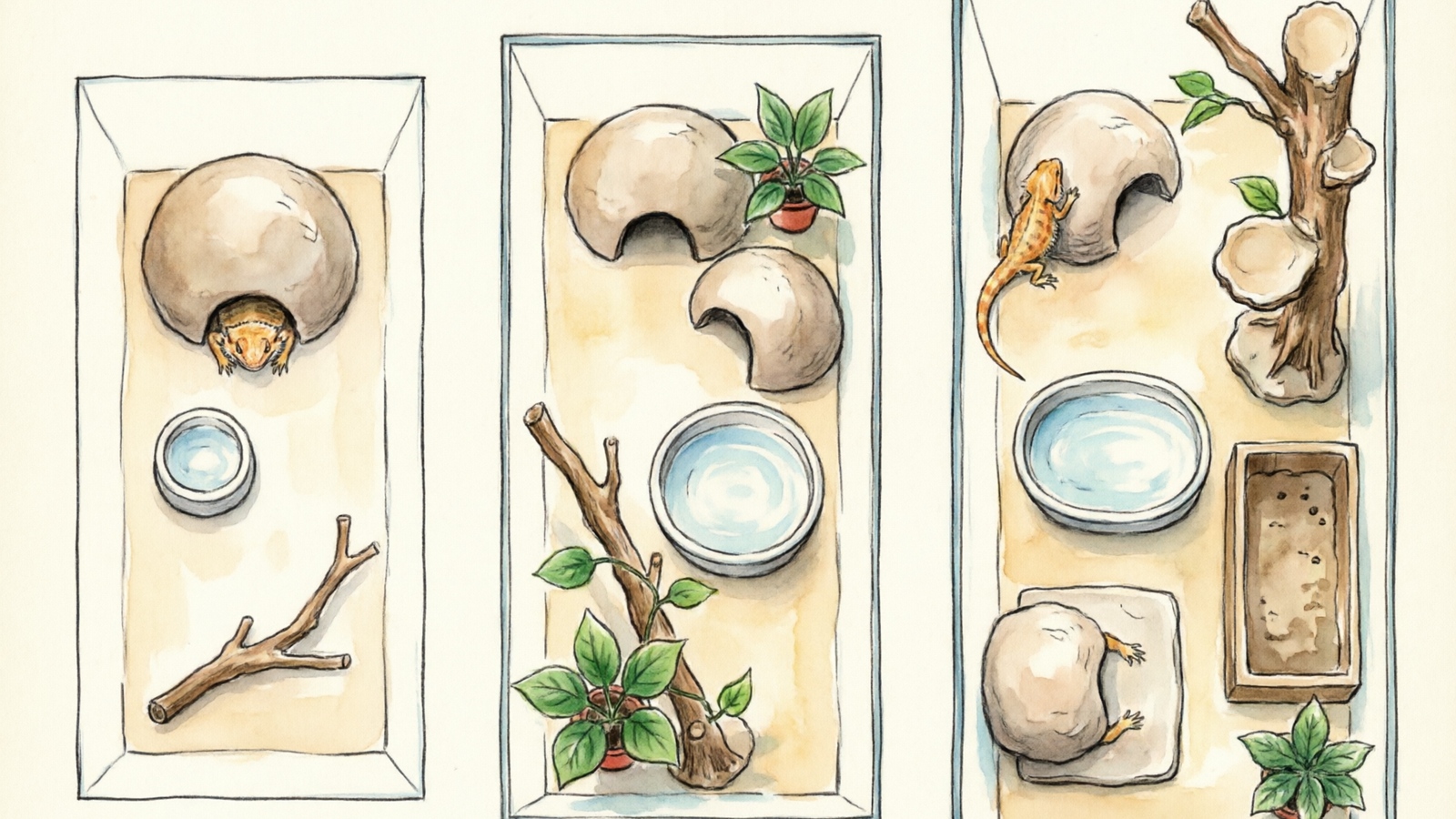
For a complete care overview beyond housing, see our bearded dragon care guide.
Common Tank Size Mistakes to Avoid
Starting too small and never upgrading. This is the most common mistake owners make. A 20-gallon hatchling tank is appropriate for 2 to 3 months, not 12.
Each life stage requires a larger enclosure to support healthy growth and activity.
Choosing tall over long. Bearded dragons are terrestrial — floor space matters more than height.
A 36×18×18 inch tank is better than a 24×18×36 inch tank. Tall tanks waste vertical space your dragon won’t use.
Trusting pet store minimums. Many stores still recommend 40 gallons for adults, which is decades out of date.
The modern community standard is 120 gallons minimum for adults.
Not planning for full-grown size. Bearded dragons reach 18 to 24 inches in length, and your adult enclosure should be at least twice the dragon’s body length.
For a 22-inch dragon, that means a minimum 48-inch long tank.
Housing dragons together. Bearded dragons are solitary and territorial. Even in a 180-gallon tank, cohabitation causes stress, competition for basking spots, and bite injuries.
Each dragon needs its own enclosure.
Final Thoughts
The tank size progression is straightforward: 20 gallons for hatchlings, 40 to 50 gallons for juveniles, 67 to 85 gallons for sub-adults, and 120+ gallons for adults.
The key is planning ahead. Don’t wait until your dragon shows stress behaviors to upgrade. Budget for the next enclosure before your dragon outgrows the current one.
The single most impactful investment you can make in your bearded dragon’s welfare is a properly sized adult enclosure.
If you take one thing from this guide: a 40-gallon tank is never a permanent home for a bearded dragon. It’s a temporary juvenile enclosure. Adults need 120 gallons minimum.
For comprehensive husbandry guidance, visit our bearded dragon care guide.
Bearded dragon tank size checklist:
- Hatchling (0–3 mo): 20-gallon (24×12×12”) — easy to find food
- Juvenile (3–8 mo): 40–50 gallon (36×18×16”) — room to grow
- Sub-adult (8–14 mo): 67–85 gallon (48×18×18”) — near adult
- Adult (14+ mo): 120+ gallon (48×24×24”) — permanent home
- Basking spot 100–110°F, cool side 75–80°F — 30°F gradient
- Tank length ≥ dragon body length — room to stretch
- Never keep an adult in 40 gallons — cannot support thermal gradient
- Never use 20-gallon long for juveniles over 3 months — stunts growth
- Never skip the 4×2×2 upgrade — the most impactful welfare investment
- Never assume “large” pet store kits are adult-sized — most are 40-gallon
- Never house multiple dragons together — territorial aggression, injury risk
FAQ
Can a bearded dragon live in a 40 gallon tank?
Only temporarily. A 40-gallon tank is suitable for juveniles (3-8 months old) as a transition enclosure.
Adult bearded dragons need a minimum of 120 gallons (4×2×2 feet). Keeping an adult in 40 gallons causes stress, stunted growth, and an inadequate thermal gradient.
Do bearded dragons prefer tall or long tanks?
Long tanks. Bearded dragons are terrestrial — they spend most of their time on the ground and need horizontal floor space for thermoregulation, exercise, and enrichment. A 48×24×18 inch tank is better than a 24×18×48 inch tank, even though both hold similar volume.
How fast do bearded dragons outgrow their tank?
Fast. Hatchlings can outgrow a 20-gallon tank in 2 to 3 months.
Juveniles typically need to upgrade from a 50-gallon within 4 to 5 months. Plan for enclosure upgrades every 3 to 4 months until your dragon reaches adult size at 12 to 18 months.
How big should a bearded dragon tank be for two dragons?
Bearded dragons should NOT be housed together, regardless of tank size. They are solitary and territorial.
Cohabitation causes stress, resource competition, bite injuries, and even death. Each dragon needs its own separate enclosure.
Can I keep my bearded dragon in a glass aquarium?
Yes, with caveats. Standard fish aquariums lack proper ventilation and top access. Front-opening reptile terrariums are better because they provide screen-top ventilation for heat and UVB lamps, plus easy access for feeding and cleaning.
What is the minimum tank size for an adult bearded dragon?
The minimum for an adult bearded dragon is 120 gallons (4×2×2 feet). Many experienced keepers and ReptiFiles recommend 6×2×2 feet for optimal welfare. Anything smaller than 4×2×2 restricts movement and prevents a proper thermal gradient.