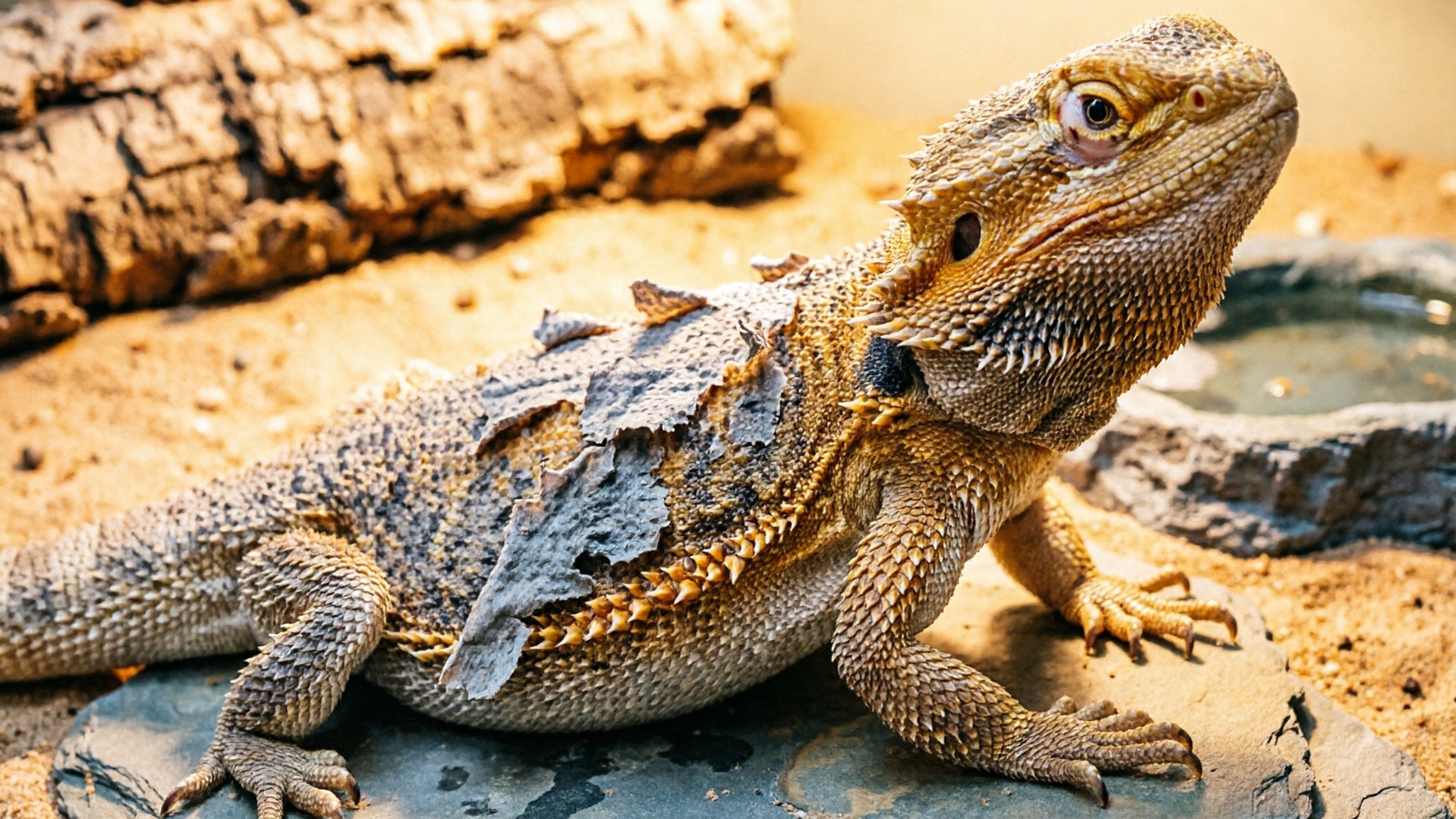
Bearded dragons shed their skin throughout their entire lives. Bearded dragon shedding is a natural process called ecdysis. Babies and juveniles shed frequently (every 1-2 weeks) because of rapid growth, while adults shed only a few times per year.
The process takes 1-3 days for babies and up to 2 weeks for adults. You will know a bearded dragon shedding cycle is coming when the skin turns dull and grayish, appetite drops, and the dragon starts rubbing against surfaces.
During bearded dragon shedding, never pull or peel the skin — it can tear healthy tissue and cause infection. Instead, during bearded dragon shedding provide warm soaks (90-100°F, 15-20 minutes), rough surfaces for rubbing, and proper hydration. Stuck shed is the most common bearded dragon shedding problem — especially on toes, tail tips, and around the eyes and can restrict circulation if left untreated.
How Often Do Bearded Dragons Shed?
Ecdysis is the biological process by which reptiles shed their outer epidermal skin layer to accommodate growth and replace damaged tissue. In bearded dragons (Pogona vitticeps), ecdysis involves separation of the old keratin layer from the newly formed skin beneath, which then detaches in patches or sheets. According to the Association of Reptilian and Amphibian Veterinarians (ARAV), the shedding process is regulated by thyroid hormone levels and is directly influenced by three husbandry factors: ambient temperature, UVB exposure, and hydration. The ARAV notes that dysecdysis (abnormal or incomplete shedding) in bearded dragons is almost always secondary to inadequate husbandry — specifically insufficient UVB output, low basking temperatures below the recommended 95–105°F gradient, or humidity below 30%. Chronic dysecdysis leads to retained shed rings around digits and tail tips, which can constrict blood flow and cause tissue necrosis requiring surgical amputation.
Bearded dragons (Pogona vitticeps) shed via a process called ecdysis. During each bearded dragon shedding cycle, the entire outer keratin layer detaches in patches or sheets. The skin is non-porous and inelastic — it cannot stretch as the animal grows.
A new layer forms underneath and the old one separates. This is different from mammals, which shed individual skin cells continuously.
| Age | Frequency | Shed Pattern | Duration |
|---|---|---|---|
| Baby (0-3 months) | Weekly or faster | Full body, rapid | 1-2 days |
| Juvenile (3-6 months) | Every 1-2 weeks | Full body | 2-4 days |
| Sub-adult (6-12 months) | Every 4-8 weeks | Full body or large patches | 4-7 days |
| Young adult (12-18 months) | Every 6-10 weeks | Patches, irregular | 1-2 weeks |
| Adult (18+ months) | A few times per year | Localized patches | 1-2 weeks |
Bearded dragon shedding frequency decreases because the growth rate slows. A baby can grow nearly an inch per week, constantly outgrowing its skin. Adults grow very slowly, so shedding shifts from growth-driven to maintenance-driven — replacing UV-damaged, abraded, and aged-out skin.
A heavy bearded dragon shedding episode after brumation is normal. The skin ages during the dormant period and sheds in larger patches once activity resumes. For detailed nutrition and UVB guidance that affects shedding quality, see our bearded dragon care guide.
Signs Your Bearded Dragon Is About to Shed
| Sign | What It Means | When It Appears |
|---|---|---|
| Dull, grayish/whitish skin | Old skin separating from new layer | 2-7 days before shed |
| Loss of appetite | Energy redirected to shedding | Pre-shed to active shed |
| Rubbing against surfaces | Initiating skin separation | 1-2 days before active shed |
| Increased irritability | Discomfort from tight skin | Pre-shed to active shed |
| Eye bulging | Loosening spectacle (eye cap) | 2-3 days before head shed |
| Lethargy / reduced activity | Energy conservation | Pre-shed to active shed |
Rubbing against surfaces is the most noticeable sign. A dragon that suddenly starts pressing its body against branches and enclosure walls is almost always about to shed. Some owners confuse this with digging behavior, but rubbing is horizontal and full-body while digging is downward and focused on substrate.
Eye bulging is the sign that worries new owners the most, but it is completely normal during bearded dragon shedding — it is deliberate, harmless, and the eyes will not pop out. Bearded dragons intentionally increase blood pressure behind their eyes to separate the spectacle (the thin transparent skin layer over the eye) from the new skin forming beneath.
This is deliberate, harmless, and the eyes will not pop out. If eyes remain swollen or weeping after the shed completes, that suggests infection — see a reptile vet.
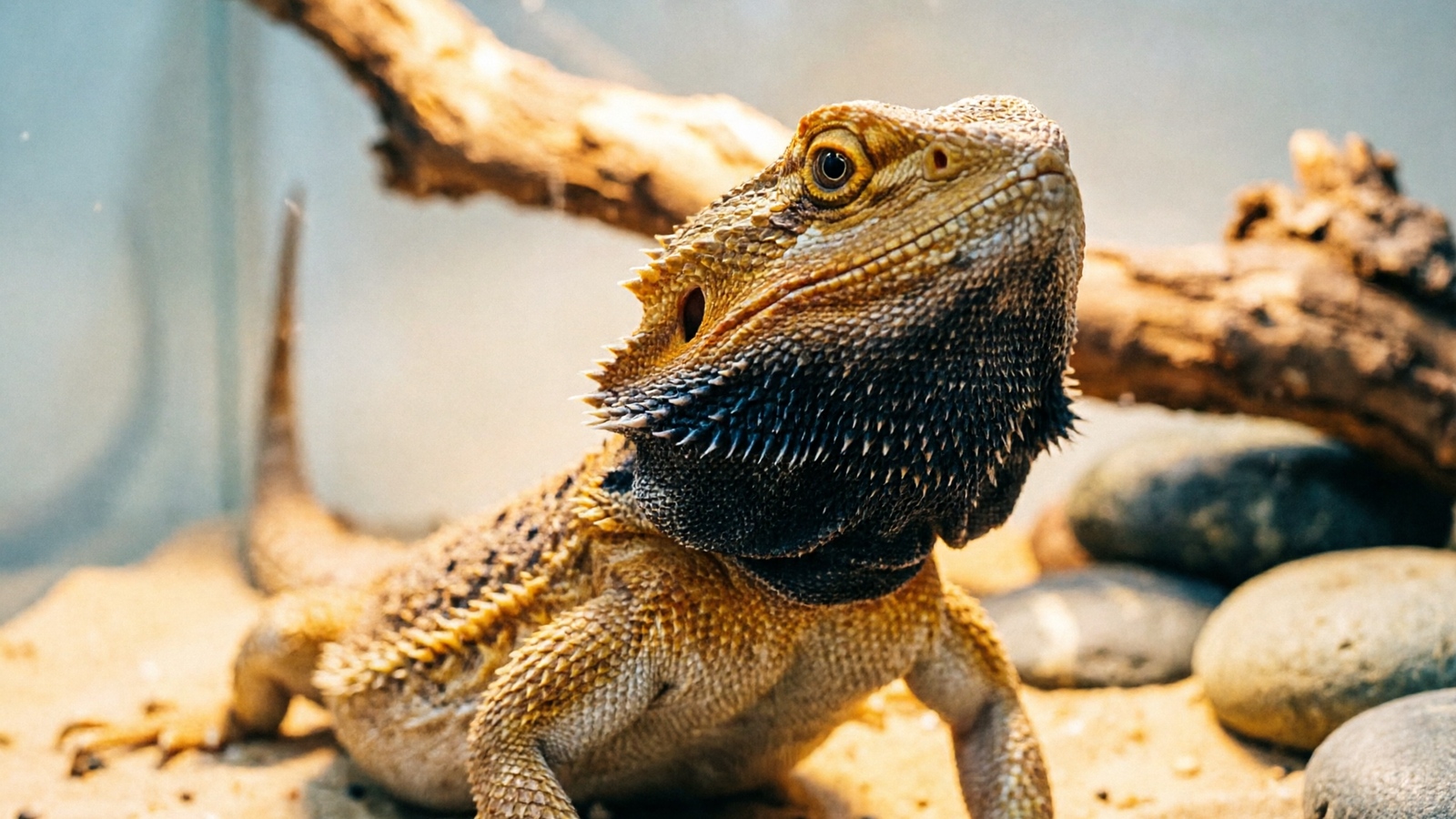
Appetite loss during bearded dragon shedding is normal and temporary and temporary. It returns within 1-2 days of shed completion. A black beard during bearded dragon shedding is stress coloration, not aggression, not aggression — if it persists 2+ days after the shed finishes, investigate other causes.
For more on behavior and stress signals, mouth gaping during shedding can indicate either thermoregulation or stress.
How Long Does Shedding Take?
Baby bearded dragon shedding completes a full-body shed in 1-3 days — often in one dramatic peel. Juveniles take 2-7 days.
Adults shedding in patches may take 1-2 weeks. Different body sections often finish at different times — it is normal for a beard to still be shedding two weeks after the back has finished.
Several factors affect bearded dragon shedding duration: hydration level, ambient humidity, nutrition (especially calcium and vitamin D3), basking temperature, and availability of rough surfaces. A well-hydrated dragon in a properly equipped enclosure completes bearded dragon shedding faster and more completely and more completely. For the species’ natural history and habitat context, see our bearded dragon species overview.
How to Help Your Bearded Dragon Shed Safely
When your bearded dragon shedding begins, these six steps support a smooth, complete shed.
Step 1: Provide rough surfaces. Cork bark, slate tiles, textured branches, and rocks are not decoration — they are essential shedding tools. Dragons need something to rub against to initiate and complete bearded dragon shedding. A smooth-walled enclosure with no texture is a major stuck shed risk factor.
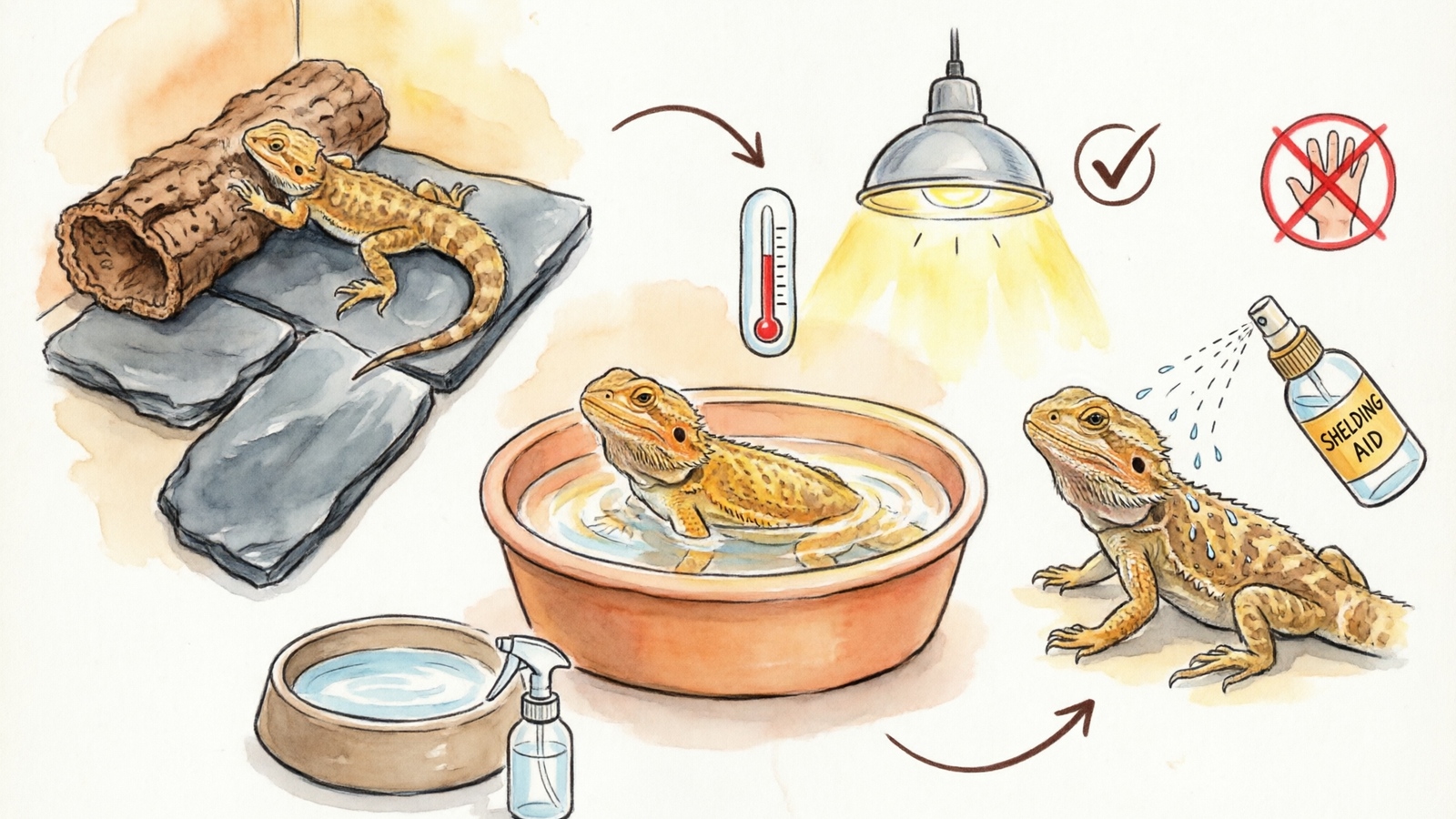
Step 2: Maintain proper hydration. Fresh water daily, regular baths 2-3 times per week. A dehydrated dragon produces dry, brittle skin that makes bearded dragon shedding difficult. Signs of dehydration: sunken eyes, concentrated dark urates, skin that tents slowly when pinched.
Step 3: Offer warm soaks during active shedding. 90-100°F water, 15-20 minutes, shallow enough that the dragon’s head stays well above the waterline. This softens and loosens bearded dragon shedding skin. After soaking, let the dragon walk across a slightly damp textured towel for gentle friction.
Step 4: Ensure proper UVB and calcium. UVB enables vitamin D3 synthesis, which directly affects bearded dragon shedding quality, which drives calcium metabolism, which directly affects skin cell quality. A failing UVB bulb is a hidden cause of poor bearded dragon shedding — UV output degrades long before visible light dims. Check out our guide to the best bearded dragon UVB lights for replacement recommendations. Proper basking temperatures of 95-105°F also support the metabolism needed for healthy skin turnover.
Step 5: Consider a shedding aid spray for stubborn cases. Zoo Med Repti Shed Aid Spray ($14.96) is formulated with aloe and emollients to help loosen stuck shed. Spray on affected areas after a warm soak.
Some experienced keepers argue shedding aids are unnecessary — warm water is sufficient for most sheds.
For routine shedding, warm water is usually sufficient. But for chronic stuck shed cases, rescue situations, or when soaks alone are not working, shedding aids are a reasonable addition. They are not harmful when used as directed.
Step 6: Never pull or peel the skin. Skin still attached during bearded dragon shedding means the new skin beneath is not ready. Pulling tears living tissue, causes pain, and opens infection routes. The only exception: completely detached skin hanging by a thread. You can gently lift it off, but if there is any resistance, stop immediately.
Stuck Shed — Causes, Danger Zones & Treatment
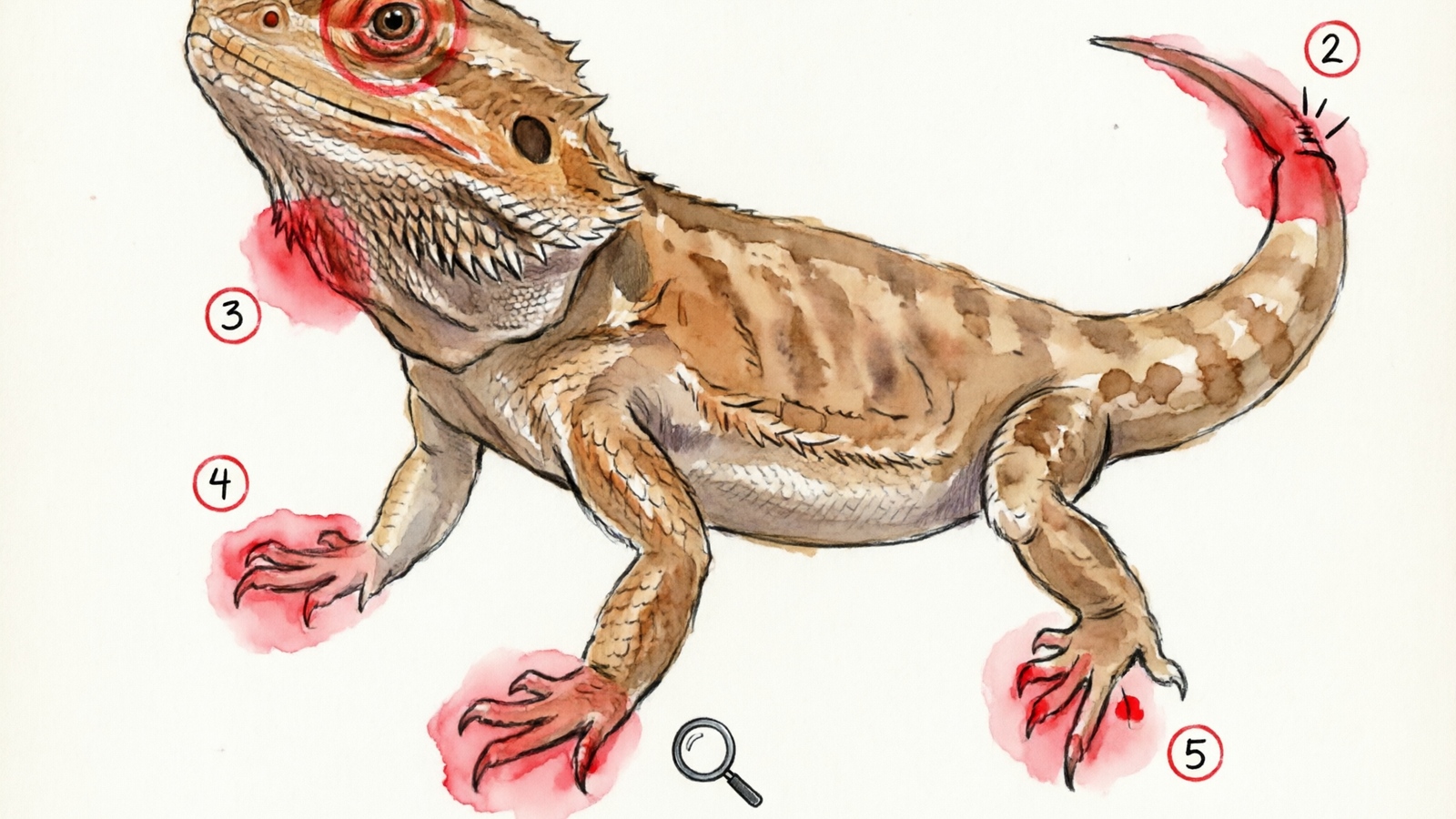
Stuck shed (retained ecdysis) is the most common bearded dragon shedding complication. During bearded dragon shedding, old skin fails to detach, dries down, and constricts the underlying tissue. It can cause permanent damage if left untreated.
| Zone | Risk | Consequence if Untreated |
|---|---|---|
| Toes / digits | Circulation restriction | Toe death, auto-amputation |
| Tail tip | Constriction at narrowest point | Tail rot, necrosis |
| Around eyes | Retained spectacle | Cloudy vision, eye infection |
| Under beard / chin | Often missed | Mild irritation, chronic issue |
| Between toes | Hard to spot | Webbing constriction |
Six root causes of chronic stuck shed:
-
Chronic dehydration (most common cause)
-
Calcium/vitamin D3 deficiency — poor skin cell quality
-
Inadequate UVB — failing bulb past useful life
-
No rough surfaces in the enclosure
-
Low humidity during shedding period
-
Metabolic bone disease — poor sheds can be the first visible symptom before skeletal changes appear
For dragons with recurring bearded dragon shedding issues, maintaining proper humidity during shedding periods helps. For bearded dragon shedding, bearded dragons normally need only 30-40% ambient humidity. During active shedding, temporarily increasing humidity to 40-50% can soften the separation layer between old and new skin.
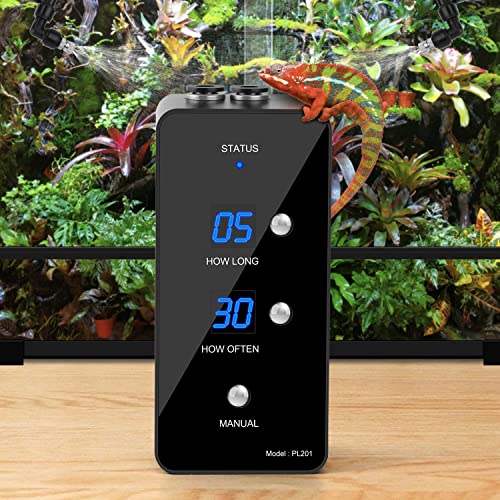
A reptile humidifier ($30.68) can help maintain this range.
Be aware of reported timer reliability issues and one reported flooding incident.
Stuck shed treatment protocol:
Step 1: Warm soak. 95°F water, 15-20 minutes. This rehydrates the stuck shed, causing it to lift at the edges.
Step 2: Gently encourage with a damp finger. Soft circular pressure over the stuck area. This is not peeling — almost no resistance should be felt. If there IS resistance, soak longer.
Step 3: Soft toothbrush. Gentle circular motions on fully soaked areas. Never use around the eyes or tail tip.
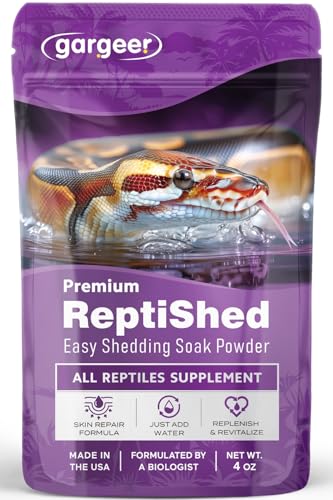
Step 4: Shedding aid soak. Gargeer ReptiShed Shedding Aid Soak Powder ($5.98) contains aloe, chamomile, and hyaluronic acid — add to bath water for a soothing soak. Budget-friendly at under $6. Note the small review sample and quality control concerns — some buyers received moisture-exposed, clumped powder.
Step 5: Repeat daily. Stubborn bearded dragon shedding may require 2-3 consecutive days of soaking.
Step 6: See a vet if no improvement within 48 hours. Especially if toes are swollen, the tail tip is darkening, or there is redness alongside the stuck shed.
When to see a vet immediately:
- Darkening or black tail tip (necrosis)
- Toe the dragon will not bear weight on
- Foul smell from the stuck shed area
- Redness and swelling alongside retained skin
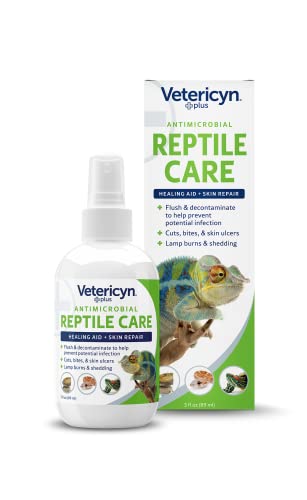
For skin damage from stuck shed, Vetericyn Plus Reptile Wound Care Spray ($18.19) is the most widely used reptile wound care product. It is veterinarian-recommended for treating raw skin, scale irritation, and minor wounds from stuck shed.
Safety concerns to be aware of: one review reports a burning reaction on a leopard gecko — test on a small area first. The product description says “safe around eyes” but the manufacturer’s website says “not recommended for eyes” — this is contradictory. Avoid direct eye application.
Distinguishing normal appetite loss during shedding from illness-related refusal to eat is important. See our guide to bearded dragon not eating for a differential diagnosis.
Why Is My Bearded Dragon Not Shedding?
A bearded dragon that never goes through bearded dragon shedding is a concern — especially for young dragons. In baby bearded dragon shedding, weekly sheds are the norm.
An adult not going through bearded dragon shedding for 4-6 months can be normal (slow metabolism, infrequent skin turnover). But a baby or juvenile that has not shed in 3+ weeks needs attention.
Check these three things first:
- UVB bulb age. Replace every 6-12 months — UV output degrades long before visible light dims.
A “working” bulb may produce zero usable UVB.
- Calcium and vitamin D3 supplementation. Without D3, the body cannot absorb calcium.
Without calcium, skin cell formation is impaired.
- Basking temperatures. 95-105°F is required for proper metabolism.
Below 90°F, everything slows down including skin turnover.
If all three check out and a young dragon still is not shedding, the issue could be illness — metabolic bone disease, parasitic infection, or other systemic problems. Bearded dragon shedding problems that persist despite correct husbandry warrant a vet visit. A proper terrarium setup with correct temperature gradients and UVB penetration prevents most shedding problems.
Chronic failure to shed can be an early sign of MBD, often appearing before skeletal symptoms like swollen jaw or rubbery bones. If husbandry is correct and the dragon has not shed in 3+ weeks, consult a reptile veterinarian.
Bearded dragon shedding checklist:
- Basking spot 95–105°F — drives bearded dragon shedding metabolism
- UVB bulb replaced every 6–12 months — degraded output causes dysecdysis (abnormal bearded dragon shedding)
- Humidity 30–40% during bearded dragon shedding — slightly higher helps skin separation
- Regular baths in lukewarm water — softens stuck bearded dragon shedding
- Provide rough surfaces (rock, cork bark) — natural rubbing points
- Diet includes calcium + D3 — supports healthy skin turnover
- Monitor 5 danger zones — tail tip, toes, spikes, eyes, vent
- Never force-pull stuck shed — can tear live skin underneath
- Never peel shed from eyes or spectacles — risk corneal damage
- Never ignore retained shed rings on toes/tail — constriction → necrosis
- Never use petroleum jelly or oils — can clog pores and cause infection
- Never skip vet visit if shed incomplete after 2+ weeks with correct husbandry
Frequently Asked Questions
How often do bearded dragons shed?
Baby bearded dragons (0-3 months) shed every week or faster because of rapid growth. This frequent baby bearded dragon shedding pace slows as they mature.
Juveniles (3-12 months) shed every 1-8 weeks depending on age. Adults (18+ months) shed only a few times per year in localized patches.
How long does bearded dragon shedding take?
Babies complete a full-body shed in 1-3 days. Juveniles take 2-7 days.
Adults shedding in patches may take 1-2 weeks, and different body sections often finish at different times. If a shed seems stalled, check for stuck shed on toes, tail tip, and around the eyes.
Should I help my bearded dragon shed?
Yes, but indirectly. Provide rough surfaces (cork bark, slate, textured branches) for rubbing, maintain hydration with regular warm soaks (90-100°F, 15-20 minutes), and ensure proper UVB and calcium levels. Never pull or peel the skin — if it is still attached, the new skin underneath is not ready, and pulling tears living tissue.
Why is my bearded dragon not shedding?
If a young bearded dragon (under 6 months) has not shed in 3+ weeks, check three things immediately: UVB bulb age (replace every 6-12 months — UV output degrades before visible light does), calcium/vitamin D3 supplementation schedule, and basking temperatures (95-105°F). Chronic poor shedding or failure to shed can be an early sign of metabolic bone disease, often appearing before skeletal symptoms. If husbandry checks out, see a reptile vet.