
Quick Answer — Yes, It’s Normal (Usually)
Why is my hedgehog hissing? Hissing is your hedgehog’s most common defensive sound — it means they feel threatened, scared, or stressed. For a new hedgehog in the first 1-2 weeks, hissing is completely normal and expected as they adjust to unfamiliar surroundings, smells, and people.
However, if your hedgehog suddenly starts hissing after months of being calm, or if hissing is accompanied by nasal discharge, lethargy, loss of appetite, or wheezing, this could indicate a respiratory infection (URI) or pain — see an exotic animal vet immediately.
Why is my hedgehog hissing at me specifically? Hedgehogs identify people primarily by smell, not sight. If you are a new owner, your hedgehog hisses because they do not yet recognize your scent as safe. This is not anger — it is fear. With consistent taming and patience, most hedgehogs significantly reduce hissing within 2-4 weeks.
Key numbers to remember:
- New hedgehog adjustment period: 1-2 weeks of normal hissing
- Safe temperature range: 75-80°F (24-27°C)
- Warning: Below 72°F (22°C) can trigger a hibernation attempt — fatal for African pygmy hedgehogs
- Expected taming improvement: 2-4 weeks for significant reduction
Hissing is not anger. It is a fear-based defensive response, like a cat arching its back. Your hedgehog is saying “I feel unsafe,” not “I dislike you.” Understanding this changes how you respond — with patience rather than frustration.
For a complete guide to hedgehog body language and sounds, see our hedgehog behavior guide. When owners ask why is my hedgehog hissing, the answer usually falls into one of the categories below.
Hedgehog Sounds Guide — Hissing vs Popping vs Huffing vs More
Mazuri Hedgehog Food is a quality option worth considering for your setup.
Hedgehog hissing vs popping vs huffing
| Sound | Description | Meaning | Normal? | Action |
|---|---|---|---|---|
| Hissing | Continuous “ssss”, like a snake | Fear / defense | New hedgehog normal | Space + taming |
| Popping | Sharp “pop pop”, like popcorn | Extreme fear escalation | New hedgehog normal | Back away |
| Huffing | Steady “huff huff”, steam engine | Mild annoyance | Normal | Reduce stimulation |
| Screaming | High-pitched shriek | Severe pain / terror | Abnormal | Check + vet |
| Clicking | Soft “tick tick”, tongue noise | Relaxed / curious | Good sign | Continue |
| Chirping | High “cheep cheep” | Mating (males) | Normal adults | No action |
| Wheezing | Whistling during breathing | Airway blockage | Abnormal | Vet immediately |
Key distinctions
Hissing → Popping = defense escalation. Popping means “back off or I will fight.” Stop advancing and give space. Understanding the difference is key when evaluating why is my hedgehog hissing versus making more serious sounds.
Hissing → Screaming = possible pain. Screaming is sudden, high-pitched, and usually paired with frantic movement. If your hedgehog screams when touched in a specific area, check for injuries.
Hissing + Wheezing = URI. This combination requires veterinary treatment — URI can become life-threatening within 48 hours.
Upper Respiratory Infection (URI) is a bacterial infection of the respiratory tract in hedgehogs, most commonly caused by Bordetella or Pasteurella species. According to the Association of Exotic Mammal Veterinarians (AEMV), URIs are among the most frequent and dangerous health conditions in African pygmy hedgehogs (Atelerix albiventris) because their small size and obligate nasal breathing leave little reserve capacity. Symptoms escalate rapidly: sneezing (day 1-2) → nasal discharge (day 2-3) → wheezing and appetite loss (day 3-5) → severe dyspnea. Without antibiotic treatment, URIs can become fatal within 48-72 hours of wheezing onset. Hissing accompanied by clicking, wheezing, or open-mouth breathing warrants immediate veterinary attention.
The 7 Reasons Your Hedgehog Is Hissing
Many owners find that Living World Pet Carrier works well for their pet’s needs.
| # | Reason | Type | What to Do |
|---|---|---|---|
| 1 | New environment | Normal | Give space + time (1-2 weeks) |
| 2 | Startled by sudden movement | Normal | Respect nocturnal schedule |
| 3 | Unfamiliar scent | Normal | Scent exchange (worn T-shirt) |
| 4 | Pain or discomfort | Warning: Concern | Check body + vet |
| 5 | Temperature below 72°F | Warning: Concern | Warm to 78-80°F immediately |
| 6 | Mating / territorial | Normal | Separate cages if needed |
| 7 | Respiratory infection | Warning: Vet | Vet within 24 hours |
The temperature danger — hibernation attempts
African pygmy hedgehogs (Atelerix albiventris) originate from warm regions of Africa and have no physiological ability to hibernate. Below 72°F (22°C), their body begins slowing metabolism in a dangerous attempt to hibernate. They lack the fat reserves and metabolic preparation for this. The result: tremors, lethargy, hissing, cold body, and organ failure. A hibernation attempt can be fatal within 24-48 hours.
Symptoms: persistent hissing, trembling, tight unresponsive ball, cold belly, slow response. When asking why is my hedgehog hissing with these additional symptoms, hibernation attempt is the most urgent answer. Emergency response: warm gradually to 78-80°F using a heating pad under half the cage or a ceramic heat emitter. Never use direct heat — rapid warming causes shock.
Respiratory infections — the most dangerous reason
URI is one of the most common and fastest-progressing health issues in pet hedgehogs. Symptoms follow a predictable escalation: sneezing (day 1-2) → nasal discharge (day 2-3) → wheezing + appetite loss (day 3-5) → severe breathing difficulty.
Look for: clear to green nasal discharge, crusted or half-closed eyes, wet-sounding breathing, reduced food intake. Vets typically prescribe antibiotics such as baytril (enrofloxacin). Do not wait — hedgehogs deteriorate far faster than cats or dogs. For a comprehensive list of hedgehog health issues, see our hedgehog health problems guide. If why is my hedgehog hissing leads you to suspect illness, early veterinary intervention is critical.
New Hedgehog Hissing — Adaptation Timeline
For this purpose, Exotic Nutrition Mango & Papaya is a popular choice among pet owners.
Hedgehog hissing at new owner
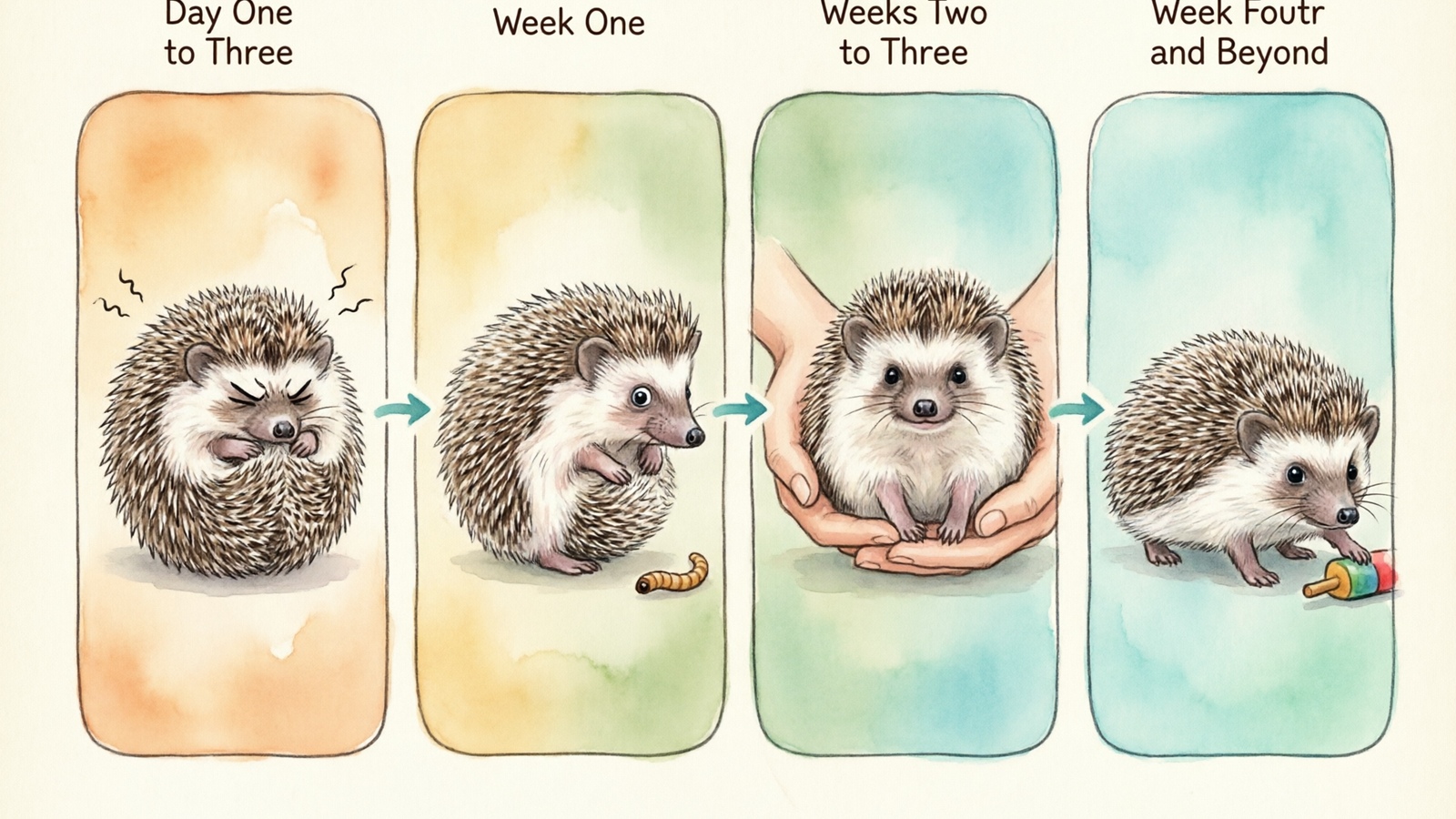
Every hedgehog adapts at a different pace. Some calm down within days; rescue hedgehogs with negative past experiences may take months. Here is what to expect:
| Time | Expected Behavior | Hissing | Action |
|---|---|---|---|
| Day 1-3 | Constant hissing + popping, balled up, may not eat | Continuous | Observe only. Place worn T-shirt in cage. |
| Week 1 | Hissing only when touched, eating, nighttime exploring | High | Hand in cage 5 min/day. Hand-feed mealworms. |
| Week 2-3 | Occasional hissing, accepts handling, more exploring | Medium-low | Handle 10-15 min/day in quiet room. |
| Week 4+ | Rare hissing, explores actively, takes food from hand | Rare | Normal interaction. |
Age matters. Young hedgehogs (under 12 weeks) typically adapt faster. Adult rescue hedgehogs may need significantly more time, especially if they had negative handling experiences.
Quilling can increase hissing. Between 2-6 months, hedgehogs shed old quills and grow new ones, making skin sensitive and sometimes painful. This causes temporary irritability and increased hissing. For details, see our hedgehog quilling guide.
How to Stop Your Hedgehog Hissing — 7-Step Taming Guide
Why does my hedgehog hiss when I pick him up?
Picking up a hedgehog from above triggers their primary predator defense — owls, hawks, and foxes all attack from above. Your hand descending is processed as a threat. This is one of the most common reasons owners search for why is my hedgehog hissing. Approach from the side and scoop with both hands under the belly instead.
7-step taming timeline
Step 1: Scent exchange (from Day 1). Place a worn T-shirt that smells like you in the cage. Hedgehogs rely on scent recognition — familiar smell equals safety. Replace every 2-3 days.
Step 2: Hand in the cage (Day 3-5 onward). During quiet evening hours, place your hand inside for 5-10 minutes without reaching. Let your hedgehog approach and sniff at their pace.
Step 3: Hand-feed treats (Week 1 onward). Offer mealworms by tongs or fingers. Hedgehogs have poor vision but excellent smell — food motivation overcomes fear faster than anything.
Step 4: Scoop from the side (Week 1-2 onward). When hand-feeding is accepted, gently scoop from the side with both hands. No gloves — gloves block scent transfer and prevent your hedgehog from learning your smell.
Step 5: Short handling sessions (Week 2 onward). Handle 10-15 minutes daily in a quiet room. Sit on a sofa with a small fleece blanket on your lap for stability.
Step 6: Gradually increase (Week 3-4). Extend handling time. Try brief daytime wake-ups combined with longer evening sessions.
Step 7: Daily consistency. Tame every single day — hedgehog trust is built through repetition, and breaks cause regression. Even 5 minutes daily beats 30 minutes once a week.
Common mistakes that slow taming:
- Reaching from above (predator trigger)
- Wearing gloves (blocks scent recognition permanently)
- Forcing a hedgehog out of a ball (increases fear)
- Taming only at night (short daytime sessions plus evening sessions work better)
For guidance on setting up a stress-free environment, see our hedgehog cage setup guide.
When to See the Vet — Red Flags You Shouldn’t Ignore
| Symptom | Severity | Likely Cause | Action |
|---|---|---|---|
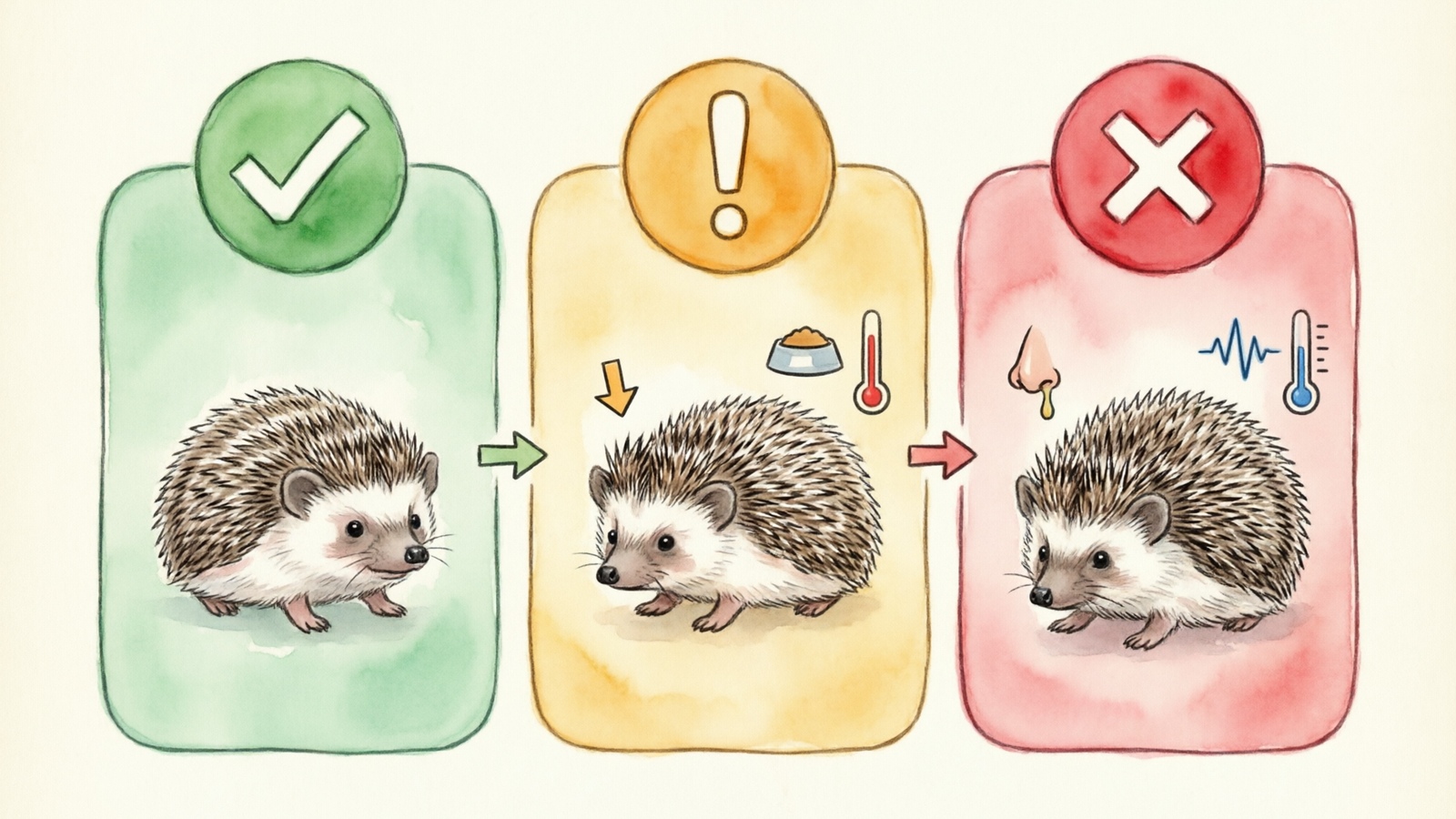
| Hissing + wheezing breathing | Warning: Urgent | URI | Vet within 24 hours |
| Hissing + nasal discharge (clear/yellow/green) | Warning: Urgent | URI | Vet within 24 hours |
| Hissing + crusted eyes / half-closed eyes | Warning: Urgent | URI / eye infection | Vet within 24 hours |
| Hissing + complete appetite loss (>24h) | 🟡 High | Pain / dental / URI | Vet within 48 hours |
| Hissing + trembling + balled up (daytime) | Warning: Urgent | Hibernation attempt (<72°F) | Warm to 78-80°F immediately |
| Hissing + rapid weight loss | 🟡 High | Multiple possible causes | Vet ASAP |
| Hissing + localized pain when touched | 🟡 High | Injury / abscess | Check + vet |
| Hissing only (no other symptoms) | Normal | Adjustment / personality | Continue taming + observe |
URI in hedgehogs — what to watch for
URI is one of the most common and fastest-progressing health issues in pet hedgehogs. The progression is predictable: sneezing → nasal discharge → wheezing → appetite loss → labored breathing. What starts as mild sneezing Monday can become a respiratory crisis by Wednesday.
Treatment typically involves antibiotics from an exotic animal vet. Owners who wait even one extra day before seeking treatment often see noticeably worse outcomes — hedgehogs mask illness well, and obvious symptoms mean advanced infection. Do not delay.
Hibernation attempts — the silent killer
African pygmy hedgehogs cannot hibernate. Below 72°F, their body attempts a state it is not equipped for — metabolism slows, temperature drops, organs fail, and death can occur within 24-48 hours. Any temperature reading below 72°F should be treated as an emergency requiring immediate action.
Signs: hissing, trembling, cold belly and legs, unresponsiveness, tight persistent ball. Emergency response: warm gradually to 78-80°F using a heating pad under half the cage or a ceramic heat emitter. Never use direct heat sources like hair dryers — rapid warming causes shock.
For help distinguishing between normal and concerning shaking, see our article on why hedgehogs shake.
Product Recommendations
Here are some products mentioned in this guide:
Frequently Asked Questions
Is it normal for hedgehogs to hiss?
Yes, hissing is completely normal for hedgehogs — it is their primary defensive sound. New hedgehogs will hiss almost constantly during their first 1-2 weeks in a new home as they adjust to unfamiliar surroundings, smells, and people. Even well-adjusted hedgehogs may hiss occasionally when startled, picked up suddenly, or exposed to unfamiliar sounds. However, if your hedgehog suddenly starts hissing after months of being calm, or if hissing is accompanied by nasal discharge, wheezing, lethargy, or loss of appetite, this is not normal and requires veterinary attention.
Why is my hedgehog hissing at me specifically?
Your hedgehog is hissing at you because they don’t yet recognize your scent as safe. Hedgehogs identify people primarily by smell, not sight. If you are a new owner, give your hedgehog 1-2 weeks to adjust. Speed up trust by leaving a worn T-shirt in their cage (scent exchange), offering mealworms from your fingers, and sitting quietly near their cage without reaching in. Avoid picking them up from above, which mimics a predator attack.
Why is my hedgehog hissing all of a sudden?
Sudden hissing in a previously calm hedgehog usually has three causes: environmental change (new pet, moved cage, loud noise), temperature drop below 72°F (which triggers a dangerous hibernation attempt in African pygmy hedgehogs), or illness/pain (especially respiratory infections). Check the cage temperature first — if it’s below 72°F, warm it to 78-80°F immediately. If temperature is normal, look for other symptoms like nasal discharge, wheezing, or appetite loss, which indicate a vet visit is needed.
Why does my hedgehog hiss when I pick him up?
Picking up a hedgehog from above triggers their predator defense instinct — in the wild, attacks come from above (owls, hawks, foxes). To reduce this reaction, approach from the side, slide both hands under their belly, and scoop them up rather than grabbing from above. Some hedgehogs also hiss when picked up during the day because they are nocturnal and being woken from sleep. Try handling during evening hours when they are naturally awake and active.
How long does it take for a hedgehog to stop hissing?
Most hedgehogs significantly reduce hissing within 2-4 weeks of consistent, gentle taming. However, every hedgehog is different — some calm down in 5-7 days, while rescue hedgehogs with negative past experiences may take 2-3 months. The key factors are daily consistency (taming every day, not every other day), scent familiarity (worn T-shirt in cage), food-based trust building (hand-feeding mealworms), and patience. Even a fully tamed hedgehog may occasionally hiss when startled, which is normal defensive behavior.