Quick Answer — Chinchillas Are Vocal Pets
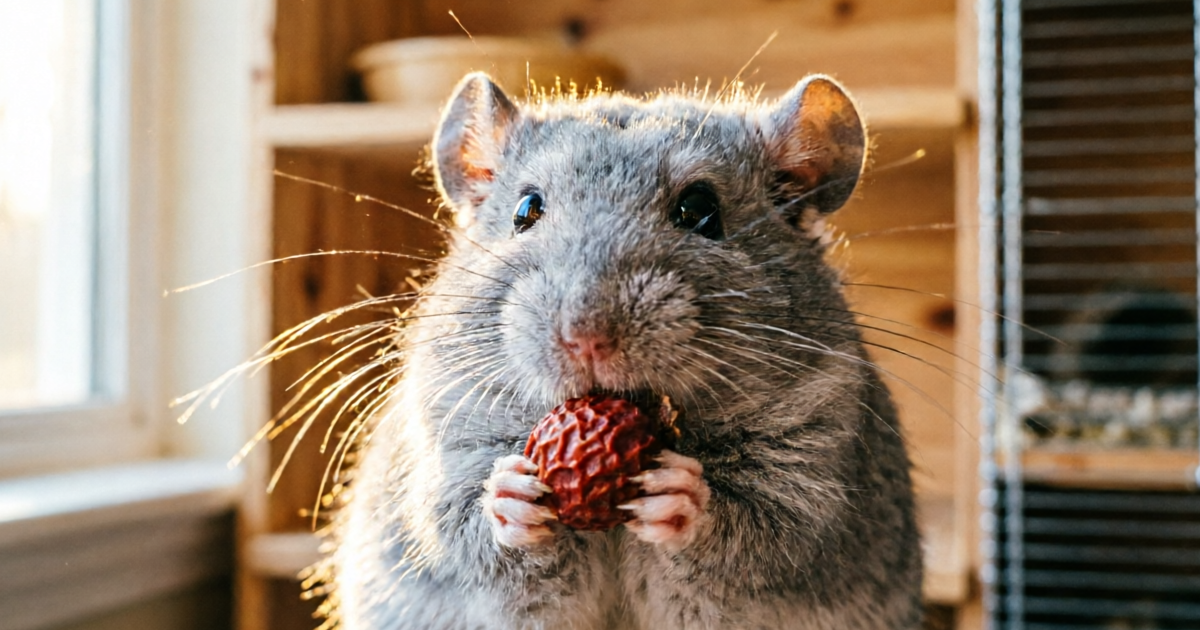
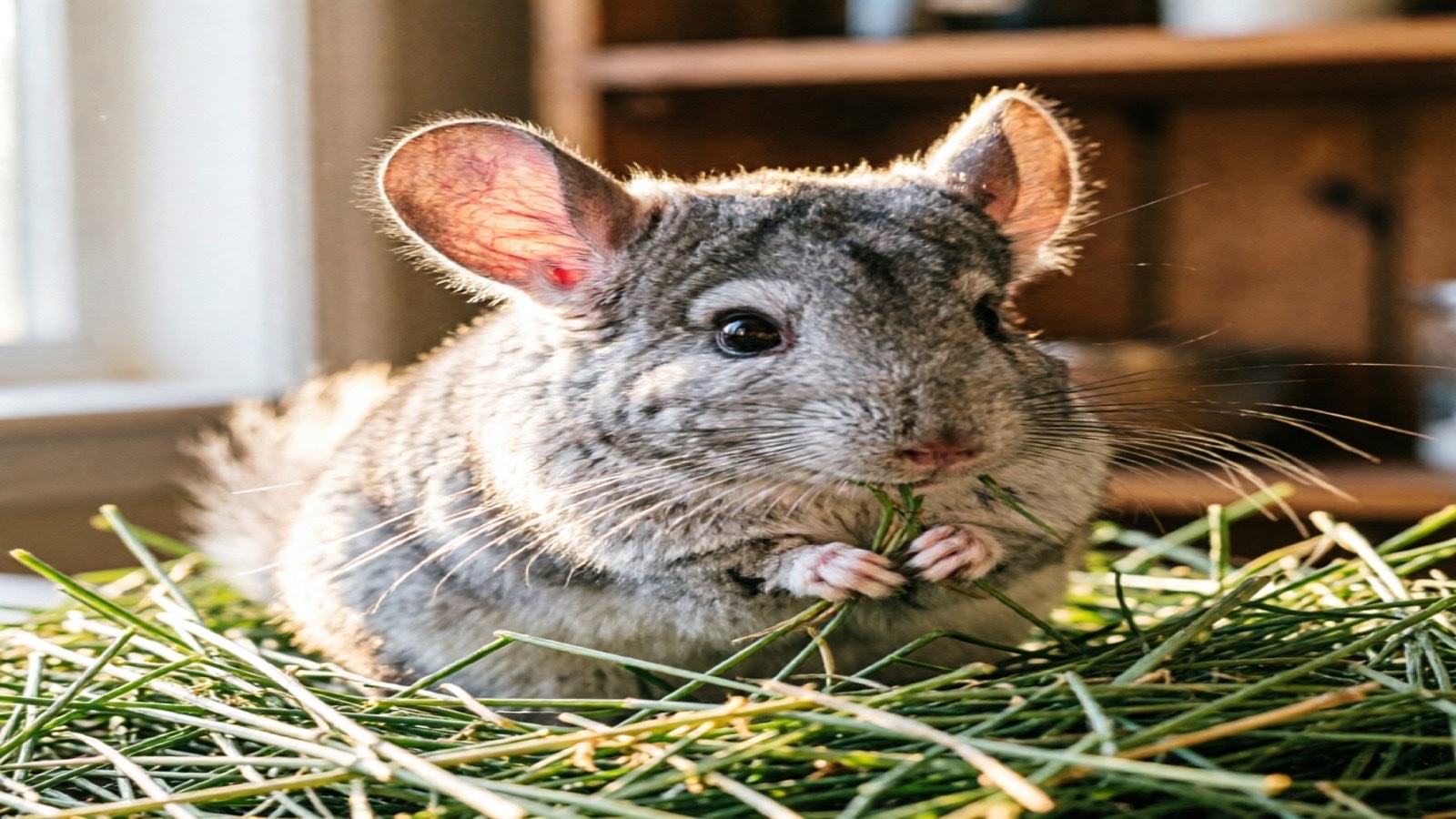
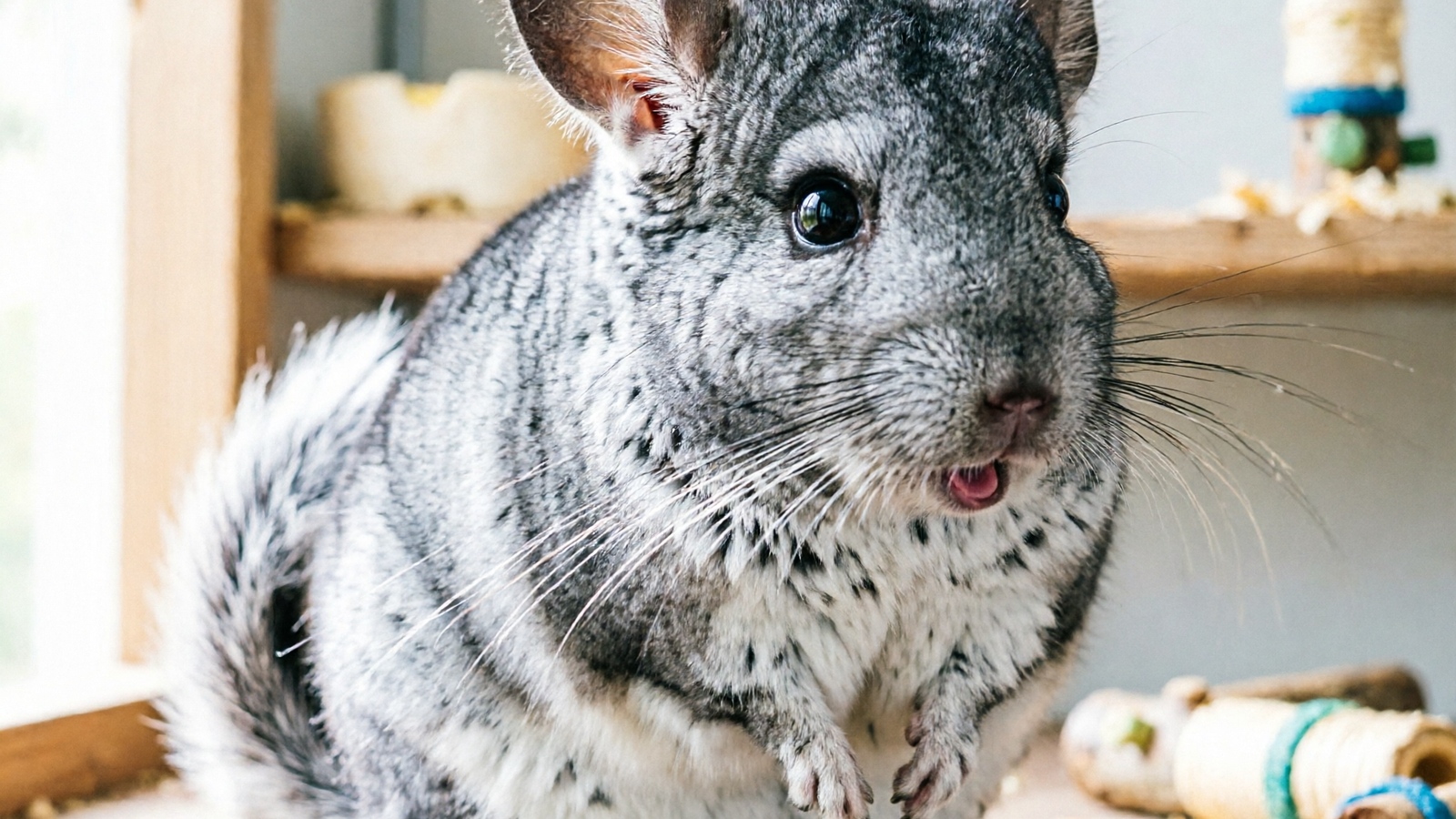
Chinchilla sounds are your pet’s primary way of communicating. Chinchillas make a wide range of noises — from soft chirps to sharp alarm barks and screams. Understanding these sounds is essential for any owner.
Chinchilla communication research in 2026 has brought new attention to the subtle vocalizations that owners often miss. Low-frequency chirps and soft muttering — once dismissed as background noise — are now understood as important social bonding signals, especially in paired chinchillas. With more owners keeping chinchillas in pairs or groups, recognizing the full range of chinchilla sounds has become essential to maintaining a harmonious and low-stress environment.
Bruxing is the slow, rhythmic grinding of teeth that chinchillas perform when relaxed — similar to a cat’s purr. It produces a soft clicking sound and indicates contentment. According to the Merck Veterinary Manual, bruxing in rodents and small mammals is associated with normal jaw function and dental wear, but sudden changes in grinding pattern can signal dental disease. The key distinction: gentle bruxing is healthy, while fast, forceful grinding indicates pain.
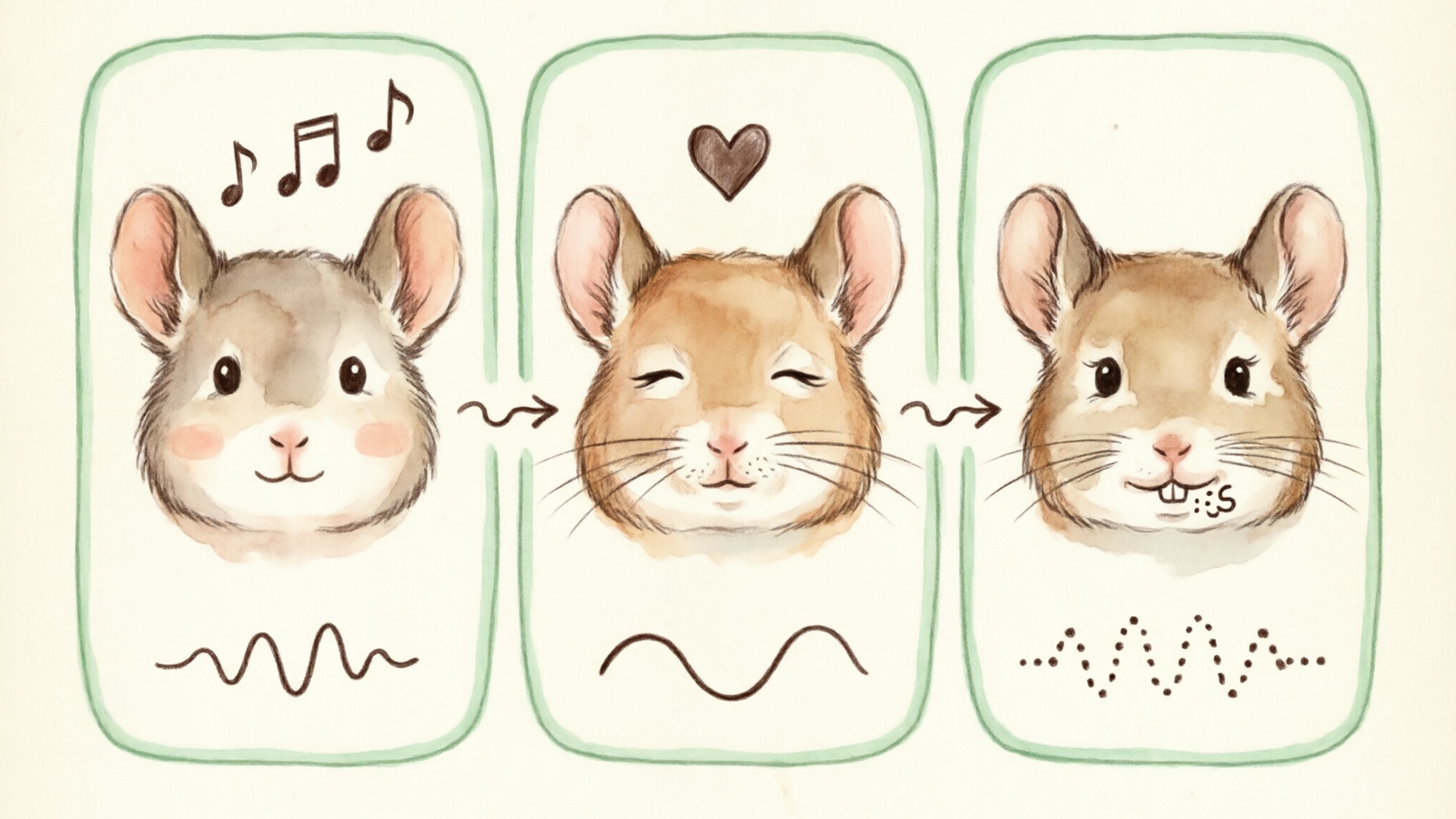
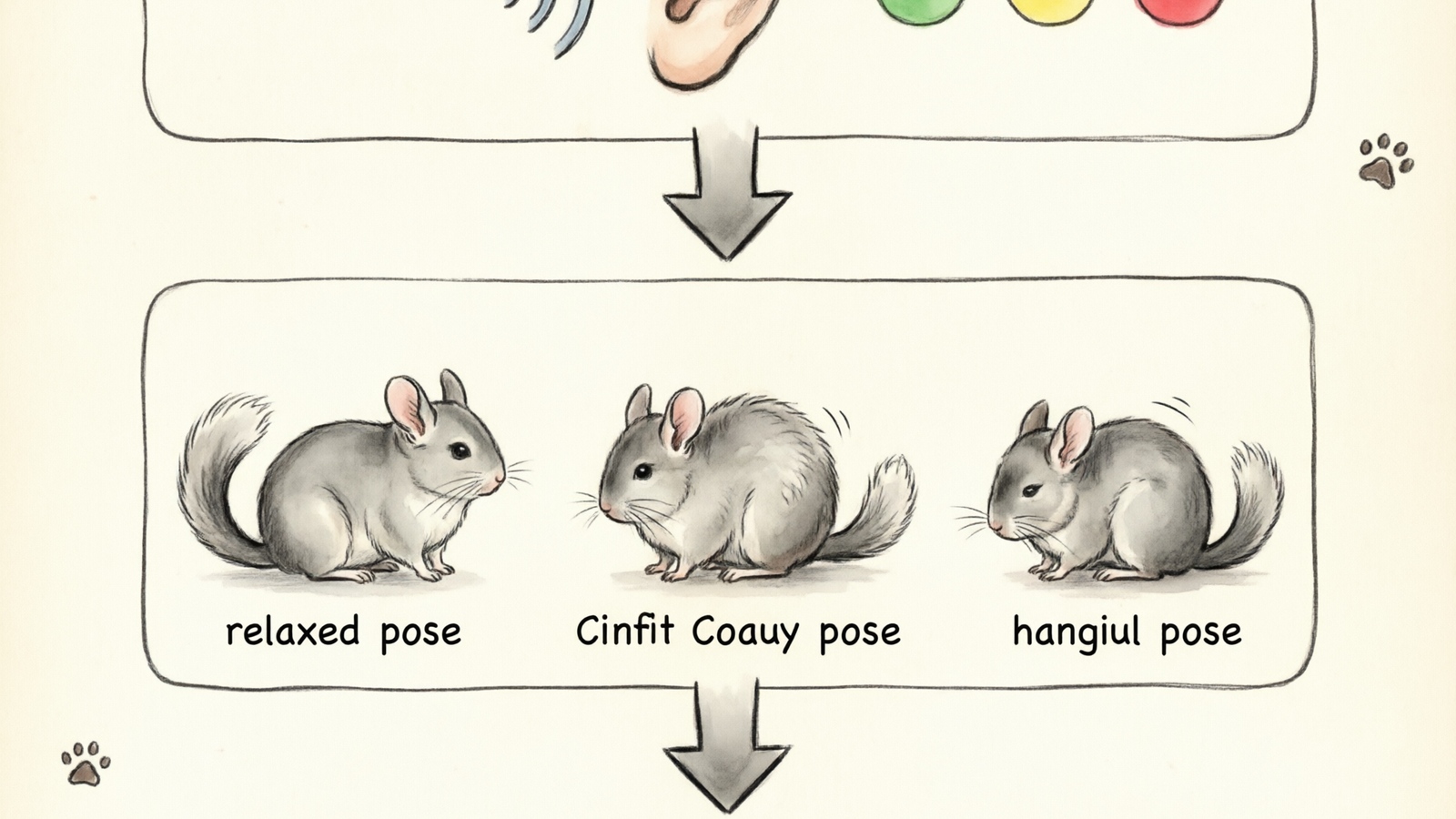
All chinchilla sounds fall into three categories based on urgency:
- 🟢 Happy/comfortable sounds: soft chirping, gentle teeth grinding (bruxing), cooing, muttering — your chinchilla feels safe and content
- 🟡 Warning/stress sounds: barking, hissing, spitting, alarm calls — something is bothering your chinchilla and needs your attention
- Warning: Emergency/pain sounds: screaming, loud persistent squeaking — your chinchilla may be in danger or pain
Most sounds are normal. The key is recognizing when a pattern changes or an emergency sound occurs. Monitoring chinchilla sounds is an essential part of everyday chinchilla care.
Chinchilla Sounds Overview — Complete Guide Table
MidWest Critter Nation Double Unit is a quality option worth considering for your setup.
There are at least 10 recognizable sounds that chinchillas make. This table covers every sound you are likely to hear:
| # | Sound | What It Sounds Like | Common Situation | Meaning | Action Needed? |
|---|---|---|---|---|---|
| 1 | Soft Chirping | Gentle short “cheep-cheep” | Exploring during playtime | Happy, curious | 🟢 None |
| 2 | Cooing | Low soft murmuring | Being petted, resting on your shoulder | Content, trusting | 🟢 None |
| 3 | Gentle Teeth Grinding (Bruxing) | Slow rhythmic clicking | Resting, after eating hay | Relaxed, natural tooth wear | 🟢 None |
| 4 | Barking | Sharp short “arf” sounds | Startled by sudden noise | Alarm, warning | 🟡 Check environment |
| 5 | Hissing | Forceful “hsssss” | Annoyed, territorial | Angry, displeased | 🟡 Stop interaction |
| 6 | Spitting | Cat-like spitting sound | Extremely irritated | Strong rejection | 🟡 Give space |
| 7 | Teeth Chattering | Rapid tooth clicking | Nervous or overexcited | Anxiety or excitement | 🟡 Read context |
| 8 | Screaming | Loud piercing shriek | Extreme fear, injury | Distress, pain | Warning: Check immediately |
| 9 | Loud Squeaking | Persistent high-pitched squealing | Pain, GI discomfort | Suffering, distress | Warning: Vet visit likely |
| 10 | Muttering/Kits Calling | Low muffled grumbling | Kits calling for mother | Dependency, communication | 🟢 Normal for kits |
The sections below explain each sound in detail.
Happy Sounds — Chirping, Cooing, and Gentle Teeth Grinding
Many owners find that Oxbow Timothy Hay Bungalow works well for their pet’s needs.
Soft Chirping
Chinchilla chirping is the most common happy sound you will hear. It sounds like a series of gentle, short “cheep-cheep” noises — similar to a small bird. You will hear it during playtime when exploring, interacting, or excited about treats.
What it means: curiosity, happiness, and excitement. In my experience, chirping is a positive signal that your chinchilla feels comfortable enough to express itself.
How to respond: keep doing what you are doing. Offer a small treat as positive reinforcement. Best chinchilla food options like rose hips or rolled oats work well as rewards during happy vocalizations.
Cooing
Cooing is a low, continuous murmuring sound — think of a pigeon’s soft call but even quieter. You will hear it when your chinchilla is being gently stroked, sitting on your shoulder, or resting peacefully nearby.
What it means: deep contentment, trust, and a feeling of safety. A chinchilla that coos around you has accepted you as a safe companion. I’ve found that cooing typically begins after several weeks of consistent, gentle handling.
How to respond: maintain calm, gentle interaction. Avoid sudden movements or loud noises that would break the peaceful moment.
Gentle Teeth Grinding (Bruxing)
Bruxing is a slow, rhythmic grinding sound that chinchillas make when relaxed. It sounds similar to a cat purring — a soft, steady clicking of the teeth. You will notice it most when your chinchilla is resting quietly or settling in after a meal.
What it means: relaxation and comfort. Teeth grow continuously, and gentle grinding keeps them at a healthy length.
Important distinction: gentle bruxing is healthy. Fast, irregular, or forceful teeth grinding is a warning sign of dental pain. The difference is covered in detail in the next section. A proper best chinchilla food diet with unlimited Timothy hay supports dental health and normal bruxing behavior.
Warning Sounds — Chinchilla Barking, Hissing, and Spitting
For this purpose, Step 3: Fill, Burp, and Check Flow is a popular choice among pet owners.
Chinchilla Barking
Chinchilla barking is the most common warning sound. It sounds like a series of short, sharp “arf” or “wuf” noises — higher-pitched than a dog bark but unmistakably alert. Barking can continue for several minutes if the perceived threat persists.
Common triggers: unfamiliar noises (vacuum, doorbell), spotting another animal, sudden cage movement, or being woken abruptly.
What it means: “I sense danger — pay attention!” Your chinchilla is acting as an alarm system, alerting you (and any cage mates) to a potential threat.
How to respond: first, check the environment for any real danger. Remove the noise source if possible. Speak softly to your chinchilla and avoid reaching in suddenly. If barking continues 10+ minutes, move the chinchilla cage setup to a quieter location.
Chinchilla Hissing
Chinchilla hissing is a forceful “hsssss” sound, often accompanied by backing away, puffing up fur, or flattening ears against the head. It is a clear sign of annoyance or defensive behavior.
You will hear hissing when your chinchilla does not want to be picked up, when a cage mate invades its space, or when startled.
What it means: “Back off — I do not like this.” Your chinchilla is setting a boundary.
How to respond: stop what you are doing immediately. Give your chinchilla space and let it calm down on its own terms. Never force interaction after a hiss — this will escalate the stress response.
Spitting
Spitting sounds exactly like a cat spitting — a sharp, forced expulsion of air, sometimes accompanied by a small spray. It is more intense than hissing and signals extreme irritation.
What it means: “Stop immediately!” This is your chinchilla’s strongest non-violent rejection signal.
How to respond: back away at once. Let your chinchilla decompress. Reassess what triggered the reaction and avoid repeating it.
Teeth Grinding — Normal Bruxing vs. Dental Pain
Chinchilla teeth grinding is the single most important sound to distinguish correctly, because normal bruxing and pain grinding sound similar but mean very different things. Malocclusion (misaligned teeth) is among the most common health problems in chinchillas.
Normal Bruxing — slow, rhythmic, gentle clicking. Happens during rest or after eating. Your chinchilla appears relaxed with half-closed eyes and a calm posture. No action needed.
Pain Grinding — fast, irregular, forceful crunching sounds. Can happen at any time, not just during rest. Accompanied by visible signs: drooling (wet chin), pawing at the mouth, reduced appetite, weight loss, or swelling around the jaw.
| Feature | Normal Bruxing | Pain Grinding |
|---|---|---|
| Rhythm | Slow and regular | Fast and irregular |
| Force | Gentle | Forceful, strained |
| Timing | During rest or after meals | Any time, including while eating |
| Body language | Relaxed, eyes half-closed | Tense, may paw at mouth |
| Other signs | None | Drooling, weight loss, not eating |
If you suspect dental pain grinding, do not wait. Chinchilla teeth grow continuously and problems escalate rapidly. A chinchilla not eating for even 12-24 hours is a veterinary emergency. Dental issues are the leading cause of appetite loss in chinchillas, and early treatment dramatically improves outcomes. I’d recommend finding an exotic vet before problems arise.
Emergency Sounds — Chinchilla Screaming and Loud Squeaking
Chinchilla Screaming
Chinchilla screaming is impossible to ignore — it is a loud, piercing, sustained shriek that sounds like a child crying out in terror. If you hear this sound, drop everything and check on your chinchilla immediately.
Common causes: attack by another animal, injury from a fall, a limb caught in cage wire, seizures, or extreme terror from rough handling.
What it means: “I am in extreme pain or mortal danger — help me now!”
What to do: rush to your chinchilla immediately. Check for injuries, bleeding, or limb issues. Remove any other animals from the area. If your chinchilla is injured, continues screaming, or shows any sign of physical harm, contact an exotic vet right away. A chinchilla in acute stress may also exhibit biting behavior as a self-defense response — handle with thick towels if needed.
Loud Persistent Squeaking
Loud chinchilla squeaking differs from normal happy squeaking in intensity, duration, and context. It is louder, more urgent, and continues without the playful pauses of content vocalization. This often accompanies GI stasis, bloating, or urinary problems — all serious in chinchillas.
What to do: observe your chinchilla closely. Check for other symptoms — is it eating? Are droppings normal? Is it hunched or lethargic? If loud squeaking persists for more than an hour or is combined with any other abnormal sign, schedule a vet visit.
Chinchilla Sounds That Mean Health Problems
Some chinchilla sounds are direct indicators of medical issues that need professional attention. Here is a checklist of six sound-related warning signs:
Irregular teeth grinding — fast, forceful grinding combined with drooling or reduced appetite points to malocclusion or tooth root infection
Unexplained screaming — screaming with no visible external trigger may indicate internal pain, neurological issues, or a seizure
Loud squeaking with appetite loss — combined with fewer droppings or a hunched posture, this strongly suggests GI stasis
Complete silence — a normally vocal chinchilla that suddenly stops making any sound at all may be severely ill or deeply frightened
Wheezing or clicking breathing sounds — audible breathing sounds often indicate a respiratory infection
Clicking from the mouth — persistent mouth clicking not related to eating can signal dental problems or a respiratory obstruction
Do not wait to see if symptoms improve — chinchillas deteriorate rapidly, and a 12-hour delay in treatment can be the difference between recovery and a fatal outcome
The most important rule: a sudden change in your chinchilla’s sound pattern is more significant than any single sound. A chinchilla that normally chirps and coos but suddenly becomes silent, or a quiet chinchilla that starts barking frequently, is telling you that something has changed. Always investigate sound pattern changes promptly.
Why Is My Chinchilla Making Weird Noises at Night?
If you are asking why is my chinchilla making weird noises after dark, you are not alone.
Chinchillas are technically crepuscular, meaning they are most active at dawn and dusk. However, in a home environment where artificial lighting extends “daytime,” many chinchillas shift their peak activity to nighttime hours. This means increased noise at night is often completely normal.
Normal nighttime sounds include soft chirping while exploring, the rhythmic sound of running on an exercise wheel, chewing on hay or wood toys, and quiet muttering between cage mates.
Abnormal nighttime sounds that need attention include persistent loud barking (possible environmental stress), screaming (immediate danger or pain), and repeated hissing or spitting (cage mate conflict).
Common causes of concerning nighttime noise:
- Cage location — placing the cage near a noisy appliance, a window with outside activity, or a high-traffic area causes repeated alarm barking. Review your chinchilla cage setup for optimal placement
- Overheating — chinchillas cannot tolerate temperatures above 25°C (77°F). Heat stress causes distressed vocalization and is life-threatening. Ensure the room stays cool with good ventilation
- Boredom — a chinchilla without enough enrichment may develop repetitive vocalizations. Providing best chinchilla toys for nighttime activity helps redirect energy into healthy chewing and exercise
- Other pets — hearing or smelling a cat or dog nearby triggers alarm barking even if the other pet cannot reach the cage
Quick fix checklist: move the cage to a quiet, cool room, add a safe exercise wheel and chew toys, block direct line of sight to other pets, and maintain a consistent light-dark cycle to support natural crepuscular rhythms.
How to Respond to Chinchilla Sounds — A Quick Guide
When you hear your chinchilla making a sound, follow this three-step response:
Step 1: Identify the Sound Type
Reference the overview table in H2-2. Classify the sound as happy (🟢), warning (🟡), or emergency (Warning:).
Step 2: Observe Body Language and Context
Sound alone is not enough. Watch body language alongside the vocalization. Relaxed posture with forward ears confirms happy sounds. Puffed fur, crouching, or flattened ears confirm stress. Hunched posture or appetite changes suggest pain.
Step 3: Take Appropriate Action
- 🟢 Happy sounds — enjoy the moment! Continue gentle interaction and bond with your chinchilla
- 🟡 Warning sounds — identify and remove the stressor, give your chinchilla space, and monitor the situation
- Warning: Emergency sounds — check your chinchilla immediately for injuries or distress, and contact an exotic vet if needed
One golden rule: never punish a chinchilla for making sounds. Vocalization is their only way of communicating with you. Punishing teaches your chinchilla to suppress communication, making future problems harder to detect.
Product Recommendations
Here are some products mentioned in this guide:
Frequently Asked Questions
What do different chinchilla sounds mean?
Chinchilla sounds fall into three categories: happy sounds (chirping, cooing, gentle teeth grinding), warning sounds (barking, hissing, spitting), and emergency sounds (screaming, loud squeaking). Happy sounds mean your chinchilla is content, warning sounds indicate stress or fear, and emergency sounds signal pain or danger that needs immediate attention. Understanding chinchilla sounds meaning becomes simple once you recognize this pattern.
Why is my chinchilla barking at night?
Chinchillas bark when they perceive a threat or are startled by unfamiliar noises. At night, common triggers include household sounds like appliances or other pets, cage movement, or temperature changes. Ensure the cage is in a quiet, cool room away from noise sources.
Why is my chinchilla grinding its teeth?
Slow, rhythmic teeth grinding (bruxing) is normal and indicates relaxation, similar to a cat purring. However, fast, irregular, or forceful teeth grinding combined with drooling, weight loss, or reduced appetite may indicate dental problems like malocclusion and requires a vet visit.
Is it normal for chinchillas to be noisy at night?
Yes, chinchillas are crepuscular (most active at dawn and dusk) and can be active at night in home environments. Normal nighttime sounds include soft chirping, chewing, running on a wheel, and quiet muttering. Persistent loud barking or screaming at night is not normal and should be investigated.
What does it mean when a chinchilla screams?
A chinchilla scream is an emergency signal indicating extreme fear, severe pain, or distress. Common causes include being attacked by another animal, injury from a fall, or a serious health crisis. Check your chinchilla immediately for injuries and contact a vet if the screaming continues or if you find signs of physical harm.