What Do Conures Eat? (The 80/20 Diet Rule)
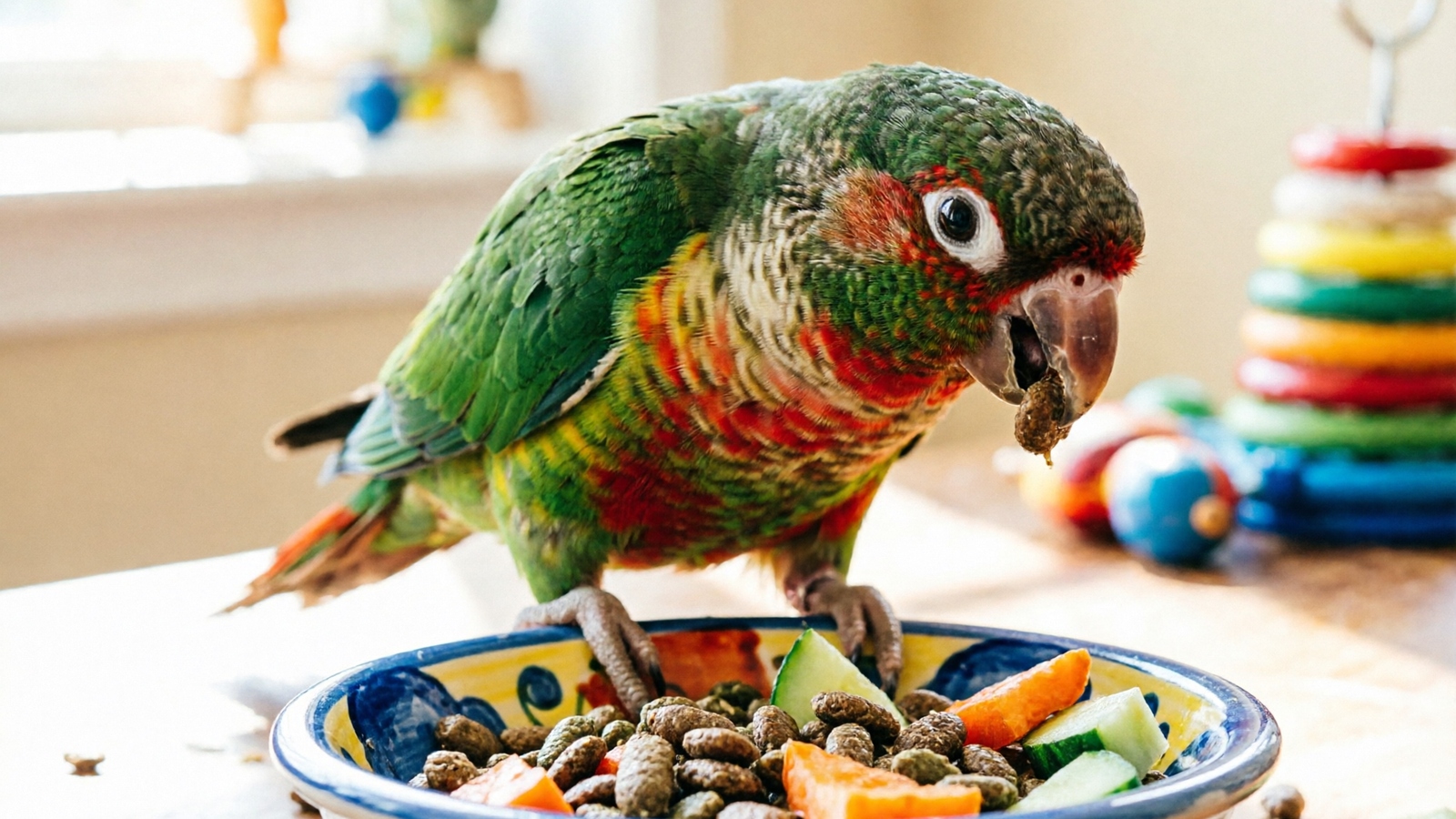
The best conure food follows the 80/20 rule: 75-80% formulated pellets as the dietary staple, supplemented with 20-30% fresh vegetables, fruits, and healthy treats. This ratio is recommended by avian veterinarians and ensures complete nutrition. [Source: VCA Animal Hospitals]
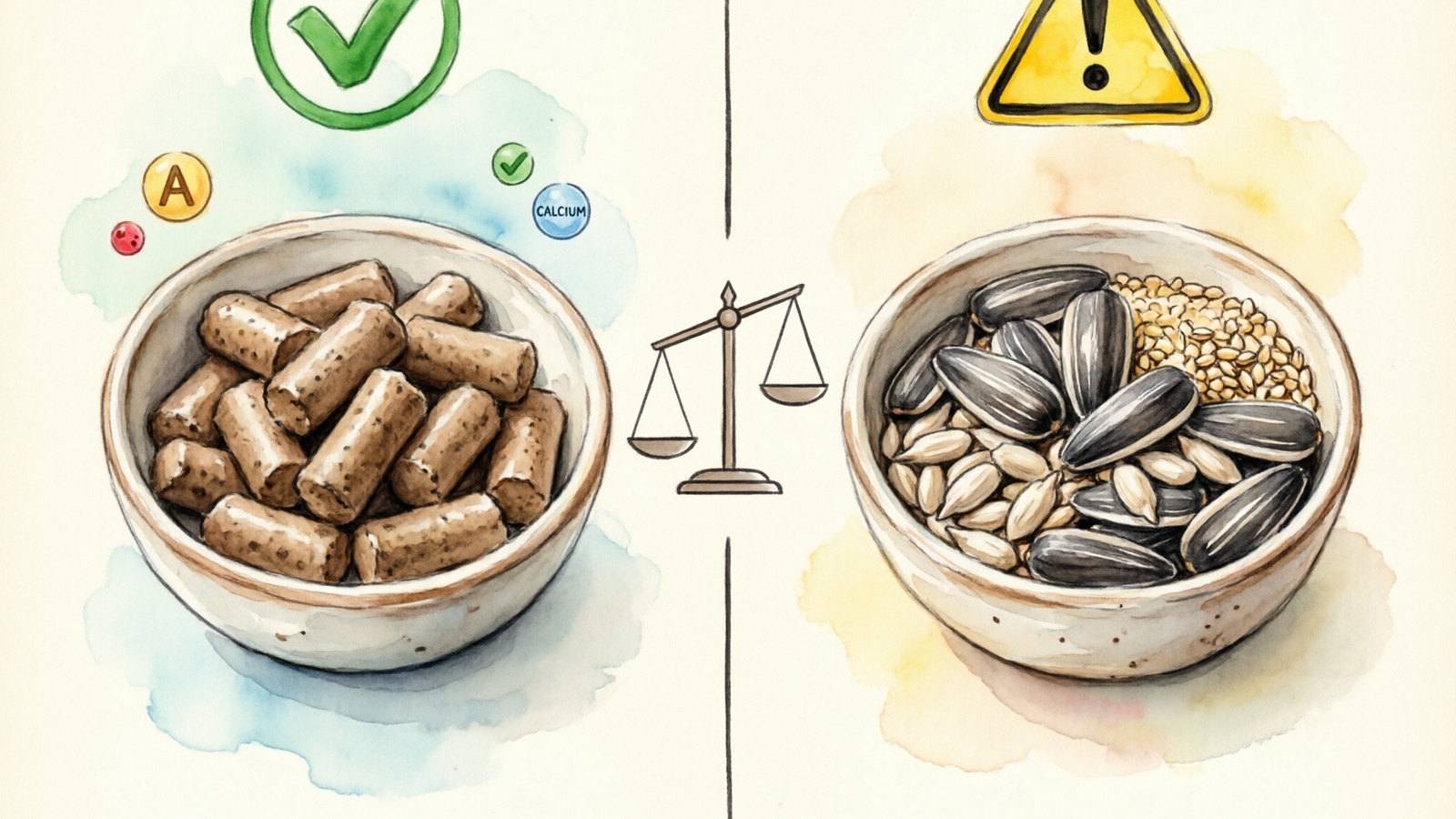
Most new conure owners make one critical mistake: feeding a seed-only diet. Seeds are nutritionally incomplete — they are high in fat and deficient in vitamin A, calcium, and essential amino acids. Over time, a seed-only diet leads to obesity, hepatic lipidosis (fatty liver disease), feather plucking, and a significantly shortened lifespan. The University of Florida IFAS Extension reports that seed-only diets are the leading cause of malnutrition in companion psittacines, while LafeberVet identifies vitamin A deficiency as the most common nutritional disorder in pet birds fed all-seed diets.
Finding the best conure food requires understanding these three categories before you shop.
Pellets (70-80% of daily intake). Formulated to provide complete nutrition with balanced vitamins and minerals. This is the non-negotiable foundation of conure health.
Fresh vegetables (15-20%). Dark leafy greens, carrots, broccoli, and sweet potatoes provide vitamin A, calcium, and mental enrichment. Offer daily and remove after 2 hours.
Fruits and treats (5-10%). Berries, apples, and seeds as training rewards and bonding tools. High in natural sugar — keep portions small.
For the full picture on avian nutrition across all species, see our comprehensive bird diet guide.
Conure Pellets vs Seeds — Which Is Better?
| Factor | Pellets | Seeds |
|---|---|---|
| Nutrition | Complete and balanced | Incomplete — high fat, low vitamins |
| Vitamin A | Fortified | Deficient |
| Calcium | Adequate | Low |
| Fat content | 4-8% | 40-60% |
| Palatability | Medium — acclimation needed | High — birds love them |
| Vet recommendation | 75-80% of diet | Treat only, under 10% |
| Cost per month | $10-30 | $5-15 |
| Best use | Daily staple | Transition tool, training treat |
VCA Animal Hospitals states it clearly: “Seeds should only be a very small part of a balanced diet but never the entire diet.” [Source: VCA Animal Hospitals]
The Reddit r/Conures community echoes this consensus. In three active threads with over 150 combined comments — the best conure food Reddit has to offer in terms of collective wisdom — experienced owners consistently warn against seed-only diets. Harrison’s and TOP’s organic pellets are the community’s gold standard recommendations.
The conure pellets vs seeds debate is straightforward: pellets win on nutrition. Seeds win on taste. Use seeds as a bridge to transition your bird to pellets — then keep them as an occasional reward.
10 Best Conure Foods Reviewed
We compared 10 products to find the best conure food across 4 categories — organic pellets, standard pellets, seed blends, and specialty foods. Each product was evaluated for nutritional completeness, ingredient quality, conure acceptance, and real owner feedback.
Many of these pellet brands also work well for cockatiels — see our best cockatiel food guide for species-specific picks.
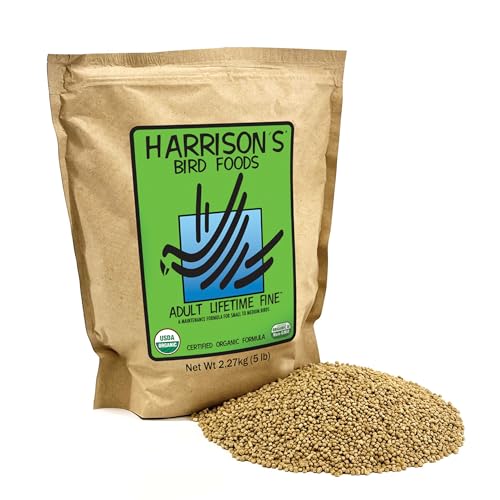
1. Harrison’s Adult Lifetime Fine — Best Overall (Vet Recommended)
$34.99 | Pellet / Organic
Harrison’s Adult Lifetime Fine on Amazon →
Harrison’s is the most vet-recommended bird food brand in the United States. These certified organic pellets contain no artificial preservatives, colors, or sweeteners. The Fine grind is sized correctly for conures.
This is the gold standard of Harrison’s conure food — and for good reason. Avian veterinarians consistently recommend it as the first choice for companion birds.
What owners say: “On my vet’s advice, I have been feeding my birds Harrison’s for years. They have remained healthy for years.” Another owner confirmed: “It took them a second to adjust from seeds but the switch was very hassle free.”
Honest downside: At $34.99 per pound, this is the most expensive pellet on our list. Some conures initially reject the plain brown pellets after being raised on colorful seed mixes. Adult Lifetime is for maintenance — use High Potency during molting or recovery.
Check current price on Amazon →
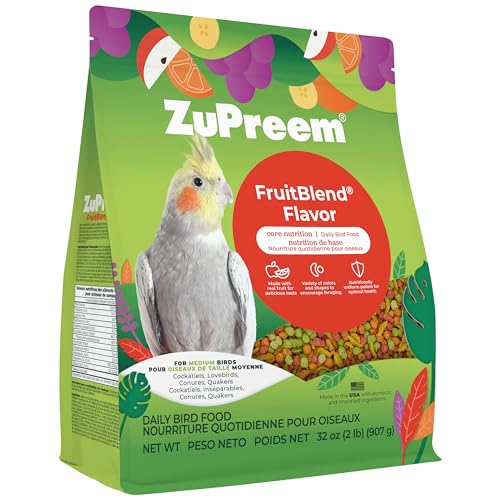
2. ZuPreem FruitBlend Medium — Best for Picky Eaters
$15.29 | Pellet / Fruit-Flavored
ZuPreem FruitBlend on Amazon →
ZuPreem FruitBlend is the most reviewed pellet on Amazon. The fruit shapes and bright colors make it the easiest pellet for transitioning seed-addicted conures. Birds go straight for it.
What owners say: “My Sun Conure has been eating these for 3 years and she is healthy and happy.” Another: “Best pellet my bird actually went right for.”
Honest downside: Reddit r/Conures frequently criticizes ZuPreem for added sugar and artificial colors. This is not the healthiest long-term pellet — it is the best transition pellet. Once your conure accepts pellets, gradually shift to Harrison’s or TOP’s for a cleaner diet. The colorful dyes also create more mess in the cage.
Check current price on Amazon →
3. TOP’s Parrot Food Pellets — Best for Sensitive Birds (Corn/Soy Free)
$19.75 | Pellet / Organic Specialty
TOP’s Parrot Food Pellets on Amazon →
TOP’s is the only pellet on the market that is certified organic, corn-free, soy-free, and peanut-free. It is cold-pressed rather than extruded, which retains more natural nutrients. This makes TOP’s conure food the best choice for birds with food allergies, feather plucking linked to diet, or sensitive digestion.
What owners say: “I will not use any other pellet — I raise Eclectus who are SUPER sensitive to artificial anything.” Another: “Fresh smelling, very healthy, but a little overpriced for bag size.”
Honest downside: The cold-pressed texture is different from standard pellets — some conures take longer to accept it. At $19.75 per pound, it is expensive. The 1-pound bag runs out quickly in multi-bird households.
Check current price on Amazon →
4. RoudyBush California Blend Mini — Best Value Pellet
$14.45 | Pellet / California Blend
RoudyBush California Blend on Amazon →
RoudyBush California Blend includes dried fruits and vegetables mixed into the pellets for added variety and natural flavor. No artificial dyes and no sugary fillers.
This is considered the best middle ground between Harrison’s premium quality and ZuPreem’s affordability.
Reddit’s r/Conures community endorses RoudyBush as a solid everyday pellet.
What owners say: “My green cheeks love these pellets.” Another: “No artificial dyes or sugary fillers — just wholesome food that keeps feathers shiny.”
Honest downside: The Mini size may still be too large for the smallest green cheek conures — some owners report needing to crumble them. Availability can be inconsistent between retailers.
Check current price on Amazon →
5. Lafeber’s Tropical Fruit Gourmet Pellets — Best Conure-Specific Formula
$29.99 (4lb) | Pellet / Gourmet
Lafeber’s Tropical Fruit on Amazon →
Lafeber’s holds the highest customer satisfaction among pellet brands on our list.
It is the only product specifically formulated for conures. The tropical fruit flavor makes it irresistible to picky eaters. No artificial colors or preservatives.
This is arguably the best conure food for owners struggling with pellet rejection — the gourmet flavor profile wins over stubborn birds.
What owners say: “My pineapple conure loves it. He refuses to switch to other vet recommended brands.” Another: “My Conure LOVES them more than any other pellets — eats every single one.”
Honest downside: The least reviewed pellet on our list. At $7.50 per pound, it is mid-range pricing but the 4-pound bag is a commitment if your bird rejects it. Not certified organic.
Check current price on Amazon →
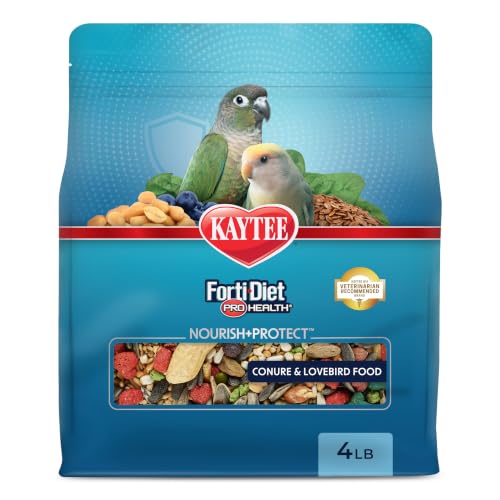
6. Kaytee Forti-Diet Pro Health — Best Budget
$5.95 (4lb) | Seed Blend / Budget
Kaytee Forti-Diet Pro Health on Amazon →
At $5.95 for 4 pounds, this is the cheapest conure food on our list by a wide margin.
Fortified with omega-3 fatty acids and probiotics. The colorful mix appeals to birds transitioning from seed-only diets.
Important caveat: This is a seed-based food, not a pellet. It works as a budget transition mix or supplement, but it should not be the sole diet for any conure.
What owners say: “He loved it, very colorful with different nutrients.” Another owner confirmed the taste appeal.
Honest downside: “Too many seeds in the mix that are too big for green-cheeked conure.” The seed-heavy formulation contradicts veterinary dietary recommendations. Use this as a stepping stone to pellets, not a long-term solution.
Check current price on Amazon →
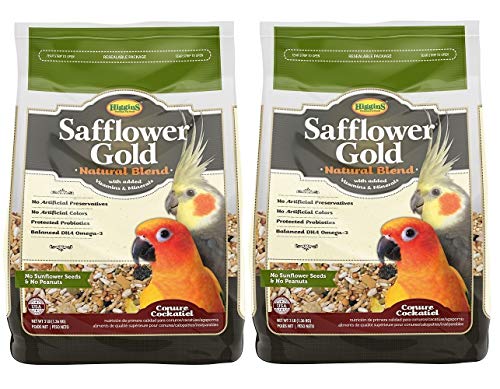
7. Higgins Safflower Gold — Best Natural Seed Blend
$15.75 (2×3lb) | Seed Blend / Natural
Higgins Safflower Gold on Amazon →
Higgins Safflower Gold uses safflower seeds instead of sunflower seeds — significantly lower in fat. No artificial colors. The twin-pack (6 pounds total) provides excellent value for multi-bird households.
What owners say: “Been buying for 4 years, never disappoints. Very little waste.” Another: “I use it as a supplement to a higher cost pellet.”
Honest downside: This is still a seed blend — it cannot replace pellets as the dietary staple. The best use is as a supplement or training reward alongside a quality pellet. Not suitable as the primary food source.
Check current price on Amazon →
8. Kaytee Fiesta Conure — Best Variety Mix
$12.95 (4.5lb) | Seed Blend / Colorful Mix
Kaytee Fiesta Conure on Amazon →
Kaytee Fiesta combines seeds, pellets, fruits, and vegetables in one colorful mix. The variety of shapes and textures provides mental enrichment for conures that get bored easily with uniform pellets.
What owners say: “Good variety of seeds treats in one bag. My conure really likes it.” An owner shared a notable anecdote about feather plucking: “My conure started plucking — this food helped.”
Honest downside: The mix is seed-heavy with higher sugar content from dried fruits. It is a treat or transition food, not a complete daily diet. The colorful pieces create more cage mess than plain pellets.
Check current price on Amazon →
9. Kaytee Nutri Soft — Best for Baby or Senior Conures
$14.95 (3lb) | Soft Food / Specialty
The soft texture makes this the best conure food for weaning babies learning to eat solid food, and for senior conures with beak problems. Softer than standard pellets, easier to break down.
What owners say: “When learning how to eat they love it since it’s soft, easier for them.”
Honest downside: “He picks around it — prefers to dip ZuPreem and RoudyBush in water.” Not all conures accept the soft texture. Adult conures with healthy beaks do not need this — standard pellets are better nutritionally.
Check current price on Amazon →
10. Wild Harvest Universal Blend — Best Bulk Value
$16.99 (10lb) | Seed Blend / Bulk
Wild Harvest Universal on Amazon →
This is the most reviewed product on our entire list.
At $1.70 per pound for a 10-pound bag, it is unmatched for bulk value. Designed for medium and large birds — suitable for multi-species households.
What owners say: “Good mix of seeds like millet and oats, birds genuinely enjoy it.”
Honest downside: This is a generic seed blend, not conure-specific and not nutritionally complete. An owner noted: “Cockatiel not as fond of it.” It works best as a supplemental food in households with multiple bird species, not as a conure’s primary diet.
Check current price on Amazon →
Best Conure Food Pellets Compared (Sugar Analysis)
Not all pellets are created equal. The best conure food pellets differ significantly in sugar content and artificial additives — a topic the Reddit community cares about intensely.
| Brand | Organic | Sugar Added | Artificial Colors | Corn/Soy Free | Price/lb | Best For |
|---|---|---|---|---|---|---|
| Harrison’s | USDA certified | No | No | No — contains corn | ~$35 | Vet gold standard |
| TOP’s | USDA certified | No | No | Yes — corn, soy, peanut free | ~$20 | Allergy-sensitive birds |
| Lafeber’s | No | No | No | No | ~$7.50 | Picky eaters |
| RoudyBush | No | No | No | No | ~$14 | Best value pellet |
| ZuPreem Fruit | No | Yes | Yes | No | ~$5 | Transition only |
Key findings from this comparison:
Harrison’s and TOP’s are the only USDA-certified organic pellets with zero added sugar and zero artificial colors. These are the brands Reddit r/Conures recommends most consistently.
ZuPreem is the only pellet with both added sugar and artificial colors. Birds love it, but it should be a stepping stone to healthier pellets — not a long-term staple.
Lafeber’s stands out for having no added sugar despite the tropical fruit flavor. It has the highest customer satisfaction among pellet brands.
RoudyBush offers the best price-to-quality ratio with no artificial dyes. This is the pellet most owners settle on after trying premium brands.
Green Cheek vs Sun Conure Diet Chart
Not all conures have the same dietary needs. The two most popular pet conure species — green cheek and sun conure — differ significantly in size and calorie requirements.
| Factor | Green Cheek Conure (60-80g) | Sun Conure (100-130g) |
|---|---|---|
| Pellet size | Fine or Small | Small or Medium |
| Daily pellet amount | 1.5-2 tablespoons | 2-3 tablespoons |
| Fresh vegetables per day | 1-2 tablespoons | 2-3 tablespoons |
| Fruit per day | 1 teaspoon or less | 1 tablespoon or less |
| Seed treats per day | 1 teaspoon or less | 1 tablespoon or less |
| Calorie needs | Lower — smaller body mass | Higher — active, larger bird |
| Common deficiency risk | Vitamin A, calcium | Vitamin A, calcium |
| Best pellet brands | Harrison’s Fine, TOP’s, RoudyBush Mini | Harrison’s Fine, Lafeber’s, ZuPreem Medium |
Key differences explained:
Green cheek conures are smaller and need fine-grind pellets. Their portions are smaller across all food categories. Pineapple conures are a green cheek mutation — use the same guidelines shown in this green cheek conure food chart.
Sun conures are nearly twice the body weight and far more active. They need medium pellets and larger portions. Jenday conures are similar in size to sun conures and follow the same dietary recommendations.
Both species share the same 80/20 pellet-to-fresh-food ratio. The difference is in portion sizes and pellet grind.
Smaller birds like budgies need even finer pellets — see our best budgie food guide for species-specific recommendations.
How to Switch Your Conure from Seeds to Pellets
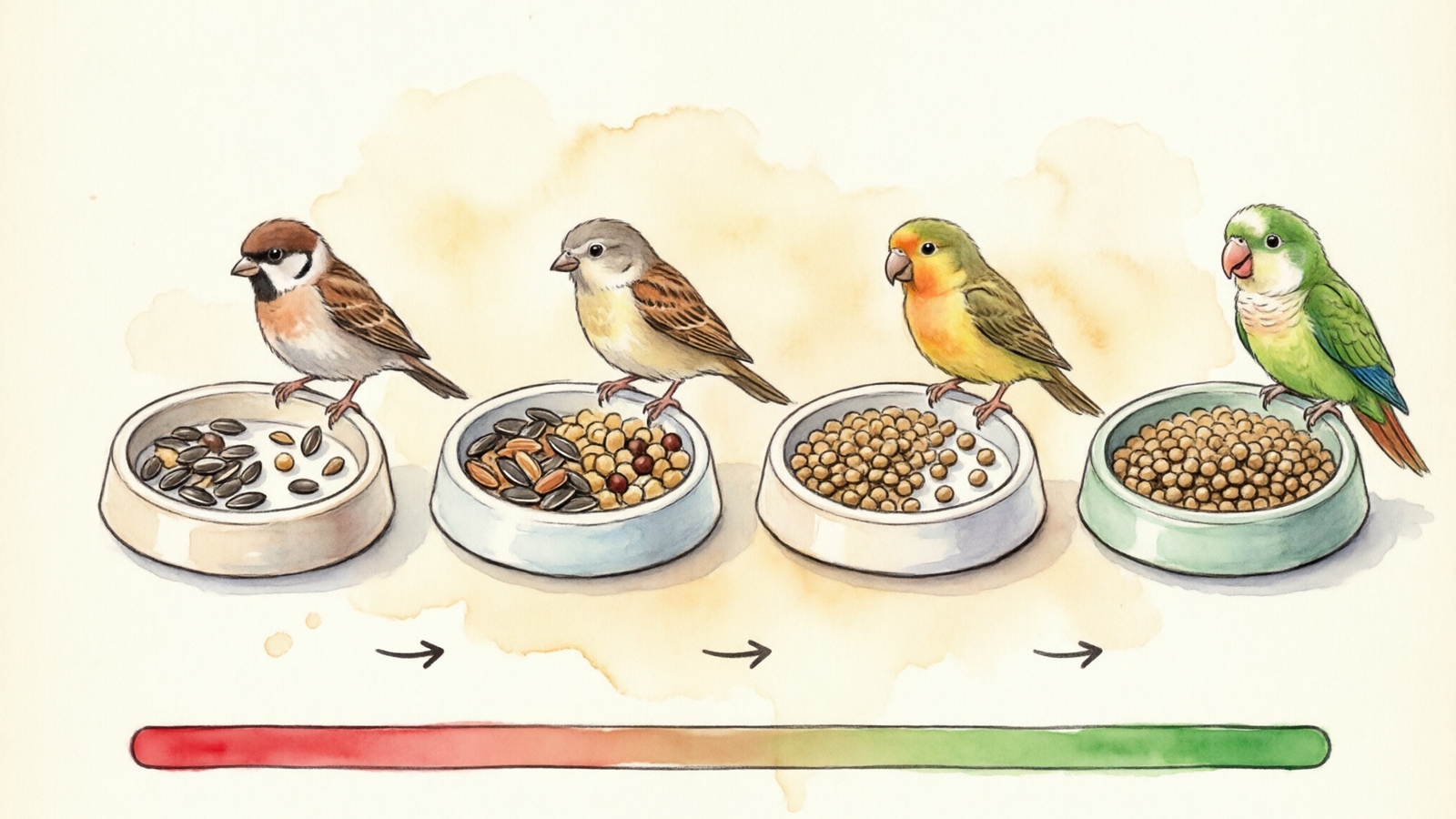
Seed-to-pellet conversion is the most important dietary change you will make when choosing the best conure food for long-term health. VCA Animal Hospitals notes: “It may take days, weeks, or months to modify a bird’s diet.” [Source: VCA Animal Hospitals]
Step 1: Start with 75% seeds + 25% pellets (Days 1-3)
Mix familiar seeds with the new pellets. Your conure will likely ignore the pellets at first — this is completely normal. Do not reduce the total food amount.
Step 2: Move to 50/50 mix (Days 4-6)
Reduce the seed portion by half. Monitor your bird’s food intake carefully — weigh your conure daily if possible. A healthy bird can tolerate a 5-10% weight loss during transition.
Step 3: Shift to 25% seeds + 75% pellets (Days 7-14)
Most conures start eating pellets by this stage. If your bird refuses to eat pellets, stay at this ratio longer rather than rushing forward.
Step 4: Full pellet conversion (Weeks 3-4+)
Remove seeds entirely only when you are certain pellets are being eaten. Always provide fresh vegetables alongside pellets.
Pro tips from Reddit and avian vets:
Pretend to eat the pellets yourself — conures are social eaters and will mimic your behavior. Grind pellets into powder and sprinkle them on moist favorite foods, then gradually increase chunk size over time.
Try starting with Lafeber’s or ZuPreem (tastier pellets), then transition to Harrison’s or TOP’s (healthier pellets). This two-step approach works well for any bird raised on a seed diet — it reduces rejection risk.
Patience is the single most important factor in pellet conversion. Rushing the process leads to food rejection and weight loss.
Conure Food Safety Checklist
Use this checklist to evaluate your conure’s daily diet.
Healthy Diet Requirements
- ** Pellets make up 75-80% of daily food intake** — Harrison’s, TOP’s, Lafeber’s, or RoudyBush provide complete nutrition. This is the veterinary standard.
- ** Fresh vegetables offered daily** — Dark leafy greens (kale, spinach), carrots, broccoli, sweet potatoes. Remove after 2 hours to prevent spoilage.
- ** Fruits limited to 5-10% of diet** — Berries, apples (no seeds), and melon are safe. High in natural sugar — keep portions small.
- ** Pellet size matches bird species** — Green cheeks (60-80g): Fine grind. Sun conures (100-130g): Small or Medium grind. Wrong size = wasted food.
- ** Clean drinking water changed daily** — Birds contaminate water with food and droppings. Refresh daily at minimum.
- ** Seeds used only as treats (under 10%)** — Training rewards, foraging enrichment, or transition tools only.
Dangerous Diet Mistakes
- ** Seed-only diet** — Leads to vitamin A deficiency, fatty liver disease, obesity, and shortened lifespan. The #1 mistake new owners make.
- ** Feeding avocado** — Persin in avocado is fatal to birds, causing heart damage and respiratory failure. Zero safe amount exists.
- ** Leaving fresh food in cage over 2 hours** — Bacteria multiply rapidly at room temperature. Spoiled vegetables cause digestive illness.
- ** Giving chocolate, onions, or caffeine** — All toxic to birds. Chocolate contains theobromine; onions cause hemolytic anemia.
- ** Forcing instant pellet conversion** — Starving a bird into eating pellets can cause fatal weight loss. Always transition gradually over 2-4 weeks.
Conure Food FAQ
What’s the best food for conures?
The best conure food is a high-quality pellet like Harrison’s, TOP’s, or Lafeber’s making up 75-80% of daily intake.
Supplement with fresh vegetables and a small amount of fruit. Avoid seed-only diets — they lead to vitamin A deficiency, obesity, and shortened lifespan. [Source: VCA Animal Hospitals]
Are pellets or seeds better for conures?
Pellets are vastly superior to seeds as a daily diet. Seeds are high in fat and lack essential vitamins and minerals.
Pellets provide complete and balanced nutrition. Seeds should only be used as occasional treats, keeping them under 10% of the total diet.
How many times a day should you feed a conure?
Feed your conure twice daily — morning and evening. Keep pellets available at all times in the cage.
Offer fresh vegetables in the morning and remove after 2 hours to prevent spoilage. Treats and fruits can be given 1-2 times daily in small amounts.
What should I not feed my conure?
Never feed your conure avocado (toxic — persin causes heart damage and respiratory failure in birds, according to the ASPCA Animal Poison Control), onions (toxic — cause hemolytic anemia), chocolate (toxic — theobromine affects the heart and nervous system), caffeine, alcohol, or salty processed foods like chips and pretzels.
Foods cooked with oil or butter are also dangerous. Dairy should be limited since birds are lactose intolerant. [Source: VCA Animal Hospitals]
How long does it take to switch a conure from seeds to pellets?
It can take anywhere from a few days to several months. The key is a gradual transition.
Start with 75% seeds and 25% pellets, then slowly increase the pellet ratio over 2-4 weeks. Monitor your bird’s weight throughout the process and be patient.
Complete your conure’s setup with safe cage toys — see our cockatiel toys guide for toy options that work great for conures too.
Pair quality food with the right enclosure — check our best bird cage guide for conure-appropriate housing.