What Do Axolotls Eat? The Honest Answer
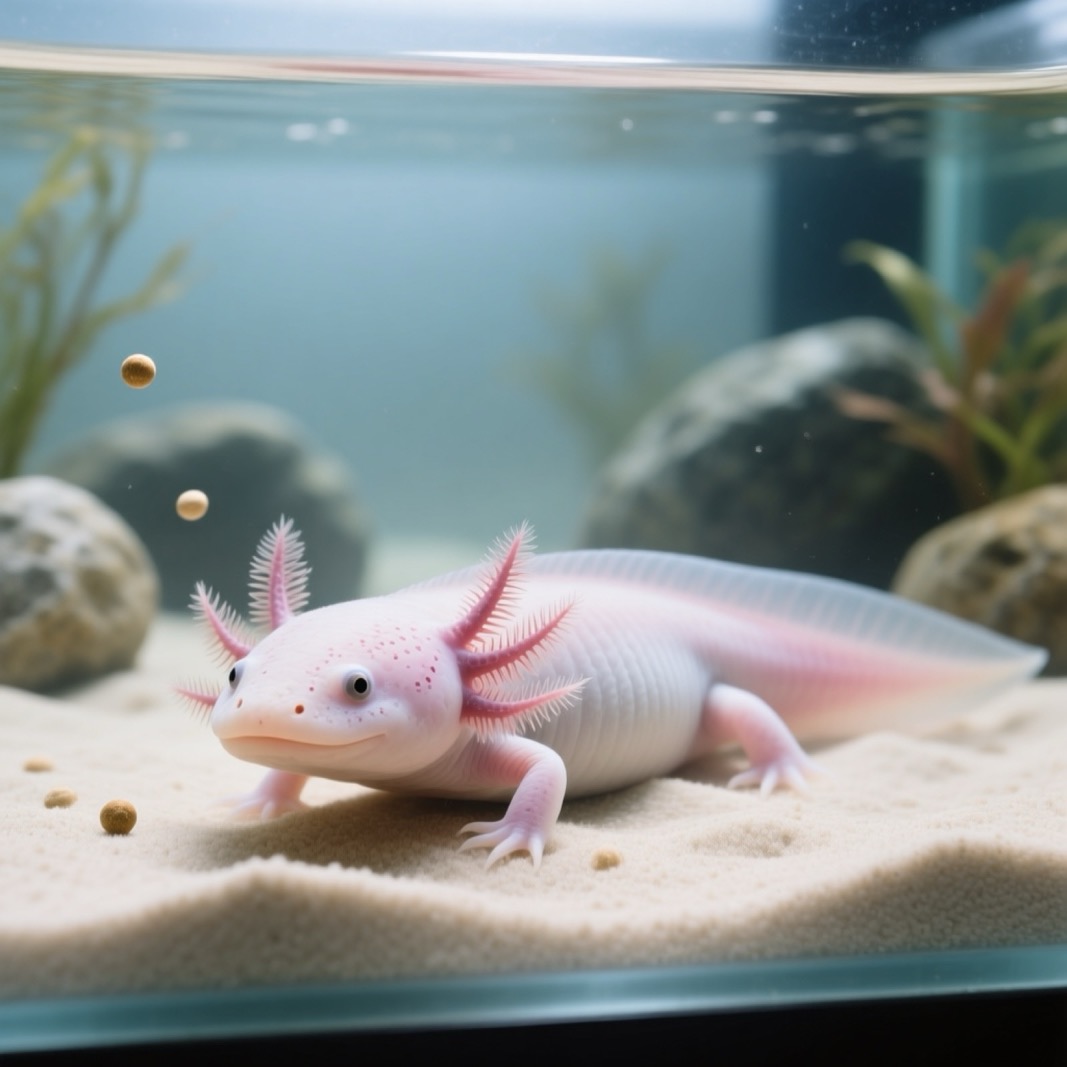
Axolotls are obligate carnivores — meaning their digestive system is designed exclusively for animal protein and cannot process plant matter. In the wild, they sit on the bottom of Lake Xochimilco and wait for prey to wander past: worms, insect larvae, small crustaceans, and the occasional tiny fish. They’re also bottom-feeders with extremely poor eyesight. An axolotl detects food by smell, not sight, which means food needs to reach the substrate level where they hunt. Anything floating at the surface is essentially invisible to them.
Juveniles need daily feeding because they’re growing rapidly. Adults only need food every 2 to 3 days. Getting the frequency wrong — usually overfeeding — is one of the most common mistakes new owners make.
Here’s the truth that most axolotl food articles won’t tell you: the best axolotl food isn’t on Amazon. Live earthworms are universally recommended by experienced keepers, breeders, and exotic veterinarians as the ideal staple diet. They have the right nutritional profile, axolotls naturally prefer them, and they cost almost nothing. Amazon products are convenience options and supplements — not replacements for a proper diet.
For comprehensive care information including feeding fundamentals, see our axolotl care guide.
Earthworms: Why They’re the Best Axolotl Food
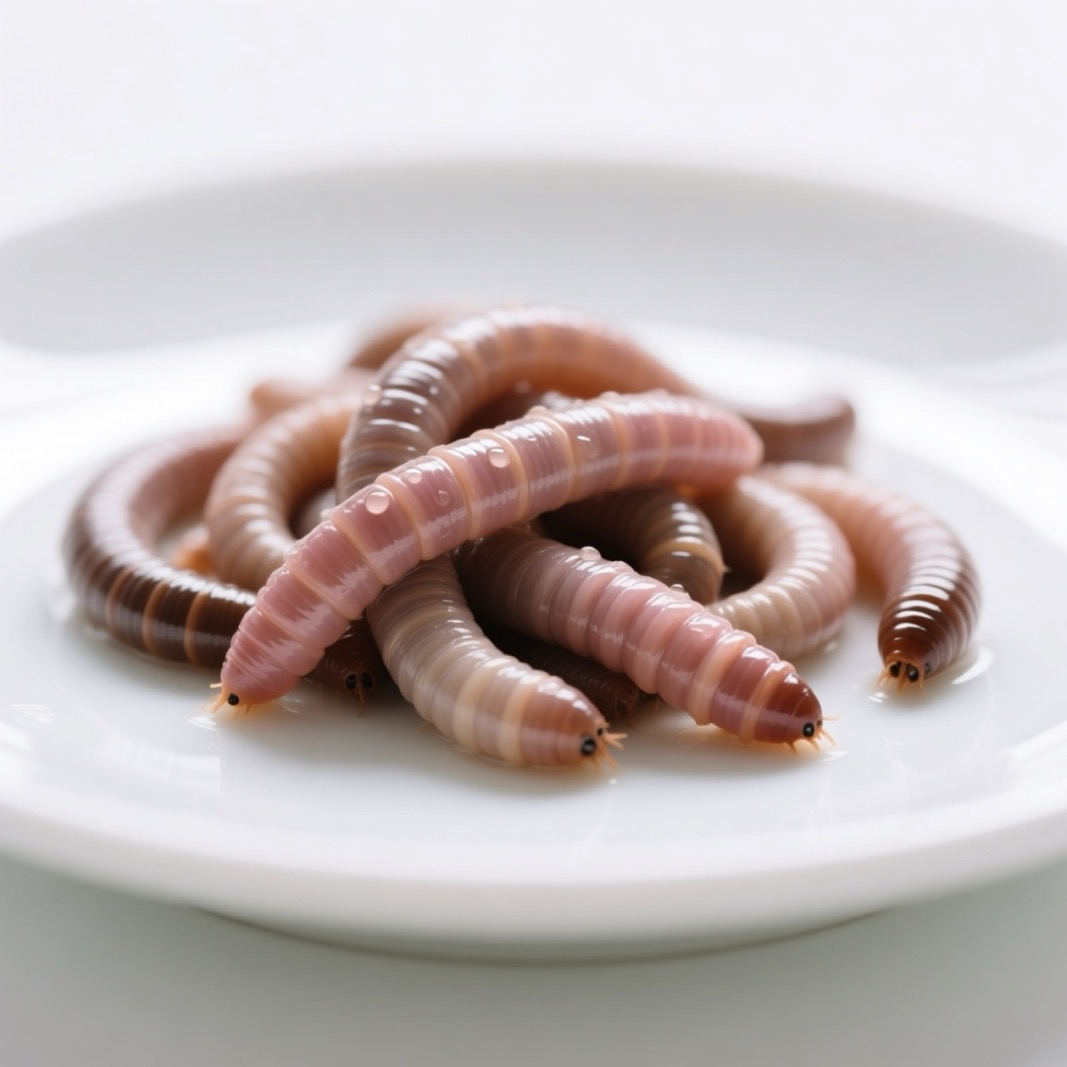
If you take one thing from this article, it should be this: live earthworms are the gold standard axolotl food. Not pellets, not bloodworms, not freeze-dried anything. Earthworms.
Canadian nightcrawlers and European nightcrawlers are the most widely used. Their nutritional profile is nearly perfect for axolotls — approximately 60% protein, 10% fat, with an excellent calcium-to-phosphorus ratio that supports bone development and overall health. No commercial pellet I’ve seen matches this profile.
Practically, earthworms are cheap and easy to source. Any bait shop sells nightcrawlers for $3 to $6 per dozen. Pet stores often carry them frozen. You can even start a small worm bin at home for essentially free ongoing food. For tank setup considerations including feeding areas, our axolotl tank setup guide covers how to create a dedicated feeding zone.
Almost every axolotl will eagerly eat earthworms, even picky individuals that refuse pellets. To feed them, rinse live worms or thaw frozen ones, cut them to appropriate size for juveniles, and either drop them near the axolotl’s mouth or use feeding tongs. Red wigglers work for some axolotls, but others refuse them because of a bitter taste — try one before buying in bulk.
In my experience, keepers who switch from a pellet-heavy diet to a worm-based diet notice improvements in their axolotl’s color, activity level, and waste quality within a few weeks. The difference is visible.
Quick Comparison: 5 Best Axolotl Foods on Amazon
None of these products match live earthworms for a staple diet. They’re supplements and convenience options — useful but not replacements.
| # | Product | Type | Price |
|---|---|---|---|
| Aquatic Foods Axolotl Sinking Pellets | Axolotl-Specific Pellets | $15.89 | Best Axolotl-Specific |
| Aqueon Shrimp Pellets | Sinking Pellets | $6.97 | Best Budget Staple |
| Repashy Grub Pie | Gel Diet Premix | $20.99 | Best Nutrition Gel |
| Tetra BloodWorms | Freeze-Dried Treat | $29.99 | Best Treat |
| Aqueon Goldfish Granules | Sinking Granules | $5.59 | Cheapest Option |
Best Sinking Pellets for Axolotls
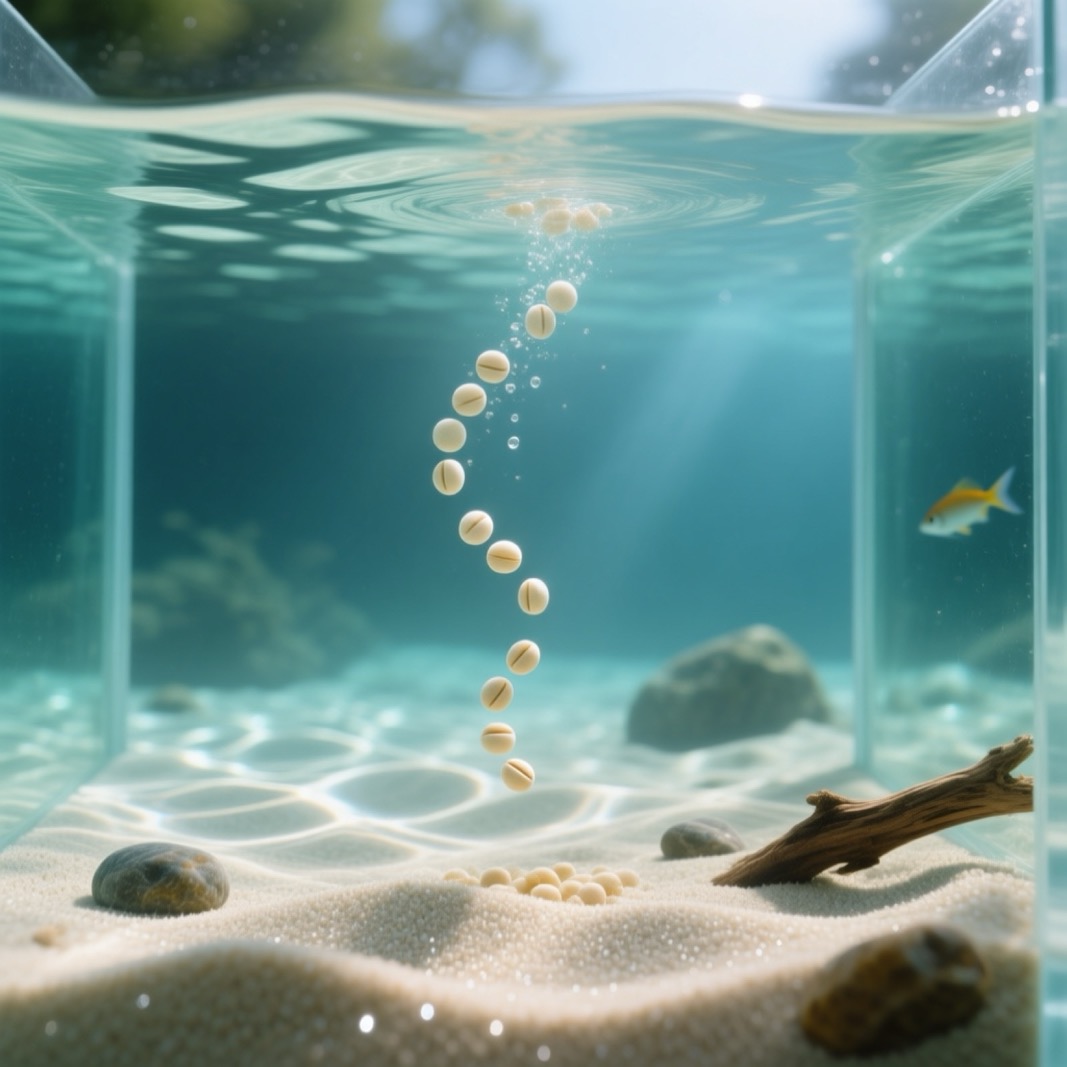
Pellets are the most convenient feeding option — no live food handling, no storage concerns, and they keep well. But there’s one non-negotiable requirement: pellets must sink. Axolotls hunt at the bottom, and floating food goes unnoticed, wastes into the water, and creates ammonia problems.
The substrate in your tank matters here too. Sinking pellets that land on fine sand are easy for axolotls to find and eat. On coarse gravel, pellets disappear between stones and the axolotl may ingest gravel while trying to eat them. For substrate guidance, our axolotl tank decor guide covers safe substrate choices.
Aquatic Foods Axolotl Sinking Pellets
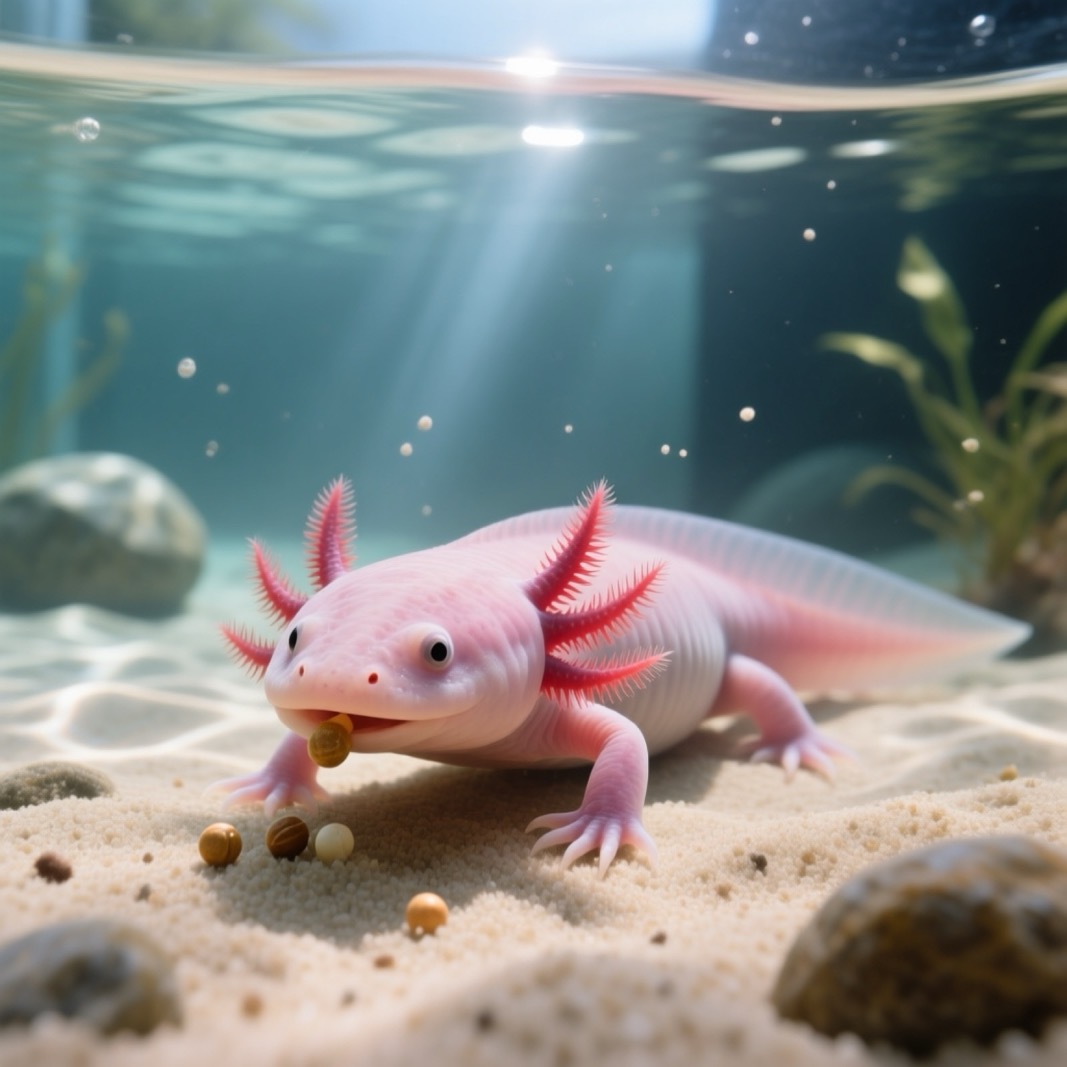
The Aquatic Foods axolotl sinking pellets are the only axolotl-specific pellet on Amazon. They’re formulated with salmon meal protein, sized at a quarter-inch for axolotl mouths, and designed as soft moist pellets that are easier to eat and digest than hard dry pellets. The sinking formula delivers food to the bottom where axolotls feed.
Atand $15.89, the numbers look good — until you notice the review count: just 6. And the reviews that exist are from catfish and oscar owners, not axolotl keepers. We simply don’t have enough axolotl-specific feedback to evaluate this product long-term. It’s a new product in a niche market.
I’d recommend these as a convenient staple if you can’t regularly source earthworms. Pair them with weekly worm feedings for balanced nutrition. If you try them, start with a small container to see how your axolotl responds before committing to a larger order.
Aqueon Shrimp Pellets
The Aqueon shrimp pellets are the most practical pellet option here. They’re a well-established product used by bottom-feeding fish keepers for years. The shrimp-based formula delivers 40%+ protein, which meets axolotl requirements. One owner confirmed they “go right to the bottom of the aquarium” — exactly what axolotls need.
At $6.97 for a 6.5-ounce container, the value is solid. These aren’t formulated specifically for axolotls — they’re general bottom-feeder food — but the nutritional profile works. Pellets may be too large for juveniles, though you can break them in half. Some owners have reported formula changes between batches, which is worth monitoring.
I’ve found these to be the most reliable pellet for adult axolotls. Use them as a convenient daily option alongside earthworms 2 to 3 times per week.
Aqueon Goldfish Granules
The Aqueon Goldfish Granules are the cheapest option at $5.59 with 1 and. The small granule size works for both juveniles and adults, which is convenient if you’re keeping axolotls of different ages in the same household.
The problems are significant. These are goldfish food, not axolotl food — the nutritional profile isn’t optimized for amphibians. Multiple owners report the granules “sink like a rock” and “drop like a rock” despite being labeled slow-sinking, which means they disappear into substrate before the axolotl can find them. One owner who expected slow-sinking behavior said “I didn’t think they’d drop like a rock.” That’s wasted food and degraded water quality. Some owners also noted the granules are “tiny pieces” that even smaller fish struggle to eat.
I’d only use these as a temporary budget option or supplement. For a long-term diet, Aqueon shrimp pellets or the axolotl-specific pellets are better choices. Remove uneaten granules after 15 minutes to prevent water quality issues. Feeding tongs are worth having on hand regardless of which pellet you choose — they let you place food directly in front of the axolotl and are essential for the bloodworm workaround I mentioned earlier.
Best Treat Foods for Axolotls
Treat foods serve a real purpose — they add variety, stimulate feeding response in picky eaters, and are useful for axolotls recovering from illness or stress. But two of the most popular treat options have serious caveats.
Tetra BloodWorms
The Tetra BloodWorms are one of the most-reviewed aquarium foods on Amazon — 15 and. Axolotls love the taste, and bloodworms reliably trigger an enthusiastic feeding response.
Here’s the critical problem: these do not sink. Multiple owners confirm this clearly. One said “they do not sink” and another called it “frustrating if you have bottom feeders.” For an animal that hunts exclusively at the bottom, floating food is a fundamental mismatch. Your axolotl may not even notice the bloodworms are there.
The workaround is to soak the bloodworms in tank water for 30 seconds, then squeeze them so they become waterlogged and sink. Or use feeding tongs to hold them directly in front of the axolotl’s mouth. Both methods work but add effort to what should be a simple treat.
Feed bloodworms only 1 to 2 times per week. Frozen bloodworms for axolotls work the same way — thaw them first and use the same sinking workaround. Either form is nutritionally incomplete — high in protein but lacking the calcium and balanced fat profile of earthworms. Using them as a staple leads to nutritional deficiencies over time.
Repashy Grub Pie
The Repashy Grub Pie is nutritionally one of the best prepared axolotl foods available. It’s a gel diet premix — you mix the powder with boiling water, let it set in the refrigerator, and cut it into pieces for feeding. The formula is specifically designed for insectivores and is highly regarded by axolotl breeders.
At $20.99 on Amazon for the 6oz jar, pricing is finally in a normal range versus specialty suppliers like Josh’s Frogs or direct from Repashy (typically $16–$20). That makes this a realistic top-tier prepared option rather than a third-party ripoff.
If you can find it at specialty retail, buy it there for potentially lower cost. Either way, it provides excellent nutrition with precise portion control and is a genuine alternative to live worms.
Temperature affects appetite and digestion in axolotls — warmer water speeds metabolism but increases stress. For the relationship between temperature and feeding, see our axolotl tank temperature guide.
Axolotl Feeding Schedule by Age
Feeding frequency is the area where most new owners make mistakes, and almost always in the direction of overfeeding. Axolotls have slow metabolisms and don’t need food as often as fish or other aquatic pets.
| Age | Size | Frequency | Portion Size | Best Foods |
|---|---|---|---|---|
| Baby | Under 3 inches | Daily | As much as eaten in 5 minutes | Live blackworms, bloodworms, daphnia |
| Juvenile | 3–6 inches | Daily | Moderate portion | Earthworms, bloodworms, sinking pellets |
| Adult | 6+ inches | Every 2–3 days | Roughly head-sized | Earthworms (staple), pellets (convenience), bloodworms (treat) |
The most important rule: remove uneaten food after 15 minutes. Leftover pellets or bloodworms break down quickly and spike ammonia levels, which stress the axolotl and degrade water quality. Use a turkey baster or small net to scoop out anything your axolotl hasn’t eaten.
Signs of overfeeding: regurgitation (the axolotl vomits food back up, often hours after eating), a persistently rounded or bloated belly, floating at the surface unable to sink, and sudden food refusal (if your axolotl consistently refuses meals, check out our guide on why your axolotl isn’t eating). If you see any of these, skip the next feeding and reduce portions going forward. In my experience, overfeeding is far more common than underfeeding — new owners tend to offer food every day out of habit, not realizing that adult axolotls simply don’t need that much.
Signs of underfeeding: visible ribs or hip bones, a thin or narrowing tail base, lethargy, and aggressive begging at the tank glass. A healthy adult axolotl should have a smooth, slightly rounded body profile — not fat, not skeletal.
One practical tip: establish a feeding schedule and stick to it. Feeding on set days (for example, Monday, Wednesday, Friday for adults) creates a routine your axolotl will learn to anticipate, which makes feeding sessions more interactive and reduces the chance of accidental overfeeding.
Foods to Never Feed Your Axolotl
Some foods that seem reasonable are actually dangerous:
Mammal meat (beef, pork, chicken) is too high in fat and the wrong protein structure for axolotls. It causes organ damage over time. Feeder fish like goldfish and rosy red minnows carry parasites and diseases, and contain thiaminase which blocks vitamin B1 absorption — this leads to neurological problems. Wild-caught insects carry pesticide exposure risk. Only feed store-bought or home-bred insects.
Hard-shelled prey (crabs, shrimp with shells) can cause impaction — blockages in the digestive tract that are dangerous and difficult to treat. Bread, pasta, vegetables, and fruit are plant matter that axolotls cannot digest at all. Dog and cat food have the wrong nutritional profile — too much fat, too many fillers, inadequate calcium.
Glow-in-the-dark or artificially dyed foods contain toxic additives. If a food product looks unnaturally bright or claims to glow, avoid it entirely. Processed human food of any kind — deli meats, hot dogs, seasoned or cooked foods — contains salt, spices, and preservatives that are harmful to axolotls.
The rule is straightforward: if it’s not a worm, an insect, or a formulated amphibian pellet, don’t feed it to your axolotl. Their digestive system is simple and specialized, and it doesn’t handle deviation well.
Conclusion
The most important takeaway from this guide is simple: earthworms first, everything else second. A diet built around live earthworms with sinking pellets for convenience and bloodworms as an occasional treat will keep your axolotl healthier than any Amazon product alone. The Amazon options covered here are useful supplements, but they’re not the foundation of a good axolotl diet — they’re the convenience layer on top of it.
The second takeaway: pellets must sink, bloodworms need a workaround, and prefer specialty-retail pricing on Repashy when Amazon markup creeps up. These practical details matter more than brand loyalty or review counts when you’re feeding a bottom-feeding amphibian with poor eyesight.
For axolotls, feeding isn’t complicated once you understand the basics: right food type, right frequency, right portion size, and always remove uneaten food. Stick with earthworms as the staple, use sinking pellets for days when live food isn’t convenient, and your axolotl will thrive.