Overview
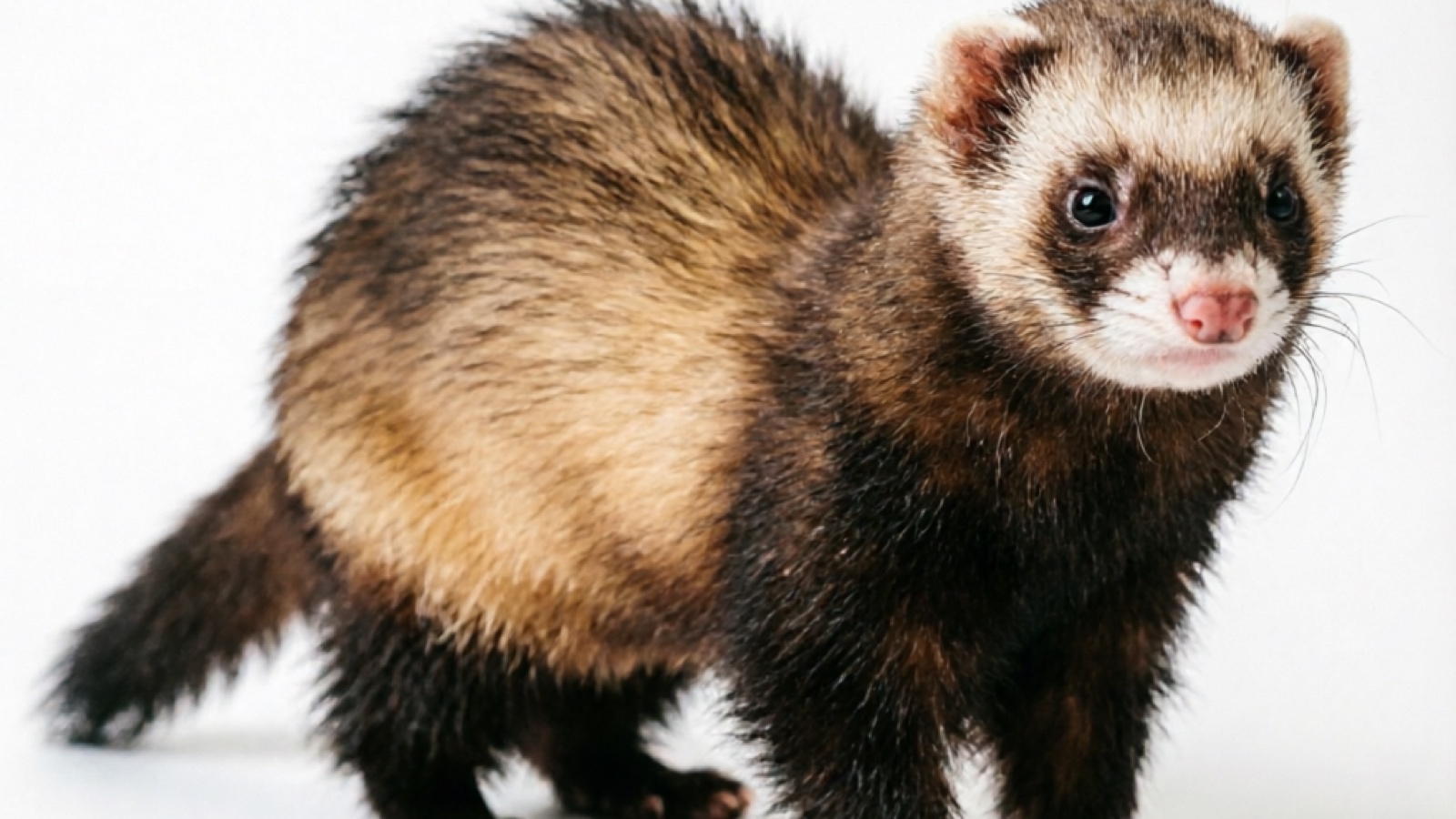
The sable ferret is the most common ferret color — the “default” that closely resembles their wild polecat ancestors. When most people picture a ferret, they’re picturing a sable. First-time ferret owners are most likely to encounter a sable at a pet store, shelter, or breeder. Despite being common, the sable comes in several striking variants that range from warm chocolate brown to near-black, and no two sable ferrets have exactly the same markings.
Color does not affect a ferret’s personality, health, or care needs. A sable ferret has the same playful, mischievous, social temperament as an albino ferret or cinnamon ferret. The difference is purely cosmetic.
Quick Facts
| Attribute | Details |
|---|---|
| Color Category | Sable (most common ferret color) |
| Adult Size | 15-20 inches (38-51 cm) body |
| Weight | 1.5-4 lbs (0.7-1.8 kg) |
| Lifespan | 5-8 years (average 6-7) |
| Temperament | Playful, curious, social |
| Activity | Crepuscular, sleeps 14-18 hours |
| Price | $150-$250 |
| Difficulty | Moderate to high |
Sable Ferret Variants
The sable category isn’t a single look — it encompasses several variants with noticeably different coloring. Here’s how they compare:
| Variant | Guard Hair Color | Undercoat | Mask | Legs/Tail | Price |
|---|---|---|---|---|---|
| Standard Sable | Dark brown | Cream/white | Distinct dark mask | Dark brown | $150-$200 |
| Black Sable | Near-black | Dark tan | Heavy dark mask | Black | $200-$250 |
| Dark Sable | Very dark brown | Tan | Dark mask | Dark brown-black | $175-$225 |
| Sable Mitt | Dark brown | Cream/white | Mask present | White paws | $150-$200 |
Standard Sable is the classic look — rich dark brown guard hairs on top with a clean cream undercoat visible on the belly and chest. The dark bandit mask around the eyes is usually well-defined and is the most recognizable feature of the sable.
Black Sable (sometimes simply called “black”) pushes the coloring as dark as it gets while still being classified as sable. The guard hairs are nearly black with minimal brown warmth, and the undercoat is darker than on a standard sable. These have a dramatic, high-contrast appearance that stands out even among other sables.
Dark Sable sits between standard and black sable — darker than the typical sable but with some brown tones still visible. The mask is usually darker and more pronounced than on a standard sable.
Sable Mitt has the standard sable coloring with one addition: white paws (mitts). The white can range from just the toes to extending partway up the legs. Sable mitts are popular with owners who like the classic sable look with a bit of visual variety.
Each variant has the same temperament and care needs. The difference is purely cosmetic — you’re not getting a different personality with a black sable versus a standard sable.
Appearance
A standard sable ferret has a distinctive look that’s easy to recognize once you know what to look for:
- Guard hairs (the longer outer fur): Dark brown to black on the back, sides, and tail. These form the dominant visible color.
- Undercoat (the shorter, softer inner fur): Light cream or white, visible on the belly, chest, and throat where the guard hairs are thinner.
- Mask: The dark “bandit mask” pattern around the eyes is the most iconic feature. It varies individually — some sables have a full, symmetrical mask, others have lighter or more diffuse markings.
- Legs and tail: Dark brown or black, consistent with the guard hair color.
- Nose: Dark brown to black.
- Eye color: Dark brown to black.
- Chin and belly: White or cream, creating contrast with the darker back.
No two sable ferrets have identical mask patterns. Some have bold, raccoon-like markings, while others have lighter, more subtle face patterns. The mask tends to darken and become more defined as the ferret matures from kit to adult.
Sable vs Other Ferret Colors
How does the sable compare to other popular ferret colors? Here’s a side-by-side look at the three colors most people consider:
| Feature | Sable | Albino | Cinnamon |
|---|---|---|---|
| Primary Color | Dark brown/black | Pure white | Reddish-brown |
| Eye Color | Dark brown/black | Pink/red | Burgundy/ruby |
| Mask | Dark bandit mask | None | Light or absent |
| Undercoat | Cream/white | White | Light golden |
| Price | $150-$250 | $100-$200 | $200-$350 |
| Availability | Very common | Common | Rare |
| Popularity | #1 most popular | Moderate | Low |
| Light Sensitivity | No | Yes (pink eyes) | Minimal |
The sable is the most affordable and easiest to find of the three. Albino ferrets are also relatively common and tend to cost slightly less because demand is lower. Cinnamon ferrets are the rarest and most expensive of this group.
Beyond these three, ferrets also come in champagne (tan/gold), silver (grey with white), chocolate (milky brown), black (solid black), and dark-eyed white (white with dark eyes). Each has its own distinct appearance, but the sable remains the standard by which all others are measured.
Temperament
Color does not affect ferret temperament — this is worth emphasizing because it’s one of the most common questions from prospective ferret owners. A sable ferret is just as playful, curious, and social as any other color. They dook (that happy clucking sound), war dance (the frantic sideways bouncing), bond with their owners, steal socks, stash treasures, and get into everything — just like every other ferret.
Individual personality varies from ferret to ferret, not from color to color. One sable might be outgoing and bold, while another is more cautious and shy. This has everything to do with the individual animal and nothing to do with their coat color. For a complete guide to understanding ferret behavior, see our ferret behavior guide.
Care Requirements
Sable ferrets need the same care as all ferrets. There are no color-specific care considerations for the sable — their darker coat doesn’t require any special grooming or maintenance beyond standard ferret care.
Diet: Ferrets are obligate carnivores. Feed a quality ferret-specific kibble with 35-40% protein and 15-20% fat from animal sources. Always keep food available — ferrets digest food every 3-4 hours and need to eat frequently. For the complete guide to feeding, see our ferret diet and nutrition guide.
Housing: A multi-level cage with bar spacing no wider than 1 inch. Ferrets need at least 4 hours of supervised out-of-cage time daily. For cage recommendations and setup advice, see our ferret cage guide.
Health: Regular exotic vet checkups are essential. Ferrets are prone to several serious conditions — see the Health section below for details.
Lifespan: Sable ferrets live 5-8 years on average, with proper care. For more on factors that affect ferret lifespan, see our ferret lifespan guide.
Medical Disclaimer: This article is for informational purposes only and does not constitute veterinary advice. If your ferret shows signs of illness, contact an exotic animal veterinarian immediately.
Health
Sable ferrets have no color-specific health issues. They’re prone to the same conditions that affect all ferrets regardless of coat color:
- Adrenal disease (typically appears at 3-5 years): Hair loss starting at the tail, behavioral changes. Treatable with surgery or medication.
- Insulinoma (typically appears at 2-4 years): Low blood sugar causing shaking, lethargy, seizures. Requires immediate vet attention.
- Lymphoma (any age): Lumps, weight loss, lethargy. Treatment options vary.
These conditions are common in all ferrets and are related to genetics and diet — not coat color. Annual vet exams with an exotic animal veterinarian are the best way to catch problems early. For detailed information on all common ferret health problems, symptoms, and treatments, see our ferret health problems guide.
Cost of Ownership
| Category | Cost |
|---|---|
| Sable ferret (from breeder) | $150-$250 |
| Adoption from shelter | $50-$150 |
| Cage setup | $200-$500 |
| Initial supplies | $70-$200 |
| Monthly food and supplies | $40-$80 |
| Annual vet exam | $100-$200 |
| Lifetime (6-7 years) | $4,000-$7,000 |
The sable is one of the most affordable ferret colors to purchase. The ongoing costs are the same regardless of color — food, litter, vet care, and supplies add up over a 6-8 year lifespan. The biggest variable cost is veterinary care for the common ferret health conditions listed above. Budgeting for at least one major vet expense over your ferret’s lifetime is realistic planning.
Frequently Asked Questions
What is a sable ferret?
A sable ferret is the most common ferret color type — it’s the “default” color that closely resembles wild European polecats. Sable ferrets have dark brown to black guard hairs on their back, sides, and tail, with a lighter cream or white undercoat on the belly and chest. They typically have a dark “bandit mask” pattern around their eyes and dark legs and tail. Sable is the baseline ferret color that all other color mutations are compared against.
How much does a sable ferret cost?
Sable ferrets typically cost $150-$250 from a breeder, making them one of the most affordable ferret colors. Standard sables are at the lower end ($150-$200), while black sables and dark sables with particularly rich coloring may cost $200-$250. Pet store ferrets are often sable and cost $100-$200. Adoption from a ferret shelter is usually $50-$150 and often includes spay/neuter and vaccinations.
Are sable ferrets good pets?
Yes — sable ferrets make excellent pets. They have the same personality as all ferrets regardless of color: playful, curious, social, and they form strong bonds with their owners. Color does not affect temperament in ferrets. A sable ferret needs the same care as any other ferret: 4+ hours of out-of-cage time daily, high-protein diet, large cage, and regular exotic vet care.
What is the difference between sable and black sable ferrets?
The difference is in the intensity of the dark coloring. A standard sable has rich dark brown guard hairs with a clear cream undercoat and distinct mask. A black sable has nearly black guard hairs with very little brown tone and a darker undercoat. Black sables have a more dramatic, high-contrast look. A dark sable falls between the two — darker than standard but not as intense as black sable.
What colors do ferrets come in?
Ferrets come in 8 main color categories: sable (dark brown, most common), albino (white with red eyes), cinnamon (reddish-brown), champagne (tan/gold), silver (grey with white), black (solid black), chocolate (milky brown), and dark-eyed white (white with dark eyes). Each category can have pattern variations like mitts (white feet), blaze (white stripe on head), and panda (white head and bib). Sable is by far the most common, while cinnamon and silver are the rarest.
Related Breeds: Albino ferret · Cinnamon ferret
Care Guides: Ferret care · Ferret health · Ferret diet · Ferret behavior · Ferret cage · Ferret lifespan