Overview
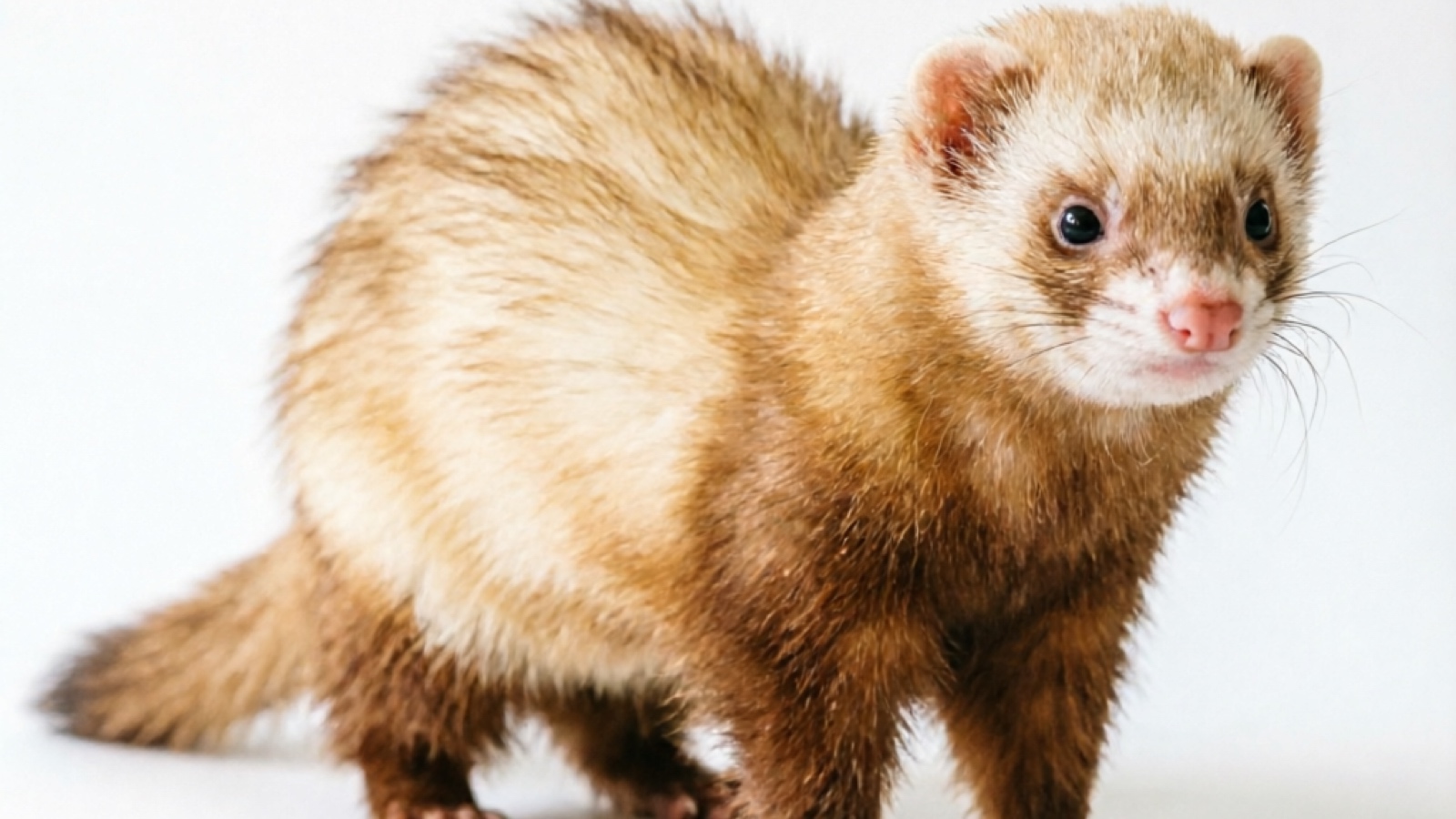
The cinnamon ferret is one of the rarest and most visually distinctive ferret colors. Their warm reddish-brown coat — reminiscent of the spice they’re named after — sets them apart from the more common sable and albino varieties. Because true cinnamon coloring requires specific recessive genetics, these ferrets are harder to find and command higher prices than more common colors.
Despite their unique appearance, cinnamon ferrets have the same personality and care needs as all ferrets. The rarity is purely cosmetic — a cinnamon ferret doesn’t require any special care, eat differently, or behave differently from any other color. They’re just harder to find and more expensive to purchase.
Quick Facts
| Attribute | Details |
|---|---|
| Color Category | Cinnamon (rare) |
| Adult Size | 15-20 inches (38-51 cm) |
| Weight | 1.5-4 lbs (0.7-1.8 kg) |
| Lifespan | 5-8 years |
| Eye Color | Burgundy/ruby/dark reddish-brown |
| Fur Color | Reddish-brown, warm-toned |
| Price | $200-$350 |
| Rarity | One of the rarest standard colors |
Appearance
A cinnamon ferret has a warm, distinctive look that’s noticeably different from both the cool-toned sable and the pure white albino:
- Guard hairs: Reddish-brown with warm tones — the color of ground cinnamon spice. The warmth comes from red undertones in the brown.
- Undercoat: Light golden or cream, providing a subtle contrast with the darker guard hairs.
- Mask: Light or absent. Unlike sables, cinnamon ferrets typically have minimal or no bandit mask pattern around the eyes. This is one of the quickest ways to distinguish a cinnamon from a light sable.
- Legs and tail: Reddish-brown, may be slightly lighter than the back.
- Nose: Pink, tan, or liver-colored — not black like a sable.
- Eyes: Burgundy, ruby, or dark reddish-brown. This warm-toned eye color complements the coat.
- Ears: Light-colored edges with pinkish inside.
The defining feature of a cinnamon ferret is the warm reddish tone of the coat. Unlike sable (cool-toned dark brown) or champagne (yellowish-tan), true cinnamon has a distinctly red undertone throughout. The overall impression is warm, rich, and unusual compared to the more common ferret colors.
Cinnamon Variants
Like other ferret colors, cinnamon comes in a few variations:
| Variant | Description | Eye Color | Rarity |
|---|---|---|---|
| Standard Cinnamon | Rich reddish-brown, minimal or no mask | Burgundy/ruby | Rare |
| Cinnamon Pastel | Lighter, more diluted cinnamon tone | Lighter ruby | Very rare |
| Cinnamon Mitt | Standard cinnamon coloring with white paws | Burgundy/ruby | Uncommon |
The standard cinnamon is the most commonly encountered of the three. The cinnamon pastel is the lightest version — some pastels are so diluted that they can be confused with champagne ferrets, though the reddish undertone is usually still visible on close inspection. The cinnamon mitt adds white paws to the standard cinnamon look, similar to the sable mitt pattern.
Cinnamon vs Champagne
This is the most common confusion among warm-toned ferret colors. Both are warm, but they’re clearly different once you know what to look for:
| Feature | Cinnamon | Champagne |
|---|---|---|
| Color Tone | Reddish-brown (warm red) | Tan/gold (warm yellow) |
| Comparison | Like ground cinnamon spice | Like champagne or weak tea |
| Intensity | Deeper, more saturated | Lighter, more diluted |
| Undercoat | Golden/cream | White/cream |
| Eye Color | Burgundy/ruby | Light ruby or dark |
| Mask | Light or absent | Light or absent |
| Price | $200-$350 | $150-$250 |
| Availability | Rare | Less rare than cinnamon |
| Gene | Different recessive gene | Dilution gene |
The simplest way to tell them apart: look at the overall warmth of the coat. More red = cinnamon, more yellow = champagne. Think of cinnamon spice versus a glass of champagne — one is reddish-brown, the other is golden-tan. The eye color can help too: burgundy or ruby eyes point toward cinnamon, while darker or more neutral eyes are more common in champagne.
Cinnamon vs Sable vs Albino
| Feature | Cinnamon | Sable | Albino |
|---|---|---|---|
| Color | Reddish-brown | Dark brown/black | Pure white |
| Eyes | Burgundy/ruby | Dark brown | Pink/red |
| Mask | Light/absent | Dark bandit mask | None |
| Price | $200-$350 | $150-$250 | $100-$200 |
| Rarity | Rare | Very common | Common |
| Light Sensitivity | Minimal | No | Yes |
The cinnamon occupies an interesting position: the most expensive to purchase but requiring the same care as the others. The higher price is purely a supply-and-demand reflection of their rarity. If you’re choosing between these three, let availability and personal preference guide you — not the assumption that a more expensive color is somehow “better.”
Temperament
Color does not affect ferret temperament. A cinnamon ferret has the same playful, curious, social personality as a sable ferret, albino ferret, or any other color. They dook, war dance, stash treasures, and bond with their owners just like every other ferret.
Individual personality varies from ferret to ferret — some cinnamons are bold explorers, others are more cautious. This has nothing to do with their coat color and everything to do with their individual temperament and early socialization. For more on understanding ferret behavior, see our ferret behavior guide.
Care Requirements
Cinnamon ferrets need the same care as all ferrets. There are no color-specific care considerations:
- Diet: High-protein ferret-specific kibble (35-40% protein, 15-20% fat from animal sources). Free-feed for adults.
- Housing: Multi-level cage with bar spacing ≤ 1 inch. Minimum 4 hours of supervised out-of-cage time daily.
- Health: Regular exotic vet exams. Same common conditions as all ferrets.
- Lifespan: 5-8 years with proper care.
The warm reddish coat of a cinnamon ferret does show dirt slightly more than a darker sable, but less than a white albino. Regular nail trims, ear cleaning, and coat brushing (which all ferrets need) are sufficient to keep a cinnamon looking its best.
Medical Disclaimer: This article is for informational purposes only and does not constitute veterinary advice. If your ferret shows signs of illness, contact an exotic animal veterinarian immediately.
Health
Cinnamon ferrets have no color-specific health issues. They’re prone to the same conditions that affect all ferrets:
- Adrenal disease (typically 3-5 years): Hair loss starting at the tail, aggression, swollen vulva in females. Treatable with surgery or medication.
- Insulinoma (typically 2-4 years): Low blood sugar causing shaking, glazed eyes, and seizures. Medical emergency requiring immediate attention.
- Lymphoma (any age): Lumps, weight loss, lethargy. Treatment varies by type and stage.
These are genetic and age-related conditions that affect ferrets regardless of coat color. Annual checkups with an exotic animal veterinarian are the best prevention strategy. For detailed information, see our ferret health problems guide.
Cost of Ownership
| Category | Cost |
|---|---|
| Cinnamon ferret (breeder) | $200-$350 |
| Cage setup | $200-$500 |
| Initial supplies | $70-$200 |
| Monthly food and supplies | $40-$80 |
| Annual vet exam | $100-$200 |
| Lifetime (6-7 years) | $4,000-$7,500 |
The cinnamon ferret’s higher purchase price is the main cost difference. Ongoing expenses — food, litter, supplies, and veterinary care — are identical across all ferret colors. Over a 6-8 year lifespan, the purchase price becomes a small fraction of total ownership cost. The biggest financial variable, as with all ferrets, is veterinary care for common conditions like adrenal disease and insulinoma.
One practical note: because cinnamon ferrets are harder to find, you may need to travel to a specialized breeder or wait on a waiting list. Factor in potential travel costs and the time investment when budgeting.
Frequently Asked Questions
Are cinnamon ferrets rare?
Yes — cinnamon ferrets are one of the rarest standard ferret colors. The cinnamon coloration requires a specific recessive gene combination that produces the reddish-brown coat, and it’s less commonly bred intentionally than sable or albino. Finding a true cinnamon ferret usually requires searching through specialized breeders rather than pet stores. Because of their rarity, they command a higher price ($200-$350) compared to sable ($150-$250) or albino ($100-$200).
What is the difference between a cinnamon and champagne ferret?
The difference is in the color tone. Cinnamon ferrets have a distinct reddish-brown coat — think of the spice cinnamon itself. Their guard hairs are warm-toned with reddish highlights, and they often have burgundy or ruby-colored eyes. Champagne ferrets have a more diluted, tan or golden tone — like champagne or diluted coffee. Champagne is lighter and yellower, while cinnamon is darker and more red. Both are warm-toned but sit at different points on the color spectrum.
How much does a cinnamon ferret cost?
Cinnamon ferrets cost between $200 and $350 from a reputable breeder. The higher price reflects their rarity rather than any difference in care needs or health. Show-quality cinnamon ferrets with particularly rich coloring can exceed $350. They’re rarely found in pet stores. If you find a “cinnamon” ferret for under $150, verify it’s a true cinnamon and not a light sable or champagne being mislabeled.
Do cinnamon ferrets have red eyes?
Most cinnamon ferrets have burgundy, ruby, or dark reddish-brown eyes — not bright red like an albino. The eye color ranges from a warm dark brown with reddish tints to a more obvious ruby hue. Some cinnamon ferrets may have lighter eyes, especially the cinnamon pastel variant. This is different from albino red eyes — cinnamon eye color is a warm-toned dark eye, not a pink/red eye from lack of pigment.
What colors do ferrets come in?
Ferrets come in 8 main color categories: sable (dark brown, most common), albino (white with red eyes), cinnamon (reddish-brown, rare), champagne (tan/gold), silver (grey with white), black (solid black), chocolate (milky brown), and dark-eyed white (white with dark eyes). Each category can have pattern variations like mitts (white paws), blaze (white stripe on head), and panda (white head and bib). Sable is the most common and cinnamon is among the rarest.
Related Breeds: Sable ferret · Albino ferret
Care Guides: Ferret care · Ferret health · Ferret diet · Ferret behavior · Ferret cage · Ferret lifespan