Overview
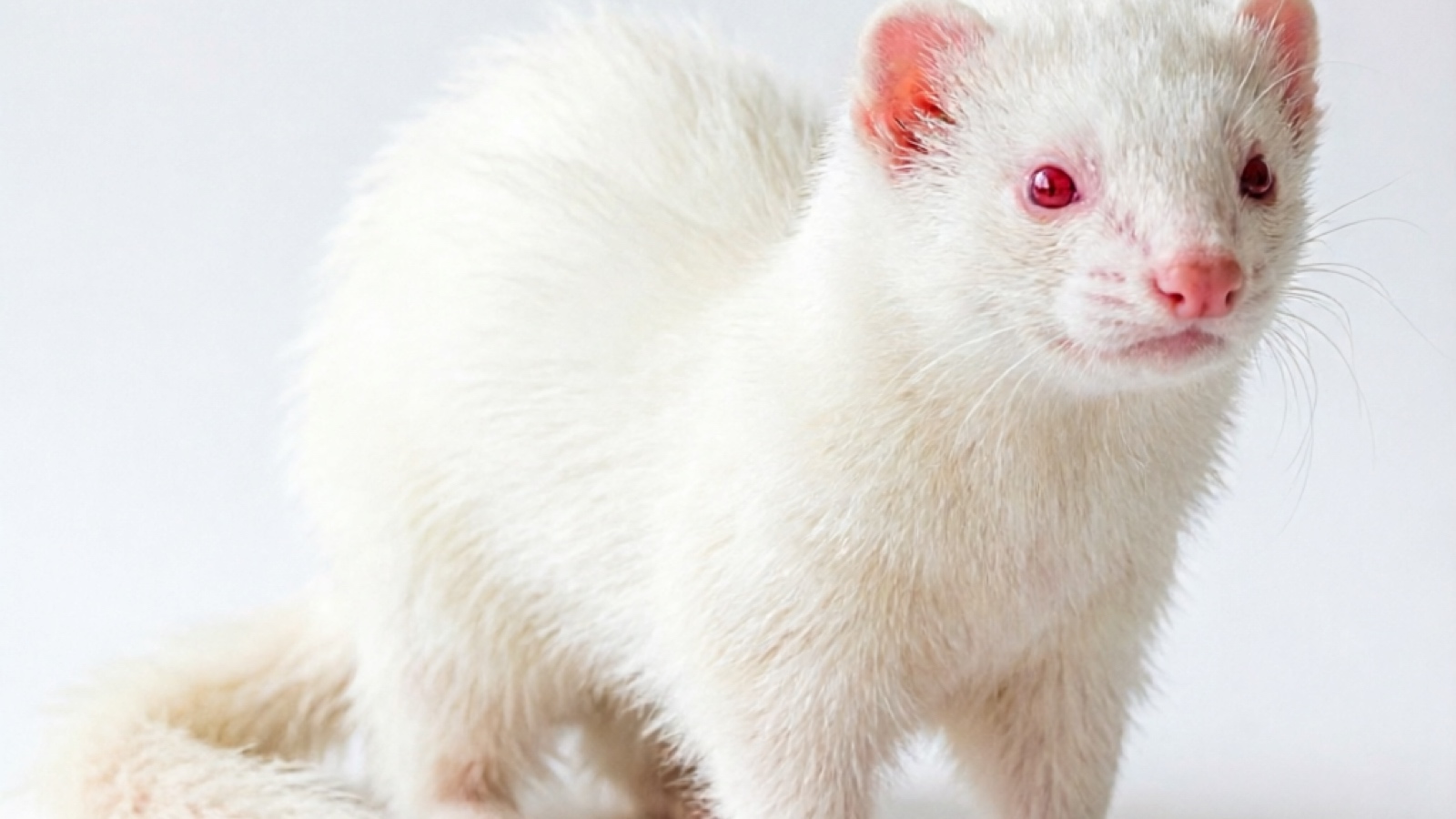
The albino ferret is one of the most visually striking ferret colors — pure white fur with pink or red eyes that make them instantly recognizable. They’re the result of a recessive genetic mutation that prevents melanin (pigment) production throughout the body. Despite their unusual appearance, albino ferrets have the same playful, social personality as all ferrets, and they’re more common than many people assume.
The most common misconceptions about albino ferrets — that they’re deaf, blind, or aggressive — are all false. Albinism in ferrets affects only pigment, not hearing, vision function, or temperament. Understanding what albinism actually means (and doesn’t mean) is the key to appreciating these unique-looking ferrets.
Quick Facts
| Attribute | Details |
|---|---|
| Color Category | Albino (no melanin) |
| Adult Size | 15-20 inches (38-51 cm) |
| Weight | 1.5-4 lbs (0.7-1.8 kg) |
| Lifespan | 5-8 years |
| Eye Color | Pink/red |
| Fur Color | Pure white (no patches) |
| Price | $100-$200 |
| Light Sensitivity | Yes (pink eyes) |
Appearance
The albino ferret has a clean, unmistakable look that sets it apart from every other ferret color:
- Fur: Pure white from nose to tail. No patches, tipping, shading, or color variation anywhere on the body. Completely uniform white.
- Eyes: Pink or red — the color comes from blood vessels showing through the unpigmented iris. This is the quickest way to identify an albino. No other ferret color has this eye color.
- Nose: Pink (unpigmented, unlike the dark nose of a sable ferret).
- Ears: Pink inside with very light fur on the outside.
- Skin: Pink and visible through the thin fur in areas like the ears, belly, and nose.
The complete absence of pigment is what makes albino ferrets look so different from dark-eyed white (DEW) ferrets. If a ferret has white fur but dark eyes, it’s a DEW — not an albino. The eye color is the definitive identifier.
Albino vs Dark Eyed White (DEW)
This is the most common source of confusion. Both are “white ferrets,” but they’re genetically and visually distinct:
| Feature | Albino | Dark Eyed White (DEW) |
|---|---|---|
| Eye Color | Pink/red | Dark (brown/black) |
| Fur | Pure white, no patches | White, may have tiny color patches |
| Gene Type | Recessive (no melanin production) | Dominant lethal factor (white pattern gene) |
| Light Sensitivity | Yes — squints in bright light | No — dark eyes handle light normally |
| Nose Color | Pink | Pink or dark |
| Availability | Common | Less common |
| Price | $100-$200 | $150-$250 |
The eye color tells you everything. Pink or red eyes mean albino. Dark eyes on a white ferret mean DEW. Beyond appearance, the practical difference is light sensitivity — albino ferrets are bothered by bright light, while DEW ferrets are not.
Vision and Hearing
Two myths about albino ferrets come up repeatedly: that they’re blind and that they’re deaf. Neither is true.
Vision
Albino ferrets can see, but their vision works differently in bright light. The unpigmented iris can’t constrict as effectively as a pigmented one, which means more light enters the eye than the ferret can comfortably process. In bright environments, albino ferrets will squint, blink excessively, or avoid the area entirely.
In normal indoor lighting or dim conditions, their vision is adequate. They navigate their environment, play with toys, chase things, and respond to movement just fine. It’s worth noting that ferrets in general — regardless of color — are not visually driven animals. They rely primarily on their excellent sense of smell and hearing to interact with the world. Vision is their weakest sense, and this is true for sables, albinos, and every color in between.
Hearing
Albino ferrets have completely normal hearing. The gene that causes albinism affects melanin production — it does not affect the structures of the inner ear. This myth likely stems from confusion with white cats that have blue eyes, where there IS a known genetic link between white coat, blue eyes, and deafness. That linkage does not exist in ferrets. Albino ferrets respond to sounds, their name, and dooking just like any other ferret.
Albino vs Sable vs Cinnamon
| Feature | Albino | Sable | Cinnamon |
|---|---|---|---|
| Color | Pure white | Dark brown/black | Reddish-brown |
| Eyes | Pink/red | Dark brown | Burgundy |
| Mask | None | Dark bandit mask | Light or none |
| Price | $100-$200 | $150-$250 | $200-$350 |
| Rarity | Common | Very common | Rare |
| Light Sensitivity | Yes | No | Minimal |
The albino sits in the middle on price and availability — more common and less expensive than cinnamon, but less universally popular than the sable. Some people are drawn to the striking white-and-red-eye look, while others prefer the more natural appearance of darker colors.
Care Requirements
Albino ferrets need the same fundamental care as all ferrets, with one notable addition:
Light management: Because their eyes lack pigment, albino ferrets are more sensitive to bright light. Keep their cage in a room with indirect or moderate lighting. Avoid placing the cage near windows with direct sunlight or under bright overhead lights. Some albino ferret owners notice their pets are more active during dawn, dusk, and nighttime — this is natural, as lower light conditions are more comfortable for them.
Standard ferret care that applies equally to albino ferrets:
- Diet: High-protein ferret-specific kibble (35-40% protein, 15-20% fat). Always available — ferrets need to eat every 3-4 hours.
- Housing: Multi-level cage with bar spacing ≤ 1 inch. Minimum 4 hours of supervised out-of-cage time daily.
- Health: Regular exotic vet exams. Watch for adrenal disease, insulinoma, and lymphoma — the same conditions that affect all ferrets.
- Lifespan: 5-8 years with proper care.
- Behavior: Dooking, war dancing, social bonding — albino ferrets do everything other ferrets do.
Medical Disclaimer: This article is for informational purposes only and does not constitute veterinary advice. If your ferret shows signs of illness, contact an exotic animal veterinarian immediately.
Health
Albino ferrets have no color-specific health issues. Albinism in ferrets is a cosmetic genetic trait — it does not make them more susceptible to disease, weaken their immune system, or shorten their lifespan. They’re prone to the same conditions that affect all ferrets:
- Adrenal disease (typically 3-5 years): Hair loss, behavioral changes. Treatable.
- Insulinoma (typically 2-4 years): Low blood sugar, shaking, seizures. Medical emergency if untreated.
- Lymphoma (any age): Weight loss, lethargy, swollen lymph nodes.
The one health-adjacent consideration is eye health. Because their eyes lack pigment, albino ferrets may be slightly more prone to photophobia (light sensitivity) and potentially to UV-related eye damage over time. Keeping them out of direct sunlight is the main precaution. For comprehensive health information, see our ferret health problems guide.
Cost of Ownership
| Category | Cost |
|---|---|
| Albino ferret (breeder) | $100-$200 |
| Pet store | $80-$150 |
| Shelter adoption | $50-$100 |
| Cage setup | $200-$500 |
| Initial supplies | $70-$200 |
| Monthly food and supplies | $40-$80 |
| Annual vet exam | $100-$200 |
| Lifetime (6-7 years) | $3,500-$6,500 |
Albino ferrets are typically the least expensive color to purchase — their lower demand means breeders and pet stores price them below sables and cinnamons. The ongoing costs are identical across all colors. The lifetime total reflects the reality of ferret ownership: the purchase price is a small fraction of what you’ll spend over their 6-8 year lifespan, with veterinary care being the biggest variable expense.
Frequently Asked Questions
Are albino ferrets rare?
No — albino ferrets are not particularly rare. They’re actually one of the more common ferret colors available. Albinism in ferrets is a well-established recessive mutation that has been selectively bred for decades. They’re commonly found at pet stores, breeders, and shelters. Price-wise, albino ferrets are often slightly cheaper than sable ($100-$200 vs $150-$250) because demand is lower, not because they’re scarce.
Are albino ferrets deaf?
No — albino ferrets are not deaf. The gene responsible for albinism affects only melanin production, not the structures of the inner ear. Unlike white cats with blue eyes (where there IS a deafness link), albinism in ferrets does not affect hearing at all. Albino ferrets hear normally and respond to sounds the same way as any other ferret.
Can albino ferrets see?
Yes — albino ferrets can see, but their vision has differences from pigmented ferrets. The lack of pigment in the iris means their pupils can’t constrict as effectively, making them more sensitive to bright light. They may squint or avoid well-lit areas. In normal or dim lighting, their vision is functional. Most ferrets rely primarily on smell and hearing rather than vision, and this is equally true for albino ferrets.
What is the difference between albino and dark eyed white ferrets?
The key difference is eye color and genetics. Albino ferrets have pure white fur with pink/red eyes due to a complete lack of melanin (recessive gene). Dark eyed white (DEW) ferrets have white fur but dark eyes — they carry the white pattern gene (dominant lethal factor) rather than the albino gene. DEW ferrets may have small patches of color, while albinos are pure white. DEW ferrets don’t have the light sensitivity issues of albino ferrets.
Do albino ferrets need special care?
Albino ferrets need the same care as all ferrets with one exception: light management. Because their eyes lack pigment, they’re more sensitive to bright light. Keep their cage in indirect lighting and avoid direct sunlight. Some albino ferrets are more active at night when light is lower. Otherwise, they need the same diet, cage, out-of-cage time, and vet care as any other ferret.
Related Breeds: Sable ferret · Cinnamon ferret
Care Guides: Ferret care · Ferret health · Ferret diet · Ferret behavior · Ferret cage · Ferret lifespan