A proper turtle tank setup is the foundation of your aquatic turtle’s health and longevity. Whether you’re housing a red-eared slider, a painted turtle, or a map turtle, getting the habitat right from day one prevents costly vet visits and keeps your pet thriving for decades.
This guide covers every component of a healthy turtle tank setup—from tank size and water quality to basking platforms and lighting. Each section includes specific product recommendations so you can build a complete habitat with confidence.
Choose the Right Tank Size
The most common mistake new turtle owners make is underestimating how much space their turtle needs. Aquatic turtles are active swimmers, and cramped tanks lead to stress, shell deformities, and poor water quality.
General rule: Provide at least 10 gallons of water per inch of shell length for a single turtle. A fully grown red-eared slider (8–12 inches) needs 80–120 gallons minimum.
| Turtle Size | Shell Length | Minimum Tank |
|---|---|---|
| Hatchling | 1–2 inches | 20 gallons |
| Juvenile | 2–4 inches | 40 gallons |
| Sub-adult | 4–6 inches | 55–75 gallons |
| Adult | 6+ inches | 75–120+ gallons |
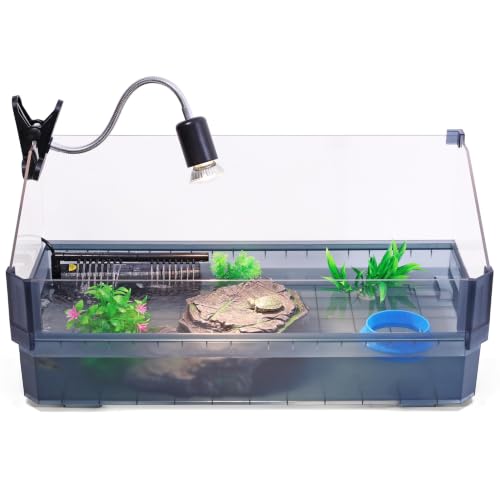
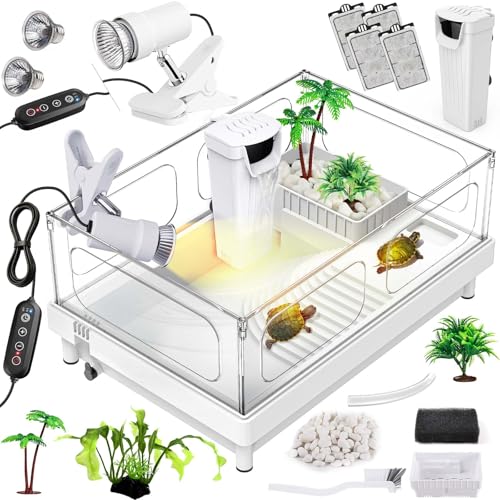
For beginners, an all-in-one approach simplifies the turtle tank setup process. Starter kits like the Large Turtle Tank Starter Kit work for hatchlings, but you’ll need to upgrade within the first year as your turtle outgrows the included filter and space.
Kits hide undersized glass — 10 gallons of water per inch of shell is the buying filter before you pick a filter.
Key tip: Horizontal swimming space matters more than depth. A 75-gallon long tank (48 × 18 × 20 inches) is better than a tall tank of the same volume because it gives your turtle more room to swim.
Water Depth and Quality
Aquatic turtles need enough water depth to swim comfortably and right themselves if they flip over. Fill the tank so the water level is at least twice the length of your turtle’s shell.
Water parameters to monitor:
- Temperature: 75–80°F (24–27°C) for most aquatic turtles
- pH: 6.5–7.5
- Ammonia/Nitrite: 0 ppm (any detectable level is toxic)
- Nitrate: Below 40 ppm
Invest in a reliable submersible aquarium heater and a digital thermometer. Turtles produce significantly more waste than fish, so maintaining water quality requires a filter rated for at least twice your tank’s actual volume.
Filtration: The Most Critical Component
Turtle tanks produce more biological waste than almost any other aquarium setup. An undersized filter leads to cloudy water, foul odors, and harmful ammonia spikes that can burn your turtle’s eyes and skin.
Filter types for turtle tanks:
-
Canister filters — Best for turtle tanks 40 gallons and up. They handle large biological loads, stay out of the tank (more swimming space), and are easy to maintain. Look for models rated for tanks 2–3× your actual volume.
-
Hang-on-back (HOB) filters — Adequate for hatchling setups under 30 gallons. They’re affordable but clog quickly with turtle waste.
-
Internal/submersible filters — Good as supplementary filtration or for very small temporary setups. Not sufficient as the primary filter for adult turtle tanks.
Change filter media regularly and rinse biological media with tank water (not tap water) to preserve beneficial bacteria.
The Basking Area
Every aquatic turtle needs a dry basking platform where they can climb completely out of the water. Turtles bask to regulate their body temperature, digest food, absorb UVB for calcium metabolism, and dry their shells to prevent fungal infections.
Basking platform requirements:
- Large enough for the turtle to fit its entire body on
- Easy to climb onto (ramp or gradual slope)
- Positioned under the heat and UVB lamps
- Made of non-abrasive material that won’t scratch the plastron
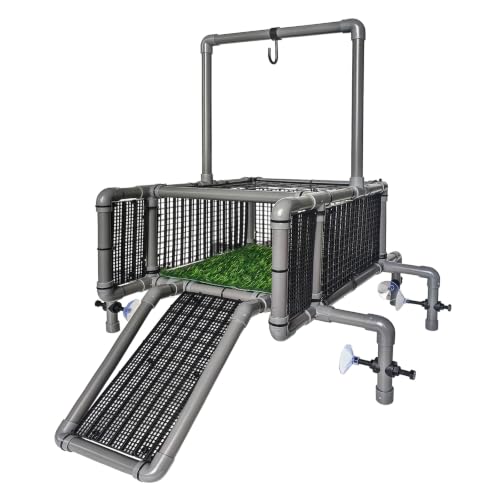
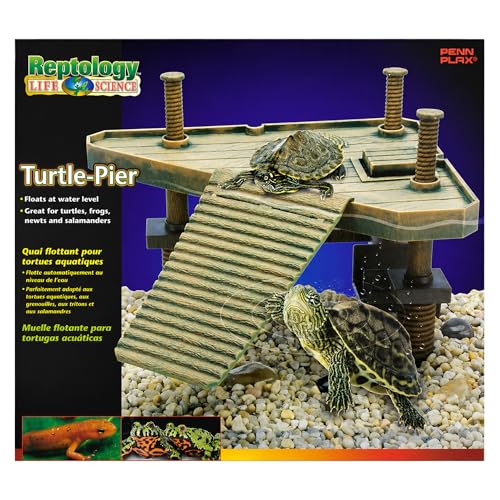
Available options range from simple floating docks to elaborate above-tank platforms. The Penn-Plax Reptology Aquatic Turtle Pier is a floating option that works well for smaller tanks, while above-tank platforms like the OEBEESA Above Tank Turtle Platform save swimming space in larger setups by using the area above the tank.
DIY option: Stack large, flat river rocks to create a natural-looking basking island. Make sure the rocks are stable and there are no gaps where a small turtle could get trapped.
Heat Lamp and UVB Lighting
Proper lighting is non-negotiable for aquatic turtles. Without correct heat and UVB exposure, turtles develop metabolic bone disease (MBD), which causes soft, deformed shells and can be fatal.
Two separate bulbs are required:
-
Heat lamp (basking bulb): A standard incandescent or halogen bulb that creates a basking spot temperature of 85–95°F (29–35°C). Use a dome fixture with a clamp to position it over the basking platform. The Zoo Med Repti Basking Spot Lamp is widely used for this purpose.
-
UVB bulb: Provides the UVB radiation turtles need to synthesize vitamin D3 and absorb dietary calcium. Use a fluorescent tube (T5 HO is best) or a compact fluorescent bulb rated for reptiles. Every successful turtle tank setup requires replacing UVB bulbs every 6–12 months even if they still emit visible light—the UVB output degrades over time.
Position the UVB bulb so it covers the entire basking area. Glass and plastic block UVB, so mount the fixture directly above the tank with no barrier between the bulb and your turtle.
Lighting schedule: Maintain a consistent 10–12 hours on, 12–14 hours off cycle. A simple outlet timer automates this and prevents stress from irregular lighting.
Substrate: To Use or Not to Use
Substrate in a turtle tank is optional and depends on your priorities:
Bare-bottom (no substrate): The easiest to clean and the safest option. Waste sits on the glass and gets pulled into the filter. This is the recommended approach for beginners.
Large river rocks: Provide a natural look without the risk of impaction. Rocks must be too large for the turtle to swallow. Avoid gravel—turtles can and will eat small gravel, leading to intestinal blockages.
Sand: Can work for some species but requires strong filtration and regular siphoning. Fine sand packs tightly and traps waste, making it harder to keep clean.
Play sand: An affordable option for larger setups. Rinse thoroughly before adding. Not recommended for small tanks or hatchlings.
If you choose substrate, layer it 1–2 inches deep and siphon waste during weekly water changes.
Decorations and Hiding Spots
While turtles don’t need elaborate décor, adding structure improves their quality of life and reduces stress.
Recommended additions:
- Driftwood or cork bark — Provides climbing surfaces and creates natural barriers. Make sure pieces are too large to be swallowed.
- Live or artificial aquatic plants — Offer hiding spots for hatchlings. Note that most turtles will eat or destroy live plants, so artificial plants are more practical for adults.
- PVC pipe sections — Inexpensive hiding tunnels that turtles enjoy exploring.
- Floating islands — Supplement the main basking area with additional resting spots.
Avoid anything with sharp edges, small parts that can be ingested, or materials that degrade in water.
Feeding Area Setup
Many turtle keepers dedicate a section of the tank for feeding. While optional, a designated feeding area helps in two ways:
-
Reduces waste: Feeding in a separate container or a specific area makes it easier to remove uneaten food before it fouls the water.
-
Prevents aggression: If you house multiple turtles, feeding them in the same area reduces competition and ensures each turtle gets enough food.
For pellets and dried foods, a feeding dock or clip keeps food from dispersing across the tank. Remove uneaten food after 10–15 minutes.
Cycling the Tank Before Adding Your Turtle
Before introducing your turtle, the tank needs to go through the nitrogen cycle—a process where beneficial bacteria colonize the filter and break down toxic ammonia into less harmful nitrate.
How to cycle a turtle tank:
- Set up the complete tank with filter, heater, and decorations
- Add a source of ammonia (fish food, pure ammonia, or a small amount of turtle waste)
- Test water parameters daily using an aquarium test kit
- Wait 3–6 weeks for ammonia and nitrite to spike and then drop to zero
- Only add your turtle once both ammonia and nitrite read 0 ppm
During cycling, perform partial water changes (25–30%) if ammonia exceeds 2 ppm to protect the cycling bacteria.
Ongoing Maintenance Schedule
A healthy turtle tank requires consistent maintenance. Here’s a weekly and monthly breakdown for maintaining your turtle tank setup:
Weekly:
- Test water parameters (ammonia, nitrite, nitrate, pH, temperature)
- Perform a 25–50% water change
- Clean the filter intake pre-filter or sponge
- Remove uneaten food and visible waste
- Wipe down the basking platform
Monthly:
- Deep clean filter media (rinse biological media with tank water)
- Scrub algae from tank walls and decorations
- Check all electrical connections (heater, lights, filter)
- Replace UVB bulb if it’s been 6+ months
- Inspect the turtle for shell health, eye clarity, and behavior changes
Quarterly:
- Replace mechanical filter media (carbon, filter pads)
- Check water pump and impeller for wear
- Review and update your setup as the turtle grows
Common Setup Mistakes to Avoid
Learning from common turtle tank setup mistakes saves time, money, and stress:
- Tank too small: Turtles grow fast. A 20-gallon starter kit is fine for a hatchling, but a red-eared slider will outgrow it within months. Plan for the adult size from the start.
- No UVB lighting: A heat lamp alone is not enough. Without UVB, turtles cannot metabolize calcium, leading to metabolic bone disease.
- Tap water without conditioner: Chlorine and chloramines in tap water irritate turtles’ eyes and skin. Use a water conditioner or let water sit for 24 hours before adding.
- Overfeeding: Turtles beg aggressively and will eat until they’re bloated. Feed portions roughly the size of the turtle’s head, 2–3 times per week for adults.
- Mixing species: Different turtle species have different temperature, dietary, and space requirements. House one species per tank.
- Skipping water changes: Even with good filtration, turtle tanks need regular partial water changes to dilute nitrates and replenish minerals.
When to Upgrade Your Setup
Signs your turtle has outgrown its current setup include:
- The turtle can touch both sides of the tank simultaneously while swimming
- Water quality degrades rapidly between changes despite proper filtration
- The basking platform is too small for the turtle to dry off completely
- Aggressive behavior (biting tank walls, constant pacing) indicating stress from confinement
- Shell deformities from inadequate swimming space
As part of your turtle tank setup, plan upgrades in advance. Moving to a larger tank is less disruptive if you cycle the new setup before transferring your turtle.
Conclusion
Setting up a turtle tank correctly from the start prevents most common health problems and creates an environment where your aquatic turtle can thrive for 20–40 years. Focus on adequate tank size, powerful filtration, proper basking with heat and UVB, and consistent maintenance. These five pillars form the foundation of every successful turtle habitat.
Start with the basics—a properly sized tank, a strong canister filter, a reliable basking platform, and quality lighting—then refine the setup as you learn your specific turtle’s preferences and habits. The investment in a good setup pays for itself many times over in reduced vet bills and a healthier, more active pet.
Frequently Asked Questions
Can I use a fish tank for a turtle? Yes, but with modifications. Fish tanks lack the reinforced lids and heavy-duty filtration that turtle setups need. Glass aquariums work, but ensure the sealant is non-toxic and the glass is thick enough for the water volume. Turtle-specific tanks often include built-in basking areas and drainage.
How deep should the water be for a turtle? The water should be at least twice the length of your turtle’s shell. This gives enough depth for natural swimming behavior and allows the turtle to right itself if it flips over. For a 4-inch turtle, aim for at least 8 inches of water depth.
Do turtles need a water heater? Most aquatic turtles need water maintained at 75–80°F. If your home stays consistently in this range, a heater may not be necessary. However, a heater provides stability, and temperature fluctuations stress turtles and suppress their immune system.
How often should I clean a turtle tank? Perform partial water changes (25–50%) weekly and deep clean the filter monthly. Turtle tanks produce more waste than fish tanks, so they need more frequent maintenance. Test water parameters weekly to catch problems early.
Can I keep my turtle in a plastic tub instead of a glass tank? Yes, plastic storage tubs (stock tanks) are a cost-effective alternative, especially for larger turtles. They’re lightweight, unbreakable, and available in large sizes. You’ll still need to set up filtration, lighting, and a basking area the same way as a glass tank.