Understanding Tortoise Temperature Needs

Tortoise thermal gradient: Tortoises are ectothermic (cold-blooded) reptiles that regulate their body temperature through their environment. They require a thermal gradient — a range of temperatures across their enclosure — to thermoregulate effectively. The basking spot should be 32-35°C (90-95°F) for adults (up to 38°C/100°F for hatchlings), while the cool shaded end should be 20-24°C (68-75°F). At night, temperatures can safely drop to 15-18°C (59-64°F) for Mediterranean species and 18-21°C (65-70°F) for tropical species.
Without access to this gradient, tortoises cannot digest food properly. Their immune system weakens, and they become susceptible to respiratory infections.
The concept of tortoise temperature revolves entirely around providing this range — not a single fixed number. Understanding the gradient principle is the first step toward successful long-term tortoise keeping.
Air Temperature vs Shell Temperature
One critical distinction that many new keepers miss: air temperature and shell temperature are not the same thing. Kamp Kenan demonstrates in a widely referenced video (over 227,000 views) that air readings taken at lamp height can be 5-10°F hotter than the surface temperature where the tortoise actually rests.
A probe thermometer placed at lamp height might read 40°C (104°F) while the ground surface directly beneath reads only 30°C (86°F). Your tortoise experiences the ground temperature, not the air temperature. Always measure at shell height using a digital probe thermometer for accurate readings.
Why the Gradient Matters
The thermal gradient allows tortoises to self-regulate throughout the day. After a meal, they move to the basking zone to raise their body temperature for digestion.
When they feel too warm, they retreat to the cool zone. Without this choice, the tortoise cannot maintain optimal body function. Extended time at either temperature extreme causes stress and health problems.
Proper diet aids thermoregulation — well-fed tortoises have the energy reserves to shuttle between zones. See our tortoise food guide for nutrition basics that support healthy temperature regulation.
Different tortoise species come from different climates and need different setups. See our tortoise species guide for species identification and climate origins. Understanding where your tortoise’s species evolved helps you recreate appropriate conditions in captivity.
Tortoise Temperature Zones in an Enclosure
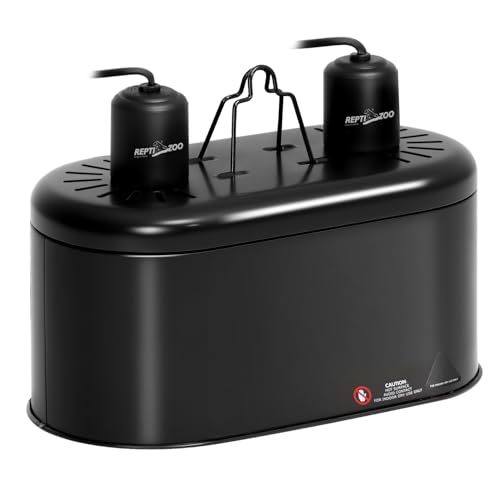
REPTI ZOO Dual Reptile Light Fixture is a quality option worth considering for your setup.
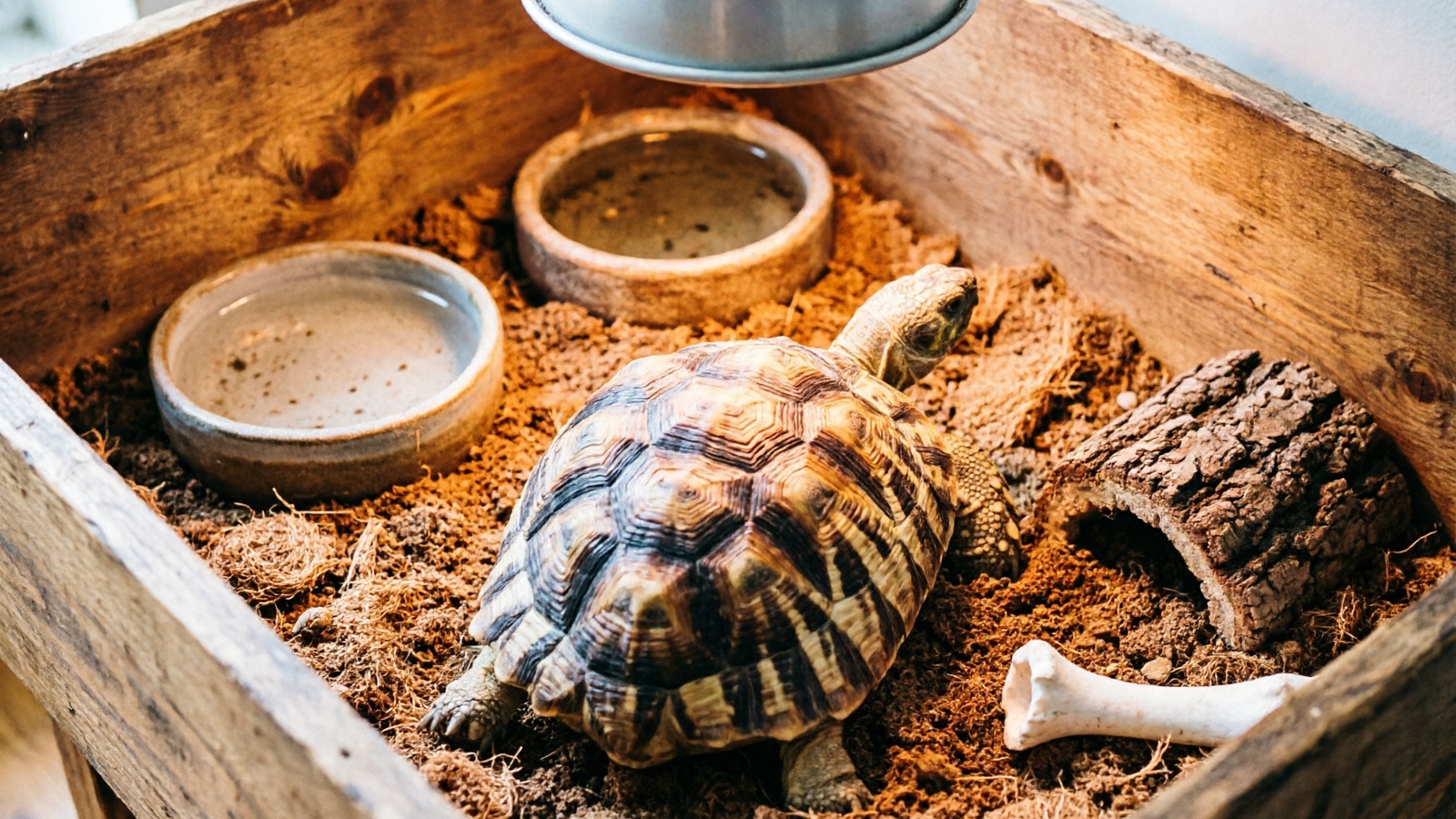
A proper setup divides the enclosure into distinct zones. Each zone serves a specific purpose in your tortoise’s daily thermoregulation cycle.
1. Basking zone (directly under heat source): 32-35°C (90-95°F) for adults, 35-38°C (95-100°F) for hatchlings. This is where digestion happens. The basking area should cover at least 1.5 times the tortoise’s carapace length so the entire body can warm evenly.
2. Warm zone (mid-enclosure): 26-30°C (78-86°F). This transition area lets your tortoise adjust gradually between the basking spot and the cool end. Tortoises naturally shuttle between zones to fine-tune their body temperature throughout the day.
3. Cool zone (far from heat source): 20-24°C (68-75°F). This area is essential for thermoregulation. If the tortoise cannot escape the heat, it will overheat. Provide a hiding spot or shelter in this zone so the tortoise feels secure while cooling down.
4. Night temperature: 15-18°C (59-64°F) for Mediterranean species (Russian, Hermann’s, Marginated). 18-24°C (65-75°F) for tropical species (Red-foot, Yellow-foot). A natural nighttime drop is healthy — it mimics the daily temperature cycle in their native habitat.
For nighttime heating, use a Ceramic Heat Emitter (CHE) connected to a thermostat. CHEs produce heat without light, so they do not disrupt your tortoise’s sleep cycle. Unlike incandescent bulbs, a CHE can run continuously for months with minimal wear.
See our thermostat guide for equipment recommendations.
Tortoise Temperature by Species
Many owners find that Repashy SuperCal LoD 6 oz → works well for their pet’s needs.
Species origin determines temperature requirements. A Sulcata from sub-Saharan Africa needs significantly warmer conditions than a Russian tortoise from Central Asia. The table below covers the six most common pet tortoise species with basking, cool-side, and nighttime ranges in both Celsius and Fahrenheit.
| Species | Origin | Basking | Cool Side | Night | Humidity |
|---|---|---|---|---|---|
| Russian (Horsfield) | Central Asia | 32-35°C (90-95°F) | 20-24°C (68-75°F) | 15-18°C (59-64°F) | 30-40% |
| Hermann’s | Mediterranean | 32-35°C (90-95°F) | 20-24°C (68-75°F) | 15-18°C (59-64°F) | 30-50% |
| Sulcata | Sub-Saharan Africa | 35-38°C (95-100°F) | 24-28°C (75-82°F) | 21-24°C (70-75°F) | 40-60% |
| Leopard | East/Southern Africa | 32-35°C (90-95°F) | 22-26°C (72-79°F) | 18-21°C (65-70°F) | 30-50% |
| Red-foot | South America | 32-35°C (90-95°F) | 24-27°C (75-80°F) | 21-24°C (70-75°F) | 60-80% |
| Marginated | Mediterranean/Greece | 32-35°C (90-95°F) | 20-24°C (68-75°F) | 13-16°C (55-61°F) | 30-50% |
Key Species Differences
The Sulcata needs the hottest basking spot at 35-38°C (95-100°F). As the third-largest tortoise species in the world, this African native is adapted to intense sun and high daytime temperatures.
Its cool-side range of 24-28°C (75-82°F) also runs warmer than most other species. Sulcata owners in cooler climates often struggle to maintain adequate basking temperatures without high-wattage mercury vapor bulbs.
The Red-foot requires the warmest cool side and night temperatures. As a tropical forest species from South America, it is adapted to warm, humid conditions year-round.
Red-foot tortoise temperature requirements are the least forgiving of any species on this list when it comes to nighttime lows. Even brief exposure to temperatures below 18°C (64°F) can trigger respiratory problems in this tropical species.
The Marginated tortoise tolerates the coldest nights at 13-16°C (55-61°F). Native to the rocky hillsides of Greece and the Balkans, it is the hardiest species for keepers in cooler climates. Marginated tortoises are also among the most cold-tolerant during brief outdoor exposure.
Hermann’s and Russian tortoises share nearly identical requirements despite their different geographic origins. Both tolerate the standard Mediterranean range comfortably and are the most forgiving species for beginners learning to manage enclosure gradients.
Pancake tortoises from East Africa need slightly lower basking temperatures (28-32°C/82-90°F) than the species in the table above. They are less common in the pet trade but share similar cool-side and night requirements with Leopard tortoises. Their unique flat shell shape makes them sensitive to overheating since they cannot retreat into a dome-shaped shell as effectively.
Tortoise Temperature Requirements by Life Stage
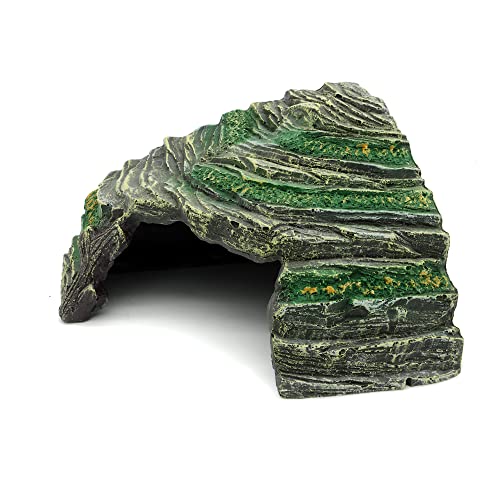
For this purpose, JIHAQUA Resin Cave is a popular choice among pet owners.
Temperature requirements shift significantly as a tortoise grows. Hatchlings are the most vulnerable and need the tightest gradient with the warmest overall conditions.
Hatchlings (0-6 Months)
The most vulnerable life stage to temperature fluctuations. Basking should reach up to 38°C (100°F) — noticeably higher than the adult range of 32-35°C. The cool side should not drop below 24°C (75°F), and night temperatures must stay above 20°C (68°F).
Hatchlings cannot thermoregulate as efficiently as adults. Their small body mass loses heat quickly, and they lack the instinct to shuttle between zones reliably. Keep the gradient tighter with a smaller temperature range between hot and cool zones.
A tightly controlled enclosure with a smaller footprint actually benefits hatchlings. The reduced distance between zones means they do not have to travel far to find their preferred temperature. A 2x3 foot enclosure is sufficient for most hatchlings.
Do not hibernate hatchlings under any circumstances. Their fat reserves are insufficient for extended cooling periods, and the risk of dehydration during hibernation is high at this stage.
Juveniles (6 Months to 3 Years)
Basking 32-35°C (90-95°F). Cool side 22-24°C (72-75°F). Night 18-20°C (65-68°F).
Juveniles are more resilient than hatchlings but still sensitive to cold snaps and rapid temperature drops. Their larger body mass retains heat better, but they should not be exposed to the same temperature extremes as healthy adults.
Most experienced breeders recommend waiting until at least 3 years of age before attempting hibernation. Five years is an even safer threshold for Mediterranean species. Tropical species like the Red-foot should never be hibernated at any age.
Adults (3+ Years)
Standard species-specific ranges from the table above apply. This is the most robust life stage. Healthy adults tolerate wider temperature fluctuations and can recover from brief periods of suboptimal conditions.
Adults of Mediterranean species are the only life stage suitable for hibernation. The decision to hibernate should depend on the individual tortoise’s health, weight, and pre-hibernation conditioning — not just age alone. A veterinary health check before hibernation is recommended for any tortoise over 10 years old.
Seniors (20+ Years)
May need slightly warmer basking temperatures — roughly 1-2°C higher than the standard adult range. This compensates for a naturally slower metabolism that develops with age. Monitor elderly tortoises more carefully for signs of cold stress.
Some senior tortoises may need to skip hibernation entirely if their overall health is declining. A warm winter indoors is safer than a risky hibernation for an elderly animal with compromised health. Weight loss during hibernation hits seniors harder because they have less reserves to spare.
Indoor vs Outdoor Tortoise Temperature Management
Tortoise temperature management differs significantly between indoor enclosures and outdoor habitats. Each environment presents unique challenges that require different approaches.
Indoor Enclosures
Indoor tortoise temperature management requires active heat control year-round. Use an incandescent heat lamp or mercury vapor bulb for daytime basking. A Ceramic Heat Emitter (CHE) on a thermostat handles nighttime heating when room temperature drops below the species minimum.
Place thermometers at both the basking area and the cool end. Measure at shell height, not lamp height — this is the single most common mistake new keepers make.
Ensure the enclosure is large enough for a proper gradient. A minimum of four times the tortoise’s length in each direction gives adequate space for temperature zoning. Cramped enclosures cannot maintain distinct zones, and the tortoise is forced to endure whatever temperature exists.
Avoid glass terrariums for tortoises. Poor ventilation traps heat and causes dangerous overheating within minutes. Open-topped tortoise tables or custom indoor enclosures provide better airflow and more reliable gradient control.
For detailed sizing and setup recommendations, see our tortoise enclosure guide. The right enclosure size directly determines how well your tortoise temperature gradient functions — a too-small enclosure is the most common cause of temperature problems in indoor setups.
Outdoor Enclosures
Outdoor tortoise temperature management relies on natural sunlight but needs careful monitoring. The consensus among keepers on Reddit’s r/tortoise community (multiple threads with 7-15 comments each) is to bring tortoises indoors when overnight temperatures drop below 10°C (50°F).
Daytime outdoor access is generally safe when air temperature reaches 18-20°C (65-68°F) and direct sunlight is available for basking. Ground temperature matters more than air temperature outdoors. A sunny patch of ground can be 5-10°C warmer than the surrounding air, so a thermometer at ground level gives the most useful reading.
Outdoor enclosures have a significant advantage: natural sunlight provides full-spectrum UVB radiation that no indoor bulb can fully replicate. However, outdoor temperatures are also less controllable. A sudden cloud cover can drop ground temperature by 5°C within minutes.
Overheating is equally dangerous in summer months. Arizona-based rescue groups and experienced keepers on Facebook emphasize providing shaded retreat areas, shallow water dishes for cooling, and close monitoring for signs of heat stress during hot weather.
A tortoise that cannot escape direct sun will overheat rapidly, even in moderate ambient temperatures. Always provide at least one fully shaded area that is large enough for the tortoise to rest in completely.
Check weather forecasts regularly for cold snaps, and always have an indoor fallback enclosure ready. The transition between indoor and outdoor should be gradual — sudden temperature changes of more than 10°C can shock a tortoise’s system.
Tortoise Temperature and Hibernation (Brumation)
Hibernation applies only to Mediterranean tortoise species: Russian, Hermann’s, Marginated, and Horsfield. Tropical species like the Red-foot and Yellow-foot do not hibernate and must maintain warm conditions year-round. The distinction is critical — attempting to hibernate a tropical tortoise will likely be fatal.
The safe tortoise temperature range for hibernation is 3-8°C (37-46°F), per 608 Vet Practice. Below 3°C risks frost damage to tissues and extremities.
Above 10°C the tortoise will not achieve true hibernation. Instead, it will begin waking periodically and burn through its fat reserves dangerously fast. This partial-waking cycle is more dangerous than a slightly cold hibernation because the tortoise expends energy without being able to feed.
Pre-Hibernation Preparation
Follow these steps over 2-4 weeks before the target hibernation date:
-
Reduce basking gradually: Shorten daily basking time and lower enclosure temperatures by 1-2°C per day over the first week to signal seasonal change.
-
Stop feeding: Withhold food 2-3 weeks before hibernation so the gut clears completely. Any food remaining in the digestive tract can rot and cause fatal infections during hibernation — a completely empty gut is non-negotiable.
-
Shorten photoperiod: Reduce the light cycle from 12-14 hours down to 8 hours over the pre-hibernation period to signal to the tortoise’s biological system that winter is approaching.
-
Maintain hydration: Continue regular soaks in lukewarm water (26-32°C) right up until the hibernation start date. A well-hydrated tortoise enters hibernation in better condition and is less likely to experience dehydration-related complications.
-
Perform a health check: Confirm the tortoise is at a healthy weight with no signs of respiratory infection, eye or nasal discharge, or lethargy before beginning hibernation.
During Hibernation
-
Set up monitoring: Place a digital probe thermometer in the hibernation container and verify it reads within the 3-8°C (37-46°F) safe range before leaving the tortoise overnight. A data-logging model is ideal because it records temperature history.
-
Weigh weekly: Weigh the tortoise before hibernation begins and recheck weekly. Healthy hibernation should result in less than 1% body weight loss per month.
-
Inspect for warning signs: Check the tortoise for excessive weight loss, urination (indicating temperatures are too warm), or frequent waking. Any of these require immediate action.
-
Emergency exit: If warning signs appear, gradually warm the tortoise over 24-48 hours and end hibernation early. It is always safer to skip a hibernation season than to risk the animal’s life.
Proper hibernation practices contribute to long-term longevity. See our tortoise lifespan guide for more on factors affecting how long tortoises live.

Tortoise Temperature Safety Checklist
Do These ():
- Place probe thermometers at shell height in both basking and cool zones
- Use a thermostat to control all heat sources — never run bulbs unregulated
- Provide a cool hiding spot so the tortoise can escape the basking area
- Use Ceramic Heat Emitters for nighttime heat (no light disruption)
- Monitor weight weekly during hibernation (target: less than 1% loss per month)
- Soak hatchlings in lukewarm water (26-32°C) for 15-20 minutes, 3 times per week
Avoid These ():
- Using glass terrariums for tortoises (poor ventilation causes overheating)
- Measuring air temperature at lamp height instead of shell height
- Using light-emitting bulbs at night (disrupts circadian rhythm)
- Hibernating tropical species (Red-foot, Yellow-foot) — always fatal
- Hibernating hatchlings under 3 years old (insufficient fat reserves)
- Letting tortoise temperature drop below 10°C (50°F) outside hibernation
- Bathing in water above 38°C (100°F) or below 20°C (68°F)
Tortoise Temperature FAQ
Does a tortoise need heat at night?
Mediterranean species like Russian and Hermann’s tortoises tolerate night drops to 15-18°C (59-64°F), so supplemental night heat is unnecessary if your room stays above this range. Tropical species like Red-foot tortoises need 21-24°C (70-75°F) at night — use a Ceramic Heat Emitter on a thermostat if cooler. Never use a light-emitting heat source at night, as it disrupts the tortoise’s circadian rhythm.
How cold is too cold for a tortoise?
Below 10°C (50°F) is dangerous for all species during extended exposure. Below 5°C (41°F) can cause frostbite on extremities, and below 3°C (37°F) risks fatal tissue damage per 608 Vet Practice.
Mediterranean species survive brief near-freezing exposure during controlled hibernation only — never in an unheated garden shed or outdoor situation.
Will my tortoise be ok without a heat lamp for 2 days?
Mediterranean species will be fine as long as room temperature stays above 15°C (59°F) — they may become less active and stop eating but will not suffer lasting harm.
Tropical species need minimum 21°C (70°F). Use heat packs in an insulated box or move to a warmer room if your house runs cooler than this threshold.
How do I tell if my tortoise is cold?
Cold tortoises become lethargic, refuse food, and keep their legs and head pulled tight into the shell — the shell will feel cold to touch instead of warm after basking. Chronic cold exposure leads to respiratory infections with wheezing or bubbles from the nostrils. If you notice these signs, check your temperatures immediately and warm the enclosure gradually.
What temperature should a tortoise bath be?
Bath water should be lukewarm at 26-32°C (80-90°F) — use a thermometer to verify before placing your tortoise in. Never use water above 38°C (100°F) as it can scald, and cold water below 20°C (68°F) defeats the purpose since warmth is needed to aid hydration and digestion. Soak for 15-20 minutes in a shallow container with water below the chin line.