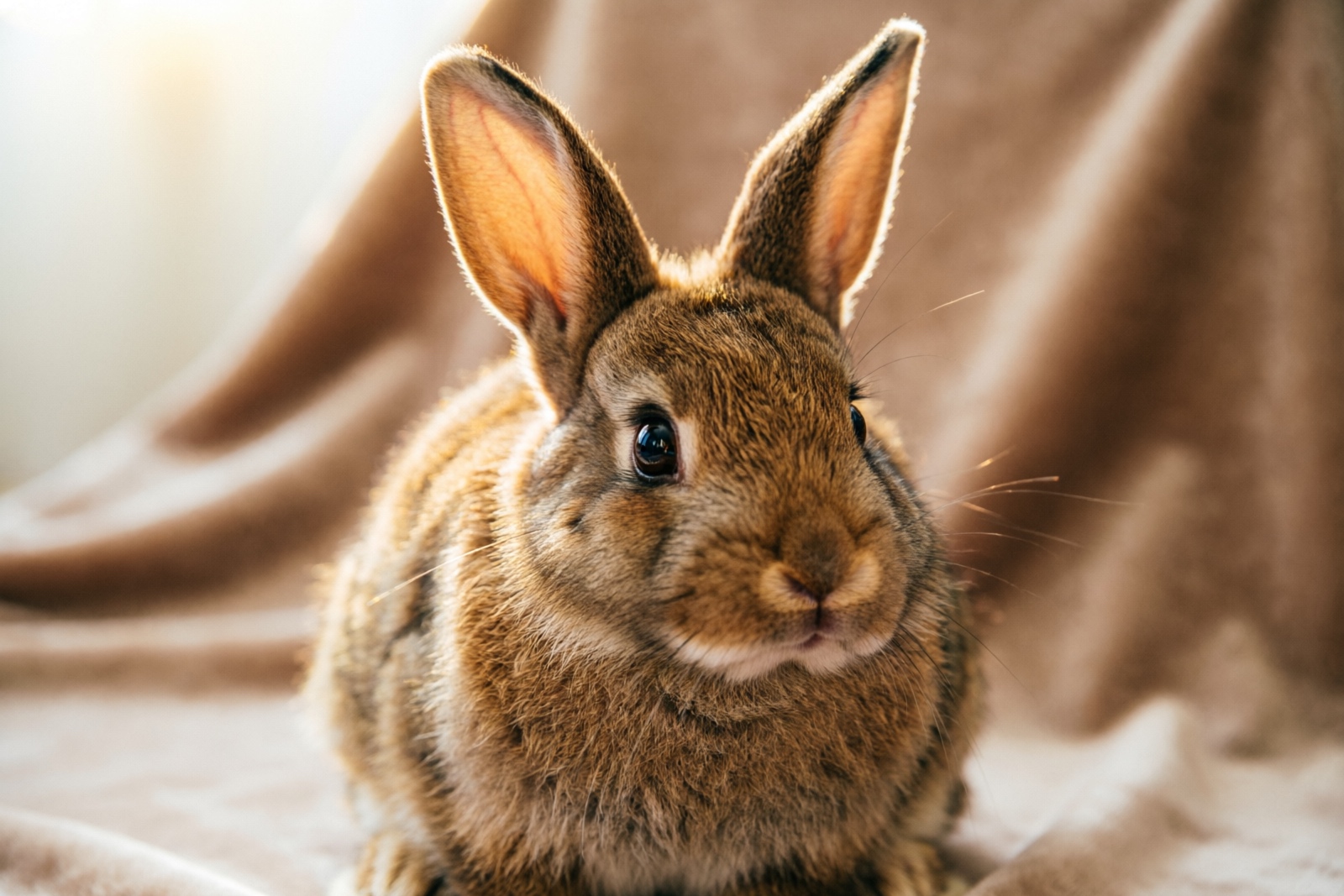
Rabbits may be quiet creatures by nature, but they have a surprisingly rich vocabulary of sounds and noises. Understanding rabbit sounds is one of the most important skills you can develop as an owner — it tells you when your rabbit is happy, scared, annoyed, or in pain. The challenge is that many rabbit noises are subtle and easy to miss, while a few are unmistakable signals that something is seriously wrong.
This guide covers every sound your rabbit makes — from happy honking and purring to warning thumps and emergency screams — explaining what each noise means, what triggers it, and what you should do about it. Most problem sounds are linked to stress or boredom, and creating the right environment can dramatically reduce them. For a deeper look at how rabbits communicate through body posture and movement, see our rabbit behavior guide.
Why Do Rabbits Make Sounds?
Understanding Rabbit Communication
As prey animals, rabbits evolved to be cautious communicators. Learning to interpret rabbit sounds correctly takes time but is incredibly rewarding. In the wild, drawing attention to yourself is dangerous — so rabbits rely far more on body language than on vocalizations. They use ear position, posture, movement, and scent marking to express themselves most of the time.
However, rabbits do produce a range of sounds — more than ten distinct vocalizations have been documented. The key to understanding rabbit sounds is context. A noise that means one thing in one situation can mean something entirely different in another. What do rabbit sounds mean? It always depends on what your rabbit is doing, what’s happening around them, and how their body looks while making the sound.
Rabbits communicate through a combination of three channels:
- Sounds — Vocalizations like honking, growling, grinding, and screaming
- Body language — Ear position, posture, tail movement, and facial expressions
- Context — Environment, time of day, recent events, and your rabbit’s personality
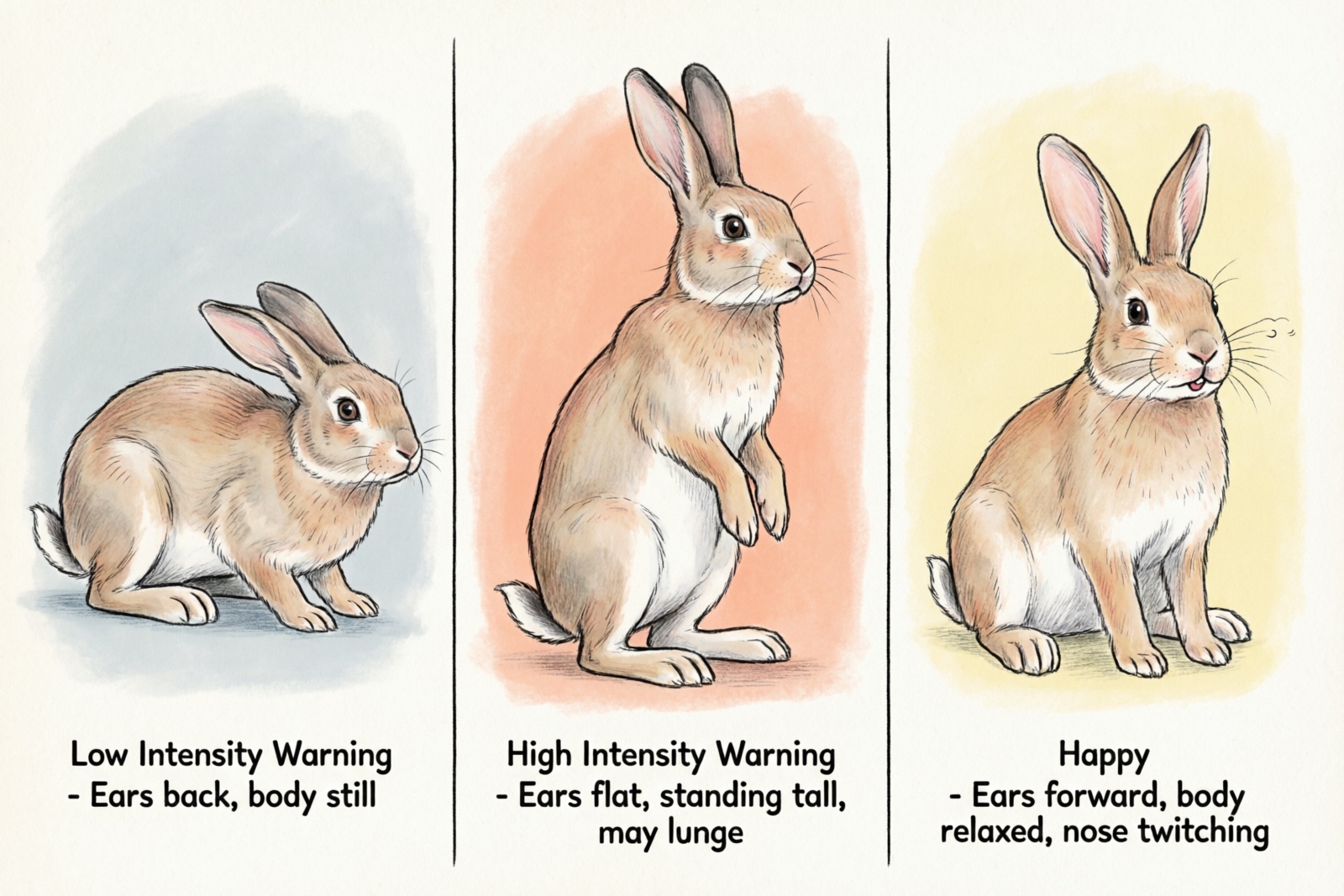
All three channels work together. A rabbit that grinds their teeth while stretched out and relaxed is happy — the same sound from a hunched, hiding rabbit means pain. For a complete guide to reading your rabbit’s body language, see our rabbit behavior guide.
The Four Categories of Rabbit Sounds
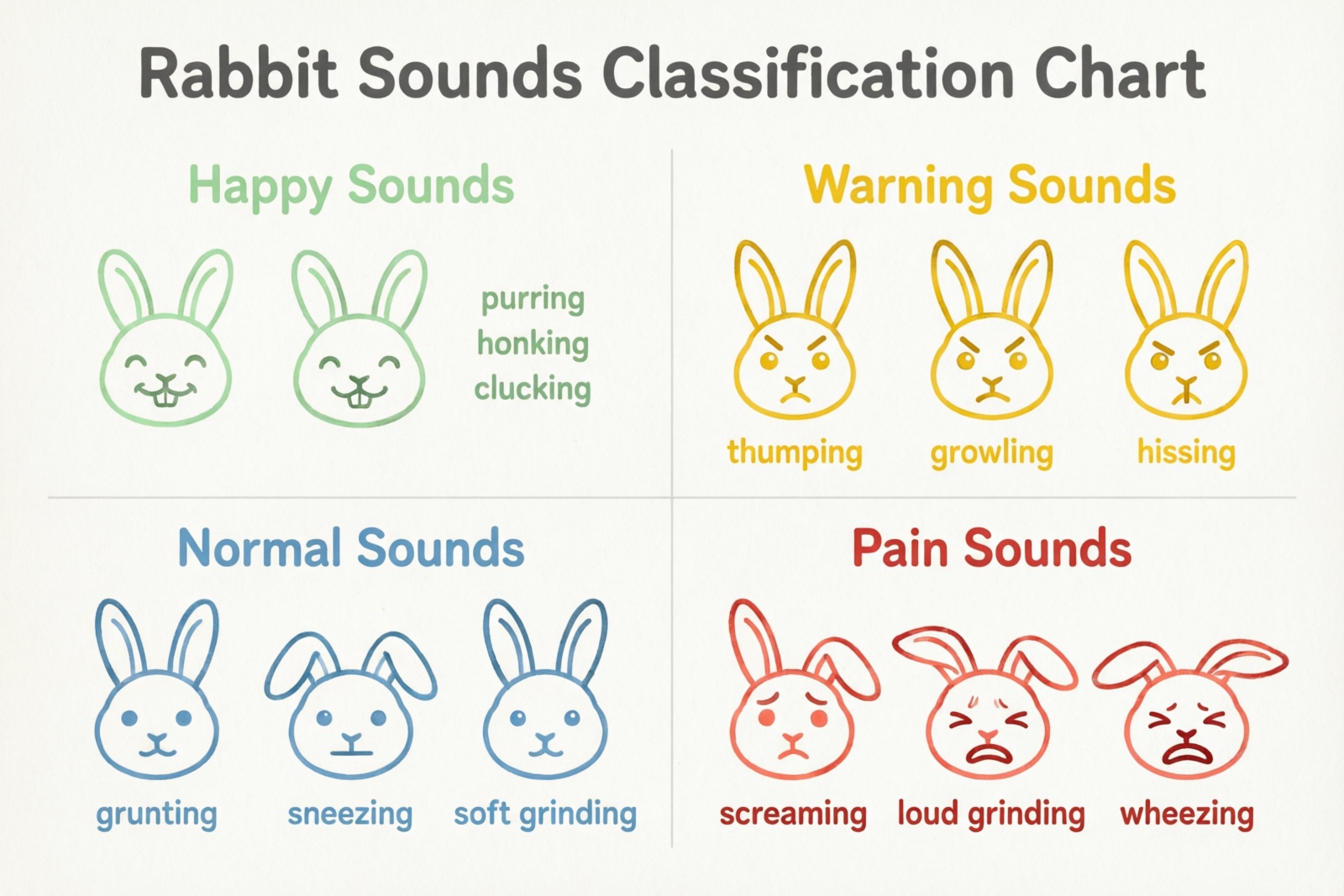
All rabbit sounds fall into one of four categories:
| Category | Sounds | What It Means |
|---|---|---|
| Happy sounds | Purring, honking, clucking, humming | Your rabbit feels safe, content, or excited |
| Warning sounds | Thumping, growling, hissing, squeaking | Your rabbit feels threatened or annoyed |
| Normal sounds | Grunting, light teeth grinding, sneezing | Everyday communication, nothing to worry about |
| Pain sounds | Screaming, loud teeth grinding, wheezing | Your rabbit needs immediate veterinary attention |
Why Is My Rabbit Thumping?
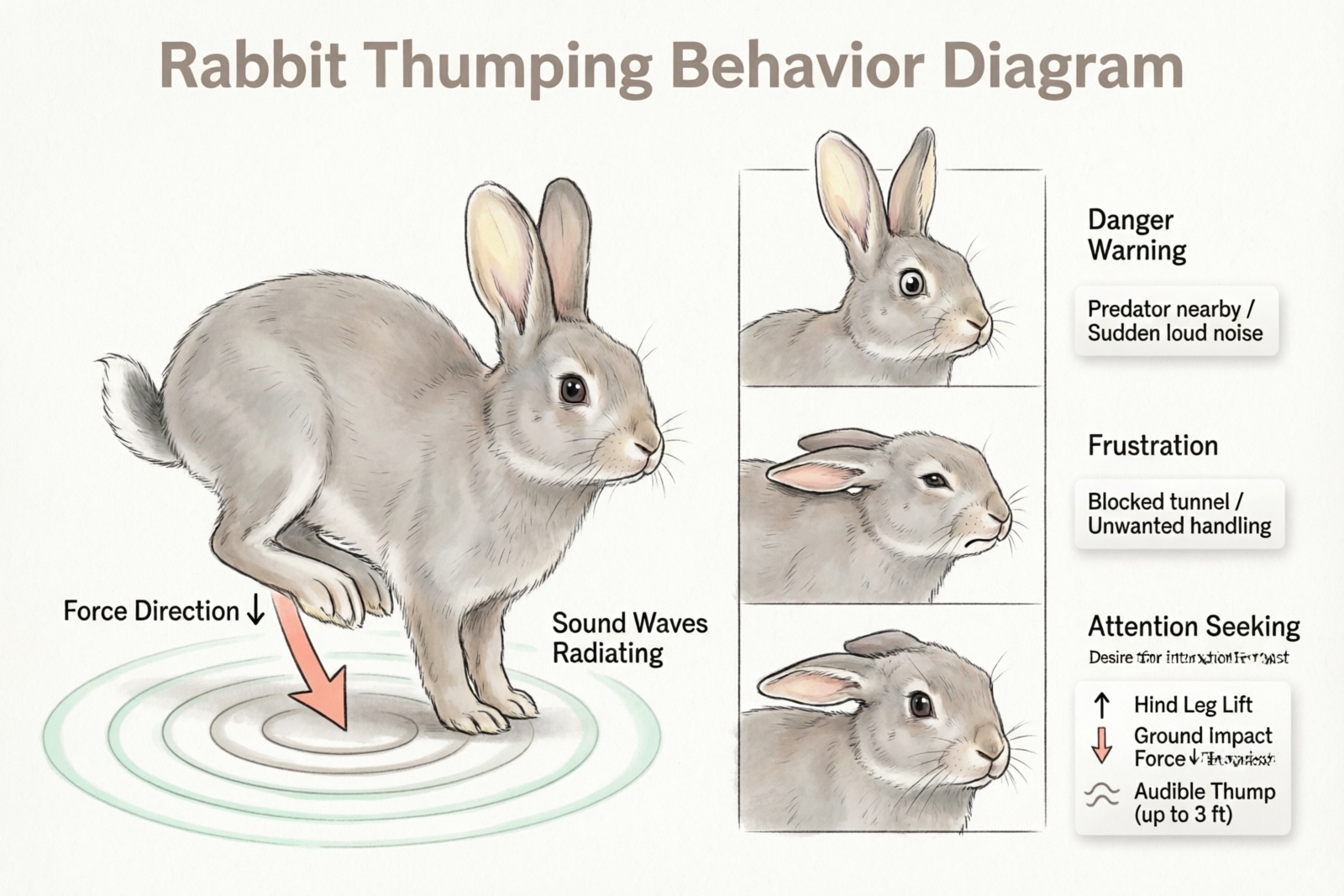
Thumping — sometimes called stomping — is the most common and most noticeable of all rabbit sounds. Your rabbit slams one or both hind legs against the ground, producing a surprisingly loud thud that can resonate through floors. It’s impossible to ignore, which is exactly the point.
The 3 Reasons Rabbits Thump
1. Danger warning — This is the thump’s original purpose. In the wild, rabbits thump to alert other rabbits of nearby predators. Your domestic rabbit retains this instinct. Common triggers include sudden loud noises (doorbells, fireworks, dropped objects), unfamiliar animals or people approaching, unusual smells, and anything that breaks their routine. If your rabbit thumps and freezes with ears upright, they’ve detected something they perceive as a threat.
2. Anger and frustration — Rabbits thump to express strong displeasure. This happens when they’re picked up against their will, handled too roughly, moved to a new environment, or when something in their space has changed without warning. An angry thump is often repeated — two or three rapid thumps in succession — and may be accompanied by other signs of irritation like ears pinned back or a tense body posture.
3. Attention seeking — Some rabbits learn that thumping gets results. If your rabbit thumps and you immediately come over to check on them, they may start using it as a way to demand food, treats, or playtime. This is most common in intelligent, confident rabbits who have figured out cause and effect.
How to Stop Excessive Thumping
The solution depends on the cause. For danger-related thumping, identify and remove the trigger. Close windows if outdoor noises are the problem, keep other pets away from your rabbit’s space, and maintain a consistent routine. For frustration thumping, respect your rabbit’s boundaries — if they don’t want to be held, put them down.
For attention-seeking thumping, the hardest but most effective response is to ignore it. Responding to demand-thumping reinforces the behavior. Wait until your rabbit is quiet before giving them attention.
Providing a safe retreat space dramatically reduces fear-based thumping. A fleece tunnel hideout ($15.99, 4.4⭐, 🔥) gives your rabbit a dark, enclosed space to escape when they feel threatened, while a fleece cuddle cave bed ($13.99, 4.7⭐, 🔥) provides a warm, machine-washable sleeping cave that many rabbits prefer over open beds. When your rabbit has a secure place to hide, they feel less need to sound the alarm.
If boredom is driving attention-seeking thumping, increasing enrichment with rabbit toys can channel that energy into more positive activities.
Do Rabbits Purr? Understanding Happy Sounds
Yes, rabbits purr — but not the way cats do. This is one of the most rewarding rabbit sounds to discover as an owner. A rabbit’s purr sounds different, feels different, and means something slightly different. Along with purring, rabbits produce several other sounds when they’re feeling content or excited.
Rabbit Purring — What It Sounds Like
A rabbit purr is actually one of the most distinctive rabbit sounds — a soft teeth-grinding noise. When you pet your rabbit and hear a faint clicking or gentle rubbing noise, that’s purring. You can often feel it more than hear it — place your hand gently on the side of your rabbit’s face and you’ll sense a light vibration as they gently rub their upper and lower teeth together.
This is distinctly different from loud teeth grinding, which signals pain (covered in the next section). The differences are:
| Feature | Content Purring | Pain Grinding |
|---|---|---|
| Volume | Very soft — need to be close | Loud enough to hear across a room |
| Rhythm | Slow, rhythmic, relaxed | Forceful, irregular, tense |
| Body posture | Stretched out, relaxed, eyes half-closed | Hunched, tense, hiding, ears back |
| Context | During petting, resting, eating | During illness, after injury, with other symptoms |
If your rabbit is stretched out, eyes half-closed, and making a soft clicking sound while you pet them — they’re telling you they’re happy and comfortable. It’s one of the best sounds a rabbit owner can hear.
Rabbit Honking Noise
Honking is one of the most endearing sounds rabbits make. It sounds like a soft, nasal “oinking” or humming noise — almost like a tiny goose. Rabbits honk when they’re excited, which is why you’ll often hear it at feeding time or when they’re about to get free-roam time.
Unneutered male rabbits also honk as a courtship behavior, circling and honking at females. If this is the case, neutering usually resolves the behavior.
When to be concerned: If your rabbit’s honking is accompanied by sneezing, nasal discharge, or labored breathing, it may indicate a respiratory issue rather than excitement. See our rabbit health guide for more information on respiratory problems.
Clucking and Humming
Clucking sounds like a mother hen making soft “cluck-cluck” sounds. Rabbits make this noise when they’re satisfied — often while eating something they particularly enjoy. It’s a happy, contented sound that means your rabbit approves of what’s happening.
Humming is a soft, low-pitched sound most commonly heard from unneutered males near a female rabbit. It’s a courtship vocalization and generally stops after neutering. Some fixed rabbits may still hum occasionally during very relaxed moments.
Rabbit Teeth Grinding — Happy or Hurting?
Teeth grinding is one of the rabbit sounds that confuses new owners the most, because it has two completely opposite meanings depending on how it sounds. Getting this distinction right matters — one version means your rabbit is blissfully content, and the other means they’re in pain.
Soft Grinding (Contentment)
Soft teeth grinding is the rabbit equivalent of a cat’s purr. It’s a gentle, rhythmic clicking sound produced by lightly rubbing the top and bottom teeth together. You’ll typically hear it when:
- You’re petting your rabbit in their favorite spot (usually the forehead or behind the ears)
- Your rabbit is settling down to sleep
- Your rabbit is eating something they particularly enjoy
The volume is very low — you often need to be within arm’s reach to hear it. Your rabbit’s body language confirms the meaning: they’ll be relaxed, possibly stretched out on their side, with ears in a neutral or slightly lowered position. Their eyes may be half-closed.
This is a positive sound. If you hear soft grinding while petting your rabbit, you’re doing something right.
Loud Grinding (Pain or Stress)
Loud teeth grinding is a pain signal and should never be ignored. Unlike the gentle clicking of contentment, pain grinding is forceful, irregular, and noticeably louder — you can often hear it from across the room. It may sound like teeth chattering or a coarse, harsh scraping noise.
Rabbits grind their teeth loudly when they’re experiencing pain from:
- Dental problems — Overgrown teeth, spurs, or abscesses are extremely common in rabbits. Rabbit teeth grow continuously, and misaligned teeth can cut into the gums or cheeks.
- Gastrointestinal (GI) issues — Gas pain, bloating, or the early stages of GI stasis often cause loud grinding.
- Injuries — Any injury, from a sore hock to a broken bone, can trigger grinding.
- Infections — Urinary tract infections, respiratory infections, and abscesses all cause pain that rabbits may express through grinding.
Accompanying signs to watch for: A rabbit in pain will often hunch their body, press their belly flat against the ground, hide more than usual, stop eating or eat less, produce fewer droppings, and become less active. Their coat may look unkempt because they’ve stopped grooming.
If you hear loud teeth grinding, contact your veterinarian immediately. Rabbits are prey animals that instinctively hide pain — by the time they show obvious signs, the problem is usually serious. Early intervention can be the difference between a quick recovery and a life-threatening situation. For more information on recognizing health problems early, see our rabbit health guide.
Warning Sounds — Growling, Squeaking & Hissing
Warning rabbit sounds are your rabbit’s way of saying “I’m not happy about this.” These vocalizations range from mild annoyance to serious distress. Understanding them helps you respond appropriately before a situation escalates.
Rabbit Growling
A rabbit growl is one of the more concerning rabbit sounds — a low, rumbling noise — similar to a small dog’s growl but quieter and shorter. It means “back off” or “leave me alone.” Your rabbit may growl when:
- You reach into their cage or territory uninvited
- Another pet or person approaches too closely
- They’re being handled in a way they don’t like
- They’re protecting food or a favorite resting spot
- They feel cornered or trapped
Growling is often accompanied by defensive body language: ears pinned flat against the back, body tensed and lowered, tail raised, and eyes wide. Some rabbits will lunge or box with their front paws if the warning is ignored.
How to respond: Stop what you’re doing immediately. Don’t try to comfort or pick up a growling rabbit — this will likely escalate the situation. Back away slowly, speak in a calm voice, and give your rabbit space. Once they’ve calmed down (which may take several minutes), you can try a gentler approach. Never punish a rabbit for growling — it’s a legitimate communication, and punishing it will damage trust.
For more on understanding territorial and defensive behaviors, see our rabbit behavior guide.
Rabbit Squeaking
A rabbit squeak is a high-pitched, short sound — sometimes described as a “yip” or “eep.” The meaning depends heavily on context and the rabbit’s age:
- Baby rabbits squeak frequently as a general communication tool, expressing everything from hunger to excitement to mild frustration. This is completely normal.
- Adult rabbits rarely squeak. When they do, it usually indicates pain or fear. A single squeak during nail trimming or handling may just be mild discomfort, but repeated squeaking or a sustained high-pitched cry needs attention.
If your adult rabbit squeaks while being held, put them down gently. If they squeak while resting or eating, observe them closely for other signs of illness or injury.
Hissing and Snorting
Hissing is an unmistakable sign of extreme displeasure. The rabbit forces air through their teeth, producing a sharp hissing sound. It’s the rabbit equivalent of a cat’s hiss and carries the same message: “I am very upset, and I will defend myself if you come closer.” This is most common during territorial disputes, aggressive bonding sessions, or when a rabbit feels genuinely threatened.
Snorting is a milder version — a quick, forceful exhale through the nose, similar to a human sigh or a soft grunt of annoyance. You’ll often hear it during grooming sessions when your rabbit is being patient but not thrilled about the process. An occasional snort is nothing to worry about.
Normal Sounds — Grunting, Sneezing & More
Not every sound your rabbit makes is cause for concern. Some everyday rabbit sounds are perfectly normal. Several vocalizations are part of everyday rabbit life and simply reflect normal communication.
Rabbit Grunting Meaning
A grunt is a soft, low-pitched “unf” or “umph” sound — gentler and shorter than a growl. Rabbits grunt to express mild annoyance or impatience. Common situations include:
- Being petted in a spot they don’t prefer
- Being picked up or moved when they don’t want to be
- Being woken up from a nap
- Waiting for food that’s taking too long to arrive
The key difference between a grunt and a growl is intensity. A grunt says “I’m mildly inconvenienced.” A growl says “I’m genuinely upset and you need to stop.” A grunting rabbit won’t usually lunge or show defensive body language — they’re just expressing a preference.
Sneezing and Sniffing
Occasional sneezing is perfectly normal for rabbits. Hay dust, bedding particles, and environmental allergens can all trigger a sneeze or two. Some rabbits sneeze more during cage cleaning when dust is stirred up.
When sneezing needs attention: If your rabbit is sneezing frequently (multiple times per day), has discharge from the nose, or is also making wet-sounding breathing noises, this may indicate a respiratory infection. Rabbit respiratory infections can progress quickly and require veterinary treatment. Other warning signs include lethargy, reduced appetite, and matted fur on the front paws (from wiping a runny nose).
Sniffing and snuffling sounds are completely normal — rabbits have highly sensitive noses and use them constantly to explore their environment. A rabbit that sniffs around during free-roam time is just gathering information about their surroundings.
How to Reduce Stress-Related Rabbit Sounds
Most “problem rabbit sounds” — excessive thumping, growling, loud teeth grinding, and attention-seeking vocalizations — are linked to stress, boredom, or an environment that doesn’t meet your rabbit’s needs. Addressing the root cause is more effective than trying to suppress the symptoms. A rabbit that feels safe, stimulated, and understood will naturally make fewer distress sounds.
Create a Safe Environment
The single most impactful change you can make is providing secure hiding spaces. Rabbits are prey animals that need a retreat where they feel protected from above and behind. Without a safe space, even minor environmental changes can trigger fear-based thumping and growling.
A fleece tunnel hideout ($15.99, 4.4⭐, 🔥) provides a collapsible tunnel that serves double duty — a hiding spot when your rabbit feels scared and an exploration tunnel during confident moments. The soft fleece material is comfortable for resting, and the foldable design makes it easy to store when not in use.
For a more permanent sleeping retreat, a fleece cuddle cave bed ($13.99, 4.7⭐, 🔥) is the highest-rated small pet bed on Amazon. The enclosed cave design with a reversible cushion gives your rabbit two sleeping options in one product, and it’s machine washable for easy cleaning. Rabbits that have a secure cave to retreat to show noticeably fewer fear-related sounds.
Provide Mental Stimulation
A bored rabbit is a noisy rabbit. Without enough to do, rabbits resort to attention-seeking behaviors — thumping for interaction, destructive chewing, and excessive vocalizations. Mental stimulation doesn’t need to be complicated; simple interactive toys make a significant difference.
A 3-way collapsible tunnel ($13.99, 4.6⭐, 🔥) with three connected pathways and an included chew toy keeps rabbits active and engaged. The multiple tunnel openings encourage running and exploration, which is especially valuable for indoor rabbits with limited space. For a more focused mental challenge, stacking cups for rabbits ($6.99, 4.7⭐, 🔥) let you hide treats inside the cups for your rabbit to discover — this simulates natural foraging behavior and redirects attention-seeking thumping into productive play.
Satisfy Natural Instincts
Rabbits have powerful instincts to chew and dig. When these needs aren’t met, they become frustrated and noisy. Providing appropriate outlets for these behaviors reduces stress-related sounds and protects your furniture at the same time.
Natural apple wood chew toys ($9.99, 4.5⭐, 🔥) are 100% natural and pesticide-free, giving your rabbit a safe chewing surface that also promotes healthy dental wear. Rabbit teeth grow continuously throughout their life, and adequate chewing material is essential for preventing dental problems that can lead to pain-related grinding.
For the digging instinct, natural grass mats ($5.99, 4.5⭐, 🔥) provide a designated surface for your rabbit to dig, scratch, and shred. Since they’re made from natural hay, they’re completely safe if your rabbit decides to eat them too. Placing a grass mat over areas where your rabbit tends to dig (like carpet corners) redirects the behavior to an acceptable outlet.
Build Trust and Bond
Fear-related sounds — thumping, growling, and hissing — often come from rabbits that haven’t built enough trust with their owners. A pet bonding scarf ($19.99, 4.4⭐, 🔥) is a wearable pouch that lets you keep your rabbit close during calm activities — working at a desk, reading, or watching television. The fleece-lined interior keeps your rabbit warm and comfortable, and the close contact helps build trust over time. Start with short sessions of five to ten minutes and gradually increase as your rabbit becomes more comfortable.
Building trust takes patience, but the reward is a rabbit that greets you with happy rabbit sounds instead of fearful ones. For more enrichment ideas, see our complete rabbit toys guide.
When to See a Vet — Rabbit Sounds That Need Attention
Most rabbit sounds are normal communication, but a few are medical emergencies. Knowing the difference can save your rabbit’s life.
Emergency Sounds
Screaming — A rabbit scream is a high-pitched, piercing cry that sounds almost like a human child screaming. It indicates extreme pain or terror. If you hear this sound, check your rabbit immediately for injuries, signs of a predator attack, or acute medical emergencies like GI stasis or a seizure. This is a go-to-the-vet-now situation.
Loud teeth grinding — As covered earlier, loud grinding is a pain signal. If it’s accompanied by hunched posture, hiding, reduced appetite, or smaller droppings, your rabbit needs veterinary care within hours. GI stasis can become fatal within 12-24 hours if untreated.
Wheezing or labored breathing — If your rabbit is audibly struggling to breathe, making wet or raspy sounds when inhaling or exhaling, this is a respiratory emergency. Pneumonia and upper respiratory infections can progress rapidly in rabbits.
Warning Signs to Watch For
| Sound | Possible Cause | Urgency | Action |
|---|---|---|---|
| Screaming | Extreme pain or terror | Emergency | Vet immediately |
| Loud teeth grinding | Dental disease, GI stasis, injury | High | Vet within hours |
| Wheezing or labored breathing | Respiratory infection | High | Vet same day |
| Constant sneezing with discharge | Upper respiratory infection | Medium | Vet within 1-2 days |
| Persistent honking | Possible respiratory issue | Medium | Monitor — vet if it continues |
| Clicking sound while breathing | Pneumonia or abscess | High | Vet same day |
When in doubt, always err on the side of caution. Rabbits deteriorate quickly when ill, and early treatment dramatically improves outcomes. For a comprehensive guide to common health problems, see our rabbit health guide. Regular preventive care and a proper diet are the best ways to extend your rabbit’s lifespan and catch problems early.
FAQ: Common Questions About Rabbit Sounds
What does a happy rabbit sound like?
A happy rabbit makes several distinct rabbit sounds — soft teeth grinding (purring), gentle honking when excited, and contented clucking sounds while eating. You may also hear soft sighs and sniffing during exploration. These sounds are typically quiet and relaxed, and they’re accompanied by open, comfortable body language — stretched-out posture, relaxed ears, and sometimes a happy flop.
Why is my rabbit thumping for no reason?
Rabbits almost never thump without a reason — you just might not be able to detect the trigger. Rabbits can hear frequencies well beyond human range and may react to distant sounds you can’t perceive. They’re also sensitive to vibrations from footsteps, appliances, and traffic. Other common “invisible” triggers include the smell of a predator outside (even a neighbor’s cat), changes in air pressure before a storm, or reflections and shadows from outside movement. Check the environment systematically — lighting, sounds, smells, vibrations, and other animals.
Do rabbits purr like cats?
Not exactly. A rabbit’s purr is a soft teeth-grinding sound rather than a throat vibration like a cat’s purr. It’s quieter, less continuous, and you often feel it through your hand more than hear it with your ears. The meaning is similar though — it indicates contentment and comfort. You’ll typically hear it when you’re petting your rabbit in their favorite spot.
What does teeth grinding mean in rabbits?
It depends entirely on the volume and context. Soft, gentle grinding means your rabbit is happy and relaxed — similar to a cat’s purr. Loud, forceful grinding means pain and requires immediate veterinary attention. The difference is usually obvious once you’ve heard both: content grinding is faint and rhythmic, while pain grinding is harsh and irregular. Pay attention to your rabbit’s body language for additional clues.
Why is my rabbit making a honking noise?
Honking is usually a sign of excitement. Most rabbits honk when they see food, get free-roam time, or encounter something interesting. Unneutered males also honk during courtship behavior, which stops after neutering. However, if the honking is accompanied by sneezing, nasal discharge, or difficulty breathing, it could indicate a respiratory problem and should be checked by a vet.
What does it mean when a rabbit growls?
Growling means your rabbit is unhappy and wants you (or another animal) to back away. It’s a warning signal that says “I feel threatened — give me space.” The most common triggers are territory invasion, unwanted handling, and encounters with unfamiliar animals. The correct response is to stop what you’re doing, give your rabbit space, and let them calm down on their own terms. Never punish a growling rabbit — they’re communicating a legitimate boundary.