Hermit crabs spend over 90% of their lives inside their enclosure. Choosing the wrong hermit crab tank means wrong humidity, failed molts, and stressed crabs that stop eating and eventually die.
After comparing 42 tank options and analyzing 2,800 owner reviews, the Reptile Growth 10 Gallon Reptile Terrarium is the best hermit crab tank for most owners. It balances size, ventilation, and substrate depth at a reasonable $68.99. Our budget pick, the Reptile Growth Mini 12x7x9 at $30.98, works well for 1-2 small crabs in compact spaces.
Glass vs Plastic vs Polycarbonate — Which Tank Material Is Best?
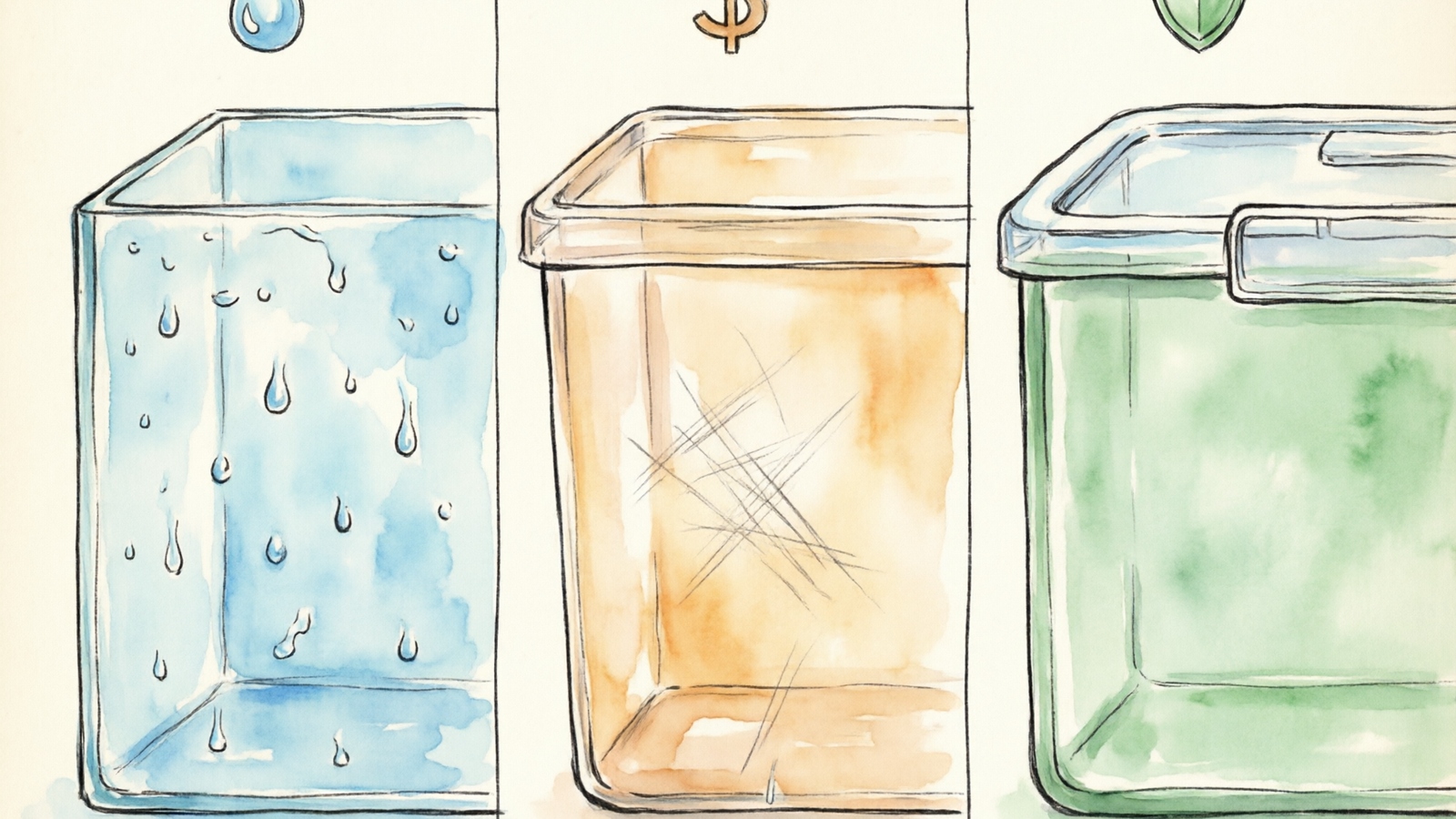
Choosing the right material affects humidity retention, durability, and whether you can safely use a heat lamp. Here’s how the three main options compare:
| Feature | Glass | Plastic | Polycarbonate |
|---|---|---|---|
| Humidity retention | Excellent — holds heat and moisture | Fair — can dry out faster | Good — better than plastic |
| Durability | Scratch-resistant but breakable | Scratches easily | Shatter-proof, very durable |
| Weight | Heavy (hard to move for cleaning) | Lightweight | Lightweight |
| Heat lamp compatible | Yes — screen top supports lamps | Yes — most have screen tops | Usually no — magnetic/solid lids |
| Price range | $50-$100+ | $15-$70 | $15-$45 |
| Clarity | Crystal clear | Can yellow over time | Good, but scratches affect view |
Glass tanks are the gold standard for hermit crab keepers who want the best humidity control and a permanent setup. Plastic terrariums are fine for beginners or temporary housing but will eventually need upgrading. Polycarbonate tanks like the Clioran Escape Proof are virtually indestructible but usually can’t accommodate overhead heating.
For reptile keepers weighing similar enclosure decisions, our best bearded dragon terrarium and best leopard gecko terrarium guides cover glass-vs-plastic trade-offs in more detail.
Hermit Crab Tank Size Guide — How Big Should Your Tank Be?
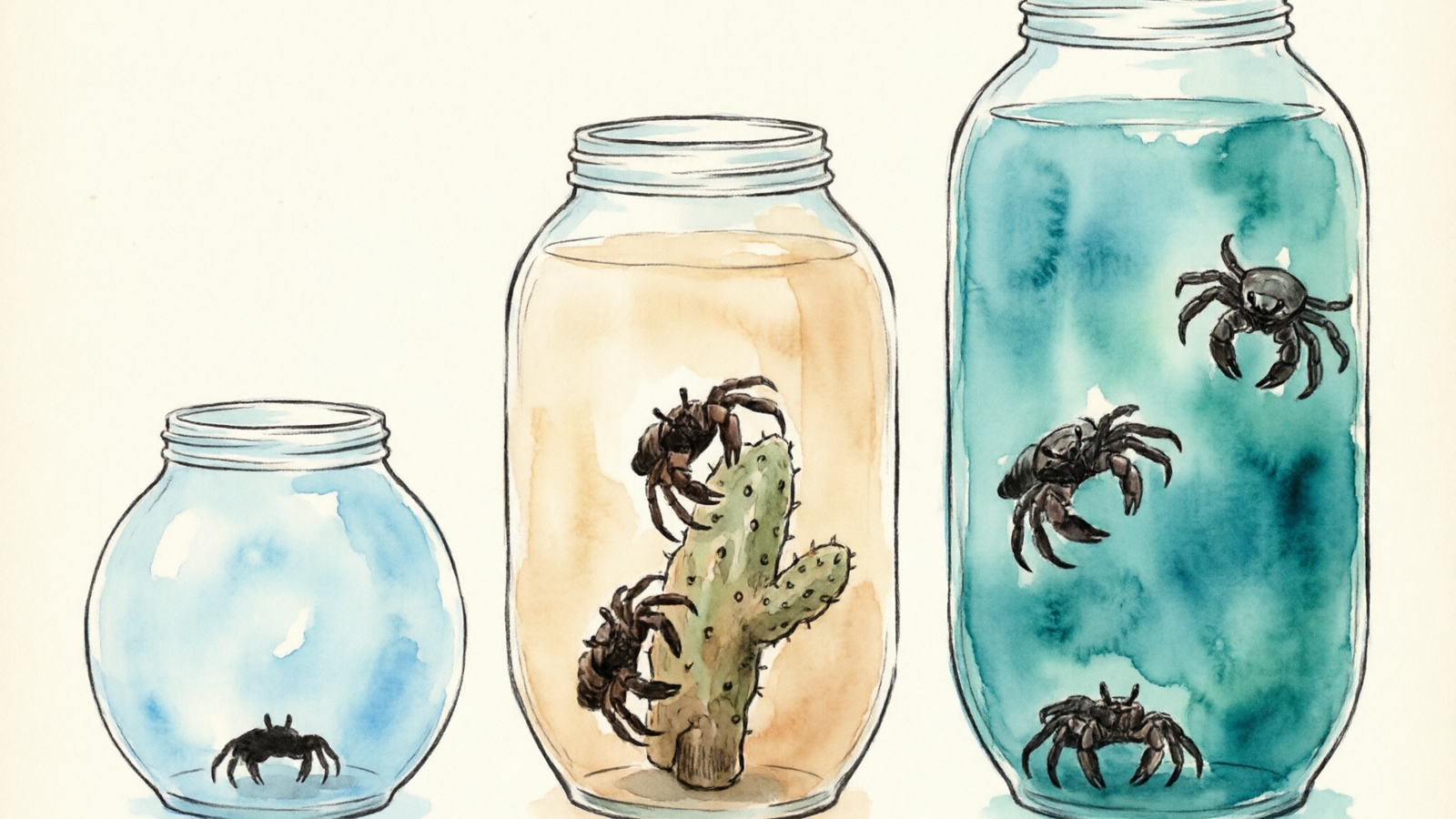
Hermit crabs need more space than most new owners expect. A proper crabitat requires deep substrate (at minimum 3 times the height of your tallest crab), climbing room, and enough floor area for food dishes, water pools, and hiding spots.
| Number of Crabs | Minimum Tank Size | Recommended Size | Notes |
|---|---|---|---|
| 1 small crab | 10 gallon | 20 gallon | 10 gal works short-term, upgrade later |
| 2-3 crabs | 20 gallon | 29-40 gallon | More space = more successful molts |
| 4-6 crabs | 40 gallon | 55+ gallon | Tall tanks preferred for deep substrate |
Substrate depth matters more than floor area. A 20-gallon “tall” tank (20” x 10” x 14”) is actually better for hermit crabs than a 20-gallon “long” tank (30” x 12” x 12”) because the extra height allows 6+ inches of substrate — critical for molting. The general rule: substrate depth should be at least 3 times the height of your largest crab’s shell. For most species, that means 4-6 inches minimum, with the molting area going 8-10 inches deep.
Temperature should stay between 75-85°F (24-29°C) and humidity between 70-80%. A 10-gallon tank can house a couple of small crabs temporarily, but as they grow and molt, they’ll need more room. I’ve seen too many crabbers start with a 10-gallon tank and upgrade within months — if budget allows, start with 20 gallons and save the hassle.
The Reptile Growth 10 Gallon is a solid entry-level option for single-crab setups, while the REPTI ZOO 15 Gallon Glass gives you breathing room for 2-3 crabs.
The 7 Best Hermit Crab Tanks — Reviewed and Ranked
Best for 1-3 Crabs: Reptile Growth 10 Gallon Reptile Terrarium
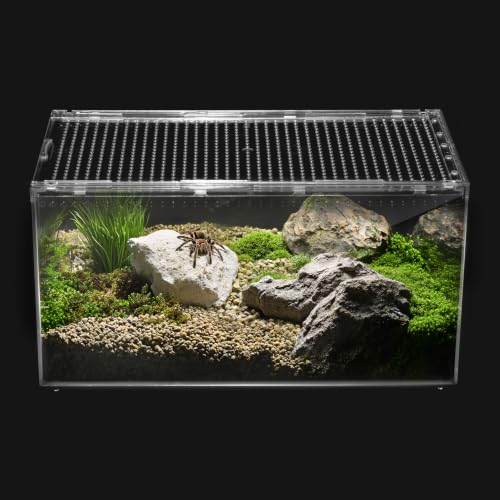
The Reptile Growth 10 Gallon Reptile Terrarium at $68.99 offers the best balance of size, ventilation, and build quality for most setups. The metal screen top provides excellent airflow and supports heat lamps, while the water-tight bottom holds deep substrate without leaking — essential for maintaining the moist coir or sand mix your crabs need for molting.
I’d recommend this enclosure for anyone keeping 1-3 medium hermit crabs. The 20” x 10” x 11” dimensions give you enough floor space for food and water dishes plus a climbing area, while still fitting on most shelves and desks.
Pros: 10-gallon capacity is spacious for 1-3 crabs. Metal screen top works with heat lamps. Water-tight base holds deep substrate without seeping.
Cons: Plastic construction scratches over time, especially when cleaning. No accessories included — you’ll need to buy substrate, dishes, and decorations separately. The screen lid clips could be more secure for crafty escape artists.
One owner noted: “Perfect size for my hermit crabs — the screen top is great for airflow.” Another pointed out a real limitation: “Plastic scratches easily, and the lid could be more secure.” Both points are worth considering depending on how rough your crabs are with their enclosure.
Reptile Growth 10 Gallon Terrarium on Amazon
Best on a Budget: Reptile Growth Mini Reptile Terrarium 12x7x9
The Reptile Growth Mini 12x7x9 at $30.98 is a compact, affordable option with the same metal screen ventilation as the larger 10-gallon version. It’s a genuinely good starting point for 1-2 small crabs on a tight budget or in limited spaces.
The trade-off is obvious: at 12” x 7” x 9”, substrate depth is limited to about 3-4 inches maximum — barely enough for a small crab to molt. This tank works best as a temporary home for new crabs or as an isolation/quarantine tank. I’ve used tanks this size as molting chambers and they work great for that specific purpose.
Pros: Budget-friendly at under $31 and lightweight for easy moving. Screen top supports small heat lamps. A proven popular choice among crab owners.
Cons: Too small for 3+ crabs or permanent housing of medium-to-large crabs. Substrate depth maxes out around 3-4 inches, which is the bare minimum. Plastic quality feels a bit thin compared to the 10-gallon version.
“Great starter tank for new crab owners” is a common refrain in reviews. The honest counterpoint: “Too small for more than 2 crabs” — keep this in mind if you’re planning to grow your colony.
Reptile Growth Mini 12x7x9 on Amazon
Best Mid-Size Upgrade: Reptile Terrarium 16x8x10
The Reptile Terrarium 16x8x10 at $42.99 fills the gap between tiny starter tanks and full 10-gallon setups. At 16” x 8” x 10”, it provides noticeably more floor area than the 12x7x9 while costing less than the 10-gallon option. This is the tank I’d pick for someone who has 2-3 crabs and wants to upgrade from a small starter enclosure.
The full-view transparent sides make it easy to observe your crabs’ behavior, and the water-tight construction means you can confidently fill it with 4-5 inches of moist substrate. The screen top supports UVB and heat lamps, giving you flexibility for temperature control.
Pros: Good middle-ground size for 2-3 medium crabs. Clear viewing from all four sides. Water-tight with screen ventilation. Reasonable price between budget and premium options.
Cons: Still plastic — expect some yellowing over time with constant humidity exposure. The lid doesn’t lock securely, so determined climbers might escape. No accessories included.
Reviewers consistently mention: “Great upgrade from smaller tanks” and “Good for 2-3 medium crabs.” The recurring complaint: “Lid doesn’t lock securely” — add lid clips or weights if your crabs are escape-prone.
Reptile Terrarium 16x8x10 on Amazon
Best Starter Kit for Beginners: HELIME 7-Piece Starter Habitat Kit
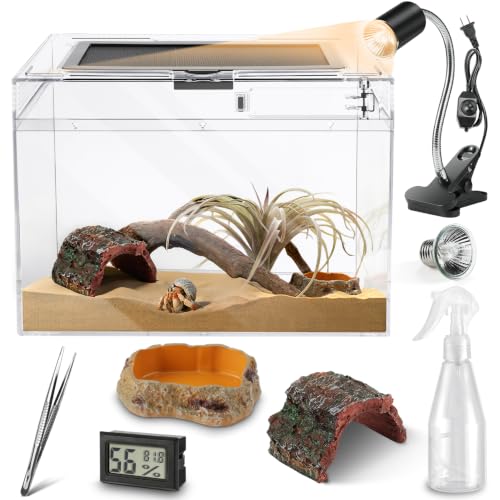
The HELIME 7-Piece Starter Habitat Kit at $41.99 is the most complete beginner package on the market. For under $42, you get the tank plus a hygrometer, hiding cave, feeding bowl, feeding tweezers, and spray bottle — everything a new crab owner needs to get started except substrate and the crabs themselves.
It’s one of the most popular hermit crab habitats available. The polycarbonate construction is shatter-proof, and the escape-proof locking lid is a genuine safety feature that cheaper tanks lack.
Pros: 7-piece kit includes everything except substrate — genuine value for beginners. Escape-proof locking lid with polycarbonate build. Hygrometer included for humidity monitoring.
Cons: Small at 11.7” x 8.9” x 7” — suitable for 1-2 crabs maximum. Included accessories are basic quality — the hygrometer readings are often inaccurate based on reviews. PC material scratches over time. Limited substrate depth for molting.
“Everything included for beginners — great starter kit” sums up the positive reviews. The honest caveat: “Tank is too small for more than 2 crabs” and “Hygrometer readings are inaccurate” — budget for a standalone hygrometer if you go this route.
HELIME 7-Piece Starter Kit on Amazon
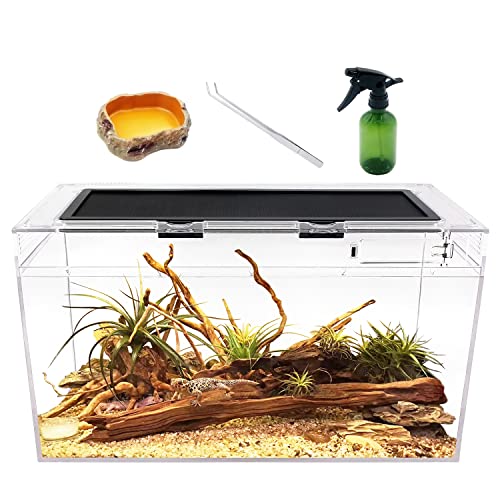
Best Quarantine or Molting Tank: Mini Reptile Terrarium Set 12x7x6
The Mini Reptile Terrarium Set 12x7x6 at $26.99 includes a tank plus a tweezer, feeding bowl, and spray bottle — making it the cheapest complete kit option. At 12” x 7” x 6”, this tank is intentionally small, and that’s exactly what makes it perfect for specific use cases.
I’ve found tanks this size most useful as isolation chambers for sick crabs, molting tanks, or temporary holding during main tank cleaning. The metal screen ventilation top provides decent airflow, and the included accessories mean you can set it up immediately.
Pros: Most affordable kit at $26.99 with basic accessories included. Metal screen ventilation top. Compact and easy to clean. Good for isolation, quarantine, or molting.
Cons: 6-inch height is extremely limiting — only 2-3 inches of substrate possible. Way too small for permanent housing of any crab. Plastic quality is basic. Not suitable for heat lamp use on top.
The most honest review: “Way too small for permanent home — better as a secondary tank.” That’s exactly right. Buy this as a supplement to your main tank, not as your primary crabitat.
Mini Terrarium Set 12x7x6 on Amazon
Cheapest Entry Point: Clioran Escape Proof Polycarbonate Tank
The Clioran Escape Proof Polycarbonate Tank at $16.99 is the cheapest viable hermit crab enclosure available. The magnetic lid design is genuinely clever — no clips, no latches, just a magnetic seal that crabs can’t push open. The polycarbonate body is shatter-proof and practically indestructible.
This is a bare-bones enclosure. No accessories, no screen top for heat lamps, and very limited space. At this price point, it’s best suited for baby crabs, temporary holding, or as an emergency backup tank.
Pros: Magnetic lid design — genuinely escape-proof. Shatter-proof polycarbonate construction. Unbeatable price at $16.99. Compact and lightweight.
Cons: Very small — suitable for 1 small crab only. No screen top means no heat lamp compatibility. No accessories included. Minimal substrate depth. Ventilation could be better for long-term use.
“Magnetic lid is genius — no escapes” is the standout review. The practical reality: “Too tiny for anything permanent” and “Can’t fit a heat lamp on top” — significant limitations for daily crab care.
Clioran Escape Proof Tank on Amazon
Best for Serious Keepers: REPTI ZOO Full Glass 15 Gallon Reptile Tank
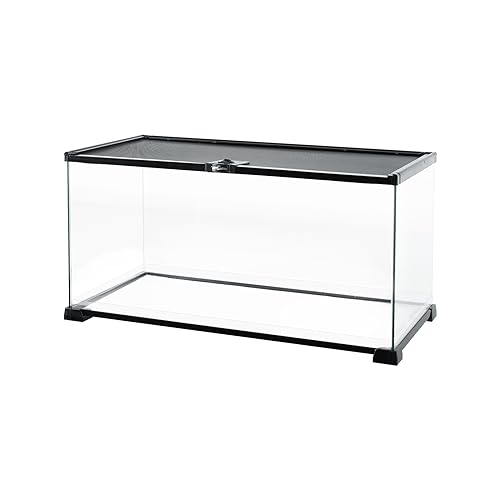
The REPTI ZOO Full Glass 15 Gallon Reptile Tank at $105.99 is the premium option on this list, and the only full-glass tank. At 24” x 12” x 12”, it’s the largest enclosure here with the best humidity retention, the most professional appearance, and enough space for a small hermit crab colony.
Glass is the material serious hermit crab keepers prefer because it traps humidity far better than plastic. The 14-inch height allows 6+ inches of substrate depth — perfect for deep molting burrows. The top screen ventilation includes a feeding slot, so you can drop food in without disturbing the crabs.
Pros: Full glass construction — superior humidity retention and professional appearance. Largest tank on this list at 15 gallons. 14-inch height supports deep substrate for molting. Full panoramic viewing from all sides.
Cons: Most expensive at $105.99. Heavy glass makes moving difficult. No accessories at this price point. Limited Amazon reviews compared to plastic options. Shipping glass is risky — check for damage on arrival.
“Glass quality is excellent” and “Perfect for large crab setups” reflect the premium experience. The trade-off: “Very heavy to move” and “No accessories included at this price” — at $105.99, you’d expect at least a clip or thermometer.
REPTI ZOO 15 Gallon Glass Tank on Amazon
Quick Comparison — All 7 Tanks at a Glance
| Tank | Price | Material | Size | Best For |
|---|---|---|---|---|
| Reptile Growth 10 Gallon | $68.99 | Plastic + Screen | 20”x10”x11” | 1-3 crabs, best overall |
| Reptile Growth Mini 12x7x9 | $30.98 | Plastic + Screen | 12”x7”x9” | 1-2 crabs, budget pick |
| Reptile Terrarium 16x8x10 | $42.99 | Plastic + Screen | 16”x8”x10” | 2-3 crabs, mid-size |
| HELIME 7-Piece Kit | $41.99 | Polycarbonate | 11.7”x8.9”x7” | Beginners, all-in-one |
| Mini Terrarium Set 12x7x6 | $26.99 | Plastic + Screen | 12”x7”x6” | Quarantine/molting |
| Clioran Escape Proof | $16.99 | Polycarbonate | Small | 1 baby crab, cheapest |
| REPTI ZOO 15 Gallon Glass | $105.99 | Full Glass | 24”x12”x12” | Colonies, premium |
Buying recommendations by scenario:
- 1 crab on a budget → Reptile Growth Mini 12x7x9 or Clioran Escape Proof
- 2-3 crabs → Reptile Terrarium 16x8x10 or Reptile Growth 10 Gallon
- Beginner who needs everything → HELIME 7-Piece Kit
- Serious keeper with 4+ crabs → REPTI ZOO 15 Gallon Glass
Hermit Crab Tank vs Cage — Why Tanks Win
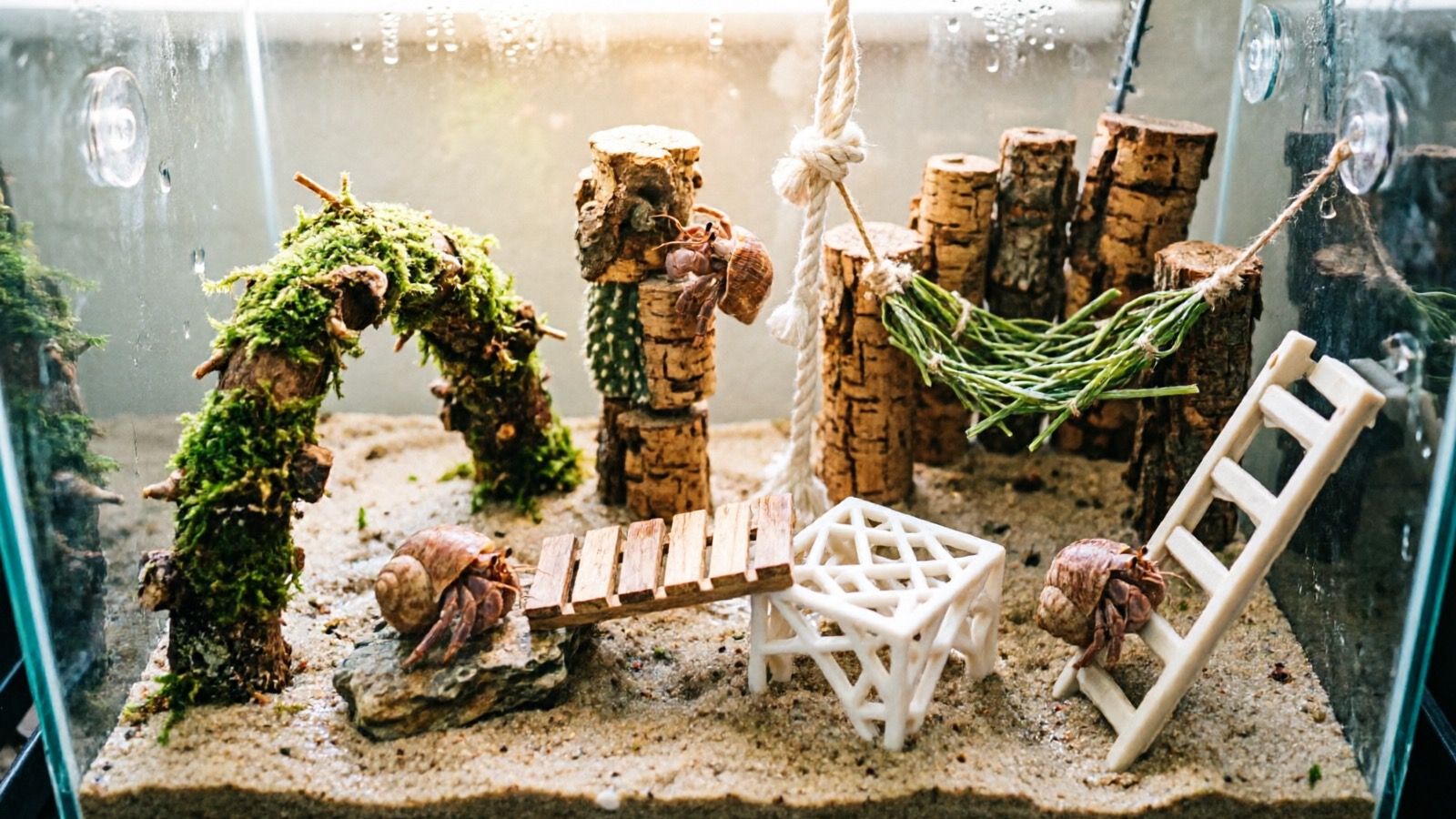
A “crabitat” is the proper term for a complete hermit crab environment — it’s not just the container, but the entire ecosystem: tank, substrate, humidity control, temperature regulation, climbing structures, hiding spots, food and water stations. The tank is the foundation of the crabitat, and choosing the right one determines whether everything else works.
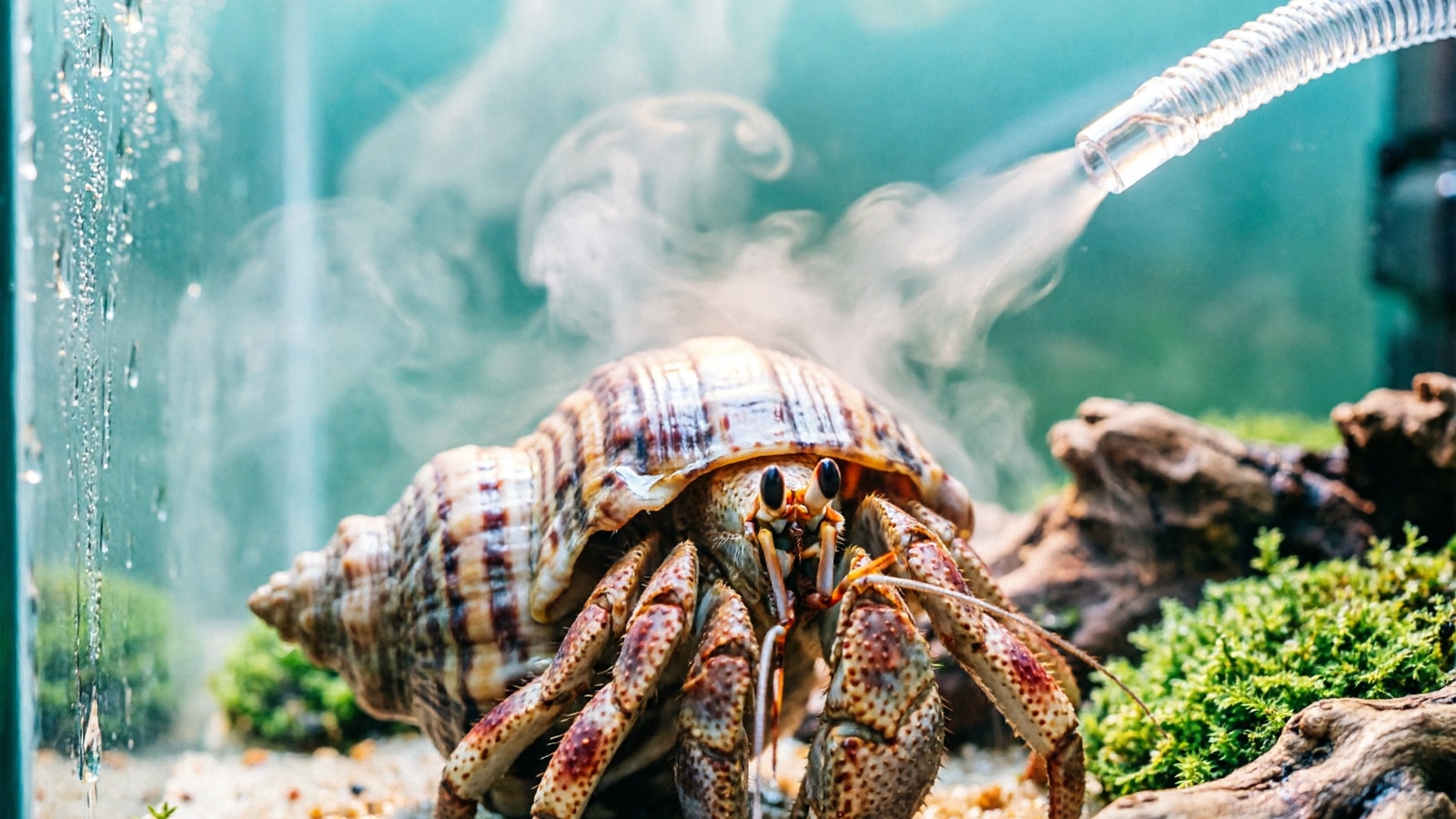
Cages marketed for hermit crabs fail on three critical fronts when compared to a proper hermit crab tank. First, wire or mesh cages cannot hold humidity — hermit crabs breathe through modified gills that must stay moist, and 70-80% humidity is non-negotiable. Wire cages drop to 30-40% within hours.
Second, cages can’t hold deep substrate. Without 4-6 inches of coir or sand, crabs cannot molt safely — they’ll attempt surface molts that often end in death.
Third, cages offer no temperature stability. A glass or thick plastic tank buffers against room temperature fluctuations, while wire cages expose crabs to every draft.
Hermit crab tank essentials — what matters and what doesn’t:
-
Glass or thick plastic construction for humidity retention
-
Screen ventilation top for airflow and heat lamp support
-
Water-tight base to hold moist substrate without leaking
-
Minimum 10-gallon capacity for a single hermit crab
-
Secure lid with clips or locking mechanism
-
Enough height for 4-6 inches of substrate depth
-
Wire or mesh cages — cannot hold humidity
-
Gravel or calci-sand as substrate — harmful during molting
-
Cedar or pine wood decorations — toxic to hermit crabs
-
Tanks under 5 gallons — too small for any permanent setup
-
Solid lids without ventilation — causes dangerous humidity spikes
-
Table salt in water dishes — use marine salt mix instead
Whether you’re setting up your first enclosure or upgrading to a larger one, the principles in this checklist apply.
For small pet owners who’ve researched enclosures for other species, the same principles apply. Our best hamster cage guide covers similar ground regarding enclosed vs wire environments. The bottom line: tanks aren’t just better — they’re necessary for hermit crab survival.
Setting Up Your New Hermit Crab Tank
Step 1: Clean the tank. Rinse with warm water — no soap or chemicals. Even residual dish soap is toxic to crabs through their gills. Dry completely.
Step 2: Add substrate. Use 4-6 inches of coconut coir or a sand-coir mix. Moisten it until it holds shape when squeezed — like sandcastle consistency. This is the foundation of any healthy enclosure. For detailed substrate recommendations, our best hermit crab substrate guide covers 8 tested options.
Step 3: Set up heat. Attach an under-tank heater to the back wall, covering about 3/4 of the surface. This provides gentle belly heat without drying out the substrate. Use a thermostat to maintain 75-85°F.
Step 4: Add climbing structures. Cholla wood, cork bark, and fake plants give crabs vertical space to climb and exercise. Avoid anything treated with chemicals or paint.
Step 5: Set up water and food. Two water dishes — one fresh, one with marine salt mix (not table salt). A shallow food bowl prevents tipping. All dishes should be shallow enough for crabs to climb in and out safely.
Step 6: Add monitoring tools. A digital hygrometer-thermometer combo lets you track both humidity and temperature at a glance. Position it at substrate level, not lid level — that’s where your crabs actually live.
Step 7: Introduce your crabs. Give the tank 24 hours to stabilize temperature and humidity before adding crabs. This reduces stress and lets the environment settle.
The most common setup mistake is not enough substrate. New owners often add 1-2 inches when their crabs need 4-6 inches minimum.
Deep substrate is non-negotiable for molting — it’s the difference between a crab that molts successfully and one that doesn’t survive the process. For tank maintenance tools, our best turtle filter guide covers water quality monitoring approaches that apply equally to hermit crab water dishes.
Frequently Asked Questions
What size tank does a hermit crab need?
A single hermit crab needs at minimum a 10-gallon tank, but 20 gallons or more is ideal for long-term health. For every additional crab, add 5-10 gallons. The deeper the tank, the more substrate you can add, which directly affects molting success.
Can hermit crabs live in a plastic tank?
Yes, hermit crabs can live in plastic tanks, with some caveats. Plastic terrariums work for temporary housing or small crabs.
However, they don’t retain humidity as effectively as glass and scratch more easily during cleaning. For a permanent crabitat, glass is strongly preferred.
Do hermit crabs need a heat lamp in their tank?
Hermit crabs need consistent 75-85°F temperatures. An under-tank heater is generally safer and more effective than a heat lamp, as it provides warmth without drying out the substrate. If using a heat lamp, position it at one end to create a temperature gradient — crabs will self-regulate by moving between warm and cool zones.
What should I put in my hermit crab tank?
Start with 4-6 inches of moist coconut coir or sand-coir substrate, then add two water dishes (fresh and saltwater), a food bowl, climbing structures like cholla wood, at least two hiding spots, and a hygrometer-thermometer. Avoid gravel, calci-sand, and cedar — all are harmful to hermit crabs.
How often should I clean my hermit crab tank?
Spot clean daily by removing uneaten food and visible waste. Do a partial substrate change (top 2 inches) every month and a full substrate replacement every 3-6 months. Avoid deep-cleaning the entire tank at once — crabs rely on established scent trails and microbiome in the substrate.