faq:
- q: “What is a Coronet guinea pig?” a: “A Coronet is a long-haired guinea pig breed distinguished by a single rosette (crown) on the forehead. They have silky hair flowing back from the crown over the body, similar to a Silkie but with this one defining feature. Recognized by the ACBA in the US, the Coronet was developed in England in the 1980s by crossing Silkies with other long-haired breeds.”
- q: “How long do Coronet guinea pigs live?” a: “5-7 years on average, the same as all guinea pig breeds. Lifespan depends on diet quality, housing, veterinary care, and companionship. With excellent care, some Coronets reach 8 years.”
- q: “Are Coronet guinea pigs good pets for beginners?” a: “Their temperament is gentle and friendly. However, the daily grooming requirement of 15-20 minutes makes them better suited for owners who can commit to regular coat care. A beginner willing to learn grooming is fine; a beginner unwilling to brush daily should consider a short-haired breed.”
- q: “How big do Coronet guinea pigs get?” a: “8-12 inches in body length and 1.5-3 lbs (700-1400 g) in weight. Males tend to be slightly larger than females. Their long coat can make them appear larger than they actually are.”
- q: “Do Coronet guinea pigs need a lot of grooming?” a: “Yes — daily brushing of 15-20 minutes is the standard. Their long, silky coat tangles easily without regular attention. During shedding seasons, grooming may need to increase to twice daily.”
- q: “What is the difference between a Coronet and a Silkie guinea pig?” a: “The only structural difference is the crown: Coronets have a single rosette on the forehead, while Silkies have a smooth head with no rosette. Both have long, silky coats. Temperament and care needs are identical.”
- q: “How much does a Coronet guinea pig cost?” a: “$30-80 from a breeder and $20-50 from a rescue. Show-quality Coronets can cost $100-200. Ongoing costs are higher due to grooming supplies.”
- q: “What colors do Coronet guinea pigs come in?” a: “All standard guinea pig colors and patterns are accepted: self (solid), agouti (ticked), tortoiseshell, dalmatian, roan, and Himalayan. Color does not affect grooming difficulty or health.”
- q: “Can Coronet guinea pigs live alone?” a: “No — like all guinea pigs, Coronets must live in pairs or groups. They are social animals that become depressed when housed alone.”
- q: “What do Coronet guinea pigs eat?” a: “The same diet as all guinea pigs: 80% timothy hay, 1/8 cup fortified pellets daily, and 1 cup fresh vegetables with Vitamin C-rich options like bell peppers.”
Overview
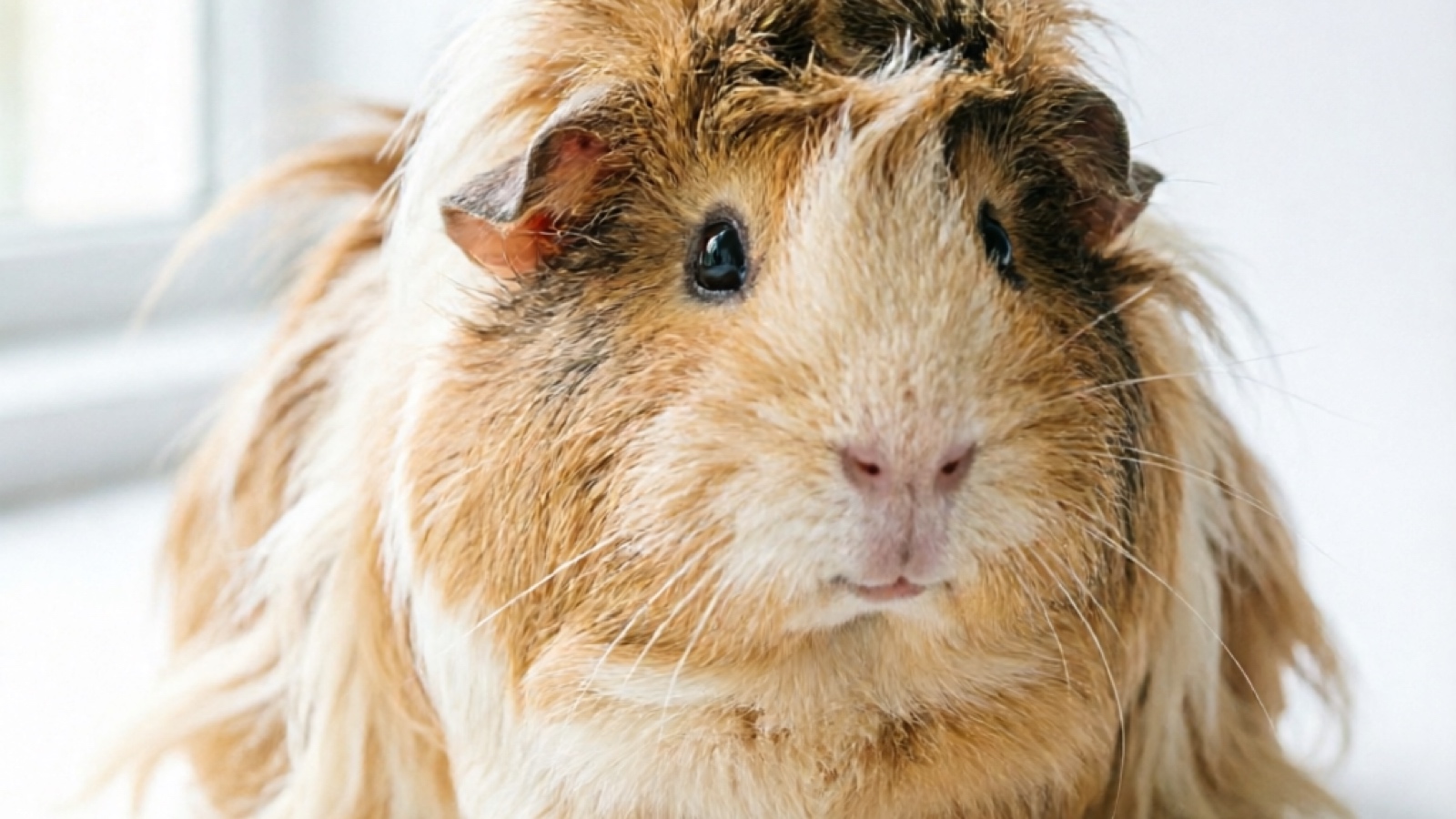
The Coronet guinea pig is a long-haired breed defined by one distinctive feature: a single rosette on the forehead called the crown. This rosette creates a tufted, crown-like appearance that gives the breed its name and makes it one of the most visually striking guinea pig breeds. Developed in England in the 1980s by crossing Silkies with other long-haired breeds, the Coronet is recognized by the American Cavy Breeders Association (ACBA).
Structurally, a Coronet is essentially a Silkie with a forehead rosette — the two breeds share identical coat texture, temperament, and care requirements. That single crown rosette is the only structural difference. However, the practical implication of that long silky coat is significant: daily grooming of 15-20 minutes is non-negotiable for Coronet owners. This grooming commitment is the breed’s biggest differentiator and the primary factor to consider before bringing one home.
Quick Facts
| Attribute | Details |
|---|---|
| Scientific Name | Cavia porcellus |
| Other Names | Coronet cavy |
| Adult Size | 8-12 inches (20-30 cm) |
The coronet guinea pig size ranges from 8-12 inches in body length. | Weight | 1.5-3 lbs (700-1400 g) |
The average coronet guinea pig weight is 1.5-3 lbs (700-1400 g). | Lifespan | 5-7 years |
The coronet guinea pig lifespan is 5-7 years, consistent with all guinea pig breeds. | Activity Cycle | Crepuscular (most active dawn and dusk) | | Temperament | Gentle, curious, friendly, outgoing | | Social | Must live in pairs or groups | | Coat | Long, silky, with single forehead rosette (crown) | | Grooming | High — daily brushing, 15-20 min | | Difficulty | Moderate to Advanced | | Cost | $30-80 (breeder); $20-50 (rescue) |
Appearance
The Crown (Coronet Rosette)
The crown is a single rosette — a circular whorl of hair that grows outward from a center point on the forehead, creating a tufted, crown-like appearance. This is the Coronet’s defining feature and the only structural difference between a Coronet and a Silkie guinea pig.
In show standards, the ideal crown is a single, centered rosette that is clearly defined and circular. Pet-quality Coronets may have a crown that is off-center, asymmetric, or less clearly defined — these are purely cosmetic differences that have zero impact on health or temperament.
The Coronet’s single forehead rosette contrasts sharply with the Abyssinian guinea pig, which carries 8-10 rosettes distributed across the entire body. While an Abyssinian’s rosettes create a tousled, textured appearance all over, the Coronet’s single crown sits on an otherwise smooth, flowing long coat.
The Coat
The Coronet’s coat is long, soft, and silky — similar to a Peruvian guinea pig but shorter and more manageable. Coat length typically reaches 4-8 inches, compared to the Peruvian’s 15-20 inches. The hair grows continuously at roughly 1 inch per month and sweeps back from the crown over the body without a frontal sweep over the face (unlike the Peruvian’s characteristic forelock).
The coat consists of a soft undercoat beneath longer silky guard hairs. This double-layer structure gives the coat its characteristic sheen and flow, but it also means the hair tangles easily where the layers interact — particularly behind the ears, under the chin, and around the rear end.
Colors
Coronet guinea pig colors span the full range of accepted guinea pig varieties. The ACBA recognizes all color patterns for Coronets, including self (solid white, black, red, cream), agouti (ticked hair shafts), tortoiseshell, dalmatian, roan, and Himalayan. Color is determined by genetics and has no effect on grooming difficulty, temperament, or health. Some breeders specialize in specific color lines, but any color Coronet requires the same daily grooming commitment.
Satin Variety
The coronet satin guinea pig carries the satin gene, which produces a distinctive sheen caused by hollow hair shafts that reflect light differently. Satin Coronets look striking under bright light but are less common and harder to find from breeders.
⚠️ Health warning: The satin gene has been linked to osteodystrophy, a metabolic bone disease that causes skeletal weakness, lameness, and pain. This condition is not fully understood but appears connected to the genetic mutation that creates the hollow hair shafts. If you are considering a Satin Coronet, ask the breeder about the lineage’s health history and be prepared for potential veterinary costs.
Temperament & Behavior
The coronet guinea pig temperament is one of the breed’s strongest selling points. Coronets are widely described as gentle, curious, and friendly — one of the most outgoing long-haired breeds. They sit in a comfortable middle ground: more active than the calm Peruvian, but more relaxed than the bold Abyssinian guinea pig.
Coronets enjoy lap time, popcorn (jump for joy) regularly when happy, and often learn to recognize their owners by voice and approach the cage bars for attention. Their temperament is identical to Silkies, which makes sense given their shared ancestry.
Handling
The long coat adds complexity to handling. When picking up a Coronet, support the full body with one hand under the chest and the other under the hindquarters — never grab or lift by the coat. Place a towel on your lap during handling sessions to catch loose hair and keep your lap clean. Keep the coat dry during lap time; a wet long coat takes hours to dry and risks chilling.
Coronets are generally good with children due to their calm nature, but the grooming commitment is the realistic barrier. If the adults in the household aren’t prepared to take over daily brushing, a short-haired breed is a more practical choice.
Social Behavior
Like all guinea pigs, Coronets must live in pairs or groups — they cannot live alone. A solitary Coronet will become depressed, stop eating, and develop stress-related health problems. For a comprehensive coronet guinea pig care guide, see our guinea pig care guide.
Pairing a Coronet with a short-haired breed (like an American or Teddy) reduces mutual grooming challenges — two long-haired pigs can get their coats tangled together during social grooming. Same-sex pairs (two sows or two boars) are the standard recommendation for first-time owners.
Diet & Nutrition
There are no breed-specific dietary differences for Coronet guinea pigs. They eat the same diet as every other guinea pig breed:
- Unlimited timothy hay (80% of diet) — essential for dental health and digestion
- Fortified pellets (1/8 cup daily) — provides vitamins and minerals
- Fresh vegetables (1 cup daily) — emphasizes Vitamin C-rich options like bell peppers
Vitamin C is critical for all guinea pigs — they cannot synthesize it and need 30-50 mg daily. Without adequate Vitamin C, guinea pigs develop scurvy (joint pain, lethargy, poor wound healing). For detailed dietary guidance, see our guinea pig food guide, guinea pig vitamin C requirements, and best guinea pig food recommendations.
Housing Requirements
Cage Size
The coronet guinea pig cage size requirement follows standard guidelines: the minimum for a pair is 10.5 square feet, but 13+ square feet is strongly recommended. Long-haired breeds benefit from extra space because their coat drags less on the cage floor in larger enclosures, reducing soiling and matting. For detailed dimensions, see our guinea pig cage size guide and our recommendations for the best guinea pig cages.
Bedding
Fleece liners are the best bedding choice for Coronets. The long coat doesn’t pick up fleece fibers the way it catches loose bedding particles. Fleece is also easier to clean — shake, wash, and replace weekly. Paper bedding is a workable second choice. Avoid wood shavings entirely — the particles embed in the long coat and are nearly impossible to fully brush out.
Long-haired breeds require more frequent cage cleaning regardless of bedding type. The coat sweeps through the cage floor and distributes waste, so spot-cleaning daily and full bedding changes weekly is the minimum for a Coronet.
Grooming
The coronet guinea pig grooming requirement is the single most important factor that separates this breed from short-haired alternatives. Daily brushing of 15-20 minutes is not optional — it is the minimum maintenance to prevent painful matting, skin infections, and coat damage.
Daily Grooming Routine (Step-by-Step)
Step 1: Prepare (2 minutes) Gather your tools: a wide-tooth comb, a soft-bristle brush, and optionally a guinea pig-safe detangling spray. Find a comfortable, well-lit spot and place a towel on your lap. Have a few treats ready — many Coronets learn to tolerate (and some enjoy) grooming sessions when rewarded.
Step 2: Check the Crown (2 minutes) Inspect the forehead rosette first — the coronet guinea pig rosette is the number one tangle hotspot. Hay, bedding particles, and food debris get trapped in the crown whorl easily. Gently separate any tangles with your fingers before using the comb. Work from the outside of the rosette inward to avoid pulling on the center.
Step 3: Full Body Brush (10-12 minutes) Start from the skin outward, working section by section from head to tail. Comb through the entire coat with the wide-tooth comb first to remove tangles, then follow with the soft-bristle brush to smooth the coat. Pay extra attention to high-tangle areas: behind the ears, under the chin, the armpit area, and the rear area where urine contact causes matting.
Step 4: Finish & Check (3-5 minutes) Run your fingers through the entire coat to catch any missed tangles. Check the skin for redness, flakes, scabs, or signs of parasites (moving specks could indicate mites). Trim any soiled or severely matted sections with blunt-nosed scissors — never cut near the skin. Total time: 15-20 minutes.
Shedding Management
Coronet guinea pig shedding occurs year-round because the hair grows continuously. Peak shedding happens in spring and fall when the coat thins and regenerates. During these periods, you may need to brush twice daily to keep up with loose hair. A damp cloth wipe-down after brushing helps catch loose fur that the brush misses. Increasing brushing frequency during shedding season also reduces the amount of hair scattered around your home.
Bathing
Baths are rarely needed — once every 3-6 months at most. Frequent bathing strips natural oils from the coat and dries the skin. When bathing is necessary, use a guinea pig-safe shampoo only (never human shampoo or dish soap). Dry the coat thoroughly with towels and a hair dryer on the lowest cool or warm setting. A wet Coronet takes a long time to dry due to the dense, long coat — a damp guinea pig is at risk of chilling, so make sure the coat is completely dry before returning to the cage.
Trimming
Pet Coronets can be trimmed to 2-3 inches to significantly reduce the daily grooming burden. A shorter coat still tangles but is far more manageable. Show Coronets are kept at full length with rigorous daily grooming. The rear area should always be kept shorter regardless — a long rear coat becomes soaked with urine and causes skin irritation.
Grooming Troubleshooting
Severe mats: Don’t pull — hold the mat at the base (against the skin) and gently work it apart with your fingers or a mat breaker. If the mat is too tight, carefully cut it out with blunt-nosed scissors, keeping the blades parallel to the skin.
Coat breakage: Brittle, breaking hair usually indicates dry skin or nutritional deficiency. Ensure adequate Vitamin C intake and consider adding a small amount of olive oil to the diet (1/4 teaspoon, once per week).
Guinea pig won’t sit still: Try grooming after mealtime when they’re relaxed, or have a second person offer vegetables as distraction. Most Coronets adapt to routine grooming within 2-3 weeks.
Grooming Tools
Essential tools: wide-tooth comb, pin brush, soft-bristle brush, blunt-nosed scissors, guinea pig-safe nail clippers. Optional but helpful: detangling spray, mat breaker, flea comb for parasite checks.
Coronet vs Silkie vs Peruvian
The coronet vs silkie guinea pig comparison is the most common question from prospective owners. Adding the Peruvian creates a complete picture of the three long-haired breeds.
| Feature | Coronet | Silkie (Sheltie) | Peruvian |
|---|---|---|---|
| Crown rosette | Single forehead rosette | No rosette | No rosette |
| Coat length | 4-8 inches | 4-8 inches | 15-20 inches |
| Coat growth pattern | Sweeps back from crown | Sweeps back smoothly | Forward over face (forelock) + back |
| Daily grooming | 15-20 minutes | 15-20 minutes | 20-30 minutes |
| Temperament | Gentle, curious, outgoing | Gentle, calm | Calm, docile |
| Difficulty | Moderate to Advanced | Moderate to Advanced | Advanced |
| Bedding | Fleece recommended | Fleece recommended | Fleece strongly recommended |
| Best for | Owners wanting long hair + crown | Owners wanting elegant long hair | Show enthusiasts, experienced groomers |
How to Tell a Coronet from a Silkie
The only reliable difference is the presence of the forehead rosette. Coat texture, length, body shape, and temperament are identical between the two breeds. If you see a long-haired guinea pig with a tufted whorl on its forehead, it is almost certainly a Coronet. If the head is smooth with hair flowing straight back, it is a Silkie. Show judges evaluate the crown’s placement, symmetry, and clarity — pet owners just need to spot the tuft.
Coronet vs Peruvian
The coronet guinea pig vs peruvian comparison comes down to coat management. The Peruvian’s coat can reach 20 inches and grows a forelock that falls forward over the face, requiring daily grooming of 20-30 minutes and frequent trimming around the eyes. The Coronet’s shorter coat (4-8 inches) is more manageable and doesn’t obscure vision. For owners attracted to long-haired breeds but intimidated by Peruvian-level maintenance, the Coronet is often the better practical choice. See our Peruvian guinea pig breed page for full details.
Which Long-Haired Breed Is Right for You?
Choose a Coronet if you want the visual appeal of a crown rosette with moderate grooming commitment. Choose a Silkie if you prefer the clean, elegant look of flowing hair without any rosettes. Choose a Peruvian if you are an experienced groomer willing to invest maximum time in coat care and potentially interested in showing.
Health & Common Issues
Coat-Related Health Issues
Coronet guinea pig health problems related to the long coat create several concerns that short-haired breeds rarely face:
Matting — Severe mats pull on the skin, causing discomfort and restricted movement. Mats also trap moisture and bacteria against the skin, creating infection risk. Daily brushing prevents this entirely.
Skin infections — Matted fur traps moisture, creating an environment where fungal and bacterial infections thrive. Regular grooming and keeping the coat dry are the best prevention.
Urine scald — The rear coat can become soaked with urine, leading to skin irritation, redness, and open sores. Keeping the rear area trimmed short and checking daily prevents this.
Parasite detection — Mites and lice are harder to spot under a dense long coat. Weekly skin checks during grooming are essential — look for excessive scratching, flaking skin, or moving specks in the fur.
Fly strike — In warm weather, soiled rear fur attracts flies that lay eggs in the coat. This is a veterinary emergency. Keep the rear clean and dry during summer months.
Satin osteodystrophy — The satin variety carries a genetic risk of bone disease. Not all satin pigs develop it, but the risk is significant enough to warrant discussion with the breeder.
Standard Guinea Pig Health Issues
Beyond coat-related concerns, Coronets face the same health issues as all guinea pig breeds:
- Dental problems — prevented by unlimited hay, which wears down continuously growing teeth
- Respiratory infections — common in guinea pigs, often triggered by drafts or poor ventilation
- Bumblefoot — painful foot pad inflammation; long-haired breeds are susceptible because the coat drags on damp cage floors. See our guinea pig bumblefoot guide for prevention and treatment
- Urinary problems — bladder stones and sludge are common, especially in pigs that don’t drink enough water
- Vitamin C deficiency (scurvy) — prevented by adequate fresh vegetables and pellets
For comprehensive health information, see our guinea pig health guide and guinea pig lifespan article.
Conclusion
The Coronet guinea pig combines the flowing elegance of a long-haired breed with the eye-catching appeal of a forehead crown rosette. Their gentle, curious temperament makes them rewarding companions — they are interactive, enjoy lap time, and form strong bonds with their owners. The trade-off is the daily 15-20 minute grooming commitment, which is the single biggest factor to consider before choosing this breed.
If you can commit to daily brushing, regular health checks, and providing a spacious cage with fleece bedding, a Coronet is an excellent choice. For an overview of all breed options, see our guinea pig breeds guide.