Quick Answer — Why Does My Rabbit Thump?
Thumping is an instinctive alarm communication — rabbits use their powerful hind legs to strike the ground, sending vibrations and sound that warn other rabbits of potential danger. In the wild, why do rabbits thump their back legs comes down to survival: a single thump alerts the warren that a predator may be nearby. In my experience, the best way to understand thumping is to think of it as your rabbit’s personal alarm system.
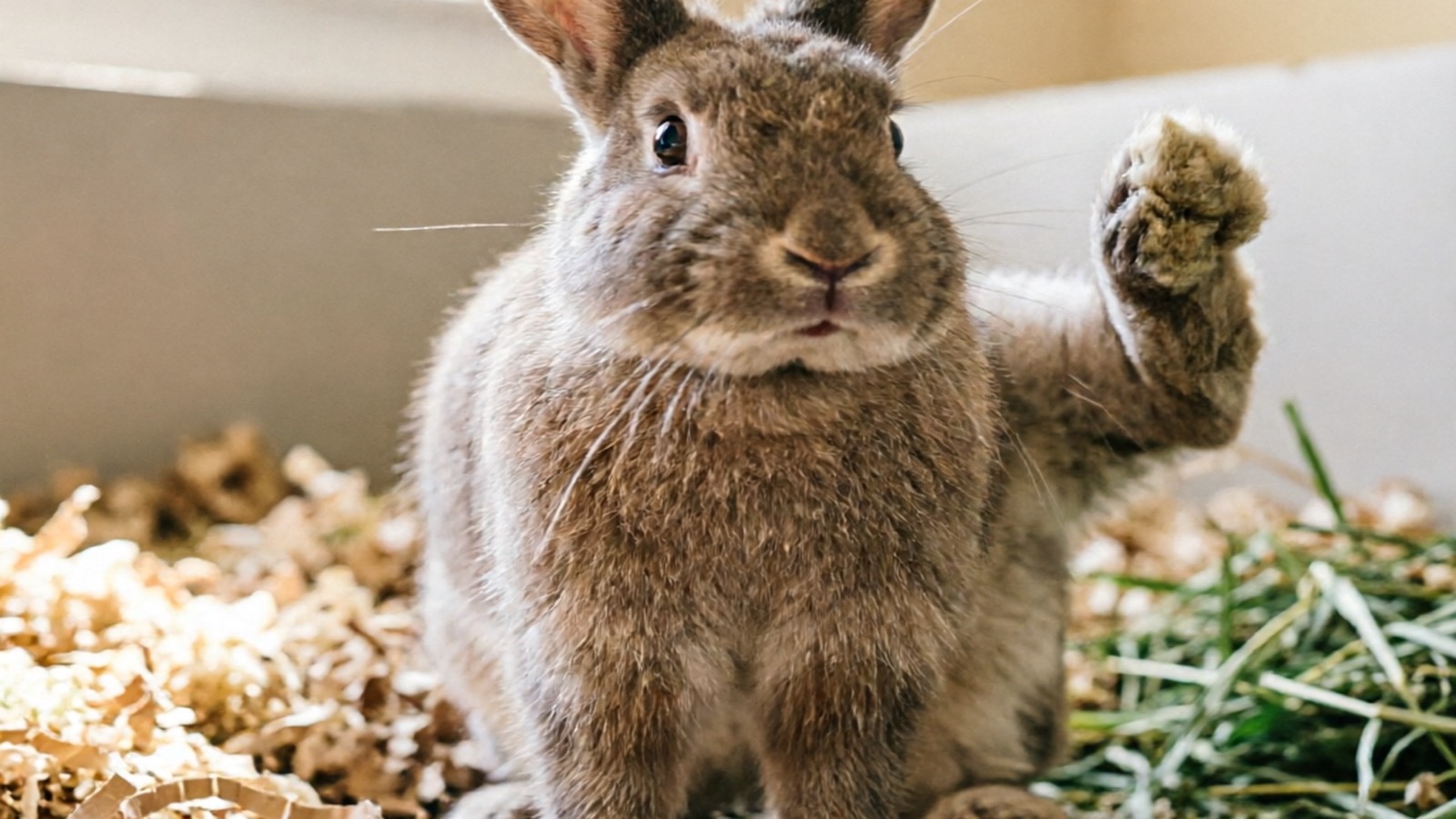
Thumping (also called foot-drumming or stamping) is a rabbit’s instinctive alarm signal — they strike the ground with powerful hind legs to produce vibrations and sound that warn other rabbits of potential danger. In the wild, this behavior alerts the entire warren to predators. Pet rabbits retain this instinct even when no real threat exists.
As a pet owner, if you are wondering why does my rabbit thump, the answer almost always falls into one of three categories: fear, annoyance, or demand for attention. Understanding which one your rabbit is expressing — and why — is the key to reducing excessive thumping.
What does rabbit thumping mean? The rabbit thumping meaning depends on context. A single, deliberate thump usually means annoyance or frustration — your rabbit is saying “stop that” or “I don’t like this.” I have seen this happen countless times, especially during nail trims or cage cleaning. Rapid, repeated thumping signals genuine fear or alarm. Wild rabbits use continuous thumping to warn the entire warren, while pet rabbits often thump when they hear an unfamiliar sound, see a sudden movement, or feel insecure.
6 Common Reasons Why Rabbits Thump
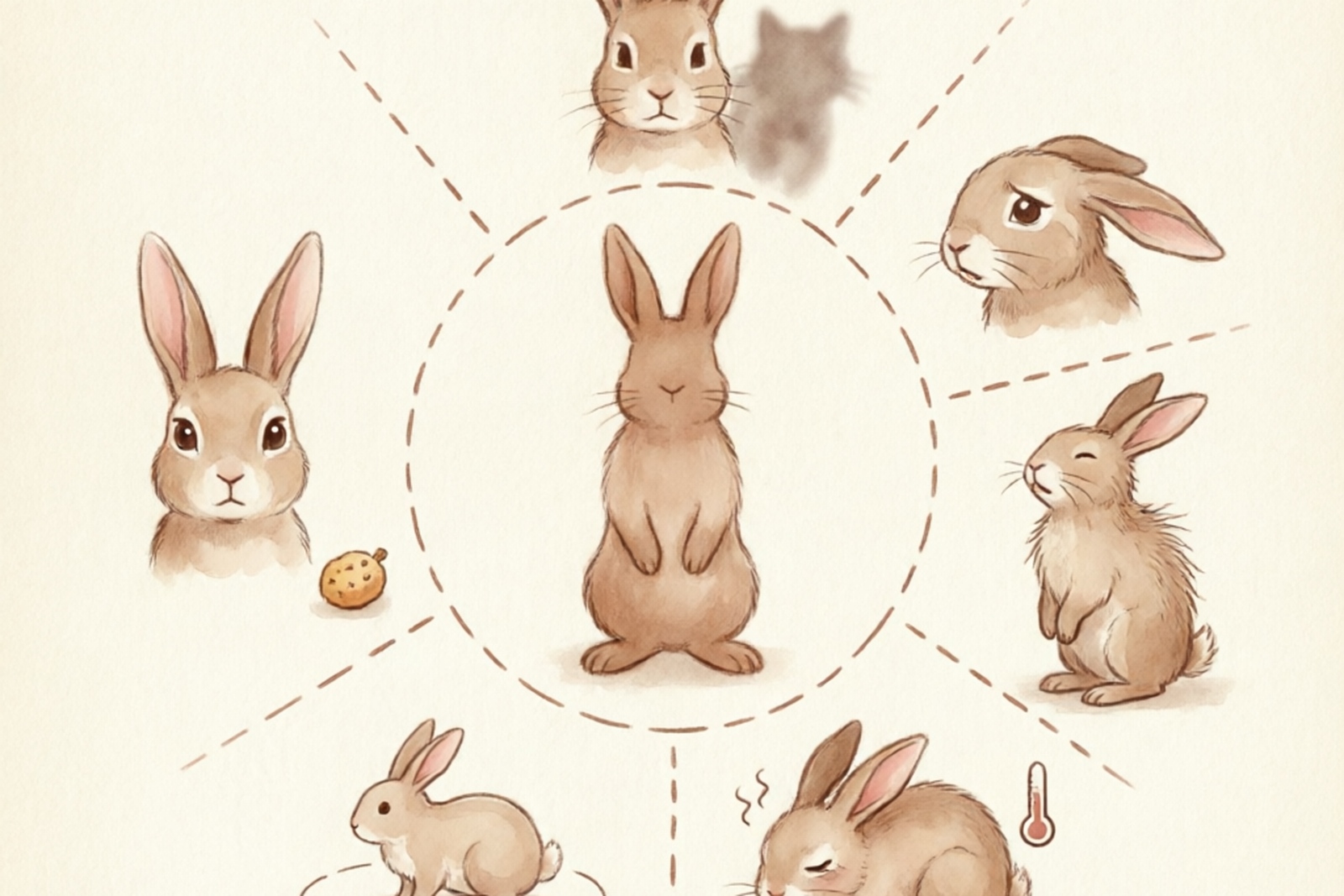
Most rabbit owners encounter thumping regularly. If you are trying to figure out why does my rabbit thump, here are the six most common reasons:
| Reason | Common Signs | Emotion Type | Severity | Quick Fix |
|---|---|---|---|---|
| Fear / Perceived Danger | Ears forward, wide eyes | Fear | ⭐⭐⭐ | Remove the threat |
| Annoyance / Frustration | Single thump + turning away | Irritation | ⭐ | Wait for rabbit to calm |
| Territorial Behavior | Raised fur, low growling | Defense | ⭐⭐ | Respect their space |
| Pain or Illness | Hiding, not eating, hunched | Pain | ⭐⭐⭐ | See a vet |
| Boredom / Pent-up Energy | Pacing, bar biting | Frustration | ⭐⭐ | Add toys and space |
| Attention Seeking | Thumps at you, then waits | Control | ⭐ | Ignore, reward calm |
Fear is the most serious and most common cause. Rabbits have excellent hearing and can detect sounds you may not even notice — a dog barking outside, a car door slamming, or a loud conversation. When your rabbit thumps in response, it genuinely believes danger is present.
Annoyance is the mildest cause. I’ve seen my own rabbit thump once when I moved her food bowl to a different spot. She was not scared — she was just letting me know she disapproved of the change. This type of thumping is harmless and actually kind of funny once you understand it.
Territorial behavior becomes more noticeable as rabbits mature. Unspayed and unneutered rabbits are especially prone to territorial thumping, which usually improves after being fixed.
Pain or illness should never be ignored. A normally calm rabbit that suddenly starts thumping and seems restless may be hurting from dental issues, urinary problems, or digestive discomfort.
Boredom causes more thumping than most owners realize. A rabbit in a small cage with nothing to do will thump out of frustration. According to House Rabbit Society guidelines, a single rabbit needs at least 8 square feet of floor space (1,152 square inches), with 24 square feet recommended for daily exercise. The RSPCA similarly recommends enclosure sizes that allow rabbits to hop at least three consecutive times. Providing adequate space and enrichment makes a dramatic difference — I have seen cage thumping drop to almost zero after upgrading an enclosure.
Attention seeking is learned. If you respond immediately to thumping — picking up, offering treats, or talking — your rabbit learns it works. Ignore the thump and only interact when your rabbit is quiet.
Why does my rabbit thump when I pick her up? Being lifted off the ground triggers a predator-response — their feet leaving the floor feels like being grabbed by a hawk. The RSPCA notes that rabbits should never be picked up by the ears or scruff — lifting should always support the hind end to prevent spinal injury. Scoop from below, keep them close to your body, and support their hind end. For more on understanding these reactions, see our guide to rabbit behavior problems.
Why does my rabbit thump the floor? Thumping on hard floors produces a louder sound than on soft bedding. If your rabbit has suddenly started floor thumping, it may be reacting to a new surface or testing the acoustics of a changed room.
Fear vs. Annoyance — How to Tell the Difference
One common question is why is my rabbit thumping for no reason — but there is almost always a reason. Rabbits communicate subtly, and the trigger may be something you have not noticed: a draft, a reflection, or a high-pitched electronic sound.
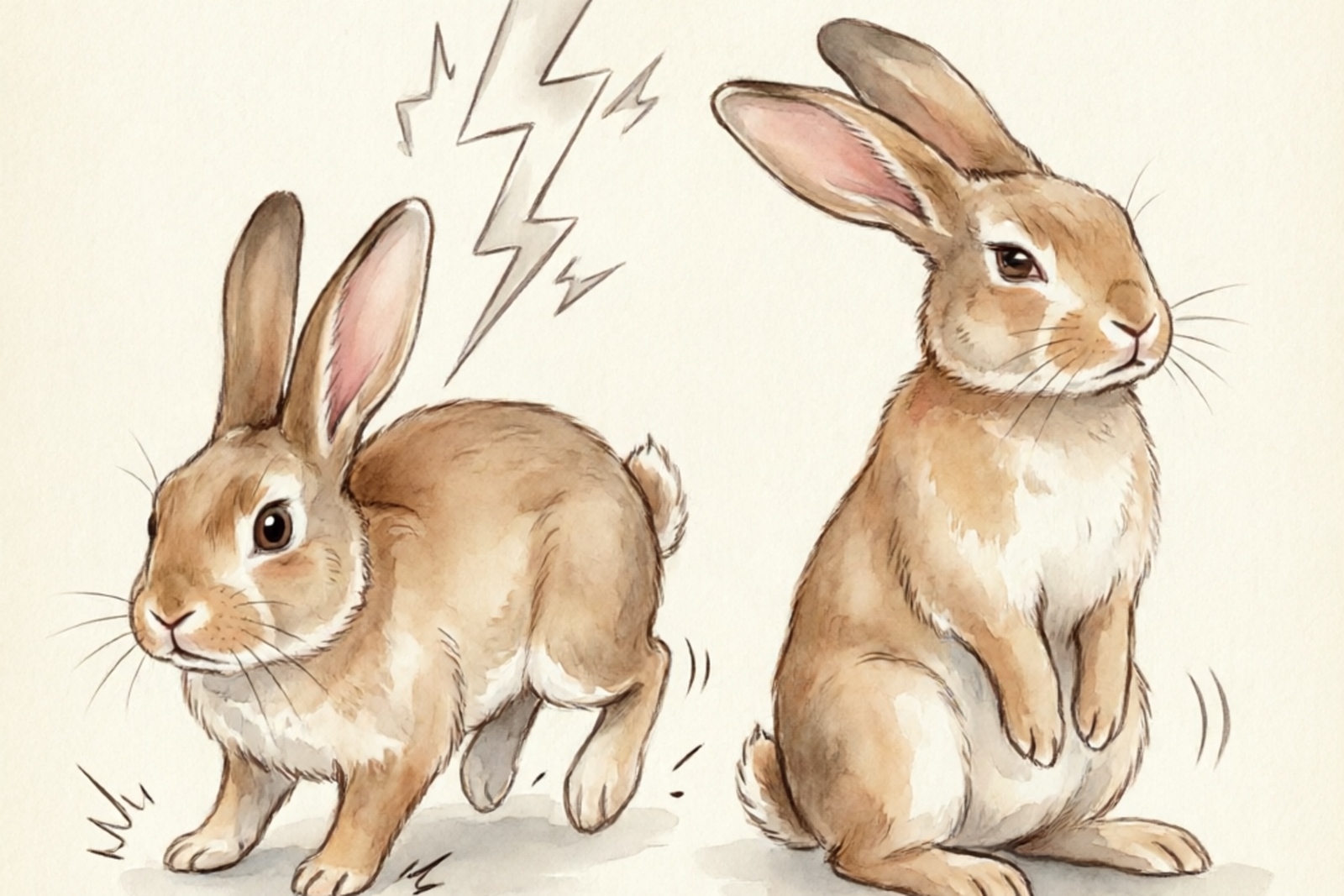
Learning to read body language tells you whether your rabbit is scared or just irritated. This skill takes practice but becomes second nature:
| Feature | Fear Thumping | Annoyance Thumping |
|---|---|---|
| Ear position | Forward, rigid | Relaxed or tilted back |
| Eyes | Wide, alert | Normal, calm |
| Body posture | Crouched, ready to flee | Upright, relaxed |
| Thump frequency | Repeated, rapid | Usually a single thump |
| Direction | May face away from threat | Faces toward you |
| Stops when | Threat is removed | Gets what it wants |
Fear thumping is urgent. Your rabbit’s body is tense, ears are locked forward, and the thumps come in rapid succession. The rabbit may also flatten against the ground or press itself into a corner. Remove whatever triggered the response — close a window, turn off a loud appliance, or simply back away and give your rabbit space.
Annoyance thumping is casual. The rabbit thumps once, often while looking directly at you, then goes about its business. I’ve seen rabbits thump in annoyance when a nail trim took too long, when I accidentally bumped their enclosure, or when free-roam time ended earlier than expected. No intervention is needed — just acknowledge their displeasure and carry on. I’ve learned to appreciate these mild protests; they are part of what makes rabbits such expressive companions.
Why Is My Rabbit Thumping at Night?
Why is my rabbit thumping at night? Rabbits are crepuscular — most active at dawn and dusk — but many are also active during nighttime hours. When the house is quiet, your rabbit can hear sounds that are drowned out during the day: outdoor animals, house settling, or even a refrigerator compressor cycling on.
The most common nighttime triggers are:
- Outdoor animals — cats, foxes, or dogs moving near windows
- Household noises — pipes creaking, appliances cycling
- Visual changes — shadows from passing cars or new furniture casting unfamiliar shapes
- Boredom — nighttime energy turns into frustrated thumping in a small cage
Solutions that work: Cover three sides of the enclosure to reduce visual stimulation, and ensure your rabbit gets adequate exercise during the day.
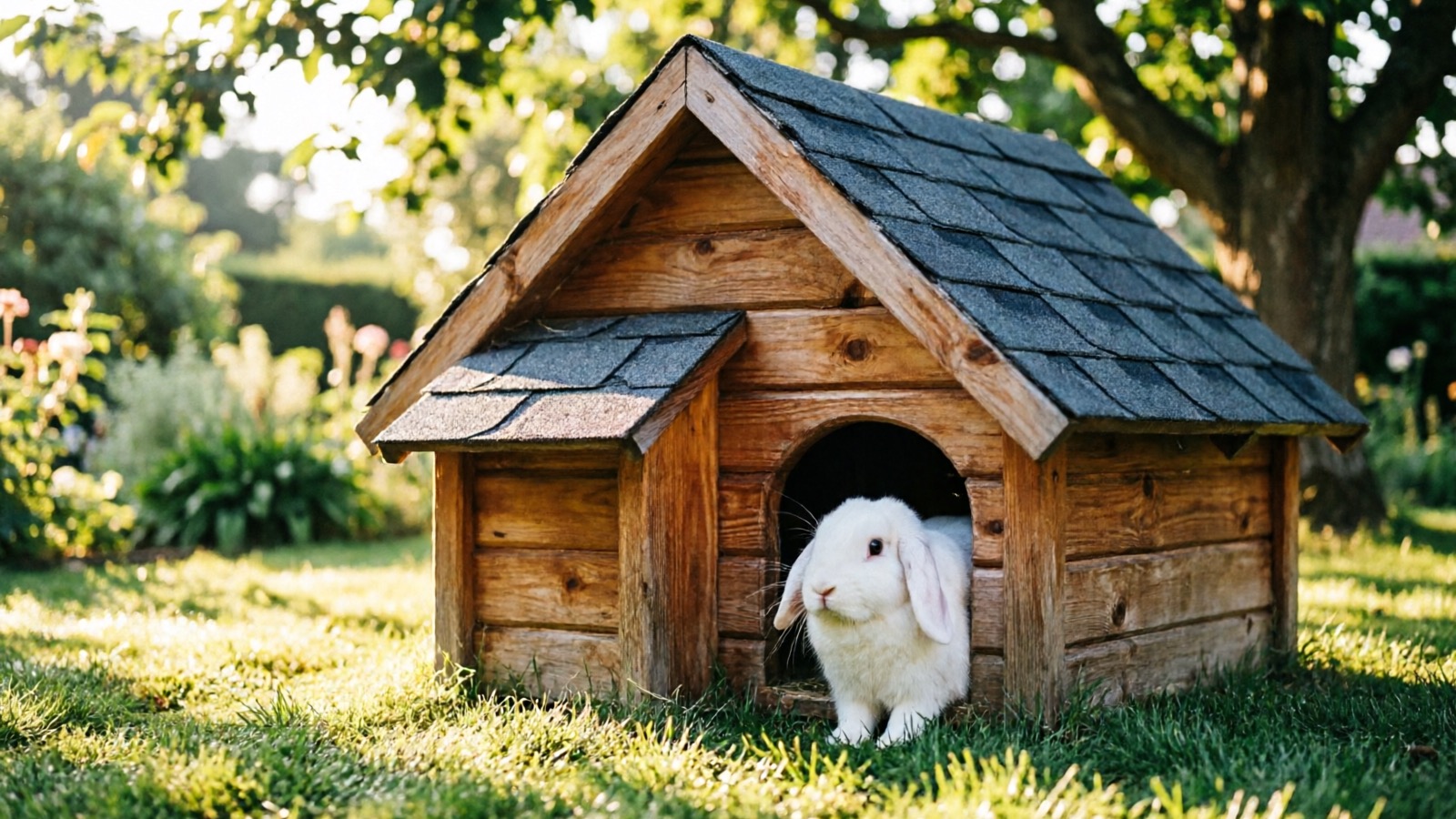
Providing a safe hiding space also helps enormously. A Kaytee Woodland Get-A-Way gives your rabbit a dark, enclosed space to retreat to when they feel exposed. I’ve used one for years, and my rabbit goes straight to it whenever something spooks her. A HERCOCCI 3 Way Tunnel is another great option — the three-way design satisfies their need for escape routes while burning energy. Note that the 7.9-inch openings suit dwarf and small breeds best.
How to Stop Your Rabbit from Thumping
Learning how to stop rabbit from thumping means addressing the root cause, not the symptom. Here is a five-step approach that I’ve found effective over years of keeping rabbits:
Before You React to Thumping — Quick-Check:
- Check for obvious triggers (loud noise, new object, other pet nearby)
- Note your rabbit’s body language (ears, eyes, posture)
- Give your rabbit at least 5 minutes to calm on its own
- Provide a safe retreat if none exists
- Never chase or corner a thumping rabbit — this escalates fear
Step 1: Identify the Trigger Watch what happens immediately before each thump. Is there a loud noise? A new object in the room? Another pet nearby? A pattern will usually emerge within a few days of observation. Keep a simple log — time, location, and what was happening — and you will likely spot the cause.
Step 2: Remove or Reduce the Stressor Once you identify the trigger, eliminate it if possible. Close windows near the enclosure, move a noisy appliance, or block your rabbit’s view of a busy hallway. If the trigger cannot be removed entirely, reducing its intensity still helps significantly.
Step 3: Provide a Safe Retreat A rabbit that can hide feels less need to thump. The Kaytee Woodland Get-A-Way and HERCOCCI 3 Way Tunnel both provide secure spaces. Choose the size that fits your breed — larger rabbits need bigger hideouts. If your rabbit’s cage is undersized, upgrading to a proper rabbit cage size is the single most impactful change you can make.
Step 4: Increase Mental Stimulation Boredom-driven thumping responds well to enrichment. A Niteangel Treat Ball is one of the best solutions I have found — fill it with a few pieces of your rabbit’s regular pellets and adjust the opening size so the treats come out slowly. This keeps rabbits occupied for extended periods and redirects their energy into a productive activity. For more options, see our guide to the best rabbit toys for boredom.
Step 5: Ignore Attention-Seeking Thumps This is the hardest step for most owners. If your rabbit has learned that thumping gets your attention, you must break the cycle. Do not look at, talk to, or approach your rabbit when they thump for attention. Wait until they are calm and quiet, then interact normally. You can reinforce the quiet behavior by offering a small treat — Kaytee Healthy Bits Treat are popular with most rabbits and work well as a reward. Just use them sparingly, since they are higher in fat than regular pellets.
Disclaimer: This article provides general care information only and is not a substitute for professional veterinary advice. If your rabbit shows signs of illness or pain, contact a veterinarian immediately.
When to Worry — Is Your Rabbit Thumping Because of Pain?
Most thumping is normal rabbit communication. But sometimes it signals a health problem that needs veterinary attention. Pain-related thumping has a distinct pattern: it is persistent, happens in a familiar environment with no obvious trigger, and your rabbit may show other signs of distress.
See a vet if you notice these red flags:
- Thumping continuously for more than 30 minutes with no identifiable cause
- Decreased appetite or noticeable weight loss alongside thumping
- Your rabbit flinches, squeaks, or thumps when you touch a specific area
- Hunched posture, puffed-up fur, half-closed eyes, or reluctance to move
- Changes in litter box habits or droppings
- Thumping that does not stop even when the environment is calm and quiet
Pain thumping differs from fear thumping in one key way: it does not stop when the environment is calm. The source of distress is internal. Thumping is one of several rabbit sounds and vocalizations that can indicate distress. For a complete overview of conditions that may cause pain-related thumping, see our guide to common rabbit health problems.
Frequently Asked Questions
Why does my rabbit thump at me?
If you have ever wondered why does my rabbit thump at you specifically, it is either a warning, annoyance, or demand for attention. Check their body language — tense posture and forward ears mean fear, while a relaxed stance and direct eye contact usually means annoyance or a demand. Context matters more than the thump itself.
Do rabbits thump when happy?
No — rabbits do not thump when happy. Rabbit thumping almost always signals fear, annoyance, or a warning. Happy rabbits binky (jump and twist in the air), zoom around the room at high speed, or gently grind their teeth in contentment. If your rabbit is thumping, something is bothering them.
Why does my rabbit thump when I approach?
Your rabbit likely feels threatened by sudden movement or has not bonded with you yet. Approach slowly from the side and offer treats to build positive associations.
Why is my rabbit thumping in her cage?
Cage thumping usually means the cage is too small, your rabbit is bored, or she senses danger nearby. Rabbits need a minimum of 8 square feet of floor space for comfortable living. If the cage is adequate, the thumping may be a response to sounds or movement outside the cage — try covering part of the enclosure to create a more secure feeling.
What does it mean when a rabbit thumps loudly?
A loud, forceful thump signals genuine fear or alarm. A softer thump is usually mild annoyance or frustration. The volume and intensity of the thump directly correspond to the rabbit’s emotional state — the more alarmed they are, the harder and more repeatedly they will thump. If you hear loud, persistent thumping, check the environment for potential threats.