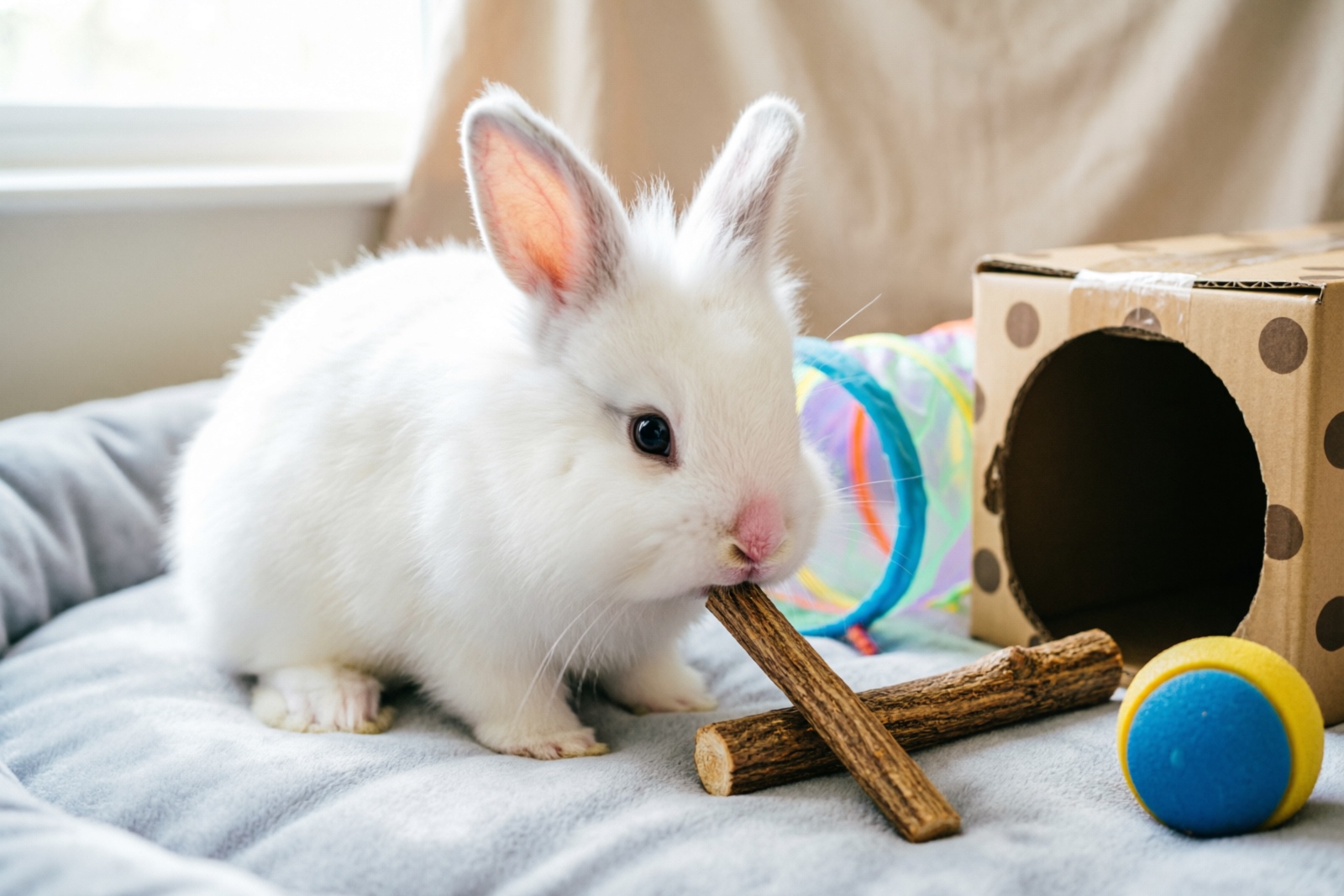
Introduction to Rabbit Toys
Rabbit toys are essential for keeping your bunny happy, healthy, and mentally stimulated. These intelligent, social animals need enrichment to thrive in captivity. In the wild, rabbits spend hours foraging for food, digging burrows, and exploring their environment. The right toys provide essential mental stimulation that prevents boredom, promotes dental health, and encourages natural behaviors.
Without adequate stimulation, bunnies can develop serious behavioral problems like destructive chewing, aggression, and even depression. Their teeth grow continuously throughout their lives (about 5 inches per year), making chew toys not just fun but medically necessary. The best enrichment items can also strengthen the bond between you and your bunny through interactive play and shared activities.
This guide covers everything you need to know: from budget-friendly DIY projects using household items to a handful of well-tested commercial products. You’ll learn what bunnies love most, which materials are safe, and how to keep your pet entertained without breaking the bank.
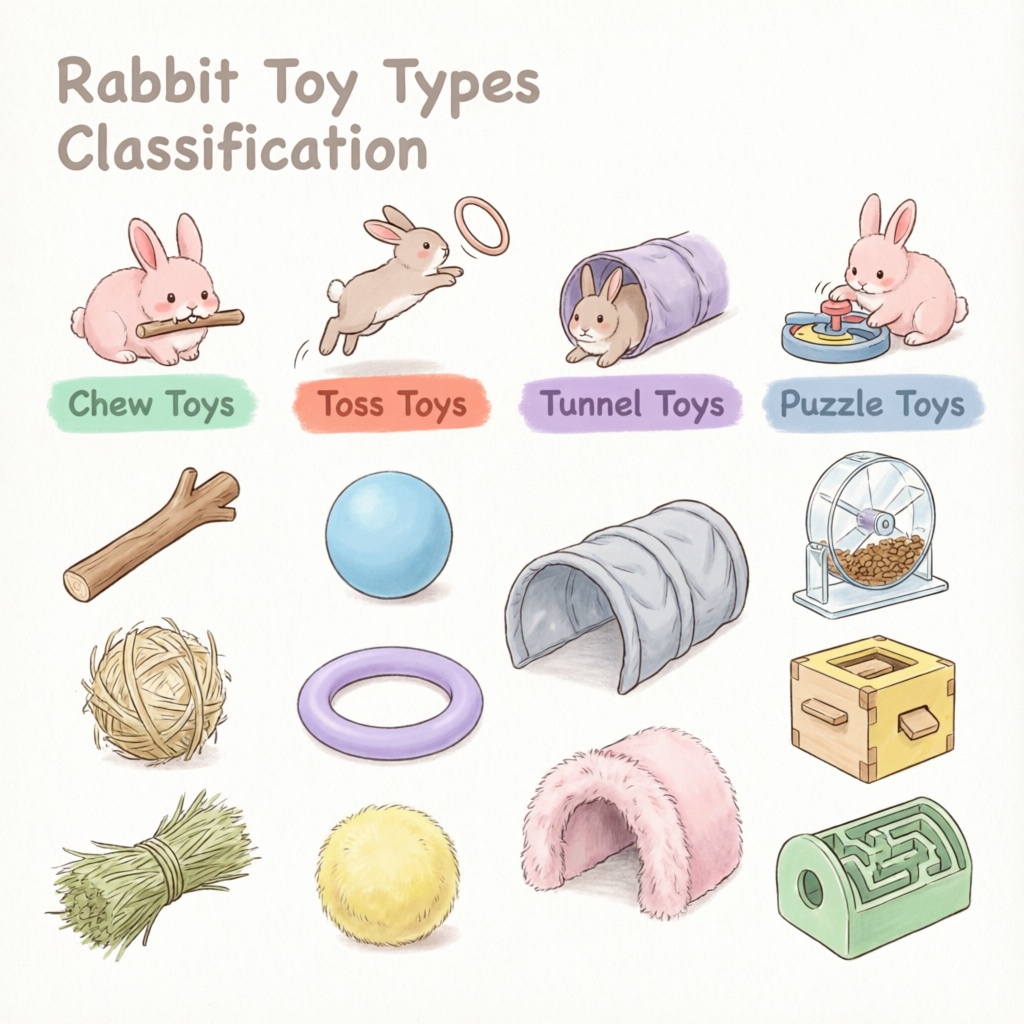
For information on incorporating toys into your pet’s living space, see our guide on rabbit setup.
Why Rabbits Need Toys for Boredom
Boredom is one of the most overlooked health issues in pet rabbits. Quality enrichment items designed for boredom prevention can make the difference between a happy, active bunny and a depressed, destructive one.
Signs of Boredom in Rabbits
Recognizing boredom early allows you to address it before serious problems develop. A lack of engaging toys often leads to these warning signs:
Physical Signs:
- Excessive cage chewing: Gnawing on bars, walls, or furniture due to lack of items to chew
- Overgrooming: Creating bald patches from excessive licking when bored
- Weight changes: Eating less due to depression or overeating from lack of stimulation
- Lethargy: Spending most of the day sleeping or hiding instead of playing
Behavioral Signs:
- Destructive behavior: Shredding bedding, destroying baseboards, chewing cords when no toys available
- Repetitive movements: Circling, bar-biting, head bobbing from lack of engaging play items
- Aggression: Lunging, biting, or growling when approached
- Loss of interest: Ignoring treats, toys, or interaction opportunities
Why Boredom Is Dangerous
A bored rabbit without adequate enrichment can develop serious health problems:
- GI stasis: Stress and lack of movement can cause digestive systems to shut down
- Dental problems: Without proper chew items, teeth can overgrow painfully
- Depression: Can lead to appetite loss and weakened immune system
- Obesity: Lack of exercise combined with overeating
How Toys Prevent Boredom
Bunny toys address three core behavioral needs that prevent boredom and promote wellbeing:
1. Mental Stimulation
- Foraging items: Require problem-solving to access treats
- Puzzle toys: Challenge the brain and provide satisfaction
- New objects: Novelty keeps the mind engaged and curious
2. Physical Exercise
- Tunnels: Encourage running and exploring
- Climbing platforms: Promote jumping and muscle development
- Throw toys: Stimulate natural tossing behaviors
3. Natural Behaviors
- Chew items: Satisfy the constant need to gnaw and maintain dental health
- Digging opportunities: Allow instinctive burrowing behaviors
- Hiding places: Provide security and stress relief
Research shows that rabbits lose interest in the same items after 3-5 days, so having a rotation system is crucial for maintaining engagement.
For more on how entertainment affects wellbeing, see our guide on rabbit health.
Best Rabbit Toys for Dental Health
Rabbit teeth grow continuously — roughly 5 inches per year. Without adequate chewing, teeth can overgrow to the point where the rabbit can no longer eat properly, requiring veterinary intervention. Chew toys aren’t just entertainment; they’re a medical necessity.
Grddaef 20 PCS Natural Chew Toys
The Grddaef 20 PCS Bunny Chew Toys ($9.99, 4.6 stars) offers 20 different chew toys made from natural apple wood and timothy hay. I like this pack because the variety matters — rabbits get bored chewing the same texture day after day, and having 20 different shapes and materials keeps them engaged.
The quality varies slightly between pieces (some are smaller than I’d prefer), but at under $10 for 20 toys, it’s hard to complain. I’ve recommended this to several new rabbit owners, and the feedback has been consistently positive — their bunnies gravitate toward different pieces, which makes it easy to figure out what textures your individual rabbit prefers.
Oxbow Enriched Life Apple Sticks
For a trusted brand option, the Oxbow Enriched Life Apple Stick Bundle ($5.74, 4.5 stars) is a simple, reliable choice. Oxbow is a well-respected name in small pet nutrition, and these apple sticks are all-natural with no additives.
The bundle is small compared to the Grddaef pack — your rabbit will go through these faster. But I’d keep Oxbow sticks in rotation alongside a variety pack rather than relying on them as the sole chew toy. They’re a good quality baseline.
For dental health specifics, see our rabbit grooming guide.
Foraging and Puzzle Toys for Rabbits
Foraging toys engage your rabbit’s brain by requiring them to work for food — this mimics the natural behavior of sniffing out and digging up plants in the wild. In my experience, food-motivated rabbits respond enthusiastically to these, while more passive bunnies may need some training to understand how the toys work.
Foraging Mat — Simple and Effective
The Rabbit Foraging Mat ($6.99, 4.3 stars) is a fleece mat with pockets and folds where you hide treats or pellets. Your bunny sniffs out and roots through the fabric to find the food. It’s machine washable, which is important because it will get soiled.
At $6.99, this is one of the most affordable enrichment options available. The mat is on the small side for larger breeds (Flemish Giants will find it cramped), but for most medium-sized rabbits it works well. Start by hiding strongly scented treats in easy-to-find spots, then gradually increase difficulty.
Foraging Toys 6 in 1 Puzzle Set
The Foraging Toys 6 in 1 ($8.99, 4.2 stars) provides six different wooden puzzle toys that require varying levels of manipulation to release treats. The variety means there’s a difficulty gradient — some puzzles are simple enough for beginners, while others take more problem-solving.
Some bunnies figure out all six puzzles within days; others lose interest quickly. I’ve found it works best to introduce one puzzle at a time rather than dumping all six into the cage at once. A note on treats: I’d use your rabbit’s regular pellets rather than high-sugar treats in puzzle toys, since the goal is mental stimulation, not adding extra calories to their diet.
Tunnels and Hideouts
Tunnels serve a dual purpose for rabbits: they provide a path for running and an enclosed space for hiding. As prey animals, rabbits feel safest when they have access to enclosed spaces. Most rabbits I’ve cared for have a clear preference for having at least one tunnel or hideout available at all times.
Oxbow Timothy Hay Tunnel
The Oxbow Timothy Hay Tunnel ($11.59, 4.4 stars) is made from 100% woven timothy hay with no wires or strings. Your rabbit can hide in it, run through it, and eat it. It’s essentially a combination hideout, tunnel, and snack.
The trade-off is longevity — a determined rabbit will consume this within days to weeks. At $11.59 each, it becomes an ongoing expense if your rabbit loves it. I’d treat this as an occasional enrichment item rather than a permanent cage fixture. For a more durable everyday tunnel, a washable fabric tunnel in the $8-12 range is more practical.
BWOGUE Extra Large Grass House
The BWOGUE Extra Large Grass House ($23.99, 4.7 stars) provides a spacious hideaway for larger breeds. The hand-crafted natural grass construction is safe for chewing and provides security. With multiple openings and foldable design, it’s one of the few appropriately-sized hideouts for large breeds like Flemish Giants.
The main drawbacks: at $23.99 it’s the most expensive option here, the grass sheds, and it needs a dry environment to prevent mold. But if you have a large rabbit that doesn’t fit comfortably in standard hideouts, I’d say this is worth the investment.
For treats to use with foraging toys, see our guide on rabbit food.
DIY Rabbit Toys: Homemade Ideas
Making your own bunny toys is one of the most rewarding and cost-effective ways to enrich your pet’s life. DIY items cost a fraction of commercial products while often being just as engaging for your bunny. I’ve found that some rabbits actually prefer homemade toys — there’s something about natural, untreated materials that appeals to their instincts.
DIY Toys with Household Items
Cardboard Box Castle
Transform shipping boxes into an exploration paradise:
- Collect 3-5 cardboard boxes of varying sizes
- Cut doorways and windows (4-6 inches wide)
- Connect boxes by cutting matching holes
- Add ramps using smaller boxes
- Place treats inside to encourage exploration
Cost: Free | Time: 20-30 minutes | Safety: Remove all tape and staples
This is consistently the DIY project I’ve recommended most often. The multi-level design provides hours of exploration, and when it gets soiled, you just recycle the boxes and build a fresh one. Try changing the configuration each time — new layouts keep things interesting.
Paper Roll Treat Dispenser
Empty toilet paper rolls become engaging puzzle toys:
- Take a clean toilet paper roll
- Fold one end closed
- Add treats or pellets inside
- Fold the other end closed
- Watch your bunny figure out how to get the treats
Cost: Free | Time: 2 minutes | Safety: Remove any glue residue first
Old Towel Weaving
Create a durable chewing and digging toy:
- Cut an old towel into strips (2 inches wide)
- Braid three strips together
- Tie knots at both ends
- Hide treats in the braids for extra engagement
Cost: Free | Time: 10 minutes | Safety: Use only clean, 100% cotton towels
DIY Chew Toys
Apple Wood Sticks
Harvest free, safe chew toys from apple trees:
- Collect branches from untreated apple trees (never from trees sprayed with pesticides)
- Scrub clean with water (no soap or cleaning products)
- Cut into 4-6 inch pieces using pruning shears
- Bake at 250°F for 30 minutes to sterilize and kill any parasites
- Let cool completely before giving to your bunny
- Store in a dry place until ready to use
Cost: Free (if you have access to apple trees) | Safety: Only use wood from trees not sprayed with chemicals | Lifespan: 1-2 weeks per stick
Cardboard Chew Logs
Stack cardboard strips and tie with natural twine to create “logs” of varying sizes. Stuff with hay for added interest and nutritional value. Replace when significantly worn or soiled.
DIY Foraging Toys
Paper Ball Treat Hunt
Crumple plain paper (no glossy or colored paper) into balls, hide treats inside some but not all, and scatter around the play area. Your bunny investigates and sniffs out the treats — this mimics natural foraging behavior.
Egg Carton Puzzle
Place treats or pellets in some cups of a clean paper egg carton (not styrofoam or plastic), close the lid, and let your bunny figure out how to open it. For added difficulty, tape compartments shut with small pieces of paper tape.
Hay-Stuffed Sock
Use a clean 100% cotton sock, stuff with fresh timothy hay, tie a knot at the end, and supervise initial use. Replace when hay is consumed or sock becomes soiled.
For more setup ideas, see our guide on rabbit setup.
Rabbit Toys for Kids
Rabbits make wonderful family pets, and involving children in their care teaches responsibility and empathy. When selecting toys for kids to use with rabbits, safety is the primary concern — both for the child and the pet.
Safe Toys for Kids to Play with Rabbits
- Foraging Mats: Children can hide treats and watch bunnies find them — educational and safe
- Tunnel Toys: Kids can watch bunnies run through tunnels without direct handling
- Soft Hideouts: Children can place treats near hideouts without stressing the bunny
- Chew Toy Variety Packs: Kids can observe which toys their bunny prefers
Important Safety Rules:
- Always supervise children under 8 years old during bunny playtime
- Teach gentle handling: Support the entire body, never pick up by ears or scruff
- Let the bunny approach: Don’t chase or corner
- Quiet voices: Bunnies are prey animals easily frightened by loud noises
- Short sessions: 10-15 minutes of interaction prevents stress
Age-Appropriate Activities
| Age | Activity | Learning Value |
|---|---|---|
| 3-5 | Placing treats in foraging mat | Cause and effect |
| 6-8 | Helping build cardboard castles | Engineering, creativity |
| 9-12 | DIY toy projects | Problem-solving, planning |
| 13+ | Full care responsibility | Life skills, commitment |
For safety information, see our guide on rabbit health.
How to Choose Safe Toys
Safety should always be your top priority when selecting bunny toys. Because rabbits will chew on virtually everything, any toy in their environment must be safe to ingest in small quantities.
Safe Materials Checklist
Safe Materials:
- Natural Apple Wood: One of the safest and most appealing woods
- Untreated Willow: Soft, chewable, and completely safe
- Unbleached Cardboard: Plain brown cardboard without inks
- 100% Cotton or Fleece: For fabric toys, ensure no loose threads
- Timothy Hay: 100% safe and edible
- Natural Wicker/Rattan: Undyed and untreated only
- Sea Grass: Natural, safe, and digestible
Dangerous Materials:
- Plastic: Can cause blockages if ingested; sharp edges when broken
- Treated Wood: Any wood treated with chemicals, stains, or sealants
- Toxic Woods: Cherry, peach, plum, cedar, and pressure-treated wood
- Toxic Dyes: Brightly colored toys may contain harmful dyes
- Small Parts: Anything smaller than your bunny’s mouth is a choking hazard
- Wire or Metal: Can cause cuts or dental damage
- Rubber: Can be torn off and swallowed
Size and Durability
- Chew toys should be at least 3 inches long to prevent swallowing
- Hideouts should have multiple exits to prevent trapping
- Tunnels should be at least 6 inches in diameter for medium breeds
- Inspect toys daily for damage, sharp edges, or excessive wear
- Replace chew toys every 1-3 weeks depending on use
For more health considerations, see our guide on rabbit health.
Toy Rotation Strategy
Having lots of toys isn’t the same as having good enrichment. The key is rotation. Rabbits habituate to their environment quickly — a tunnel that was exciting on Monday is boring by Friday.
How I’d set up a rotation:
- Keep 3-5 toys in the cage at any time
- Every 3-5 days, swap 1-2 items for “new” ones from storage
- Clean and store removed toys for future rotation
- After 3-4 weeks, the first toys will seem “new” again
This approach costs nothing extra and is more effective than filling the cage with toys all at once. I’d also recommend rearranging tunnel configurations when you rotate — the same tunnel in a new position can capture a rabbit’s interest all over again.
Rabbit Toys FAQ
What toys do rabbits like best?
Bunnies generally prefer toys that serve multiple purposes: chew toys made from natural wood, foraging toys that dispense treats, and tunnels for exploration and hiding. The best approach is to offer variety — some love tunnels while others prefer puzzle toys. Observe your pet’s preferences and provide more of what they enjoy.
Do rabbits need toys for boredom?
Yes, toys are essential for preventing boredom and its associated problems. Without stimulation, bunnies can develop destructive behaviors like chewing furniture and cords, depression, and even life-threatening health issues like GI stasis. Toys provide mental stimulation, physical exercise, and satisfy natural behaviors like chewing and foraging.
What are safe toys for rabbits?
Safe toys are made from natural, untreated materials that bunnies can safely chew and ingest in small quantities. The safest options include natural apple wood, untreated willow, unbleached cardboard, timothy hay products, and 100% cotton or fleece fabrics. Always avoid plastic, treated wood, toxic dyes, and small parts.
Can rabbits play with cardboard?
Yes, with proper precautions. Plain, unbleached cardboard is safe and provides excellent chewing and hiding opportunities. Remove all tape, staples, glue, and plastic windows before giving cardboard to your bunny. Avoid cardboard with heavy printing, glossy coatings, or colored inks.
What household items can rabbits play with?
Many common household items make excellent bunny toys at little to no cost:
Best Options:
- Plain cardboard boxes: Create multi-level castles, mazes, and hideouts
- Empty paper towel and toilet paper rolls: Stuff with hay for foraging, use as chew toys
- Paper grocery bags: Turn into crinkly hideouts (remove handles first)
- Old cotton towels and sheets: Create digging boxes or tear into strips for nesting
- Egg cartons (paper): Perfect foraging puzzles for treats and pellets
- Untreated wicker baskets: Natural chew toys and hideouts
How much should I spend on rabbit toys?
Bunny enrichment can fit any budget:
Free Options: DIY toys from household items cost nothing Budget-Friendly ($5-15): Single chew toys, simple foraging mats, small tunnels Mid-Range ($15-30): Variety packs, interactive puzzles, quality tunnels Premium ($30+): Large play structures, elaborate enrichment systems
Monthly Budget Recommendations:
- Minimum: $5-10/month (one quality chew toy + DIY items)
- Moderate: $15-25/month (rotating chew toys + one foraging item)
- Comprehensive: $25-40/month (variety of commercial products + treats)
The key is variety and rotation rather than expensive individual items.
These intelligent, social animals bring joy to countless families, and providing proper enrichment is one of the most important aspects of their care. By offering a variety of toys — whether purchased or homemade — you can prevent boredom, promote dental health, and strengthen the bond with your bunny.
Key Points to Remember:
- Variety is essential: Rotate toys every 3-5 days to maintain interest
- Safety first: Choose natural, untreated materials
- Budget-friendly options exist: DIY toys are often as engaging as commercial products
- Observe preferences: Every bunny is different — learn what yours loves
- Prevention is easier than cure: Addressing boredom is simpler than treating behavioral problems
For more information on caring for your bunny, explore our guides on rabbit setup, health, and food. Upgrade their space with a DIY Rabbit Hutch for even more enrichment.